
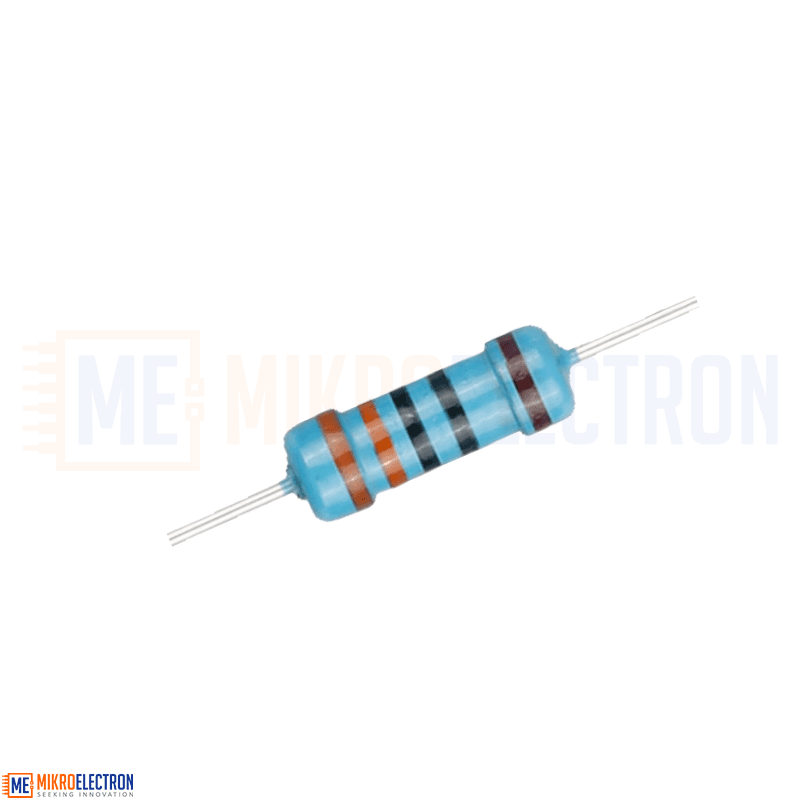

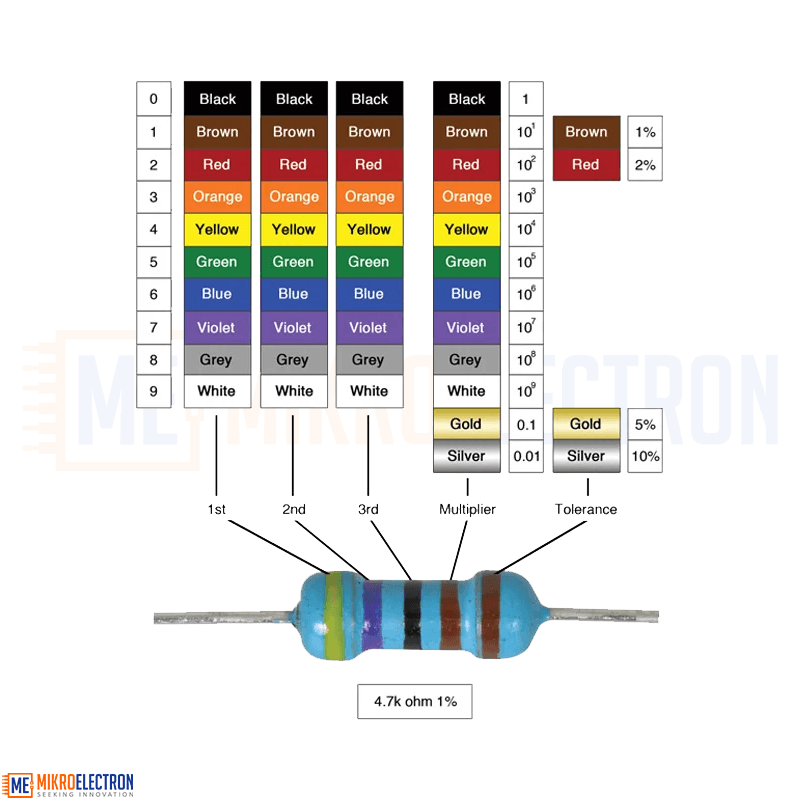
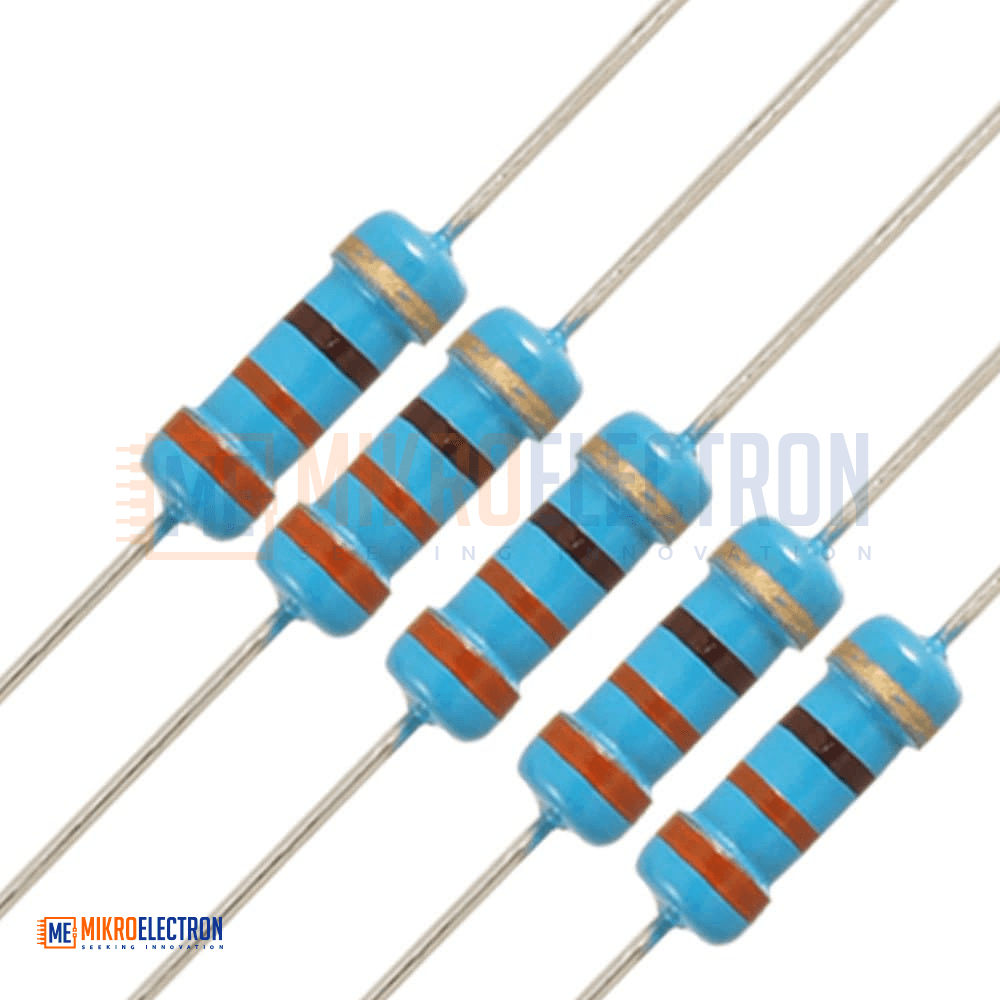
330 ohm Resistor
The 330Ω (Ohm) Resistor is a precision 1/4W metal film resistor with a tight 1% tolerance, perfect for DIY electronics, Arduino projects, and prototyping. As one of the most commonly used resistor values for LED current limiting, it safely drives LEDs from 5V supplies while delivering bright, stable output. Featuring low noise, excellent thermal stability, and long-term reliability, it's a fundamental component for hobbyists, students, and engineers in any electronic build.
المقاومة 330 أوم هي مقاومة دقيقة من نوع Metal Film بقدرة 1/4 واط وتفاوت 1%، مثالية لـ مشاريع الإلكترونيات DIY ومشاريع Arduino والنماذج الأولية. تُعدّ من أكثر القيم استخداماً لتحديد تيار الـ LED، حيث تشغّل الـ LEDs بأمان من مصدر 5 فولت مع إضاءة ساطعة ومستقرة. تتميز بضوضاء منخفضة وثبات حراري ممتاز وموثوقية طويلة الأمد، وهي مكوّن أساسي للهواة والطلاب والمهندسين في أي مشروع إلكتروني.
The 330Ω Resistor is a high-quality 1/4 Watt metal film resistor engineered to provide accurate and reliable resistance in electronic circuits. With a precise 1% tolerance, it ensures consistent performance and predictable behavior in both analog and digital applications. Metal film resistors are favored over carbon film types because of their lower noise, superior thermal stability, and better long-term accuracy, which makes them especially well-suited for precision and signal-related circuits.
The 330 ohm value is one of the most widely used resistor values in electronics, particularly as a current-limiting resistor for LEDs powered from 5V sources — including Arduino, ESP32, and Raspberry Pi GPIO pins. It strikes the perfect balance between providing adequate brightness and protecting the LED from excessive current. Beyond LEDs, it is also used in voltage dividers, transistor biasing, and pull-up/pull-down networks.
Built with a standard axial-lead through-hole design, this resistor easily integrates with breadboards, perfboards, and printed circuit boards (PCBs), making it ideal for both quick prototyping and finished projects. It is fully compatible with all major development platforms, including Arduino, Raspberry Pi, ESP32, ESP8266, STM32, and PIC microcontrollers.
Specifications
- Resistance Value: 330 Ohm (Ω)
- Power Rating: 1/4 Watt (0.25W)
- Tolerance: ±1% (Precision Grade)
- Resistor Type: Metal Film
- Mounting Style: Through-Hole (Axial Lead)
- Lead Material: Tinned Copper
- Compliance: RoHS Compliant
- Operating Temperature Range: Typically -55°C to +155°C (standard for metal film)
Applications
- LED Current Limiting — the most common value for driving standard LEDs from 5V
- Arduino GPIO Protection — limiting current to indicator LEDs
- Voltage Dividers — generating reference voltages and scaling analog signals
- Pull-up / Pull-down Resistors — stabilizing digital input pins
- Transistor Base Biasing — driving BJTs in switching and amplifier circuits
- MOSFET Gate Resistors — protecting and slowing gate transitions
- Signal Conditioning — filtering and impedance matching
- Audio & RF Circuits — gain setting and feedback networks
- Sensor Interfacing — calibration and signal scaling
- Educational Electronics — schools, universities, and STEM labs
- General-Purpose Electronics — repair, modification, and DIY builds