
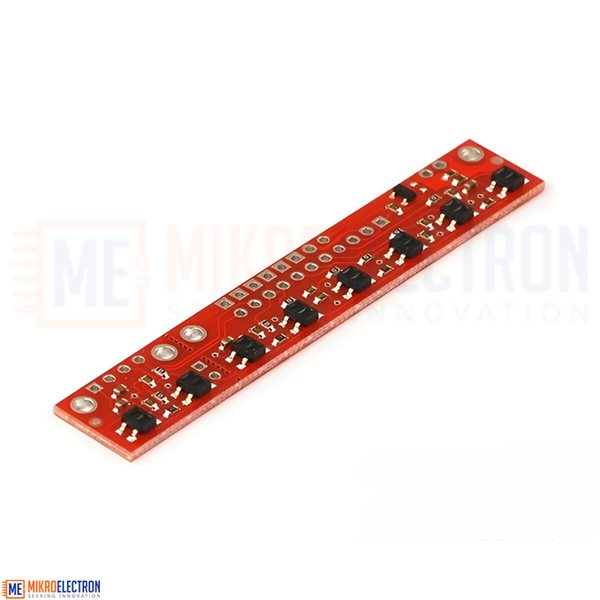
QTR-8A Line Sensor (Analog)
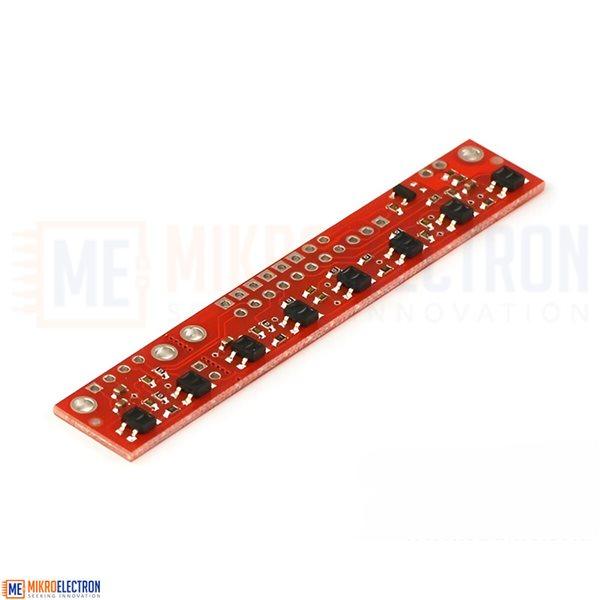
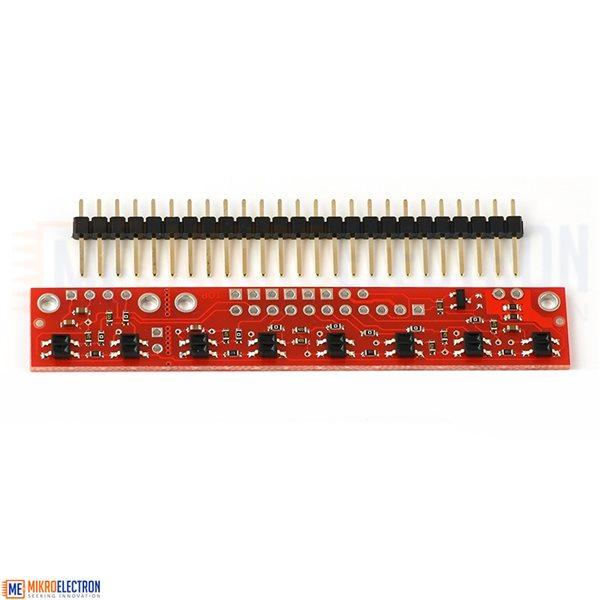
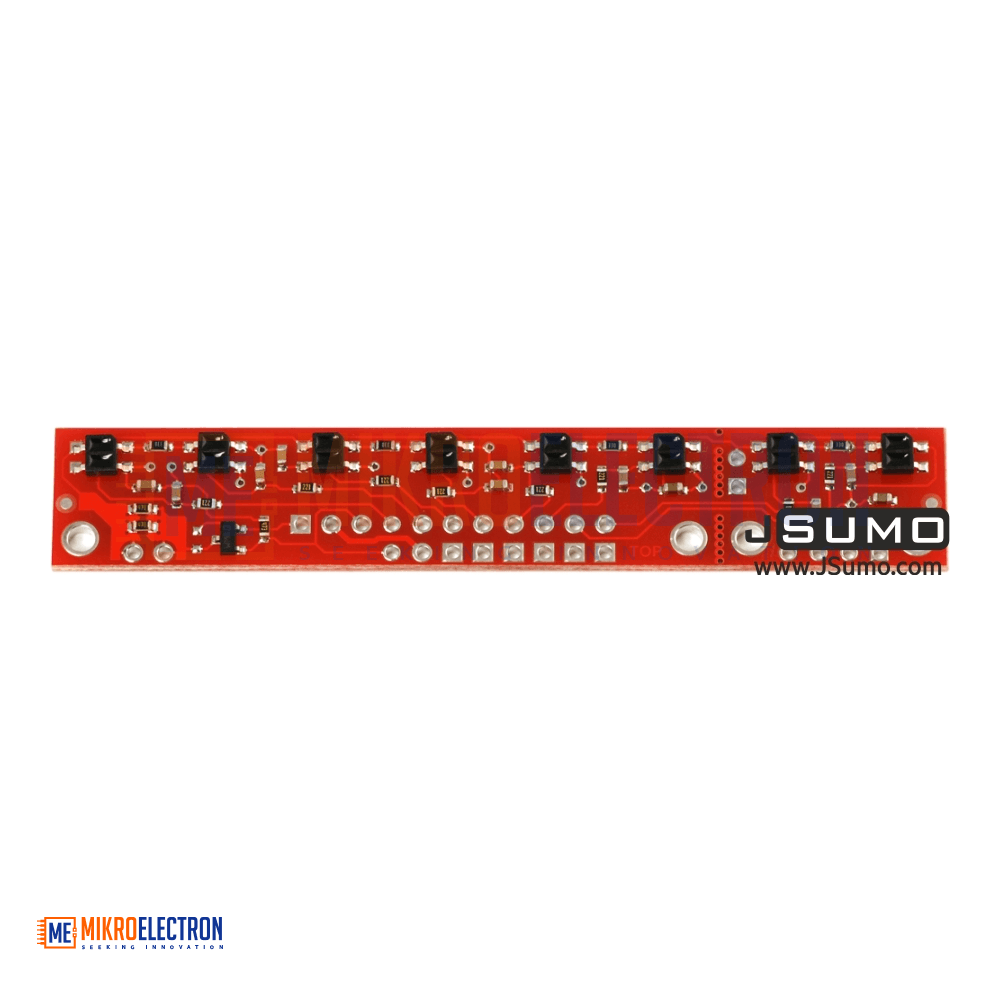
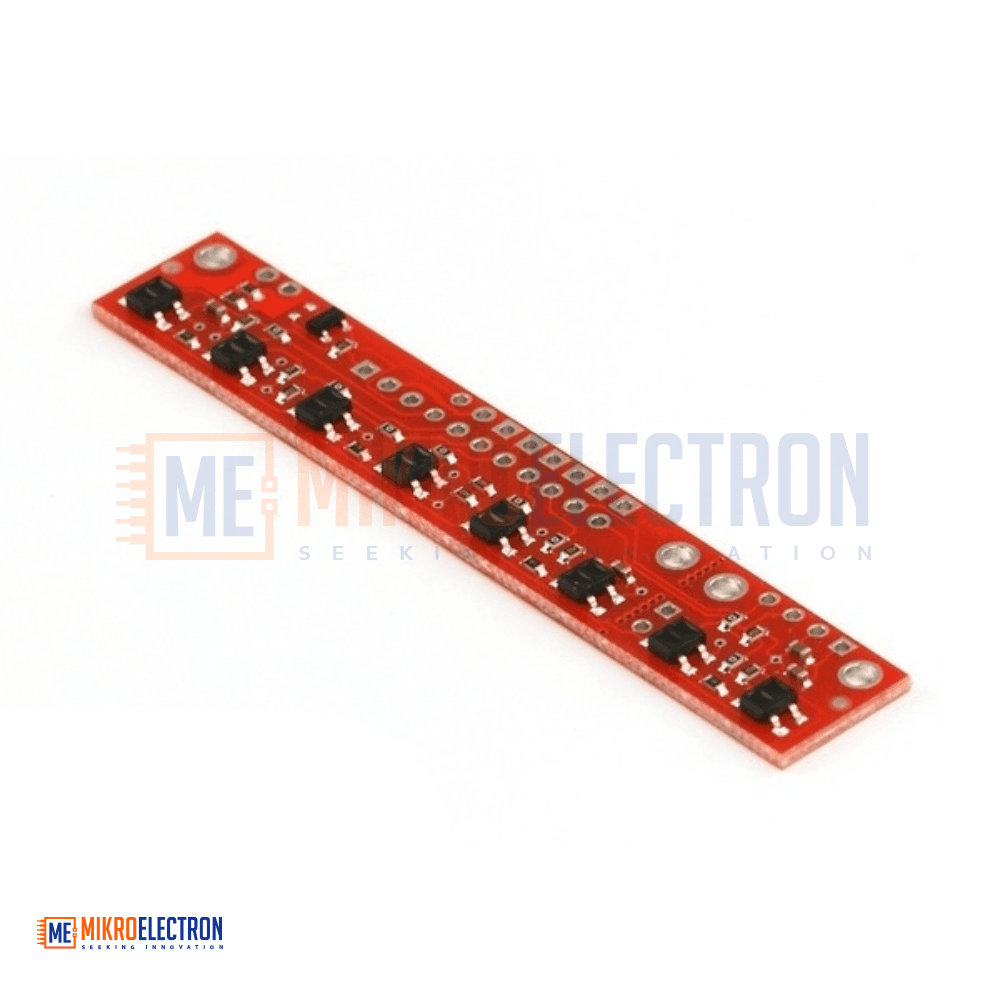
QTR-8A Line Sensor (Analog) is a high-performance reflectance sensor array designed for line-following robots and proximity sensing applications. It features 8 infrared LED and phototransistor pairs spaced evenly at 9.525 mm (0.375") intervals, providing accurate detection of lines, edges, and reflective surfaces. Each sensor delivers an independent analog voltage output, enabling precise position tracking and surface analysis. The module incorporates a MOSFET-controlled LED system for power-saving and advanced sensing options. Compatible with microcontrollers such as Arduino Nano, the QTR-8A is widely used in robotics, automation, and educational projects requiring reliable line detection.
حساس QTR-8A Line Sensor (Analog) هو مصفوفة حساسات انعكاس عالية الأداء مصممة لروبوتات تتبع الخط والتطبيقات التي تعتمد على استشعار القرب والانعكاس. يحتوي على 8 أزواج من مصابيح الأشعة تحت الحمراء والمستقبلات الضوئية موزعة بمسافات متساوية تبلغ 9.525 مم (0.375 بوصة)، مما يوفر دقة عالية في اكتشاف الخطوط والحواف والأسطح العاكسة. يقدم كل حساس خرجًا تماثليًا مستقلاً يسمح بتحديد موقع الخط بدقة. كما يضم النظام دائرة MOSFET للتحكم في تشغيل وإيقاف مصابيح الأشعة تحت الحمراء لتوفير الطاقة وتحسين أداء الاستشعار، مما يجعله مناسبًا للمشاريع الروبوتية والتعليمية وأنظمة الأتمتة.
QTR-8A Line Sensor (Analog) is a versatile reflectance sensor array developed for line-following robots and general-purpose reflectance sensing applications. The module integrates eight infrared emitter and receiver pairs, providing high-resolution detection across a wide sensing area.
Each phototransistor is connected to a pull-up resistor, creating a voltage divider that generates an analog output voltage ranging from 0V to VIN. The output voltage varies according to the amount of reflected infrared light detected by the sensor. A lower output voltage indicates stronger reflection from the target surface.
The sensor array is designed with energy efficiency in mind. The infrared LEDs are arranged in pairs connected in series, reducing current consumption. Additionally, a built-in MOSFET allows the LEDs to be switched on or off externally. This functionality can be used to reduce power consumption, perform ambient light compensation, or control LED brightness using PWM techniques.
The module supports operation with both 5V and 3.3V systems, with a simple resistor configuration adjustment available for lower-voltage applications. With a total current consumption of less than 100mA, the QTR-8A offers an excellent balance between performance and efficiency.
Because it provides eight independent analog outputs, the module is particularly well suited for microcontrollers with multiple analog input channels such as the Arduino Nano. It is widely used in line-following robots, path-tracking systems, edge detection devices, and reflective object sensing applications.
Specifications
| Specification | Value |
|---|---|
| Product Name | QTR-8A Line Sensor |
| Sensor Type | Analog Reflectance Sensor Array |
| Number of Sensors | 8 IR LED / Phototransistor Pairs |
| Sensor Spacing | 9.525 mm (0.375") |
| Output Type | Analog Voltage Output |
| Output Range | 0V to VIN |
| Operating Voltage | Typically 5V |
| 3.3V Compatibility | Yes (with resistor configuration adjustment) |
| LED Control | MOSFET Controlled |
| Current Consumption | Approximately 20–25 mA LED Current |
| Total Board Consumption | Less than 100 mA |
| Detection Method | Infrared Reflectance |
| Sensor Outputs | 8 Independent Analog Outputs |
Applications
- Line-following robots
- Autonomous mobile robots
- Maze-solving robots
- Robot navigation systems
- Reflective surface detection
- Edge and boundary detection
- Path tracking systems
- Educational robotics projects
- Arduino-based robotics
- Industrial sensing applications
- Object proximity detection
- Research and development projects
- Automation systems
- DIY robotics projects