
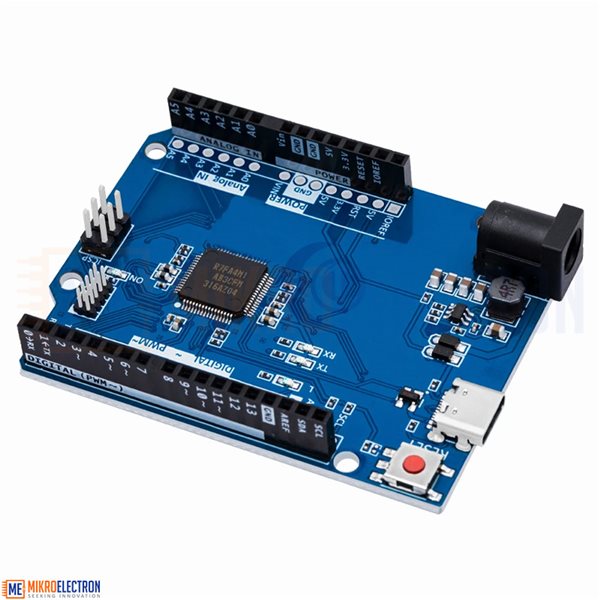
Arduino UNO R4 Minima Copy
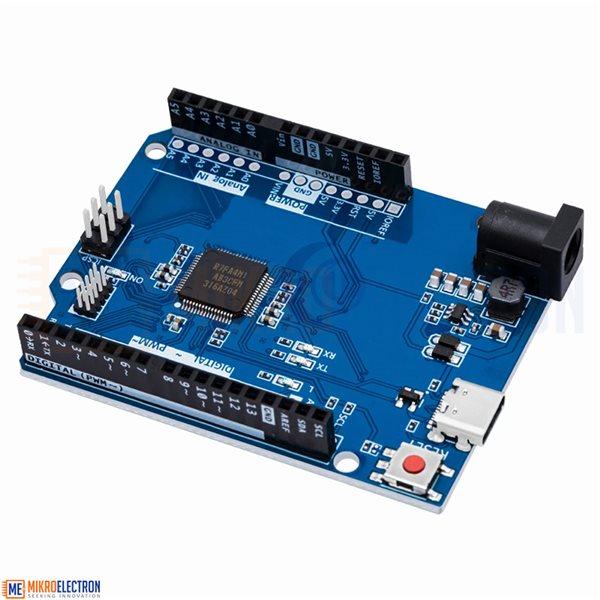
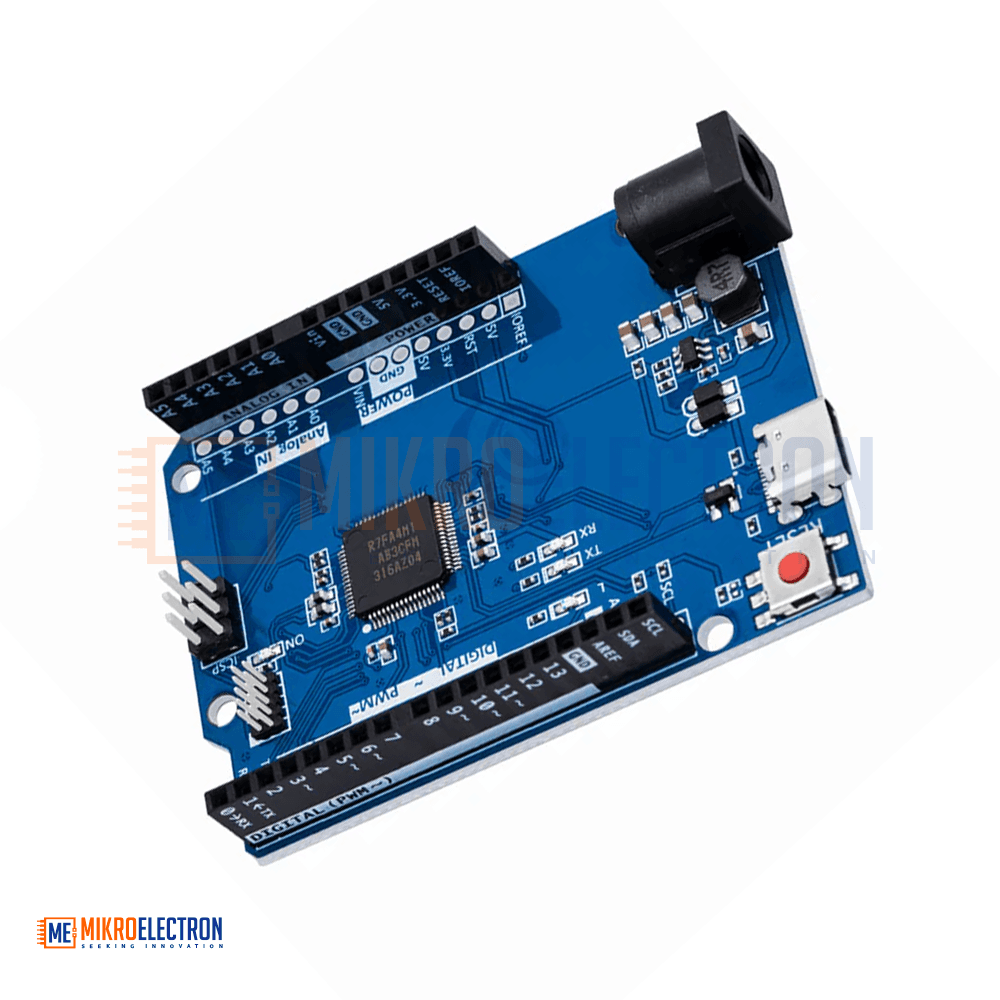
The Arduino UNO R4 Minima (Clone) is a powerful evolution of the classic UNO, featuring the Renesas RA4M1 32-bit microcontroller. It delivers higher performance, expanded memory, and modern peripherals while maintaining full compatibility with the UNO R3 form factor, shields, and 5V operation—making it a perfect drop-in upgrade for existing projects.
لوحة Arduino UNO R4 Minima (نسخة مقلَّدة) هي تطوير قوي للوحة UNO الكلاسيكية، وتعمل بالمتحكّم الدقيق Renesas RA4M1 (32-بت).
توفر أداءً أعلى، وذاكرة موسَّعة، وملحقات حديثة، مع الحفاظ على التوافق الكامل مع تصميم UNO R3، والدروع (Shields)، والتشغيل بجهد 5 فولت، مما يجعلها ترقية مباشرة وسهلة للمشاريع الحالية دون الحاجة إلى تعديلات.
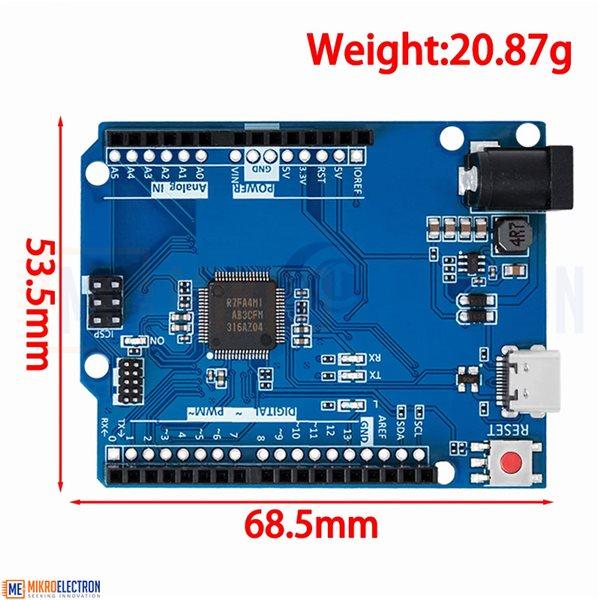
The UNO R4 Minima (Copy) is built around the Renesas RA4M1 Arm® Cortex®-M4 microcontroller, offering significantly improved processing power and memory compared to earlier UNO boards. Despite the major internal upgrade, it preserves the familiar UNO layout, pinout, and 5V operating voltage, ensuring seamless compatibility with existing shields and accessories.
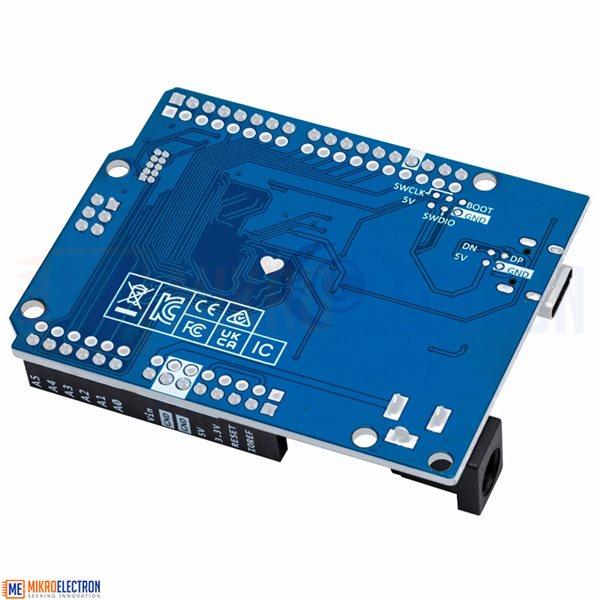
This board introduces advanced onboard peripherals such as a 12-bit DAC, CAN BUS support, and an operational amplifier, enabling more sophisticated designs without external components. With extended input voltage support up to 24V, HID capability for keyboard and mouse emulation, and SWD debugging support, the UNO R4 Minima clone is well suited for education, prototyping, automation, and embedded development.
Technical Specifications
Microcontroller
MCU: Renesas RA4M1 (Arm® Cortex®-M4)
Clock Speed: 48 MHz
Flash Memory: 256 KB
RAM: 32 KB
EEPROM (Data Flash): 8 KB
On-Chip Features
Real-Time Clock (RTC)
Memory Protection Unit (MPU)
Capacitive Touch Sensing Unit (CTSU)
USB 2.0 Full-Speed (USBFS)
Operational Amplifier (OP AMP)
Power
Operating Voltage: 5 V
Input Voltage (VIN): 6 – 24 V (recommended)
Power via Barrel Jack: Connected to VIN (6–24 V)
Power via USB-C®: 5 V
Communication & I/O
Digital I/O Pins: 14
Analog Inputs: 6 × 14-bit ADC
Analog Output: 1 × DAC (up to 12-bit)
PWM Outputs: 6
UART: 1 (D0, D1)
SPI: 1 (D10–D13 + ICSP header)
I2C: 1 (A4 SDA, A5 SCL)
CAN BUS: 1 (D4, D5 – external transceiver required)

Applications
Educational and training projects
Embedded systems development
Industrial and CAN-based communication projects
Robotics and automation
USB HID devices (keyboard/mouse)
Rapid prototyping and testing