
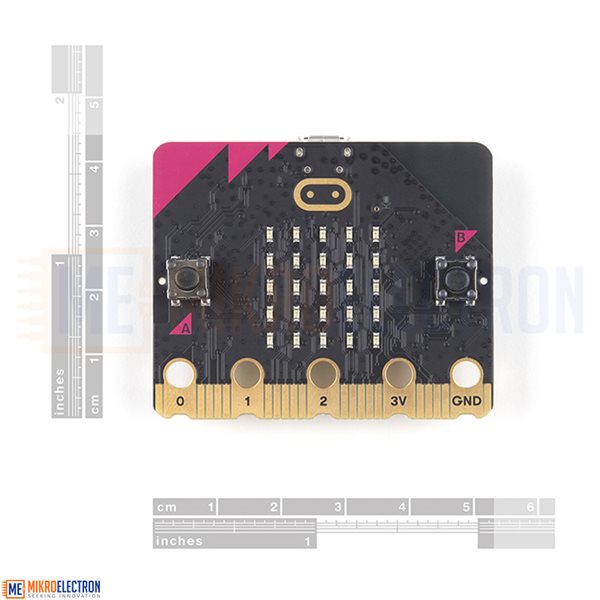
micro:bit v2 Board
The micro:bit v2 Board is a compact and versatile programmable development board designed for education, robotics, and embedded electronics. Powered by a 64MHz ARM Cortex-M4 processor, it features a 5×5 LED matrix, two programmable buttons, a touch-sensitive logo, built-in microphone, speaker, accelerometer, compass, temperature and light sensors, plus Bluetooth 5.0 wireless connectivity. The board supports MakeCode, Python, Scratch, and C++, making it ideal for beginners and advanced users alike. With multiple GPIO interfaces and expansion connections, the micro:bit v2 enables users to create interactive projects, IoT devices, wearable electronics, and innovative STEM applications.
تعد لوحة micro:bit v2 منصة تطوير صغيرة الحجم ومتعددة الاستخدامات، مصممة لتعليم البرمجة والإلكترونيات والروبوتات. تعتمد على معالج ARM Cortex-M4 بسرعة 64 ميجاهرتز، وتوفر مصفوفة LED 5×5، وزرين قابلين للبرمجة، وشعارًا يعمل باللمس، وميكروفونًا، وسماعة، ومستشعرات للحركة والاتجاه والحرارة والإضاءة، بالإضافة إلى Bluetooth 5.0 للاتصال اللاسلكي. تدعم البرمجة باستخدام MakeCode وPython وScratch وC++، مما يجعلها مناسبة للمبتدئين والمحترفين. كما توفر منافذ GPIO وواجهات توسعة متعددة لتطوير مشاريع إنترنت الأشياء، والأنظمة الذكية، والأجهزة القابلة للارتداء، والتطبيقات التعليمية والتفاعلية.
The micro:bit v2 Board is a powerful, pocket-sized development platform designed to make coding and electronics accessible for students, educators, makers, and developers. Despite its compact size, it integrates a wide range of sensors, wireless communication, and programmable interfaces, making it suitable for everything from learning basic programming to building advanced embedded systems.
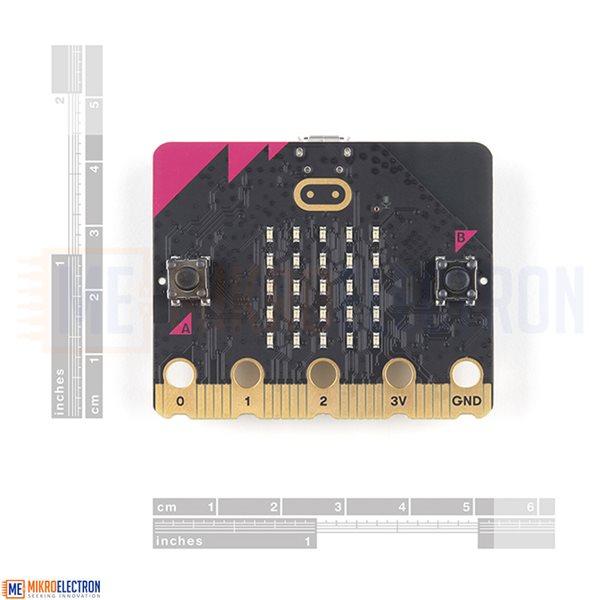
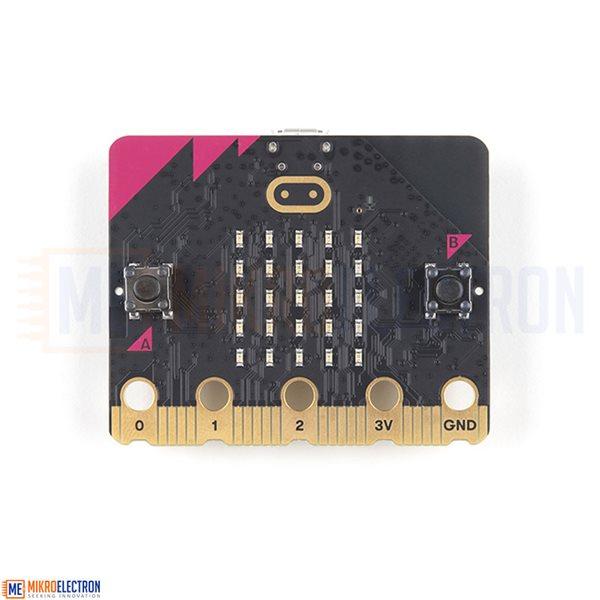
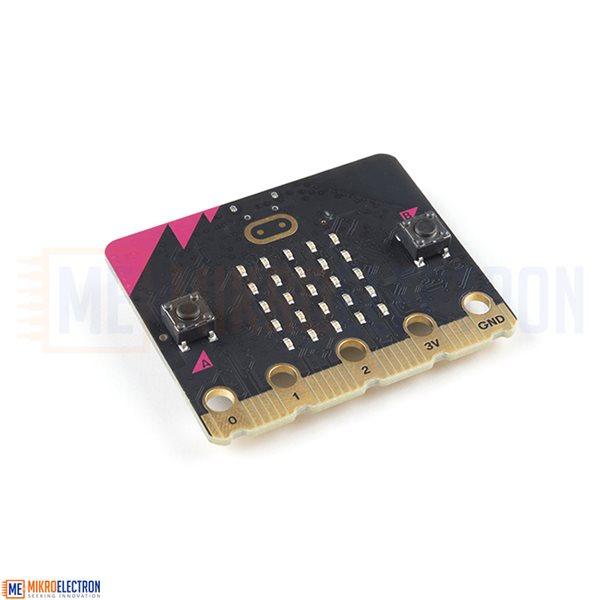
At the heart of the board is a 64MHz ARM Cortex-M4 microcontroller with Floating Point Unit (FPU), supported by 512KB Flash memory and 128KB RAM. The front of the board includes a 5×5 programmable LED matrix, which can display text, icons, animations, and also function as a light sensor. It also features two programmable buttons, a touch-sensitive logo, and a MEMS microphone with an LED activity indicator for interactive projects.
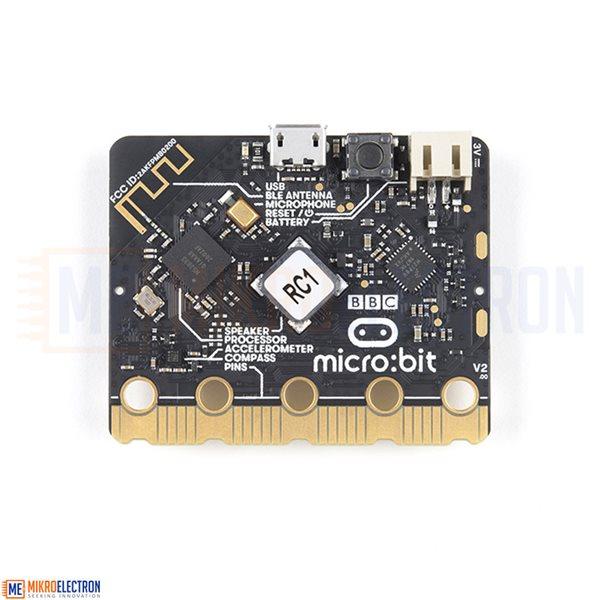
The back of the board contains an integrated speaker, accelerometer, compass, temperature sensor, Bluetooth 5.0 Smart antenna, Micro USB connector, and JST-PH battery connector for flexible power options. A 25-pin edge connector and five large ring connectors provide easy access to GPIO, analog inputs, PWM, I2C, and SPI interfaces for connecting external sensors, motors, and other peripherals.
The board is compatible with Microsoft MakeCode, Python, Scratch, and C++, allowing users of all skill levels to create robotics projects, IoT devices, wearable technology, and educational experiments. Please note that this package includes only the micro:bit v2 board and does not include a USB cable or battery pack.
Specifications
| Specification | Details |
|---|---|
| Product | micro:bit v2 Board |
| Processor | 64MHz ARM Cortex-M4 with FPU |
| Flash Memory | 512KB |
| RAM | 128KB |
| LED Display | 5×5 Red LED Matrix (25 LEDs) |
| Buttons | 2 Programmable Buttons |
| Touch Input | Touch-Sensitive Logo |
| Microphone | MEMS Microphone with LED Indicator |
| Speaker | Built-in Speaker |
| Sensors | Accelerometer, Compass, Temperature Sensor, Light Sensor |
| Wireless | 2.4GHz micro:bit Radio & Bluetooth Low Energy (BLE 5.0) |
| Edge Connector | 25-Pin Gold Edge Connector |
| GPIO Support | GPIO, PWM, I2C, SPI |
| Ring Connectors | 3 Digital/Analog I/O Rings, 3V and GND Rings |
| Dedicated I2C Bus | Yes |
| USB Interface | Micro USB (5V) |
| Battery Connector | JST-PH (3V) |
| Power Button | Reset Button with Status LED |
| Accessory Current | Up to 200mA |
| Programming Languages | MakeCode, Python, Scratch, C++ |
| Package Contents | micro:bit v2 Board only (No USB cable or battery included) |
Applications
- STEM education and coding lessons
- Learning embedded systems programming
- Robotics and autonomous vehicles
- Internet of Things (IoT) projects
- Wearable electronics
- Interactive games and controllers
- Wireless Bluetooth communication
- Environmental sensing and monitoring
- Home automation prototypes
- Motion detection applications
- DIY electronics and maker projects
- Data logging and sensor interfacing