
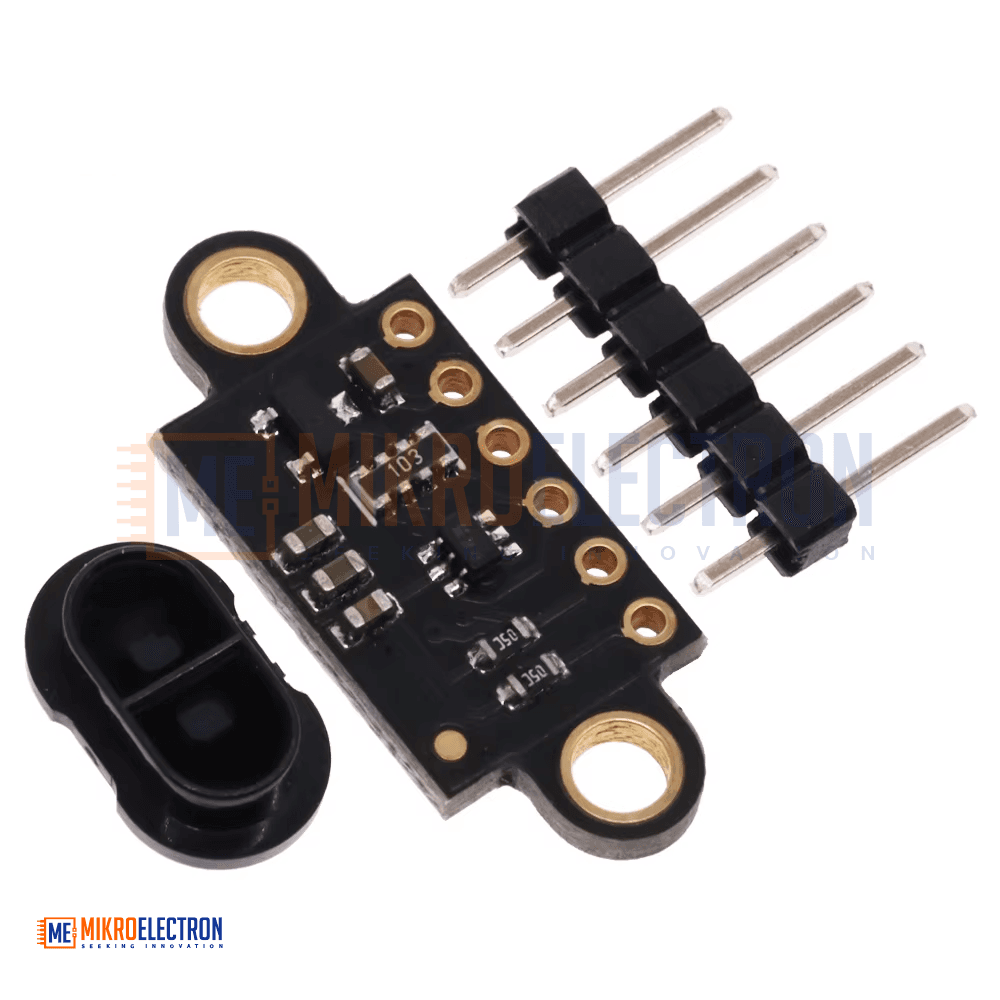
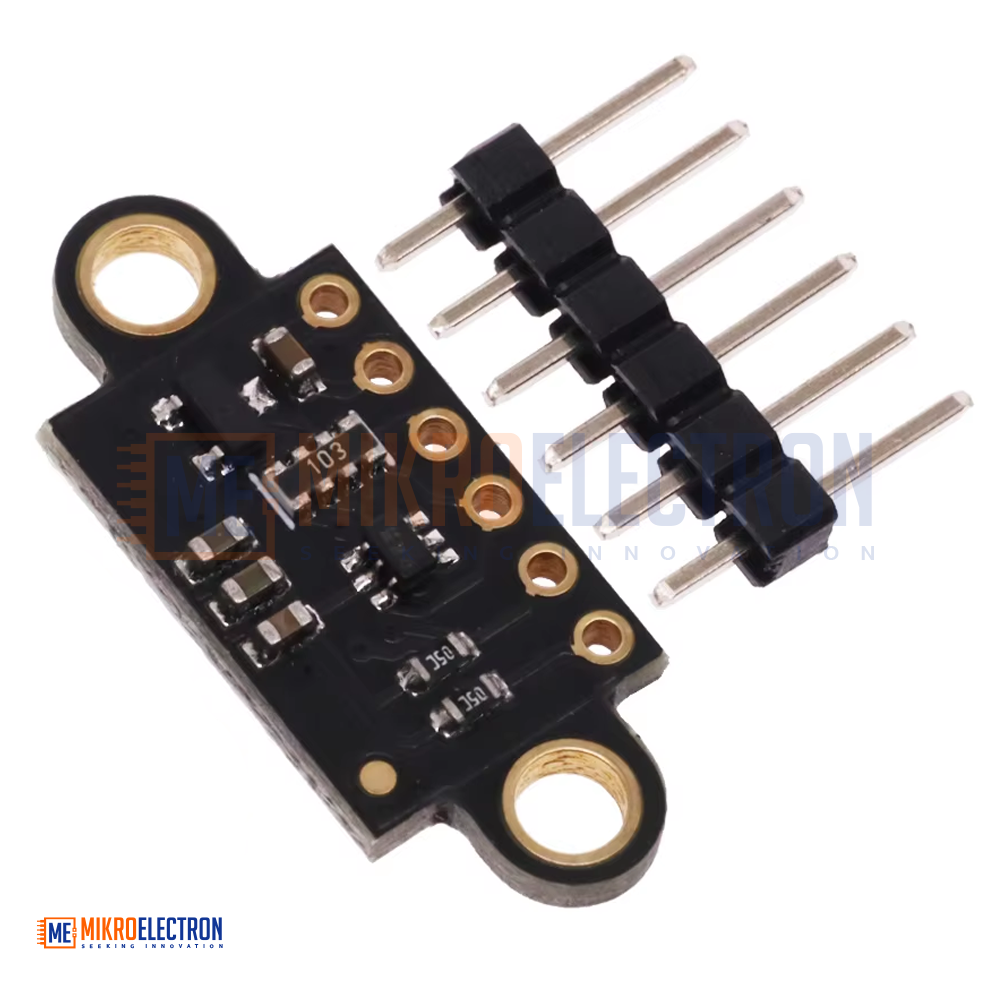
Vl53L1X With Lid Laser Ranging STM32 TOF Time of Flight Chip Flight Distance Measurement Sensor
The VL53L1X Time-of-Flight laser ranging sensor module delivers accurate absolute distance measurement up to 4 meters with a ranging frequency of up to 50 Hz. Based on ST's FlightSense technology, it uses a 940 nm Class 1 invisible laser and a SPAD receiving array to measure distance regardless of target color or reflectance. The module features a programmable region of interest (ROI), a 27° field of view, and a simple I2C interface (up to 400 kHz). With XSHUT and GPIO1 interrupt pins and a compact footprint, it is ideal for robotics, drones, obstacle avoidance, and smart automation projects with Arduino and STM32.
يوفر حساس قياس المسافة بالليزر VL53L1X بتقنية زمن الطيران (ToF) قياساً دقيقاً للمسافة المطلقة حتى 4 أمتار بتردد قياس يصل إلى 50 هرتز. يعتمد الحساس على تقنية FlightSense من شركة ST، ويستخدم ليزر غير مرئي بطول موجي 940 نانومتر من الفئة الأولى (Class 1) ومصفوفة استقبال SPAD لقياس المسافة بغض النظر عن لون الهدف أو درجة انعكاسه. يتميز الموديول بمنطقة اهتمام (ROI) قابلة للبرمجة، ومجال رؤية 27 درجة، وواجهة اتصال I2C بسرعة تصل إلى 400 كيلوهرتز. ومع توفر منفذي XSHUT و GPIO1 للمقاطعة وحجمه الصغير، يعد خياراً مثالياً لمشاريع الروبوتات والطائرات المسيّرة وتفادي العوائق والأتمتة الذكية مع Arduino و STM32.
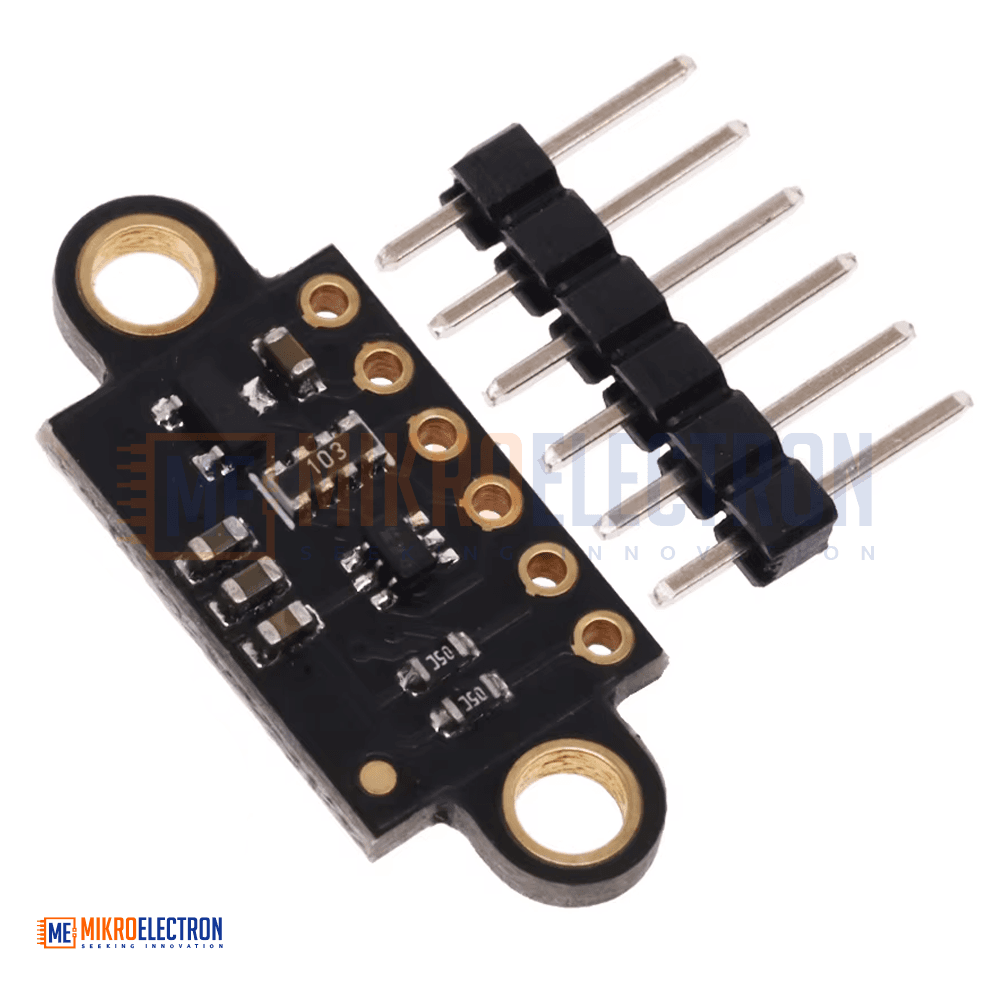
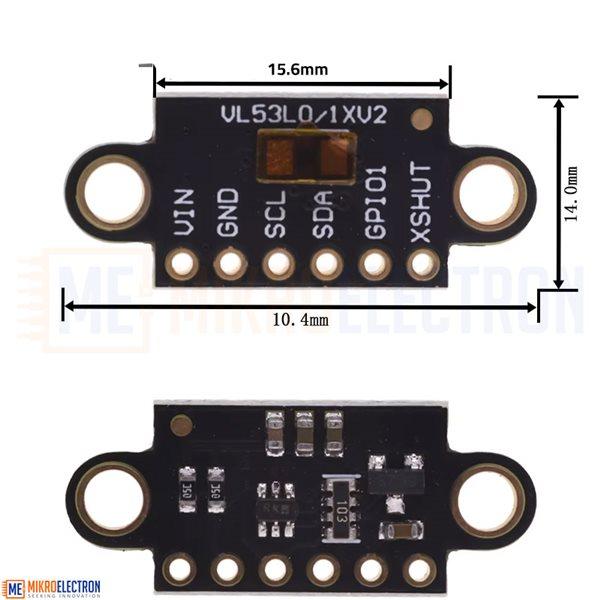
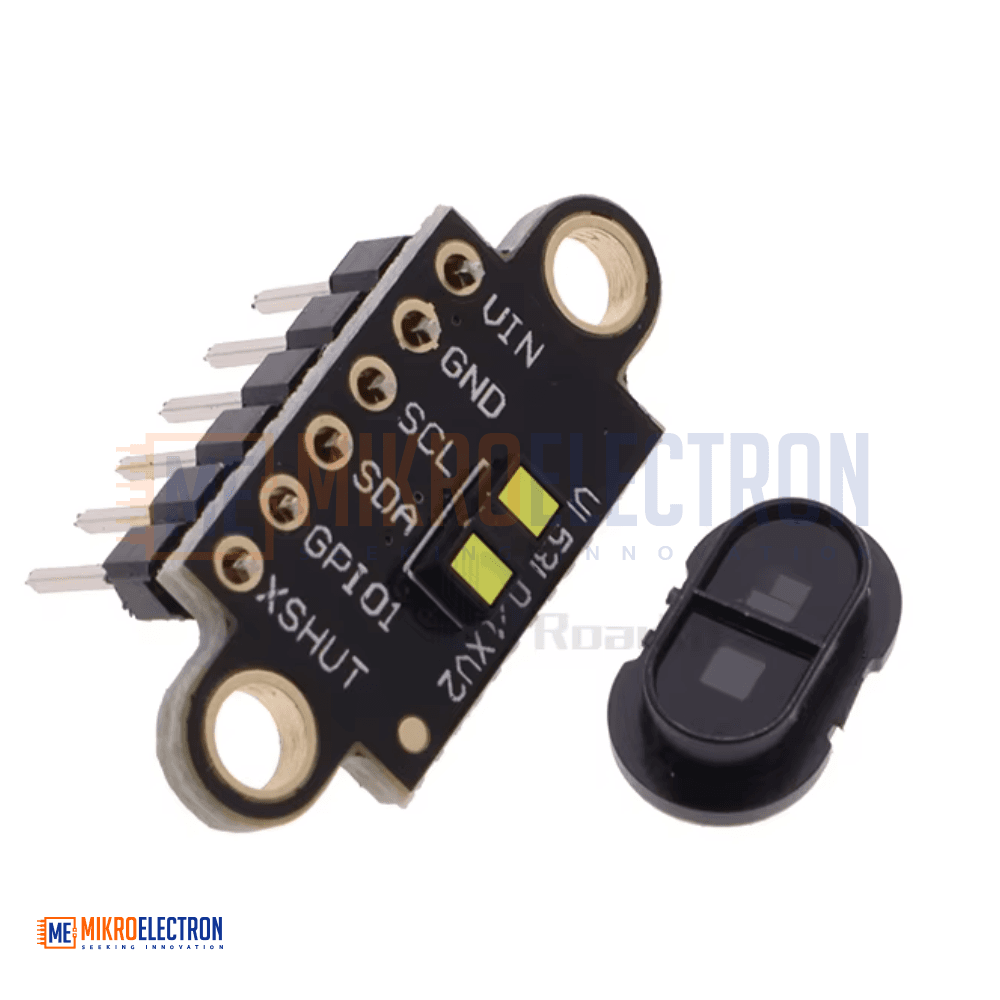
The VL53L1X is a state-of-the-art Time-of-Flight (ToF) laser-ranging sensor from ST's FlightSense product family, and one of the fastest miniature ToF sensors available. This breakout module mounts the sensor on a compact 15.6 × 14.0 mm board with mounting holes, onboard voltage regulation, and I2C pull-up resistors, making it ready to connect directly to microcontrollers such as Arduino, STM32, ESP32, and Raspberry Pi. The version with lid includes a protective cover over the optical window.
Unlike conventional IR distance sensors that estimate range from reflected light intensity, the VL53L1X measures the actual travel time of photons, delivering absolute distance readings that are unaffected by target color or surface reflectance. It achieves accurate ranging up to 400 cm at rates up to 50 Hz.
A key advantage is the programmable Region of Interest (ROI): both the size and position of the active area on the SPAD receiving array can be configured, allowing the field of view to be narrowed and enabling multizone operation controlled from the host. The sensor is pin-to-pin compatible with the VL53L0X, allowing easy upgrades of existing designs to longer range. The XSHUT pin allows shutdown and address reassignment for multi-sensor setups, while GPIO1 provides an interrupt output for data-ready signaling.
Specifications:
| Parameter | Value |
|---|---|
| Sensor Chip | VL53L1X (ST FlightSense) |
| Measurement Principle | Time-of-Flight (ToF) |
| Emitter | 940 nm invisible laser, Class 1 (eye-safe) |
| Receiver | SPAD array with integrated lens |
| Maximum Range | Up to 400 cm (4 m) |
| Ranging Frequency | Up to 50 Hz |
| Field of View | 27° (typical full FoV) |
| ROI | Programmable size and position |
| Interface | I2C (up to 400 kHz) |
| Sensor Supply Voltage | 2.8 V (onboard regulator for module VIN) |
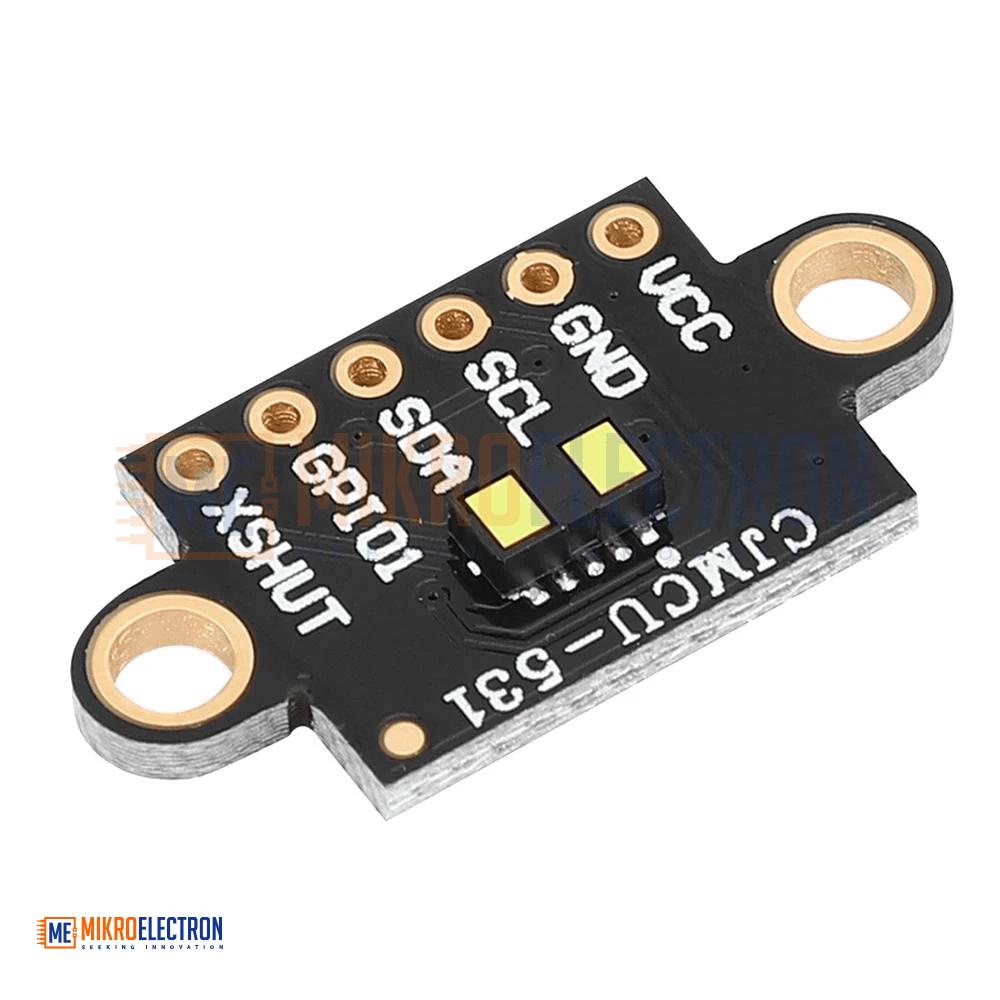
| Pins | VIN, GND, SCL, SDA, GPIO1, XSHUT |
| Control Pins | XSHUT (shutdown), GPIO1 (interrupt) |
| Compatibility | Pin-to-pin with VL53L0X |
| Board Dimensions | 15.6 mm × 14.0 mm (10.4 mm between mounting hole outer edges) |
| Mounting | 2 mounting holes |
| Extra | Protective lid over optical window |
Applications:
- Robotics obstacle detection and collision avoidance
- Drones altitude holding, landing assistance, and terrain following
- Maze-solving and line-following robots wall distance sensing
- Presence and proximity detection for smart devices and kiosks
- Gesture recognition using multizone ROI scanning
- Liquid and bin level monitoring
- Smart home automation (automatic lighting, doors, faucets)
- Industrial automation object counting and positioning
- Camera autofocus assist and depth sensing
- Educational and STEM projects with Arduino and STM32