
ESP8266 GPIO Wi-Fi Shield
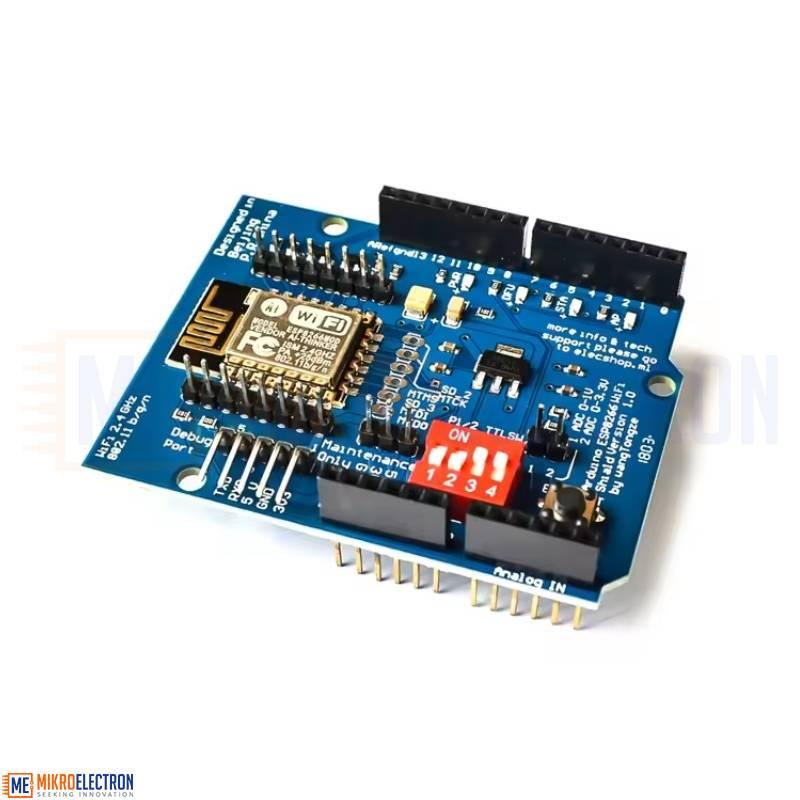
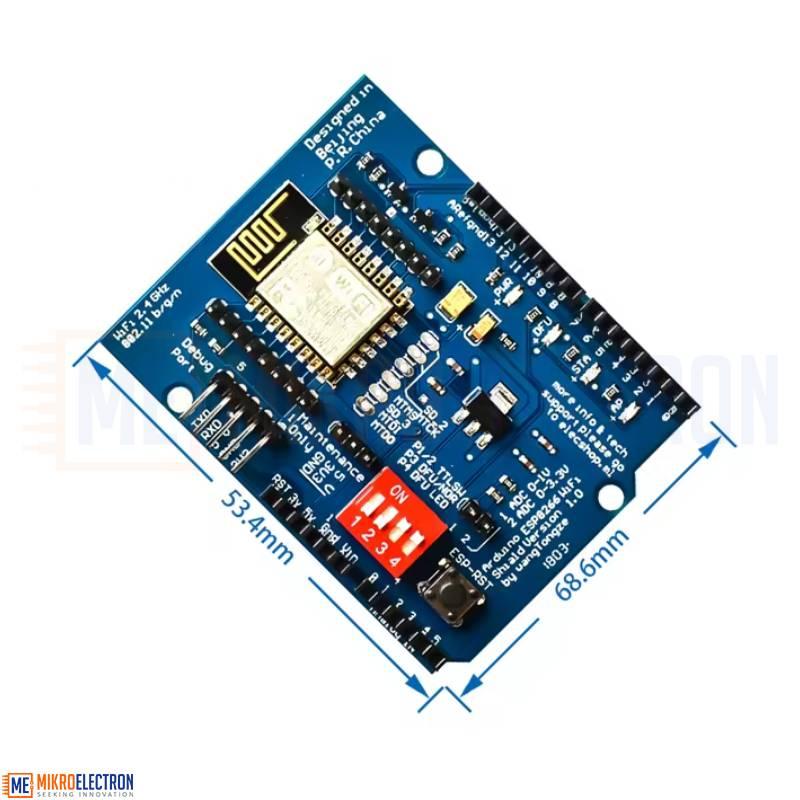
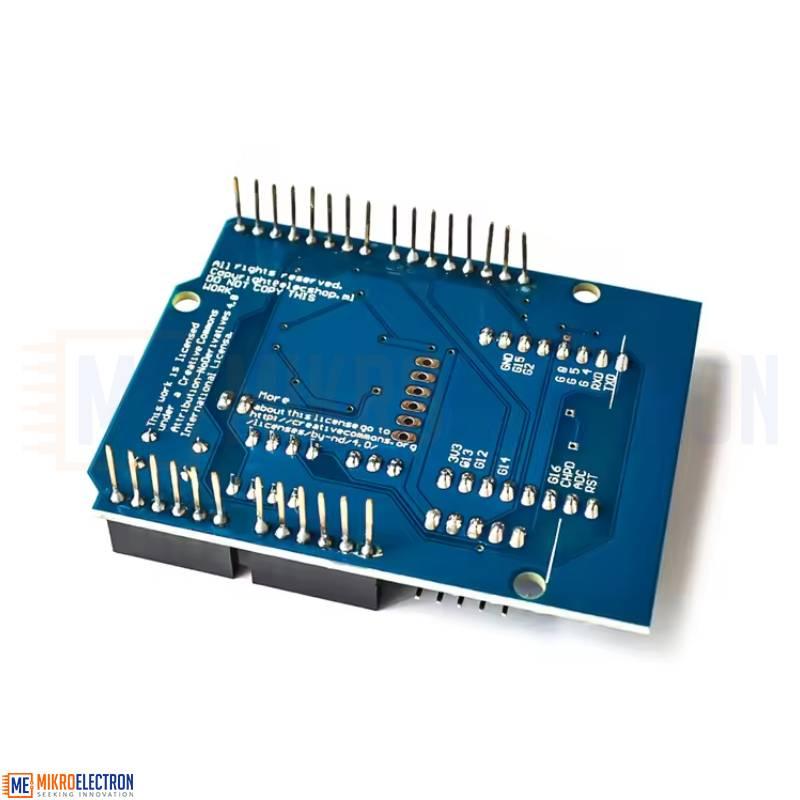
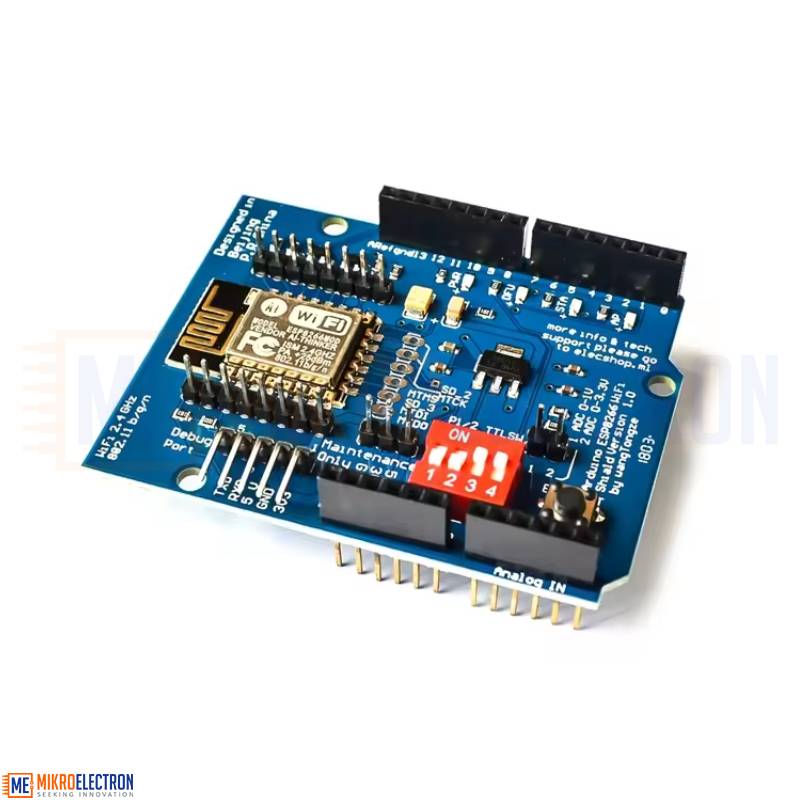
an expansion board designed to integrate WiFi capabilities into microcontroller platforms like Arduino. It leverages the ESP8266 module, a low-cost WiFi microcontroller produced by Espressif Systems, to provide wireless connectivity for Internet of Things (IoT) projects.
an expansion board designed to integrate WiFi capabilities into microcontroller platforms like Arduino. It leverages the ESP8266 module, a low-cost WiFi microcontroller produced by Espressif Systems, to provide wireless connectivity for Internet of Things (IoT) projects.
Technical Specifications:
Input Voltage: Typically operates at 5V DC, compatible with standard Arduino power outputs.
Baud Rate Configuration: Supports multiple baud rates, including 1200, 2400, 4800, 9600, 19200, 38400, 57600, 74880, and 115200 bps, allowing for adaptable serial communication speeds.
Data Bits: Configurable for 5, 6, 7, or 8 data bits per transmission, accommodating various communication protocols.
Parity and Stop Bits: Supports configurable parity (none) and stop bits (1 or 2), ensuring compatibility with diverse serial communication standards.
Usage Considerations:
Power Supply: Ensure the shield is supplied with a stable 5V DC input to maintain reliable operation.
GPIO Voltage Levels: The ESP8266 operates at 3.3V logic levels; therefore, appropriate level shifting may be necessary when interfacing with 5V systems to prevent damage.
Antenna Configuration: Some shields include an onboard PCB antenna or provisions for an external antenna to enhance WiFi signal strength and reliability.
Firmware Updates: Keep the ESP8266 firmware updated to the latest version to benefit from improved performance and security enhancements.
Applications:
The ESP8266 GPIO WiFi Shield is well-suited for a variety of IoT applications, including:
Remote Sensor Monitoring: Collecting and transmitting sensor data to a central server or cloud platform for analysis.
Home Automation: Controlling home appliances and systems remotely via WiFi connectivity.
Wireless Data Logging: Recording data from various sensors and transmitting it wirelessly for storage and analysis.
IoT Prototyping: Developing and testing IoT concepts and projects with ease, leveraging the shield's compatibility with Arduino platforms.