

Raspberry Pi Pico 2 W
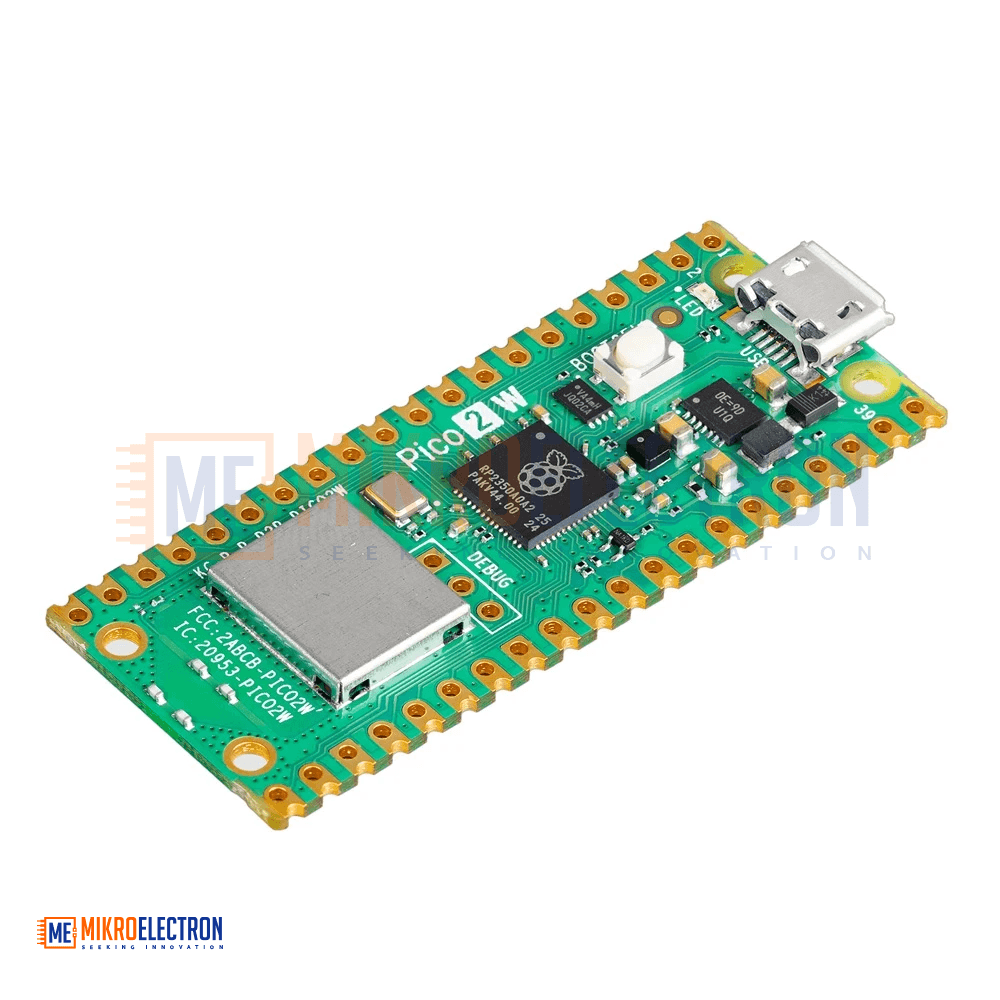
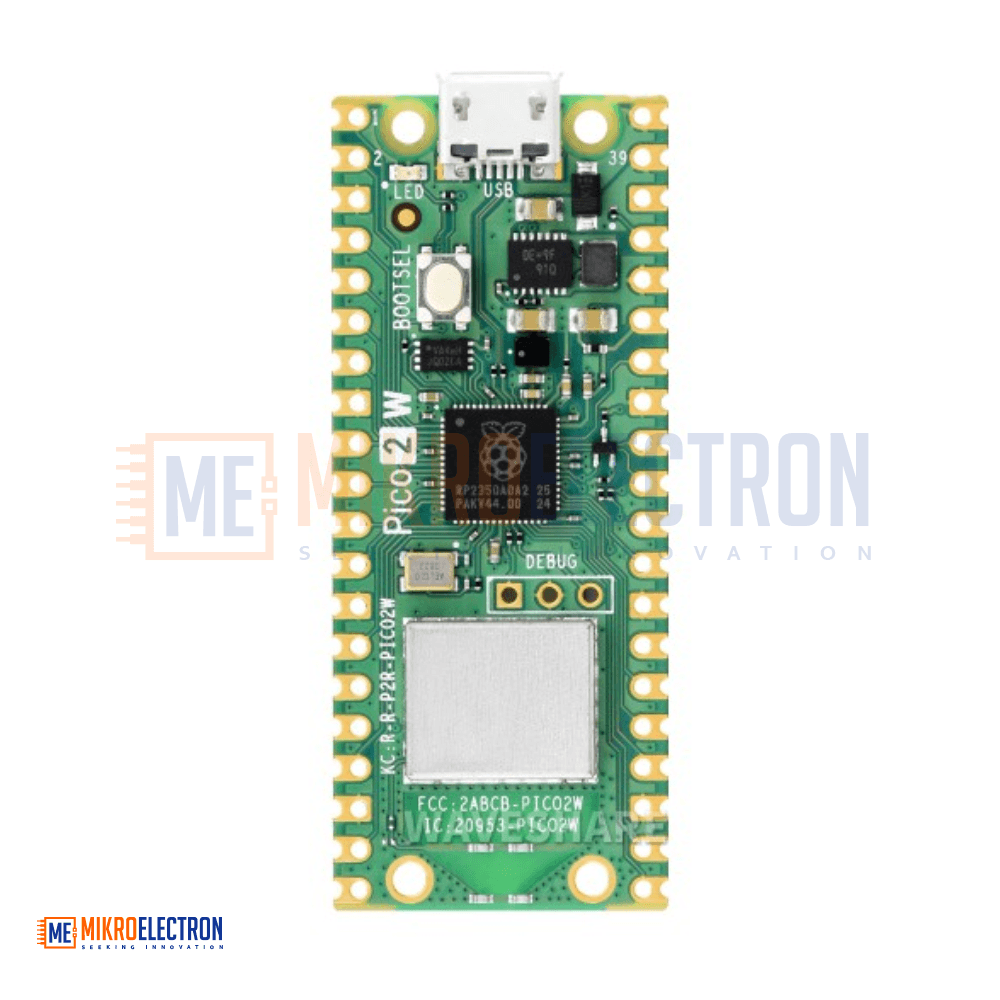
The Raspberry Pi Pico 2 W is a powerful wireless microcontroller board built around the RP2350 chip, offering significantly improved performance over the original Pico while maintaining full hardware and software compatibility. It features dual-core Arm Cortex-M33 or dual-core Hazard3 RISC-V processors running at 150MHz, 520KB SRAM, and 2.4GHz Wi-Fi with Bluetooth 5.2 for wireless connectivity. With advanced security features, programmable I/O (PIO), multiple communication interfaces, and support for C/C++ and MicroPython, the Pico 2 W is ideal for IoT devices, embedded systems, robotics, smart home applications, and wireless automation projects.
يُعد Raspberry Pi Pico 2 W لوحة متحكم دقيقة متطورة تعتمد على شريحة RP2350، وتوفر أداءً أعلى بكثير من الإصدار السابق مع الحفاظ على التوافق الكامل مع عائلة Raspberry Pi Pico. تحتوي على معالج ثنائي النواة Arm Cortex-M33 أو ثنائي النواة Hazard3 RISC-V بسرعة 150 ميجاهرتز، وذاكرة SRAM بسعة 520KB، بالإضافة إلى اتصال Wi-Fi 2.4GHz وBluetooth 5.2 المدمجين. كما توفر ميزات أمان متقدمة، ووحدات اتصال متعددة، ودعمًا للبرمجة باستخدام C/C++ وMicroPython، مما يجعلها مثالية لمشاريع إنترنت الأشياء، والروبوتات، والأتمتة، والأنظمة المدمجة.
The Raspberry Pi Pico 2 W is the latest wireless microcontroller development board from Raspberry Pi, powered by the advanced RP2350 microcontroller. It delivers a major performance upgrade over the original Pico by combining higher processing speed, increased memory capacity, enhanced security, and integrated wireless connectivity while maintaining compatibility with existing Pico hardware and software.
The RP2350 features dual-core Arm Cortex-M33 processors running at 150MHz, with the option to use dual Hazard3 RISC-V cores, providing flexibility for developers working with different architectures. The board includes 520KB of on-chip SRAM and 4MB of onboard flash memory, enabling more complex embedded applications and larger firmware storage.
The Pico 2 W adds 2.4GHz IEEE 802.11n Wi-Fi and Bluetooth 5.2, making it an ideal platform for IoT, wireless sensing, smart home systems, remote monitoring, and connected devices. Its onboard antenna provides reliable wireless communication while maintaining a compact form factor.
Security has also been significantly enhanced with features including Arm TrustZone, secure boot, hardware SHA-256 acceleration, protected OTP memory, hardware fault injection protection, and flexible security domains for peripherals and GPIOs.
Like previous Pico boards, it supports drag-and-drop USB programming, MicroPython, and the official Raspberry Pi C/C++ SDK, allowing developers to quickly build applications ranging from simple automation projects to advanced industrial control systems.
Specifications
| Specification | Details |
|---|---|
| Model | Raspberry Pi Pico 2 W |
| Microcontroller | RP2350 |
| Processor Options | Dual-core Arm Cortex-M33 or Dual-core Hazard3 RISC-V |
| Clock Speed | 150 MHz |
| SRAM | 520 KB |
| Flash Memory | 4 MB On-board Flash |
| Wireless LAN | 2.4GHz IEEE 802.11n Wi-Fi |
| Bluetooth | Bluetooth 5.2 |
| USB | USB 1.1 Host/Device with PHY |
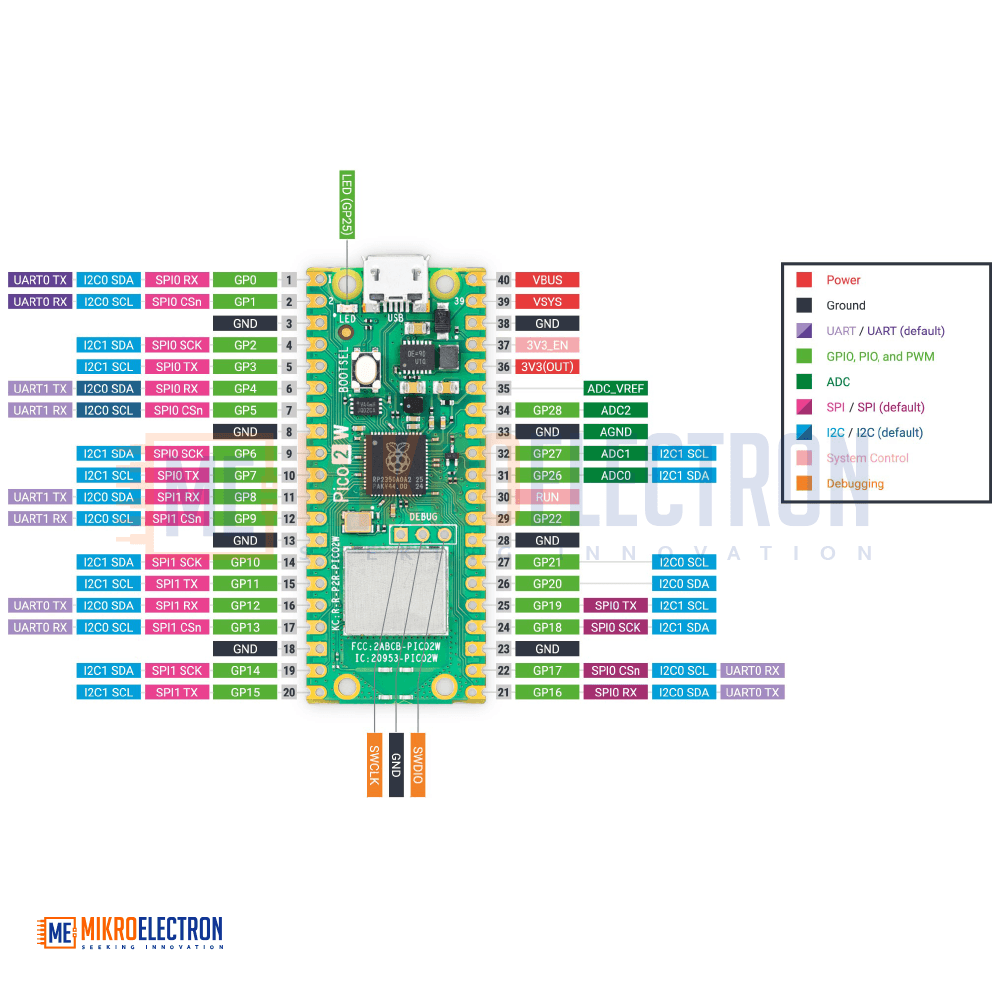
| UART | 2 |
| SPI | 2 Controllers |
| I2C | 2 Controllers |
| PWM | 16 Channels |
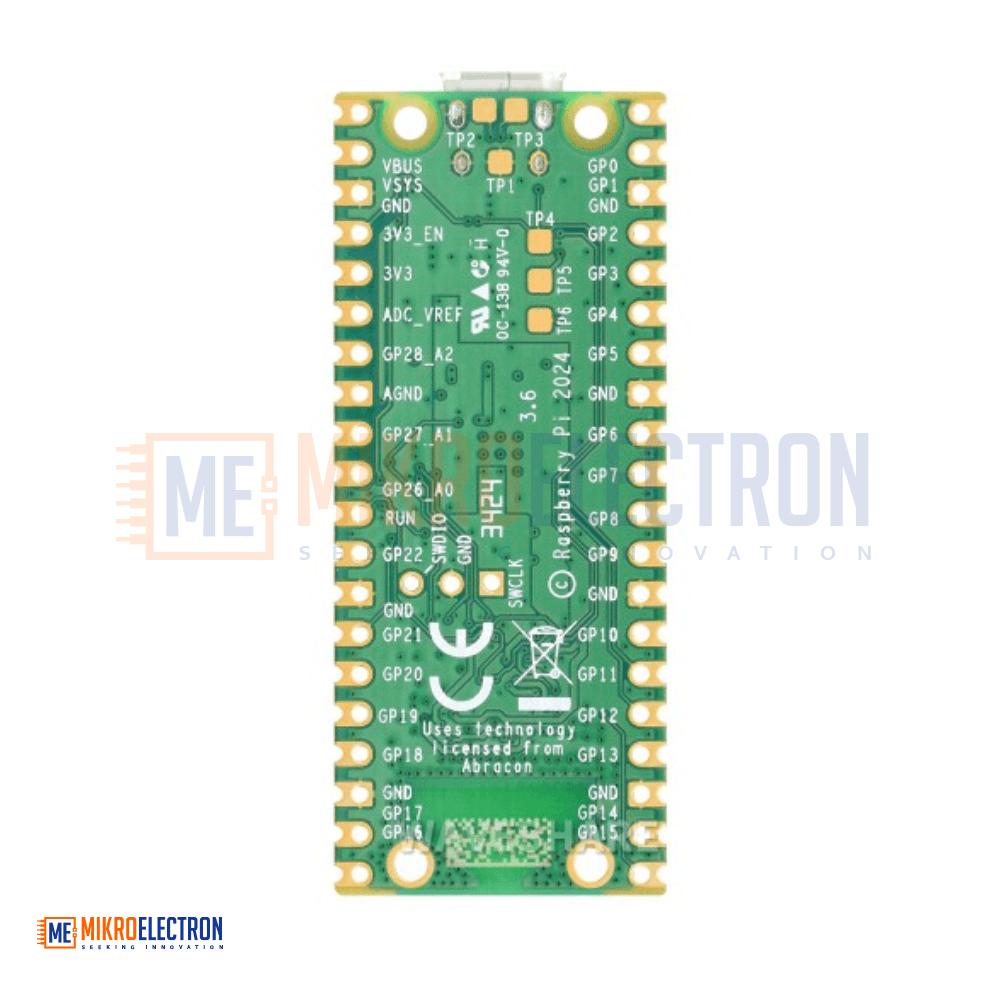
| ADC | 3 Analog Inputs |
| PIO State Machines | 12 |
| Programming Languages | C/C++, MicroPython |
| Programming Method | USB Mass Storage (Drag-and-Drop) |
| Input Voltage | 1.8V – 5.5V DC |
| Operating Temperature | -20°C to +85°C |
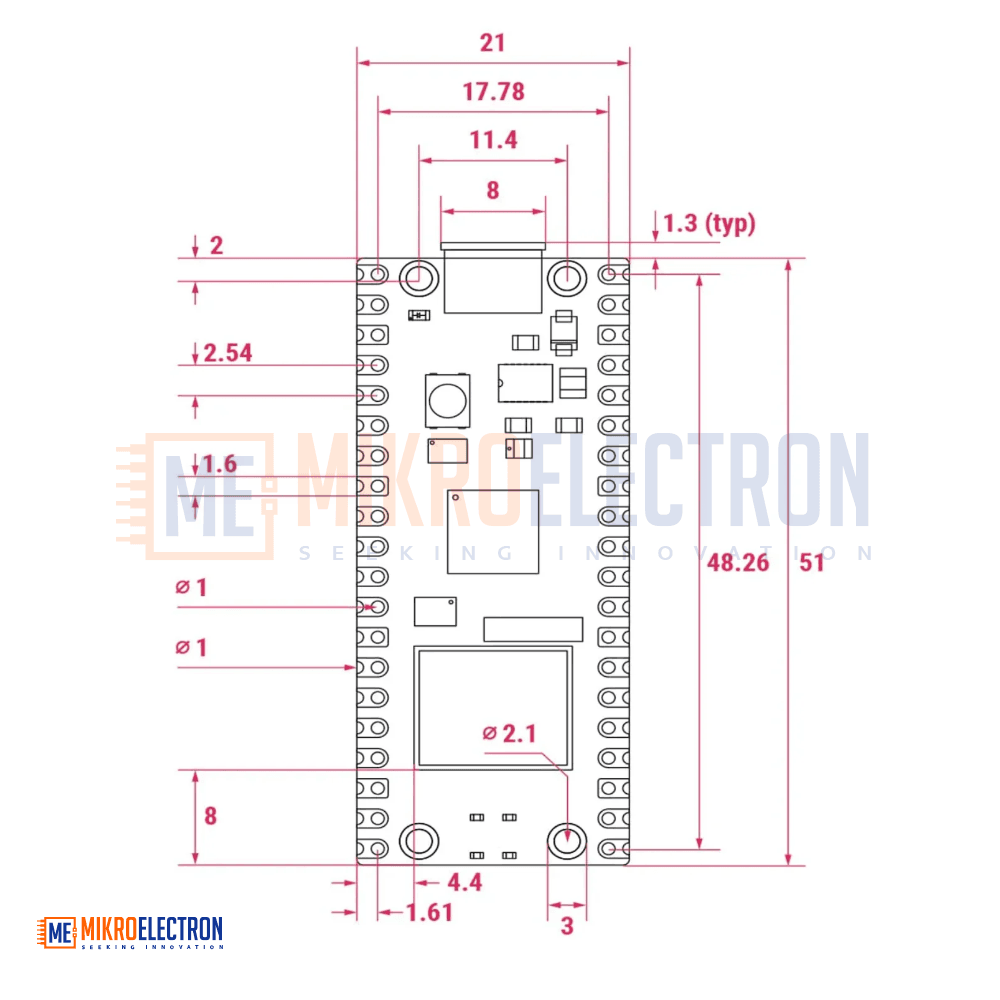
| Board Mounting | Castellated Edge for Direct Soldering |
Applications
- Internet of Things (IoT) devices
- Wireless sensor networks
- Smart home automation
- Industrial monitoring systems
- Robotics and automation
- Embedded system development
- Remote data logging
- Environmental monitoring
- Wearable electronics
- Educational programming and STEM projects
- Wireless communication projects
- Custom controller development