


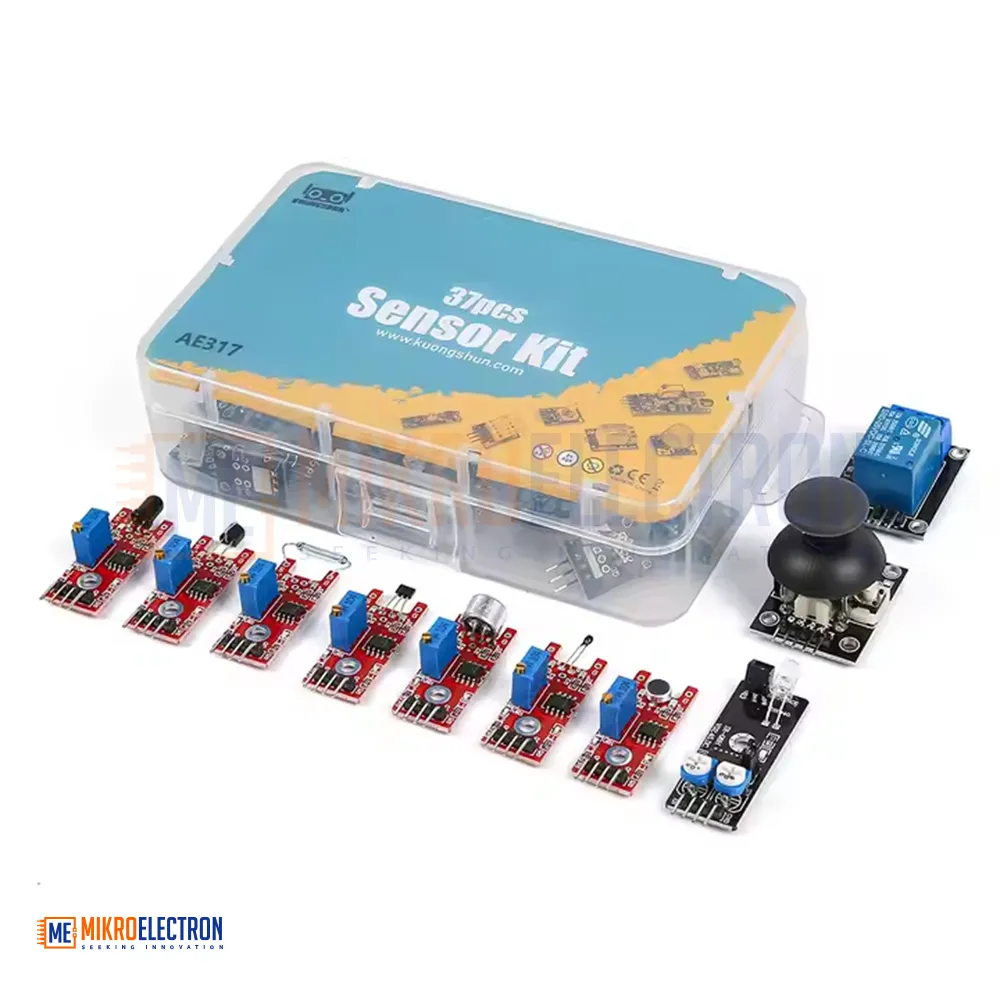
37 Sensor Modules Kit with Tutorial Compatible with Arduino
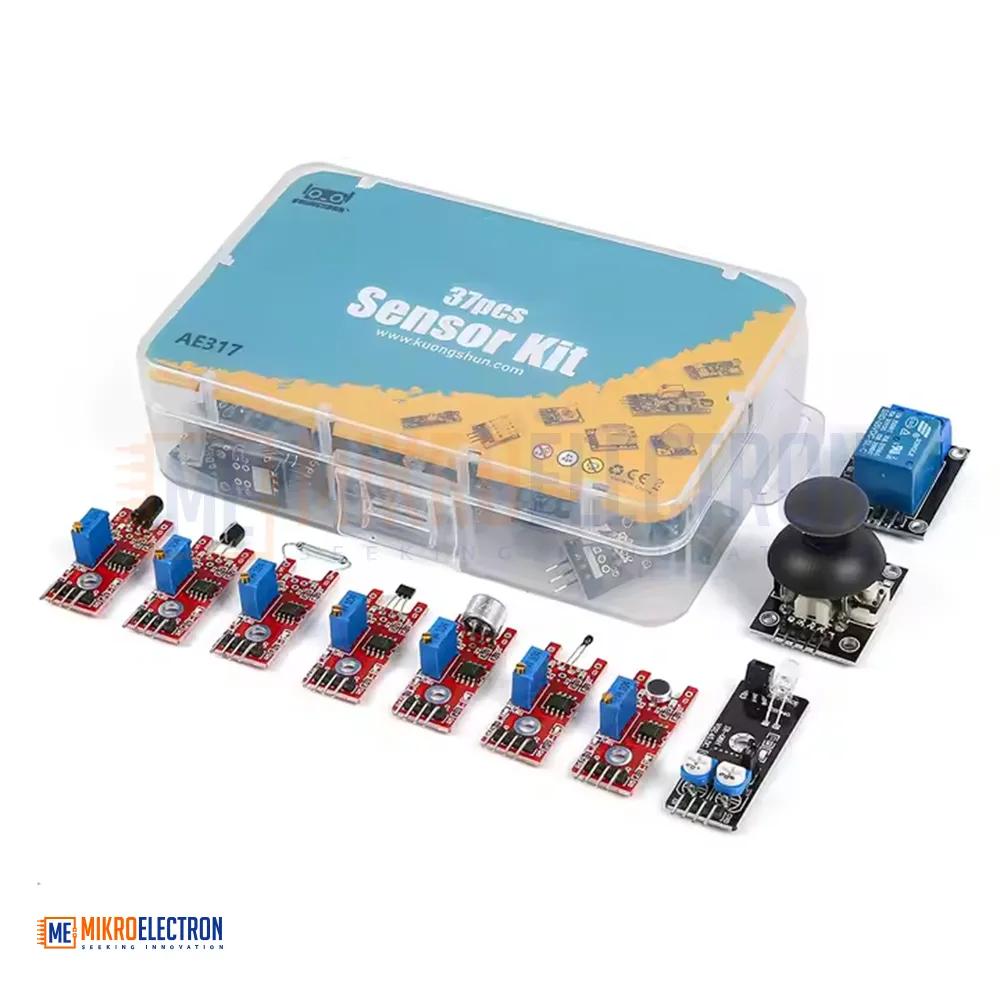
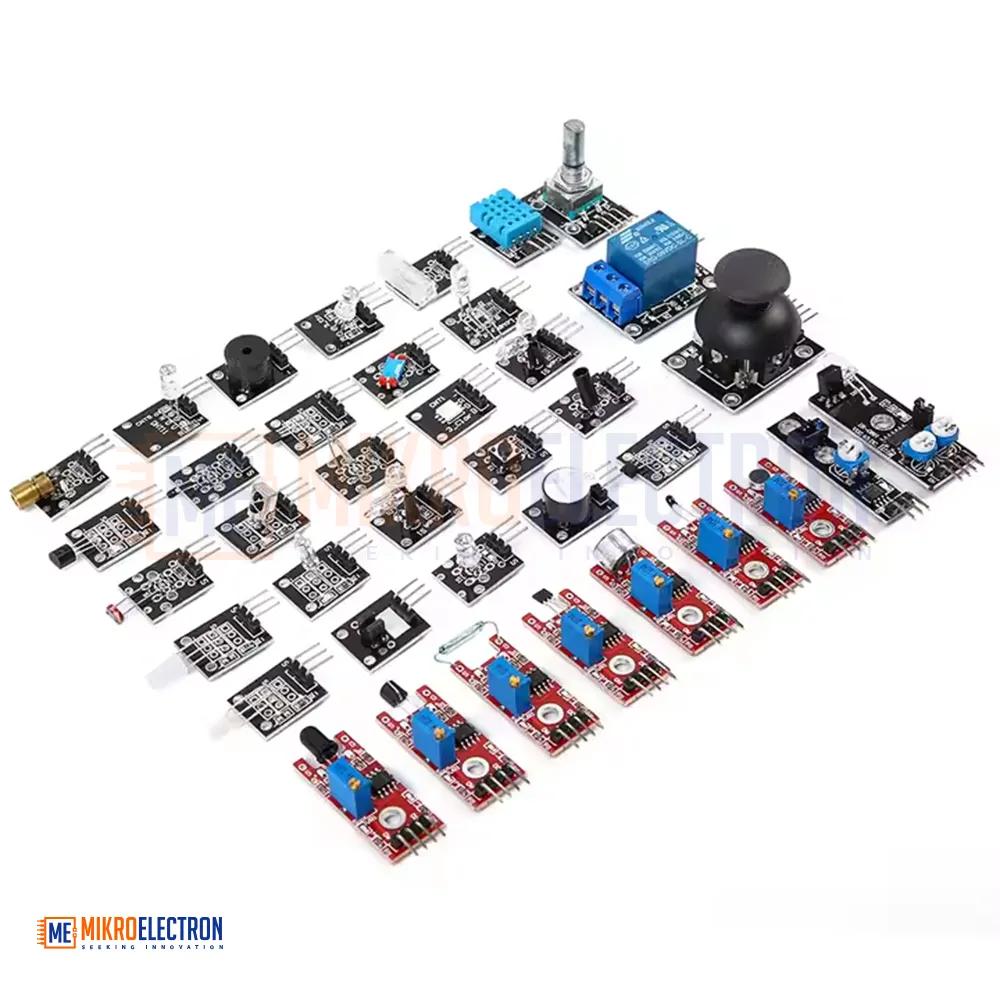
The 37-in-1 Sensor Modules Kit (AE317) is a comprehensive collection of 37 different sensor and module boards designed for learning, prototyping, and DIY projects with Arduino and other microcontrollers. The kit includes temperature, humidity, motion, light, sound, magnetic, and touch sensors, along with relays, buzzers, LEDs, and a joystick. Each module is ready to connect and comes packaged in an organized storage case for easy access. Ideal for students, hobbyists, and educators, this kit provides everything needed to explore a wide variety of electronics and IoT experiments in a single, well-organized package.
طقم وحدات الحساسات 37 في 1 (AE317) هو مجموعة شاملة تضم 37 لوحة حساس ووحدة مختلفة مصممة للتعلّم والنماذج الأولية ومشاريع DIY مع Arduino وغيره من المتحكمات الدقيقة. يشمل الطقم حساسات للحرارة والرطوبة والحركة والضوء والصوت والمغناطيس واللمس، إضافةً إلى رِليهات وأجراس وLEDs وذراع تحكم (Joystick). كل وحدة جاهزة للتوصيل وتأتي معبأة في علبة تخزين منظّمة لسهولة الوصول. مثالي للطلاب والهواة والمعلّمين، يوفّر هذا الطقم كل ما يلزم لاستكشاف مجموعة واسعة من تجارب الإلكترونيات وإنترنت الأشياء في حزمة واحدة منظّمة بإتقان.
The 37-in-1 Sensor Modules Kit (Model AE317) is an all-in-one electronics learning package containing 37 distinct sensor and module boards compatible with Arduino, Raspberry Pi, and other popular microcontroller platforms. Whether you are a beginner taking your first steps into electronics or an experienced maker building advanced projects, this kit offers a broad foundation of components in a single, neatly organized box.
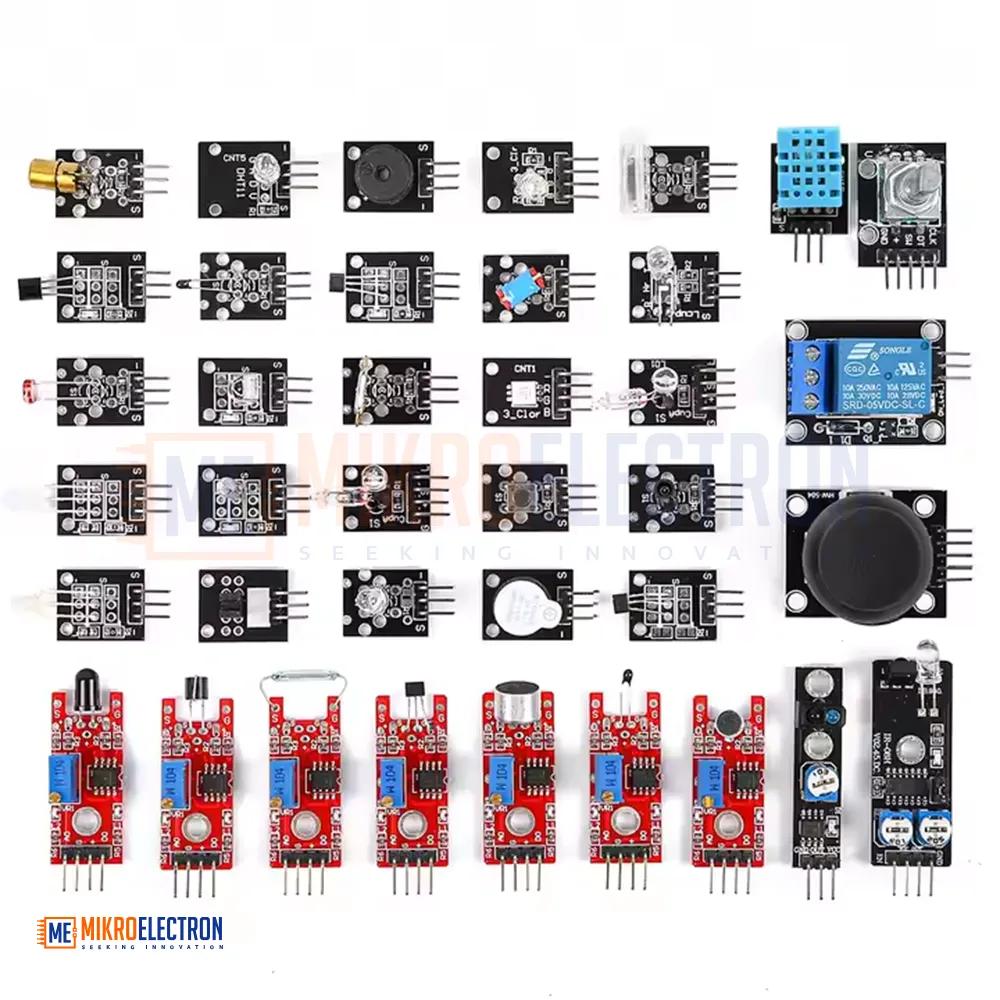
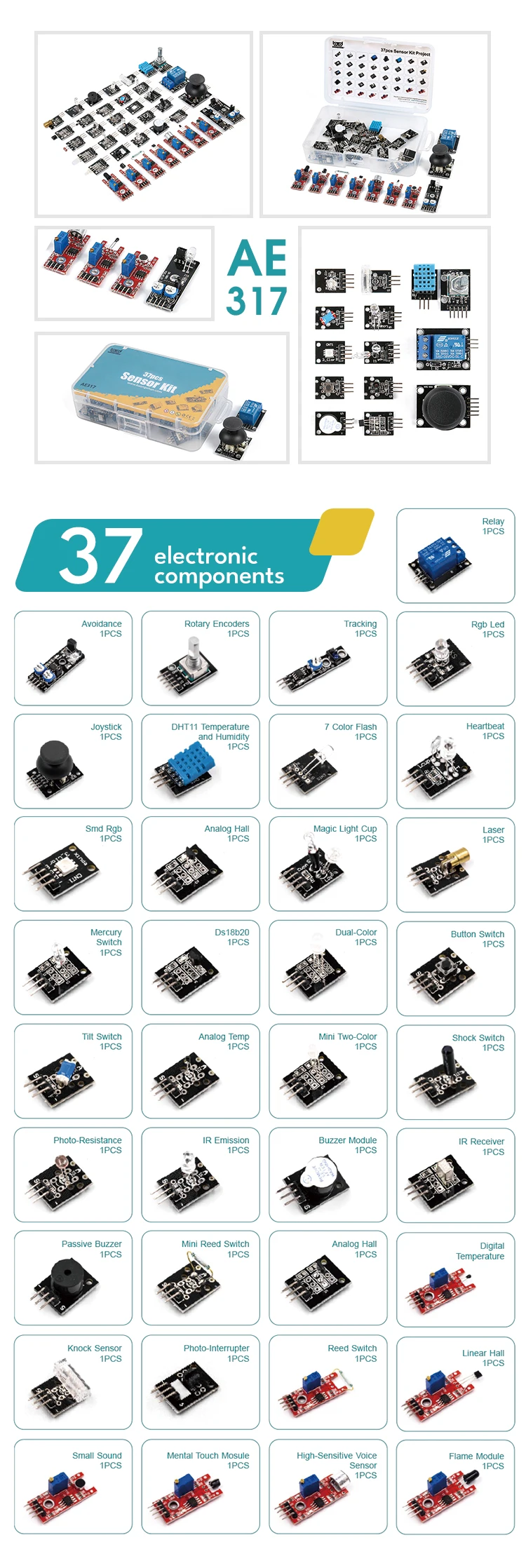
The collection covers a wide range of sensing and output functions. It includes environmental sensors such as the DHT11 temperature and humidity sensor, analog and digital temperature sensors, and the DS18B20. For motion and position detection, it offers tilt switches, shock switches, mercury switches, and a joystick module. Light and optical components include photo-resistance, laser, IR emission and receiver, photo-interrupter, and various LED modules (RGB, SMD RGB, dual-color, and 7-color flash). The kit also provides sound and signal modules like the active and passive buzzers, knock sensor, small sound sensor, and high-sensitive voice sensor, plus magnetic sensors (analog Hall, linear Hall, reed switch), a relay module, button switch, touch module, and flame module.
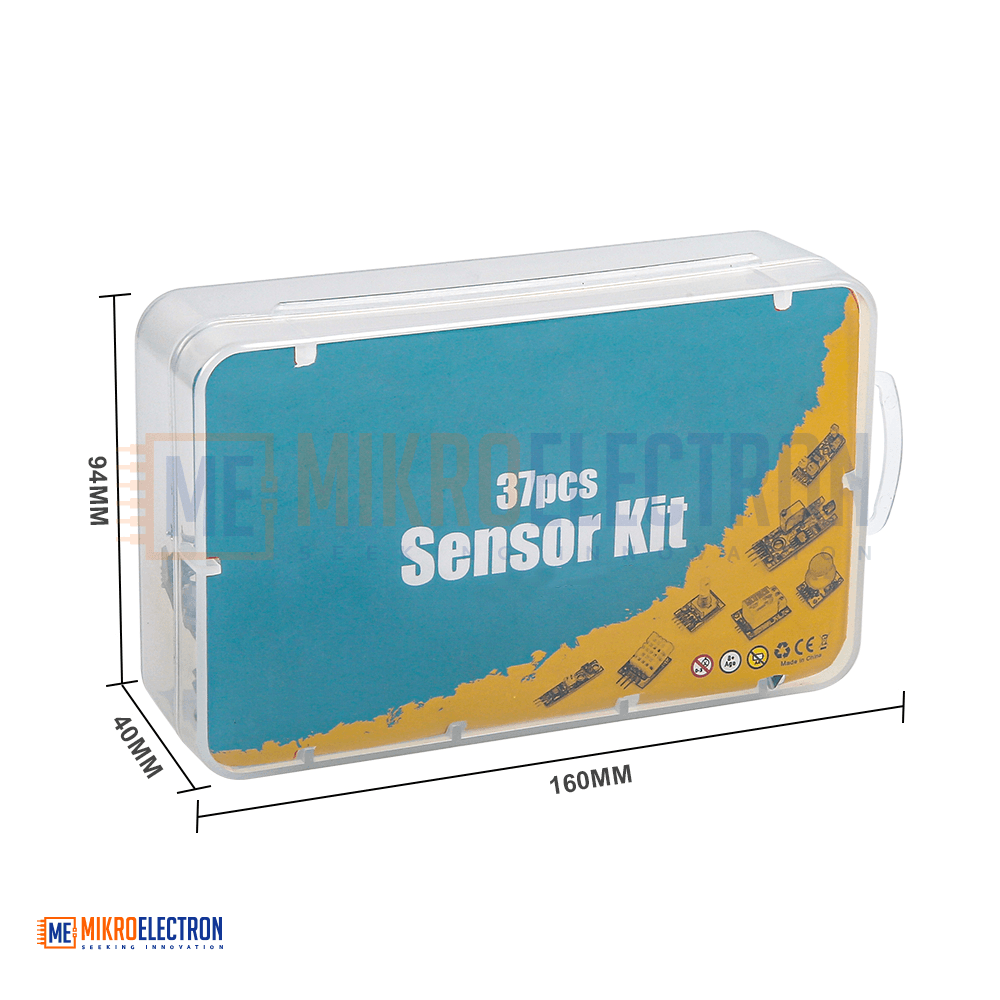
Each module is built on a compact PCB with clearly labeled pins, making wiring straightforward. Packaged in a transparent compartmentalized storage case, the kit keeps all components organized and protected. This makes it an excellent choice for STEM education, classroom teaching, electronics courses, and personal experimentation.
Specifications
| Specification | Details |
|---|---|
| Model | AE317 |
| Number of Modules | 37 pieces |
| Compatibility | Arduino, Raspberry Pi, and other microcontrollers |
| Quantity per Module | 1 PCS each |
| Operating Voltage | Typically 3.3V – 5V (varies by module) |
| Storage | Transparent compartmentalized plastic case |
| Application | Learning, prototyping, DIY, STEM education |
Included Modules (37 Pieces)
| # | Module | # | Module |
|---|---|---|---|
| 1 | Relay | 20 | Analog Temp |
| 2 | Avoidance (Obstacle) | 21 | Mini Two-Color |
| 3 | Rotary Encoder | 22 | Shock Switch |
| 4 | Tracking | 23 | Photo-Resistance |
| 5 | RGB LED | 24 | IR Emission |
| 6 | Joystick | 25 | Buzzer Module (Active) |
| 7 | DHT11 Temperature & Humidity | 26 | IR Receiver |
| 8 | 7-Color Flash | 27 | Passive Buzzer |
| 9 | Heartbeat | 28 | Mini Reed Switch |
| 10 | SMD RGB | 29 | Analog Hall |
| 11 | Analog Hall | 30 | Digital Temperature |
| 12 | Magic Light Cup | 31 | Knock Sensor |
| 13 | Laser | 32 | Photo-Interrupter |
| 14 | Mercury Switch | 33 | Reed Switch |
| 15 | DS18B20 | 34 | Linear Hall |
| 16 | Dual-Color | 35 | Small Sound |
| 17 | Button Switch | 36 | Metal Touch Module |
| 18 | Tilt Switch | 37 | High-Sensitive Voice Sensor |
| 19 | (Flame Module) | — | — |
Applications
- STEM education and electronics teaching in schools and universities
- Arduino and Raspberry Pi prototyping and learning projects
- Building DIY and IoT projects with diverse sensing capabilities
- Experimenting with temperature, humidity, light, sound, and motion sensing
- Developing robotics and automation projects
- Hobbyist and maker experimentation and rapid prototyping
- Hands-on workshops and electronics training courses