

DC-DC XL4015 Adjustable Step-down Module 5A 75W with 4 Bits Digital Display Voltmeter with USB Output
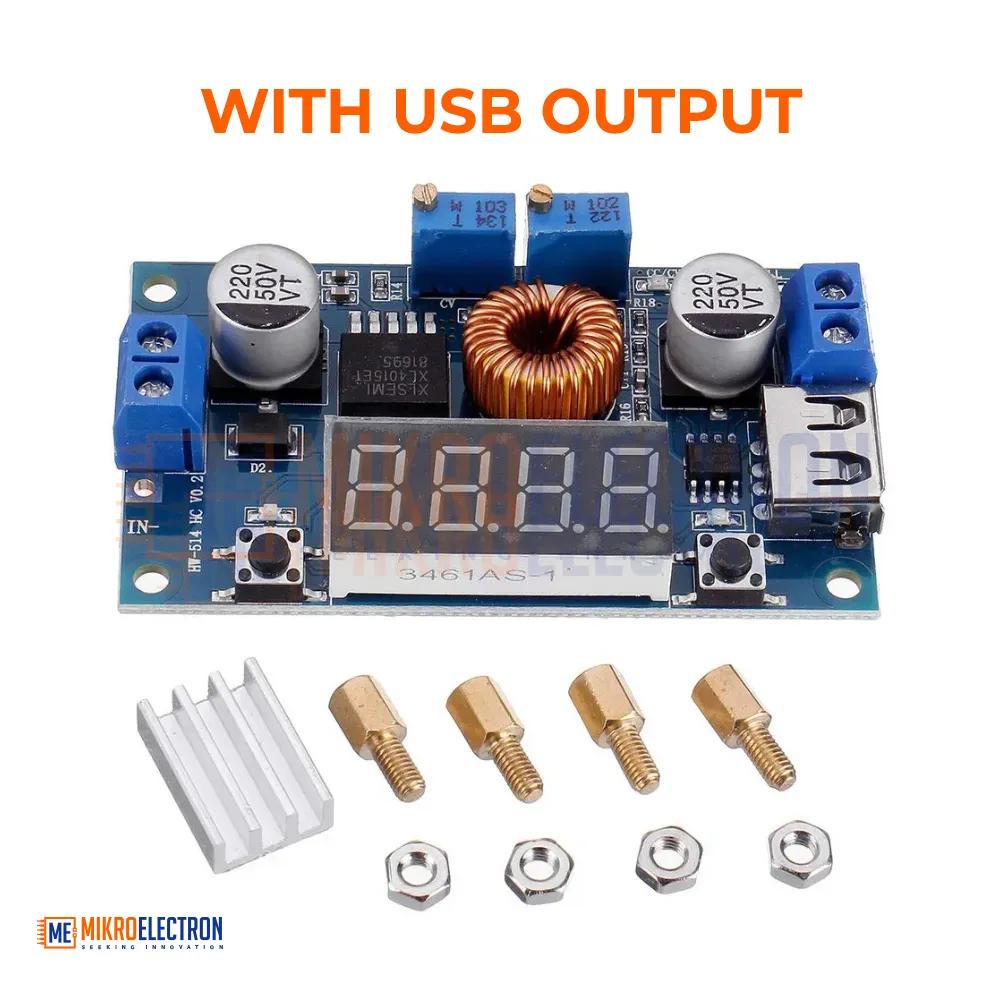
XL4015 DC-DC Adjustable Step-Down Buck Module, 5A / 75W, with a built-in 4-digit digital voltmeter and USB output. It accepts a wide 5–36V input and provides a continuously adjustable 1.25–32V output at up to 5A, with up to 96% efficiency. The onboard meter, dual indicator LEDs, short-circuit and over-temperature protection make it ideal for DIY power supplies, battery charging, and LED driving. Includes heat sink and mounting hardware.
وحدة خافض جهد XL4015 قابلة للضبط بقوة 5 أمبير / 75 واط، مزوّدة بفولتميتر رقمي بأربع خانات ومخرج USB. تقبل مدخلاً واسعاً من 5 إلى 36 فولت وتوفّر خرجاً قابلاً للضبط من 1.25 إلى 32 فولت بتيار يصل إلى 5 أمبير وبكفاءة تصل إلى 96%. يجعلها العدّاد المدمج ومؤشرات LED والحماية من القصر وارتفاع الحرارة مثالية لمصادر الطاقة اليدوية وشحن البطاريات وتشغيل إضاءة LED. تشمل مشتت حراري وقطع تركيب.
The XL4015 Adjustable Step-Down (Buck) Module is a versatile, high-power DC-DC converter that takes a higher input voltage and steps it down to a stable, lower output voltage. It is built around the XL4015 switching regulator, operating at 180KHz with a non-isolated buck topology for high efficiency and low ripple.
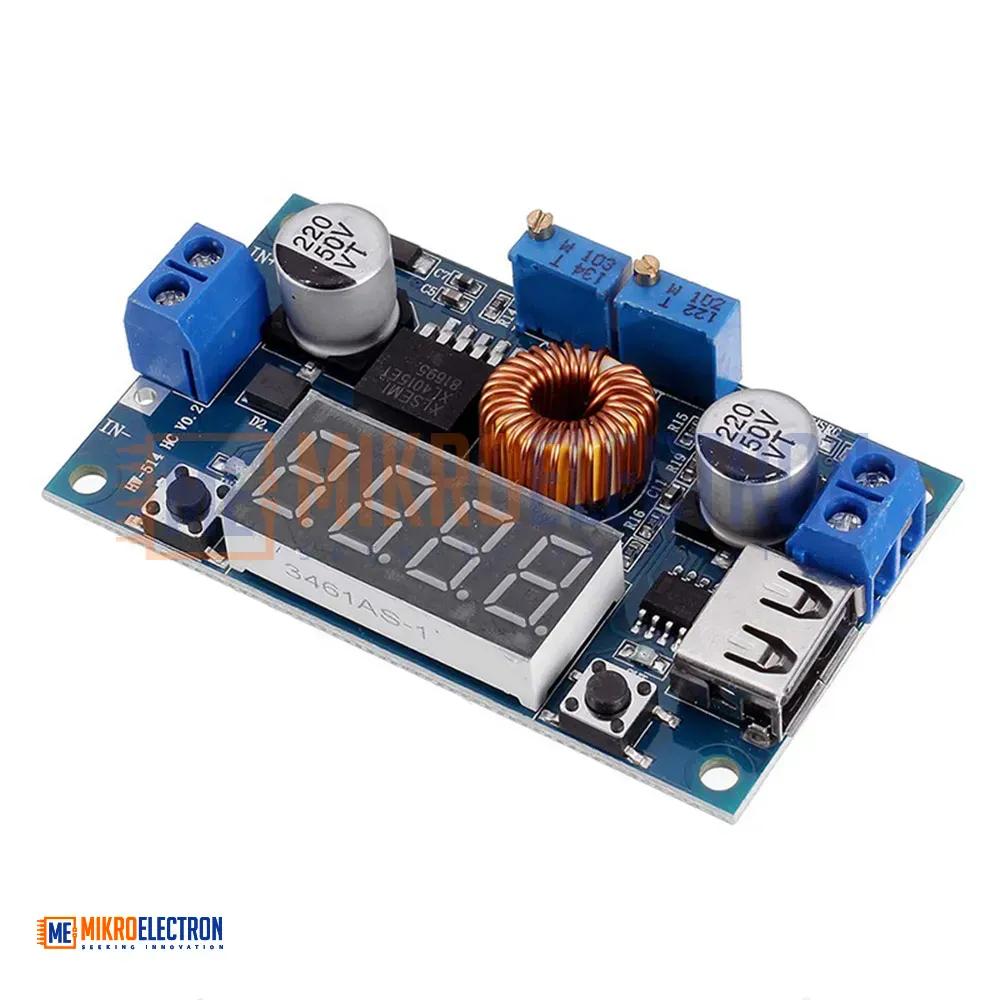
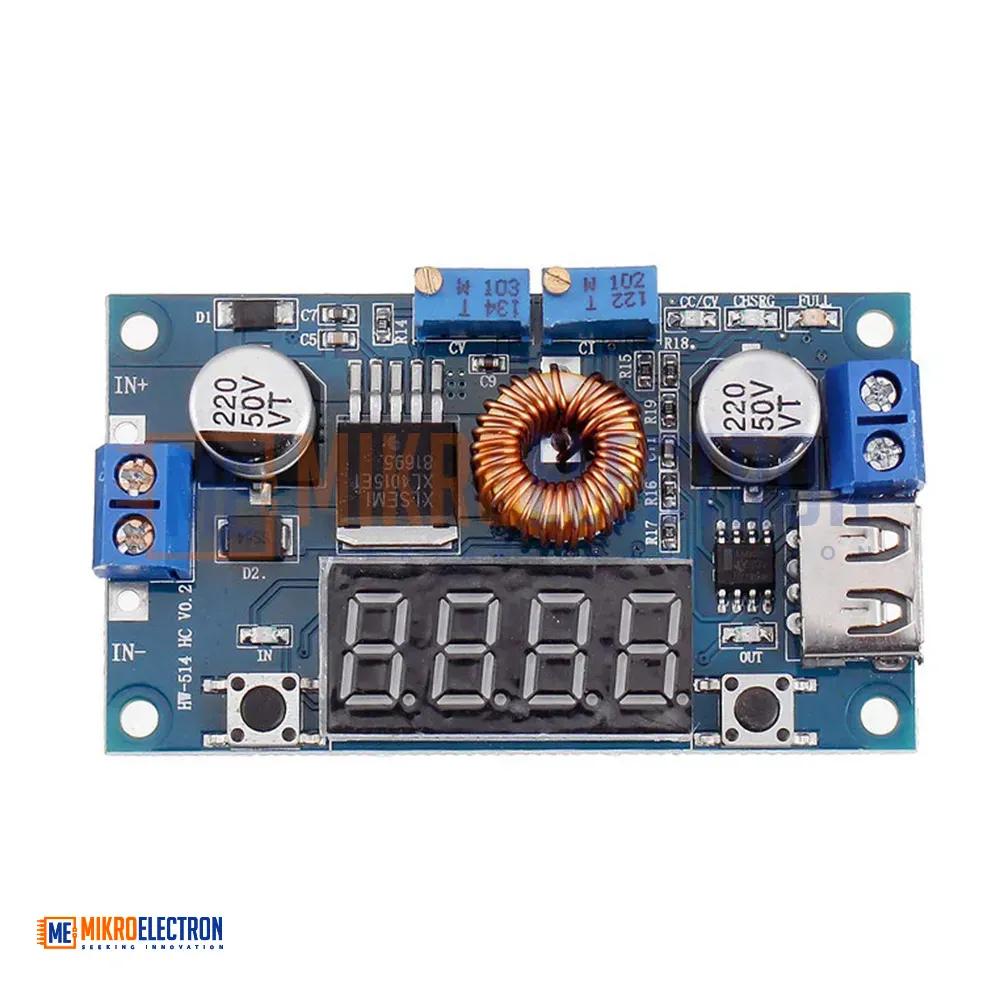
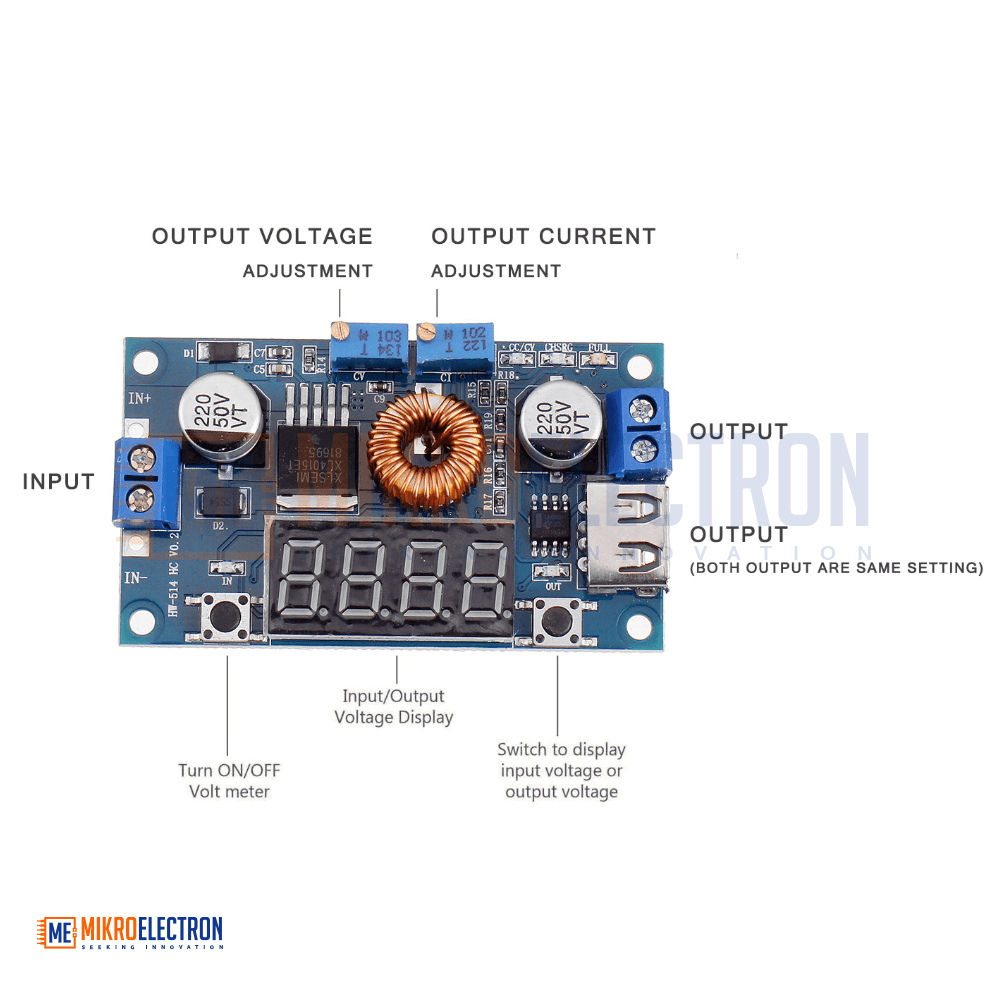
A key feature of this module is the onboard 4-digit digital voltmeter, which lets you monitor either the input or output voltage without needing a separate multimeter. A short press of the right button switches the meter between input and output measurement, with two dedicated LED indicators showing which value is displayed, while a green power indicator LED confirms the module is live. The voltmeter offers a precision of ±0.1V and self-calibration, though it will not display readings when the input drops below 4V.
The output is set with a high-precision multi-turn potentiometer (clockwise to increase, anticlockwise to decrease), allowing a smooth adjustable range of 1.25V to 32V. The module supports a rated 4A and a maximum of 5A output, delivering up to 75W, and includes short-circuit current limiting (around 8A) so the board survives an accidental output short. With its included heat sink and copper standoffs, it can run as a general step-down supply, a lithium/NiCd/NiMH battery charger, or a high-power constant-current LED driver.
Specifications
- Module Type: Non-isolated step-down (BUCK) switching regulator
- Main IC: XL4015
- Input Voltage: DC 5.0 – 36V
- Output Voltage: Adjustable 1.25 – 32V DC (input must be at least 1.5V higher than output)
- Output Current: Rated 4A, maximum 5A (heat sink required above ~4.5A)
- Output Power: 75W maximum (recommended ≤50W with large voltage difference)
- Conversion Efficiency: Up to 96%
- Minimum Dropout Voltage: 1.5V
- Voltage Regulation: 0.8%
- Display: 4-digit digital voltmeter, ±0.1V accuracy (keep input above 4.5V for best accuracy)
- Switching Frequency: 180KHz
- Short-Circuit Protection: Yes (current limited to ~8A)
- Over-Temperature Protection: Yes (output shuts off automatically)
- Input Reverse Protection: None (add a series high-current diode if needed)
- Operating Temperature: −40°C to +85°C (industrial grade)
- Wiring: Screw terminal or solder pads; V-IN for input, V-OUT for output
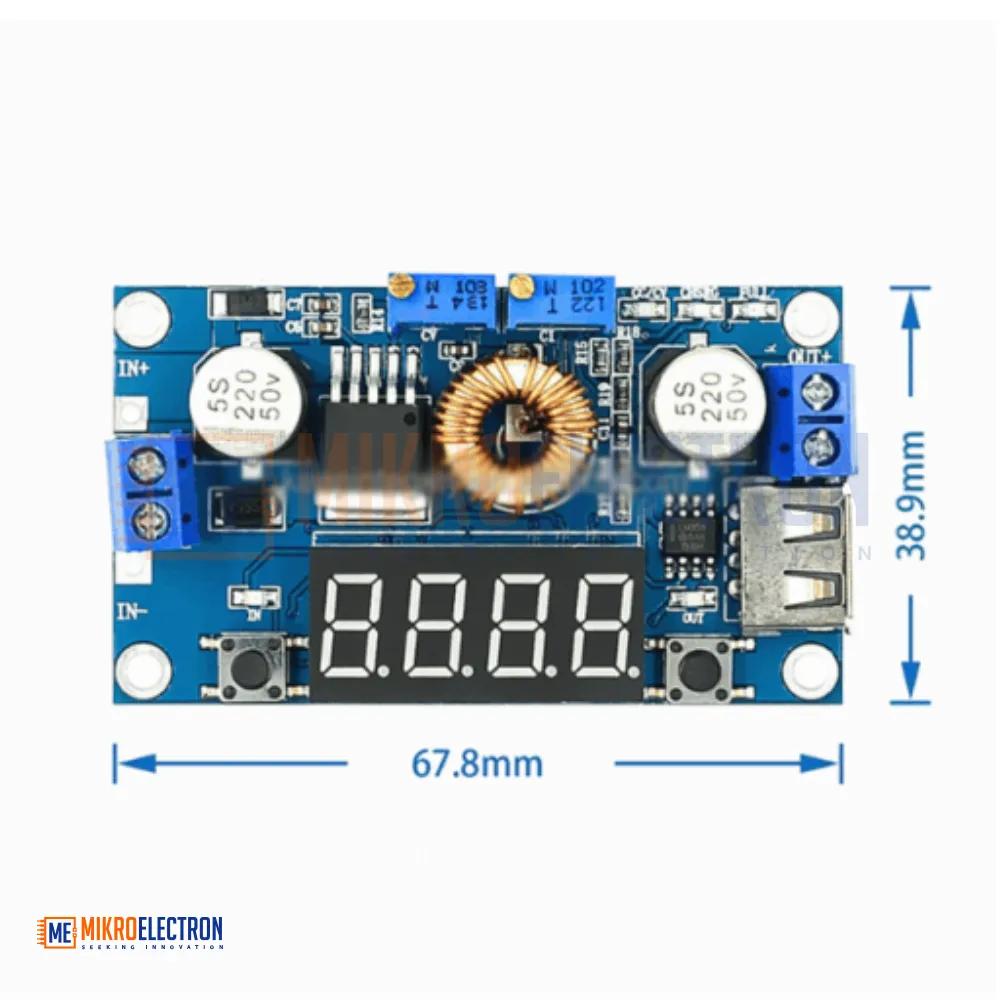
- Size: 68.2 × 38.8 × 14 mm (including terminals)
- Mounting: 4 × 3mm screw holes
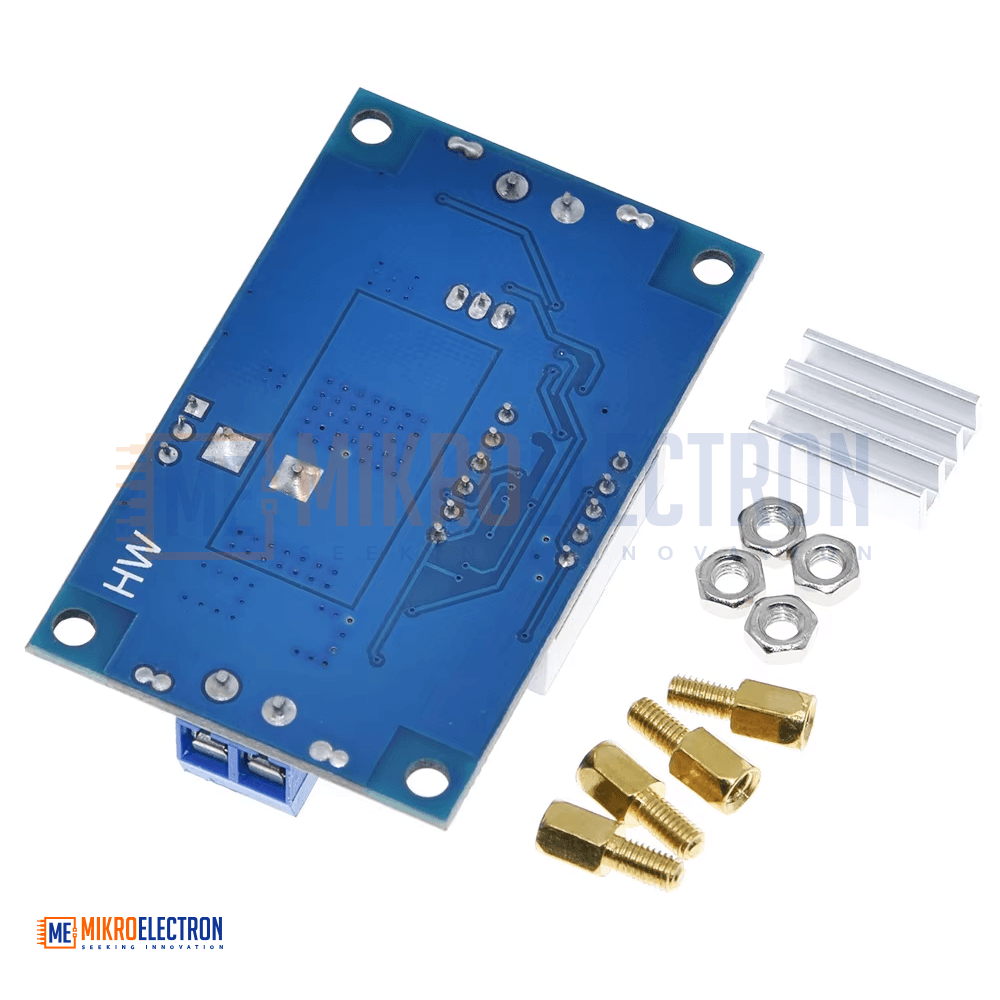
- Included: Heat sink, copper standoffs, and nuts
Note: Keep the input at least 1.5V above your desired output, and use the supplied heat sink when running near full current to avoid the over-temperature shutdown. The USB output follows the adjustable output voltage, so set it to 5V before charging any USB device.
Applications
- DIY adjustable bench and project power supplies
- Battery charging for lithium, NiCd, and NiMH packs (solar, wind, and off-grid setups)
- High-power constant-current LED drivers
- Automotive voltage step-down, such as 24V to 12V or 12V to 5V/3.3V
- Stepping down power transformers and adapters to a custom voltage
- Powering microcontrollers, sensors, and modules from a higher supply
- Charging digital devices via the onboard USB port