
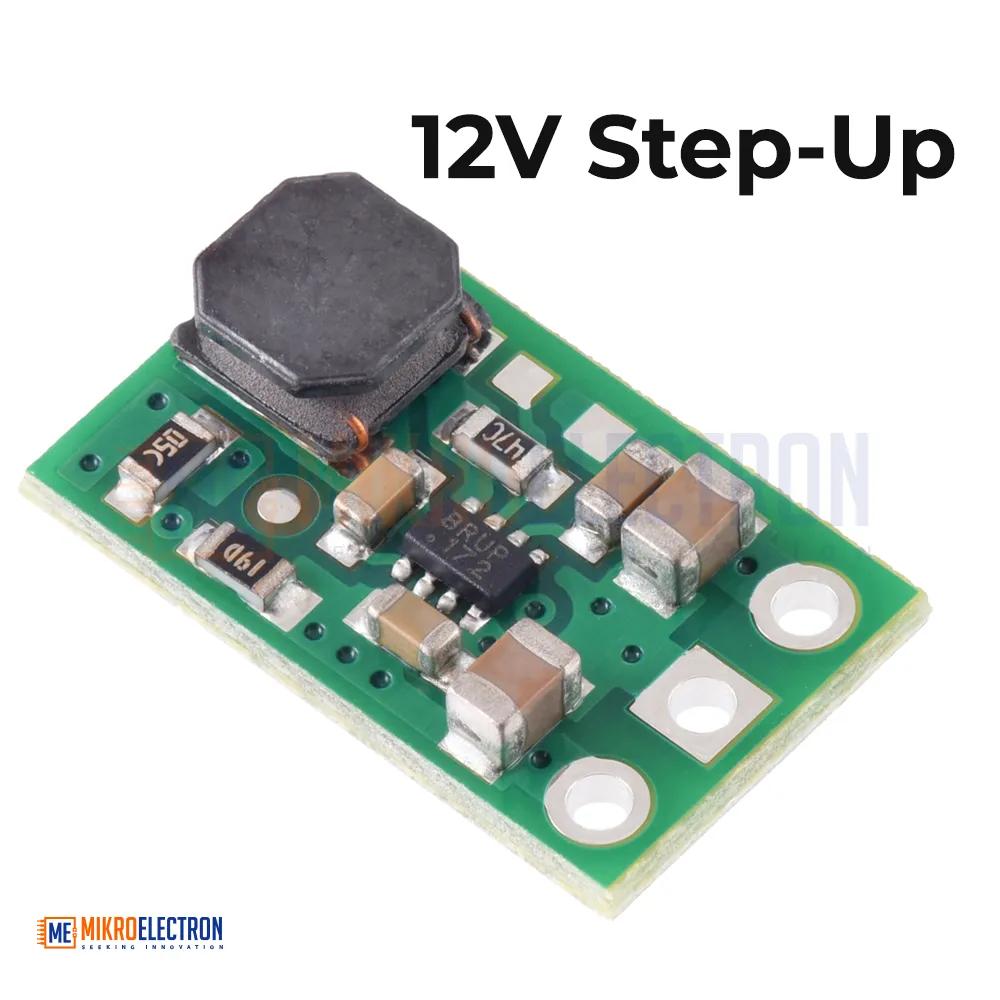
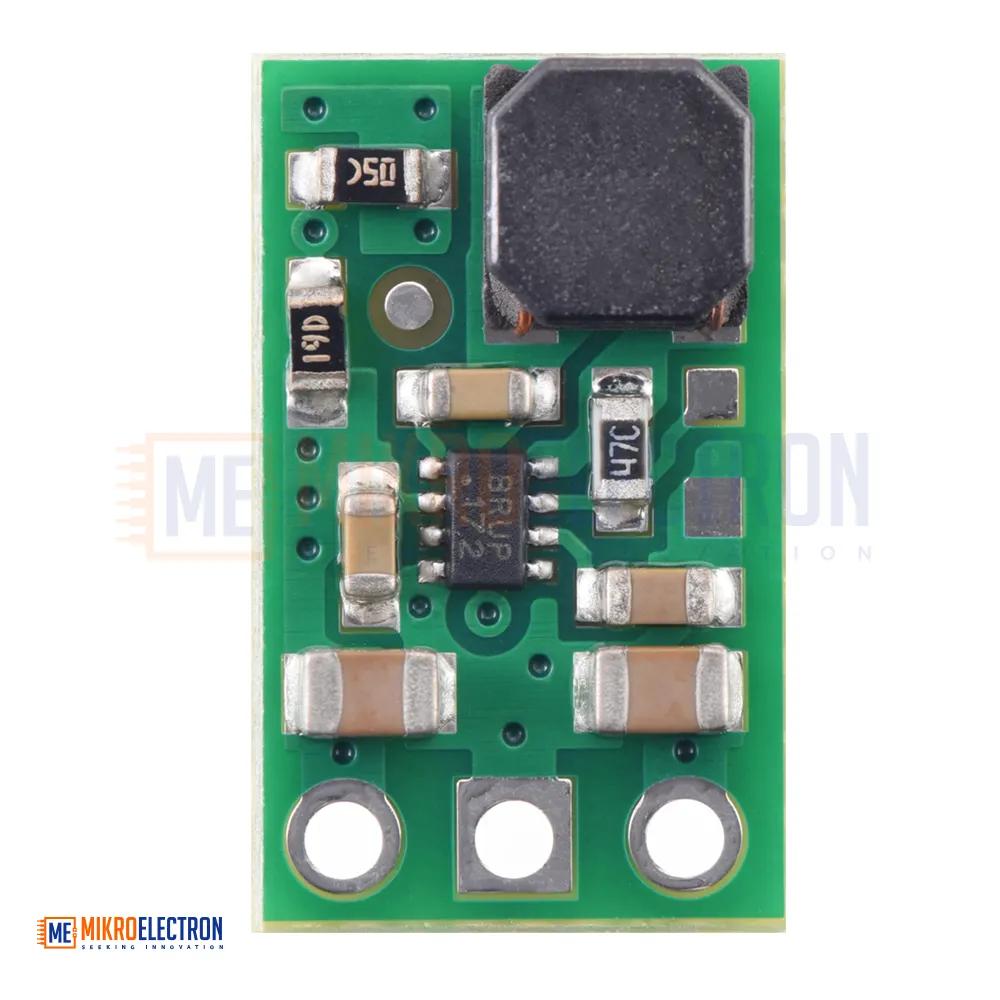
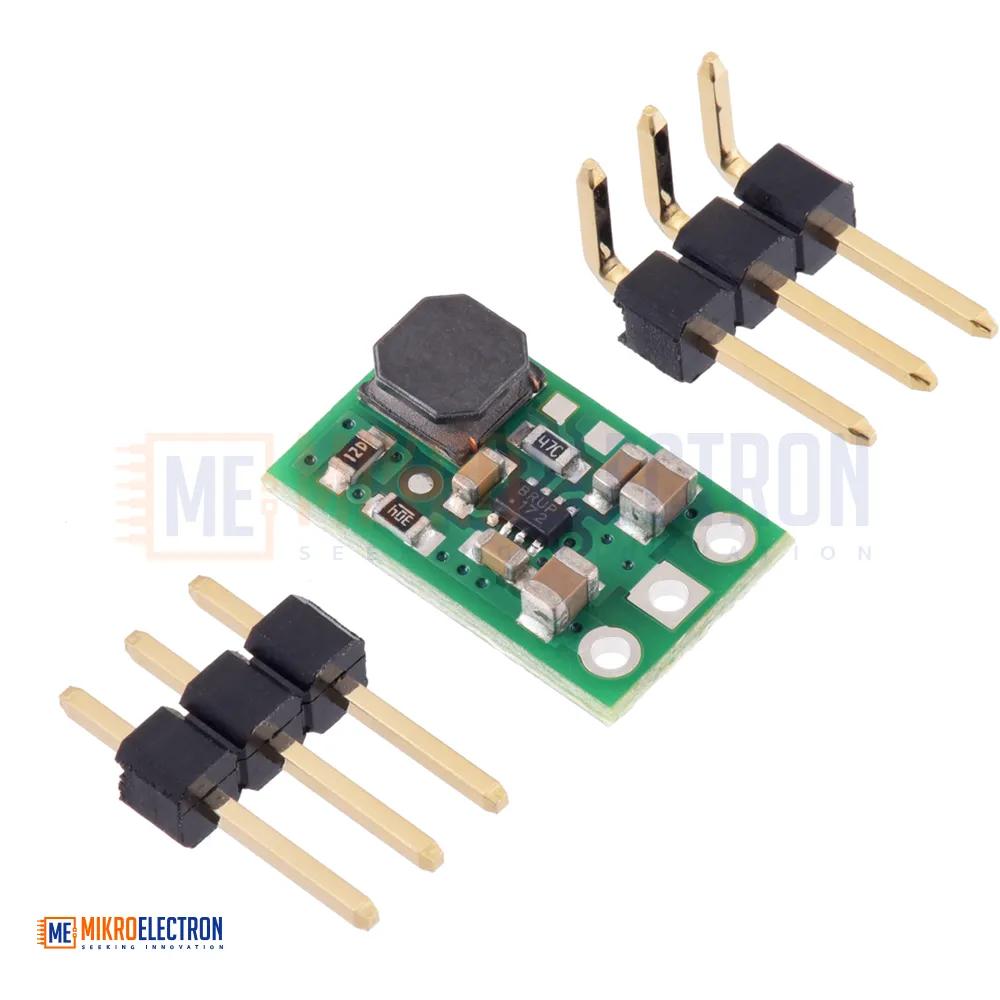
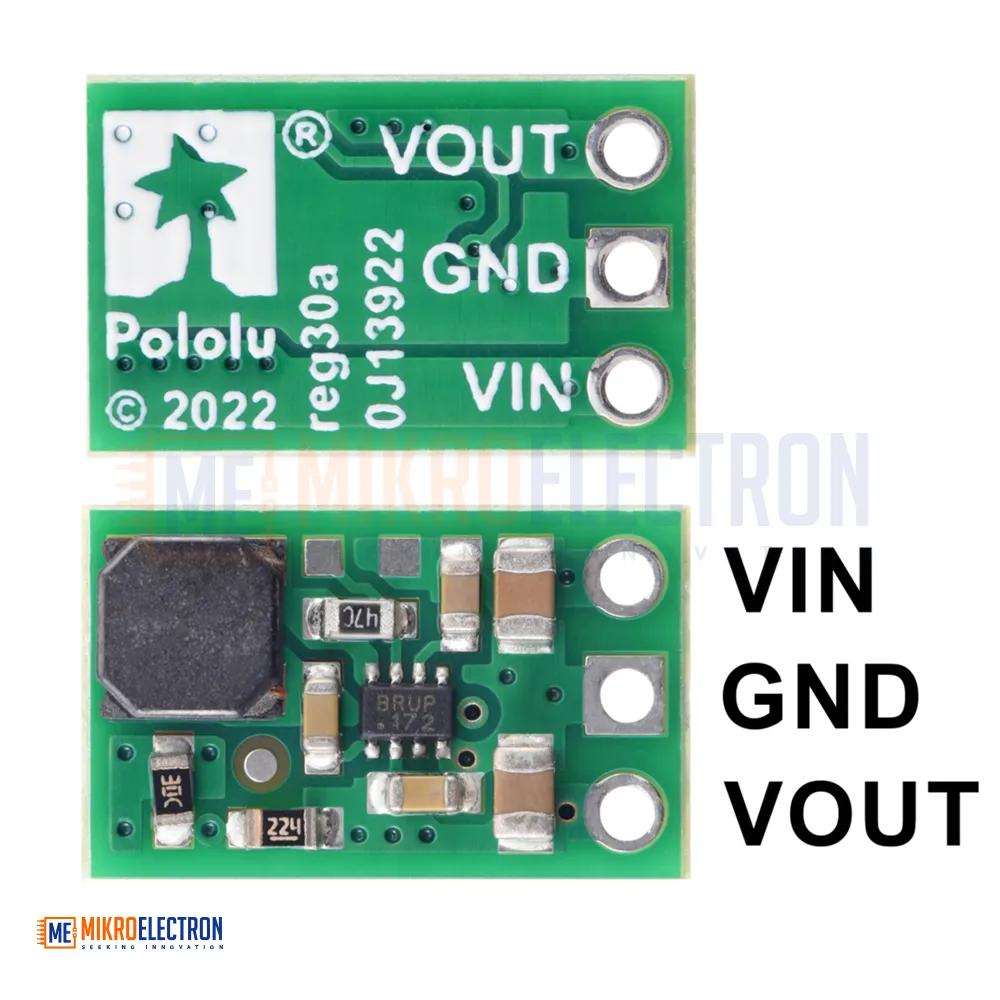
Pololu 12V Step-Up Voltage Regulator U3V16F12
Out Of Stock
The U3V16Fx family of boost (step-up) voltage regulators generate higher output voltages from input voltages as low as 1.3 V. (Note: The minimum start-up voltage is 2.7 V; see the connections section for details.) They are switching regulators (also called switched-mode power supplies (SMPS) or DC-to-DC converters) and have a typical efficiency between 85% to 95%.
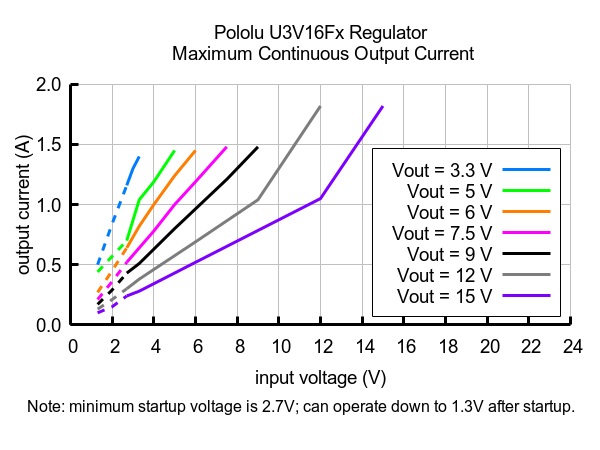
The regulators actively limit the instantaneous input currents to 2 A when boosting, and input currents up to around 1.6 A can typically be maintained for many minutes without triggering thermal shutdown, though the actual performance depends on the input and output voltages as well as external factors such as ambient temperature and airflow. For boost regulators, the output current equals the input current times the efficiency divided by the boost ratio of VOUT to VIN, so the more you are boosting, the lower the maximum output current will be (see the maximum continuous output current section below for performance graphs).
These regulators feature a variety of built-in protections, including cycle-by-cycle input current limiting, under-voltage lockout, and over-temperature shutdown.
Dimensions
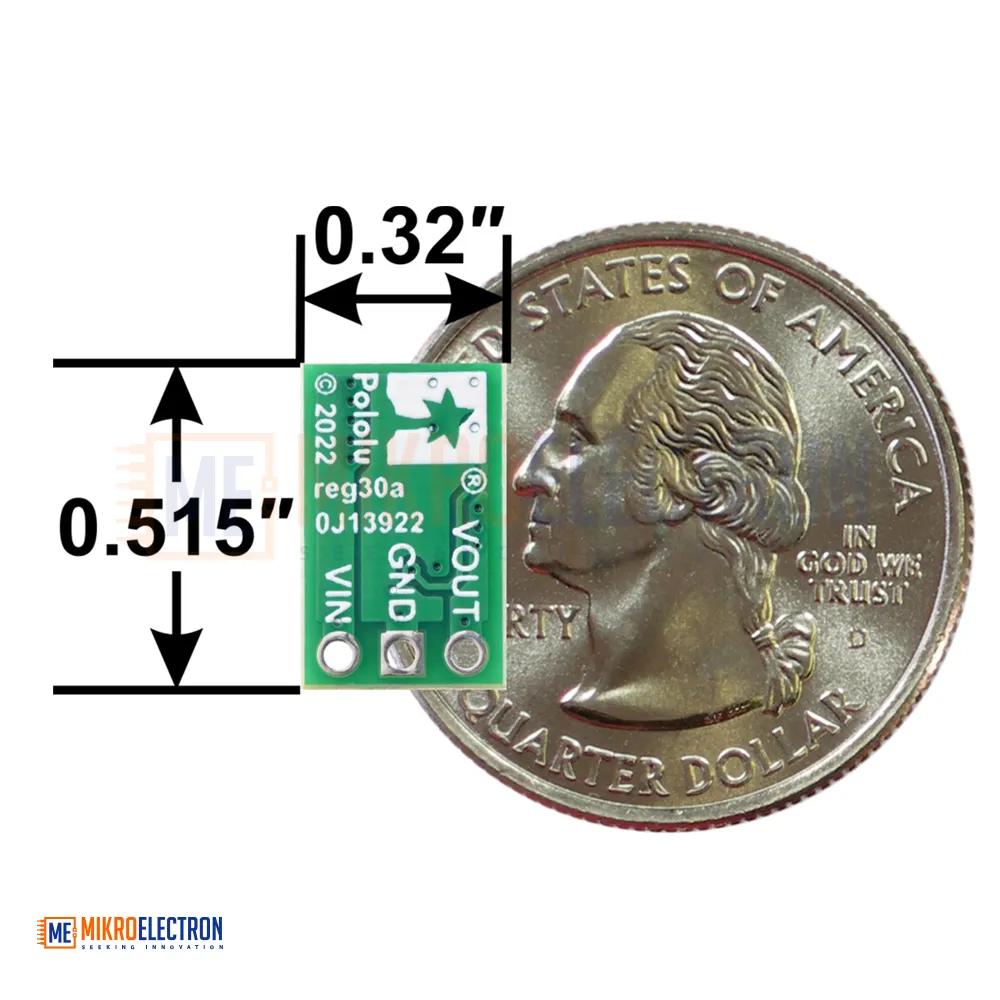
Size: 0.32″ × 0.515″ × 0.1″
Weight: 0.4 g
General Specifications
Minimum Operating Voltage: 1.3 V
Maximum Operating Voltage: 16 V
Maximum Input Current: 2 A
Output Voltage: 15 V
Reverse Voltage Protection: No
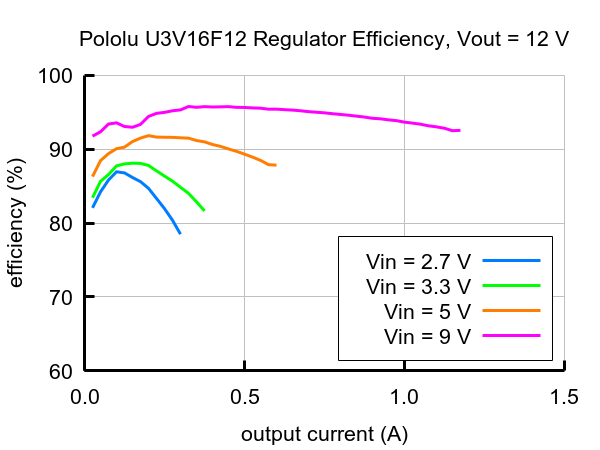
Typical efficiency
The efficiency of a voltage regulator, defined as (Power out)/(Power in), is an important measure of its performance, especially when battery life or heat are concerns.
 |
Maximum continuous output current
The maximum achievable output current is approximately proportional to the ratio of the input voltage to the output voltage. Additionally, the maximum output current can depend on other factors, including the ambient temperature and air flow. The graph below shows the typical maximum continuous output currents these regulators can deliver at room temperature with no forced airflow or heat sinking.
 |
During normal operation, this product can get hot enough to burn you. Take care when handling this product or other components connected to it.
Quiescent current
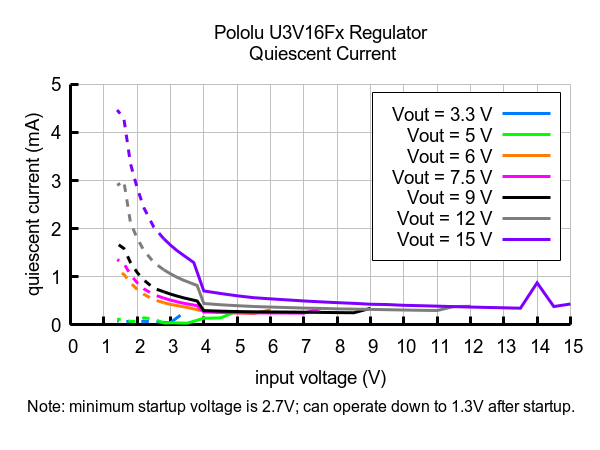
The quiescent current is the current the regulator uses just to power itself, and the graph below shows this for the different regulator versions as a function of the input voltage.
 |
LC Voltage Spikes
When connecting voltage to electronic circuits, the initial rush of current can cause damaging voltage spikes that are much higher than the input voltage. In our tests with this family of regulator connected with typical power leads (~30″ test clips), we found that input voltages up to 9 V did not generally cause spikes high enough to damage the regulator itself, but even lower input voltages did cause spikes that could still be problematic for boost regulators operating with the input voltage close to the set output voltage, since input voltages above the set output voltage will propagate to the output and could damage circuits being powered by the regulator. An electrolytic capacitor (33 μF is a good starting point) can be added close to the regulator between VIN and GND to help suppress these spikes.