
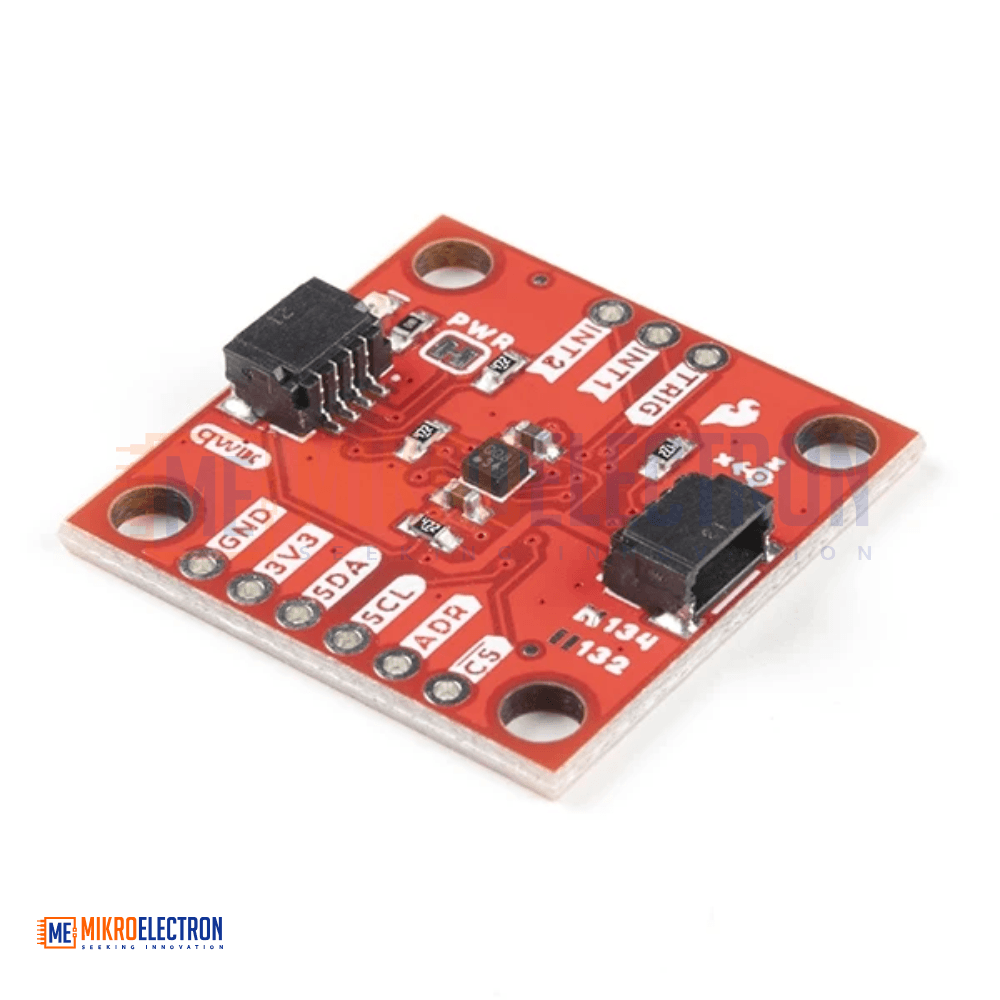
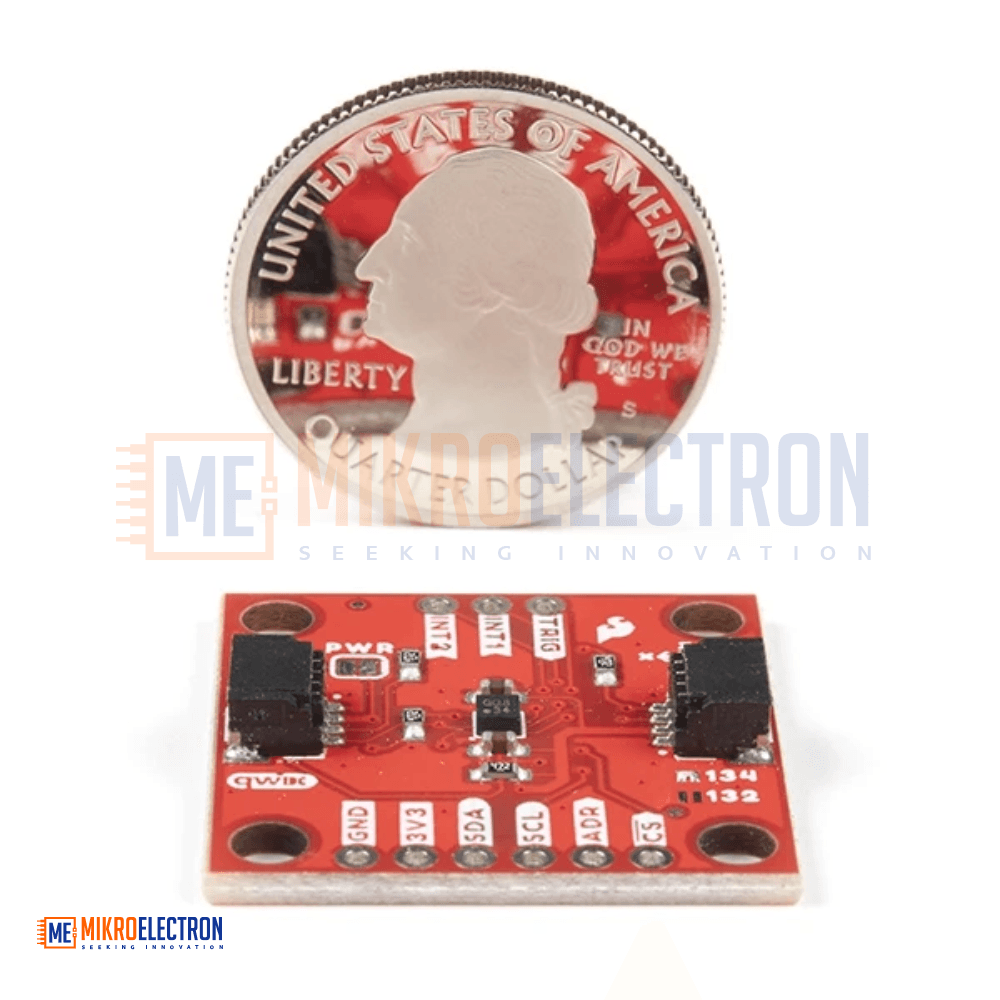
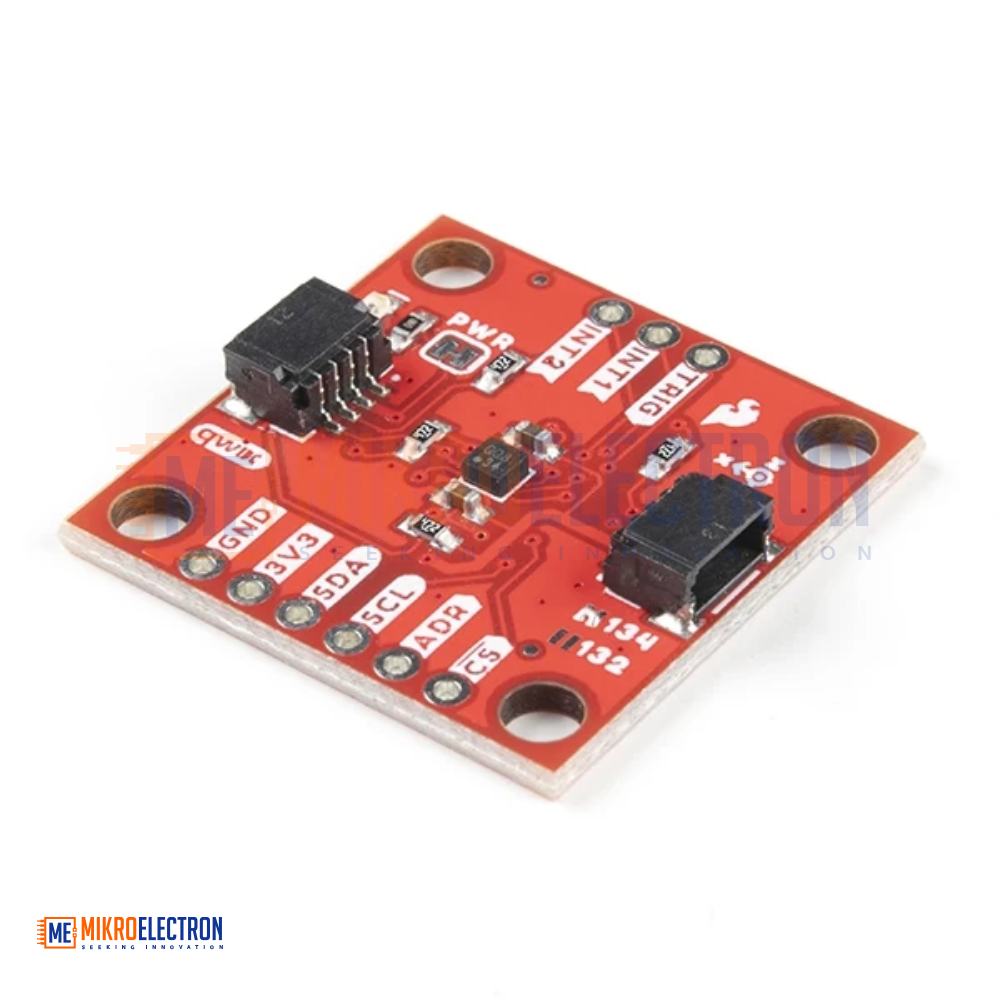
SparkFun Triple Axis Accelerometer Breakout - KX134 (Qwiic)
The SparkFun Triple-Axis Accelerometer Breakout – KX134 (Qwiic) is a high-performance breakout board featuring the Kionix KX134 16-bit digital accelerometer, capable of measuring up to ±64g with an output data rate as high as 25.6 kHz. With its Qwiic I²C interface, SPI option, and advanced built-in functions like freefall, tap, double-tap, and orientation detection, it is the ideal choice for high-g impact measurement, vibration analysis, wearable devices, and motion-sensing IoT projects.
لوحة SparkFun لمستشعر التسارع ثلاثي المحاور – KX134 (Qwiic) هي لوحة عالية الأداء تعتمد على شريحة Kionix KX134 الرقمية ذات الدقة 16 بت، وقادرة على قياس تسارع يصل إلى ±64g بمعدل إخراج بيانات يصل إلى 25.6 كيلوهرتز. بفضل واجهة Qwiic I²C، ودعم SPI، والوظائف المدمجة المتقدمة مثل كشف السقوط الحر، النقر، النقر المزدوج، وكشف الاتجاه، فهي الخيار الأمثل لـقياس الصدمات العالية، تحليل الاهتزازات، الأجهزة القابلة للارتداء، ومشاريع إنترنت الأشياء المعتمدة على الحركة.
The SparkFun KX134 Triple-Axis Accelerometer Breakout is a powerful sensor board built around the Kionix KX134 digital MEMS accelerometer, designed for applications that require measurement of strong, fast, or high-frequency accelerations that ordinary low-g accelerometers simply cannot handle.
Unlike common ±2g / ±4g accelerometers, the KX134 offers a user-selectable measurement range up to ±64g combined with an output data rate up to 25,600 Hz — making it perfectly suited to impact and shock detection, drop testing, vibration monitoring of motors and machinery, sports-performance analytics, and crash-event recording. The full 16-bit resolution ensures that even small acceleration changes can be detected accurately, while the on-chip data path offers a configurable low-pass filter, low-pass/high-pass filter, and RMS calculation engine for clean, processed output.
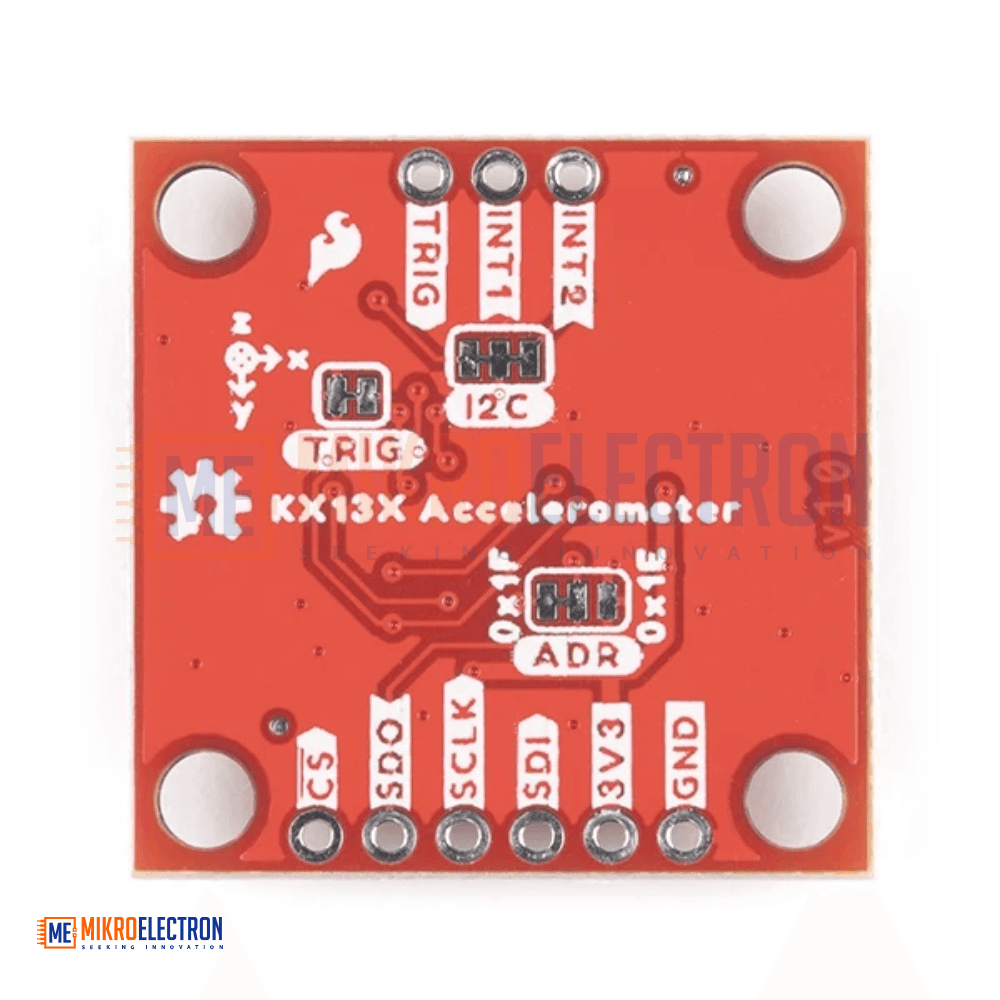
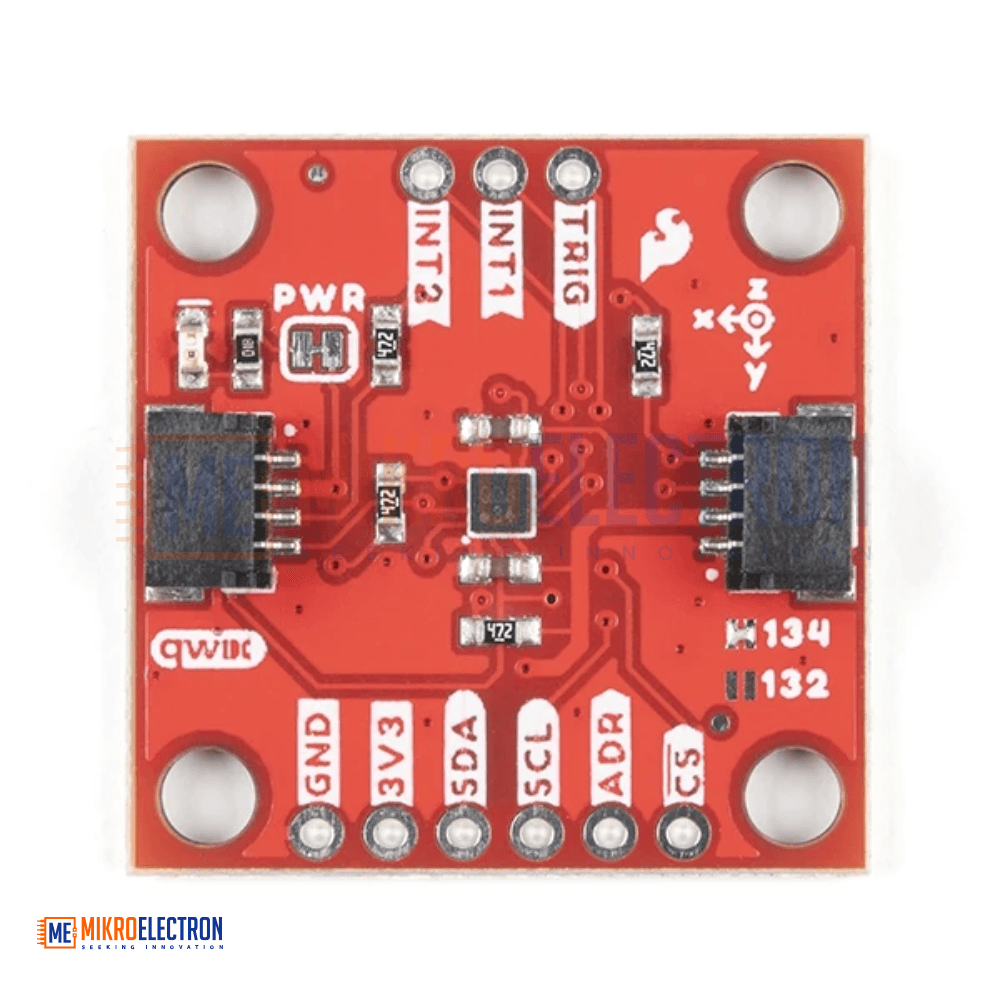
The breakout is part of SparkFun's Qwiic ecosystem, featuring two Qwiic connectors so it can be daisy-chained with other Qwiic boards without soldering. For users who need maximum performance or already have a SPI-based design, the board also exposes SPI signals on standard 0.1" PTH header pins, supporting clock rates up to 10 MHz.
The KX134 includes a powerful suite of built-in motion algorithms — freefall detection, Directional-Tap™ and Double-Tap™ detection, tilt and orientation algorithms, and configurable wake-up / back-to-sleep detection with thresholds as low as 3.9 mg. A 512-byte FIFO buffer allows the host MCU to read data in bursts without losing samples, and the integrated voltage regulator keeps current consumption extremely low — as little as 0.53 µA in low-power mode.
The KX134 is fully supported by SparkFun's Arduino library, making it easy to integrate into projects based on Arduino, ESP32, STM32, Raspberry Pi, or any I²C / SPI-capable microcontroller.
Specifications
- Sensor IC: Kionix KX134 (Triple-Axis Digital Accelerometer)
- Measurement Range: ±8g, ±16g, ±32g, ±64g (user-selectable)
- Resolution: 8-bit or 16-bit (user-selectable)
- Output Data Rate (ODR): Up to 25,600 Hz
- Interface: I²C (up to 3.4 MHz) and SPI (up to 10 MHz)
- Connectors: 2 × Qwiic (I²C) + PTH header (SPI / I²C)
- I²C Address: 0x1E (default) / 0x1F (alternate)
- Built-in Functions:
- Freefall detection
- Directional-Tap™ and Double-Tap™ detection
- Tilt and orientation detection
- Activity / inactivity algorithms
- Wake-up / back-to-sleep detection (threshold from 3.9 mg)
- Self-test functionality
- Data Path: 3-stage advanced data path with low-pass / high-pass filter and RMS engine
- Noise Density: 130 µg/√Hz (varies by ODR, power mode, and settings)
- FIFO Buffer: 512 bytes (continuous capture during readout)
- Operating Current:
- High-Performance (400 Hz ODR + Wake-Up): 148 µA
- Low-Power (0.781 Hz ODR + Wake-Up): 0.53 µA
- Standby: 0.5 µA
- Power Supply: Integrated voltage regulator (3.3V Qwiic compatible)
- Library Support: Official SparkFun Arduino library + Qwiic compatibility
Applications
- High-g impact and shock detection (drop tests, crash events)
- Vibration analysis of motors, pumps, and industrial machinery
- Predictive maintenance for rotating equipment
- Sports performance analytics (golf, baseball, hockey, skateboarding)
- Helmet and protective-gear impact monitoring (sports, construction)
- Wearable health and fitness devices
- Earthquake and seismic monitoring
- Asset tracking with shock and tamper alerts
- Drone and RC vehicle crash detection
- Automotive event recording and pothole detection
- Robotics — collision and contact detection
- Game controllers, VR/AR motion sensing
- IoT sensor nodes with motion-triggered wake-up