
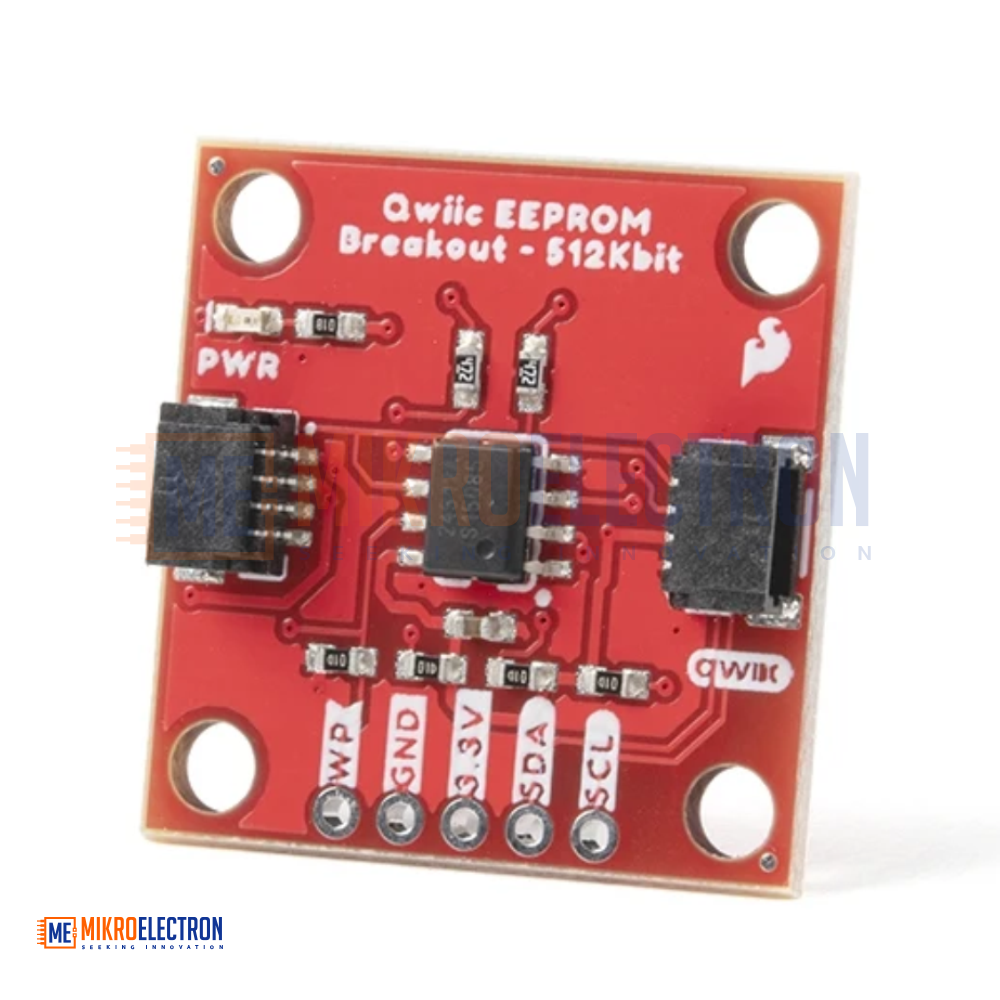
SparkFun Qwiic EEPROM Breakout - 512Kbit
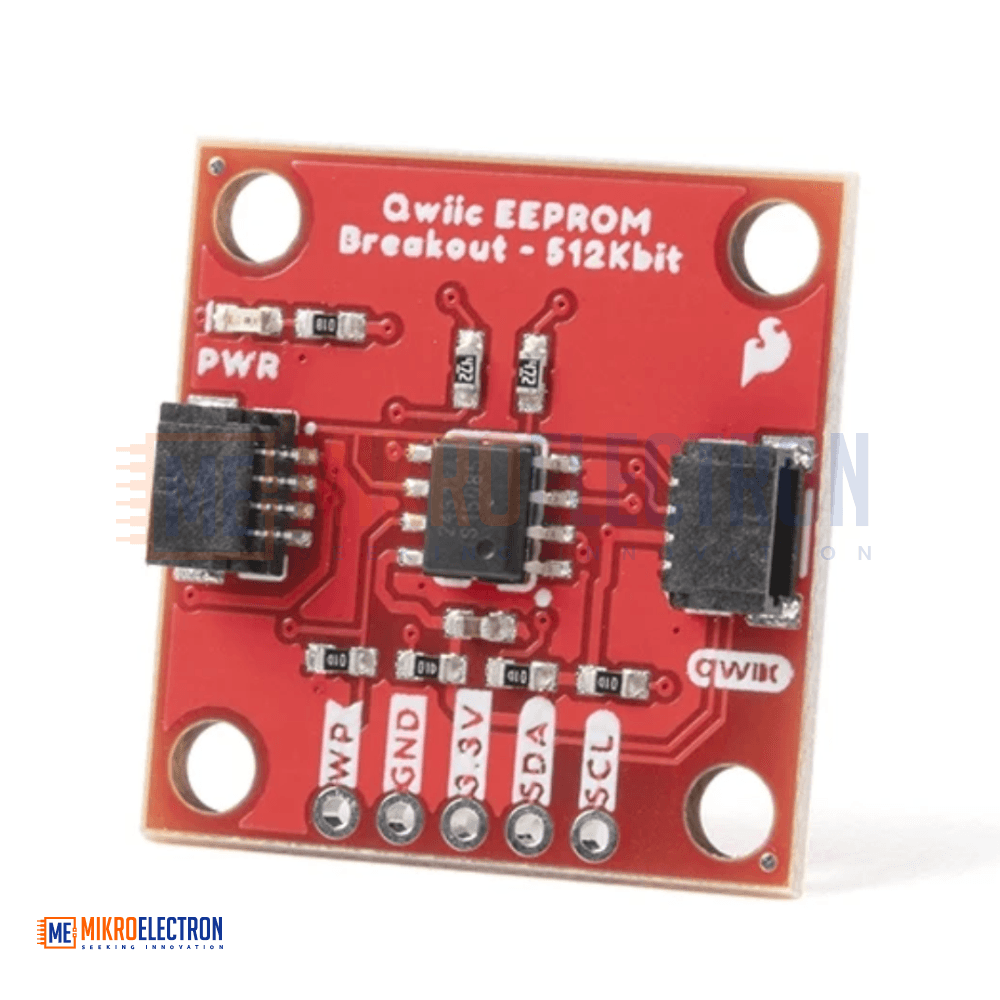
The SparkFun Qwiic EEPROM Breakout (512 Kbit) is a simple and cost-effective way to add 64 KB of non-volatile storage to any microcontroller project. Built around the CAT24C512 EEPROM with built-in ECC error correction, 128-byte page write buffer, and 1,000,000 write cycles of endurance, it is ideal for boards without internal EEPROM like the SAMD21, ESP32, or Raspberry Pi Pico. Featuring Qwiic I²C interface, selectable I²C address (up to 8 devices per bus), and write-protection, it is perfect for storing GPS waypoints, calibration data, user settings, and logs.
لوحة SparkFun Qwiic EEPROM بسعة 512 كيلوبت هي حل بسيط وفعّال من حيث التكلفة لإضافة 64 كيلوبايت من الذاكرة الدائمة لأي مشروع يعتمد على متحكم دقيق. مبنية على شريحة CAT24C512 EEPROM مع تصحيح الأخطاء ECC المدمج، وذاكرة كتابة 128 بايت لكل صفحة، ومتانة تصل إلى مليون دورة كتابة. مثالية للوحات التي لا تحتوي على EEPROM داخلية مثل SAMD21 و ESP32 و Raspberry Pi Pico. تتميز بواجهة Qwiic I²C، وعنوان قابل للاختيار (حتى 8 وحدات على نفس الناقل)، وميزة الحماية من الكتابة، وهي مناسبة لتخزين إحداثيات GPS، بيانات المعايرة، إعدادات المستخدم، وسجلات البيانات.
The SparkFun Qwiic EEPROM Breakout is a plug-and-play solution for adding persistent, non-volatile storage to any embedded project. While many older AVR-based Arduinos include some internal EEPROM, newer microcontrollers — including the SAMD21, SAMD51, ESP32, ESP8266, RP2040, and many STM32 chips — either have very little or no EEPROM at all. This board solves that problem instantly by providing 512 Kbit (64 KB) of dedicated EEPROM storage accessible over I²C.
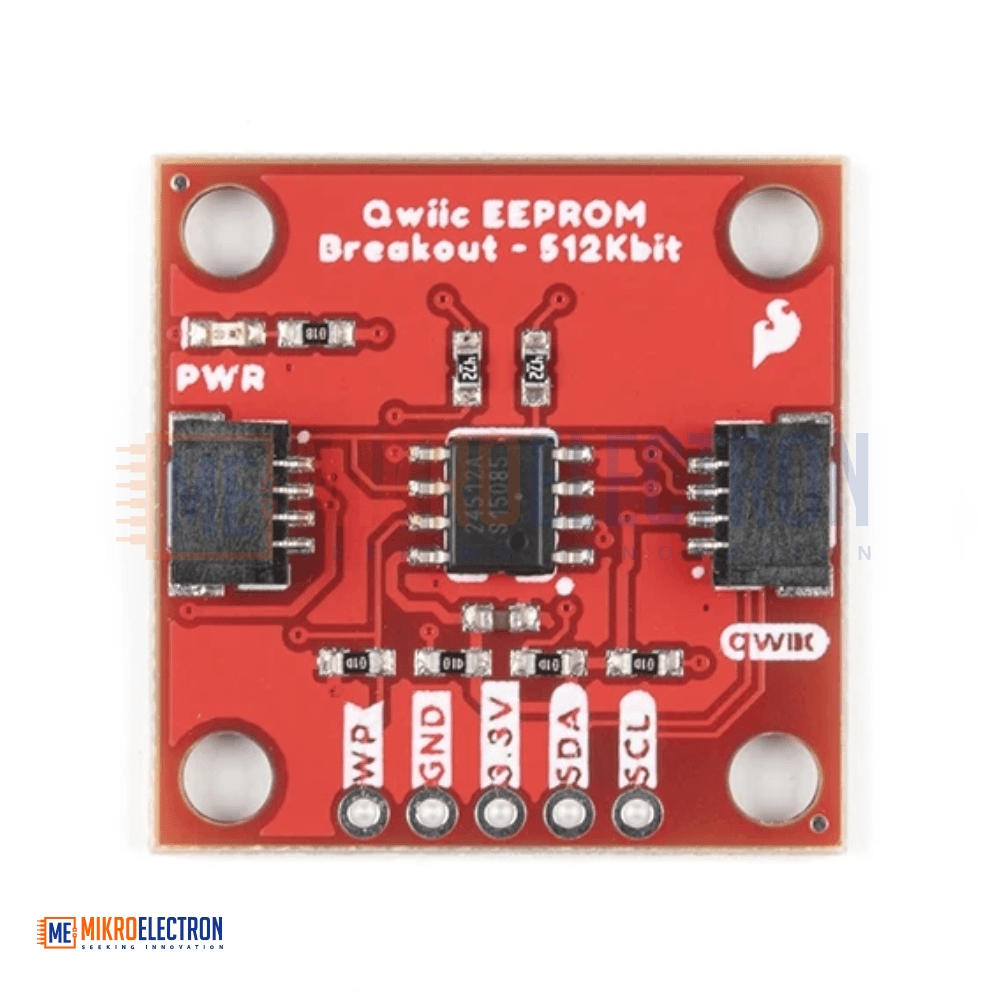
At the heart of the board is the ON Semiconductor CAT24C512, a high-reliability EEPROM organized as 65,536 × 8-bit words with a 128-byte page write buffer for efficient block writes. The chip features built-in ECC (Error Correction Code), making it suitable for safety-critical and high-reliability applications where data integrity matters. It also supports a hardware write-protect (WP) input, which blocks any write operation when pulled high — extremely useful in commercial products where firmware-controlled data should be protected from accidental overwrites.
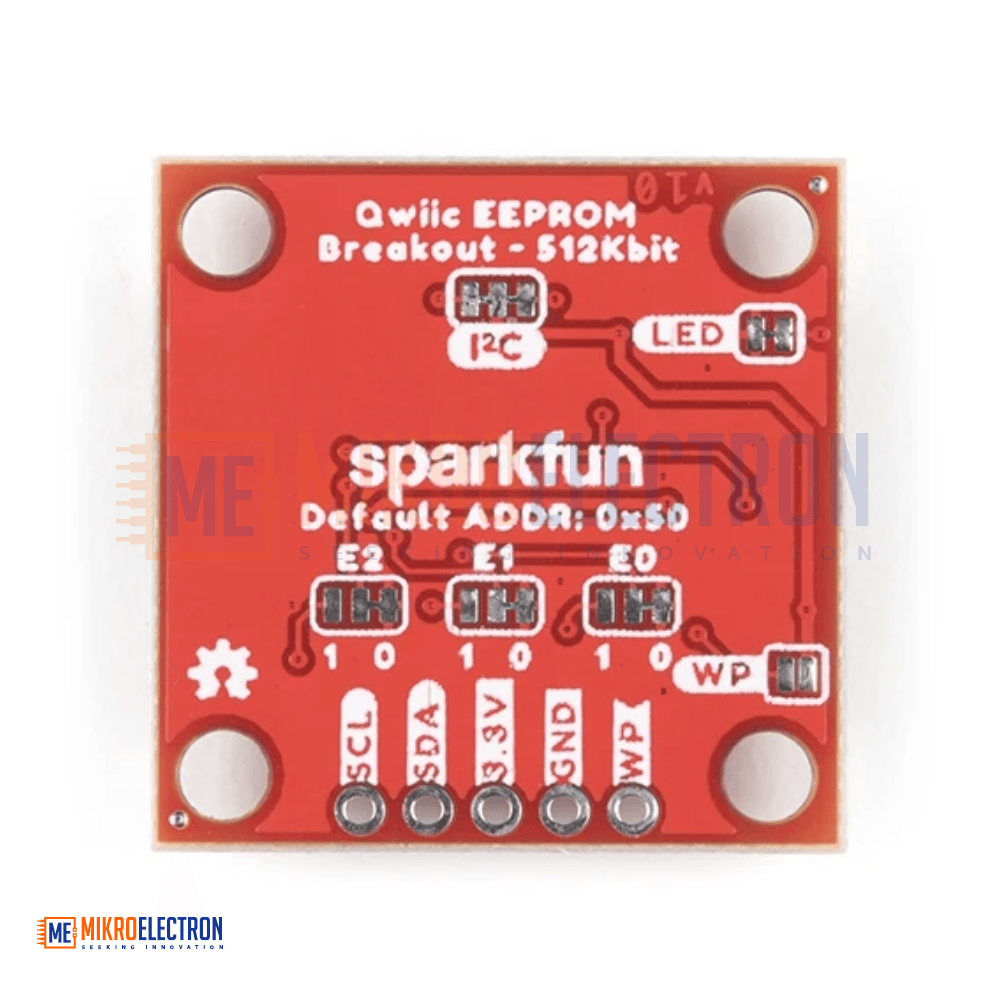
The breakout is part of the SparkFun Qwiic ecosystem, with two Qwiic connectors that allow it to be daisy-chained with other Qwiic boards using simple cables — no soldering required. Standard 0.1" pin headers are also broken out for breadboard users. The I²C address is jumper-selectable between 0x50 and 0x57, allowing up to 8 EEPROM boards on a single I²C bus for a total of 512 KB of EEPROM storage.
Note: Because the address range overlaps with other I²C EEPROMs, if you need to combine this board with other Qwiic devices that share an address, a Qwiic Mux Breakout is recommended.
SparkFun provides a dedicated Arduino library ("SparkFun EEPROM") that handles single-byte, multi-byte, and page-aligned reads/writes, as well as template functions for storing primitive data types like integers, floats, and structures directly to memory.
Specifications
- Memory IC: ON Semiconductor CAT24C512 EEPROM
- Capacity: 512 Kbit (64 KB / 65,536 × 8-bit words)
- Interface: I²C (Qwiic compatible)
- I²C Address: 0x50 (default) — jumper-selectable to 0x51 – 0x57 (up to 8 devices per bus)
- Page Write Buffer: 128 bytes
- Endurance: 1,000,000 program / erase cycles
- Data Retention: 100 years
- Error Correction: On-chip ECC
- Write Protection: Hardware WP pin support
- Power Supply: 3.3V (Qwiic regulated)
- Read Current: ~1 mA
- Write Current: ~1.8 – 2.5 mA
- Connectors: 2 × Qwiic + 0.1" breakout pins for breadboard use
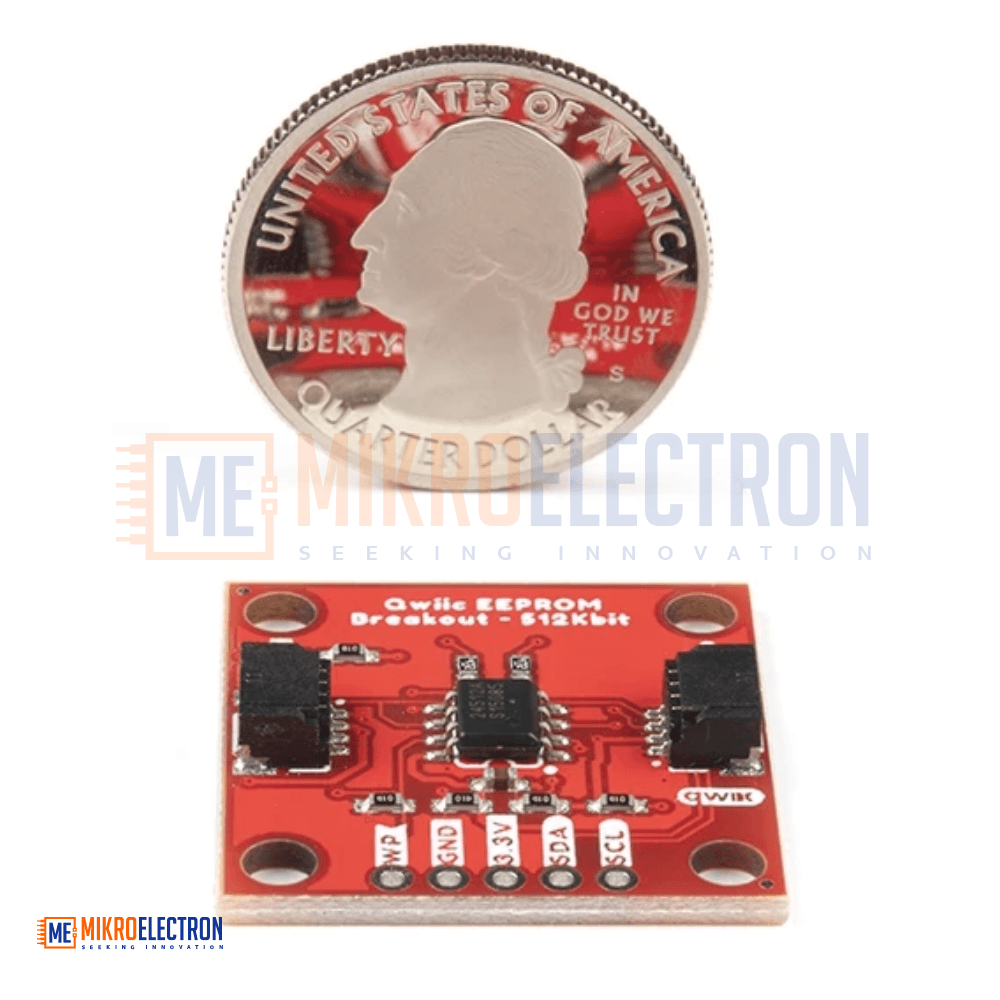
- Form Factor: Standard SparkFun Qwiic breakout PCB
- Library Support: Official SparkFun EEPROM Arduino library
Applications
- Data logging — sensor readings, GPS waypoints, weather data
- Calibration data storage for sensors and actuators
- User configuration / preferences that must survive power cycles
- High score and game state storage in Arduino-based games
- IoT device configuration (Wi-Fi credentials, MQTT topics, etc.)
- Backup storage for firmware variables and counters
- Industrial automation — recipe and parameter storage
- Robotics — saved motion sequences and behavior profiles
- 3D printer auxiliary parameter storage
- Medical and laboratory instruments requiring data retention
- Educational projects demonstrating non-volatile memory concepts
- Adding EEPROM to boards that don't natively have it (SAMD21, ESP32, RP2040, etc.)