
22.5W Fast Charging Power Bank Module with TFT Display PD QC 20W Dual USB and Type-C
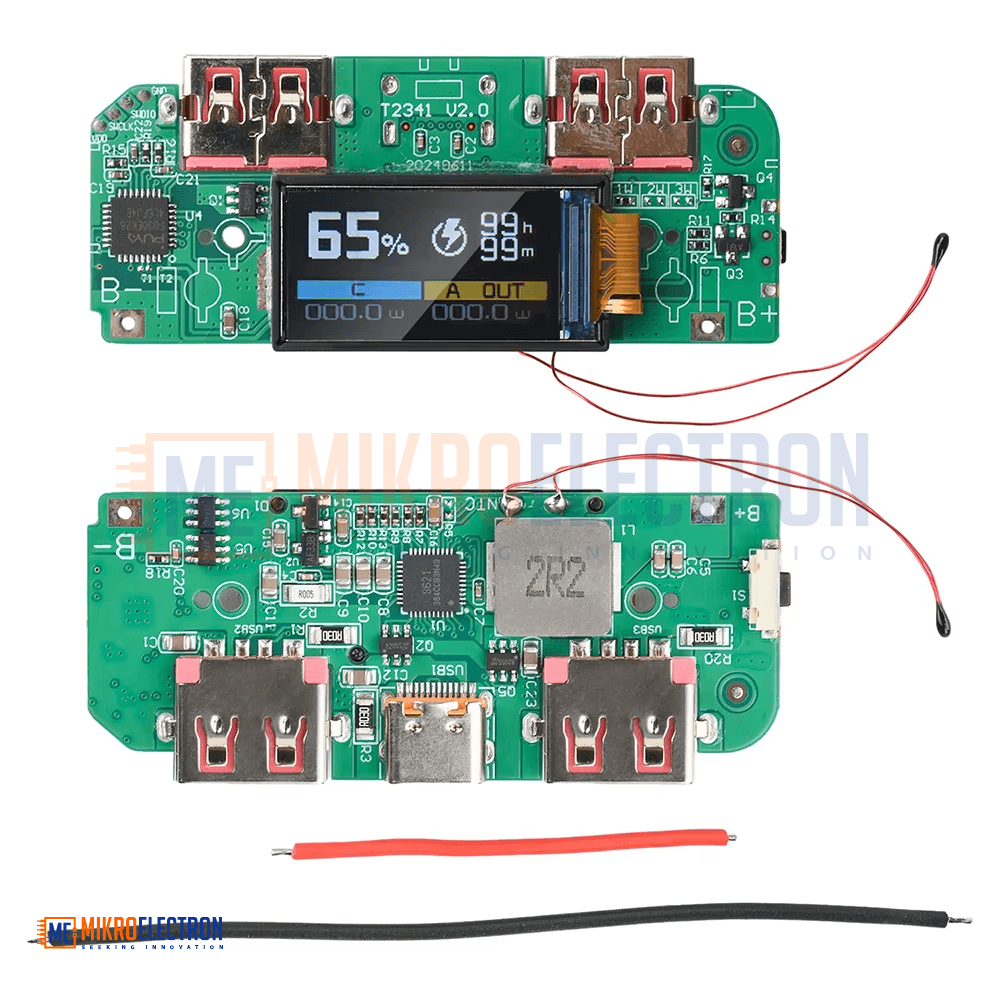
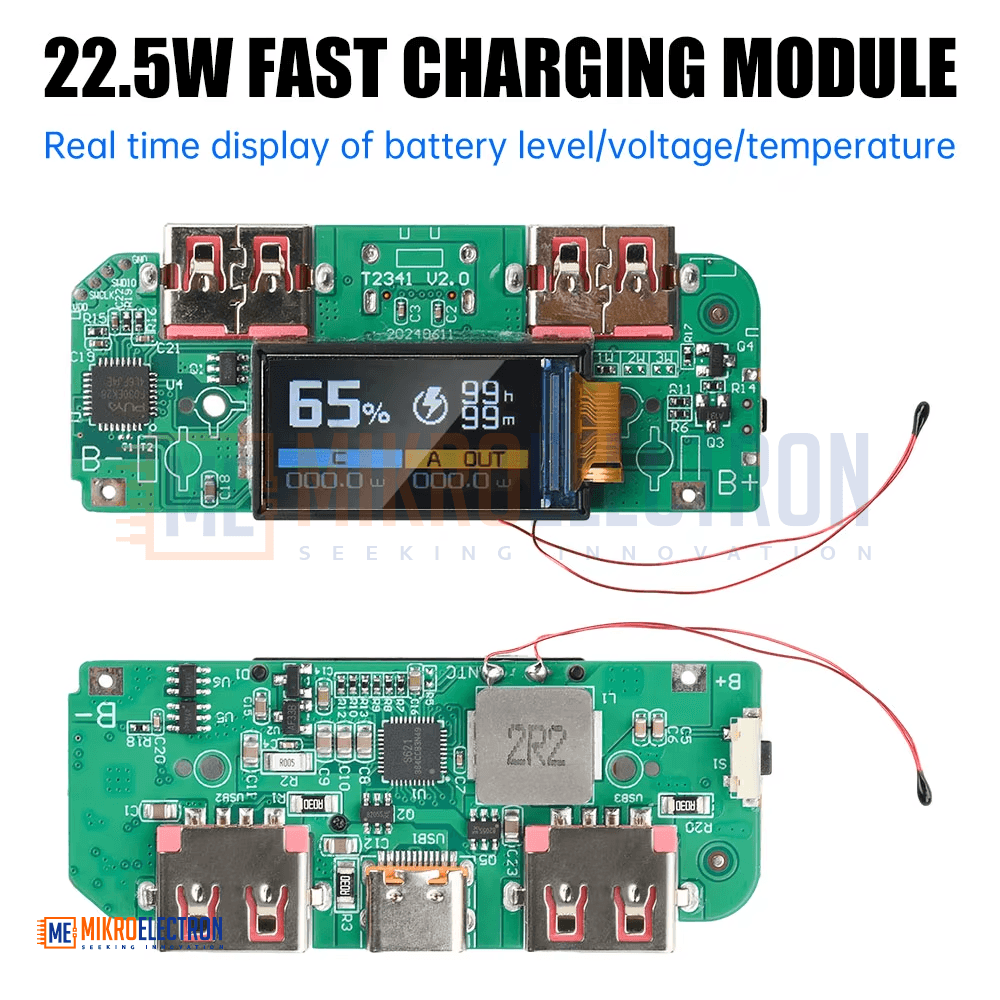
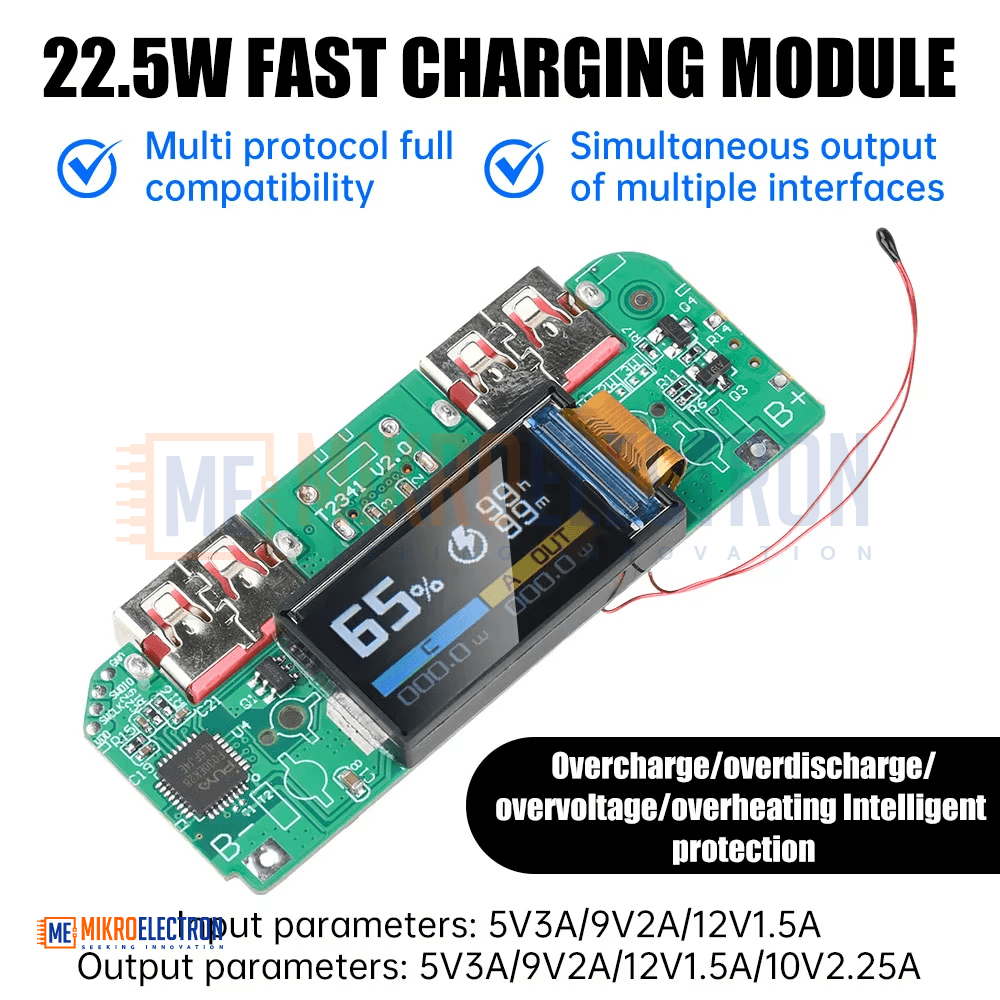
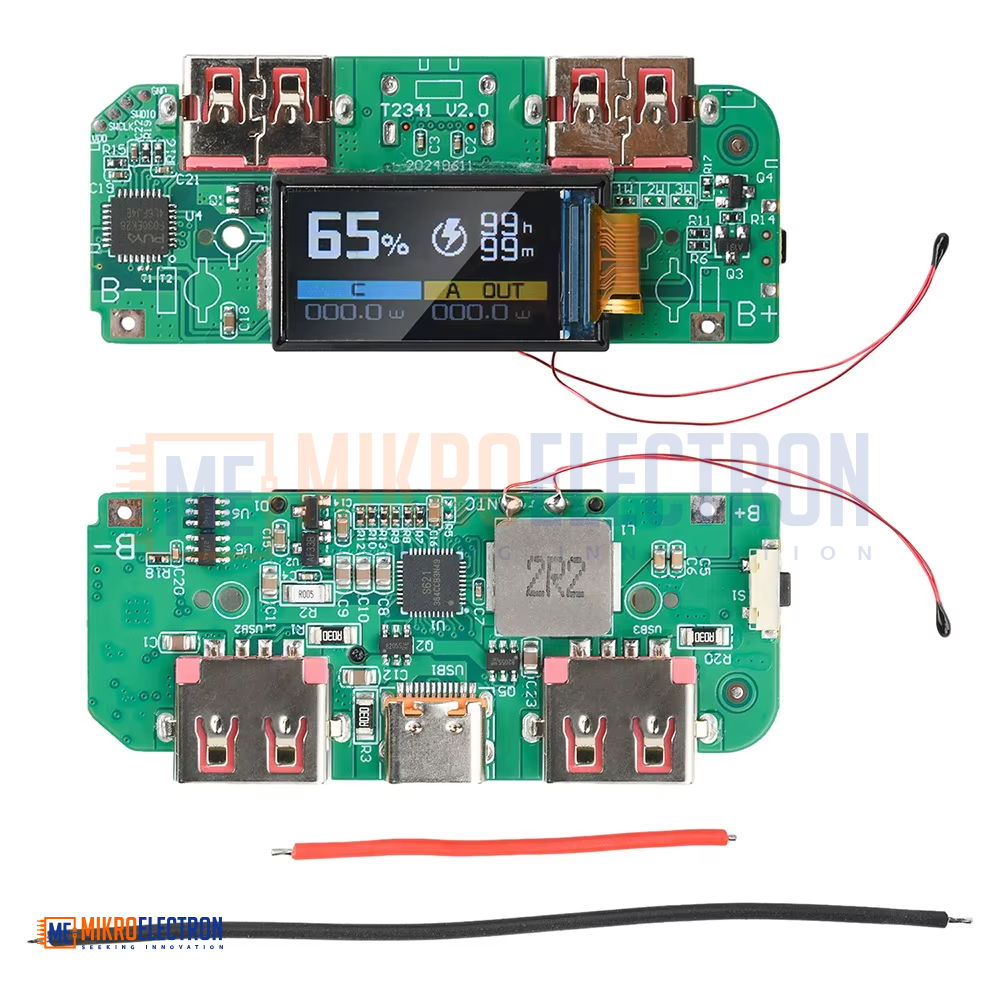
The 22.5W Fast Charging Power Bank Module features a TFT color display showing real-time battery level, voltage, and temperature. It supports PD, QC, and Apple protocols for universal fast charging, with dual USB and one Type-C port. The protection-free board design lets you solder batteries directly, while four-fold safety protection guards against overcharge, overdischarge, overvoltage, and overheating for a safe, reliable DIY power bank build.
وحدة الشحن السريع 22.5 واط تأتي بشاشة TFT ملونة تعرض نسبة البطارية والجهد ودرجة الحرارة بشكل فوري. تدعم بروتوكولات PD وQC وApple للشحن السريع لجميع الأجهزة، مع منفذين USB ومنفذ Type-C. يتيح تصميم اللوحة المدمجة للحماية لحام البطاريات مباشرةً، بينما توفر الحماية الرباعية أمانًا ضد الشحن الزائد والتفريغ الزائد وارتفاع الجهد والحرارة، لبناء بنك طاقة موثوق.
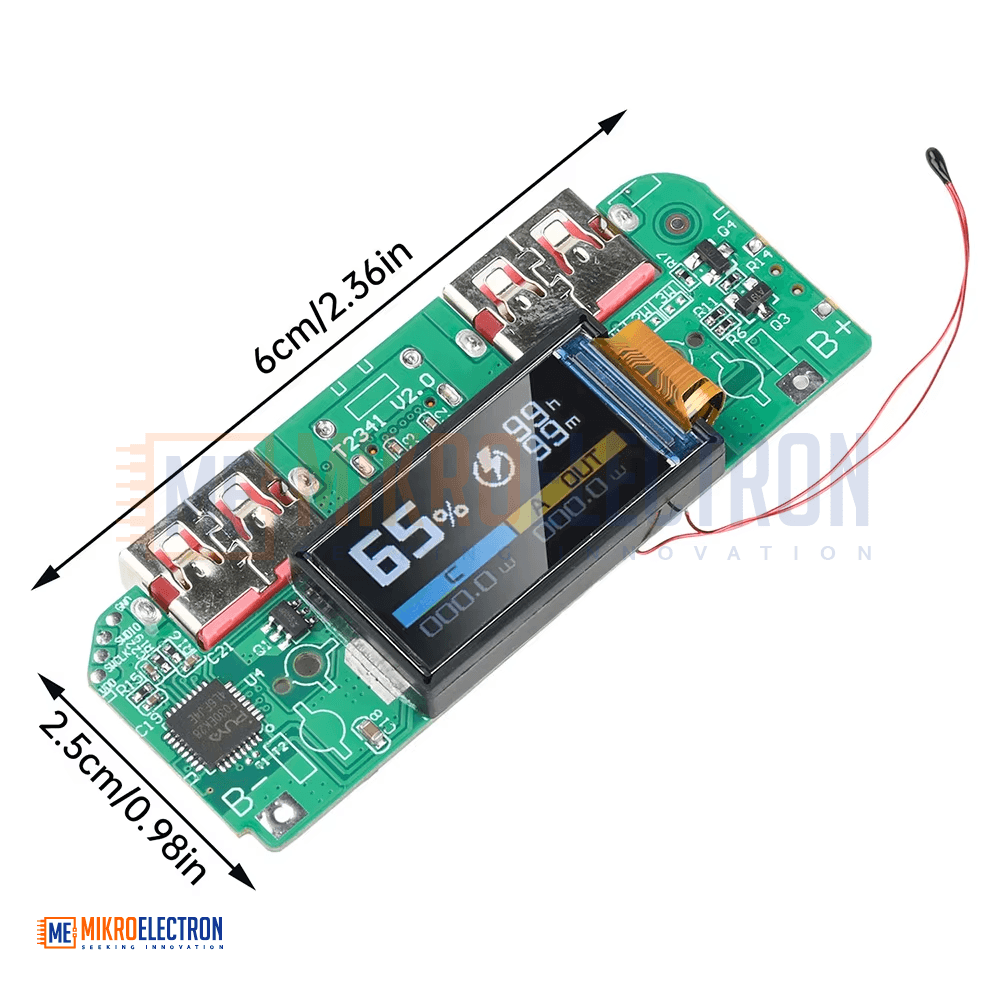
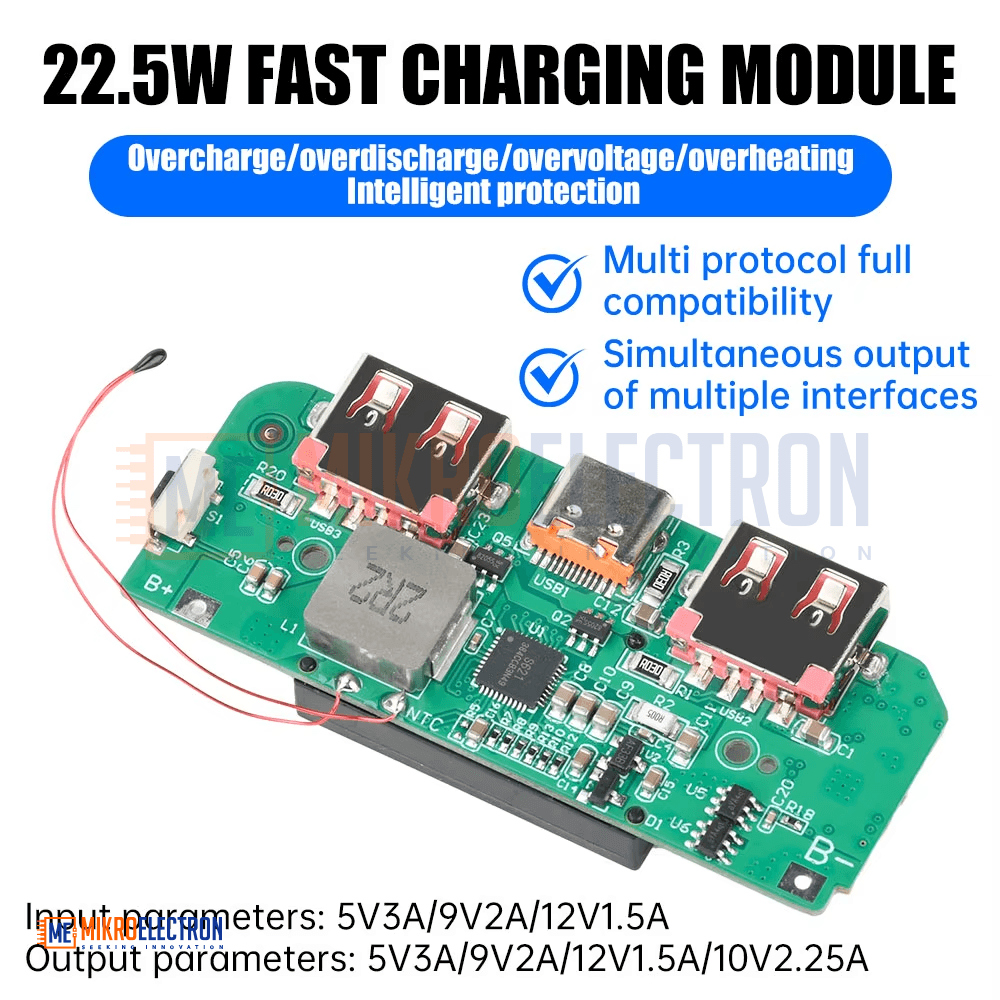
The 22.5W Fast Charging Power Bank Module is an all-in-one motherboard for building your own high-performance power bank. It combines fast charging, intelligent battery management, and a clear TFT color display in a single compact board, making it ideal for DIY projects and prototyping.
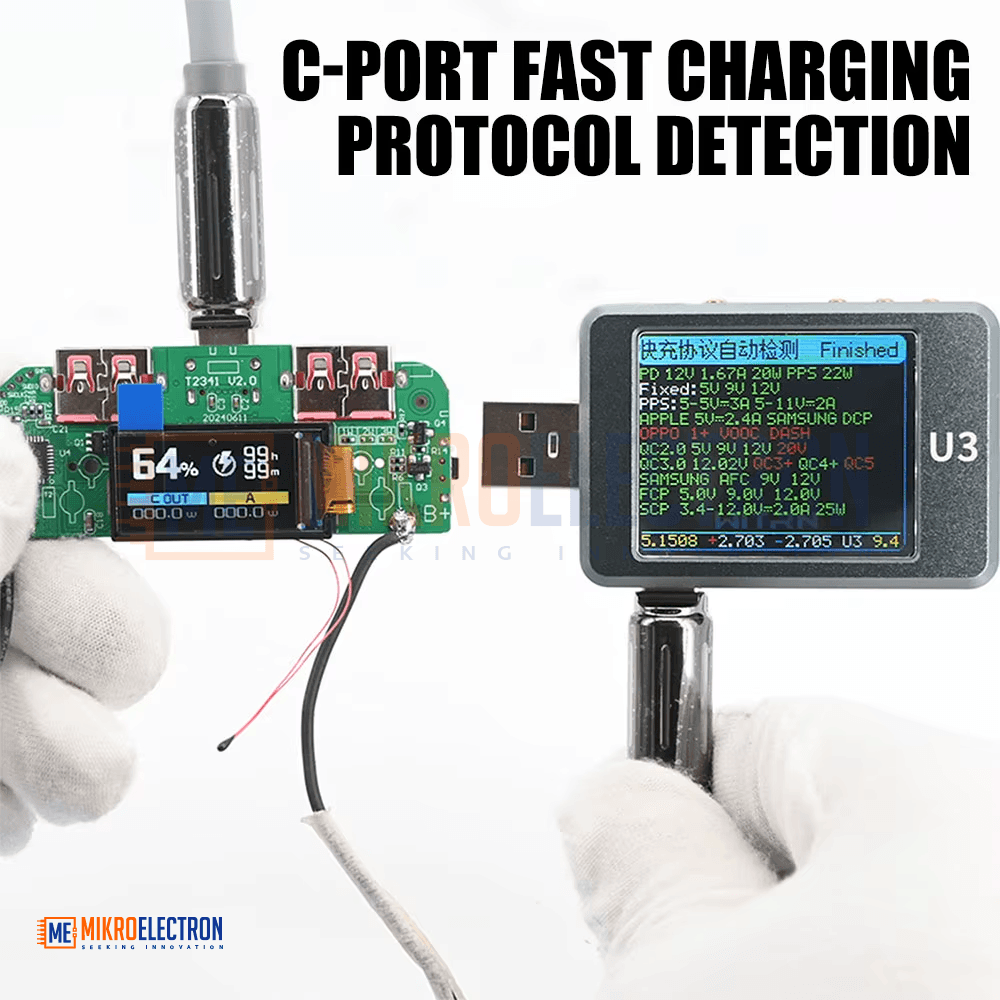
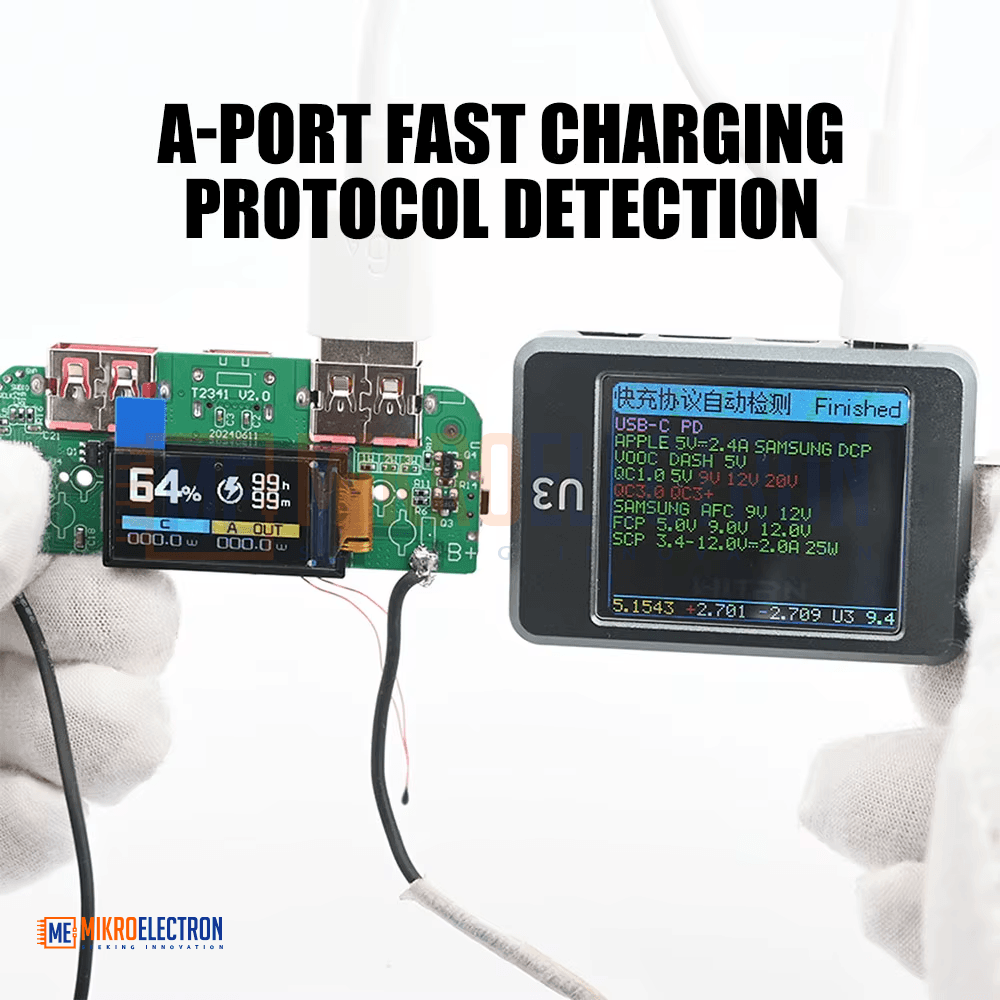
This module offers multi-protocol full compatibility, supporting mainstream fast-charging standards including PD, QC, Apple, FCP, SCP, and VOOC, so it works with virtually any brand of phone or device that uses public fast-charging protocols.
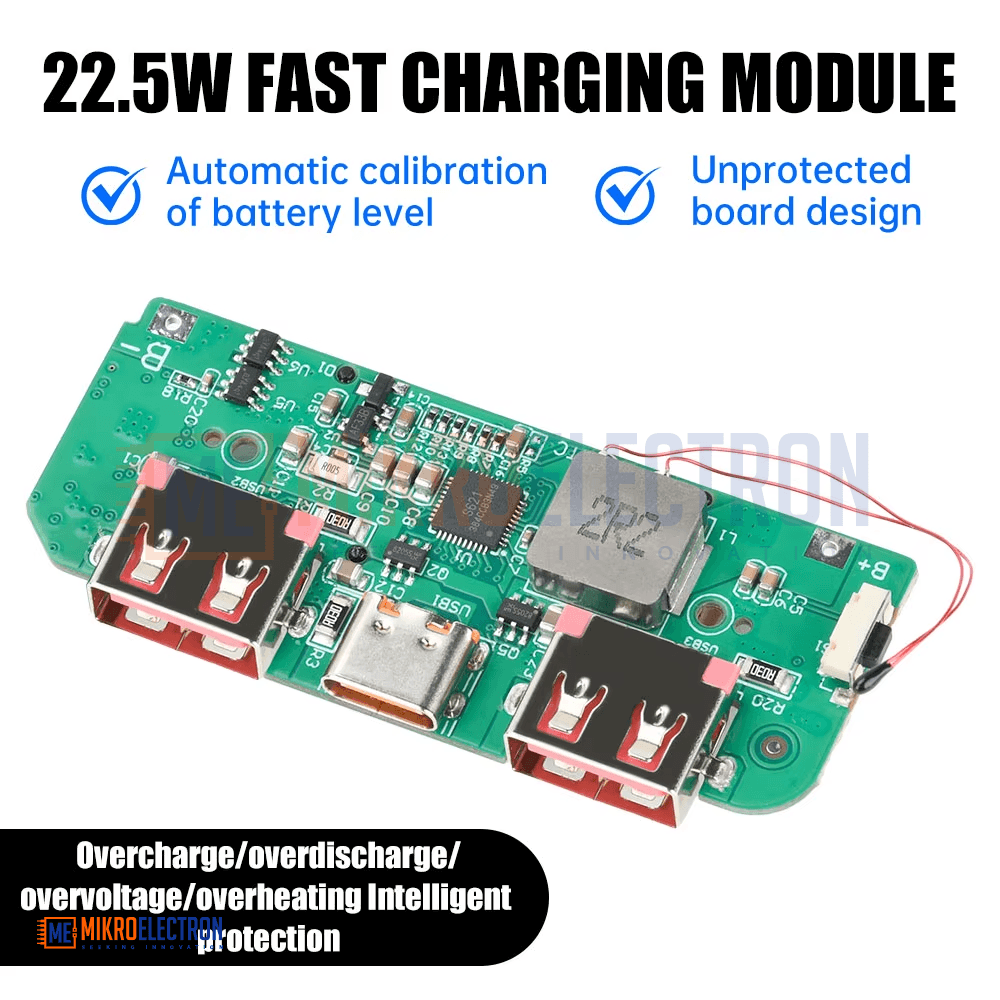
The TFT color screen provides a real-time view of battery level, voltage, and temperature, giving you clear status at a glance. With four-fold intelligent safety protection (overcharge, overdischarge, overvoltage, and overheating), the module helps prevent common safety hazards during operation.
A key advantage is its protection-free board design: the protection circuitry is integrated directly into the motherboard, so 3.7V ternary lithium batteries can be soldered directly to the board without a separate protection board — saving space and simplifying assembly. The board also features intelligent self-learning battery calibration, which automatically calibrates the displayed battery level after the first few charge/discharge cycles for accurate readings.
Specifications
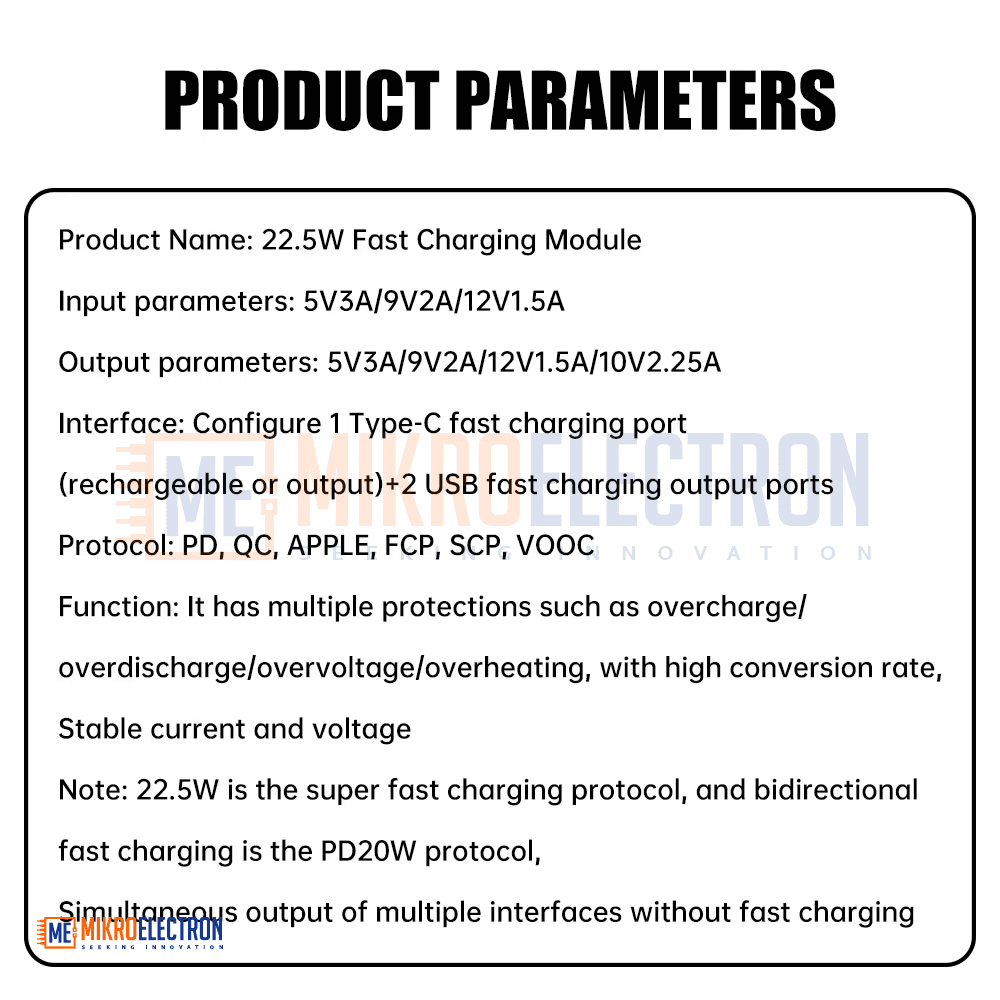
- Product Name: 22.5W Fast Charging Power Bank Module
- Input Parameters: 5V/3A, 9V/2A, 12V/1.5A
- Output Parameters: 5V/3A, 9V/2A, 12V/1.5A, 10V/2.25A
- Interfaces: 1 × Type-C (input or output) + 2 × USB fast-charging output ports
- Supported Protocols: PD, QC, Apple, FCP, SCP, VOOC
- Display: TFT color screen (battery level / voltage / temperature)
- Battery Type Required: 3.7V ternary lithium battery (LiFePO₄ not supported)
- Battery Wiring: Parallel only — never in series
- Protections: Overcharge, overdischarge, overvoltage, overheating
- Other: High conversion rate, stable current and voltage
Important Assembly & Usage Notes
These points are worth including (or keeping handy for customer support), since they prevent the most common failures:
- Test before soldering: The screen is fragile — power on and verify the screen works before soldering. A squeezed screen cable can cause display distortion or damage.
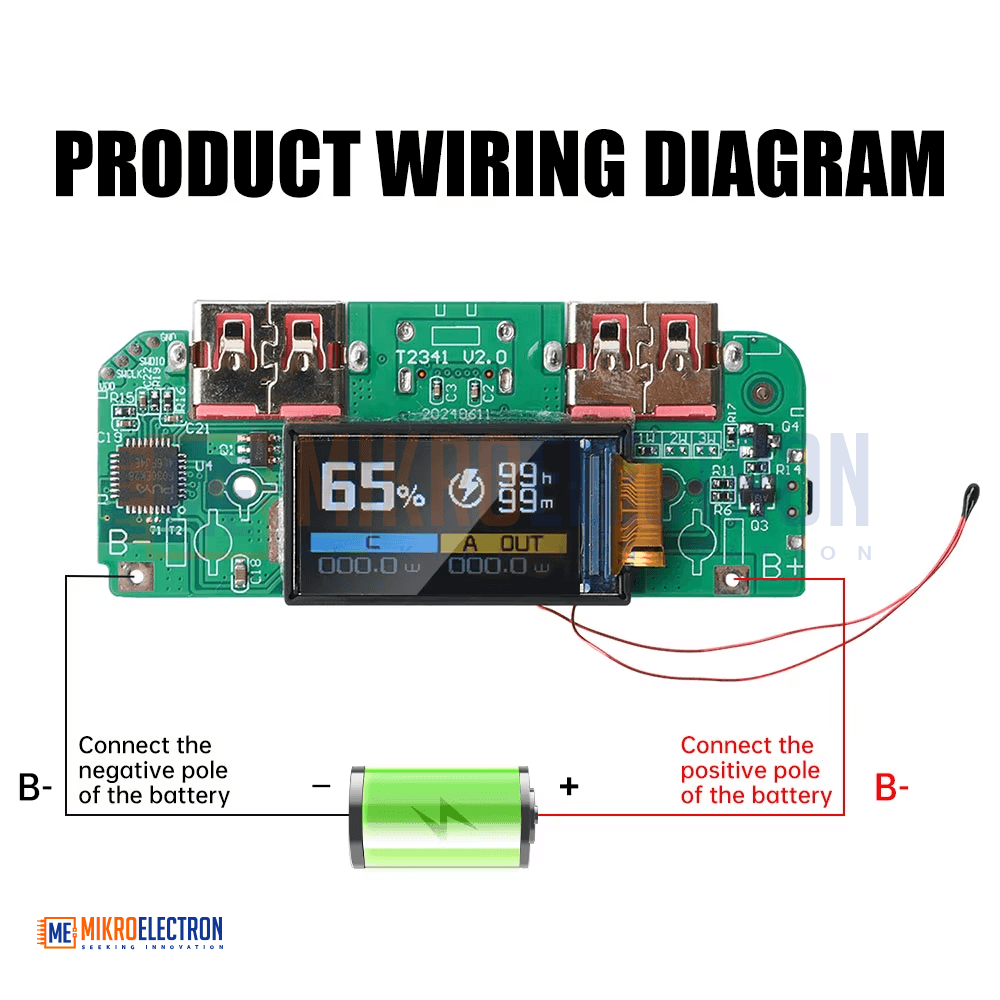
- Correct polarity is critical: Connect the board's B+ to the battery positive and B− to the battery negative. Reversing the connection will burn the motherboard.
- Use the right battery: Only 3.7V ternary lithium batteries, wired in parallel (never series). Series voltage is too high and will burn the board.
- Solid connections only: Batteries must be soldered; twisted wires, alligator clips, or spring boxes cause insufficient power and unstable charging. Insulate the battery terminals to prevent accidental contact with the board.
- No protection board needed: The motherboard has built-in protection. Adding a separate battery protection board can disconnect output if its current limit is exceeded.
- Heating is normal: The board warms during fast charging due to energy-conversion loss — this is a normal physical phenomenon.
- Confirm phone compatibility: Fast charging only triggers on phones that support public protocols. Customers should confirm this before ordering.
Applications
- DIY power bank assembly and custom builds
- Battery pack projects requiring fast charging
- Maker and electronics prototyping with integrated display
- Portable charging solutions for phones and USB devices
- Educational and hobbyist battery-management learning projects