
SparkFun DataLogger IoT - 9DoF
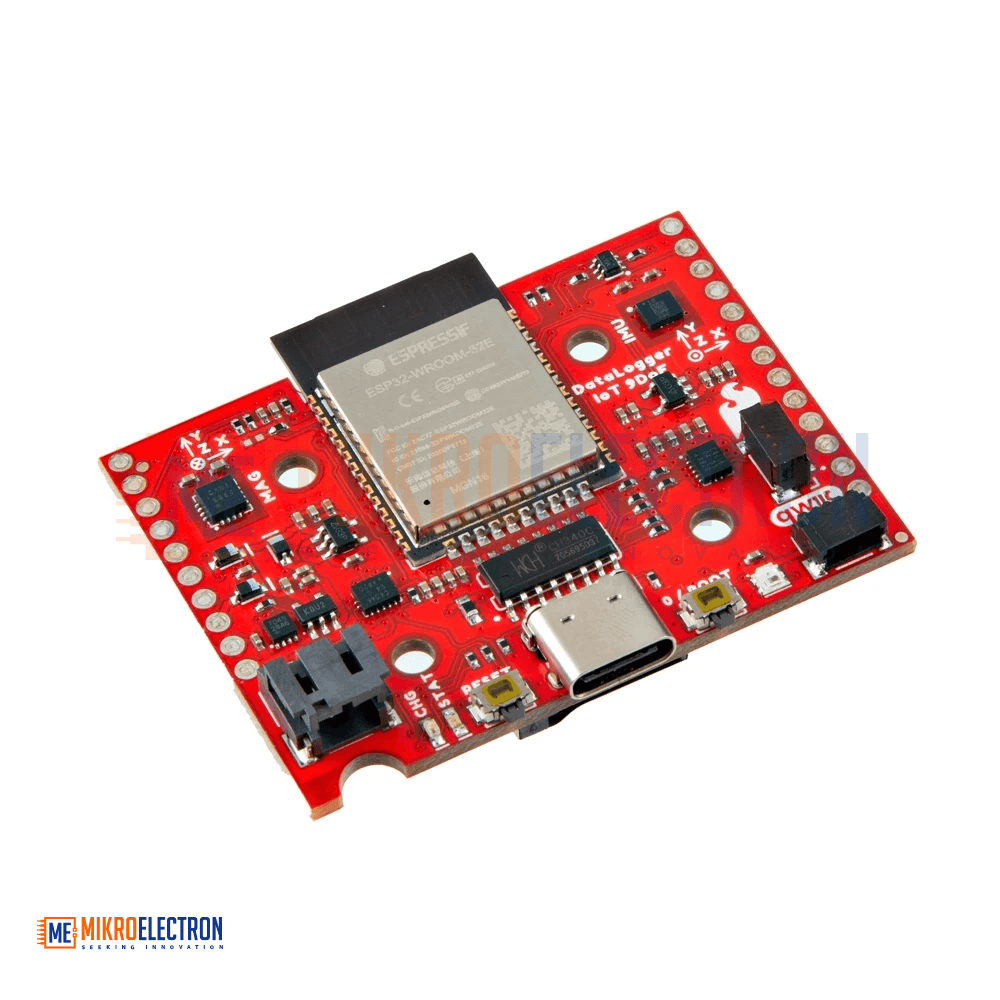
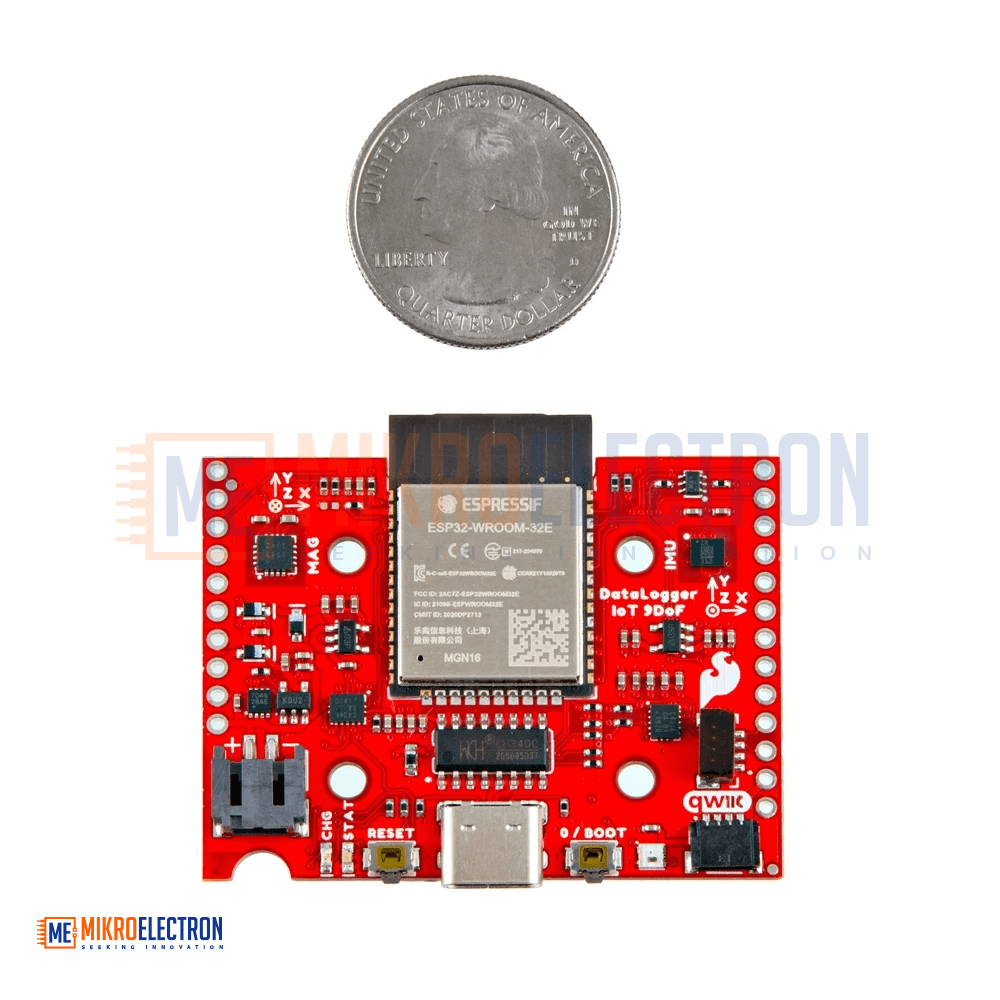
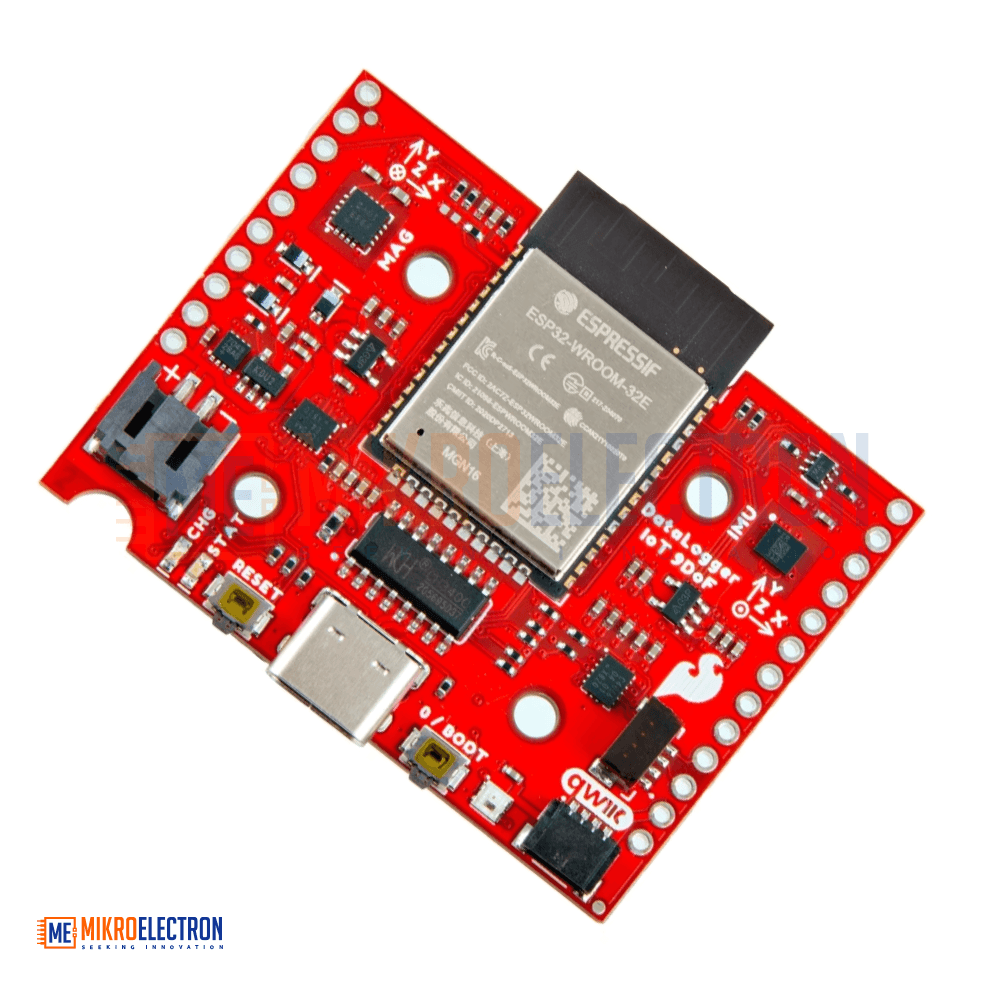
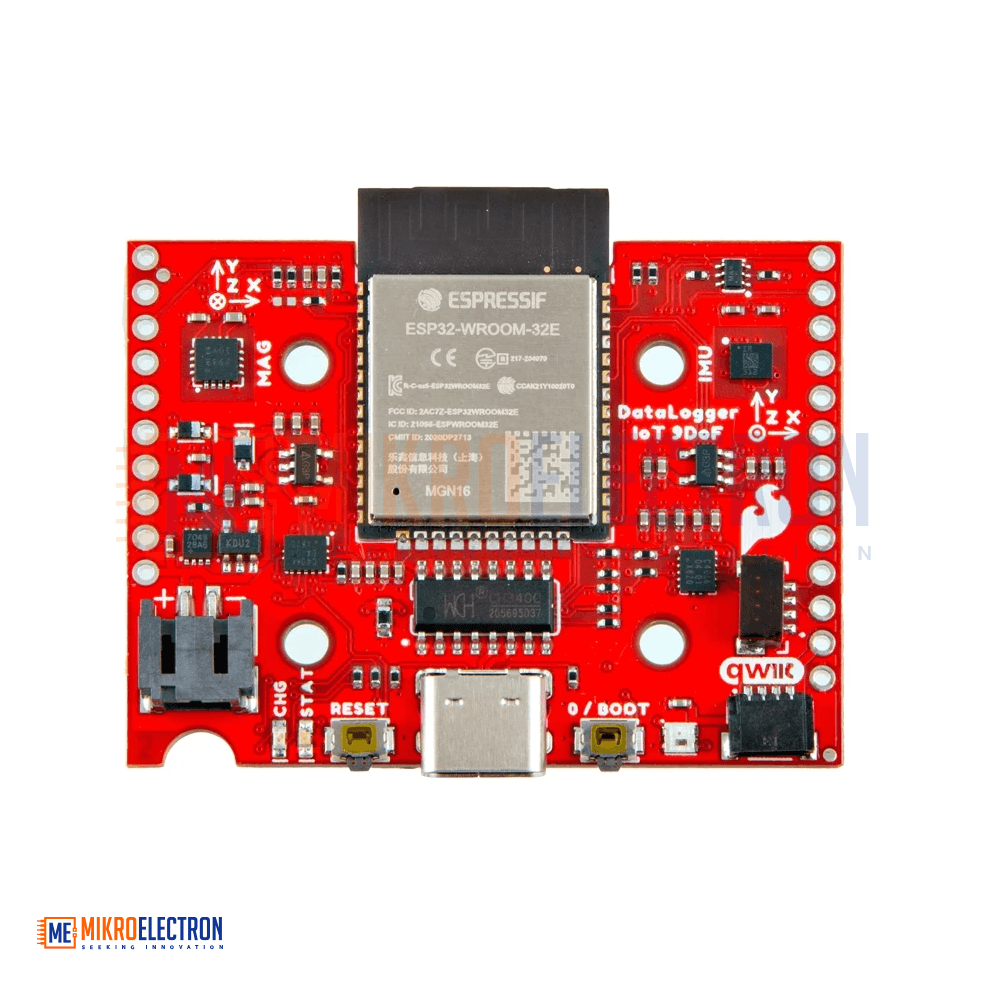
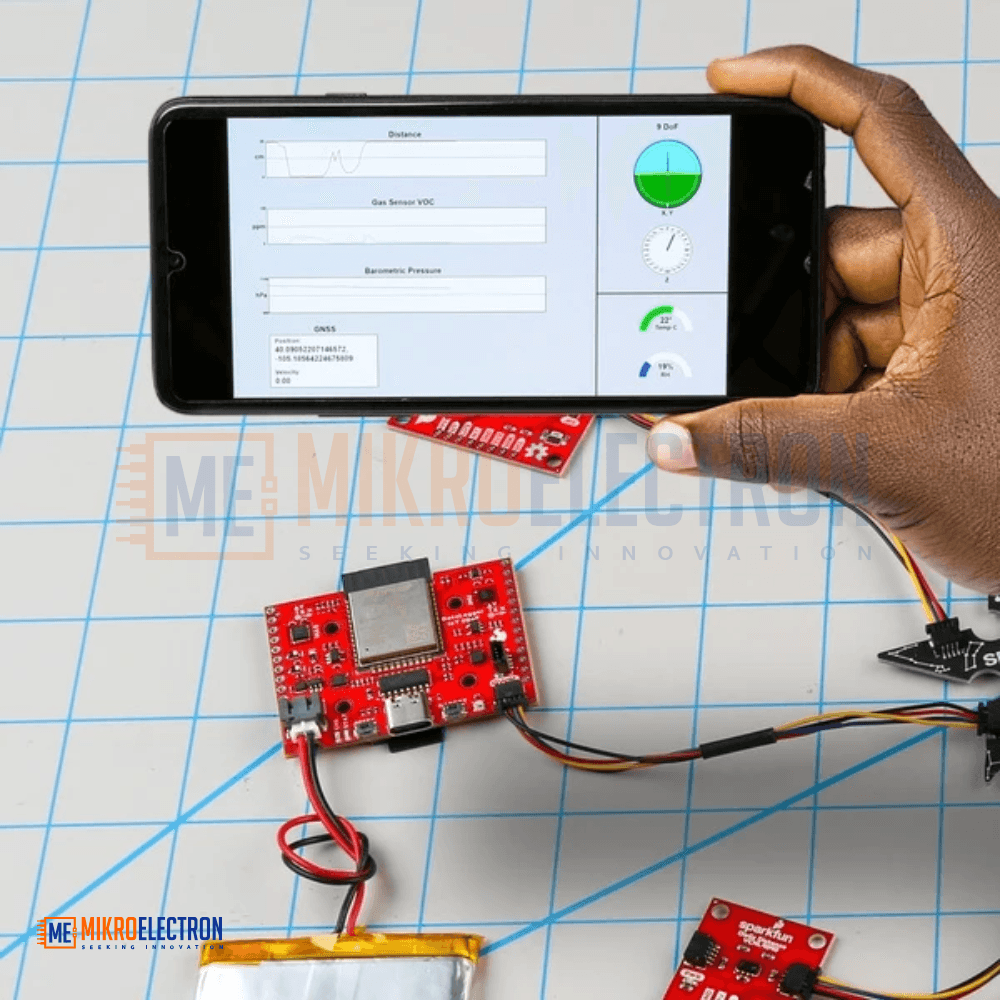
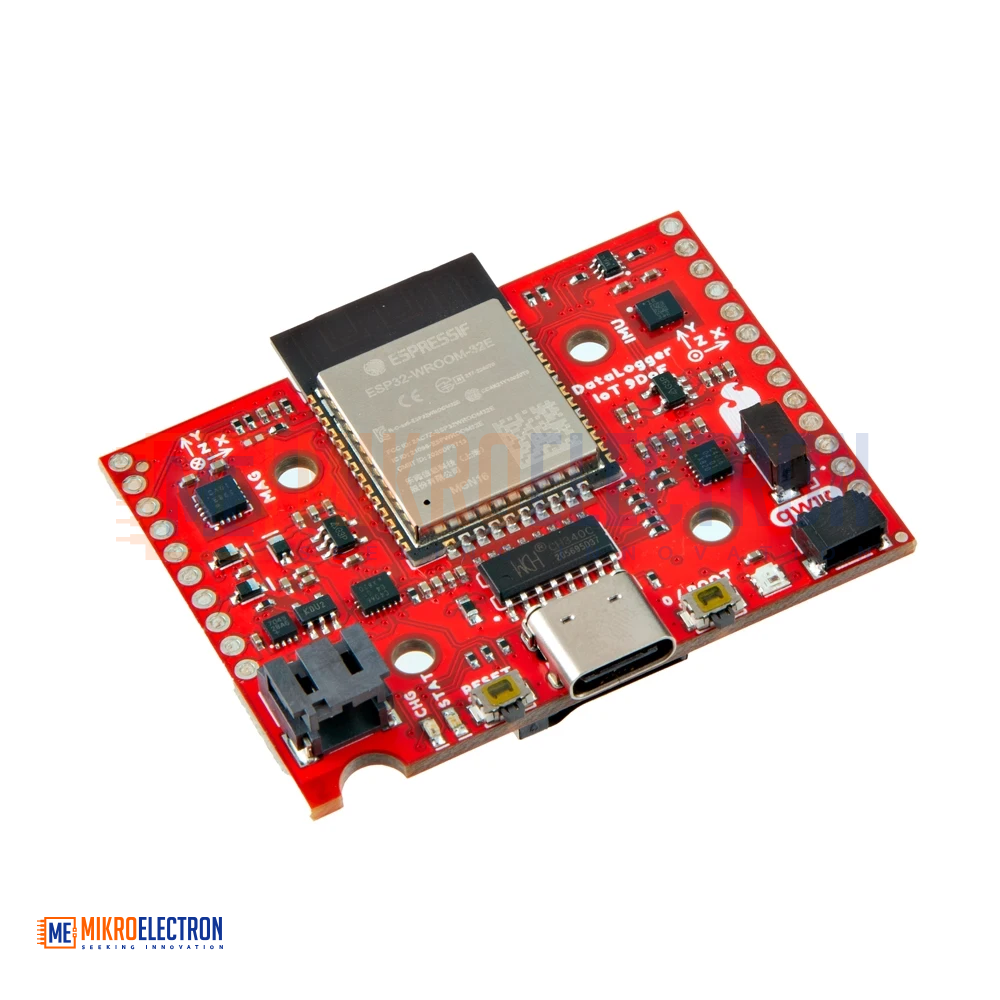
The SparkFun DataLogger IoT - 9DoF is a preprogrammed, plug-and-play data logger that captures environmental, motion, and location data without writing a single line of code. It features an onboard ISM330DHCX IMU and MMC5983MA magnetometer for full 9DoF motion and orientation tracking, along with the ESP32-WROOM-32E for Wi-Fi connectivity. It automatically detects and configures a wide range of Qwiic sensors, logging data to a microSD card as CSV or JSON, or streaming it to IoT services like AWS IoT, Azure IoT, ThingSpeak, and Arduino Cloud, making it ideal for rapid deployment of professional IoT logging projects.
سباركفن داتا لوغر آي أو تي - 9DoF (SparkFun DataLogger IoT - 9DoF) جهاز تسجيل بيانات جاهز للاستخدام ومبرمج مسبقًا، يلتقط البيانات البيئيّة وبيانات الحركة والموقع دون الحاجة إلى كتابة أيّ سطر برمجيّ. يتميّز بوحدة قياس بالقصور الذاتيّ ISM330DHCX ومقياس مغناطيسيّ MMC5983MA مدمجين لتتبّع الحركة والاتّجاه بتسع درجات حريّة (9DoF)، إضافةً إلى وحدة ESP32-WROOM-32E للاتّصال اللاسلكيّ. يتعرّف تلقائيًّا على مستشعرات Qwiic ويهيّئها، ويسجّل البيانات على بطاقة microSD بصيغة CSV أو JSON، أو يرسلها إلى خدمات إنترنت الأشياء مثل AWS IoT وAzure IoT وThingSpeak وArduino Cloud، ممّا يجعله الحلّ الأمثل لنشر مشاريع تسجيل بيانات إنترنت الأشياء باحترافيّة وسرعة.
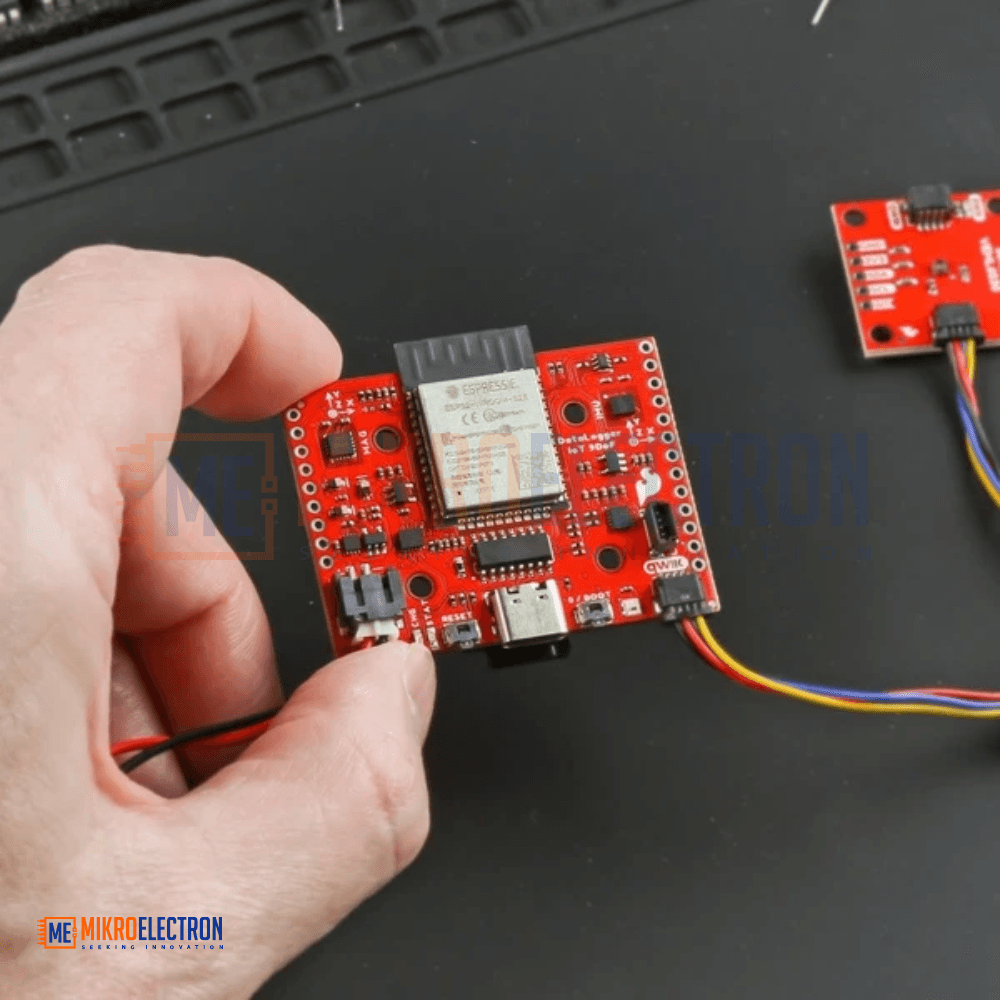
The SparkFun DataLogger IoT - 9DoF is a powerful, preprogrammed data logger engineered for makers, engineers, and researchers who need to capture large volumes of data quickly without diverting time from their core project. Instead of writing firmware, wiring breadboards, or wrestling with sensor libraries, users simply connect their Qwiic-compatible sensors, insert a microSD card, and start logging.
What sets this variant apart is its built-in 9DoF motion and orientation tracking hardware. Connected directly to the microcontroller via SPI, the board integrates the high-performance ISM330DHCX IMU from STMicroelectronics, which combines a triple-axis accelerometer and a triple-axis gyroscope, alongside the MMC5983MA magnetometer from MEMSIC. As soon as the board is powered on, full accelerometer, gyroscope, and magnetometer data becomes available for logging in parallel with any external sensors that are plugged in.
At the heart of the board is the ESP32-WROOM-32E module, which delivers integrated 2.4 GHz Wi-Fi connectivity and enough processing power to handle a rich ecosystem of sensors simultaneously. The DataLogger IoT - 9DoF automatically scans the I²C bus, detects supported devices, and configures them with zero soldering and zero programming. Supported sensor categories include GNSS and location modules (u-Blox ZED-F9P, NEO-M9N, MAX-M10S), time-of-flight distance imagers (VL53L1X, VL53L5, TMF8820), environmental and air-quality sensors (BME280, CCS811, SGP40, SCD40, ENS160), and specialty boards such as biometric hubs, Qwiic Scales (NAU7802), power meters, RFID readers, RGB encoders, and high-precision ADCs.
For remote deployments, the DataLogger IoT - 9DoF can push data to a wide range of cloud services, including MQTT Client, MQTT Secure Client, AWS IoT, ThingSpeak MQTT, Azure IoT, HTTP IoT, MachineChat, and Arduino Cloud. Sampling rates are fully configurable, ranging from 26 readings per second with default sensors enabled down to one reading every 24 hours for long-term battery-powered deployments. A built-in MCP73831 LiPo charger (500 mA) and MAX17048 fuel gauge keep the system running on battery power, with a low sleep current of approximately 200 µA.
Setup and maintenance are equally straightforward. Users open a serial terminal at 115200 baud to access the configuration menu, and firmware updates can be delivered either over-the-air (OTA) via Wi-Fi or by copying a binary file to the microSD card. There is no need to install the Arduino IDE or manage third-party libraries. For projects that do not require motion tracking, SparkFun also offers a version of the DataLogger IoT without the onboard IMU.
Specifications
| Category | Specification |
|---|---|
| Main Module | ESP32-WROOM-32E with integrated 802.11 b/g/n Wi-Fi (2.4 GHz) |
| USB Interface | CH340C USB-to-Serial (via USB Type-C) |
| Onboard IMU | ISM330DHCX (STMicroelectronics) — triple-axis accelerometer + triple-axis gyroscope, SPI interface |
| Onboard Magnetometer | MMC5983MA (MEMSIC) — triple-axis magnetometer, SPI interface |
| Total Degrees of Freedom | 9DoF (accelerometer + gyroscope + magnetometer) |
| Input Voltage (VIN) | 3.3 V to 6.0 V |
| USB Power | 5 V (via USB Type-C or 5V pin) |
| LiPo Battery Input | 3.6 V to 4.2 V (via BATT pin or 2-pin JST connector) |
| Battery Charger | MCP73831 single-cell LiPo charger, minimum 500 mA charge rate |
| Fuel Gauge | MAX17048 LiPo fuel gauge |
| I²C Voltage | 3.3 V |
| Sleep Current | Approximately 200 µA |
| Maximum Sample Rate | Up to 26 readings/second with default sensors |
| Minimum Sample Rate | 1 reading every 24 hours |
| Storage | microSD card, FAT16/FAT32, up to 32 GB, 4-bit SDIO support |
| Output Formats | CSV, JSON |
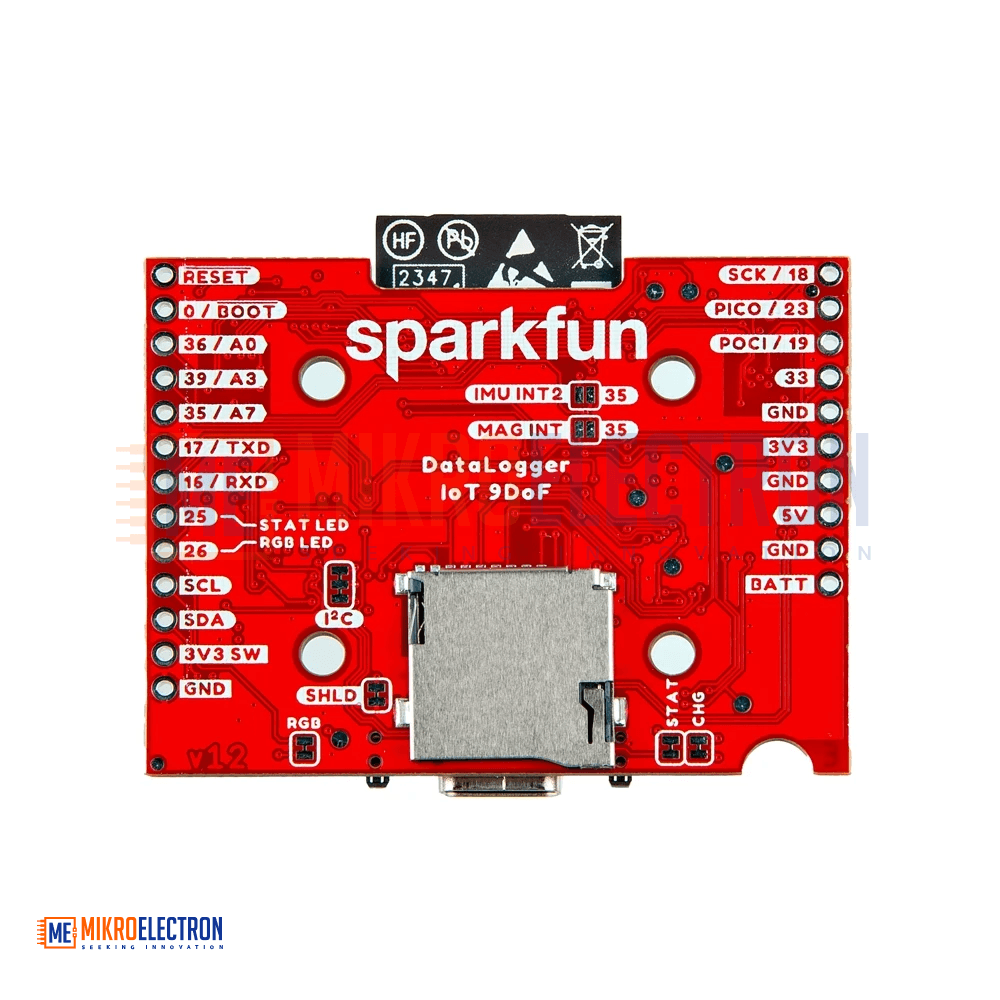
| Ports | 1× USB Type-C, 1× JST LiPo connector, 2× Qwiic (I²C), 1× microSD socket |
| LEDs | Charge (CHG), Status (STAT), 1-Wire B3DQ3BRG Addressable RGB |
| Jumpers | Measure, RGB LED, Status LED, Charge LED, I²C pull-up resistors, USB Shield |
| Buttons | Reset, Boot |
| Firmware Update | OTA via Wi-Fi or microSD binary file |
| Configuration Interface | Serial terminal at 115200 baud |
| Dimensions | 1.66 in × 2.00 in (42.2 mm × 50.8 mm) |
| Weight | 10.65 g |

Applications
- Motion and orientation tracking for drones, robots, UAVs, and autonomous vehicles using the onboard 9DoF sensors.
- Wearable and sports-performance logging to capture body motion, posture, and activity data over extended periods.
- Vibration analysis and structural health monitoring of machinery, vehicles, or buildings using the ISM330DHCX accelerometer and gyroscope.
- Inertial navigation systems combining the 9DoF IMU with u-Blox GNSS modules for dead-reckoning and heading estimation.
- Environmental monitoring stations for tracking temperature, humidity, pressure, VOCs, and CO₂ in indoor or outdoor deployments.
- Air-quality research using BME280, CCS811, SGP40, SCD40, and ENS160 sensors for pollution and ventilation studies.
- GNSS asset tracking and geolocation logging for vehicles, wildlife, drones, and field equipment.
- Industrial IoT (IIoT) data acquisition through AWS IoT, Azure IoT, or MQTT dashboards.
- Weather station deployments with cloud-based visualization via ThingSpeak or Arduino Cloud.
- Presence and distance detection using Time-of-Flight sensors for smart-building or robotics projects.
- Battery-powered remote sensor nodes operating for long durations thanks to low-power sleep modes.
- STEM and educational projects where students can build professional data-logging systems without programming.