
MyoWare 2.0 Wireless Shield
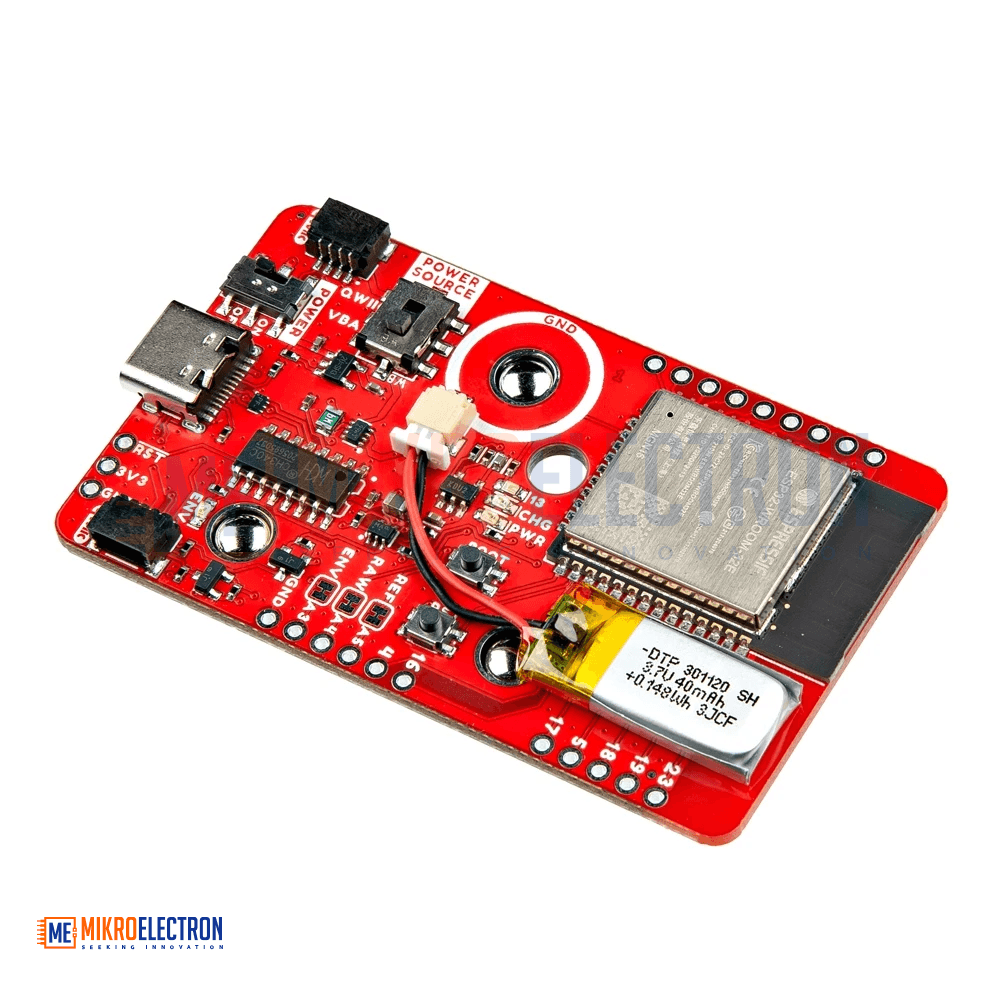
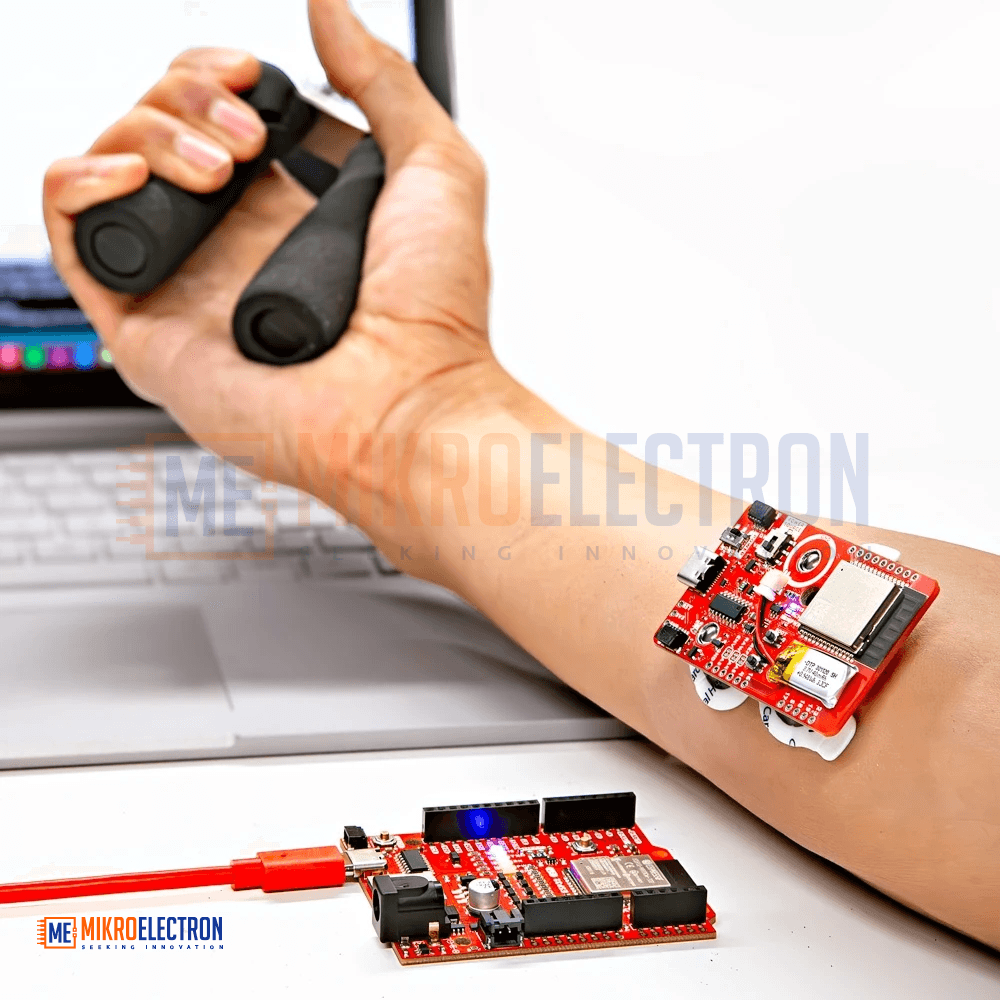
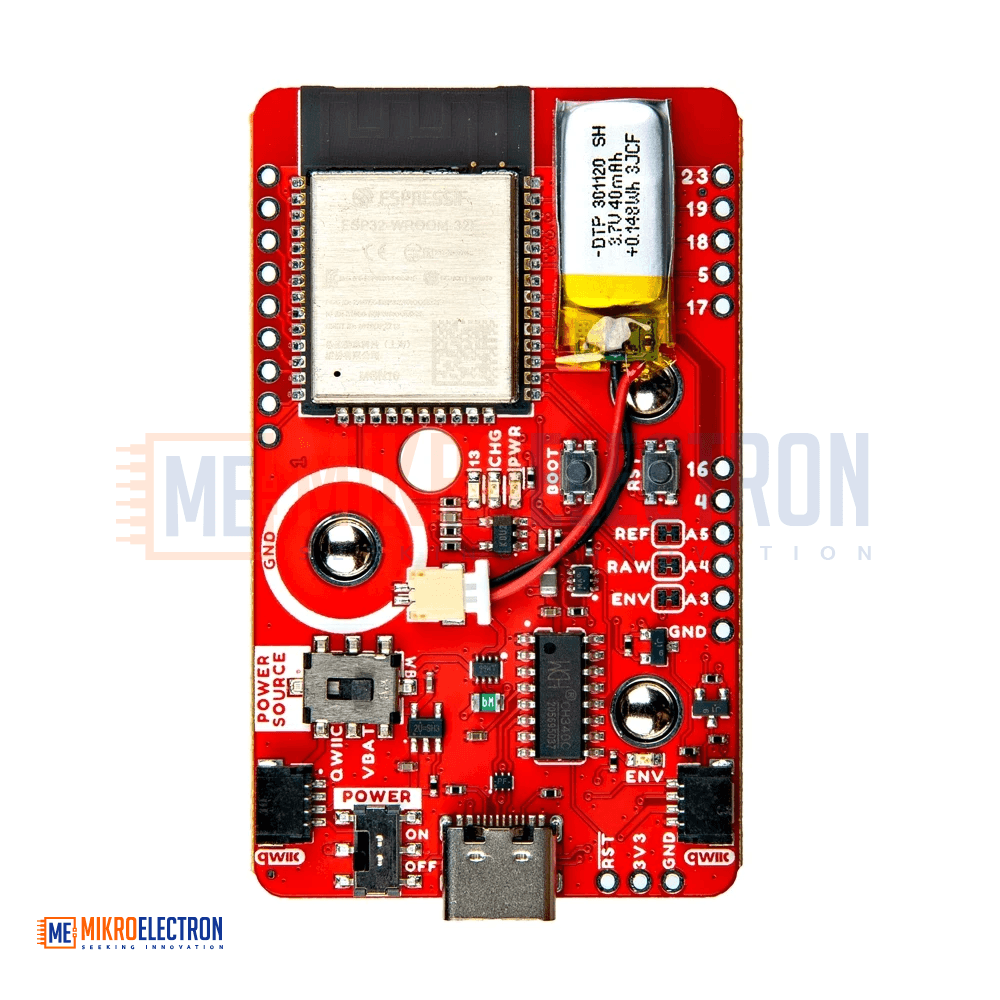
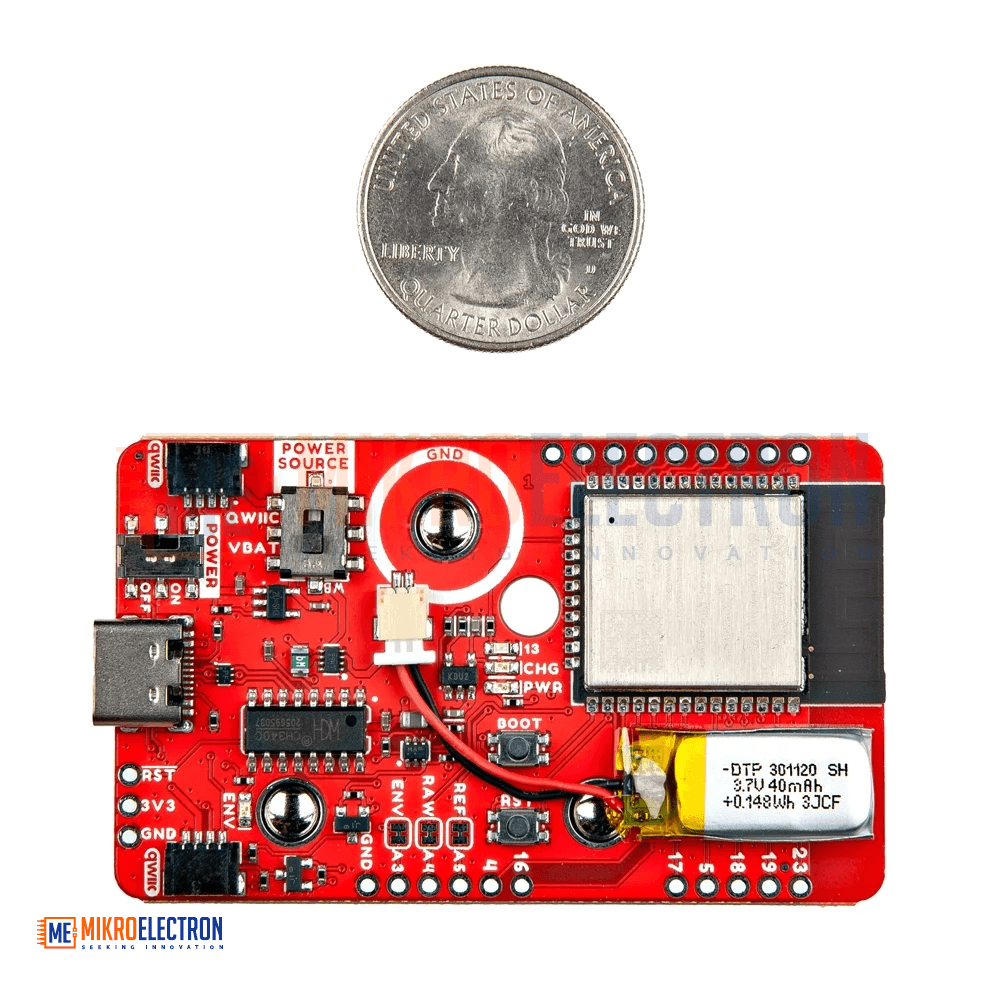
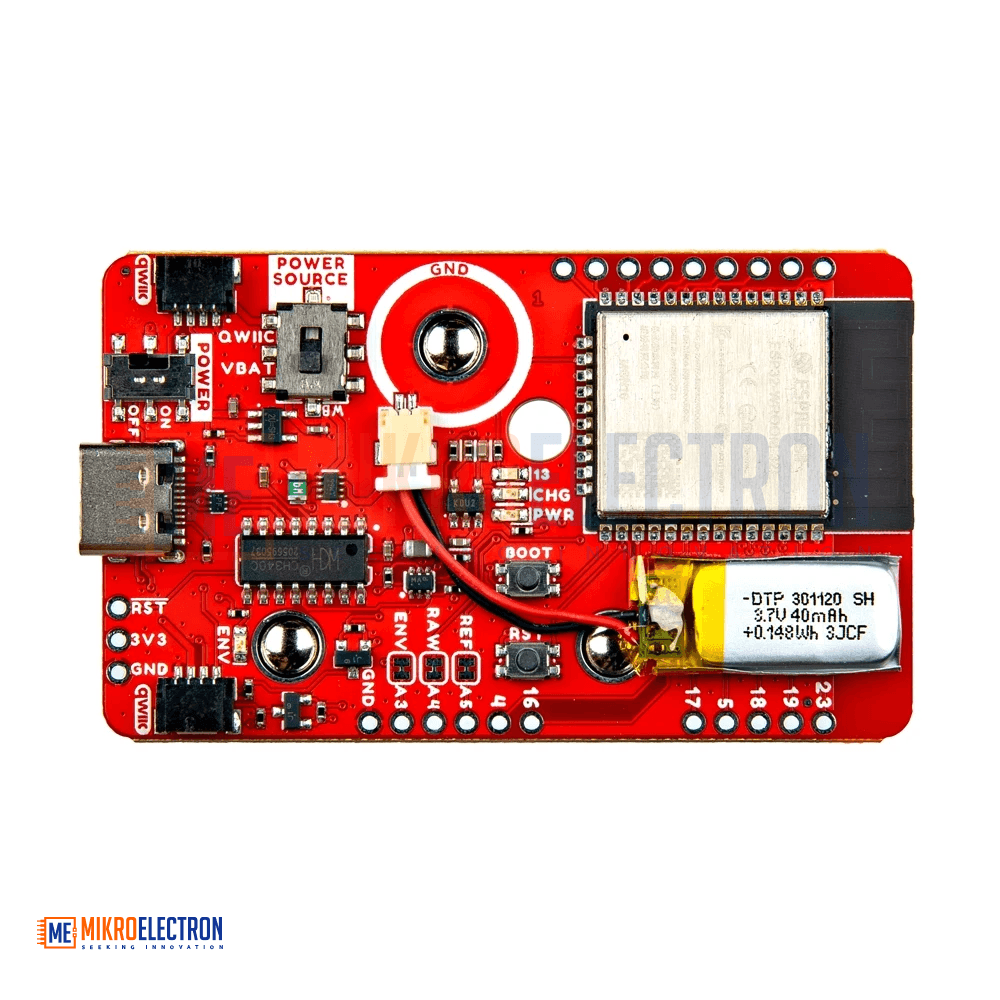
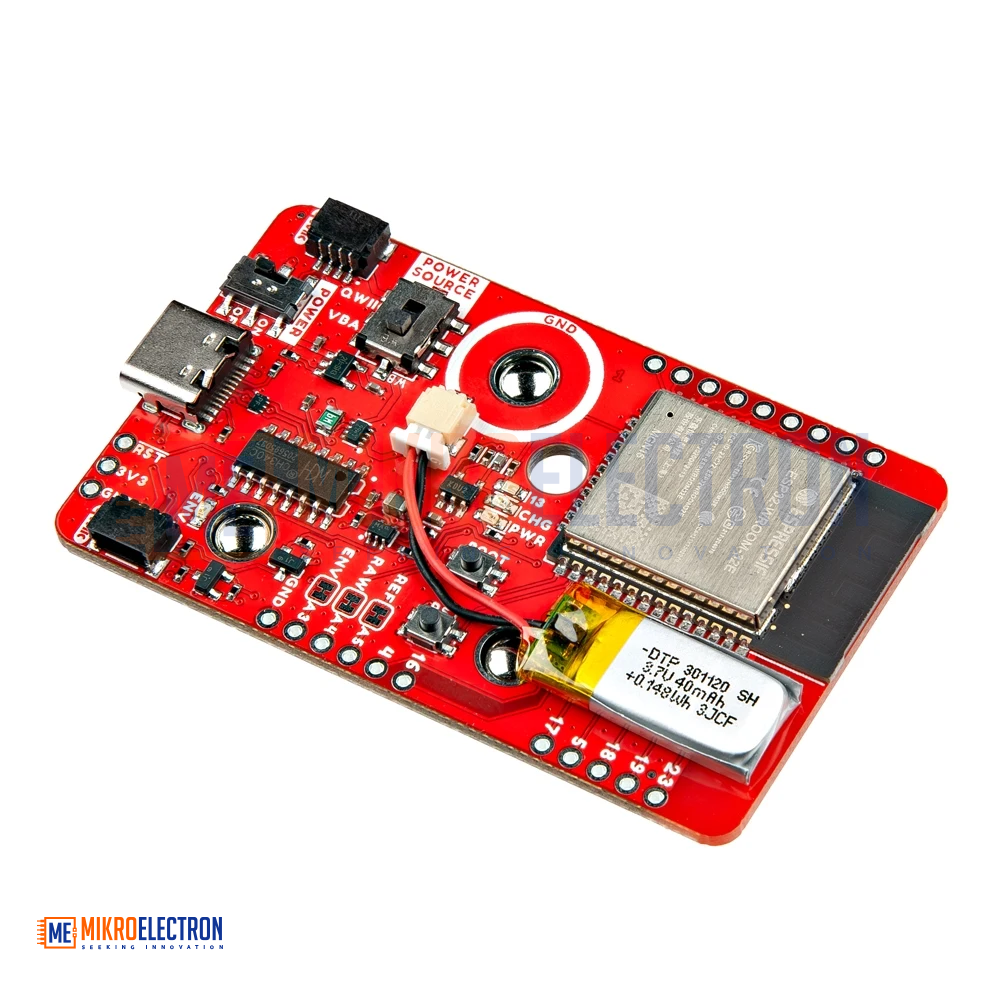
The MyoWare® 2.0 Wireless Shield is a compact expansion board that adds wireless Wi-Fi and Bluetooth connectivity to the MyoWare® 2.0 Muscle Sensor using the ESP32-WROOM module. It features a built-in 40mAh rechargeable LiPo battery, USB Type-C interface, and CH340 USB-to-Serial converter for easy programming with the Arduino IDE. The shield stacks directly onto the muscle sensor using pogo pins and snap connectors, enabling completely wireless EMG data transmission. With integrated power management, protection circuits, Qwiic connectors, and GPIO breakout pins, it is ideal for wearable biometrics, robotics, prosthetics, research, and educational projects.
يعد MyoWare® 2.0 Wireless Shield لوحة توسعة مدمجة تضيف الاتصال اللاسلكي عبر Wi-Fi وBluetooth إلى حساس العضلات MyoWare® 2.0 باستخدام وحدة ESP32-WROOM. تحتوي على بطارية LiPo مدمجة قابلة لإعادة الشحن بسعة 40mAh، ومنفذ USB Type-C، ومحول CH340 USB-to-Serial لتسهيل البرمجة باستخدام Arduino IDE. يتم تركيبها مباشرة فوق حساس العضلات باستخدام موصلات Snap ودبابيس Pogo، مما يتيح نقل بيانات إشارات العضلات (EMG) لاسلكيًا. كما توفر إدارة طاقة متكاملة، ودوائر حماية، وموصلات Qwiic، ومخارج GPIO، مما يجعلها مثالية للأجهزة القابلة للارتداء، والروبوتات، والأطراف الصناعية، والتعليم، والبحث العلمي.
The MyoWare® 2.0 Wireless Shield is a wireless expansion board specifically designed for the MyoWare® 2.0 Muscle Sensor. It integrates an Espressif ESP32-WROOM module, enabling wireless transmission of electromyography (EMG) data through Wi-Fi and Bluetooth for real-time monitoring and control applications.
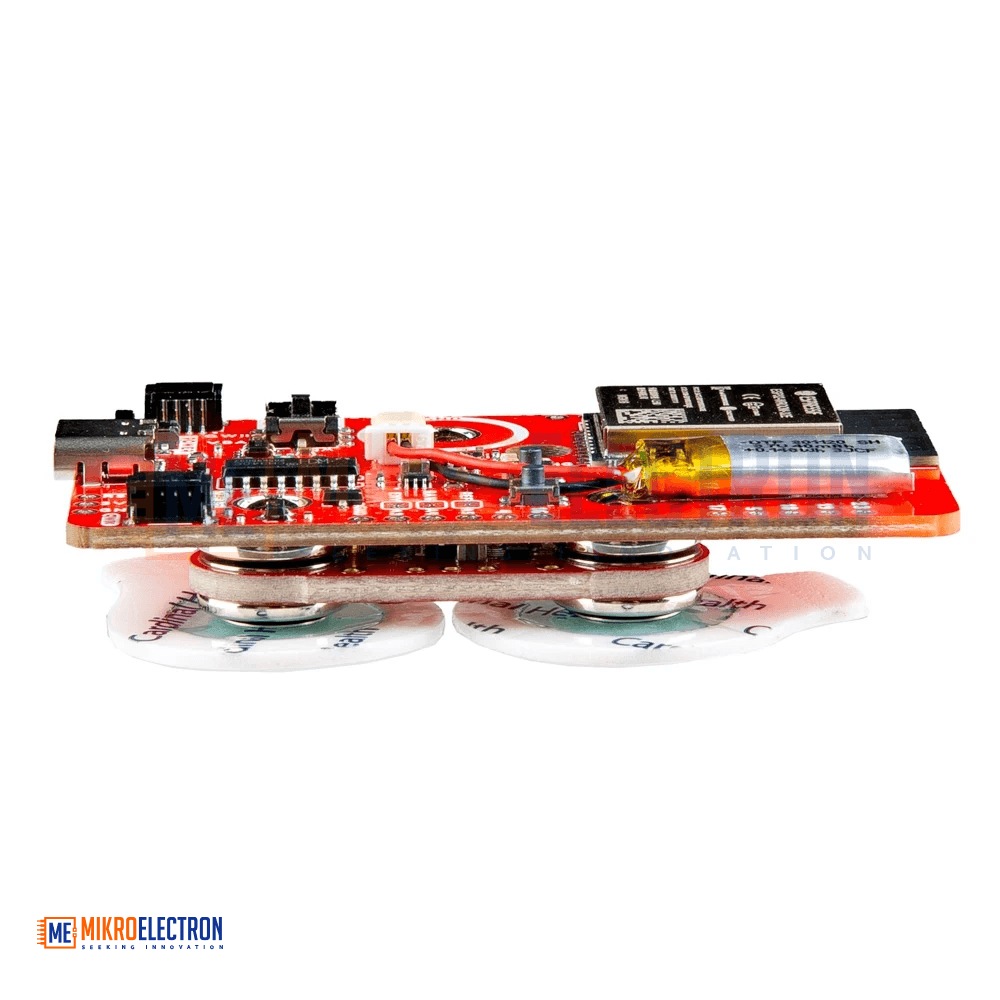
The shield mounts directly onto the MyoWare 2.0 Muscle Sensor using low-profile pogo pins and snap connectors, creating a compact, portable, and cable-free solution. A built-in 40mAh rechargeable LiPo battery powers both the muscle sensor and ESP32, allowing complete electrical isolation during operation. The battery is conveniently recharged through the USB Type-C connector using the onboard charging circuit.
Programming is simple with the integrated CH340 USB-to-Serial converter, allowing development using the Arduino IDE. The board also includes advanced protection features such as ESD protection diodes, ideal diode protection, and a resettable PTC fuse to improve reliability and safety.
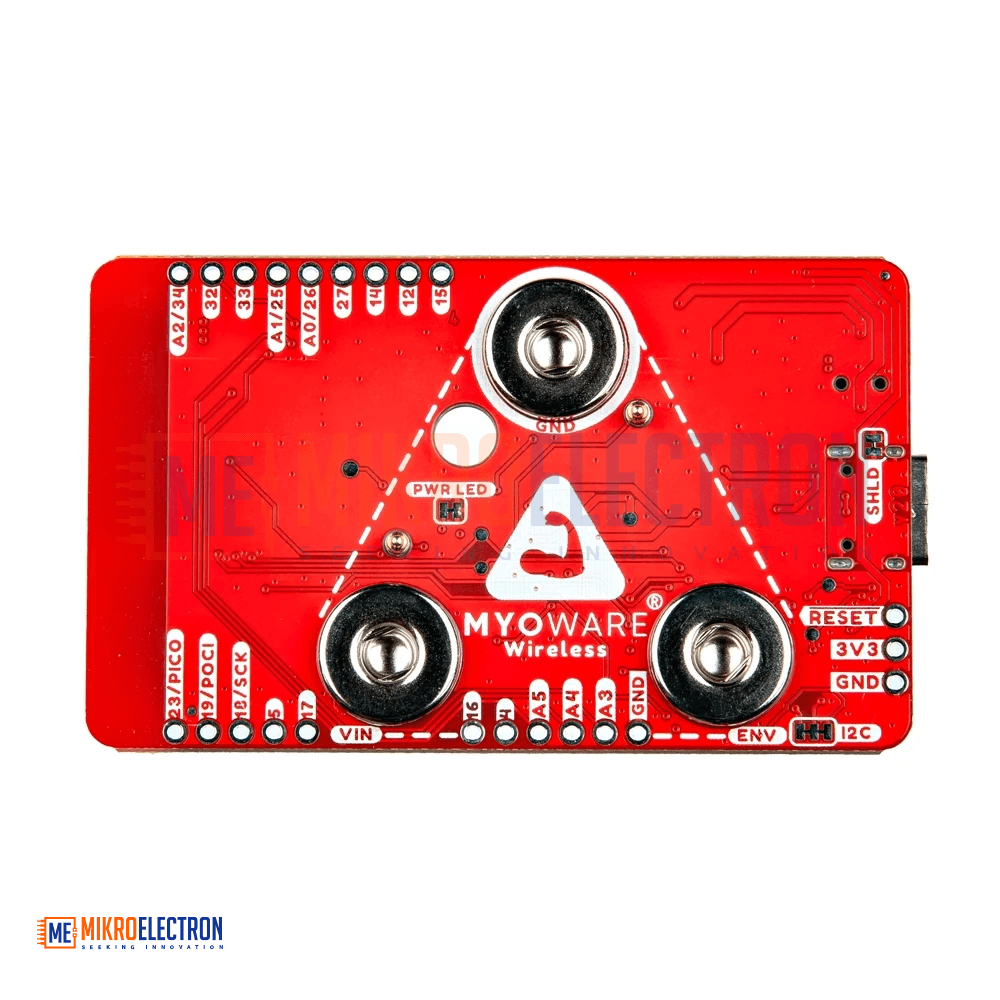
For expansion, the shield provides two Qwiic connectors for I²C peripherals, GPIO breakout pins, configurable jumpers, power source selection, ON/OFF switch, status LEDs, and dedicated reset and bootloader buttons.
This wireless shield is an excellent solution for wearable electronics, muscle-controlled robotics, prosthetics, biomedical research, human-machine interfaces, and educational EMG projects.
Important: The MyoWare® 2.0 Wireless Shield is intended for educational, research, and development purposes only. It is not intended for medical diagnosis, treatment, or disease prevention.
Specifications
| Specification | Details |
|---|---|
| Product | MyoWare® 2.0 Wireless Shield |
| Compatible Sensor | MyoWare® 2.0 Muscle Sensor |
| Wireless Module | Espressif ESP32-WROOM |
| Wireless Connectivity | Wi-Fi & Bluetooth |
| Programming Interface | USB Type-C |
| USB-to-Serial Converter | CH340 |
| Input Voltage | 5V via USB Type-C |
| Operating Voltage | 3.3V |
| Voltage Regulator | RT9080 3.3V |
| Built-in Battery | 40mAh LiPo (3.7V) |
| Battery Charging IC | MCP73831 |
| Charge Current | Approximately 40mA |
| Maximum Charge Rate | 1C (40mA) |
| Power Switches | Power Source Select, Power ON/OFF |
| Protection Features | ESD Diodes, Ideal Diodes, Resettable 6V/500mA PTC Fuse |
| Qwiic Connectors | 2 |
| I²C Pull-up Resistors | 2.2kΩ |
| Buttons | Reset, General Purpose / Bootloader |
| Status LEDs | PWR, CHG, User (13), ENV |
| Configurable Jumpers | PWR, SHLD, REF, RAW, ENV, I²C |
| Board Dimensions | 63.5 × 38.0 mm (2.50 × 1.50 in.) |
| Weight | Approximately 16.7 g |
Applications
- Wireless EMG monitoring
- Muscle-controlled robotics
- Prosthetic control systems
- Wearable biometric devices
- Human-machine interface (HMI) development
- Gesture recognition projects
- Biomedical research and education
- ESP32 IoT applications
- Wireless sensor networks
- Interactive wearable technology