
ND4012DA L Version 10W Dual Output Buck Converter Module DC 7-30V Input to 5V/3.3V Step-Down Power Supply
This is the L Version ND4012DA Buck Converter Module, a compact dual-channel DC-DC step-down power supply that converts an input voltage of DC 7-30V into two stable outputs: 5V and 3.3V. It delivers a maximum output current of 1A on each channel, with a switching frequency of 550KHz and an efficiency of 75-90%. The module features overtemperature shutdown, input under-voltage protection, and short circuit protection, along with a low quiescent current of about 1mA. Its compact size (25 x 21 x 5.8mm) and 2.54mm pin pitch make it ideal for Arduino, MCU, and embedded electronics projects.
هذه هي وحدة محول الجهد ND4012DA بإصدار L، وهي مزود طاقة خافض للجهد (Buck Converter) بقناتين مخرجين، تقوم بتحويل جهد الدخل من 7 إلى 30 فولت تيار مستمر إلى مخرجين ثابتين هما 5 فولت و3.3 فولت. توفر تيار خرج أقصى يبلغ 1 أمبير لكل قناة، بتردد تبديل 550 كيلوهرتز وكفاءة تتراوح بين 75% إلى 90%. تتميز الوحدة بخصائص إيقاف عند ارتفاع الحرارة، وحماية من انخفاض جهد الدخل، وحماية من القصر الكهربائي، بالإضافة إلى تيار سكون منخفض يبلغ حوالي 1 مللي أمبير. حجمها المدمج (25 × 21 × 5.8 ملم) وتباعد أطرافها 2.54 ملم يجعلها مثالية لمشاريع الأردوينو والمتحكمات الدقيقة والإلكترونيات المدمجة.
The ND4012DA L Version Buck Converter Module is a compact, high-efficiency dual-output DC-DC step-down power supply designed to provide reliable, regulated voltage for a wide range of electronic projects. Built as a 10W multiple switching power supply module, it accepts a wide input voltage range and simultaneously delivers two independent, stable output voltages from a single board.
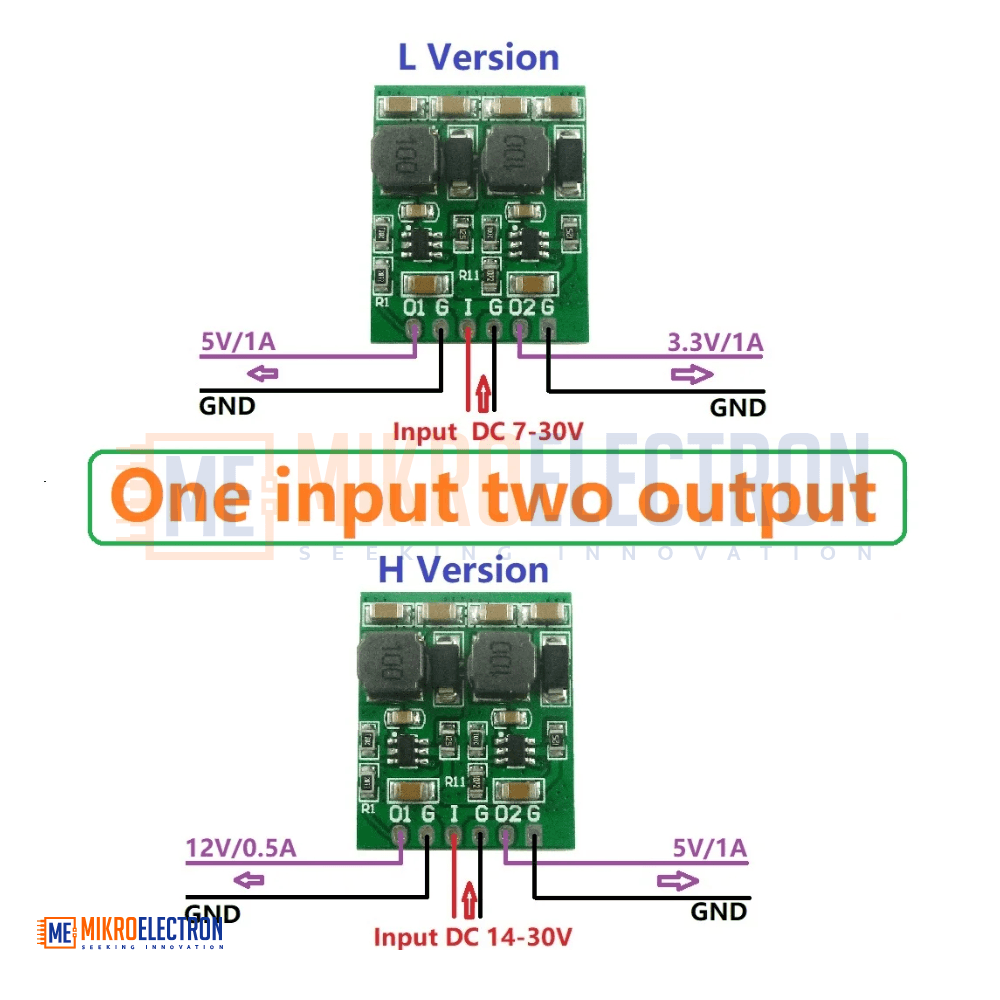
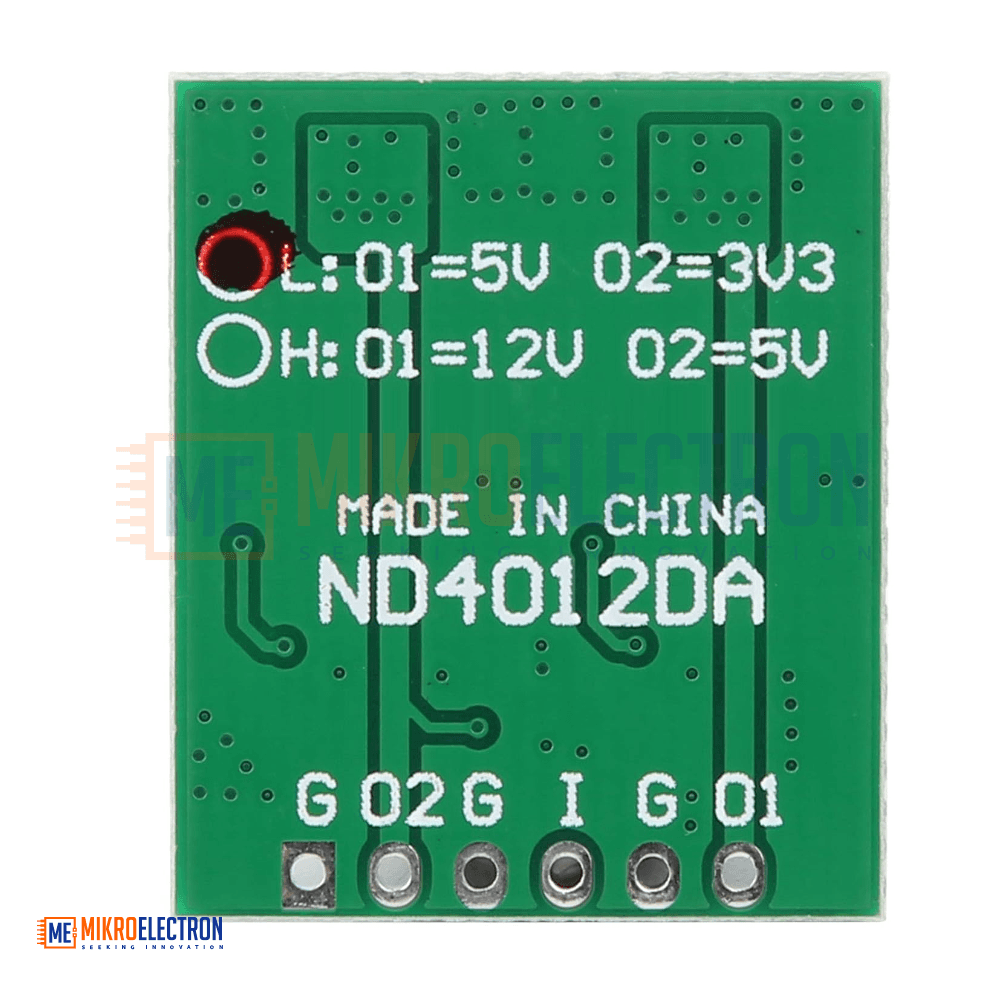
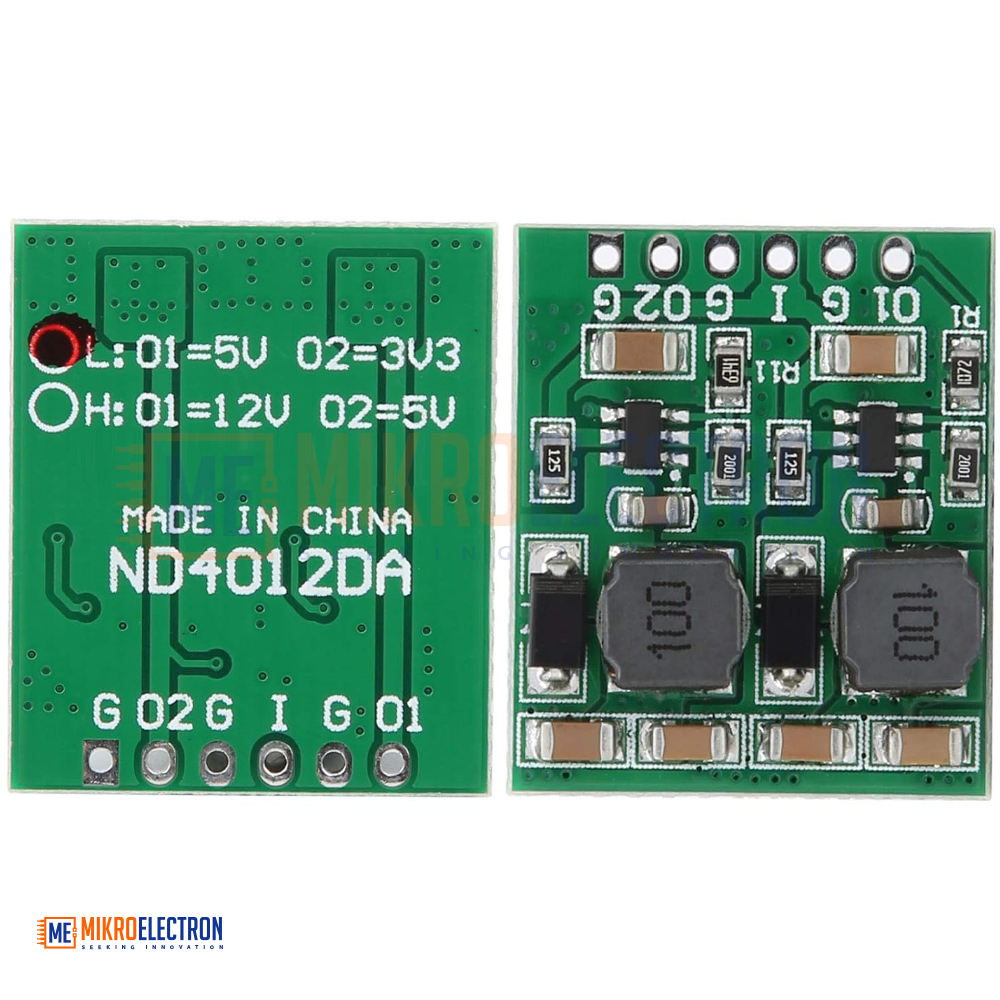
In the L Version, the module accepts an input voltage of DC 7V to 30V and converts it into two regulated outputs: 5V (Output 1) and 3.3V (Output 2). Each output channel can supply a maximum current of 1A, making it suitable for powering microcontrollers, sensors, wireless modules, and other low-power electronic components simultaneously from a single supply source.
The module operates at a switching frequency of 550KHz, achieving a power conversion efficiency of 75% to 90%, which minimizes energy loss and heat generation during operation. Its low quiescent current of approximately 1mA makes it well-suited for battery-powered and energy-sensitive applications, where standby power consumption needs to be minimized.
Safety and reliability are built into the design, with the module featuring overtemperature shutdown protection, input under-voltage protection, BS-voltage protection, and short circuit protection, helping to safeguard both the module and connected devices during abnormal operating conditions.
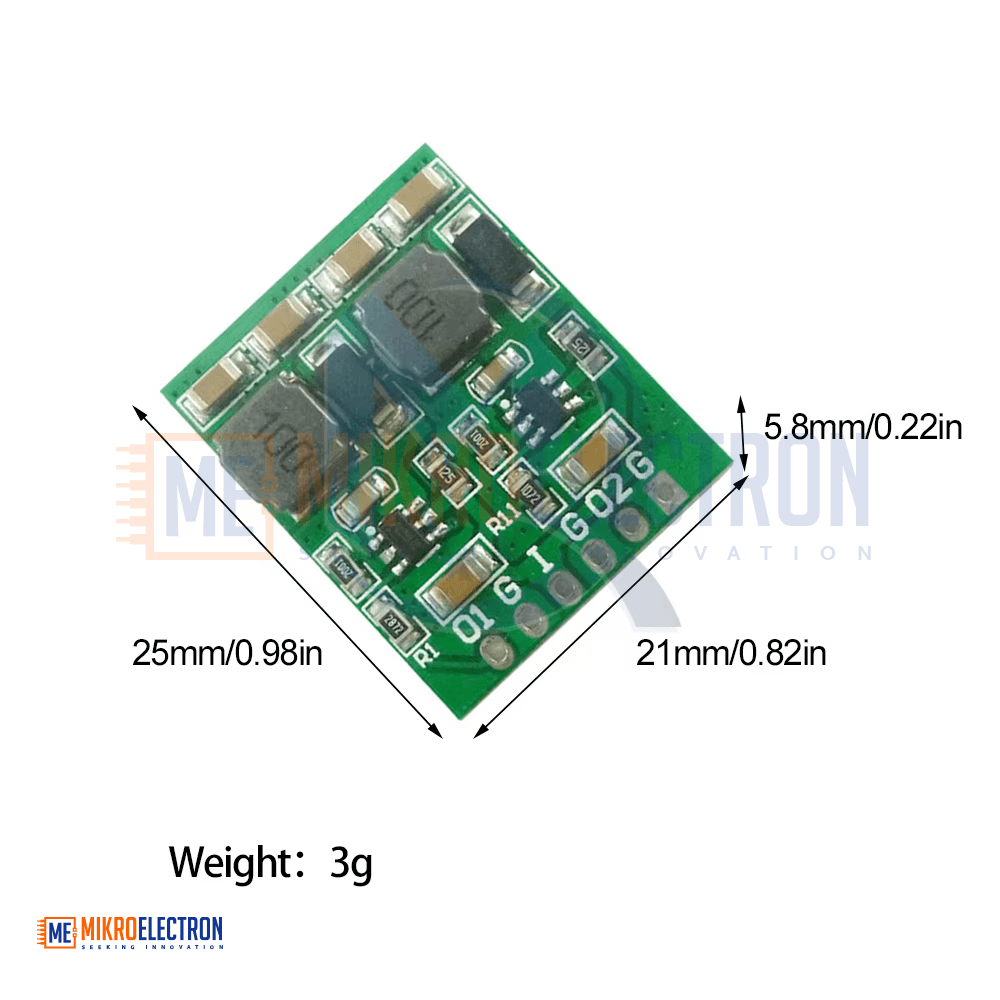
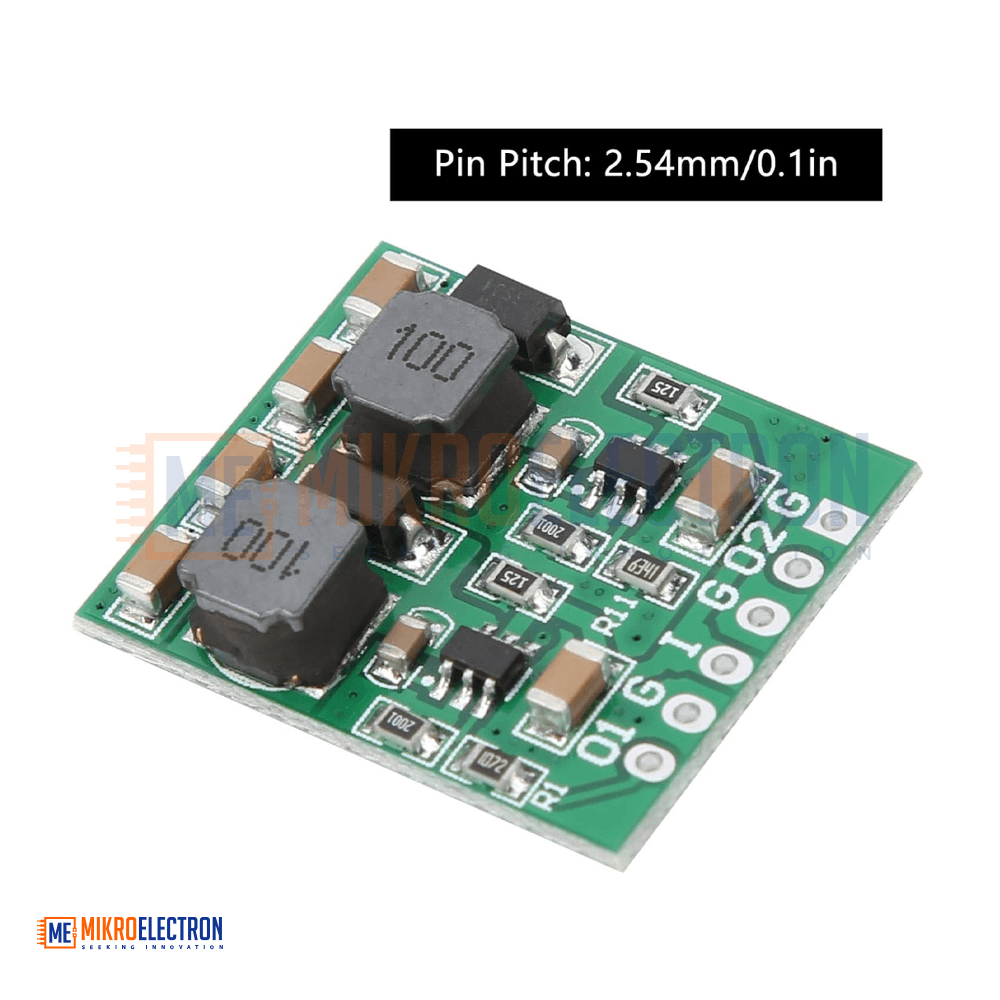
Physically, the board is extremely compact and lightweight, measuring just 25mm x 21mm x 5.8mm and weighing approximately 3 grams. It uses a standard 2.54mm pin pitch, making it fully compatible with breadboards, Arduino UNO, MEGA2560, and other MCU development boards for easy prototyping and integration.
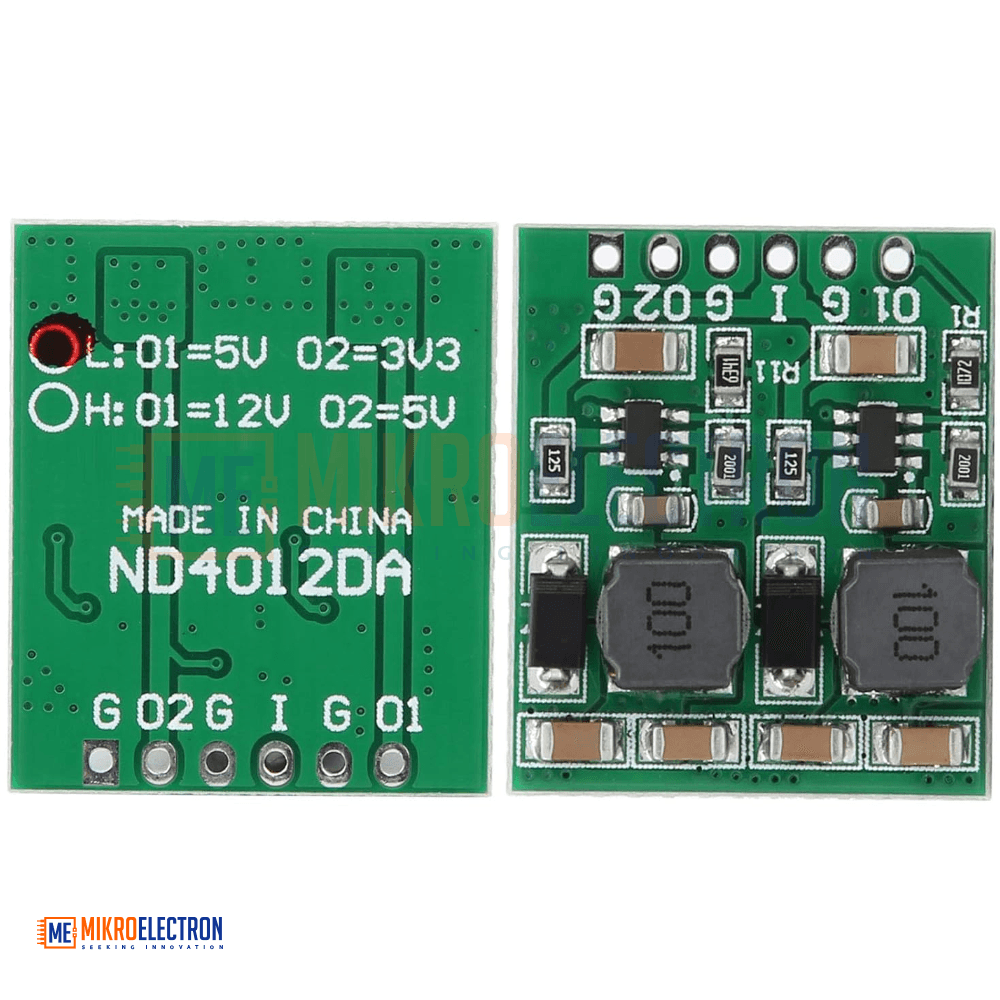
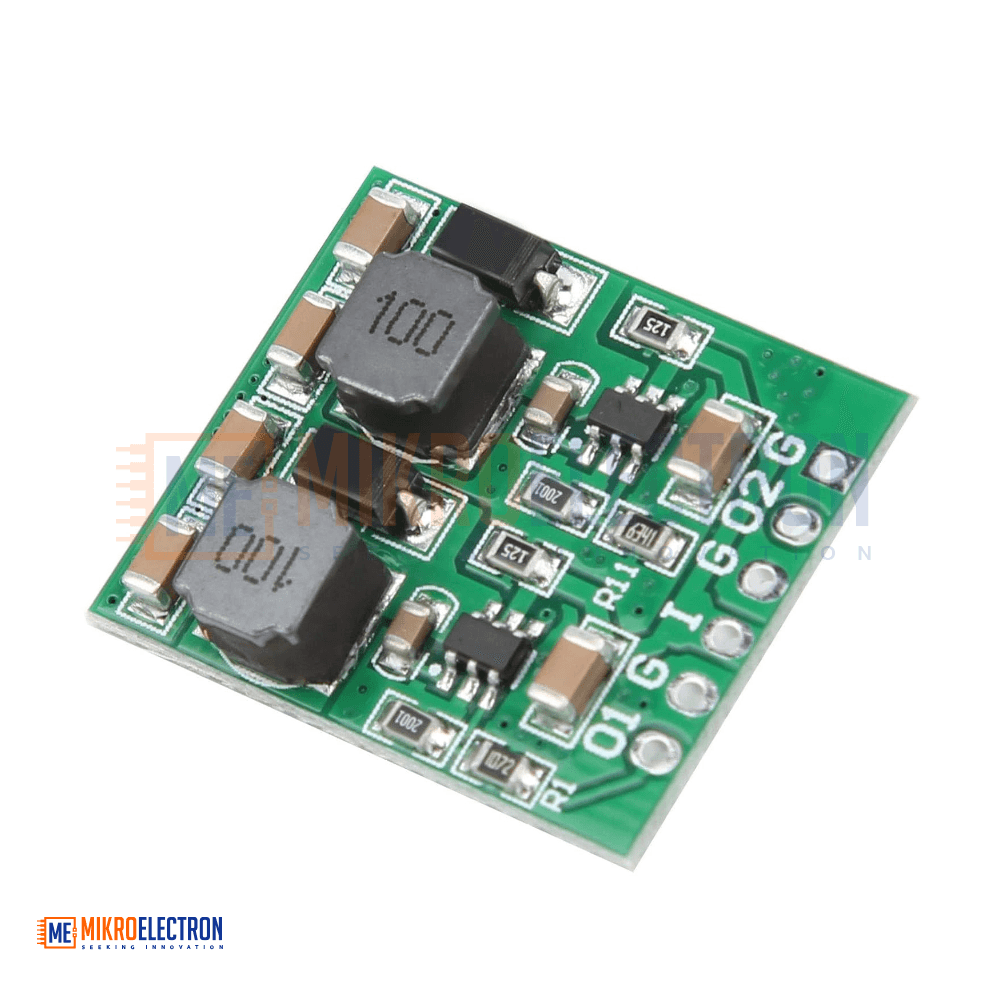
The module includes six clearly labeled pins: O1 (Output 1 +), G (Output 1 −), I (Input +), G (Input −), O2 (Output 2 +), and G (Output 2 −), simplifying wiring and circuit design.
Important usage notes:
- The input voltage must not exceed the maximum rated input range
- The output load must not exceed the maximum rated current for extended periods
- Input power must always be greater than output power, due to the module's own internal power consumption
This versatile power module is widely used in applications such as MCU/ARM/CPU/FPGA power supply, lithium battery-powered systems, small motor toys, WiFi and Bluetooth modules (ESP8266, HC-12), CCTV cameras, wireless RF modules (NRF24L01, CC1101, CC2500, CC2530, Zigbee), smart home devices, distributed power systems, battery chargers, pre-regulation for linear regulators, FM radios, and audio amplifiers.
Specification Table
| Parameter | Value |
|---|---|
| Model | ND4012DA (L Version) |
| Input Voltage | DC 7V ~ 30V |
| Output 1 Voltage | DC 5V |
| Output 2 Voltage | DC 3.3V |
| Maximum Output Current | 5V / 1A ; 3.3V / 1A |
| Switching Frequency | 550KHz |
| Efficiency | 75% ~ 90% |
| Quiescent Current | ~1mA |
| Protection Features | Overtemperature shutdown, input under-voltage protection, BS-voltage protection, short circuit protection |
| Pin Pitch | 2.54mm (breadboard/Arduino compatible) |
| Dimensions | 25mm x 21mm x 5.8mm |
| Weight | ~3g |
| Pin Configuration | O1 (Output1 +), G (Output1 −), I (Input +), G (Input −), O2 (Output2 +), G (Output2 −) |
Applications
- 3.3V / 5V / 12V power supply for MCU, ARM, CPU, FPGA/CPLD systems
- Lithium battery-powered systems
- Small motor and toy power circuits
- WiFi modules (ESP8266) and Bluetooth modules (HC-12)
- CCTV camera power supply
- Wireless RF modules — NRF24L01, CC1101, CC2500, CC2530, Zigbee
- Smart home and home automation devices
- Distributed power systems
- Battery charger circuits
- Pre-regulator for linear regulators
- FM radio circuits
- Battery-powered equipment
- Audio amplifier power supply