
4S Lithium Battery Active Balancer Energy Transfer Board
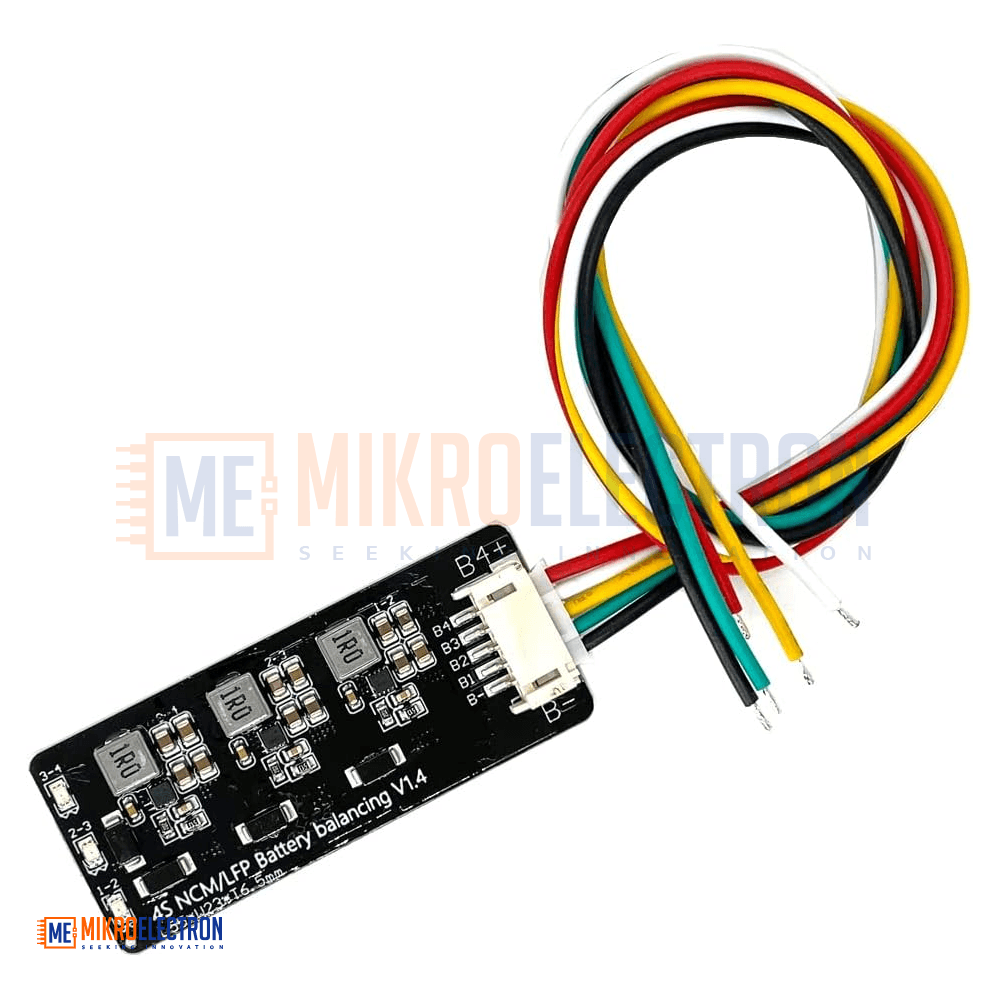
This 4S Active Balancer Module uses inductive energy transfer technology to equalize voltage across a 4-cell lithium battery pack. Unlike passive balancers that waste energy as heat, this board transfers charge from higher-voltage cells to lower-voltage cells, improving overall pack efficiency and lifespan. With a maximum balance current of 1.2A, it automatically activates when the adjacent cell voltage difference exceeds 0.1V and stops once the difference is within 0.03V. Compatible with ternary lithium and lithium iron phosphate (LiFePO4) cells, it must be used together with a lithium battery protection board — not compatible with LTO batteries.
يستخدم موديول الموازنة النشطة 4S تقنية نقل الطاقة الحثي (Inductive Transfer) لموازنة الجهد بين خلايا حزمة بطارية الليثيوم المكونة من 4 خلايا. على عكس الموازنات السلبية التي تهدر الطاقة كحرارة، يقوم هذا اللوح بنقل الشحنة من الخلايا ذات الجهد الأعلى إلى الخلايا ذات الجهد الأقل، مما يحسّن كفاءة الحزمة وعمرها الافتراضي. بتيار موازنة أقصى يبلغ 1.2 أمبير، يعمل تلقائيًا عند تجاوز فرق الجهد بين الخلايا المتجاورة 0.1 فولت ويتوقف عند وصول الفرق إلى 0.03 فولت. متوافق مع خلايا الليثيوم الثلاثي وفوسفات الحديد الليثيوم (LiFePO4)، ويجب استخدامه مع لوحة حماية بطارية الليثيوم — غير متوافق مع بطاريات LTO.
The 4S Active Lithium Battery Balancer Energy Transfer Board is designed to solve one of the most common problems in multi-cell lithium battery packs: voltage imbalance between cells. Over repeated charge and discharge cycles, individual cells naturally drift apart in voltage due to manufacturing tolerances and usage patterns. Left unmanaged, this imbalance reduces overall pack capacity, shortens battery life, and can create safety risks.
This board is built on the principle of adjacent equalization. It is not a standalone maintenance tool — it must be connected and used together with a lithium battery protection board (BMS). The pressure (voltage) difference generated during charging and discharging triggers the equalizer to work, actively transferring energy between adjacent cells rather than simply bleeding off excess charge as heat, which is how traditional passive balancers operate.
How it works: the module continuously monitors the voltage difference between adjacent cells. When the difference exceeds 0.1V, the onboard chip triggers active balancing at a rate of approximately 0.5–0.7A. If the difference exceeds 0.2V, the equalizing current increases to a maximum of 1.2A. As the voltage gap narrows, the equalizing current automatically decreases. Balancing continues until the adjacent voltage difference falls within 0.03V, at which point the module stops working to conserve energy.
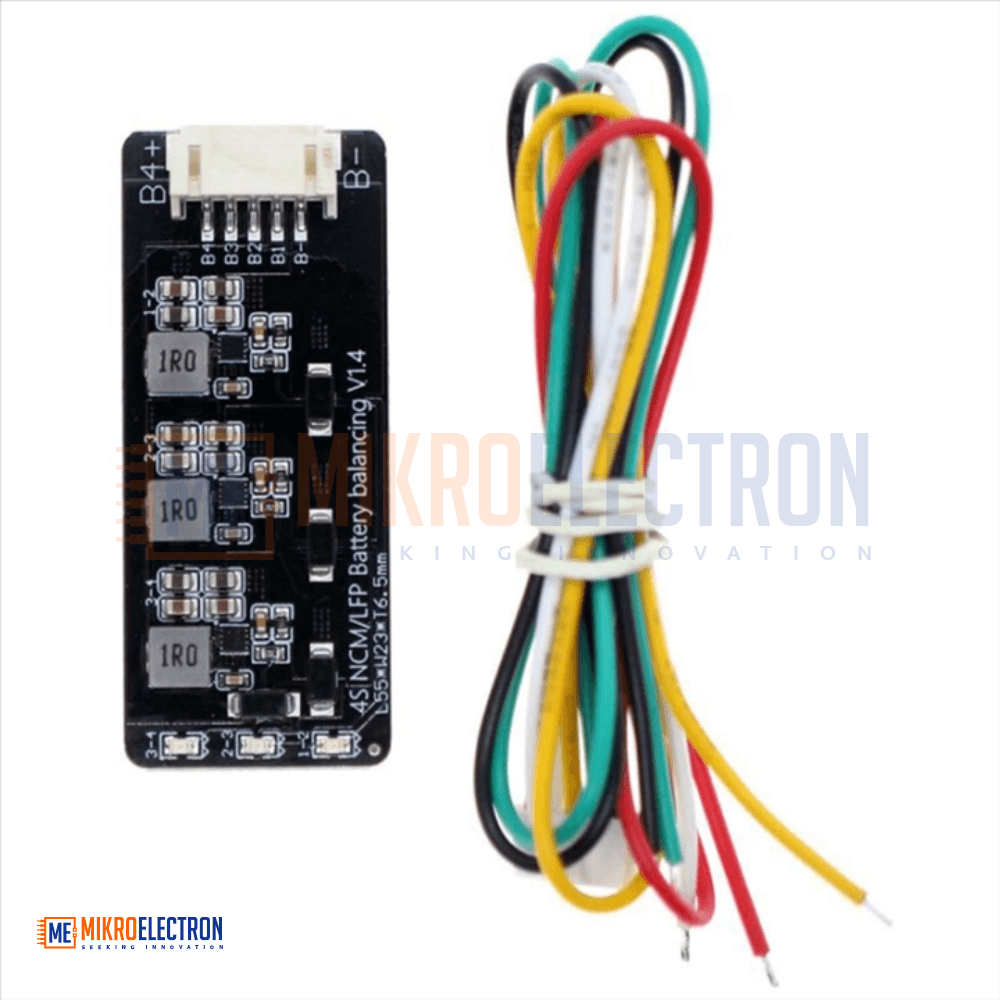
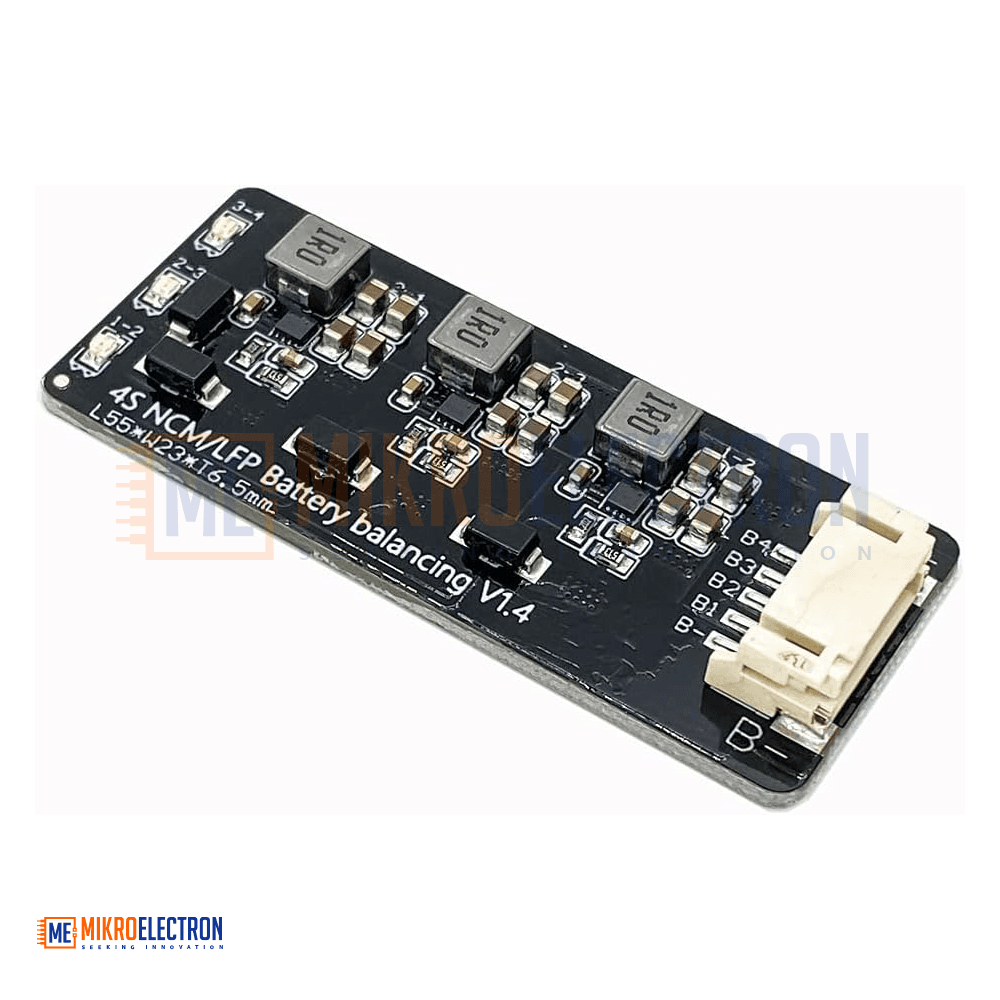
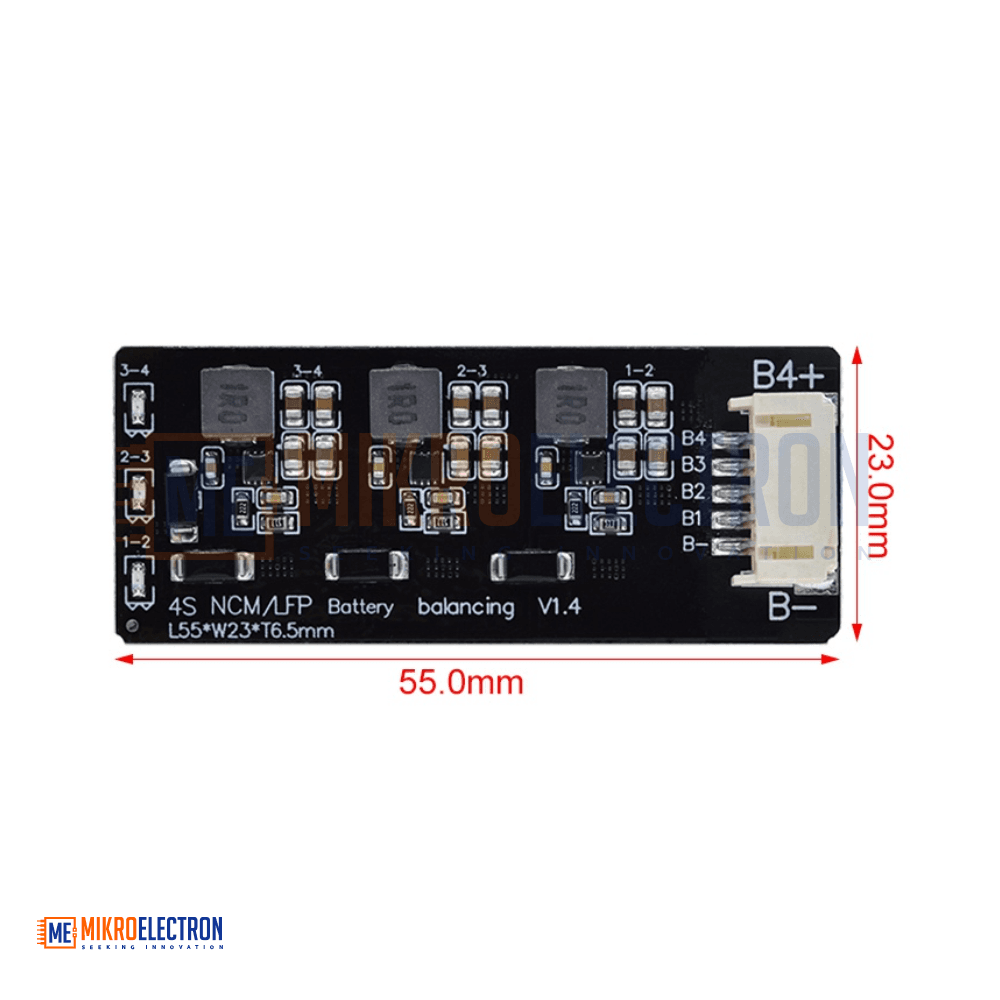
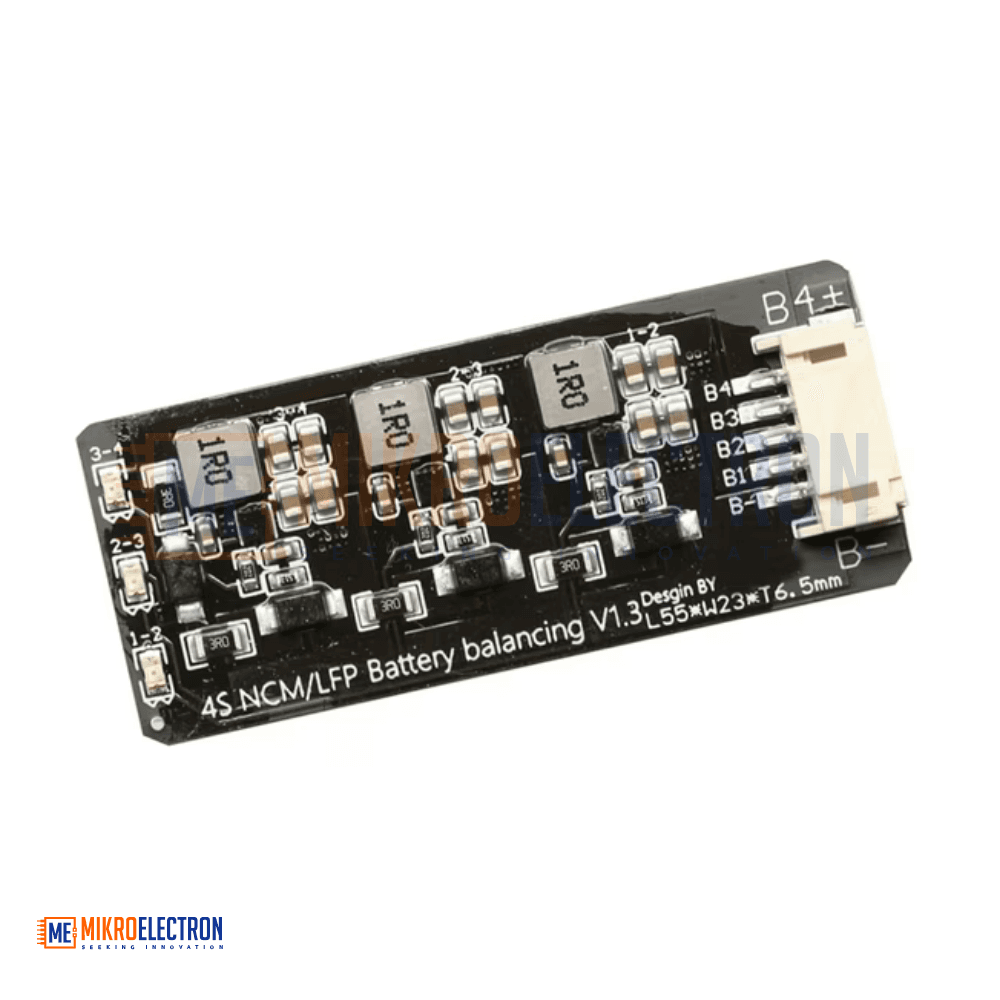
An onboard LED indicates the current state: light on means active balancing is in progress, light off means the circuit is idle (sleep state), and a flashing light indicates a dropped string connection or a circuit fault.
Important installation notes:
- Batteries must be properly matched before installation. Ideally, the voltage difference between cells should not exceed 0.05V, internal resistance difference should be no greater than 5mΩ, and capacity difference should be under 30mAh for best performance and battery life.
- Batteries should be connected in parallel before being connected in series, with correct welding technique. 18650 cells should be spot-welded with nickel plates; other cell types should be soldered. Do not screw terminals down directly, as this can burn out the protection IC.
- Confirm whether the pack uses lithium (ternary lithium, lithium cobalt oxide, or manganese oxide) cells at a 3.7V reference voltage, or lithium iron phosphate (LiFePO4) cells at a 3.2V reference voltage, and select the matching protection board accordingly.
- For packs with more than 13 series connections, cable plugs must be inserted obliquely, contacting the B- pin first, to avoid damaging the board.
This makes the module ideal for hobbyists, battery pack builders, and technicians assembling or maintaining 4S lithium battery packs for e-bikes, power tools, solar storage, and similar applications.
Specifications
| Parameter | Value |
|---|---|
| Product Type | Active Lithium Battery Energy Transfer Equalizer (Balancer) Module |
| Configuration | 4S (4-cell series lithium battery pack) |
| Balancing Method | Inductive active energy transfer (adjacent cell equalization) |
| Working Voltage (per cell) | 2.0V – 4.5V |
| Compatible Cell Chemistry | Ternary lithium / lithium iron phosphate (LiFePO4) |
| LTO Compatibility | Not applicable / not supported |
| Balance Trigger Threshold | Adjacent voltage difference > 0.1V |
| Balancing Stop Threshold | Adjacent voltage difference within 0.03V |
| Balance Current (0.1V–0.2V difference) | Approx. 0.5A – 0.7A |
| Maximum Balance Current (>0.2V difference) | 1.2A |
| Status Indicator | LED — on = balancing active, off = sleep mode, flashing = fault/dropped string |
| Required Companion Component | Lithium battery protection board (BMS) — must be used together, not standalone |
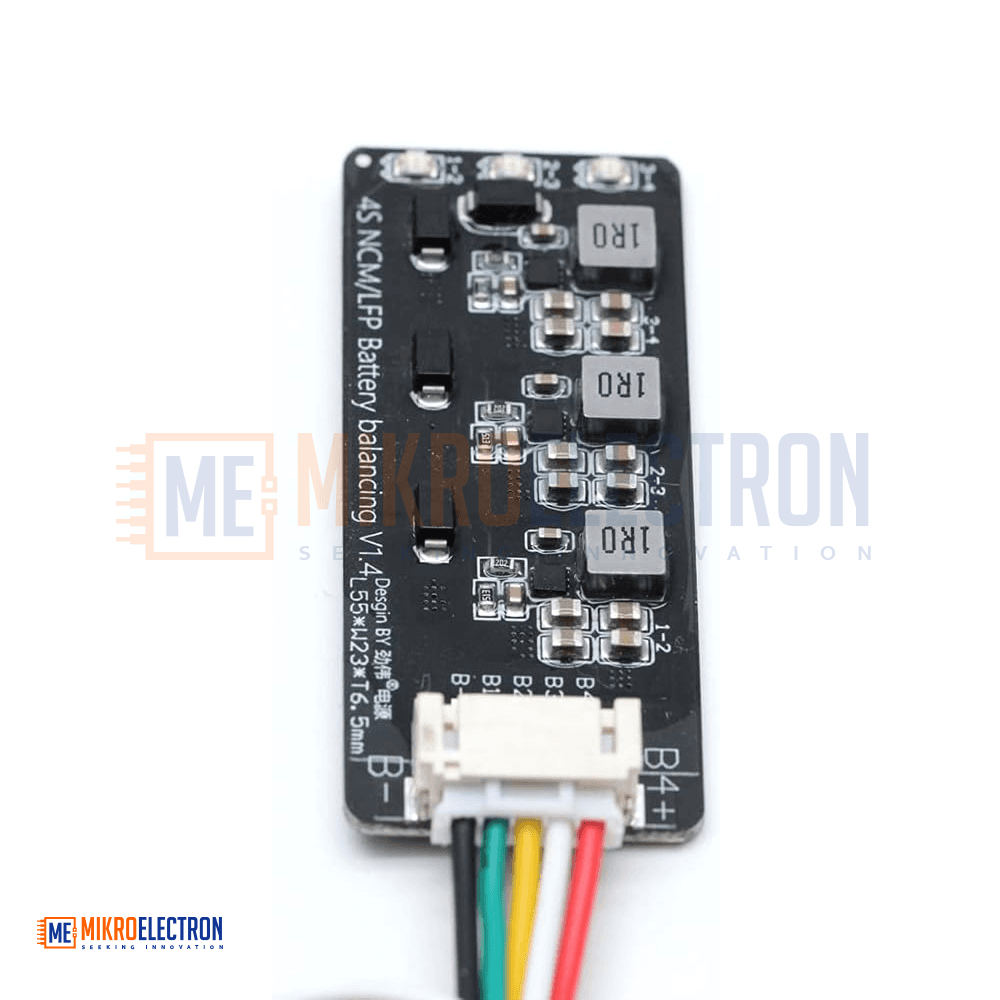
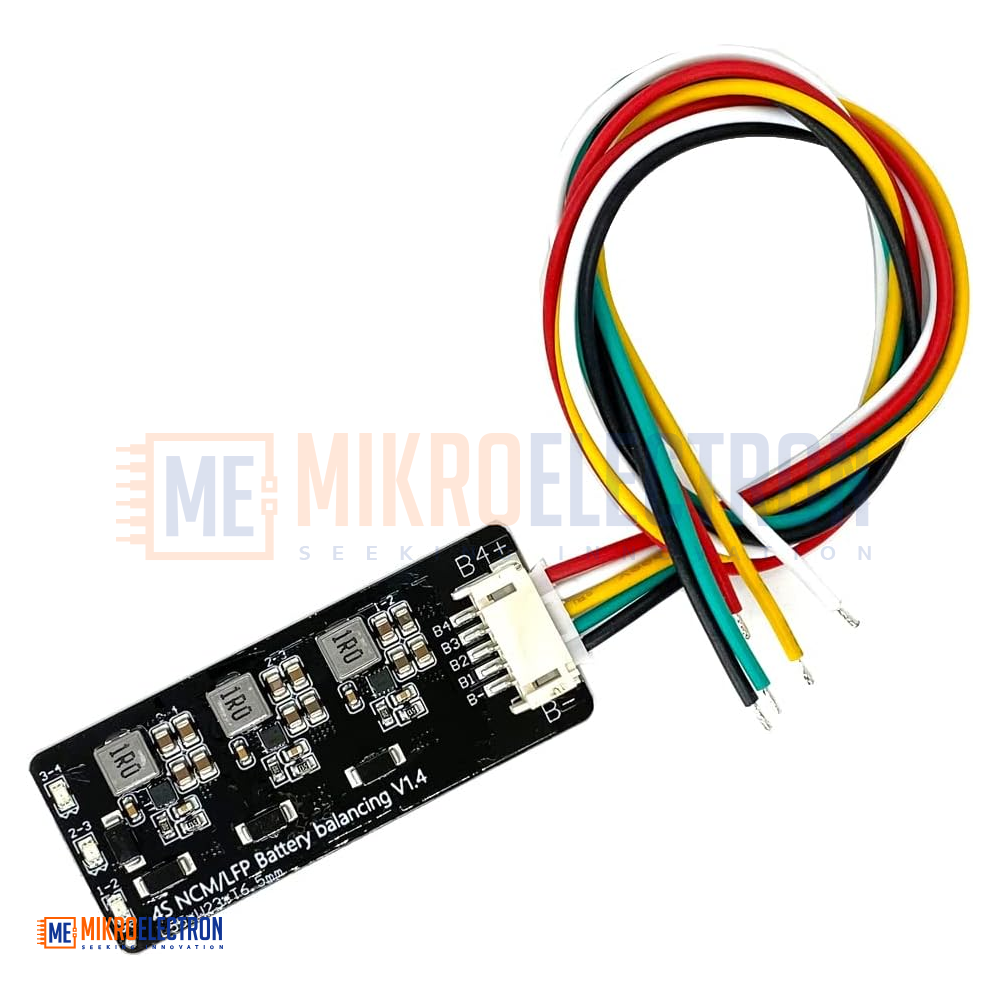
| Terminal Layout | B- (pack negative), B1 (cell 1 positive), B2 (cell 2 positive), B3 (cell 3 positive), B4 (cell 4 positive) |
| Recommended Cell Matching Tolerance | Voltage difference ≤ 0.05V, internal resistance difference ≤ 5mΩ, capacity difference ≤ 30mAh |
Applications
- 4S lithium battery pack assembly and maintenance for e-bikes, e-scooters, and light electric vehicles
- Solar energy storage systems using 4-cell lithium battery banks
- Power tool battery packs requiring long-term voltage consistency
- Portable power stations and backup battery systems
- DIY battery pack builders working with 18650, 21700, or prismatic lithium cells
- LiFePO4 battery packs in off-grid and renewable energy setups
- Robotics and drone battery packs where consistent per-cell voltage improves performance and safety