
Halisense SI-M-S Solar Irradiance Sensor RS485/Analog Solar Radiation Transmitter
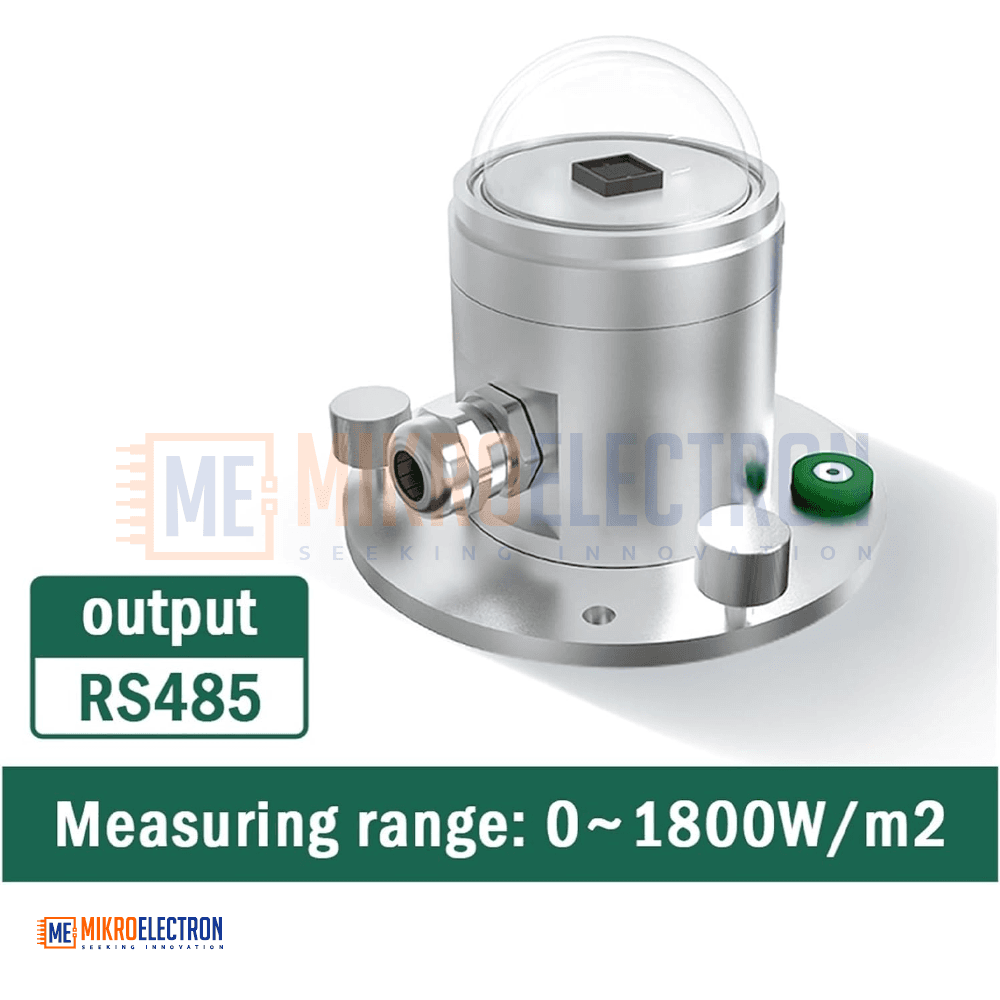
The Halisense Solar Irradiance Sensor is a professional-grade pyranometer designed to measure solar radiation intensity for weather stations, solar power systems, and agricultural monitoring. Available with RS485 (Modbus-RTU) or analog output (4-20mA, 0-5V, 0-10V), it measures a range of 0–1800W/m² with 1W/m² resolution and ±2% nonlinearity. Built with a stainless steel housing and protective dome cover, it operates reliably across -25°C to 60°C and 0-100% humidity, making it ideal for outdoor installations. Its compact design, fast response time, and industrial-grade accuracy make it a dependable solution for solar radiation monitoring.
يُعد مستشعر الإشعاع الشمسي Halisense جهاز قياس احترافي مصمم لقياس شدة الإشعاع الشمسي لمحطات الطقس، وأنظمة الطاقة الشمسية، ومراقبة المحاصيل الزراعية. متوفر بمخرج RS485 (بروتوكول Modbus-RTU) أو مخرج تناظري (4-20 مللي أمبير، 0-5 فولت، 0-10 فولت)، ويقيس نطاقاً يصل إلى 0-1800 واط/م² بدقة تصل إلى 1 واط/م² ونسبة خطأ خطي ±2%. مصنوع من هيكل فولاذ مقاوم للصدأ مع غطاء قبة واقٍ، ويعمل بموثوقية ضمن نطاق حرارة -25 إلى 60 درجة مئوية ورطوبة 0-100%، مما يجعله مثالياً للتركيبات الخارجية. يتميز بتصميمه المدمج، واستجابته السريعة، ودقته الصناعية العالية.
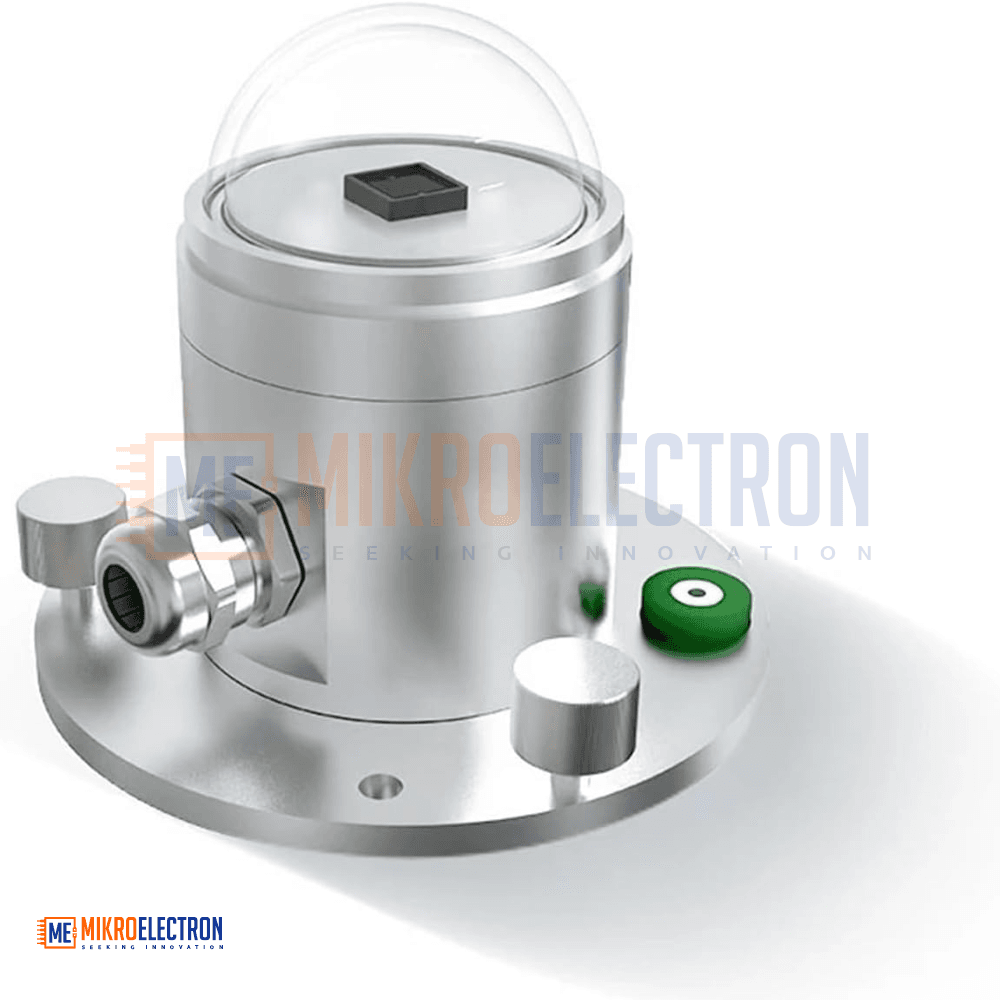
The Halisense SI-M-S Solar Irradiance Sensor is a high-precision pyranometer engineered to accurately measure solar radiation intensity in outdoor and industrial environments. Designed for use in weather stations, solar photovoltaic monitoring systems, greenhouse automation, and agricultural research, this sensor provides reliable and continuous solar radiation data.
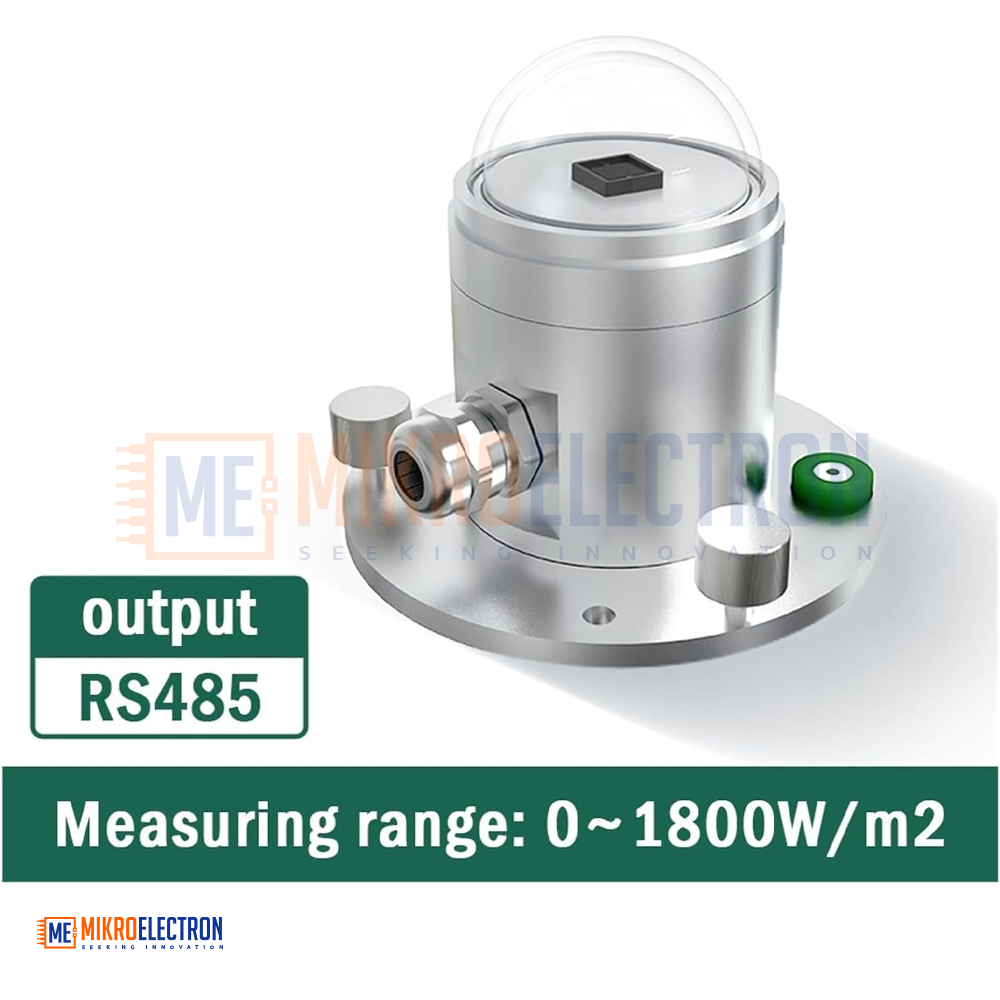
The sensor is available in two output configurations to suit different integration needs: an analog output version supporting 4-20mA, 0-5V, and 0-10V signals, and an RS485 output version using the standard Modbus-RTU protocol for digital communication with PLCs, data loggers, and monitoring systems.
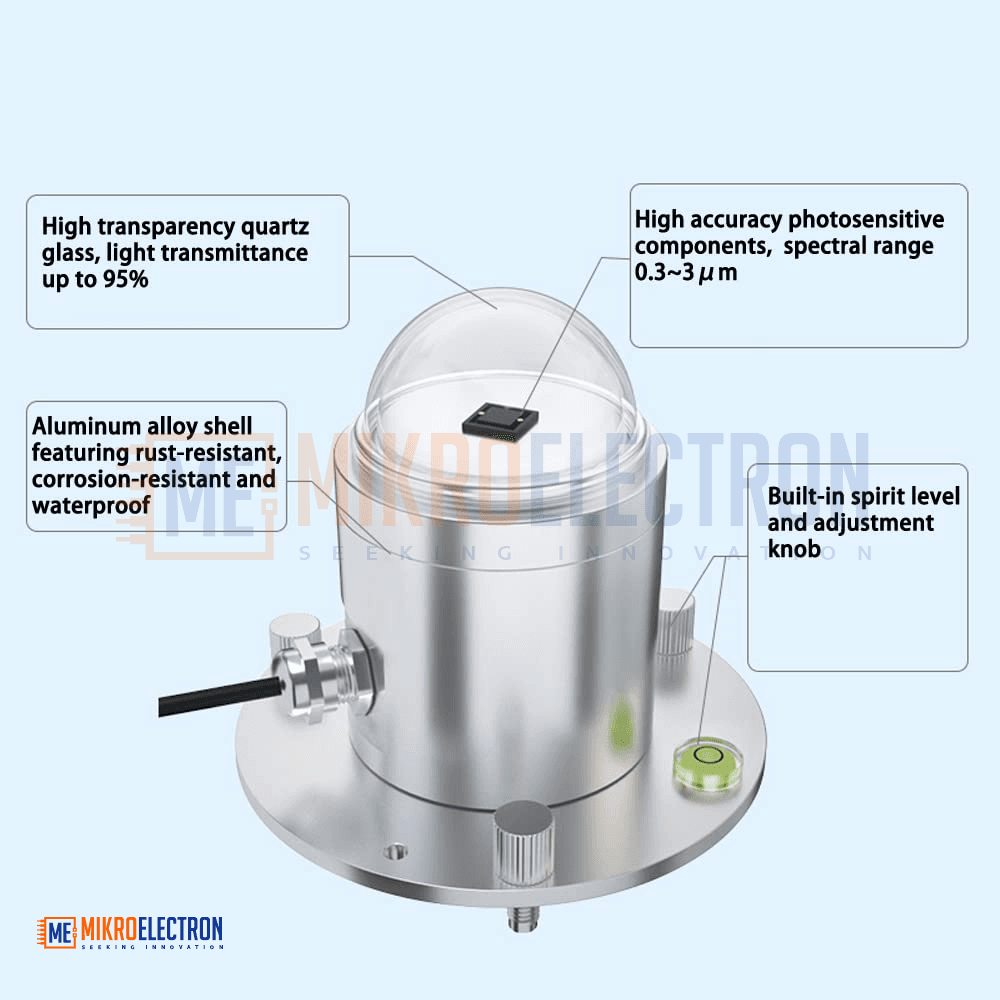
Housed in a durable stainless steel enclosure with a transparent protective dome, the sensor is built to withstand harsh outdoor conditions, operating reliably across a wide temperature range of -25°C to 60°C and full 0-100% relative humidity. It measures solar radiation across the 0.3–3μm spectral range, covering 0 to 1800W/m² with a resolution of 1W/m², a response time of ≤10 seconds, and nonlinearity and annual stability both within ±2%.
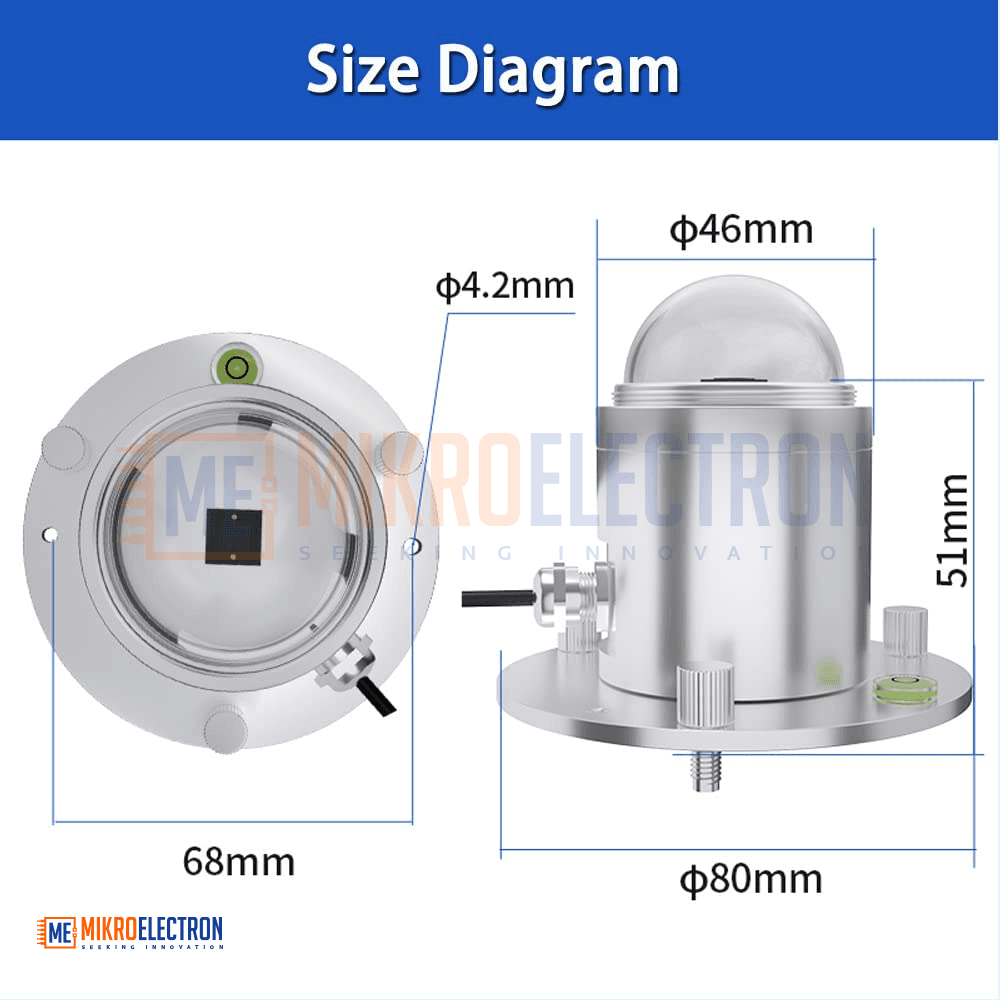
Installation is straightforward: the sensor mounts on a horizontal bracket using its base mounting holes, ensuring the sensing surface remains parallel to the ground for accurate readings. The protective dust cover should be removed after mounting is complete, and care must be taken not to damage it during installation, as this can affect measurement accuracy.
Specifications
Analog Output Version (4-20mA / 0-5V / 0-10V)
| Parameter | Value |
|---|---|
| Power Supply Range | 10V – 30V DC |
| Power Consumption | 0.06W |
| Output Signal | 4-20mA, 0-5V, 0-10V |
| Working Humidity | 0% – 100% RH |
| Working Temperature | -25°C to 60°C |
| Spectral Range | 0.3 – 3μm |
| Measuring Range | 0 – 1800 W/m² |
| Resolution | 1 W/m² |
| Response Time | ≤ 10 seconds |
| Nonlinearity | ≤ ±2% |
| Annual Stability | ≤ ±2% |
| Cosine Response | ≤ ±10% |
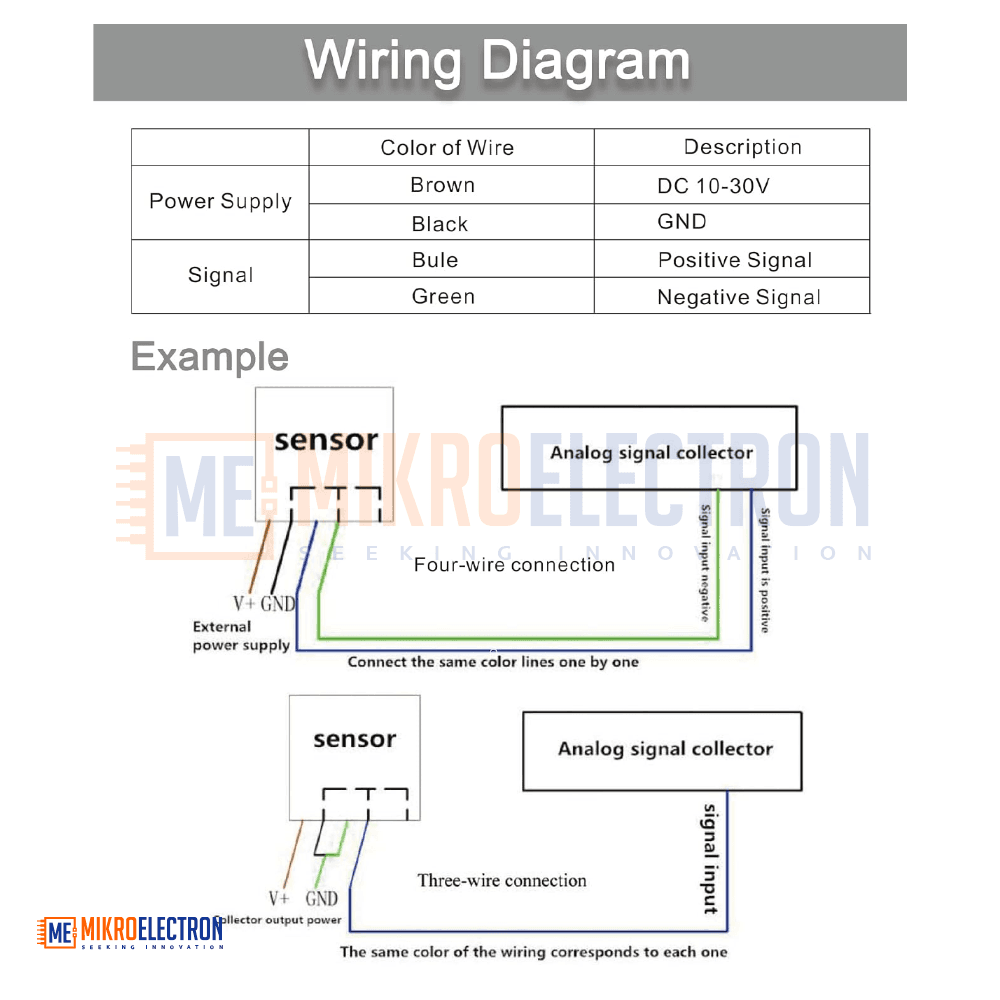
| Wiring | Brown: Power+, Black: Power-, Blue: Signal+, Green: Signal- |
RS485 Output Version (Modbus-RTU)
| Parameter | Value |
|---|---|
| Power Supply Range | 10V – 30V DC |
| Power Consumption | 0.6W |
| Output Signal | RS485 (Standard Modbus-RTU Protocol) |
| Working Humidity | 0% – 100% RH |
| Working Temperature | -25°C to 60°C |
| Spectral Range | 0.3 – 3μm |
| Measuring Range | 0 – 1800 W/m² |
| Resolution | 1 W/m² |
| Response Time | ≤ 10 seconds |
| Nonlinearity | < ±2% |
| Annual Stability | ≤ ±2% |
| Cosine Response | ≤ ±10% |
| Wiring | Brown: Power+, Black: Power-, Green: 485-A, Blue: 485-B |
Installation Steps
- Remove the protective cover after installation is complete.
- Ensure the mounting bracket is properly installed and the sensor is positioned parallel to the ground.
- Secure the sensor to the mounting bracket using a screw through the mounting hole on the sensor base.
- Do not damage the dust cover during installation, as this can negatively affect measurement accuracy.
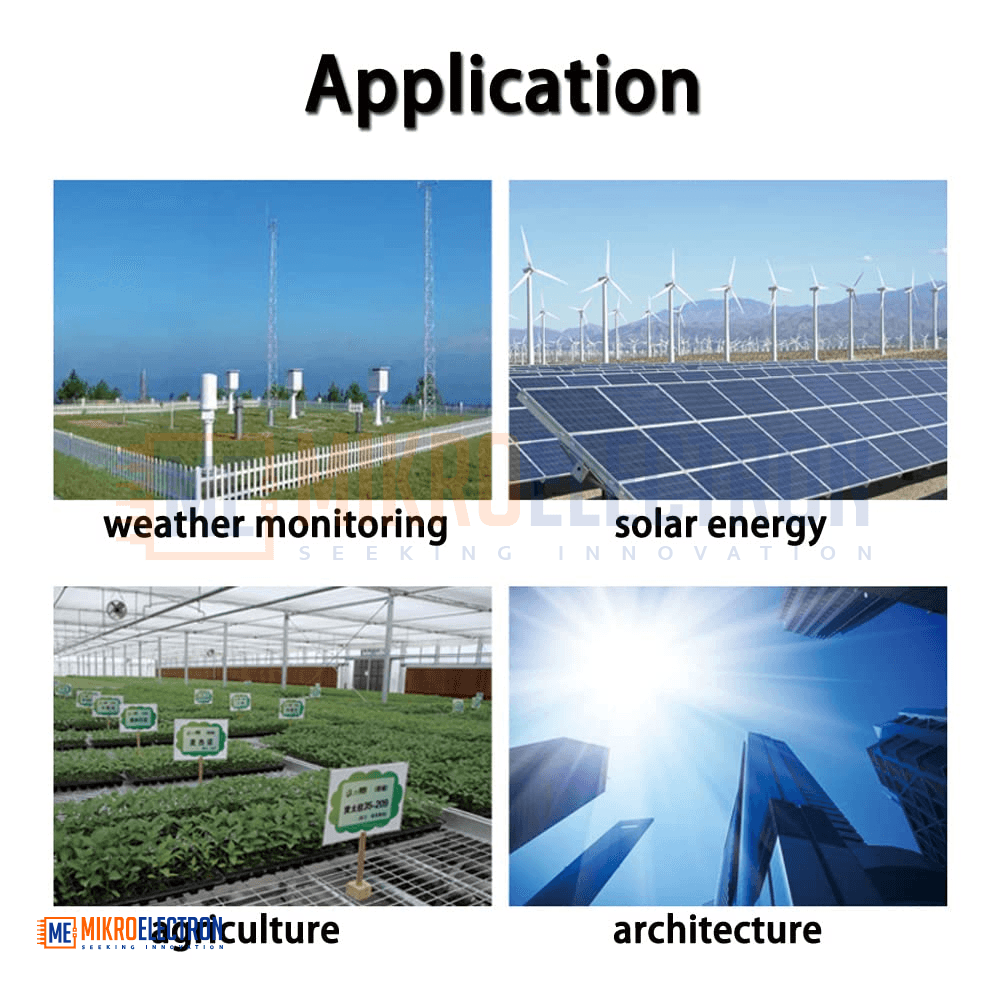
Applications
- Solar photovoltaic (PV) power plant monitoring
- Weather stations and meteorological research
- Agricultural and greenhouse solar monitoring
- Building energy management systems
- Solar water heating system optimization
- Environmental and climate research stations
- Smart irrigation and crop management systems