
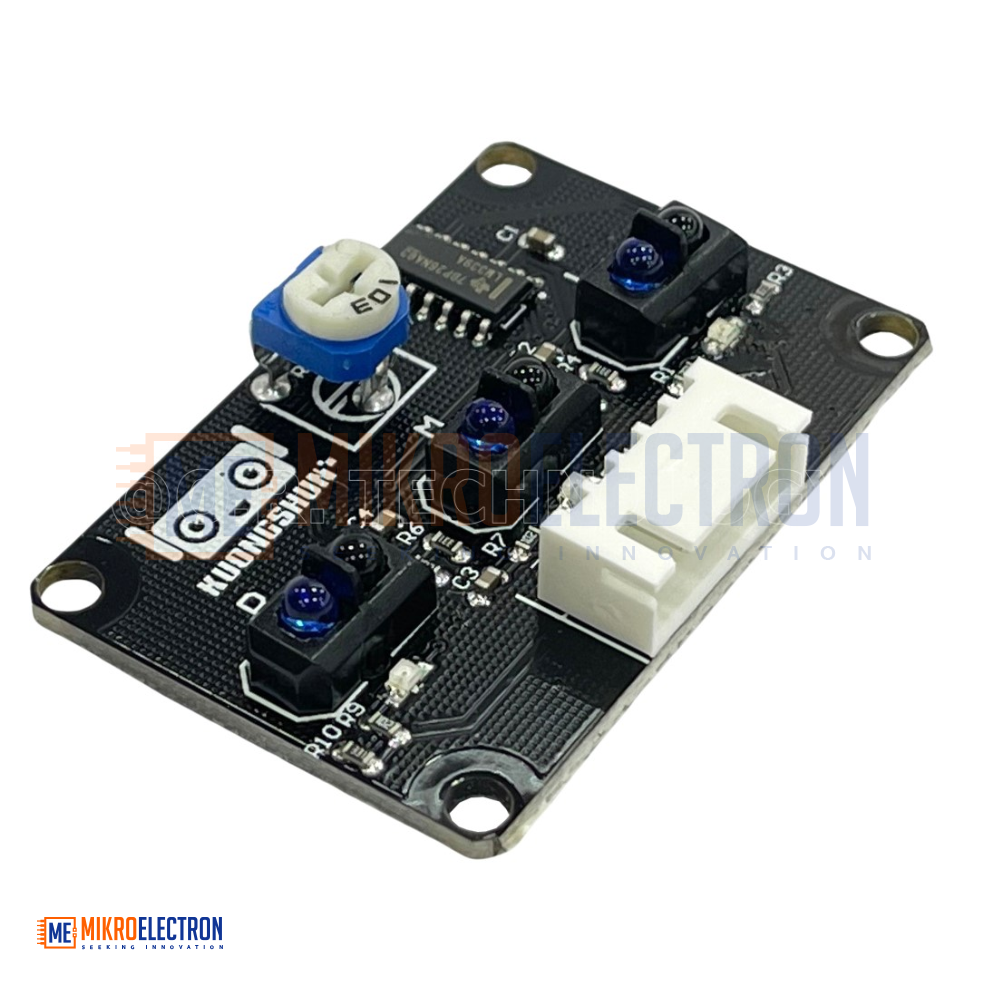
3-Channel IR Line Tracking Sensor Module 5V Digital Tracking Sensor With Adjustable Sensitivity
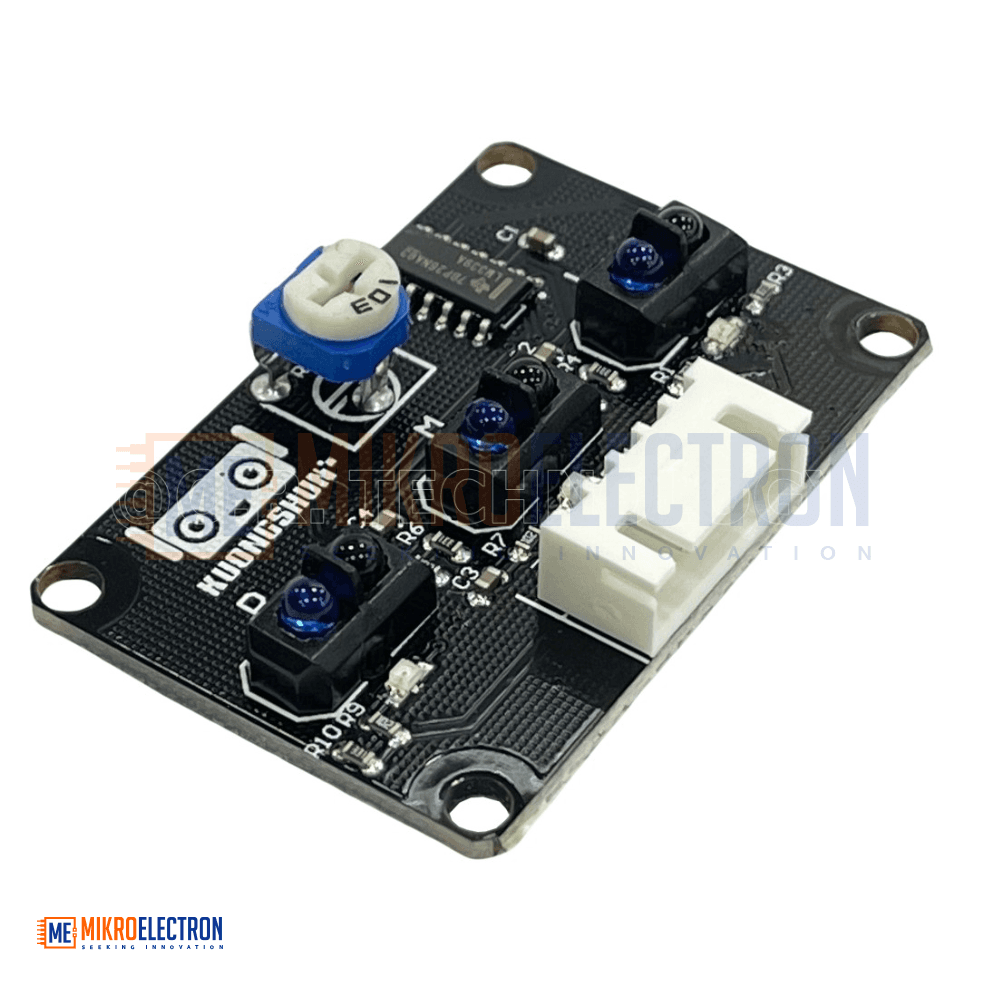
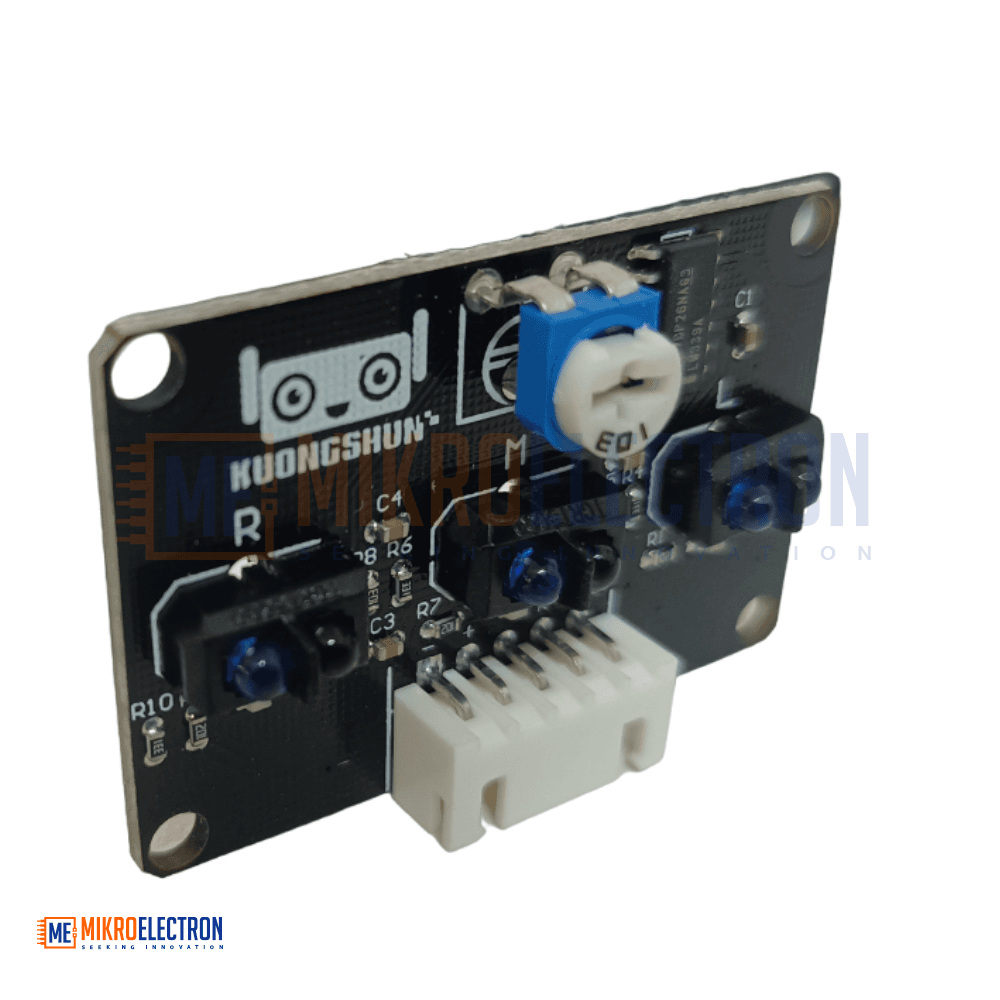
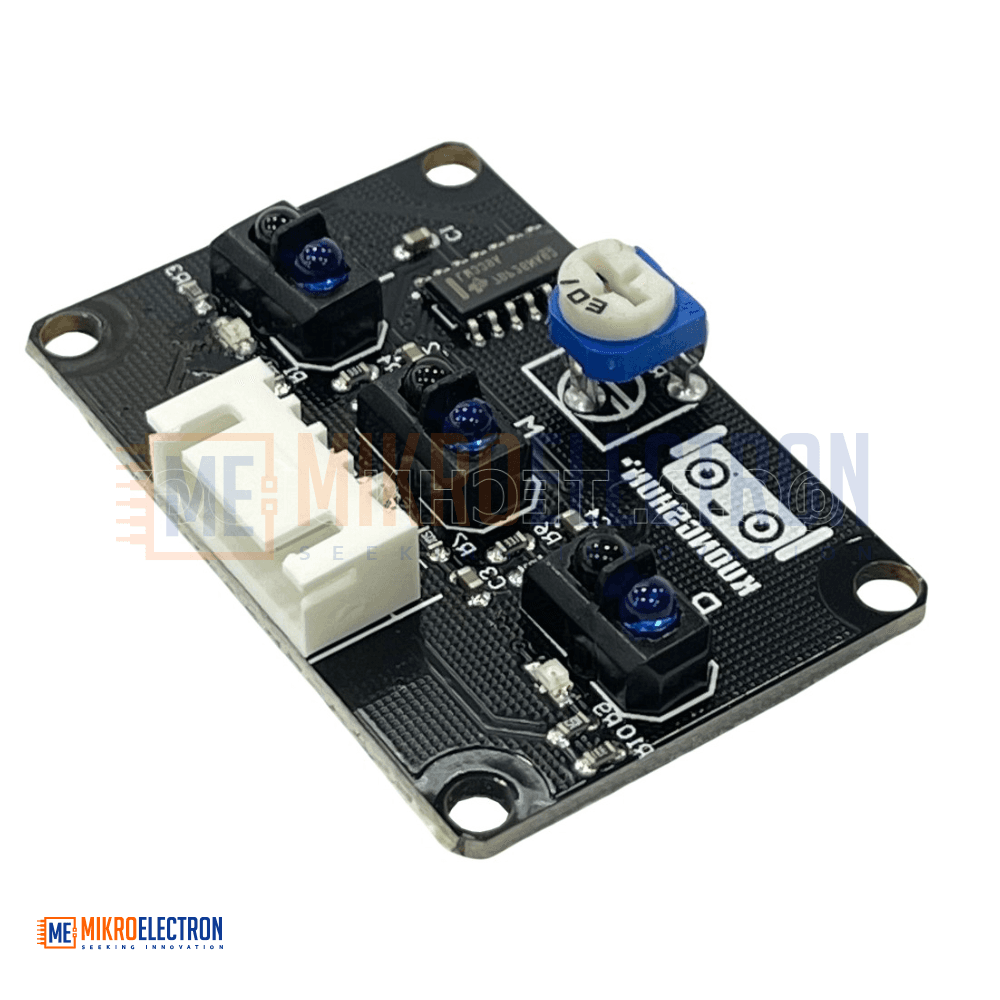
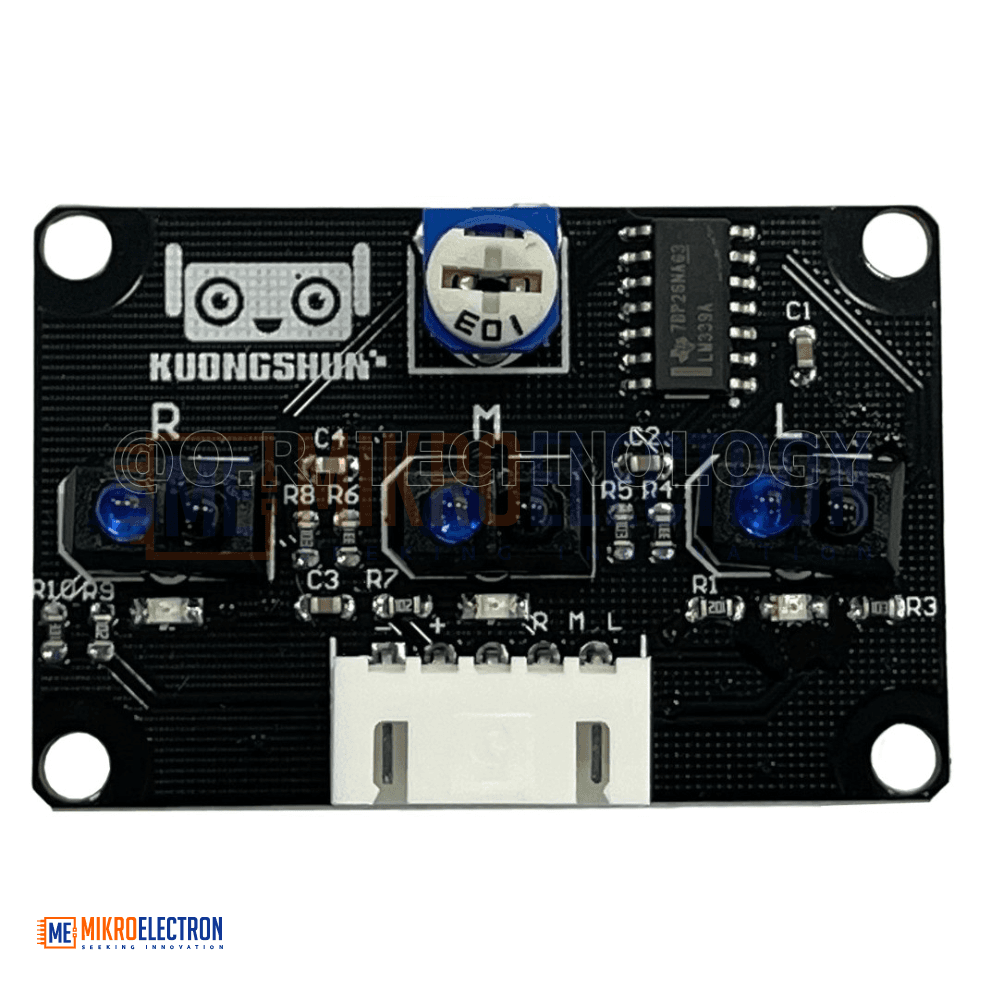
The 3-Channel Tracking Module is a compact infrared sensor board designed for accurate line detection in robotics applications. It features three IR transmitter-receiver pairs with independent digital outputs for left, middle, and right detection. The module detects the contrast between black and white surfaces, providing a LOW output for a black line and HIGH output for a white line. Built-in potentiometers allow the sensitivity and detection distance of each channel to be adjusted for different surfaces and mounting conditions. Individual LEDs provide visual feedback for sensor status. Operating at 5V, the module is suitable for line-following robots, autonomous vehicles, maze-solving robots, and DIY robotics projects.
وحدة تتبع الخطوط ثلاثية القنوات هي لوحة مستشعرات بالأشعة تحت الحمراء مصممة للكشف الدقيق عن الخطوط في تطبيقات الروبوتات. تحتوي على ثلاث مجموعات من مرسلات ومستقبلات الأشعة تحت الحمراء مع مخارج رقمية مستقلة للكشف من اليسار والوسط واليمين. تكتشف الوحدة الاختلاف بين الأسطح السوداء والبيضاء، حيث توفر خرجًا منخفضًا LOW عند اكتشاف الخط الأسود وخرجًا مرتفعًا HIGH عند اكتشاف السطح الأبيض. تحتوي كل قناة على مقاومة متغيرة لضبط الحساسية ومسافة الكشف. كما توفر مؤشرات LED تغذية بصرية لحالة المستشعرات. تعمل بجهد 5V، وتناسب روبوتات تتبع الخطوط والمركبات ذاتية الحركة والروبوتات التعليمية.
The 3-Channel Tracking Module is a compact and practical infrared line tracking sensor board designed for robotics and automation applications. It uses three sets of IR transmitters and receivers arranged as left, middle, and right sensing channels, allowing a robot to determine the position of a line relative to its path.
Each sensor detects the difference in infrared reflection between black and white surfaces. When a black line is detected, the corresponding digital output switches to LOW, while a white or reflective surface produces a HIGH output. These three independent signals can be connected directly to a microcontroller to control the direction and movement of a robot.
The module includes adjustable potentiometers that allow the sensitivity and detection distance of each sensor channel to be fine-tuned. This makes it possible to adapt the sensor to different surfaces, lighting conditions, and mounting distances.
Each channel also features an LED indicator, providing convenient visual feedback during setup, testing, and operation.
Operating from a 5V DC supply, the module can be easily integrated into many microcontroller-based robotics projects. Its built-in mounting holes provide a simple and secure way to attach it to a robot chassis.
For typical line-following applications, the sensor board should be mounted facing the ground at approximately 1–2 cm above the surface, followed by adjustment of the potentiometers until reliable detection is achieved.
Specification
| Specification | Details |
|---|---|
| Module Type | 3-Channel IR Tracking Module |
| Sensor Type | Infrared Transmitter and Receiver |
| Number of Channels | 3 |
| Channel Positions | Left, Middle, Right |
| Operating Voltage | 5V DC |
| Output Type | Digital |
| Black Line Detection | LOW |
| White Surface Detection | HIGH |
| Sensitivity Adjustment | Adjustable potentiometers |
| Detection Distance | Adjustable according to mounting conditions |
| LED Indicators | Individual indicators for each sensor channel |
| Interface Pins | VCC, GND, L, M, R |
| VCC | 5V Power Supply |
| GND | Ground |
| L | Left Sensor Digital Output |
| M | Middle Sensor Digital Output |
| R | Right Sensor Digital Output |
| Mounting | Fixed bolt holes |
| Recommended Mounting Height | Approximately 1–2 cm from the surface |
| Package Includes | 1 × 3-Channel Tracking Module |
Applications
- Line-following robots
- Educational robotics projects
- Autonomous guided vehicles
- Maze-solving robots
- Robot navigation systems
- Factory floor path tracking
- Conveyor belt alignment and sorting
- DIY robotics projects
- Arduino and microcontroller-based projects
- Robotics competition platforms