
CB10 STEM Robotics Building Block Kit – 702 Pieces 50-in-1 Models with Motors and Remote Control (Battery Not Included)
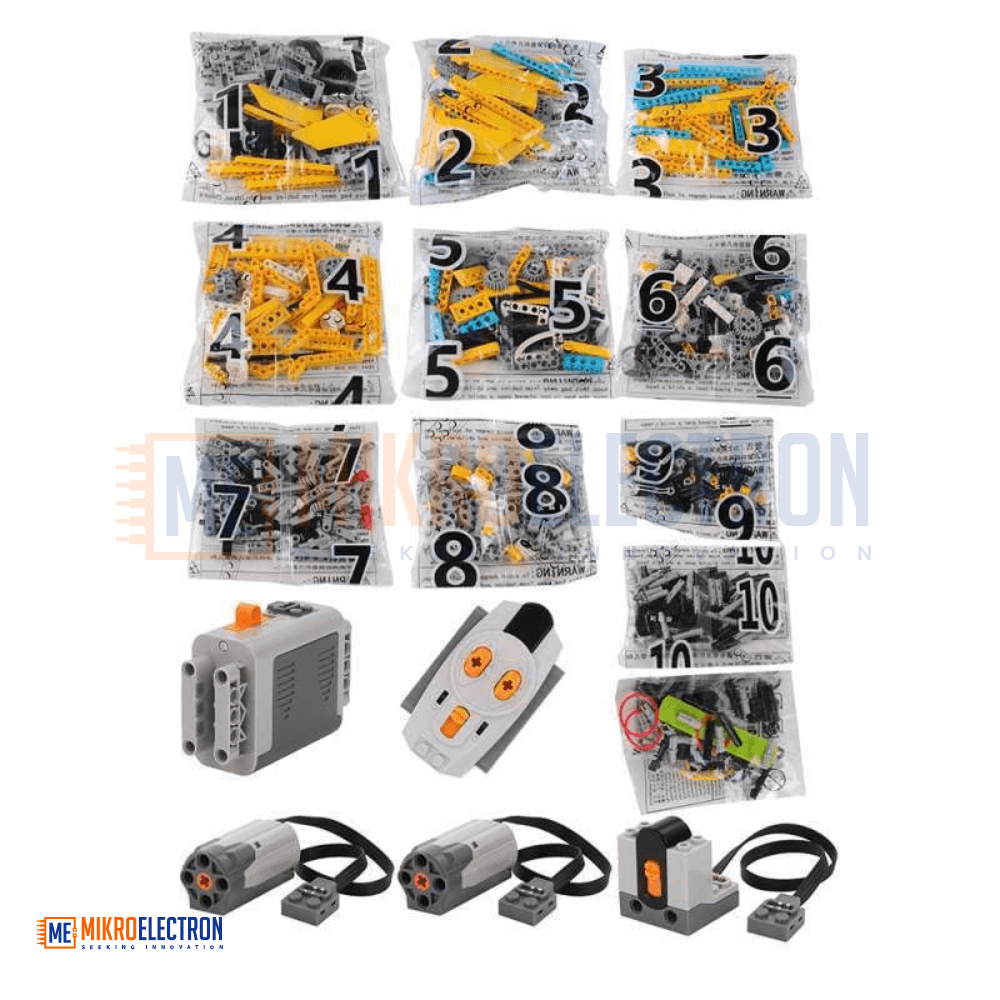
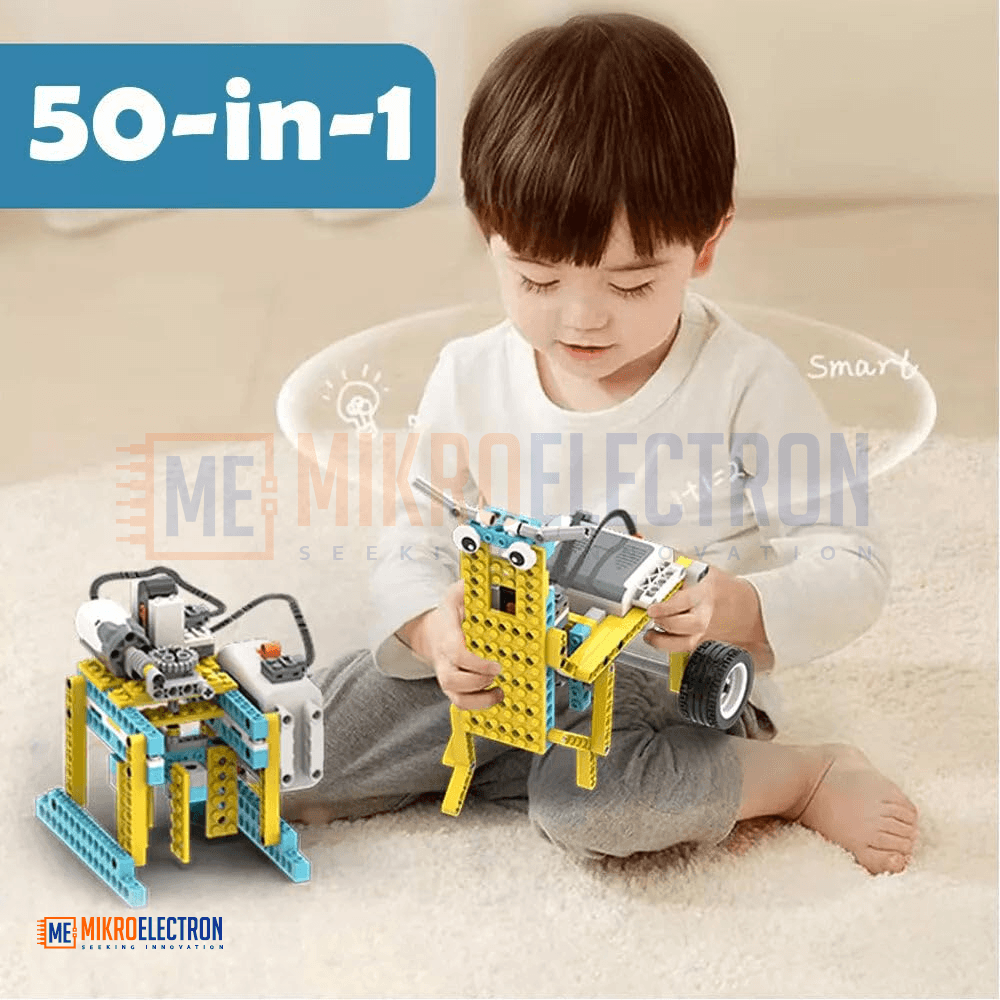
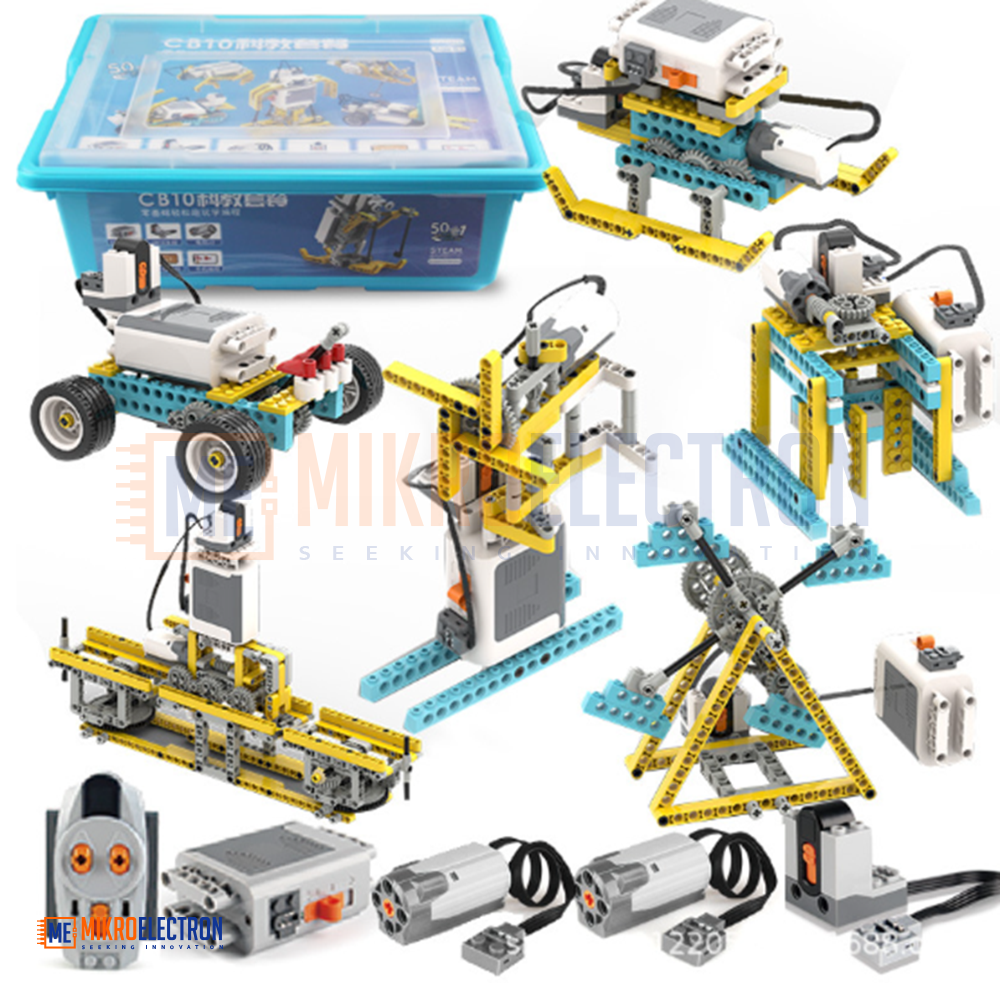
The CB10 STEM Building Block Kit is a 702-piece mechanical construction set that builds 50 different motorised models from one box. It includes a main controller, two M motors, a battery box, and a wireless remote control, so every model actually drives, lifts, or walks rather than sitting static. Parts are compatible with standard technic-style bricks and the WeDo 2.0 system. Projects teach gear ratios, axle transmission, crank-slider mechanisms, and structural stability, with 3D step-by-step drawings for each build. Supplied in a reusable storage box with sorted part bags.
طقم CB10 التعليمي للروبوتات هو طقم بناء ميكانيكي مكوّن من 702 قطعة يتيح بناء 50 موديلاً متحرّكاً من صندوق واحد. يشمل وحدة تحكّم رئيسية ومحرّكَي M وحاضن بطاريات وريموت كنترول لاسلكي، بحيث يتحرّك كل موديل فعلياً بدل أن يبقى ثابتاً. القطع متوافقة مع قطع التكنيك القياسية ومع نظام WeDo 2.0. تُعلّم المشاريع نسب التروس ونقل الحركة بالمحاور وآلية العمود المرفقي وثبات الهياكل، مع رسومات ثلاثية الأبعاد خطوة بخطوة لكل نموذج. يأتي في صندوق تخزين قابل لإعادة الاستخدام مع أكياس قطع مرقّمة.
The CB10 Science and Education Building Block Kit is a 702-piece motorised construction system designed to teach mechanical engineering principles through hands-on building. Unlike static brick sets, every one of the 50 documented models is powered — the kit ships with two M motors, a CB10 main controller, a battery box, and a wireless remote control, so children build a machine and then drive it.
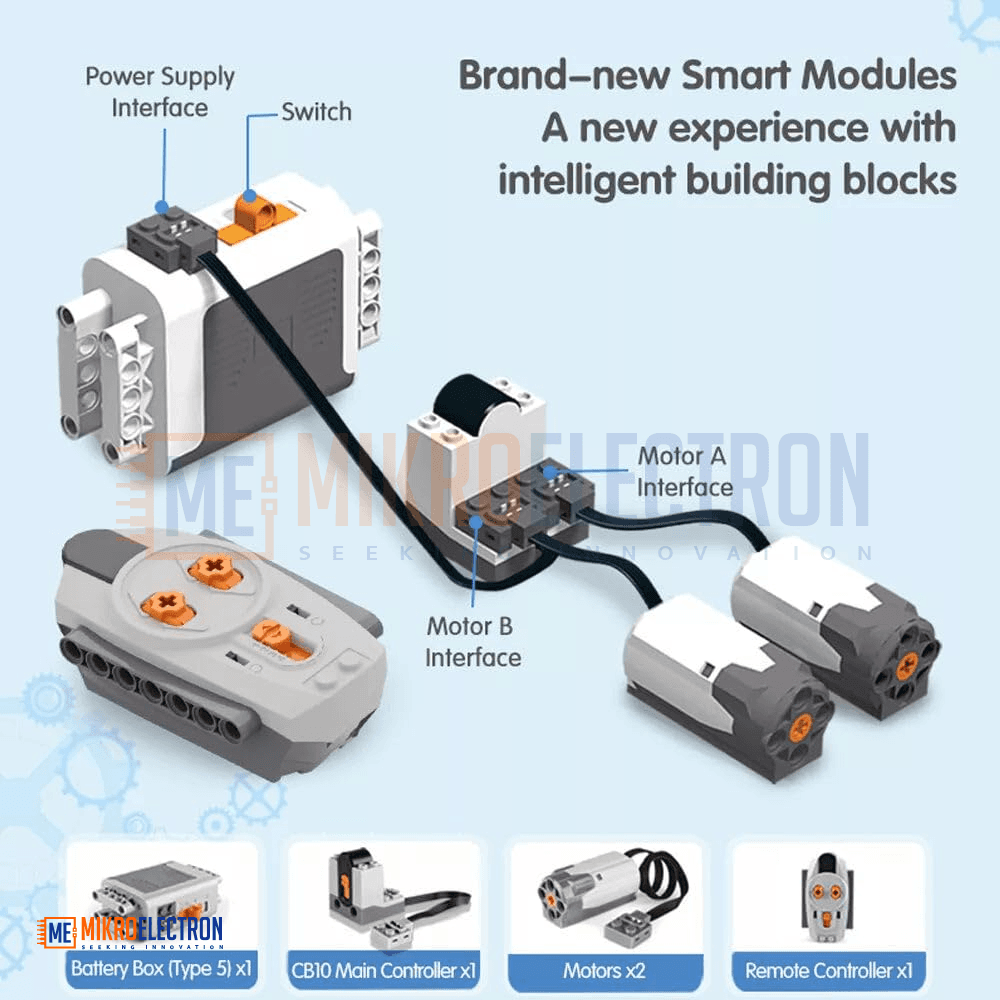
The main controller is the core of the system. It provides two motor outputs, labelled Motor A and Motor B, plus a power supply interface that connects to the battery box. Because the two motors are addressed independently, models can be built with differential steering — driving one motor forward and the other in reverse to turn a vehicle in place — as well as with one motor for drive and the second for a working tool such as a grabber, lift, or conveyor. The remote control operates both channels wirelessly, giving direct manual control of every build.
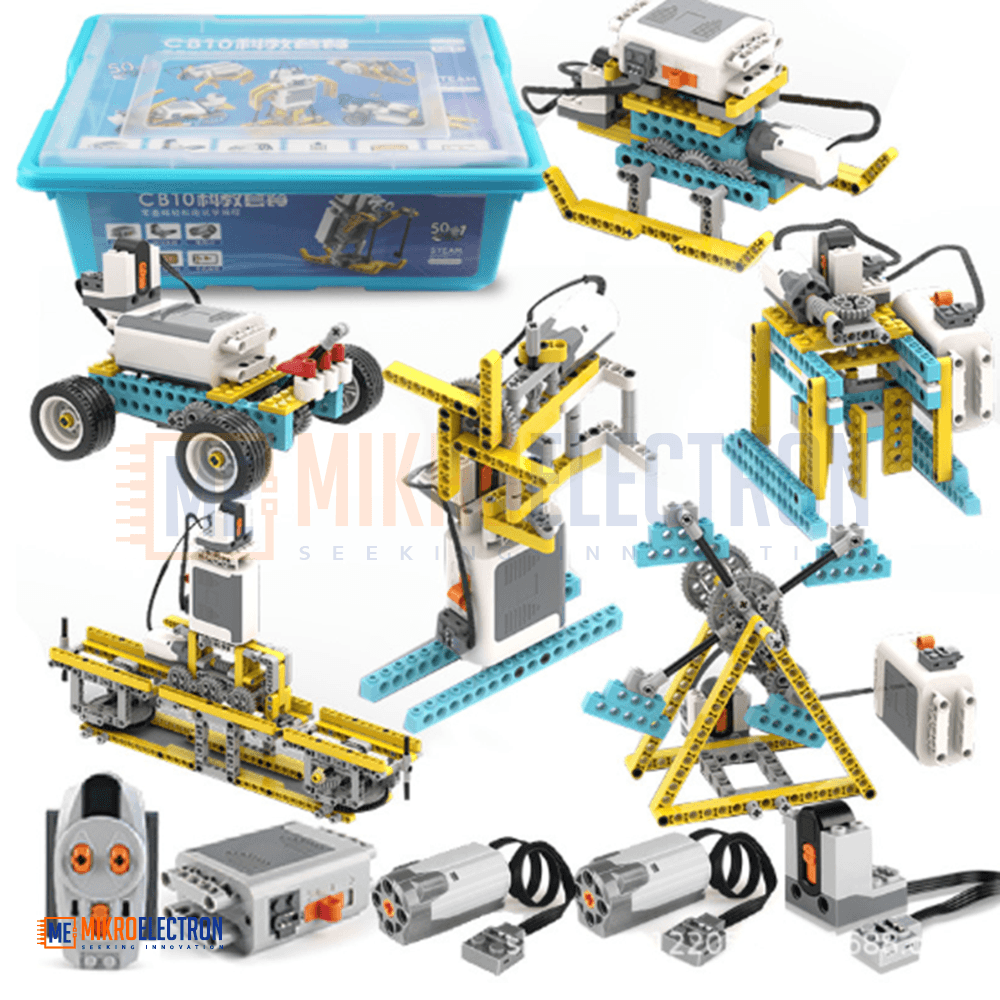
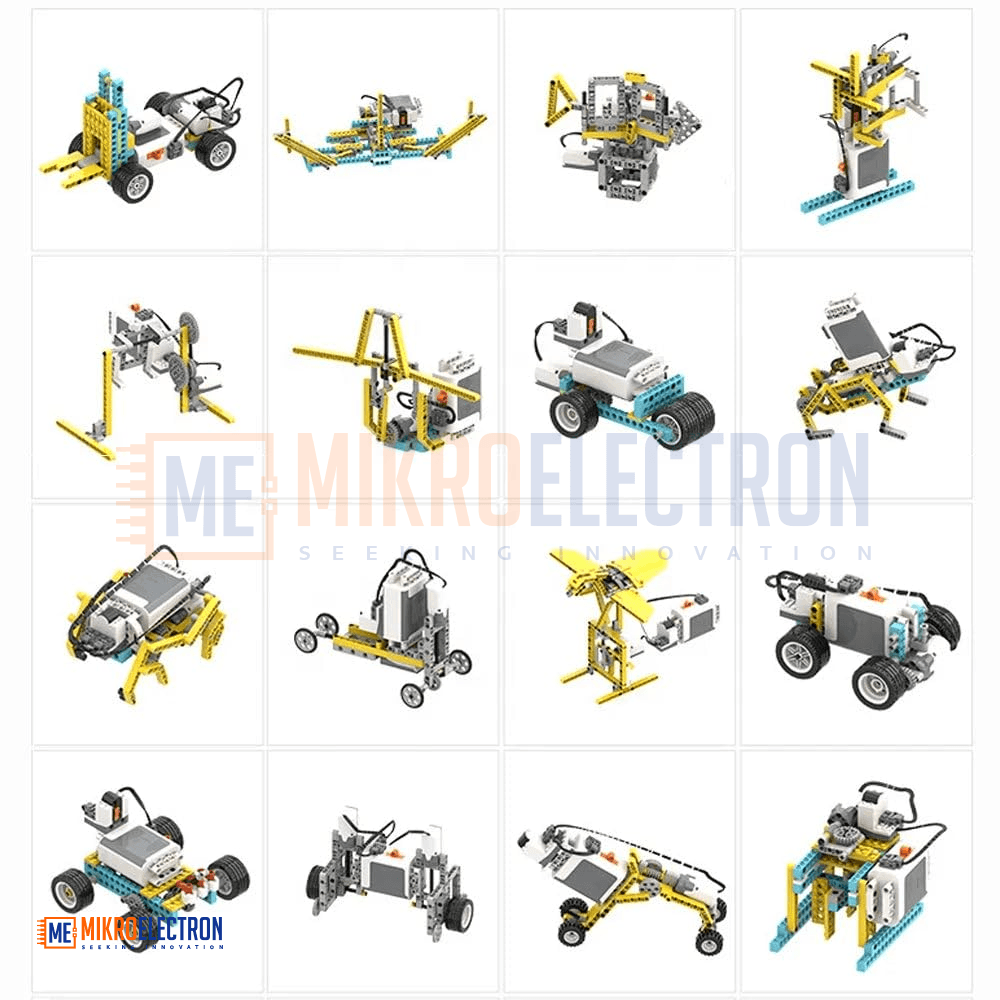
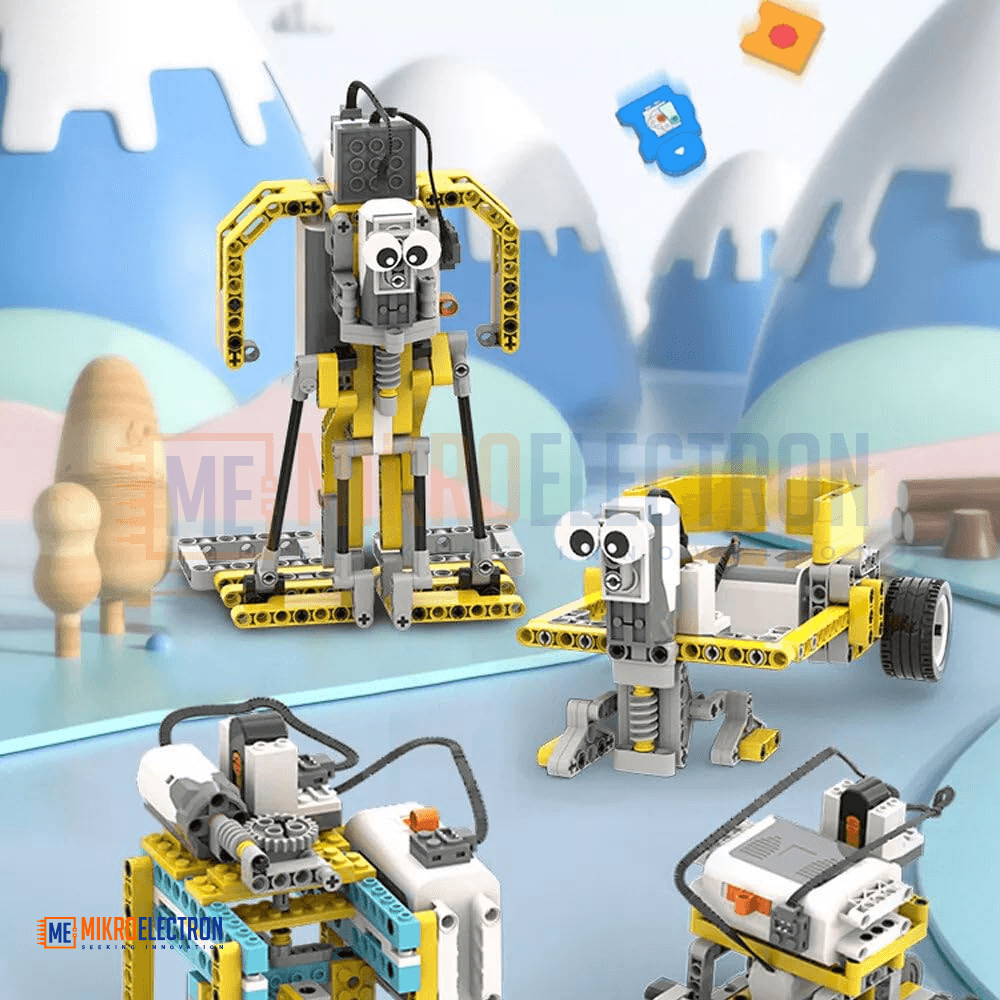
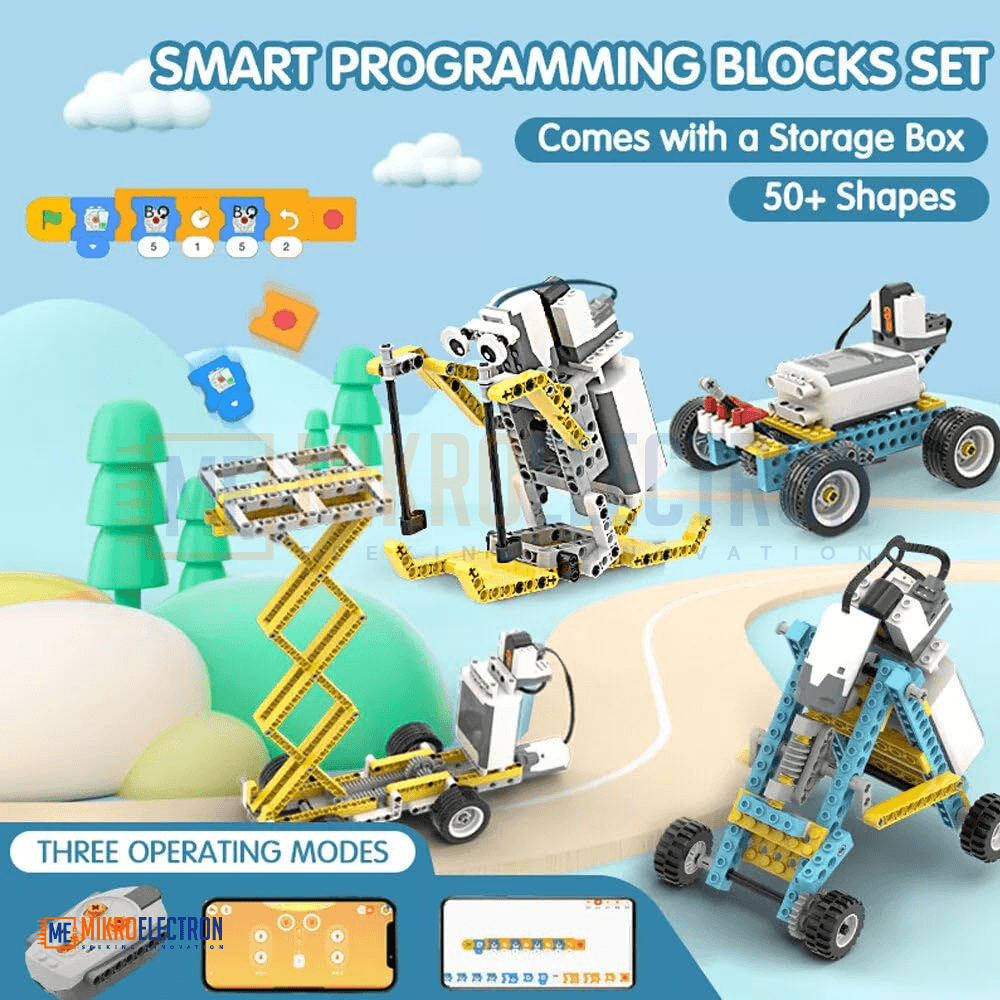
The 50 models span several categories of mechanism. Vehicle builds include a remote-controlled car with steering and a tracked conveyor platform. Mechanical builds include a crane with a working lifting arm, a catapult built around a gear-driven tensioning mechanism, a gantry structure, and a walking mechanism that converts rotation into stepping motion. Each build is documented with 3D isometric drawings rather than flat diagrams, which makes the orientation of every beam and pin unambiguous and lets children assemble complex sub-frames without adult help.
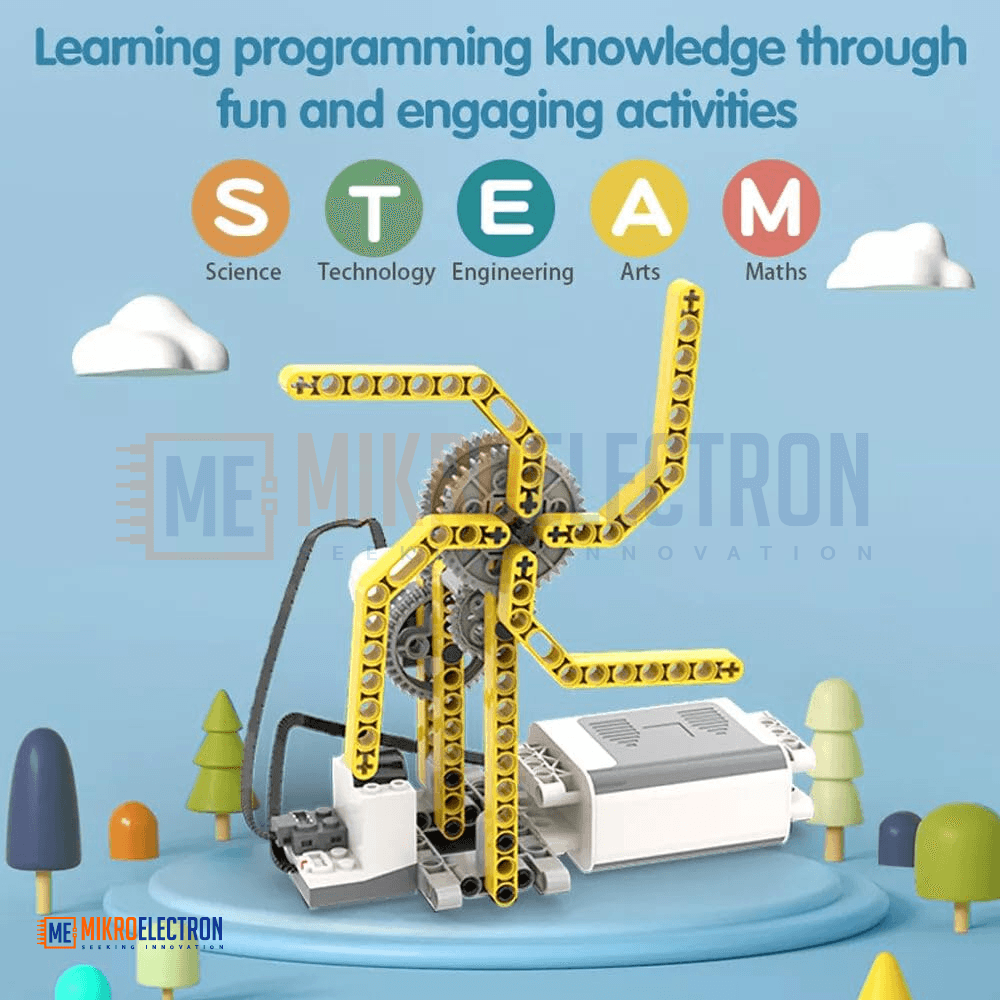
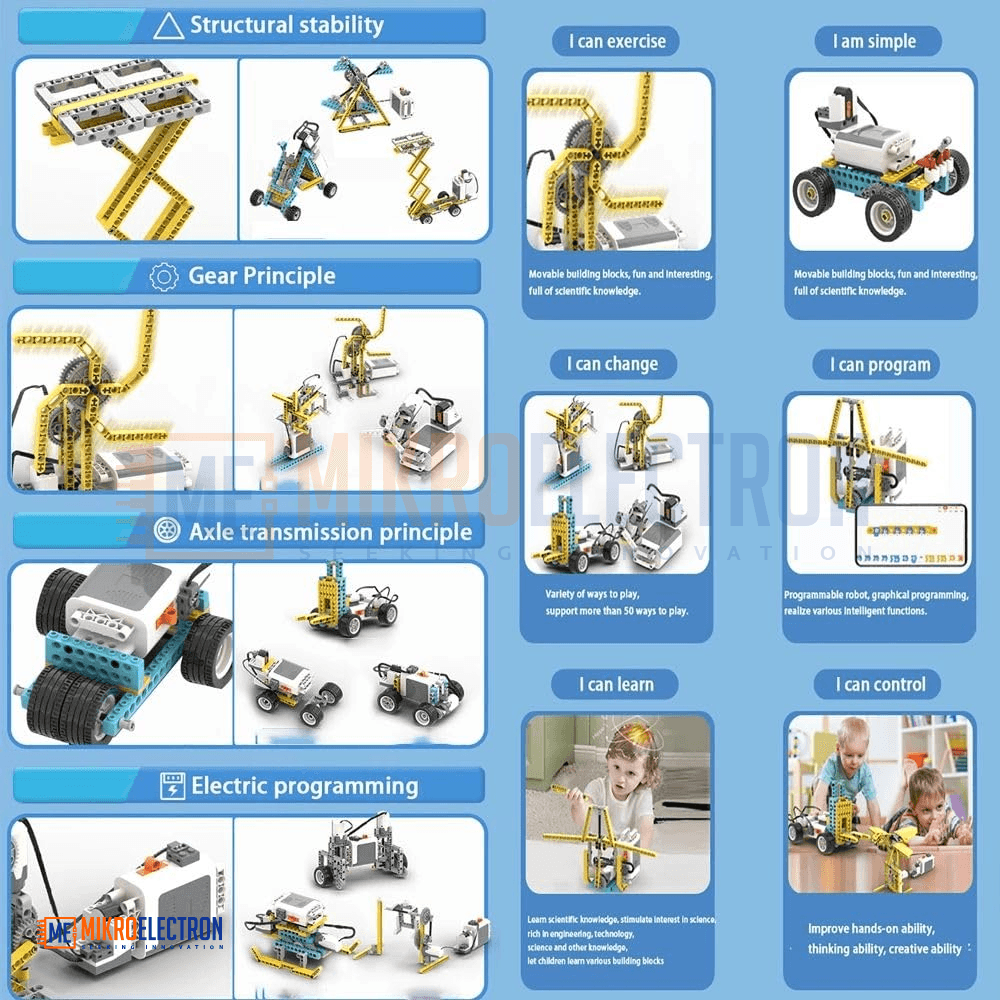
The engineering curriculum is built into the models rather than taught separately. Gear principle is covered through speed-versus-torque trade-offs, where a small driving gear meshed with a large driven gear produces slower but stronger output. Axle transmission covers how rotation is carried across a structure. The crank-slider structure demonstrates the conversion of rotary motion into linear motion, the same mechanism used in engine pistons and reciprocating saws. Structural stability is taught through triangulated bracing, where children discover directly that a rectangular frame racks under load while a triangulated one does not.
All parts follow the standard technic-style beam-and-pin geometry with cross axles, friction pins, liftarms, gears, bushings, and wheels, and are cross-compatible with other systems using the same standard, including WeDo 2.0. This means an existing collection can be merged with this kit to build larger models. Parts are supplied in ten numbered bags matched to the build sequence, and the set includes a lidded plastic storage box with a sorting tray for long-term classroom or home use.
Specifications
| Item | Details |
|---|---|
| Product Name | CB10 Science and Education Building Block Kit |
| Model | CB10 |
| Number of Parts | 702 pieces |
| Number of Models | 50 models (50-in-1) |
| Main Controller | CB10 main controller × 1 — two motor outputs (Motor A / Motor B) plus power interface |
| Motors | M motor × 2, cable-connected |
| Remote Control | Wireless remote controller × 1 — two-channel |
| Power Source | Battery box (Type 5 / AA) × 1 — batteries not included |
| Compatibility | Standard technic-style beams and pins; compatible with WeDo 2.0 |
| Mechanical Components | Gears, cross axles, friction pins, liftarms, bushings, wheels, tracks, connectors |
| Concepts Taught | Structural stability, gear principle, axle transmission, crank-slider mechanism |
| Instructions | 3D drawing tutorials for each of the 50 models |
| Packaging | Ten numbered part bags, sorting tray, lidded plastic storage box |
| Recommended Age | 7–9 years |
| Box Dimensions | 42 × 31 × 15.5 cm |
Four points to check before publishing this one:
- "Programming" in the title is not supported by the contents. The supplier calls this a "programming building block" set, but the package list contains only a main controller, motors, and a remote control — no app, no sensor blocks, no coding environment mentioned anywhere. Based on the images, this is a remote-controlled mechanical kit, not a programmable one. I have deliberately written the listing without any programming claim. If the supplier can confirm an app exists, send me the details and I will add it; if not, keep the word out of the title, because customers buying a coding kit will return it.
- "Compatible with LEGO" is a trademark risk. I wrote "compatible with standard technic-style bricks" and kept the WeDo 2.0 reference, which is factual compatibility information. Avoid putting the LEGO name in your product title or as a selling claim on mikroelectron.com — it is a common source of marketplace listing takedowns.
- Manual language. Source says "China Specification." The 3D drawings are largely language-independent, which helps here more than it did with the 3688/6688/9988 electronic sets, but it should still be stated on the page.
- Model descriptions are partly inferred. I described the crane, catapult, conveyor, gantry, and walking mechanism from the photograph in image 1. The 50-model list itself was not provided, so if you want the full model names on the page, request the model index from the supplier.
Applications
- School STEM and robotics programmes — one kit supports 50 separate lessons with no consumable parts
- Mechanical engineering fundamentals — gear ratios, transmission, and linkage mechanisms taught through working models
- Remote-control vehicle projects — differential steering and two-channel manual control
- Physics of structures — triangulation, load paths, and frame rigidity demonstrated by direct testing
- After-school clubs and holiday camps — the numbered bag system and storage box make repeated group use practical
- Home educational building — self-directed construction for children who have outgrown static brick sets
- Preparation for programmable robotics — builds the mechanical skills needed before moving to sensor and code-driven platforms
- Classroom group work — the parts count supports two or three children building in parallel
- Expansion of existing collections — motors, controller, and beams integrate with compatible brick systems already owned