
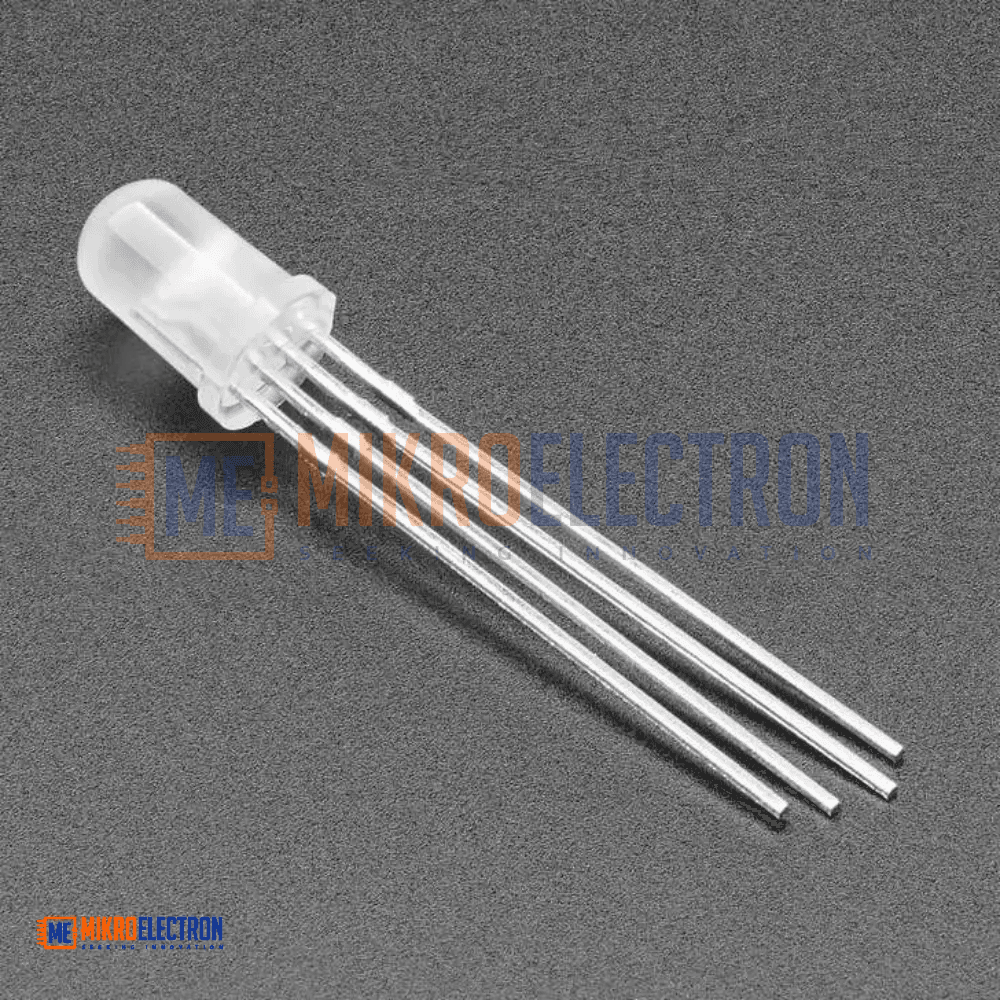
5mm RGB LED 4-Pin
Please select an option to see price and availability
Select Option
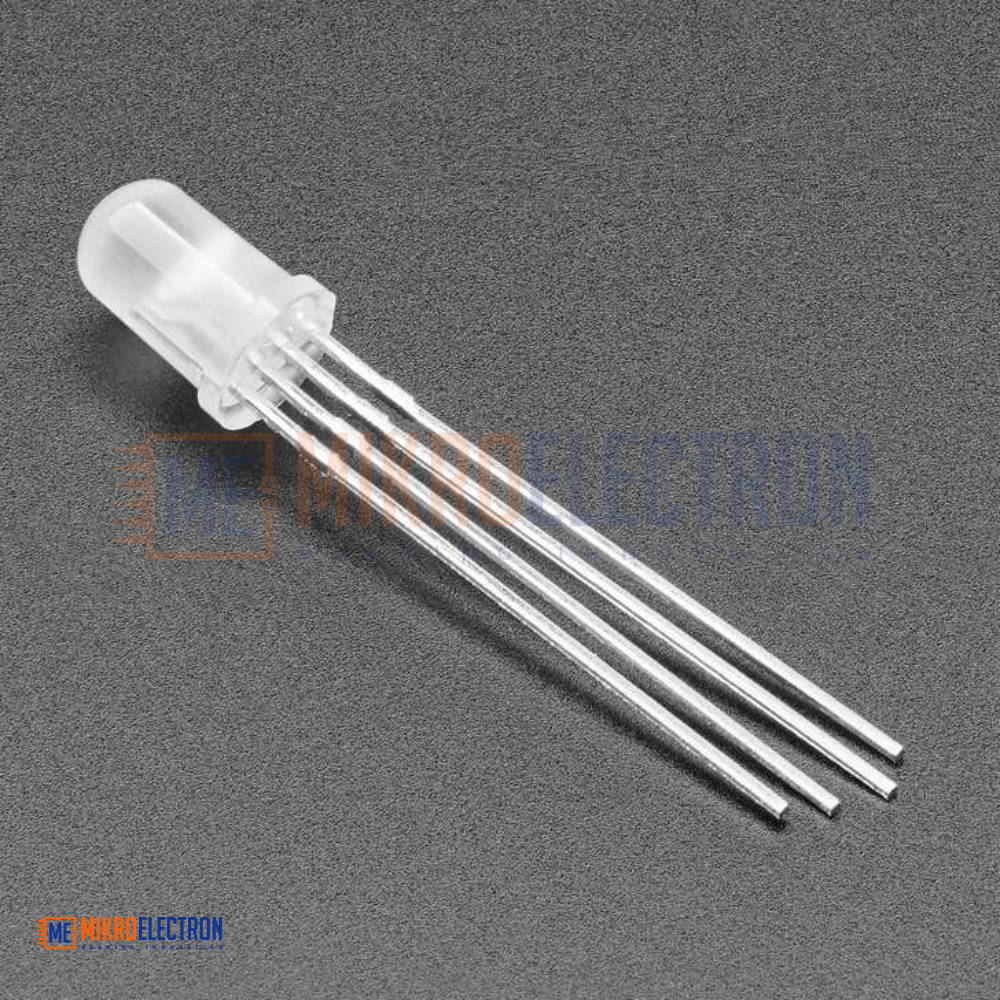 Anode
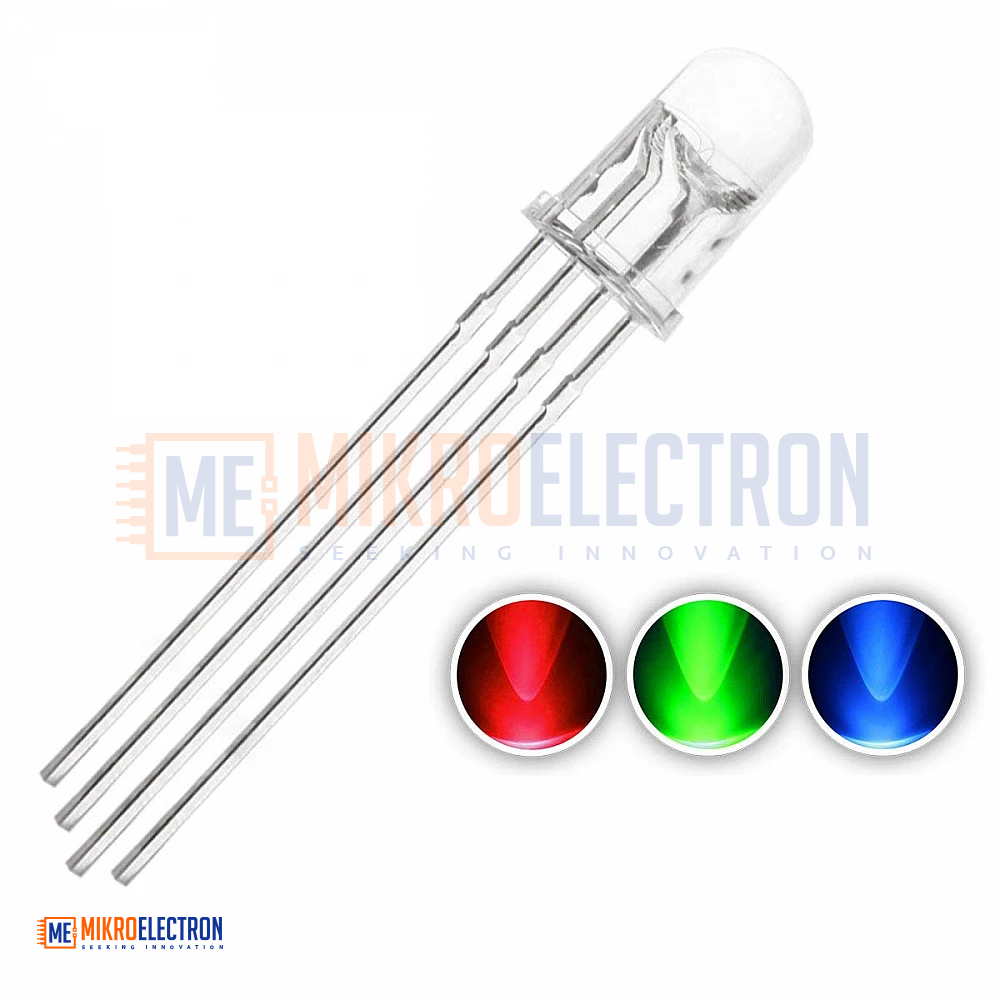 Cathode
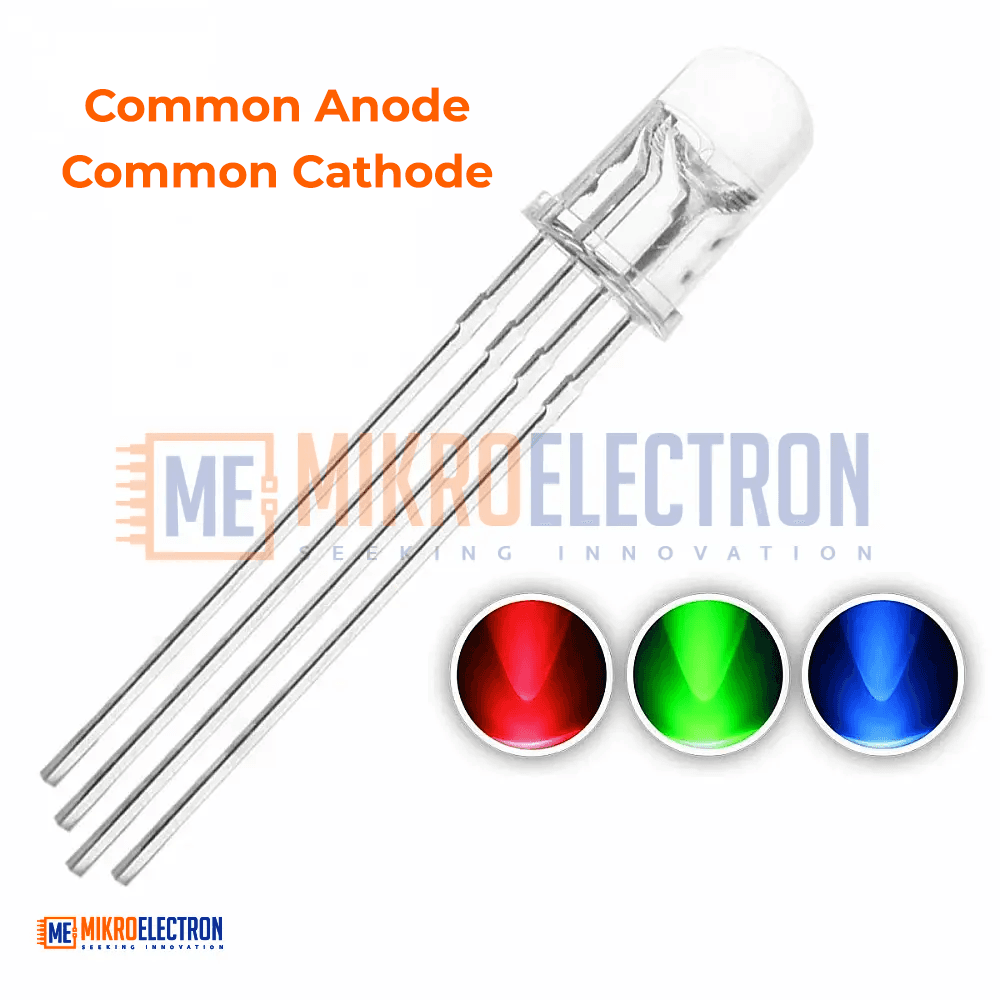
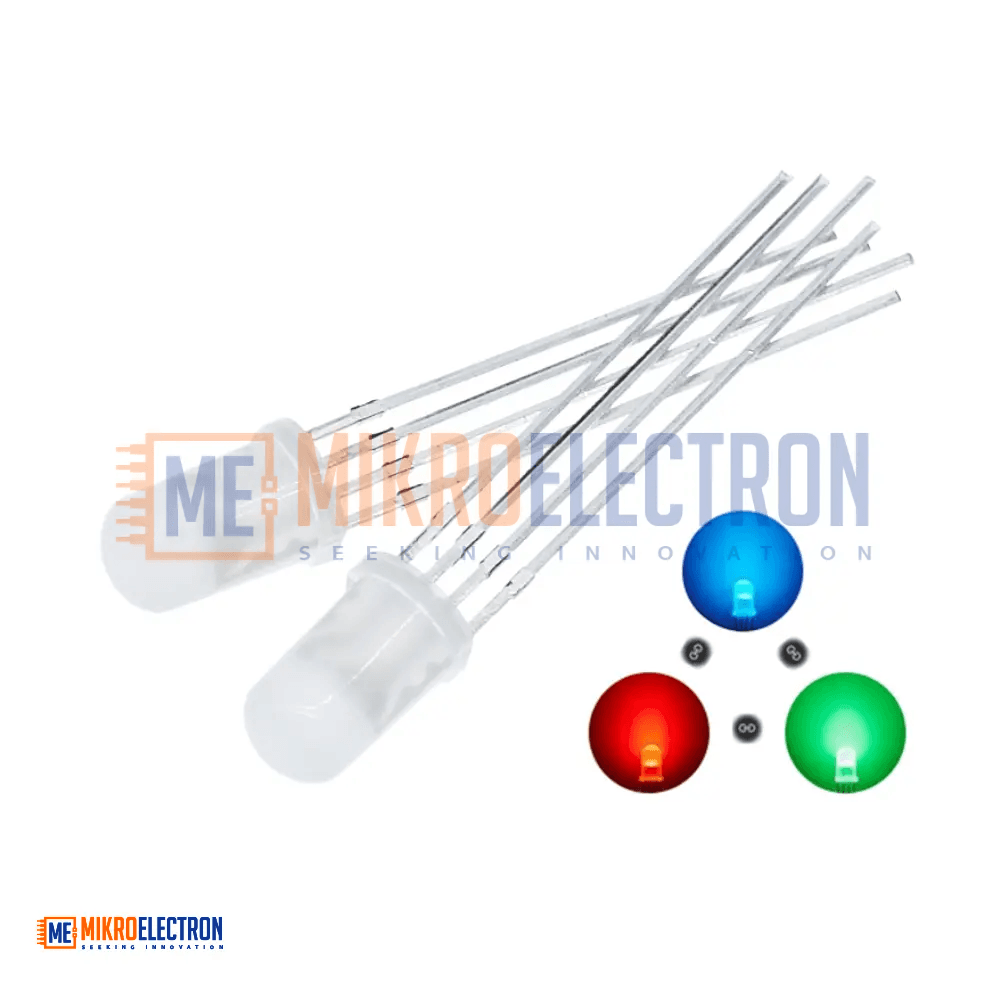
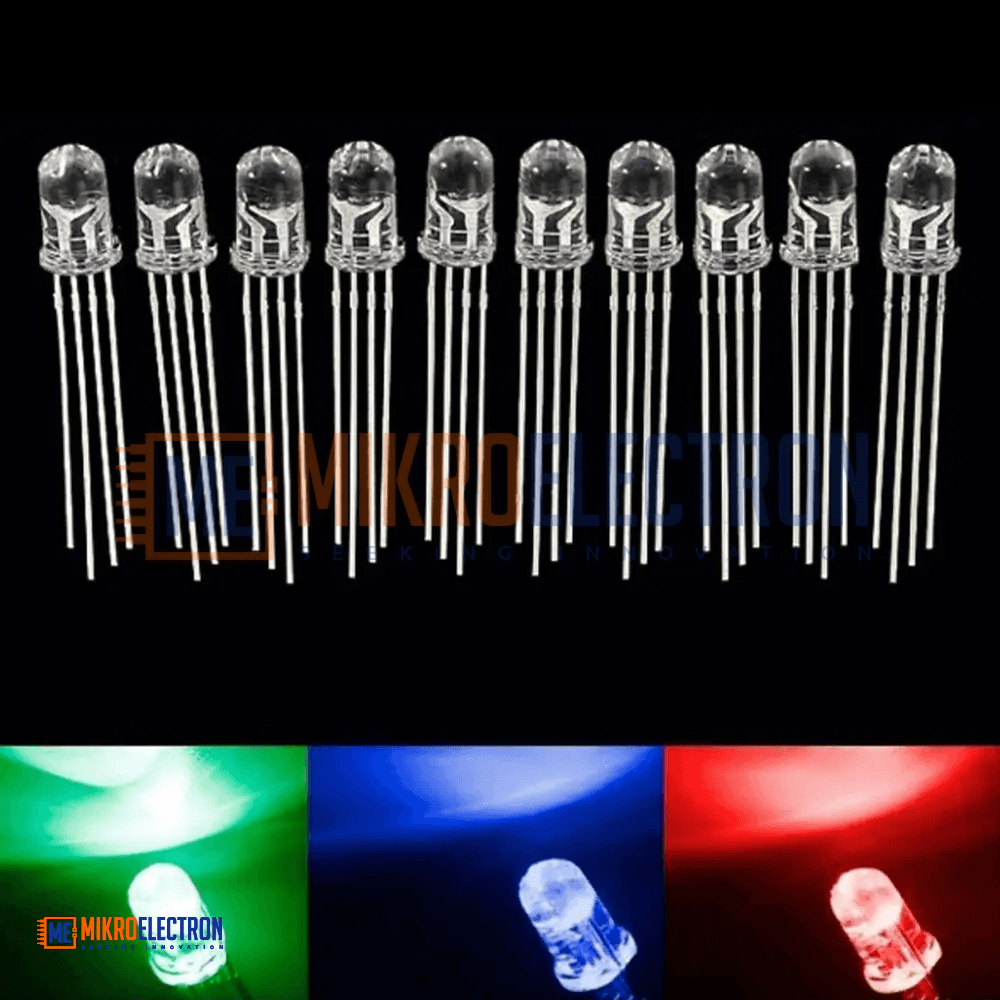
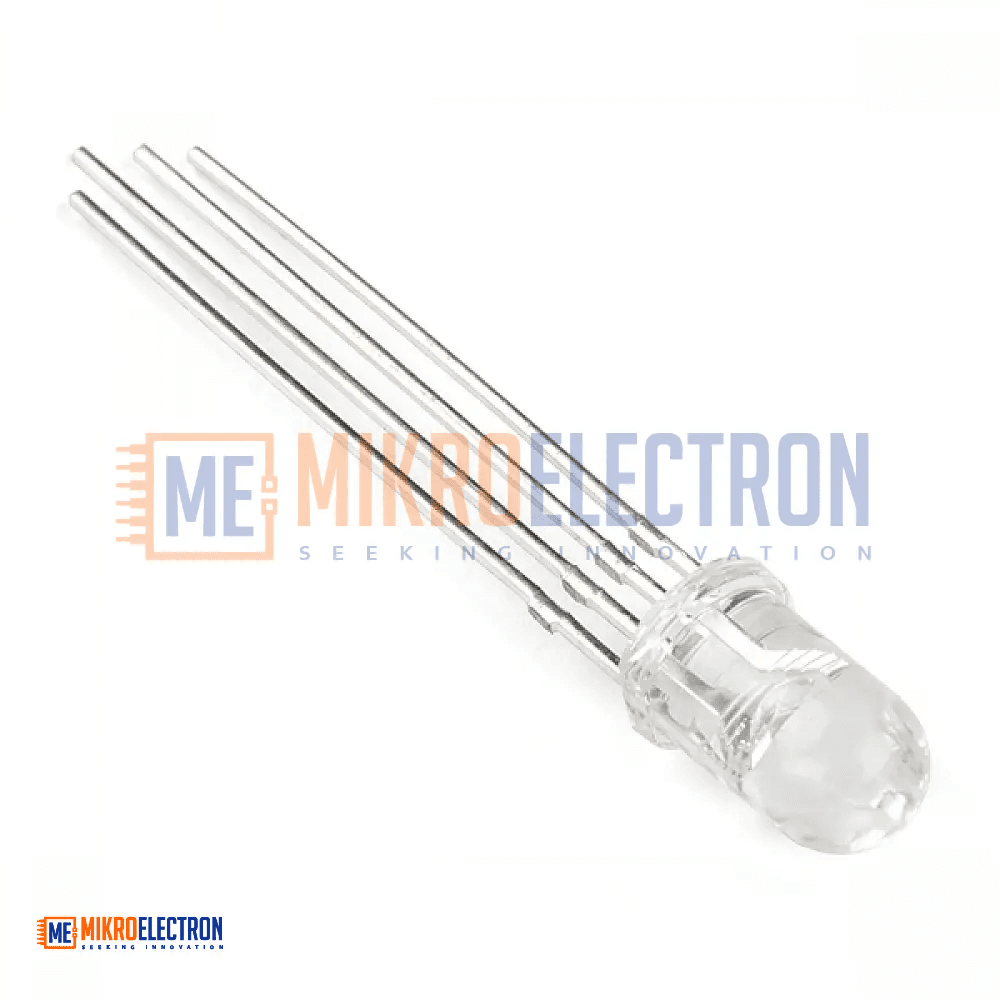
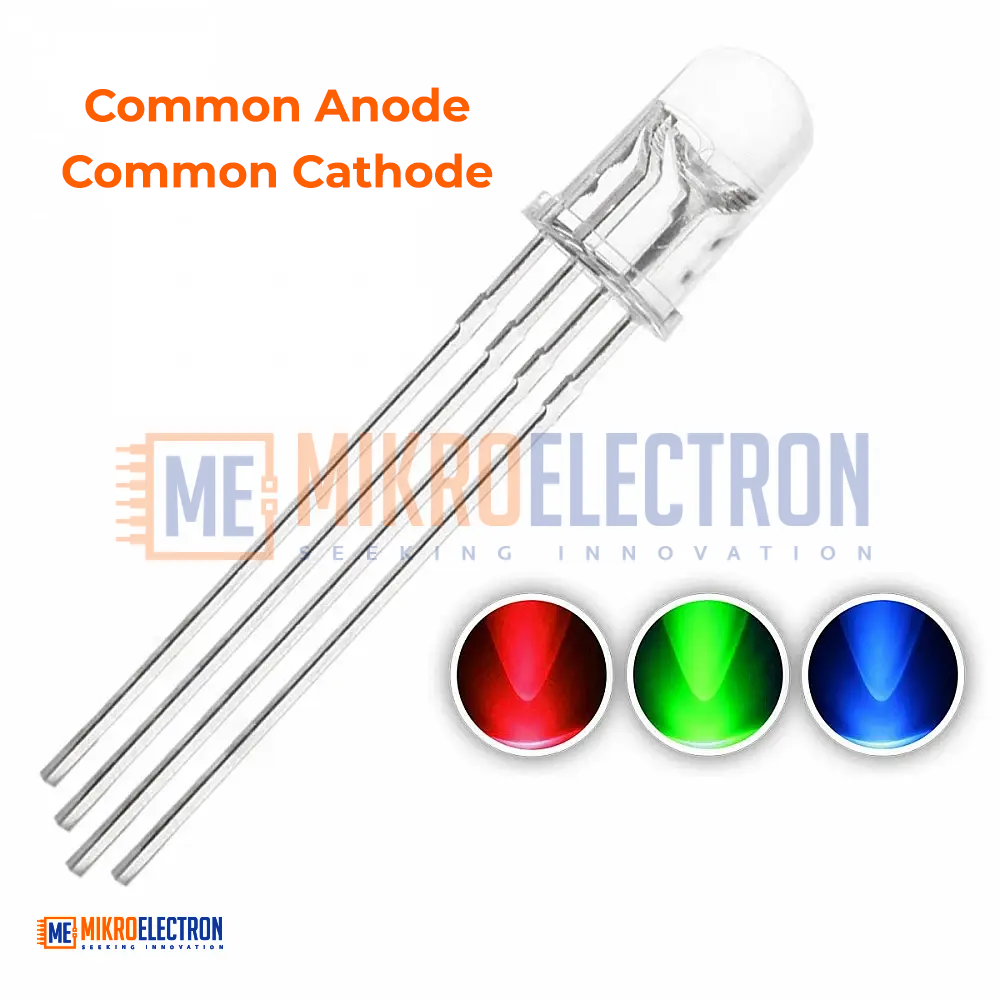
The 5mm RGB LED combines Red, Green, and Blue chips in a single clear 5mm through-hole package with 4 pins. It comes in two versions: Common Anode and Common Cathode, so you can match it to your circuit. By controlling each color individually, for example with PWM, you can mix a wide range of colors, including white. The clear lens gives bright, even illumination and smooth color mixing, and the common anode version has a wide 250° viewing angle. It is ideal for Arduino, ESP32, and Raspberry Pi projects, status indicators, mood lighting, and decorative electronics.
يجمع LED RGB بقياس 5 مم شرائح الألوان الأحمر والأخضر والأزرق في عبوة شفافة واحدة للتركيب عبر الثقوب مع 4 أطراف. يتوفر بإصدارين: أنود مشترك وكاثود مشترك، لتختار ما يناسب دائرتك. من خلال التحكم بكل لون على حدة، مثلاً باستخدام PWM، يمكنك دمج مجموعة واسعة من الألوان بما فيها الأبيض. توفر العدسة الشفافة إضاءة قوية ومتجانسة ودمجاً سلساً للألوان، ويتميز إصدار الأنود المشترك بزاوية رؤية واسعة 250°. وهو مثالي لمشاريع Arduino و ESP32 و Raspberry Pi ومؤشرات الحالة والإضاءة المزاجية والإلكترونيات الزخرفية.
The 5mm RGB LED is one of the most popular components for adding colorful, dynamic lighting to electronic projects. Inside its clear 5mm housing, it has three separate LED chips (Red, Green, and Blue) that share one common terminal. By varying the brightness of each color through PWM (Pulse Width Modulation), you can create a huge range of color combinations, from pure primary colors to soft pastels and bright white.
It is available in two configurations:
- Common Anode: the three chips share a single positive (+) terminal. The longest pin connects to the positive supply voltage, and each color is controlled by sinking current to ground through a current-limiting resistor. This setup works with most digital output pins.
- Common Cathode: all negative terminals are connected internally, which simplifies circuit design and control with microcontrollers.
The common anode version has a wide 250° viewing angle and a water-clear lens, so light spreads evenly in nearly all directions and the LED is highly visible from any angle. Its high luminous output of 700–800 mcd for red and green and 300–400 mcd for blue gives vivid, saturated colors that stand out even in well-lit environments.
The common cathode version has a clear transparent round lens for bright, vivid illumination. Its standard DIP through-hole design makes it easy to install on breadboards, PCBs, and prototyping circuits.
Both versions suit Arduino, ESP32, Raspberry Pi, and other microcontroller projects that need colorful visual feedback, from mood lamps and traffic light simulators to status indicators and interactive art installations.
Recommended: Use a 220Ω – 330Ω current-limiting resistor on each color pin when driving from 5V logic to prevent damage.
Specifications
General Specifications
| Parameter | Common Anode | Common Cathode |
|---|---|---|
| LED Type | RGB (Red, Green, Blue) | RGB tri-color LED |
| Configuration | Common Anode (+) | Common Cathode (-) |
| Package Size | 5mm | 5mm |
| Mounting | Through-hole | Through-hole DIP |
| Number of Pins | 4 leads | 4 pins |
| Pin Sequence | Red / Common Anode (+) / Green / Blue | – |
| Lens Type | Clear (water clear) | Clear transparent round lens |
| Lead Length | About 4.5 cm | – |
| Viewing Angle | 250° | – |
| Luminous Flux | 4 – 5 lm | – |
| Light Output | RGB, full-spectrum mixing capable | RGB color mixing |
| Application Voltage | See forward voltage per color | Depends on color channel |
Color Channel Specifications (Common Anode)
| Color | Forward Voltage (Vf) | Luminous Intensity | Wavelength |
|---|---|---|---|
| Red | 2.0 – 2.2 V | 700 – 800 mcd | 620 – 625 nm |
| Green | 3.0 – 3.2 V | 700 – 800 mcd | 520 – 525 nm |
| Blue | 3.0 – 3.2 V | 300 – 400 mcd | 460 – 465 nm |
Applications
- Arduino, ESP32, Raspberry Pi, and microcontroller projects that need multi-color feedback
- Status indicators in electronic devices (for example, green = OK, red = error, blue = standby)
- Mood lighting, ambient lamps, and decorative LED lighting
- DIY traffic light simulators for educational and STEM projects
- Smart home indicators for temperature, humidity, or air quality status
- Signal and notification systems
- Gaming controllers and custom keyboards with RGB feedback
- Interactive displays, art installations, and museum displays
- Music-reactive lighting that changes color with sound or beat
- Educational kits for teaching PWM, color mixing, and LED control
- Robotics projects for visual signaling
- Color-changing decorations for crafts, costumes, and props
- Photography and film props that need controllable colored light
- Battery-powered wearables and LED jewelry
- DIY prototyping and custom lighting circuits