
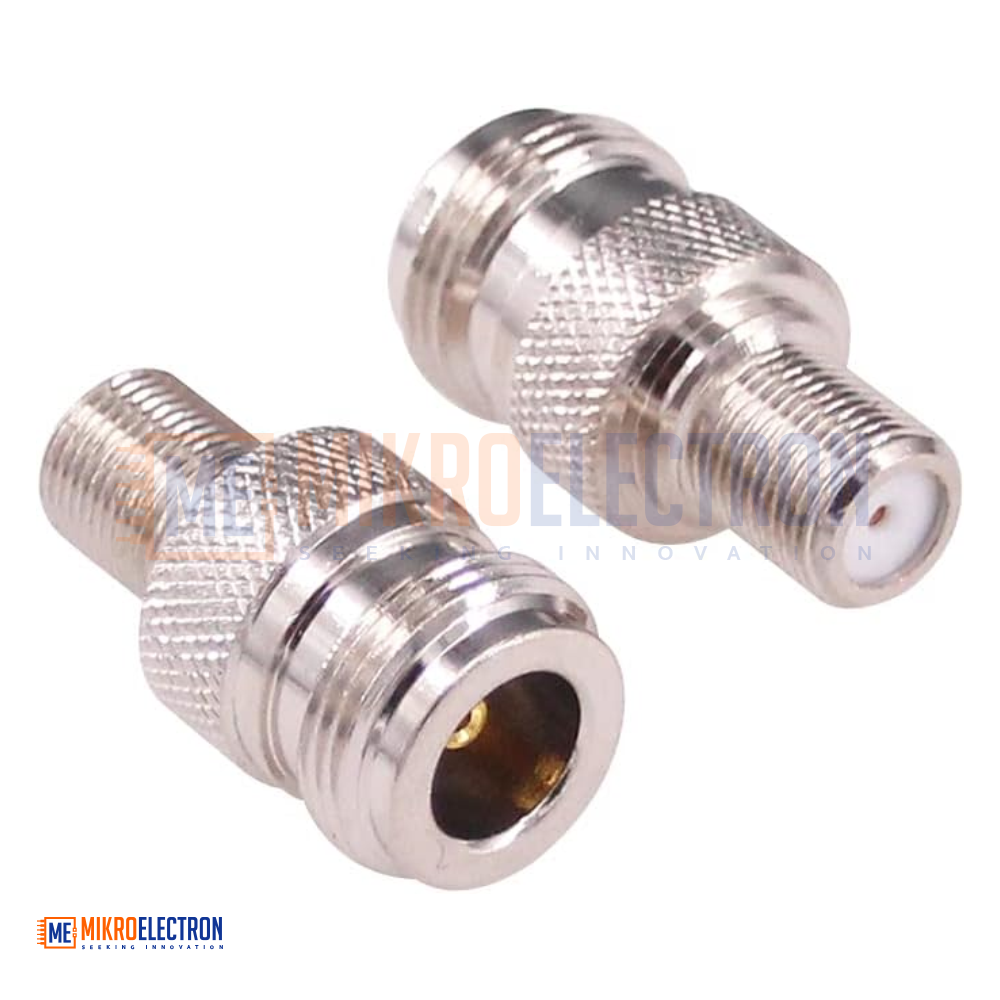
N Type Female to F Type Female RF Coaxial Adapter
The N Female to F Female RF Coaxial Adapter is a straight, one-piece coupler that joins N-type equipment with F-type cables and devices without soldering or cable rework. Both ends are female (jack) connectors, allowing two male plugs to be linked together directly. The body is machined from brass with nickel plating for shielding and corrosion resistance, and the center socket is gold plated for low contact resistance. A PTFE (Teflon) insulator keeps insertion loss low and impedance stable. Ideal for antennas, WiFi and LTE equipment, satellite and TV receivers, CCTV systems, and RF test benches.
محول N أنثى إلى F أنثى هو وصلة مستقيمة قطعة واحدة تربط أجهزة N-Type مع كابلات وأجهزة F-Type دون الحاجة إلى لحام أو تعديل الكابل. كلا الطرفين أنثى (Female)، مما يسمح بربط قابسين ذكر معاً بشكل مباشر. الجسم مصنوع من النحاس الأصفر المطلي بالنيكل لتوفير تدريع جيد ومقاومة للتآكل، والموصل المركزي مطلي بالذهب لتقليل مقاومة التلامس. العازل من مادة التفلون (PTFE) يقلل من فقد الإشارة ويحافظ على ثبات الممانعة. مثالي لـ الهوائيات، أجهزة WiFi و LTE، أجهزة استقبال البث والأقمار الصناعية، أنظمة المراقبة CCTV، وأجهزة اختبار الترددات الراديوية.
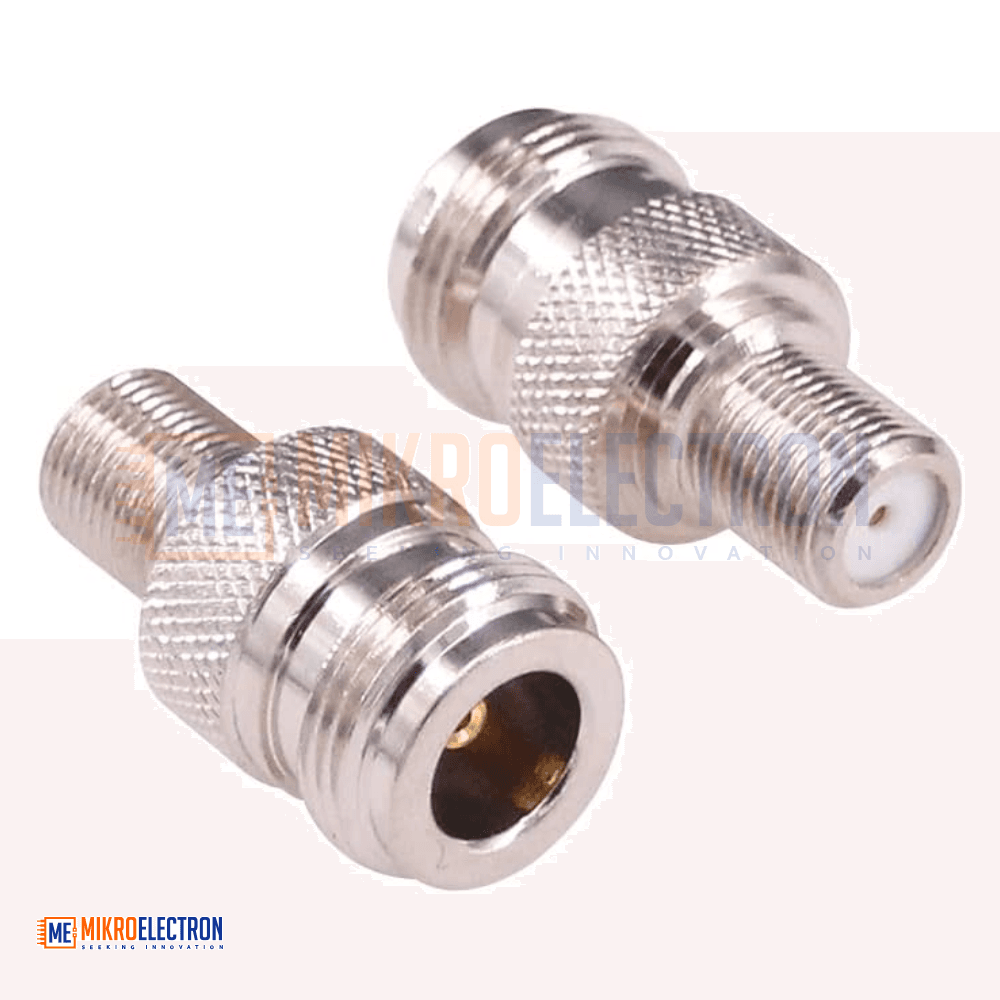
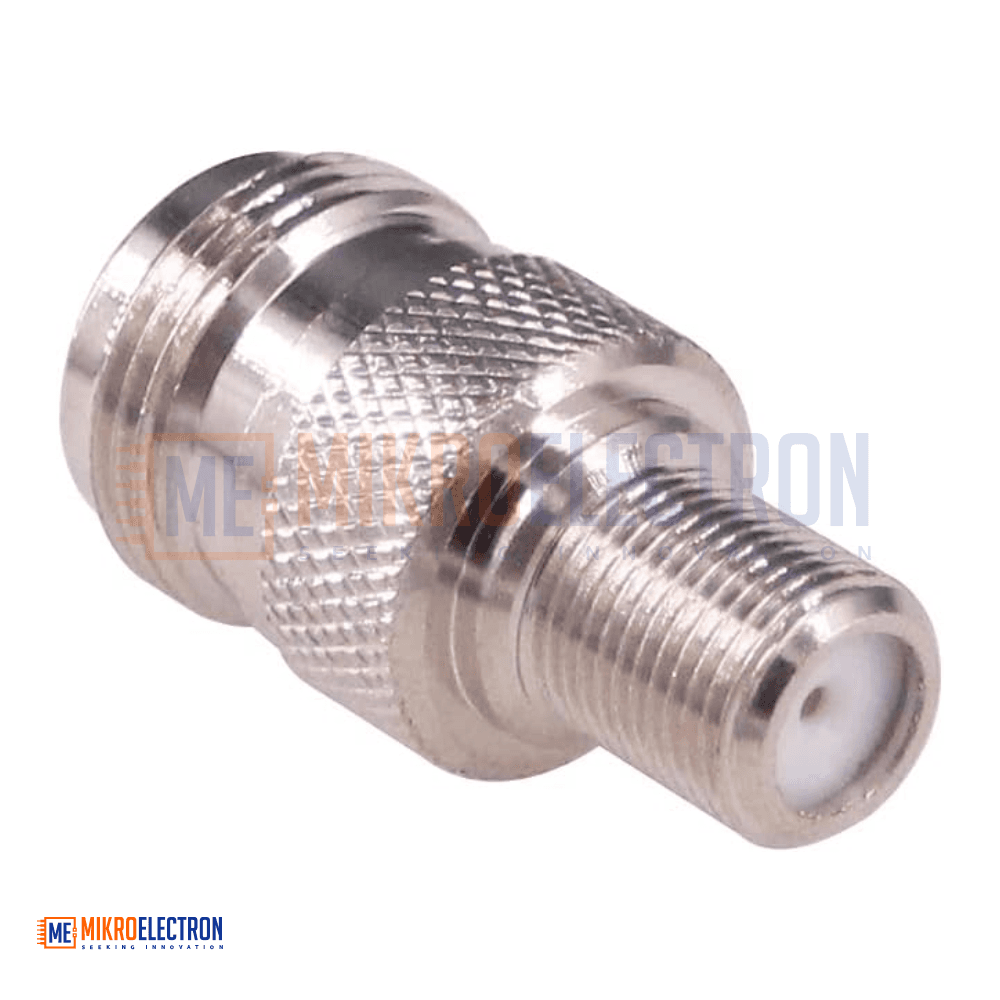
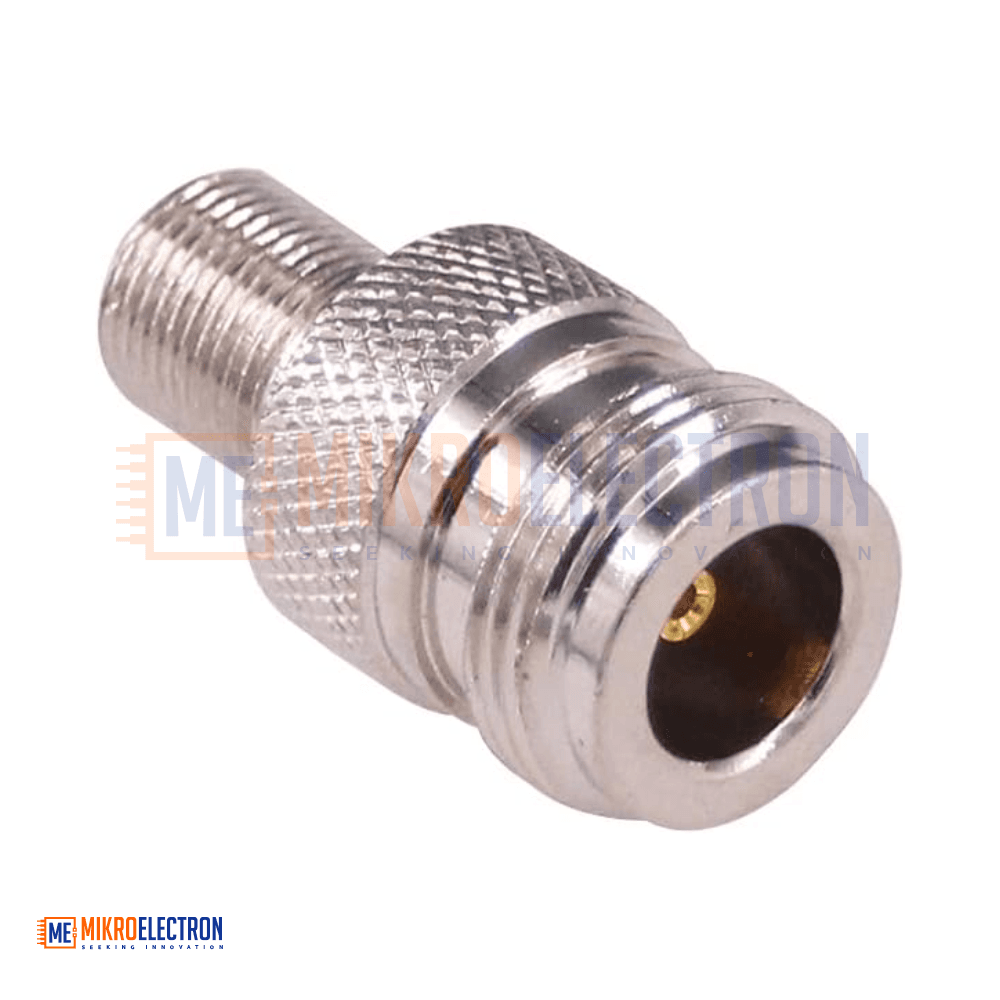
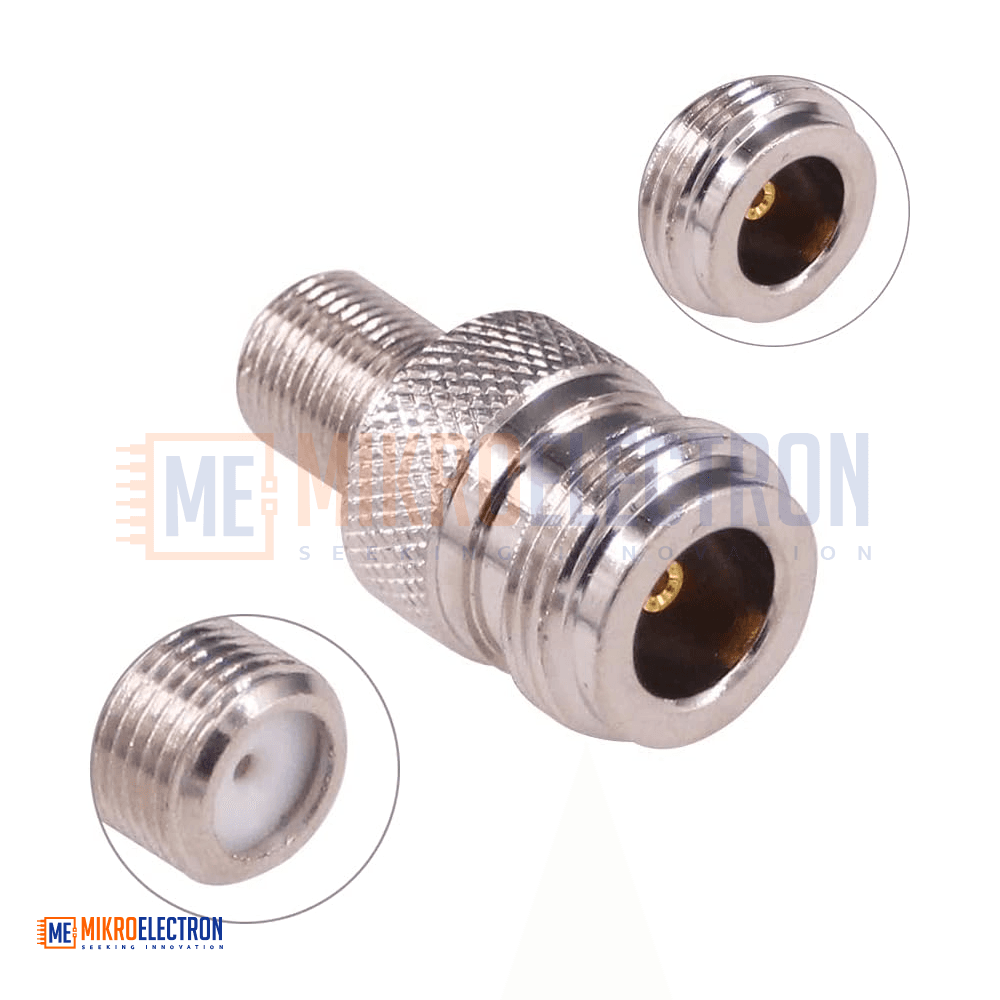
This N Type Female to F Type Female RF Coaxial Connector is a straight in-line adapter that bridges two different coaxial standards in a single compact body. One end is a standard N female jack with internal threading and a gold-plated center socket, while the opposite end is an F female jack with a PTFE face and a small center hole that accepts the bare center conductor of an F male plug.
Because both ends are female, this adapter is the correct choice when you need to join two male plugs together — for example connecting an N male antenna pigtail to an F male coaxial cable, or feeding an F male drop cable into equipment terminated with an N male connector. It removes the need for a custom cable assembly or any soldering work.
The adapter is precision machined as a solid piece rather than assembled from crimped sections, which keeps the signal path short and mechanically rigid. The outer shell is nickel-plated brass, giving continuous shielding and good resistance to oxidation in indoor and sheltered outdoor installations. The gold-plated center contact maintains a reliable low-resistance connection over many mating cycles, and the PTFE dielectric provides consistent impedance and low VSWR across the operating band.
Typical uses include WiFi and LTE antenna installations, satellite and terrestrial TV distribution, cable modem and broadband setups, CCTV coaxial runs, amateur radio accessories, and RF measurement work on the lab bench. The adapter supports frequencies up to approximately 4 GHz, though the practical usable range is limited by the lower-rated side of the link, since F-type hardware is normally specified for lower frequencies than N-type.
Specifications
| Parameter | Value |
|---|---|
| Product Name | N Type Female to F Type Female RF Coaxial Adapter |
| Connector A | N Type Female (jack, internal thread) |
| Connector B | F Type Female (jack, external thread) |
| Body Style | Straight, in-line, one piece |
| Impedance | 50 Ohm |
| Frequency Range | DC – 4 GHz (typical) |
| VSWR | Typically ≤ 1.3 across the operating range |
| Insulation Resistance | ≥ 5000 MΩ |
| Contact Resistance | Center contact ≤ 3 mΩ, outer contact ≤ 2 mΩ |
| Withstanding Voltage | 1500 V RMS |
| Body / Shell Material | Brass, nickel plated |
| Center Contact Material | Brass, gold plated |
| Insulator Material | PTFE (Teflon) |
| Operating Temperature | -55 °C to +155 °C |
| Mating Durability | ≥ 500 cycles |
| Installation | Screw-on, no soldering required |
| Color | Silver (nickel finish) |
Applications
- WiFi, LTE, GSM, and GPS antenna installations and extensions
- Satellite and terrestrial TV receivers, LNBs, and signal distribution
- Cable modem and broadband coaxial connections
- CCTV and surveillance systems using coaxial video runs
- Joining two male plugs where a female-to-female coupler is required
- RF test and measurement setups on the lab bench
- Amateur radio (ham radio) and transceiver accessories
- Signal amplifiers, splitters, and combiners
- Prototyping and educational RF laboratories