
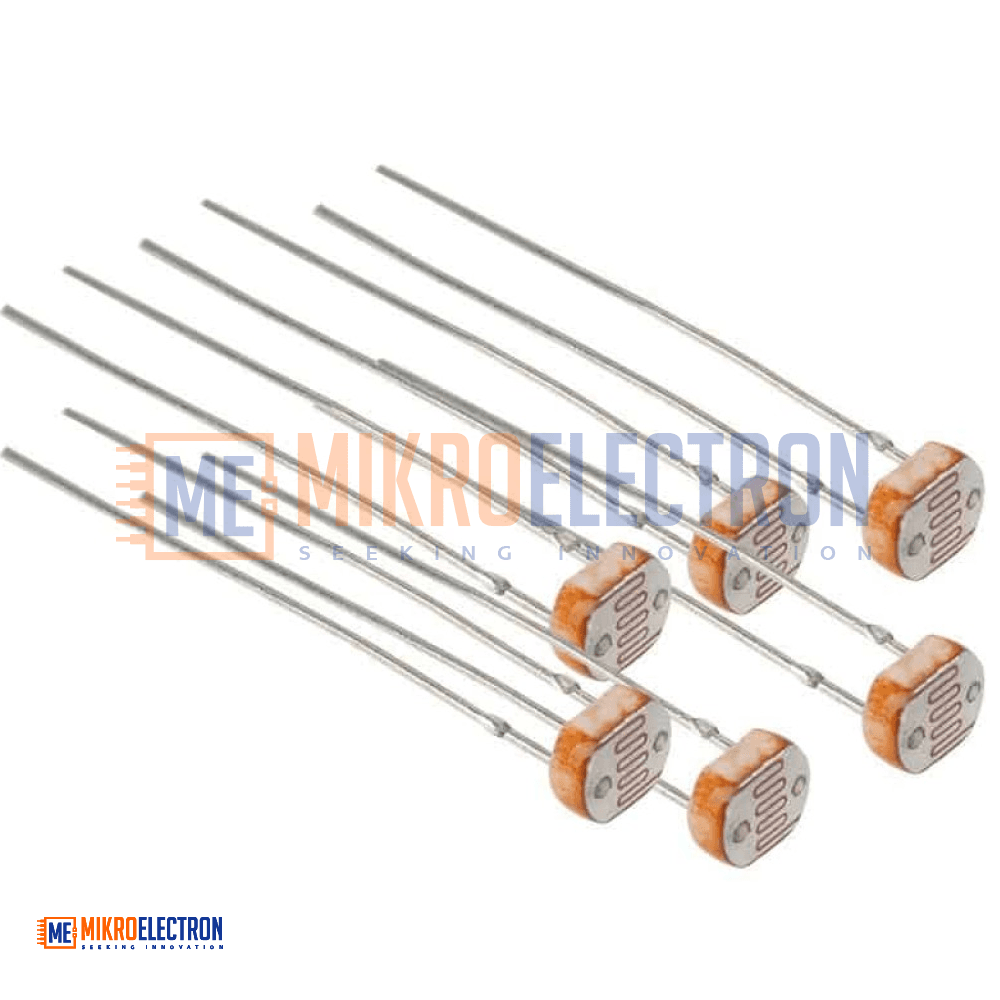
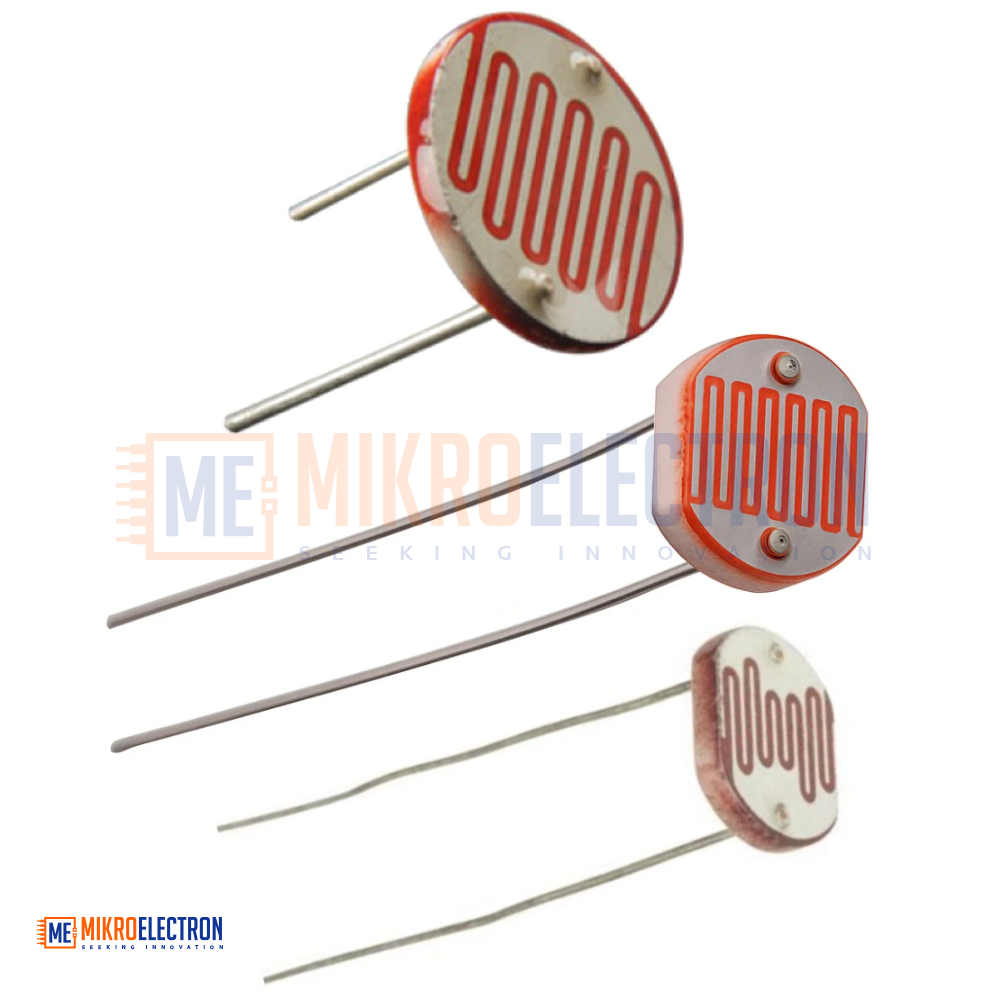
LDR Photoresistor
Please select an option to see price and availability
Select Option
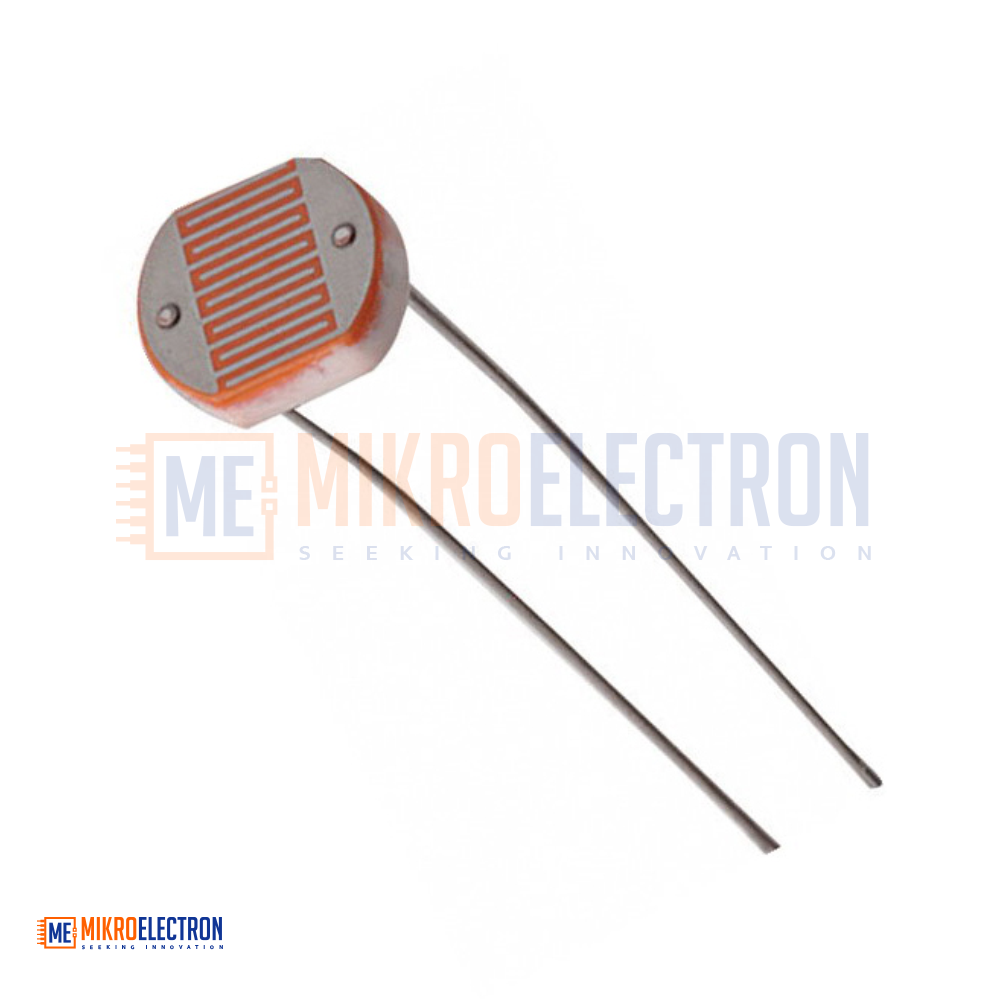 5mm 5528
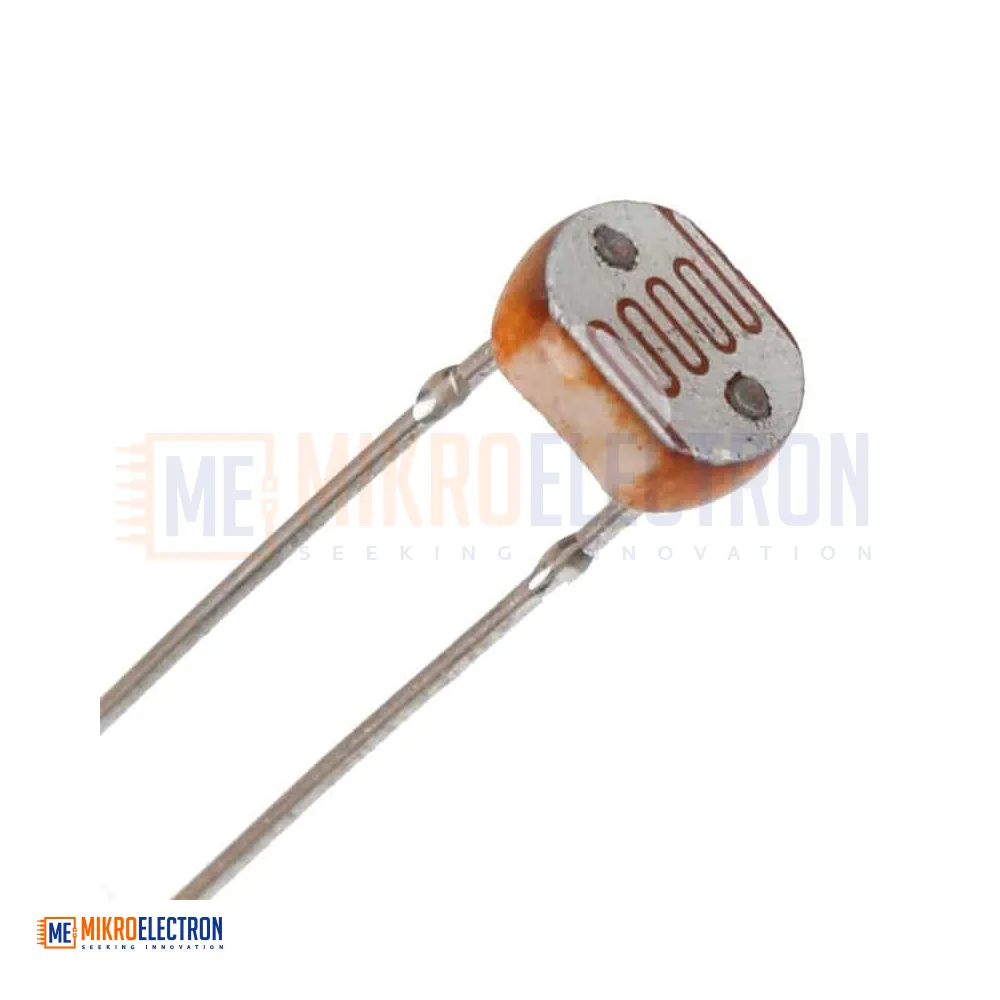 5mm 5537
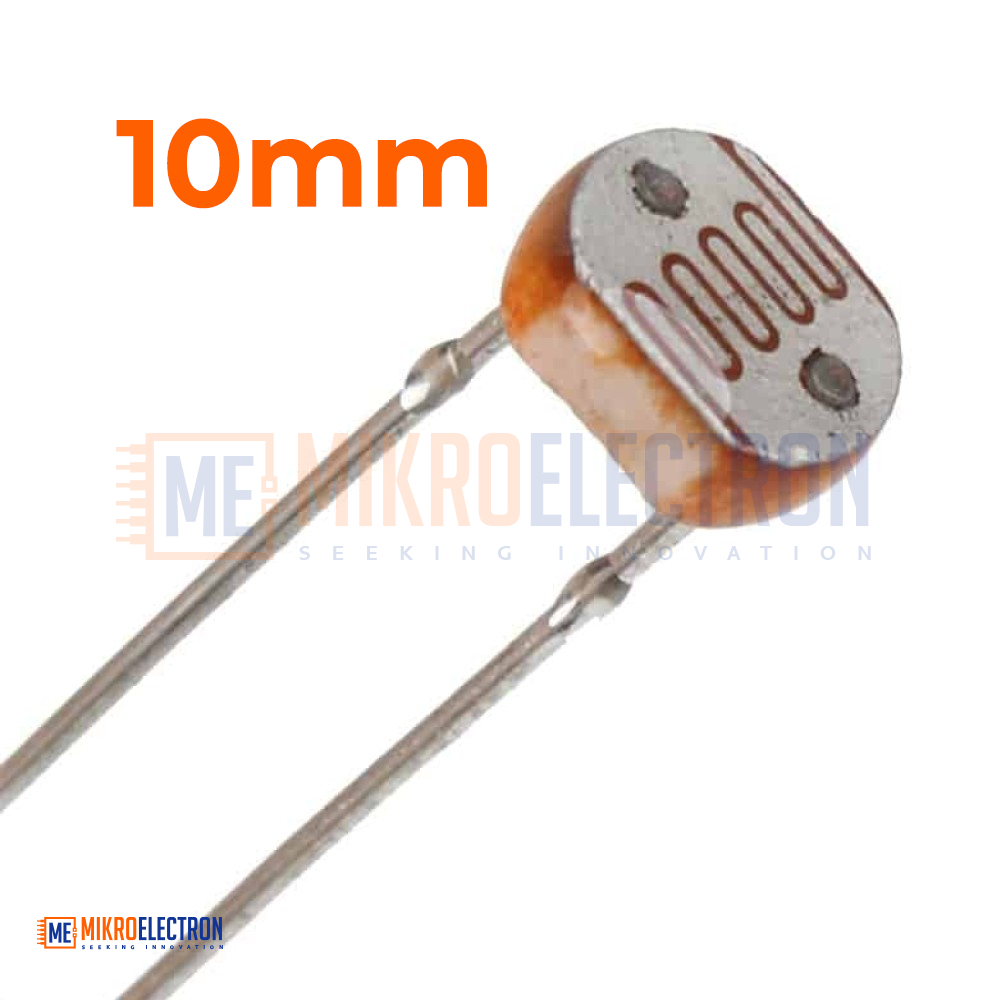 10mm
 12mm
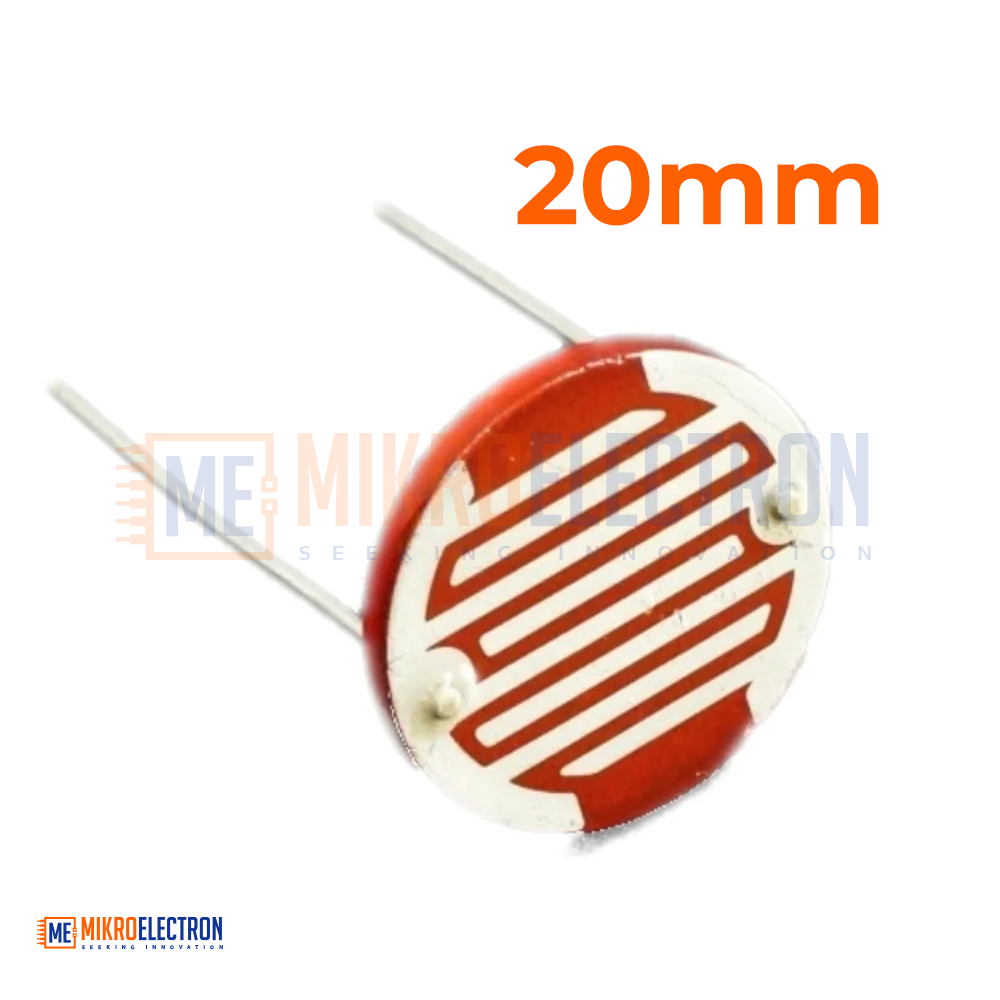 20mm
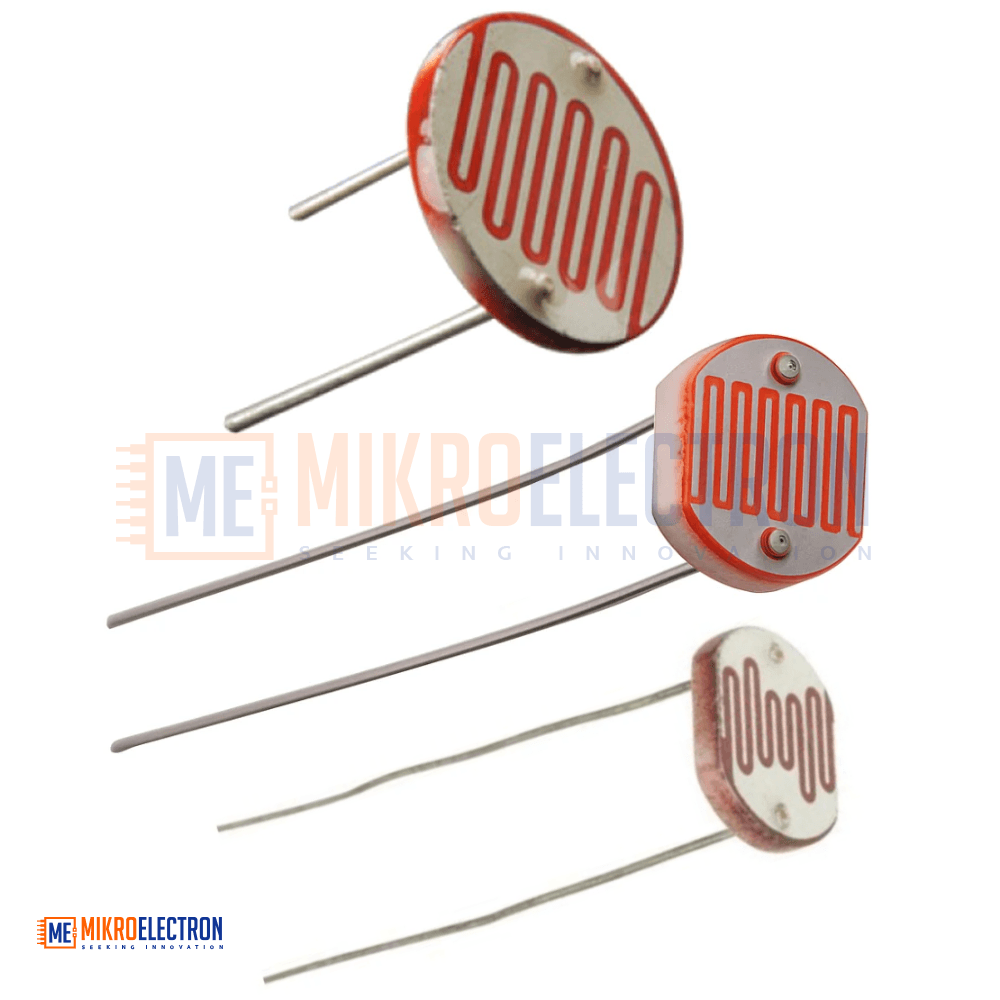
The LDR Photoresistor Series is a complete range of Light Dependent Resistors available in 5mm, 10mm, 12mm, and 20mm sensing diameters, covering the widely used 5528, 5537, and GL20528 models. Built from cadmium sulfide (CdS), each sensor lowers its resistance as ambient light increases and rises into the megohm range in darkness. With a simple two-pin through-hole design, peak spectral sensitivity around 540–560nm, and a wide operating range of -30°C to +70°C, these photoresistors connect directly to Arduino, ESP32, and Raspberry Pi through a basic voltage divider for automatic lighting, brightness control, security, and robotics projects.
سلسلة المقاومات الضوئية LDR هي مجموعة متكاملة من المقاومات الحساسة للضوء تتوفر بأقطار استشعار 5 مم و10 مم و12 مم و20 مم، وتشمل الموديلات الأكثر استخداماً 5528 و5537 وGL20528. مصنوعة من كبريتيد الكادميوم (CdS)، وتنخفض مقاومتها كلما زادت شدة الإضاءة الساقطة عليها بينما ترتفع إلى نطاق الميجا أوم في الظلام. تتميز بتصميم بسيط بطرفين للتركيب المباشر على اللوحة، وذروة استجابة طيفية عند 540–560 نانومتر، ونطاق تشغيل واسع من -30°C إلى +70°C. يمكن توصيلها مباشرة مع Arduino وESP32 وRaspberry Pi عبر دائرة مقسم جهد بسيطة لمشاريع الإضاءة التلقائية والتحكم بالسطوع وأنظمة الحماية والروبوتات.
The Light Dependent Resistor (LDR), also known as a photoresistor, is a passive two-terminal component whose electrical resistance changes in proportion to the intensity of light falling on its sensing surface. In bright conditions the resistance drops to a few kilohms, while in complete darkness it climbs to the megohm range, producing a large and easily measurable change that can be read by any analog input.
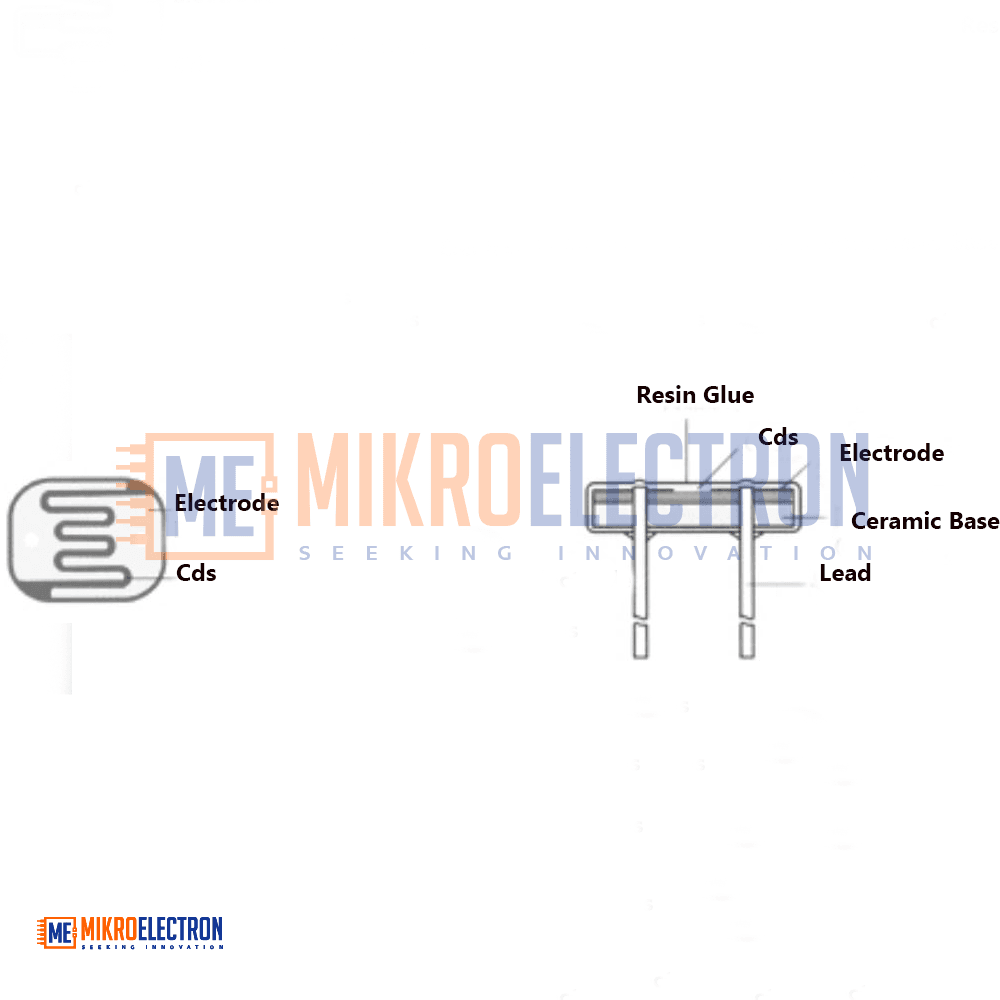
All variants in this series use a cadmium sulfide (CdS) photosensitive element protected by an epoxy resin coating, giving them high sensitivity, stable long-term performance, and resistance to humidity and mechanical handling. The spectral peak response between 540nm and 560nm closely matches the sensitivity curve of the human eye, which makes these sensors particularly accurate for measuring daylight and indoor artificial lighting rather than infrared sources.
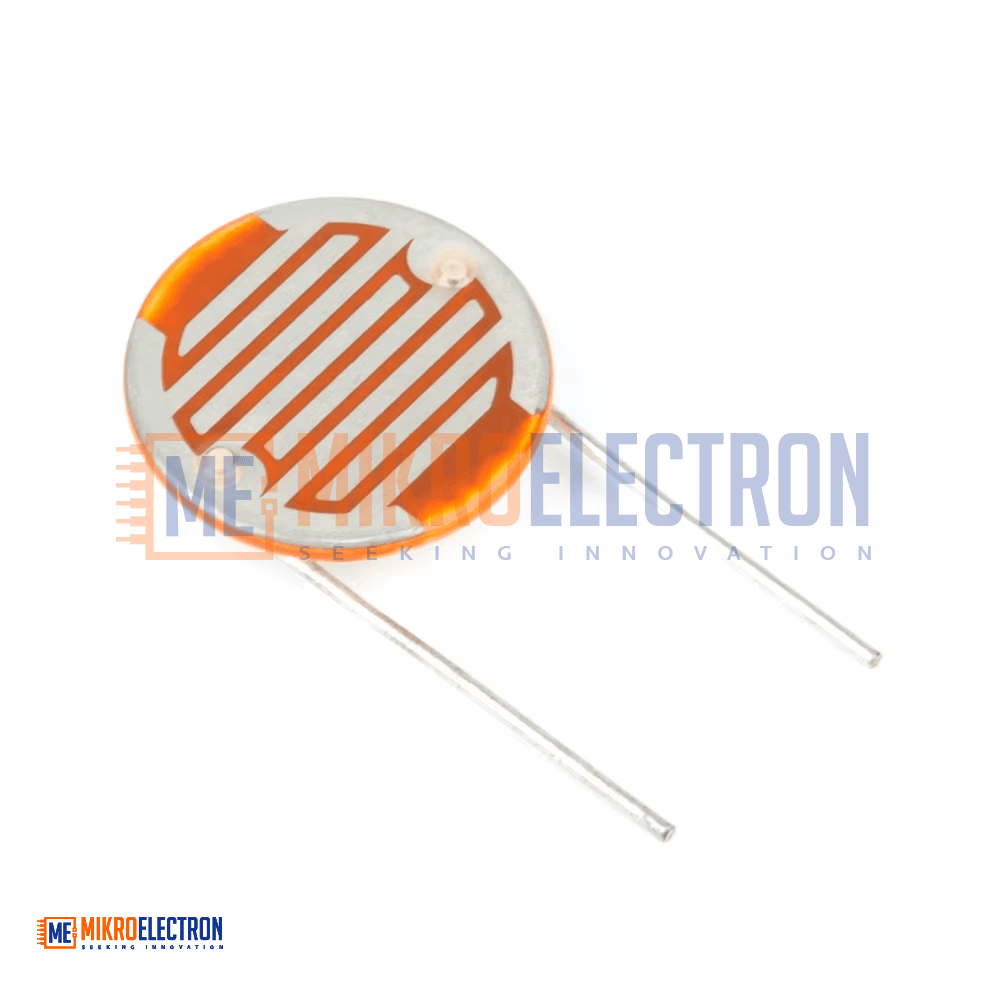
The sensing diameter is the main difference between the models. Smaller 5mm versions such as the 5528 and 5537 are ideal for compact circuits, breadboard experiments, and dense PCB layouts where board space is limited. The 10mm and 12mm versions offer a larger photosensitive area, higher power handling, and better averaging of light across a wider field, making them more suitable for enclosure-mounted sensing and outdoor lighting control. The 20mm GL20528 provides the largest collecting surface in the series along with an extremely fast 30μs response time, which suits beam-break detection, exposure control, and industrial photoelectric applications.
Interfacing is straightforward. The LDR is placed in series with a fixed resistor to form a voltage divider, and the midpoint is connected to an analog input such as A0 on Arduino or an ADC channel on ESP32 and Raspberry Pi. The resulting voltage rises or falls with light level and can be thresholded in software to trigger relays, LEDs, alarms, or motors. For purely digital switching, the same divider can drive a comparator such as the LM393 to produce a clean high/low output.
Thanks to their low cost, simple operation, and requirement of no external power or driver circuitry, these photoresistors remain one of the most practical light-sensing solutions for educational kits, hobby electronics, prototyping, and commercial automation products alike.
Specifications
| Parameter | 5mm - 5528 | 5mm - 5537 | 10mm | 12mm | 20mm - GL20528 |
|---|---|---|---|---|---|
| Sensor Type | Light Dependent Resistor (LDR) | Light Dependent Resistor (LDR) | Light Dependent Resistor (LDR) | Light Dependent Resistor (LDR) | Light Dependent Resistor (LDR) |
| Sensing Diameter | 5 mm | 5 mm | 10 mm | 12 mm | 20 mm |
| Light Resistance | Low under illumination | 10KΩ – 20KΩ | 5KΩ – 100KΩ | 10KΩ – 20KΩ @ 10 Lux | 8KΩ – 20KΩ |
| Dark Resistance | Very high | ≥ 1MΩ (typ. 2MΩ) | 1MΩ – 8MΩ | 2MΩ | Up to 2MΩ |
| Maximum Voltage | — | 150V DC | 500V | 250V DC | 500V DC |
| Maximum Power | — | 100 mW | 500 mW | 200 mW | 500 mW (0.5W) |
| Spectral Peak Response | — | 540 nm | — | 560 nm | 560 nm |
| Rise Time | — | 20 ms | — | 30 ms | 30 μs |
| Fall Time | — | 30 ms | — | 30 ms | 30 μs |
| Operating Temperature | -30°C to +70°C | -30°C to +70°C | -30°C to +70°C | -30°C to +70°C | -30°C to +70°C |
| Dimensions | — | — | — | 12 × 10.3 × 2 mm | — |
| Pin Pitch | — | — | — | 8.55 mm | — |
| Sensitivity Ratio (λ100/λ10) | — | — | — | 0.6 | — |
| Material | Cadmium Sulfide (CdS) | Cadmium Sulfide (CdS) | Cadmium Sulfide (CdS) | Cadmium Sulfide (CdS) | Cadmium Sulfide (CdS) |
| Coating | Epoxy resin | Epoxy resin | Epoxy resin | Epoxy resin | Epoxy resin |
| Number of Pins | 2 | 2 | 2 | 2 | 2 |
| Mounting Type | Through-hole | Through-hole | Through-hole | Through-hole | Through-hole |
| Output Type | Variable Resistance | Variable Resistance | Variable Resistance | Variable Resistance | Variable Resistance |
| Compliance | — | RoHS Compliant | — | — | — |
Applications
Lighting and Automation
- Automatic street lighting systems
- Day and night detection circuits
- Smart home lighting control
- Solar garden and pathway lights
- Nightlight control systems
- Energy-saving lighting control circuits
- Automatic headlight dimmers
- Light-controlled switches and relays
Measurement and Imaging
- Light intensity measurement and lux meters
- Camera exposure control
- Display and screen brightness adjustment
- Colorimetric test equipment and densitometers
- Photocopy machine toner density control
- Automatic gain control systems
Security and Detection
- Security and burglar alarm systems
- Beam-break object detection
- Presence and absence detection
- Position sensing
- Smoke detection systems
- Oil burner flame monitoring
Education and Prototyping
- Arduino, ESP32, and Raspberry Pi projects
- Light-following and line-following robots
- Educational electronics kits and lab experiments
- Industrial photoelectric control systems
- Electronic toys and interactive projects