
Solid State Relay Module 5v High Level Trigger
Please select an option to see price and availability
Select Option
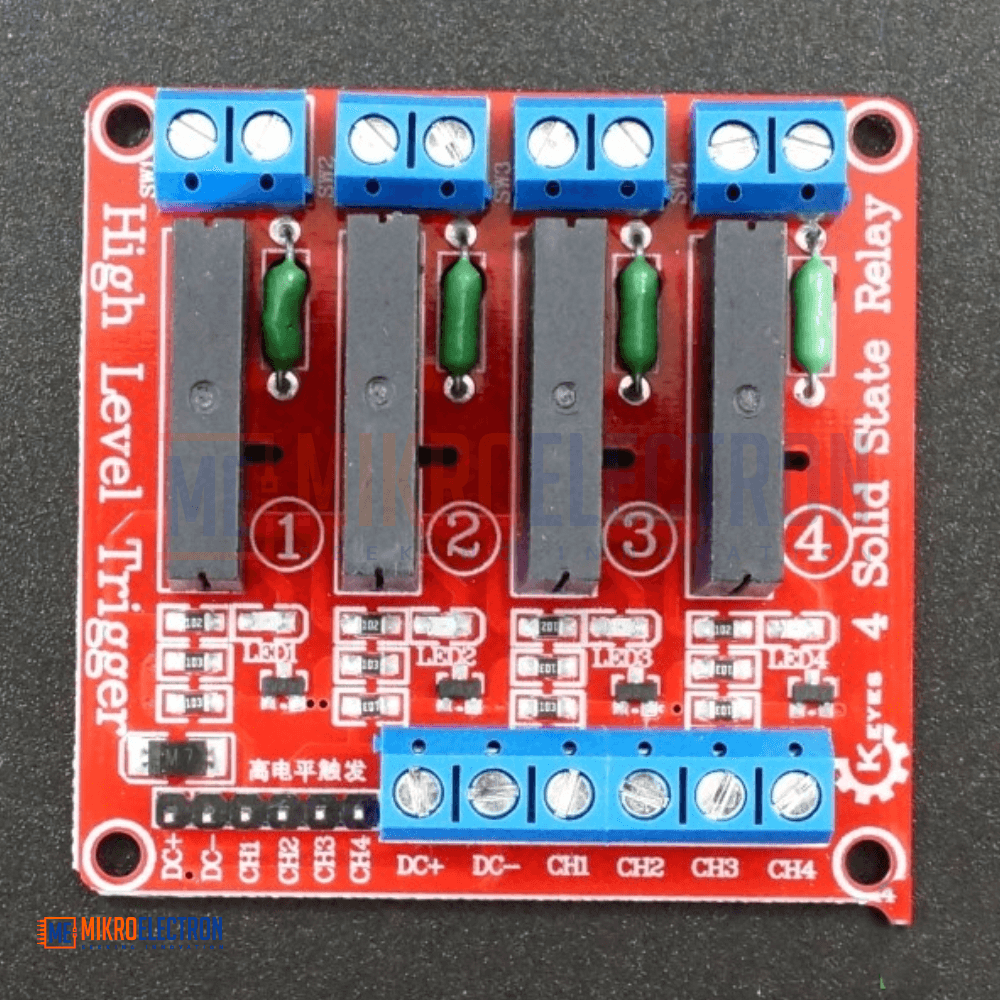
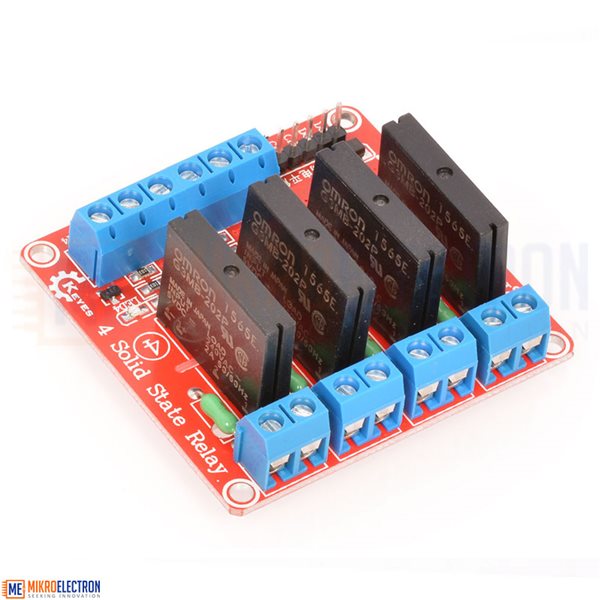 4-Channel
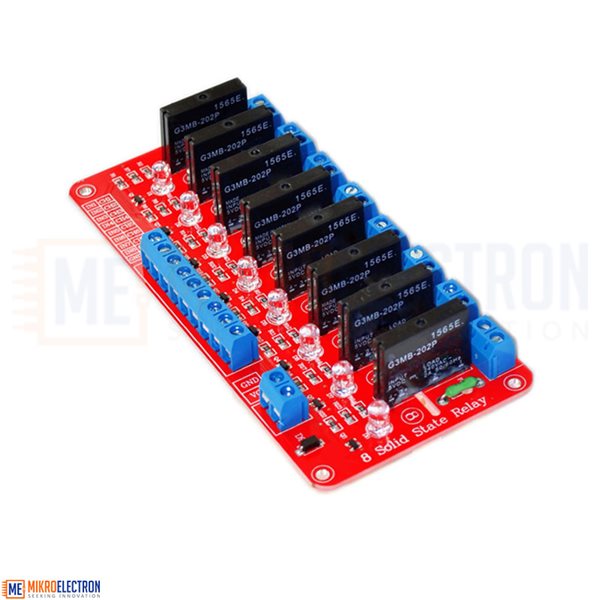 8-Channel
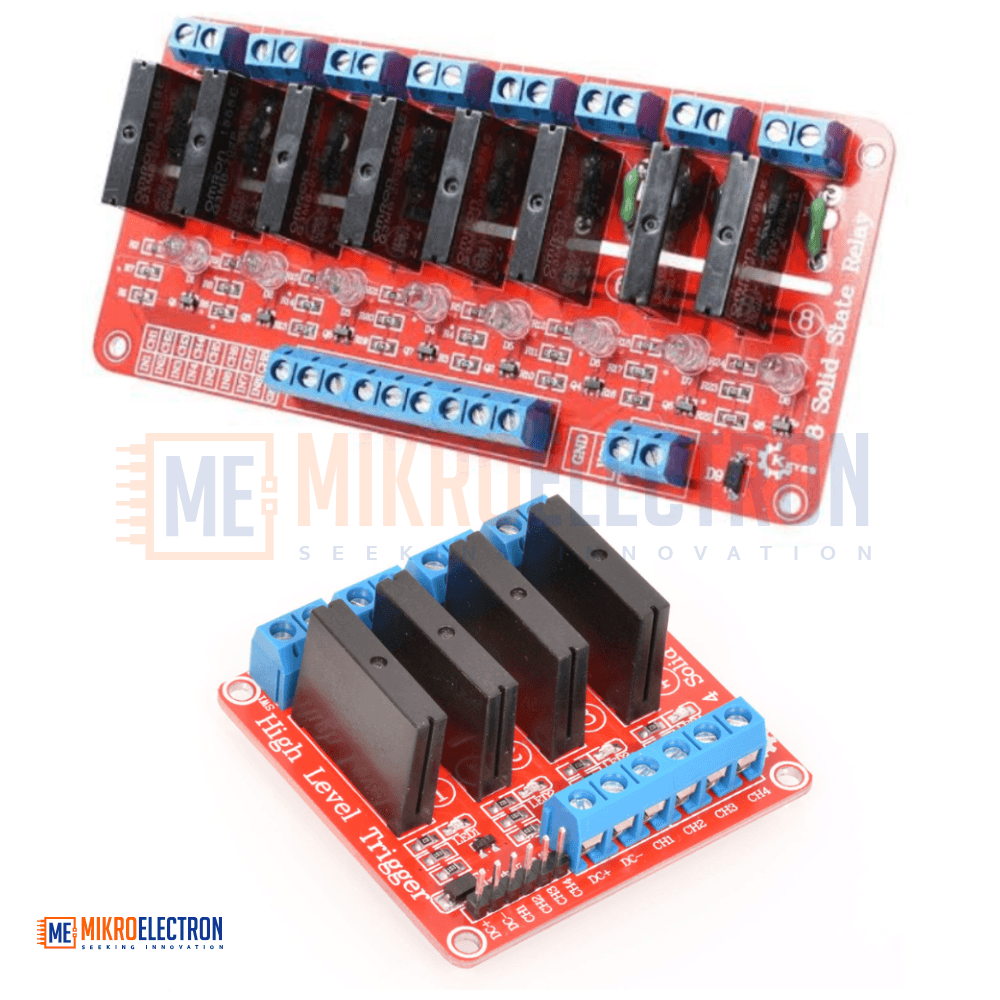
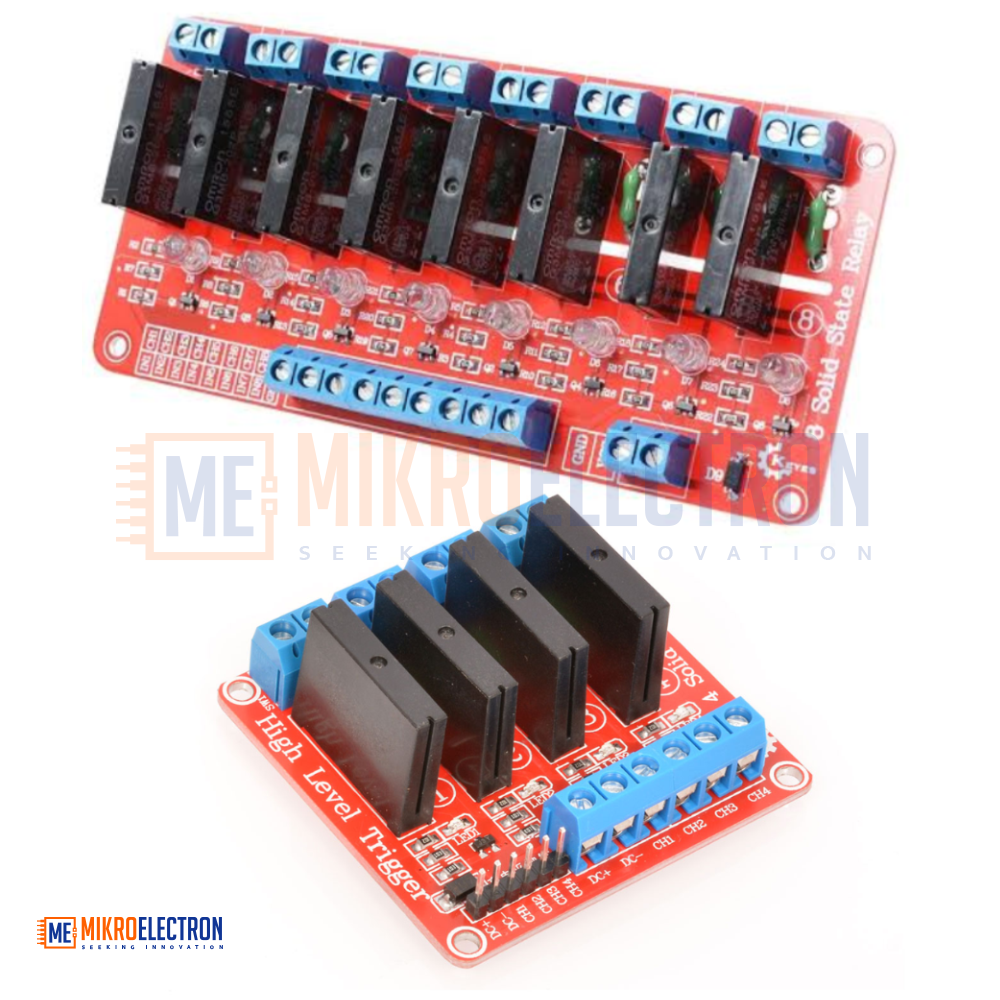
The 5V Solid State Relay Modules are compact switching interfaces that let low-voltage digital control systems operate higher-voltage AC loads, available in 4-Channel and 8-Channel versions. Each channel uses contactless Solid State Relay switching for fast response, long service life, and reduced interference compared to electromagnetic relays. Both modules run on a 5V DC supply and accept TTL-compatible control signals, with each channel rated to switch up to 2A at 240VAC. Clearly labeled screw terminals simplify wiring, and the compact form factors make them convenient for Arduino, microcontroller, PLC, and automation projects requiring digital control of AC-powered loads.
تُعد وحدات Solid State Relay بجهد 5V واجهات تحكم مدمجة تتيح لأنظمة التحكم الرقمية منخفضة الجهد التحكم بأحمال كهربائية أعلى جهداً، وتتوفر بإصدارين: 4 قنوات و8 قنوات. تستخدم كل قناة تقنية التبديل الإلكتروني بدون تلامس (Solid State Relay) لتحقيق استجابة سريعة وعمر تشغيل طويل وتقليل التداخلات مقارنة بالمرحلات الكهرومغناطيسية التقليدية. تعمل كلتا الوحدتين بجهد 5V DC وتدعمان إشارات تحكم متوافقة مع TTL، مع قدرة كل قناة على التحكم بحمل يصل إلى 2A عند 240VAC. تتميز الوحدتان بأطراف توصيل لولبية واضحة لتسهيل التمديد، وتصميم مدمج يجعلهما مناسبتين لمشاريع Arduino والمتحكمات الدقيقة وأنظمة PLC والأتمتة.
The 5V Solid State Relay Module family provides reliable electronic switching between low-voltage control systems and higher-voltage AC loads, and is offered in two configurations:
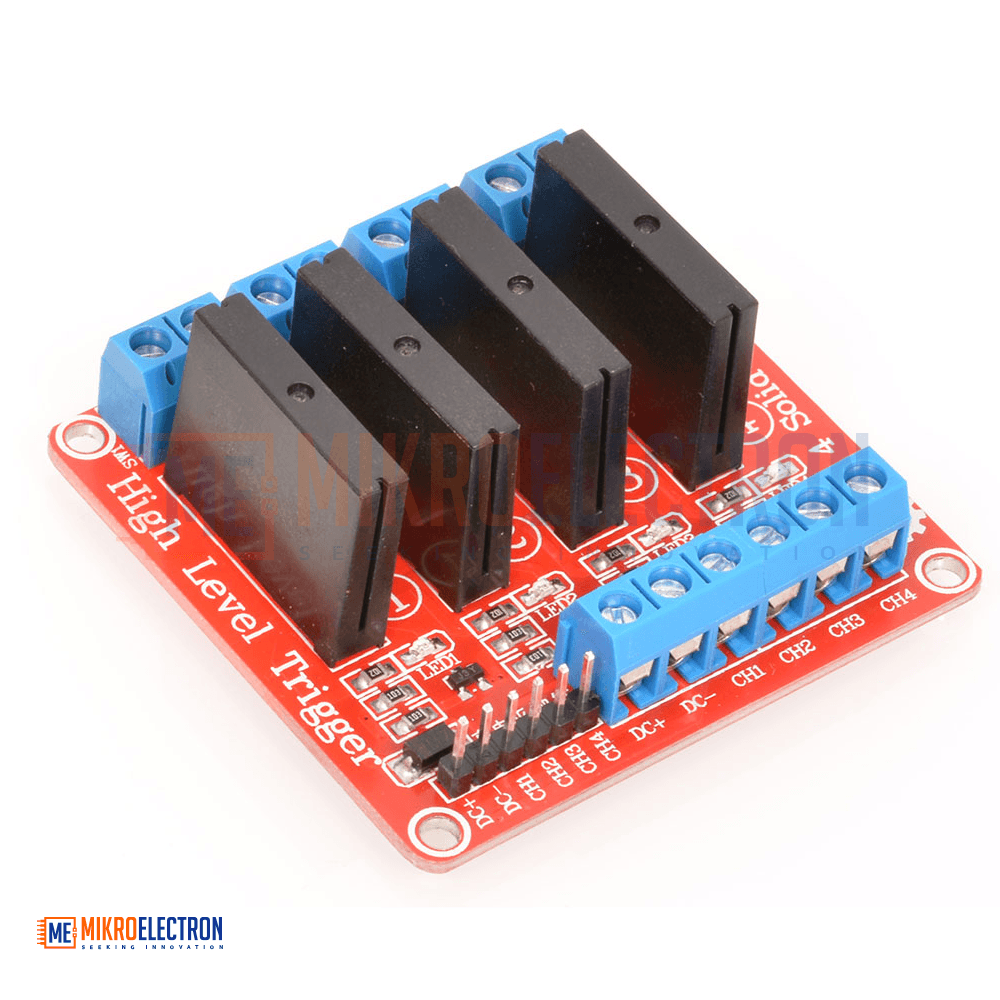
4-Channel Module: Features four independent Solid State Relay channels, operating from a 5V DC supply with TTL voltage-level, high-level trigger control. Each channel activates when a high-level signal is applied to its input, making it well suited for Arduino boards, microcontrollers, and embedded automation controllers. The module measures 57 × 55 × 25mm and weighs 38g.
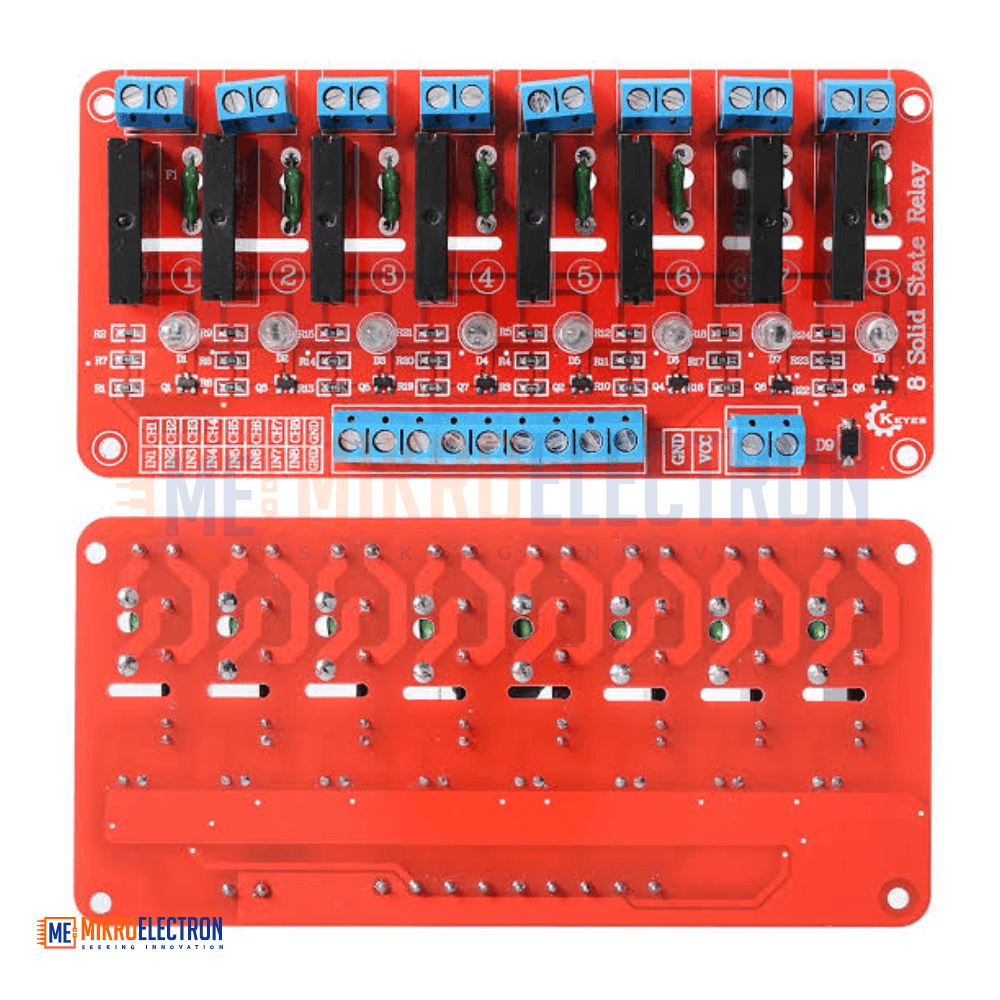
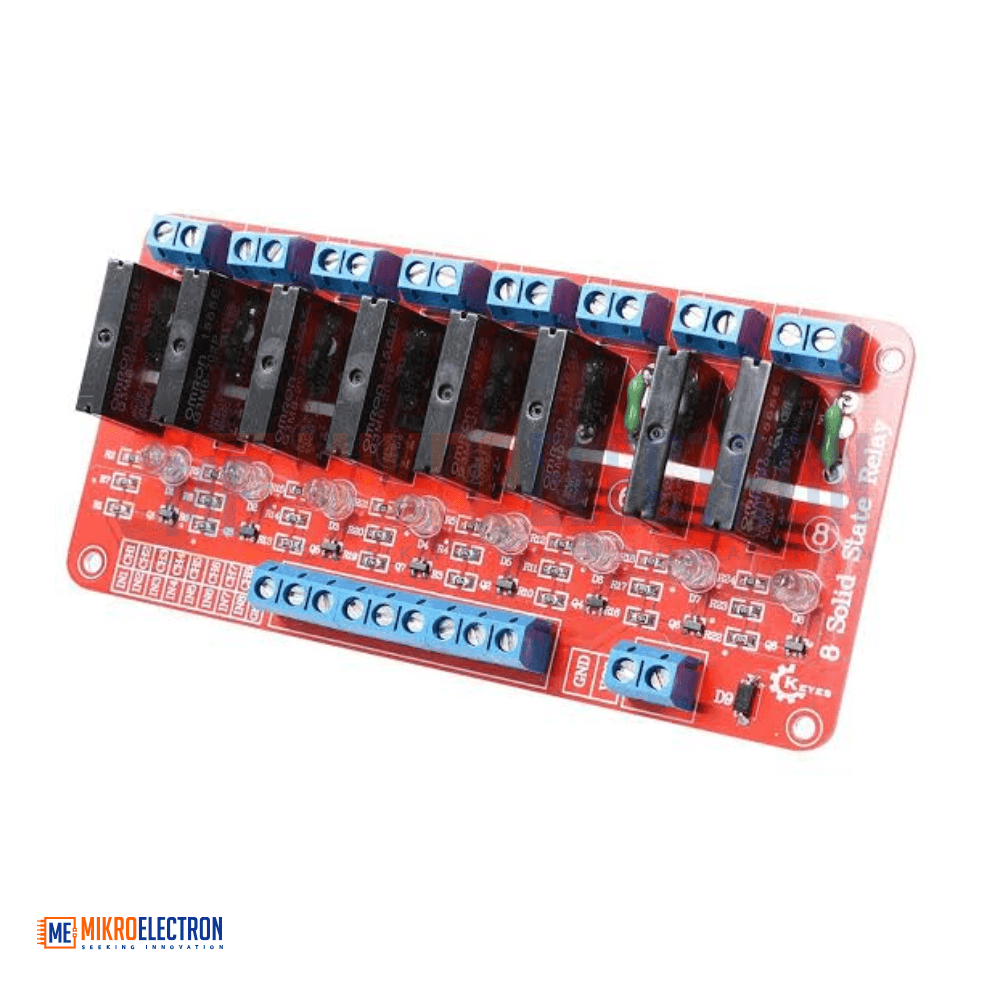
8-Channel Module: Features eight independent Solid State Relay channels using contactless electronic switching for fast operation, long service life, and reduced mechanical wear compared to traditional electromagnetic relays. It runs on 5V DC at approximately 160mA and supports 0–5V range control signals. Note: the supplied product documentation contains conflicting information — the title indicates high-level trigger, while the detailed specification lists the default configuration as low-level trigger; PCB markings should be verified before wiring. It includes 2.54mm pin headers and blue KF301 screw terminals, and measures 103 × 53 × 21mm (package: 110 × 55 × 25mm), weighing 70g.
Both modules use clearly labeled screw terminals to simplify wiring and are designed for integration with PLC systems, Arduino boards, microcontrollers, home automation, and industrial control panels.
Important: The output side of both modules can involve dangerous mains voltage. Installation and wiring of 240VAC circuits should only be performed by a suitably qualified person using appropriate electrical safety practices.
Specifications
| Specification | 4-Channel Module | 8-Channel Module |
|---|---|---|
| Number of Channels | 4 | 8 |
| Relay Type | Solid State Relay | Solid State Relay |
| Supply Voltage | 5V DC | 5V DC |
| Input Current | Not specified | Approx. 160mA |
| Trigger Type | High-Level Trigger | High-Level / Low-Level (default: Low-Level per spec sheet) |
| Control Signal | TTL Voltage | 0–5V range (2.5V low / 3.3–5V high) |
| Trigger Current | Not specified | Approx. 2mA |
| Maximum Load Rating | 2A | 2A |
| Maximum Switching Voltage | 240VAC | 240VAC |
| Connector Type | Screw Terminals | 2.54mm Pin Headers + KF301 Screw Terminals |
| Dimensions | 57 × 55 × 25mm | 103 × 53 × 21mm |
| Weight | 38g | 70g |
Applications
- Arduino and microcontroller-based projects
- PLC control systems
- AC lighting control
- Home and smart home automation
- Industrial automation and control panels
- Embedded control systems
- IoT-based switching systems
- Laboratory and educational projects
- Digital control of AC-powered electrical devices