
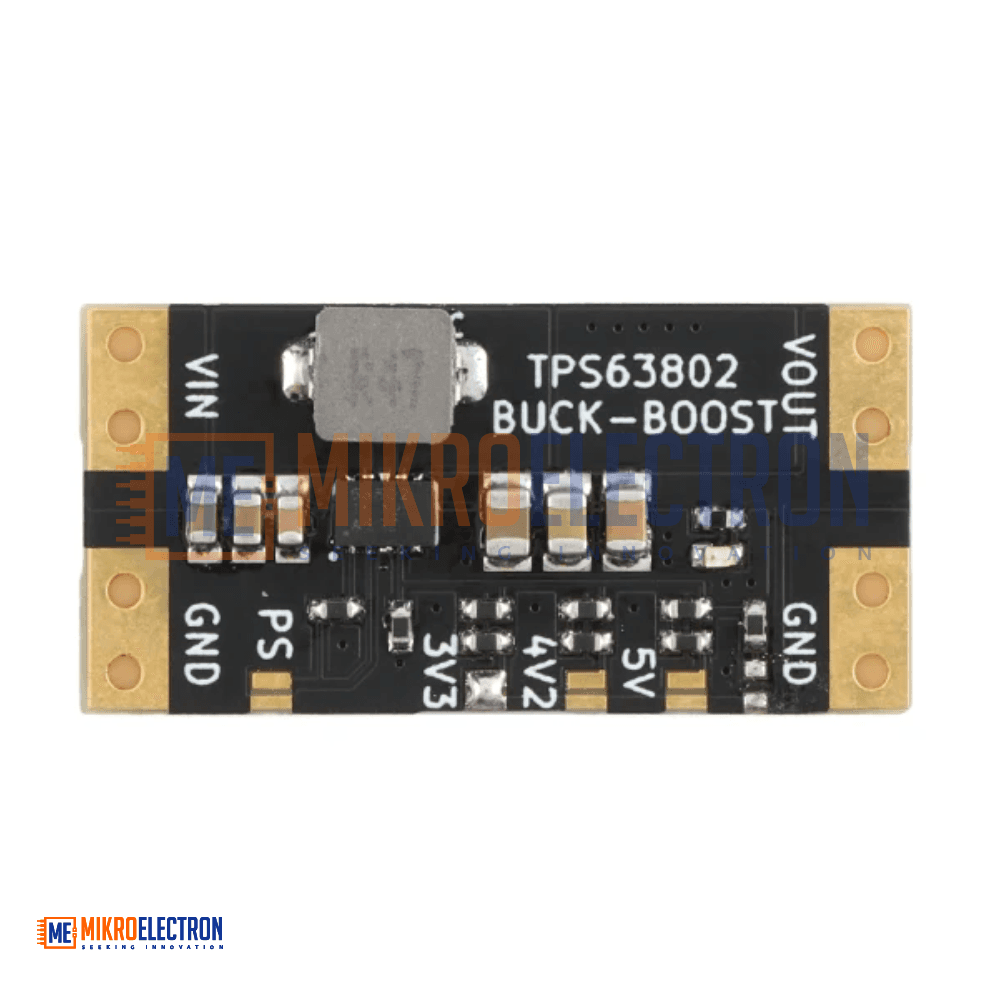
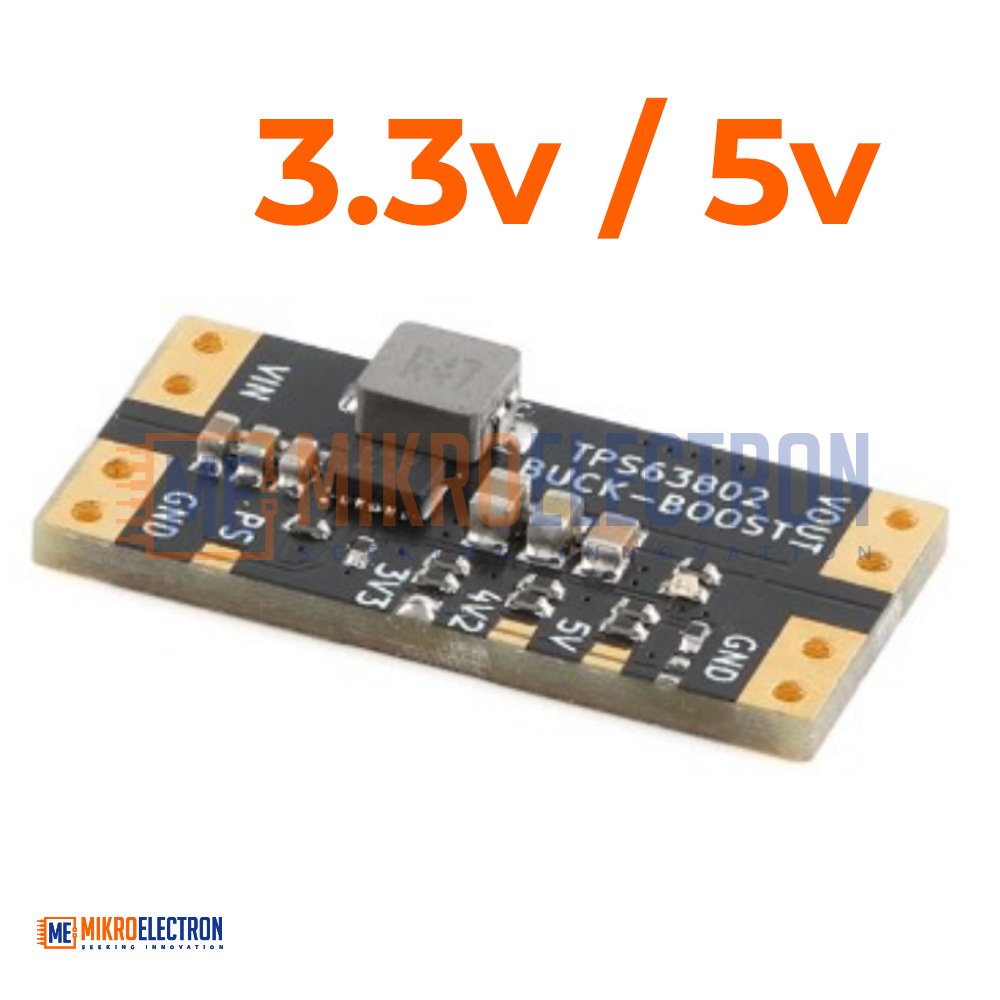
TPS63802 Automatic Step Up/Step Down Power Supply Module
Please select an option to see price and availability
Select Option
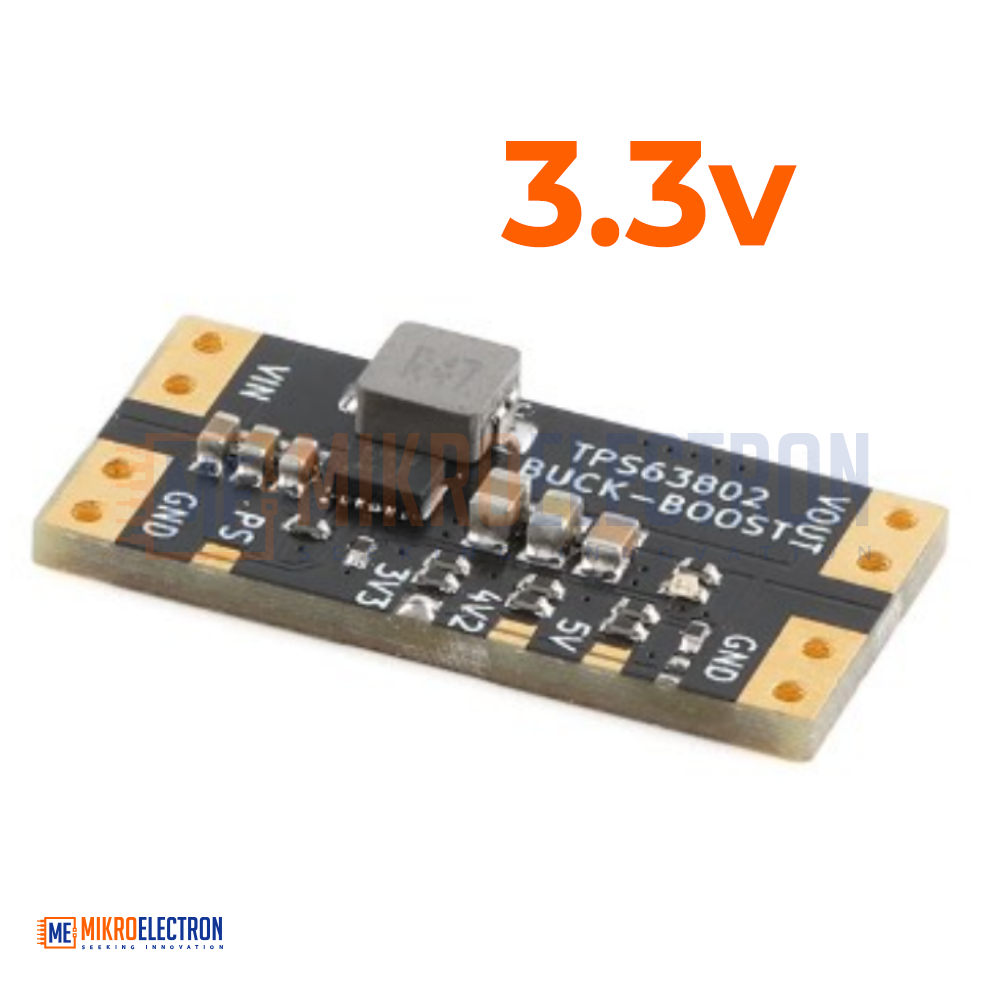 3.3v
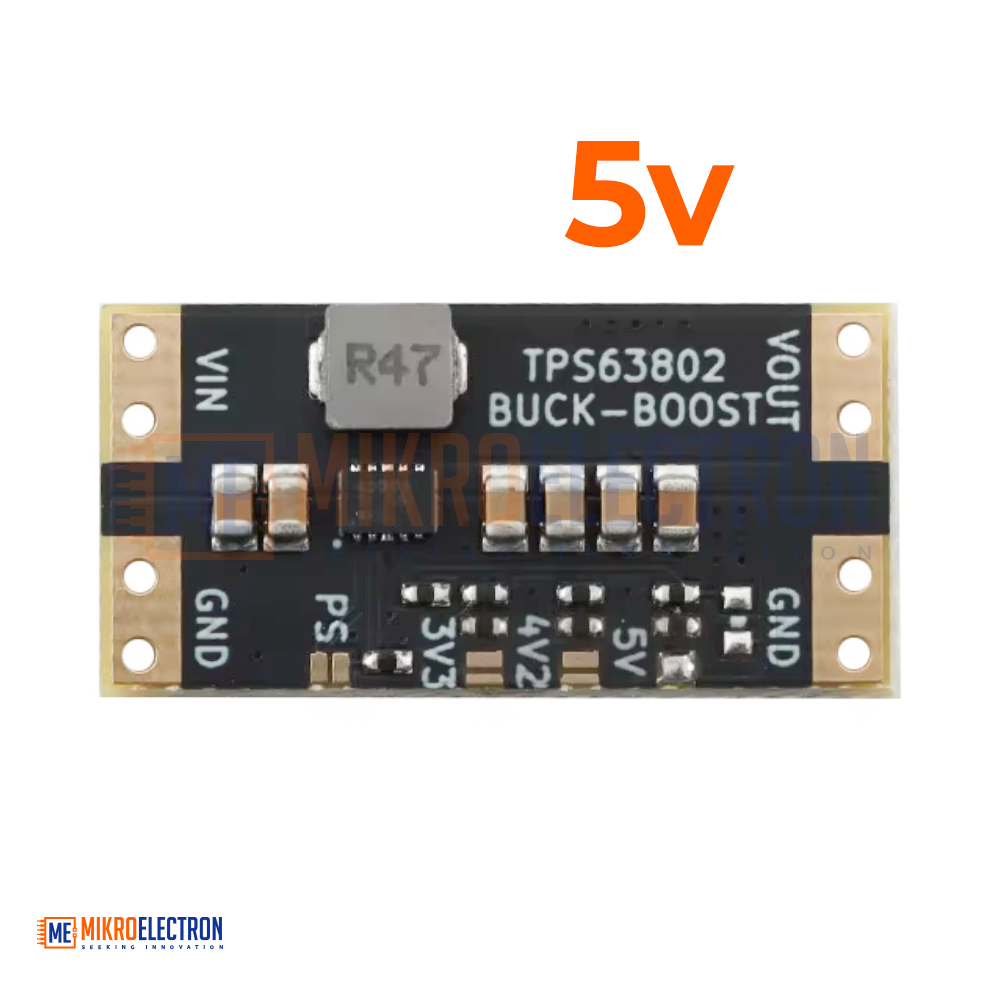 5v
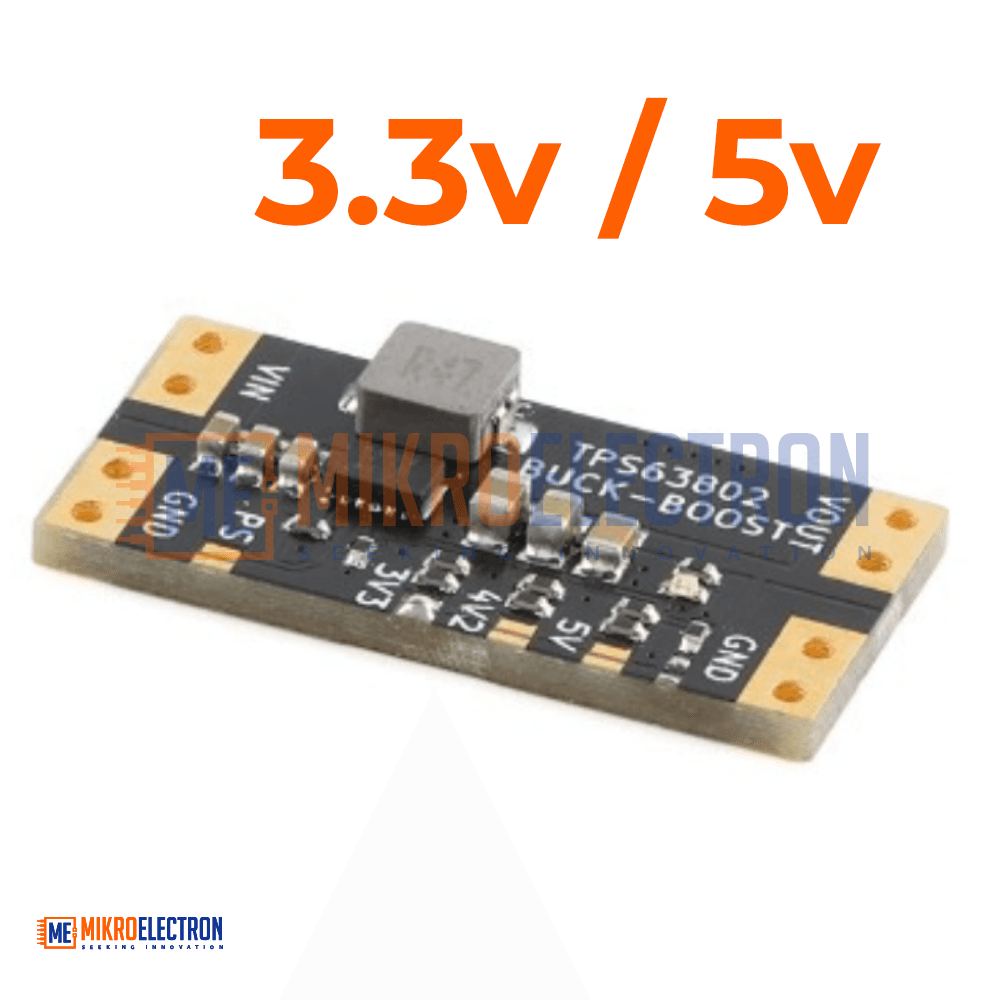
The TPS63802 Power Supply Module series is a compact, high-efficiency buck-boost voltage regulator that automatically steps voltage up or down to deliver a stable, fixed output — available in 3.3V and 5V versions. Built around the Texas Instruments TPS63802 chip, it accepts a wide input voltage range of 1.3V to 5.5V, making it ideal for lithium battery or USB-powered projects. With a switching frequency above 1.4MHz, it delivers low output ripple and stable performance, while supporting both normal and power-saving modes. Rated for up to 1A output current, it is well suited for powering STM32, ESP32, and 51-series microcontrollers and other low-voltage embedded circuits.
تُعد سلسلة وحدة تنظيم الجهد TPS63802 منظّم جهد مدمج وعالي الكفاءة من نوع رافع/خافض (Buck-Boost) يقوم تلقائيًا برفع أو خفض الجهد للحصول على خرج ثابت، وتتوفر بإصدارين: 3.3 فولت و5 فولت. تعتمد الوحدة على شريحة Texas Instruments TPS63802، وتقبل مجال جهد دخل واسع من 1.3 فولت إلى 5.5 فولت، مما يجعلها مثالية للمشاريع التي تعمل بـبطاريات الليثيوم أو منافذ USB. وبفضل تردد تبديل يزيد عن 1.4 ميجاهرتز، توفّر الوحدة تموجًا منخفضًا في الخرج وأداءً مستقرًا، كما تدعم وضعي التشغيل العادي وتوفير الطاقة. وبتيار خرج يصل إلى 1 أمبير، تُعد مناسبة لتغذية متحكمات مثل STM32 وESP32 وسلسلة 51 وغيرها من الدوائر الإلكترونية منخفضة الجهد.
The TPS63802 Power Supply Module is a compact, efficient buck-boost voltage regulator built around the Texas Instruments TPS63802 chip. Its core function is to automatically increase or decrease the input voltage, maintaining a constant, stable output regardless of whether the source voltage sits above or below the target output — a key advantage over simple linear or single-direction (buck-only or boost-only) regulators.
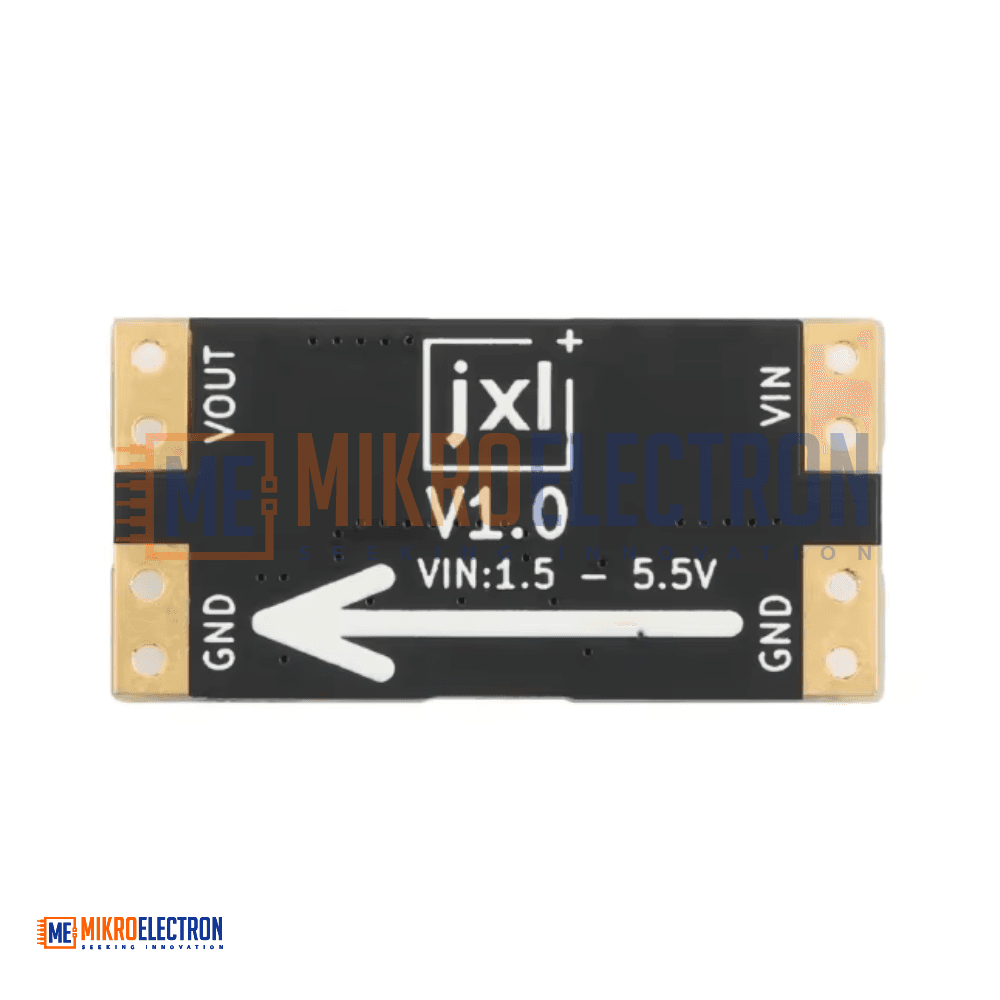
The module accepts a wide input voltage range of 1.3V to 5.5V (with a startup threshold above 1.8V), allowing it to run directly from a single-cell lithium battery, USB power, or other low-voltage sources. A switching frequency exceeding 1.4MHz enables efficient conversion with low output ripple, ensuring clean, stable power delivery to sensitive digital circuits.
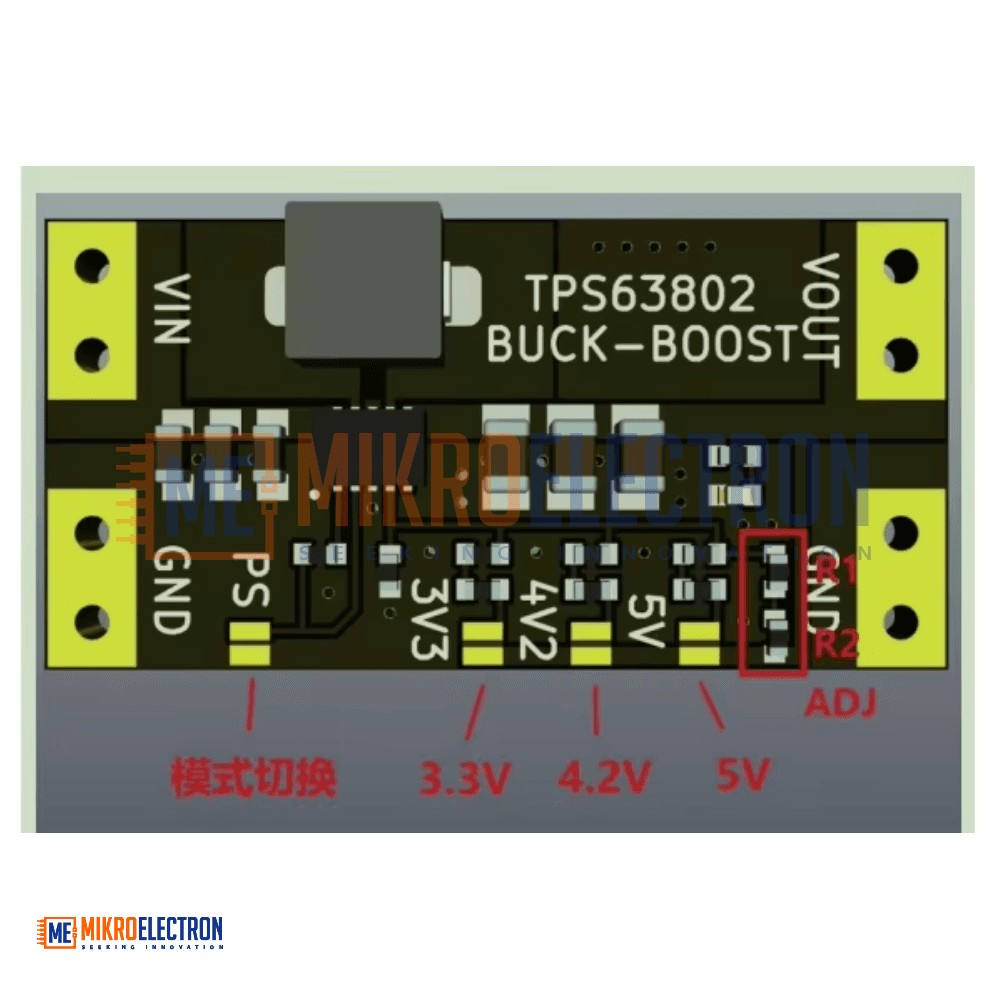
To extend battery life in portable applications, the module offers two selectable operating modes: a Normal Mode for full-performance operation, and a Power-Saving Mode that reduces quiescent current draw when full performance is not required.
The output voltage is configurable via jumper pads, with selectable options of 3.3V, 4.2V, or 5V — this series is offered pre-configured in 3.3V and 5V default versions for convenience. A built-in red LED indicator shows the power output status at a glance. The board is designed for easy integration, featuring large solder pads and support for optional 2.54mm pin headers, making it simple to connect to development boards, breadboards, or custom PCBs.
Specifications
| Parameter | Details |
|---|---|
| Module Type | Automatic Step-Up / Step-Down (Buck-Boost) Voltage Regulator |
| Chipset | TPS63802 (Texas Instruments) |
| Input Voltage | DC 1.3V – 5.5V |
| Startup Voltage | Above 1.8V |
| Output Voltage Options | 3.3V / 4.2V / 5V (selectable via jumper pad) |
| Default Output (Version 1) | 3.3V |
| Default Output (Version 2) | 5V |
| Output Current | Up to 1A (at 3.7V input) |
| Switching Frequency | ≥ 1.4 MHz |
| Working Modes | Normal Mode / Power-Saving Mode |
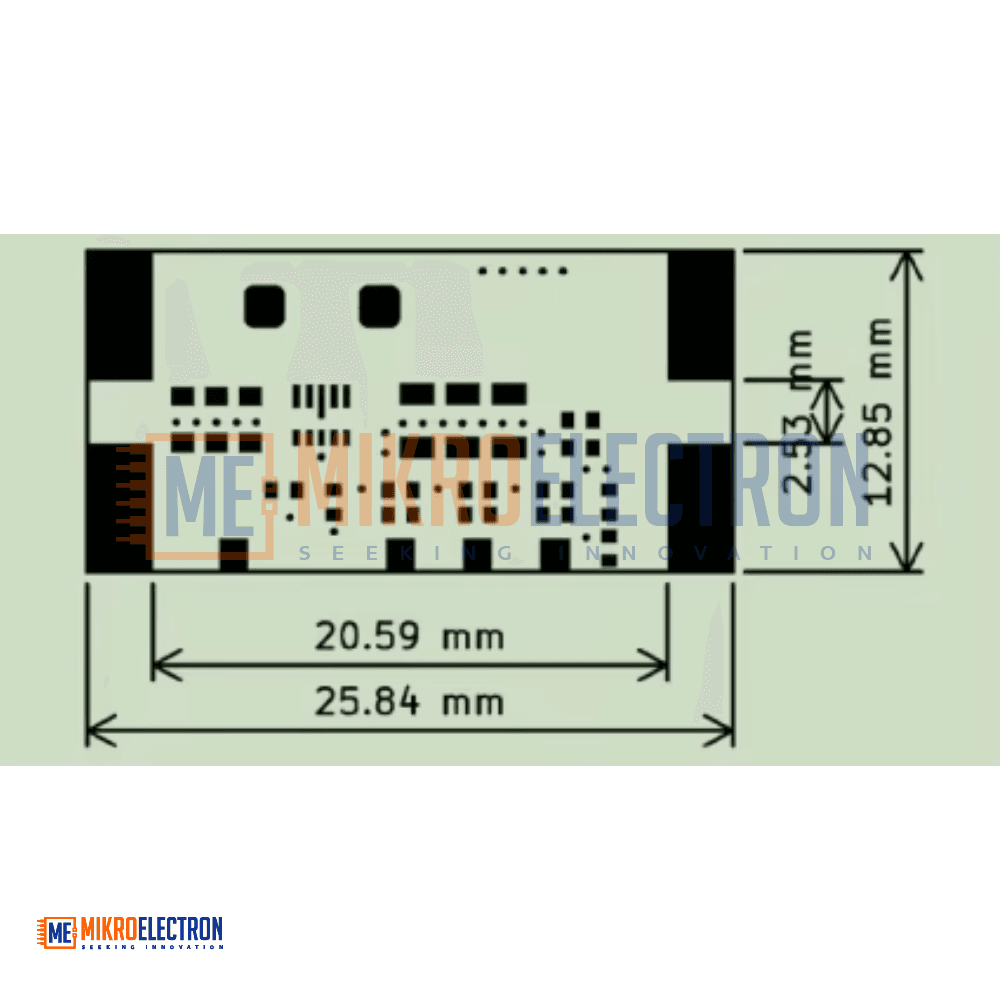
| Interface | Large solder pads or optional 2.54mm pin header |
| Indicator | Red LED power output indicator |
Applications
- Battery-powered electronic devices requiring stable regulated voltage
- Microcontroller power supply for STM32, ESP32, and 51-series boards
- Portable and handheld electronics
- DIY and hobbyist electronics projects
- IoT devices needing efficient, compact power regulation
- USB-powered circuits and low-voltage embedded systems
- Embedded systems development and prototyping