
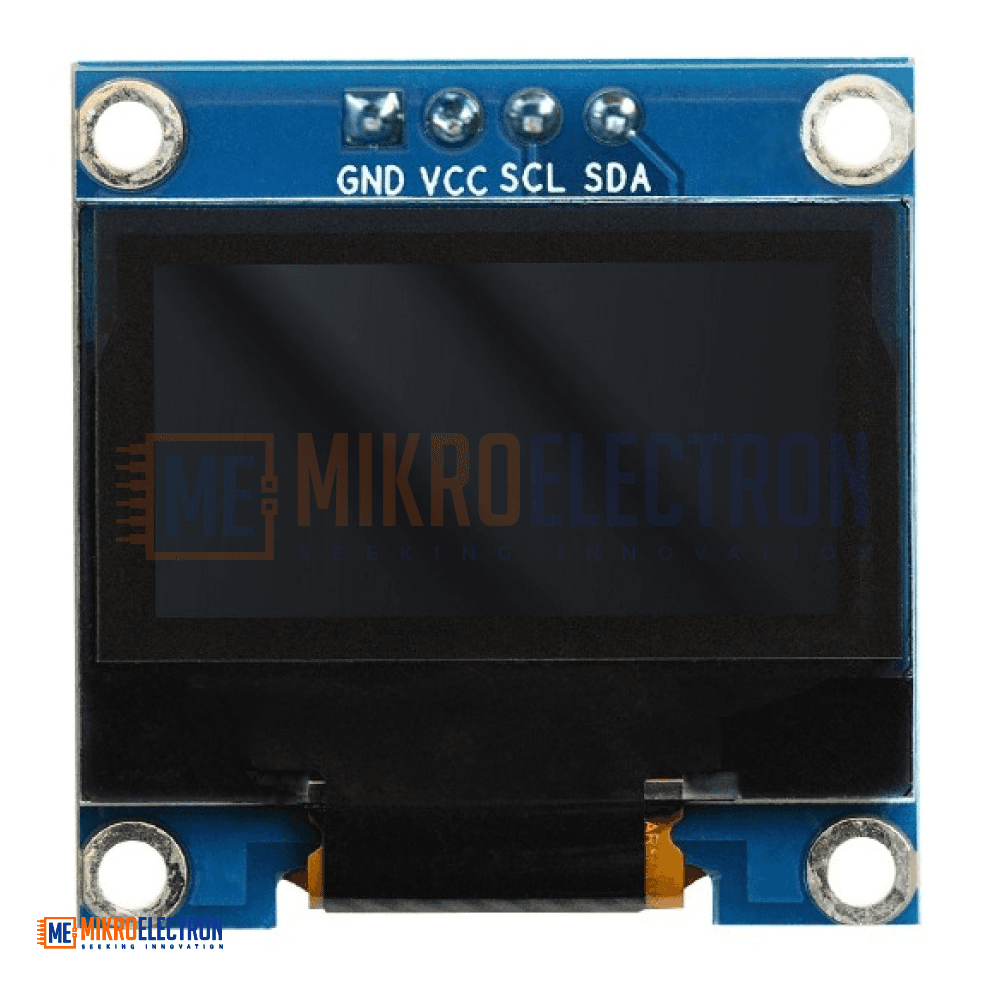
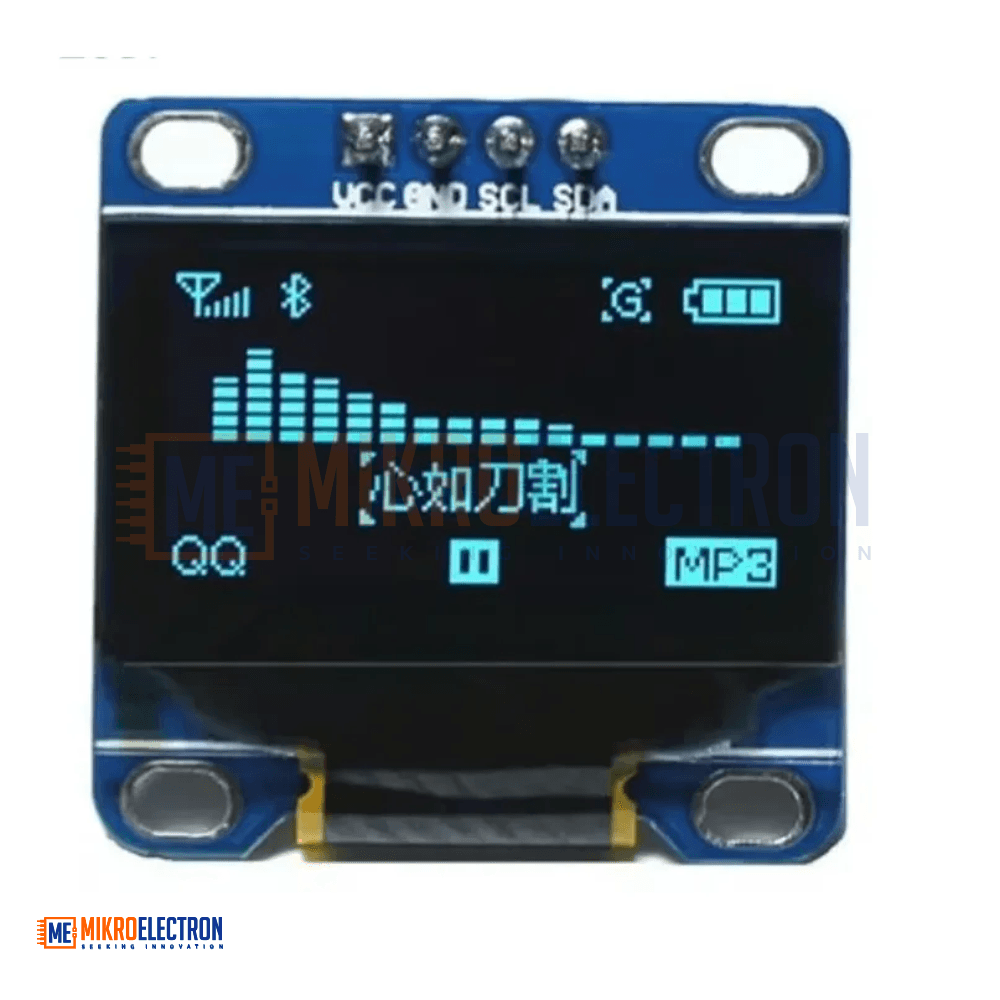
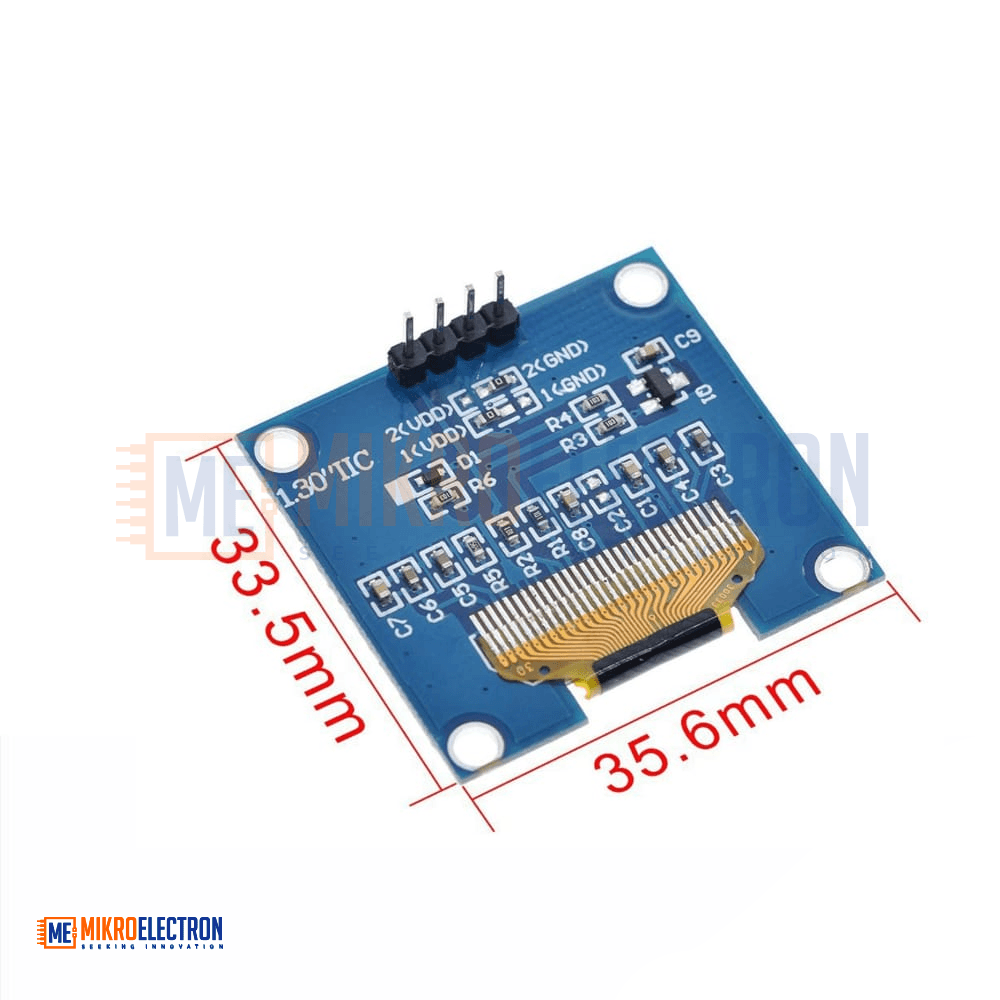
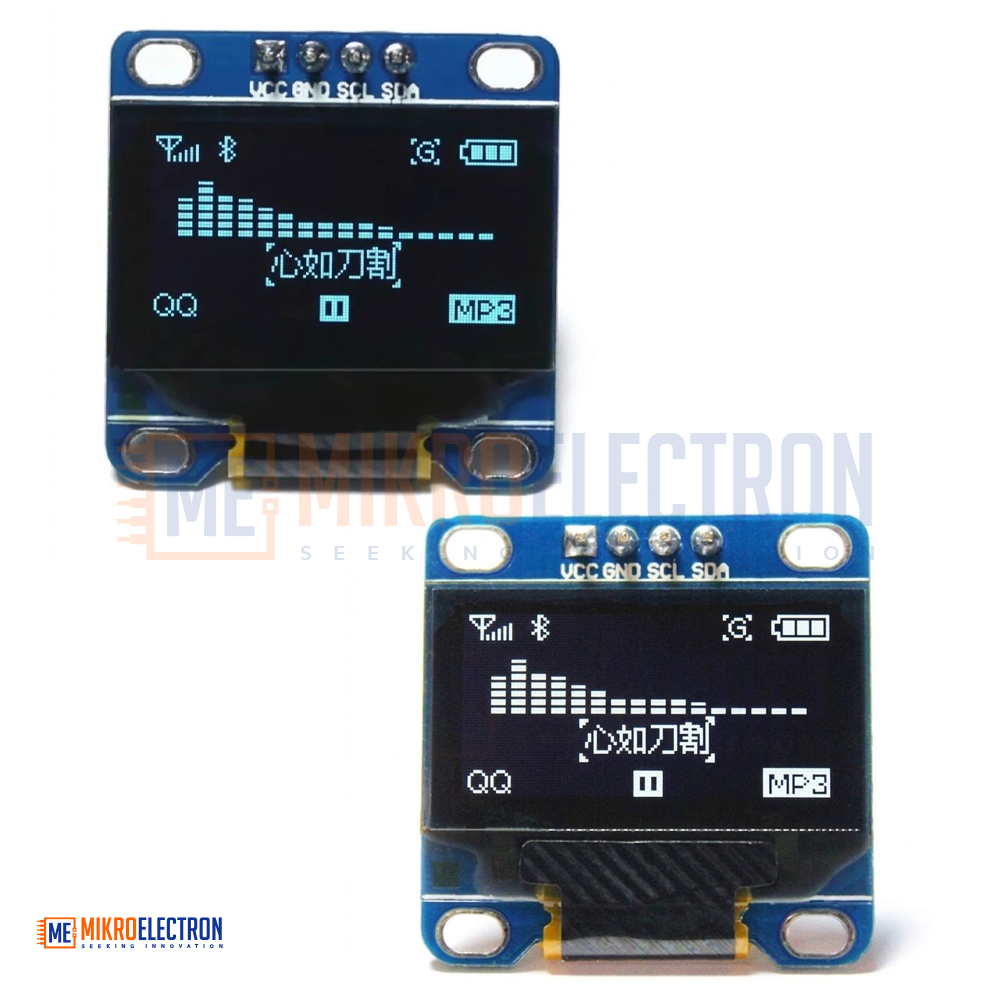
0.96 Inch 128x64 I2C OLED Display Module 4-Pin
Please select an option to see price and availability
Select Option
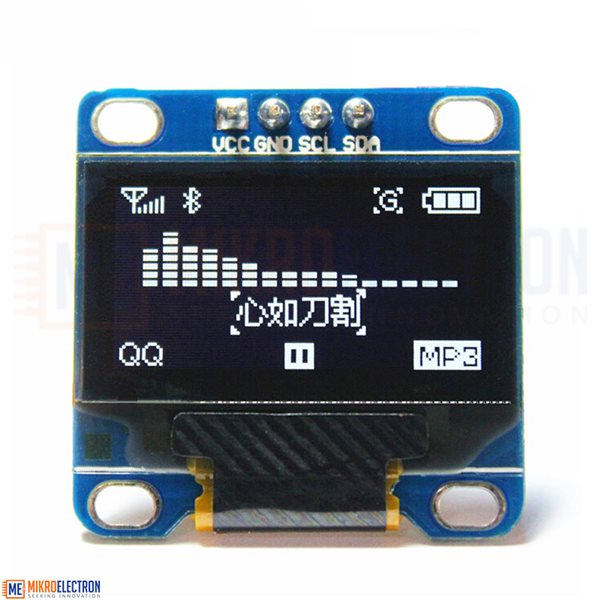 WHITE
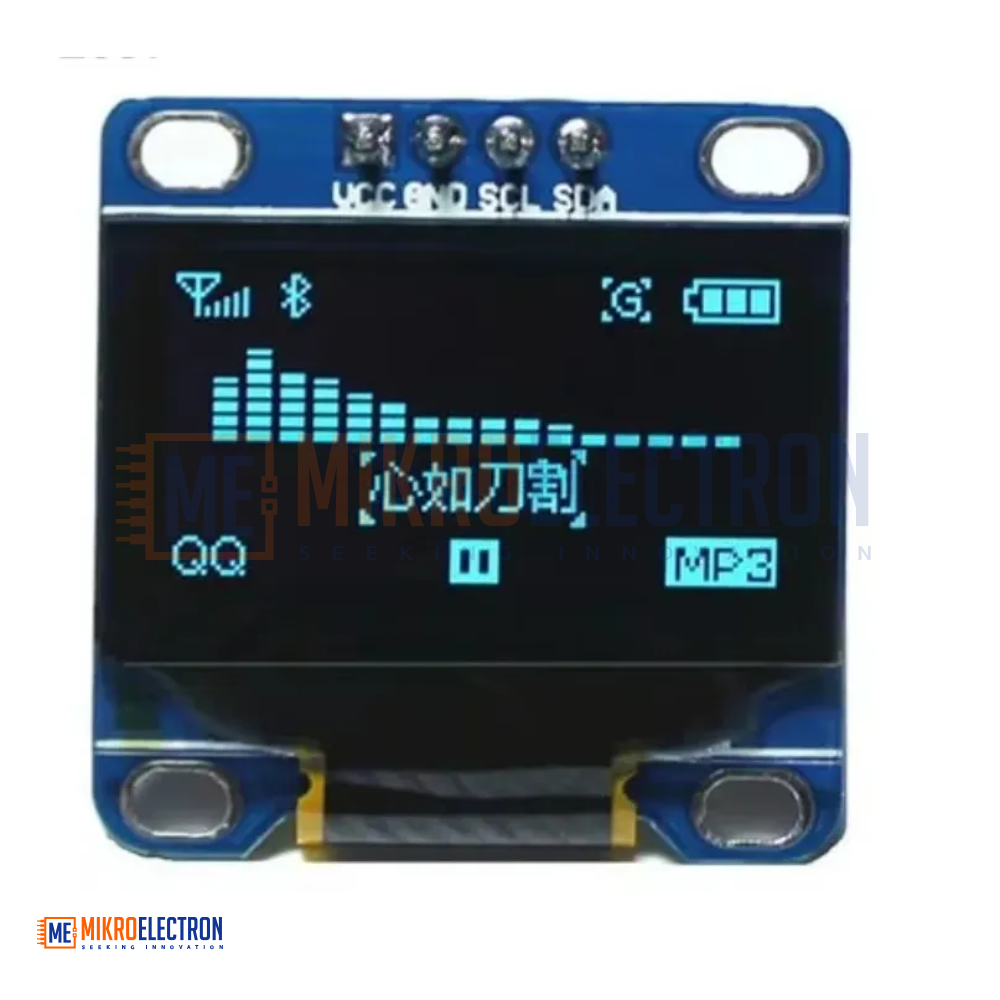 Blue
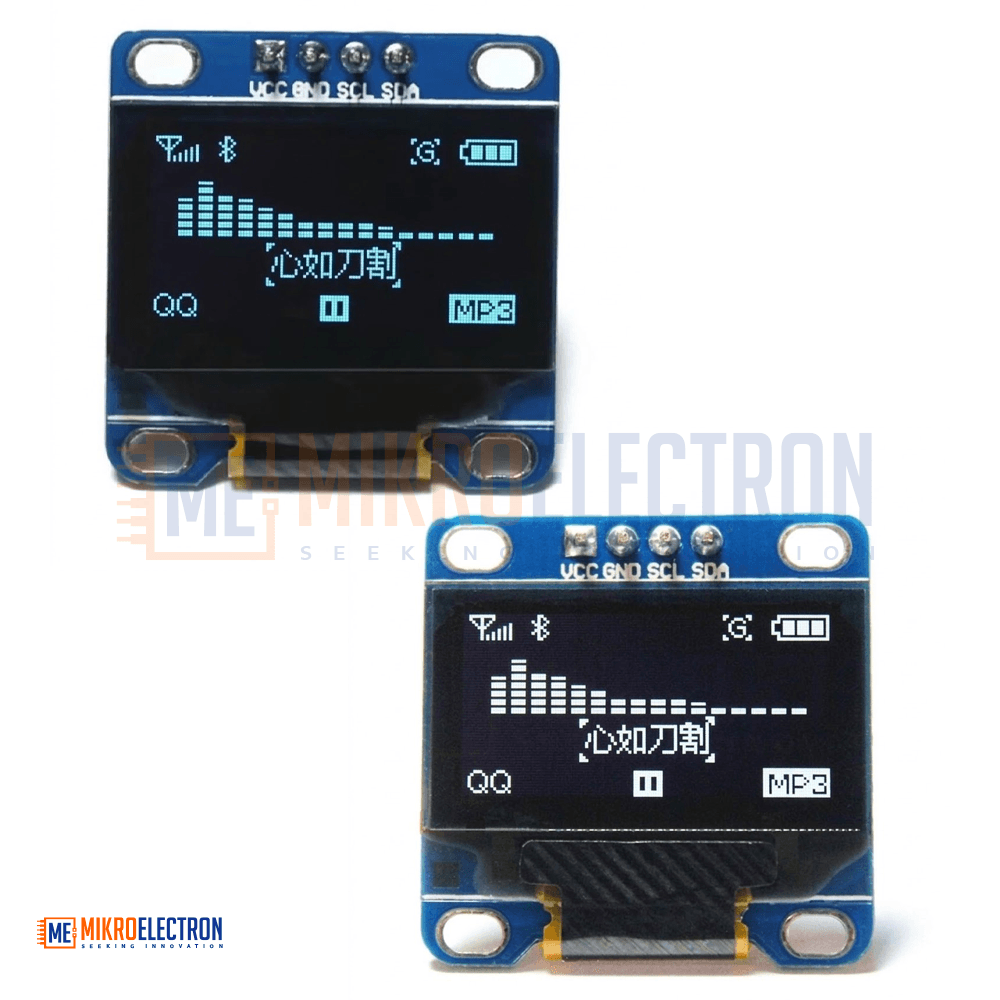
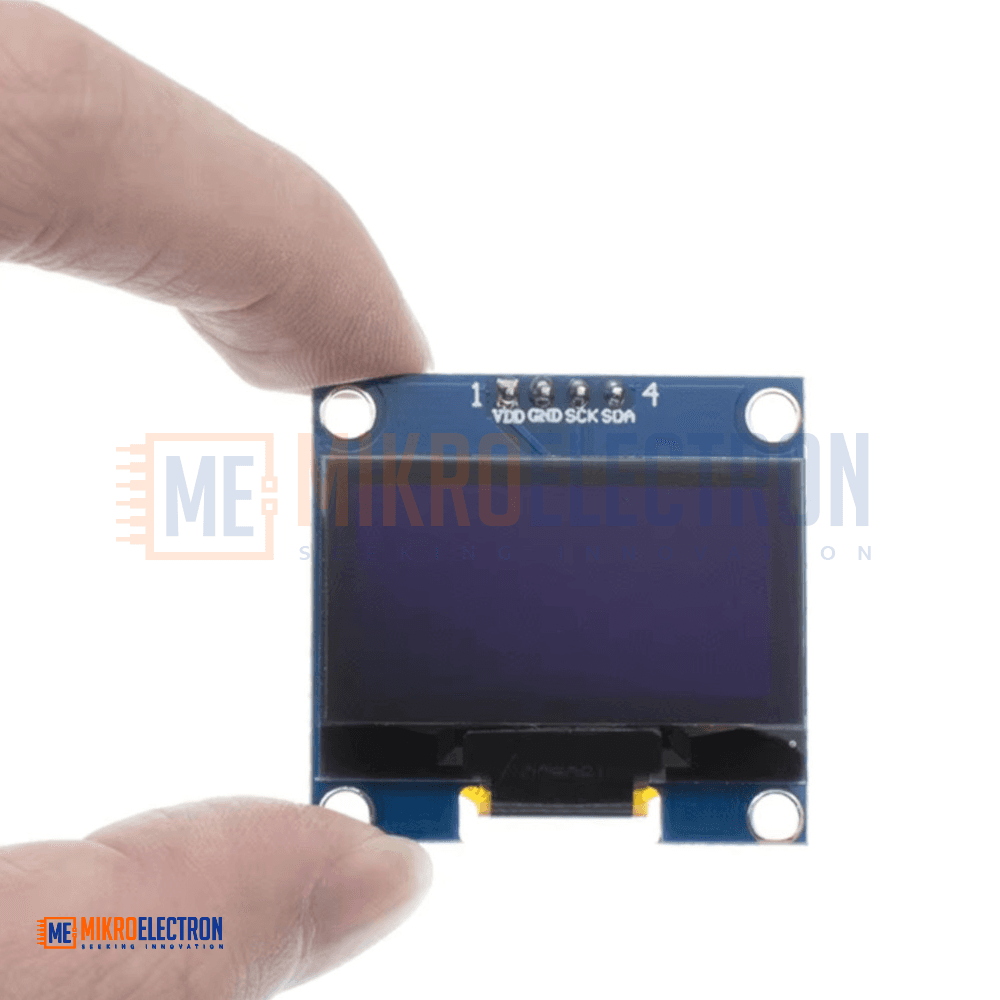
The 0.96 Inch I2C OLED Display Module is a compact, self-illuminating screen with a sharp 128 x 64 pixel resolution, available in blue or white pixels. It is driven by the popular SSD1306 controller and connects through a simple I2C interface that needs only two I/O pins (SDA and SCL). The display needs no backlight, offers a viewing angle of over 160 degrees, and works on 3.3V to 5V power. Its ultra-thin panel and low power draw make it ideal for Arduino, ESP32, and Raspberry Pi projects, wearables, IoT devices, and portable instruments.
وحدة شاشة OLED مقاس 0.96 بوصة بواجهة I2C هي شاشة مدمجة ذاتية الإضاءة بدقة 128 × 64 بكسل، تتوفر ببكسلات زرقاء أو بيضاء. تعمل بشريحة التحكم الشهيرة SSD1306 وتتصل عبر واجهة I2C بسيطة تحتاج إلى طرفين فقط (SDA وSCL). لا تحتاج الشاشة إلى إضاءة خلفية، وتوفر زاوية رؤية تتجاوز 160 درجة، وتعمل بجهد 3.3 إلى 5 فولت. لوحتها الرقيقة جداً واستهلاكها المنخفض للطاقة يجعلانها مثالية لمشاريع Arduino وESP32 وRaspberry Pi والأجهزة القابلة للارتداء وأجهزة IoT والأجهزة المحمولة.
The 0.96 Inch I2C OLED Display Module is a high-contrast, self-emitting graphic display built on Organic Light-Emitting Diode (OLED) technology. Unlike traditional TFT-LCD screens, each pixel generates its own light, so no backlight is needed. This gives deeper blacks, sharper contrast, and wider viewing angles, and it keeps text and graphics clear even in bright ambient conditions.
The module comes in two color versions, blue and white, both with a 128 x 64 pixel resolution. It can show text, icons, sensor readings, graphs, animations, and simple bitmap graphics.
It is driven by the industry-standard SSD1306 driver IC, which works with mature libraries such as Adafruit GFX, Adafruit SSD1306, and U8g2 for Arduino, Luma.OLED for Raspberry Pi, and MicroPython and CircuitPython drivers for ESP32, Raspberry Pi Pico, and STM32.
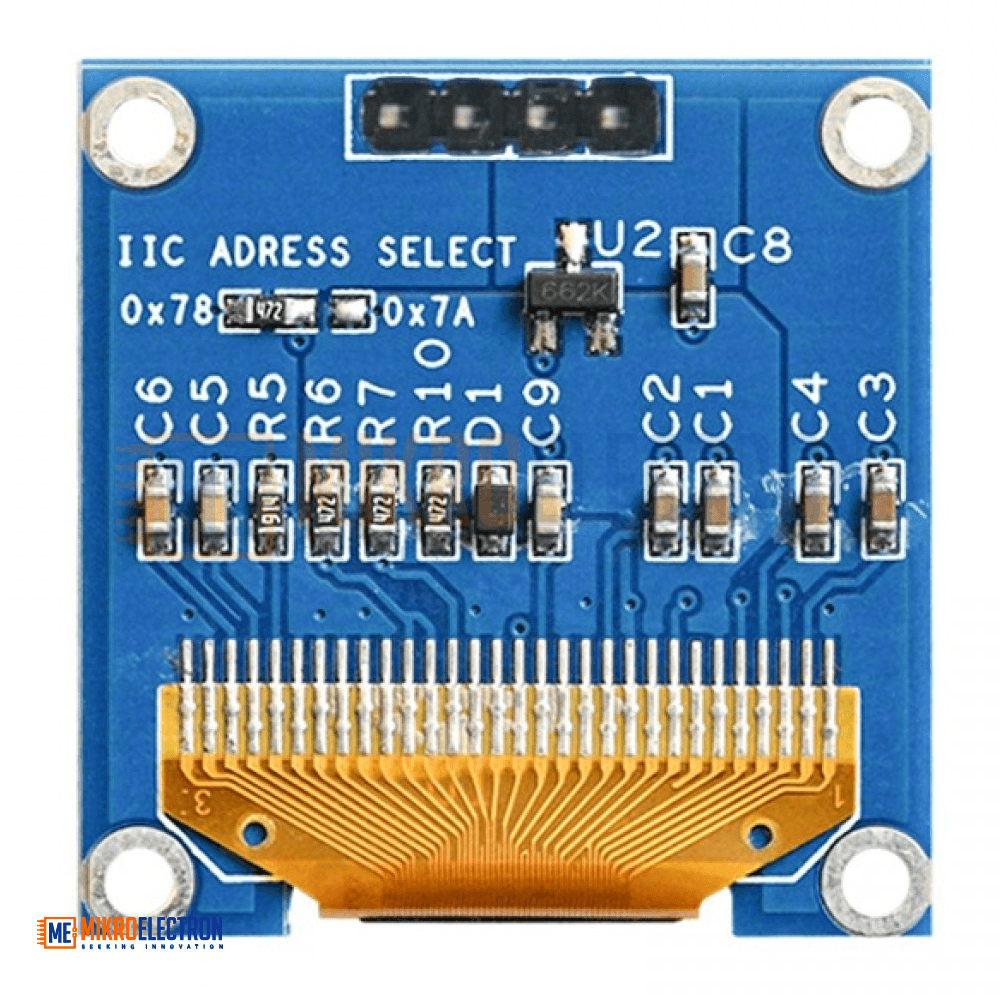
Communication uses the I2C (IIC) protocol, which needs only two data lines (SDA and SCL) plus power and ground. This reduces wiring and frees up GPIO pins on your microcontroller. The default I2C address is typically 0x3C, and it may also be 0x3D.
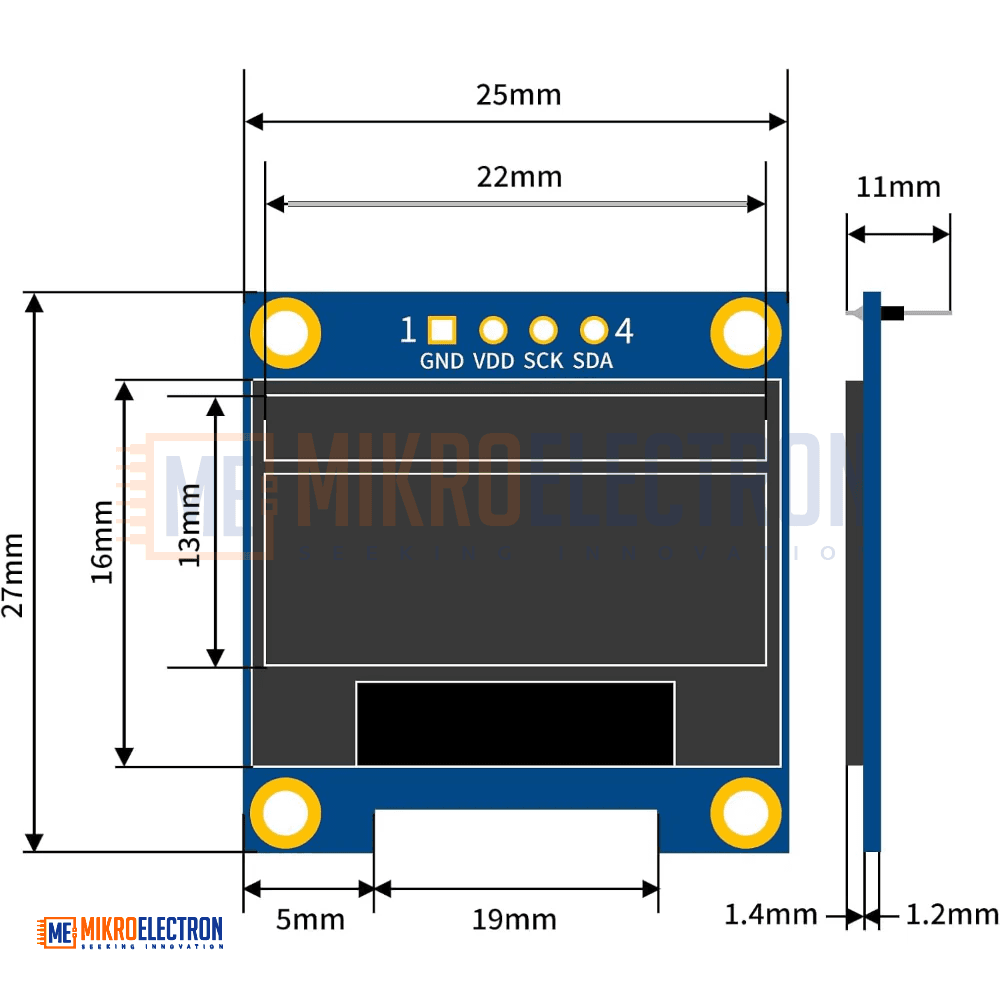
The module works on 3.3V to 5V DC, so it suits both 3.3V logic boards (ESP32, Raspberry Pi, STM32) and 5V logic boards (Arduino Uno, Mega, Nano) without level shifting. The ultra-thin panel is less than 2 mm thick, and its very low current draw makes it well suited to battery-powered devices, wearables, and portable instruments. It works across an operating temperature range of -40°C to +85°C, so it is reliable in industrial, outdoor, and demanding environments.
Specifications
| Parameter | Details |
|---|---|
| Display Type | OLED (Organic Light-Emitting Diode) |
| Screen Size | 0.96 inch |
| Resolution | 128 x 64 pixels |
| Pixel Color Options | Blue or White (monochrome) |
| Driver IC | SSD1306 |
| Communication Interface | I2C (IIC) |
| Number of Pins | 4 pins (VCC, GND, SCL, SDA) |
| Operating Voltage | 3.3V - 5V DC |
| Viewing Angle | More than 160 degrees |
| Operating Temperature | -40°C to +85°C |
| Panel Thickness | Less than 2 mm |
| Backlight | None required (self-emitting) |
| Response Time | Microsecond-level (white version) |
| Power Consumption | Very low (varies with the number of pixels lit) |
| Default I2C Address | 0x3C (typical, may also be 0x3D) |
| Compatibility | Arduino, ESP32, ESP8266, Raspberry Pi, STM32, PIC, AVR |
Applications
- Arduino, ESP32, and microcontroller projects showing sensor data, menus, and status messages
- IoT devices and connected home sensors
- Wearable electronics, smart watches, and fitness trackers
- Portable measurement instruments (voltmeters, thermometers, scales, data loggers)
- Drone and quadcopter telemetry displays
- 3D printer status screens
- Smart home controllers, thermostats, and home automation panels
- Robotics telemetry and debug information
- Weather stations and environmental monitors
- Small dashboards and menu systems (including rotary-encoder interfaces)
- DIY handheld game consoles
- Battery-powered gadgets that need low current draw
- Industrial monitoring systems
- Educational STEM projects and prototyping