
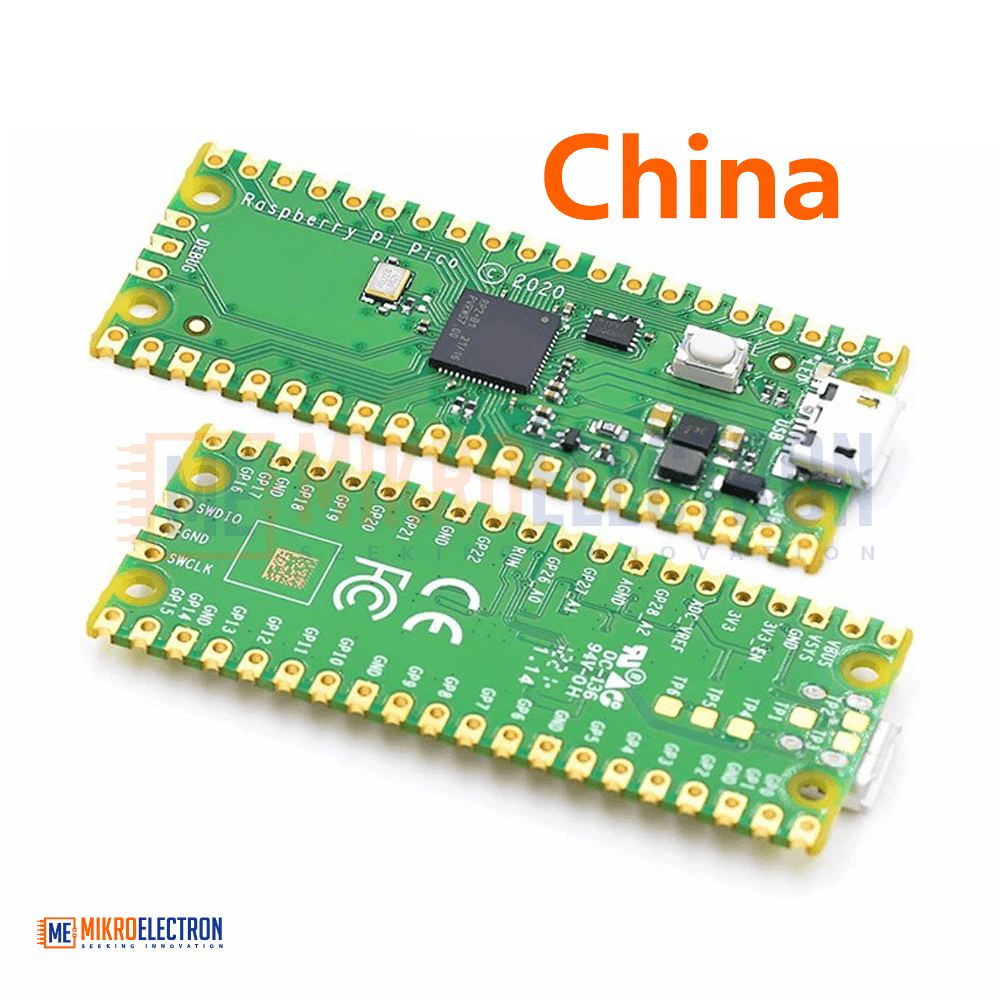
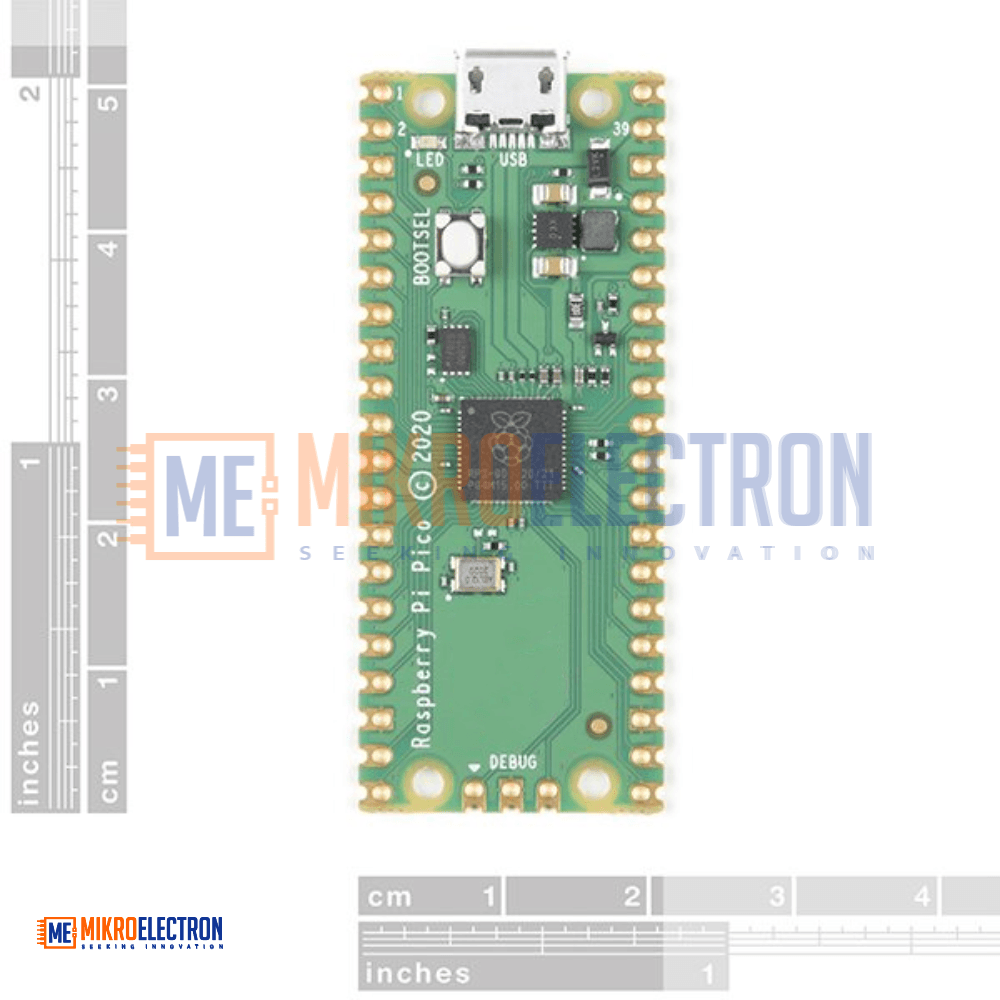
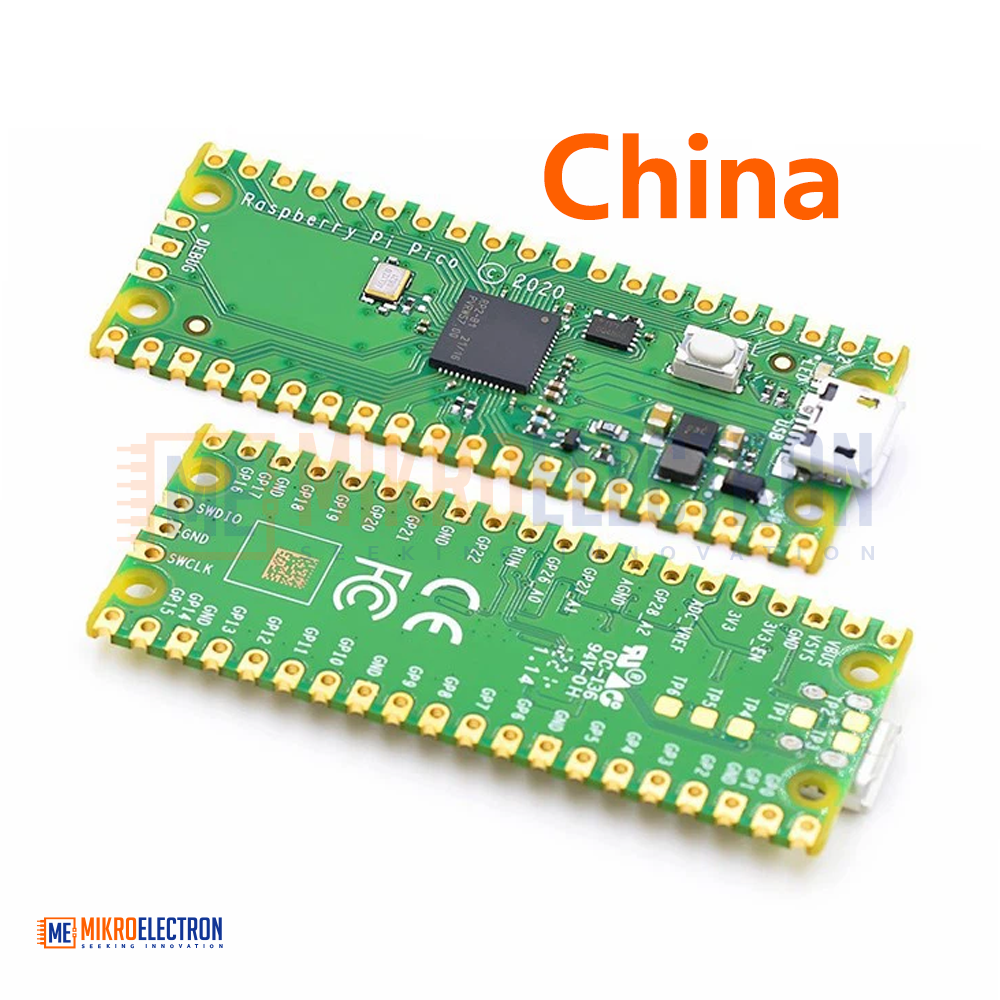
Raspberry Pi Pico - China
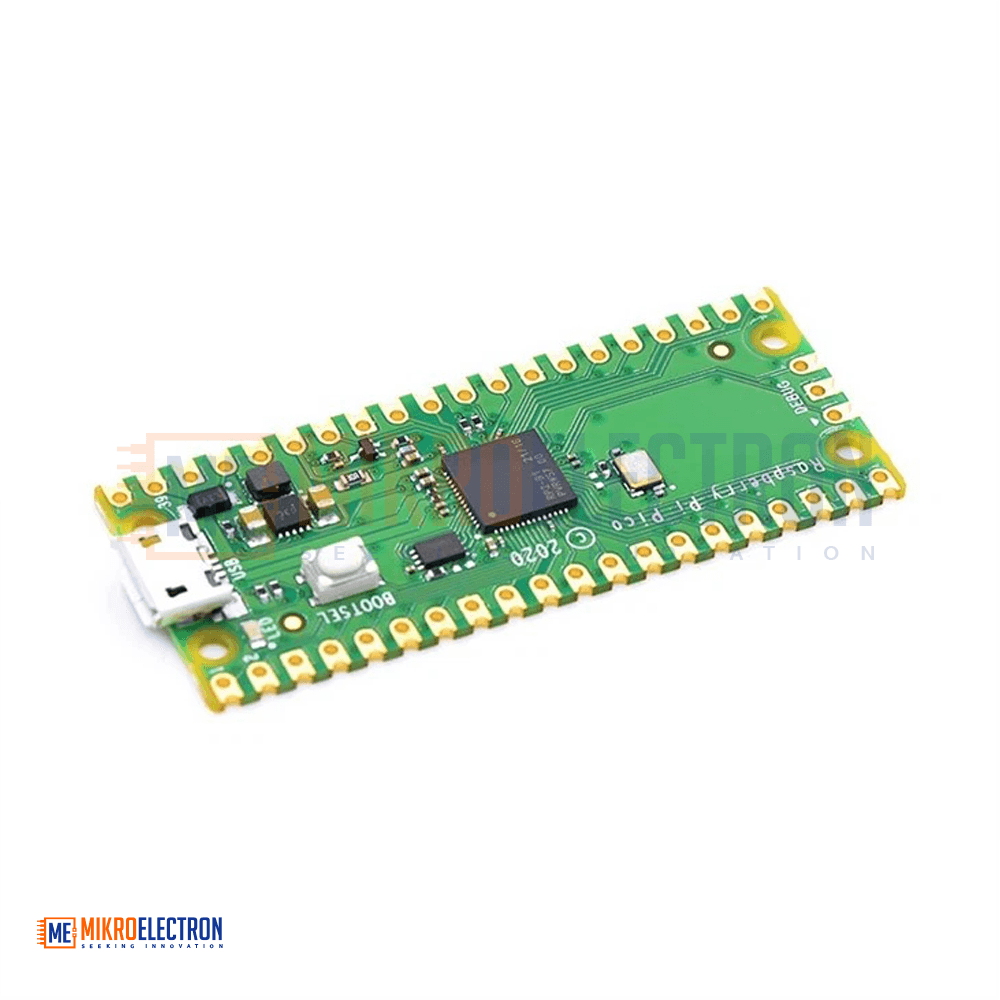
The Raspberry Pi Pico - China is a compact, low-cost, and high-performance microcontroller development board powered by the RP2040 microcontroller designed by Raspberry Pi. Featuring a dual-core Arm Cortex-M0+ processor running at up to 133MHz, 264KB SRAM, and 2MB Flash memory, it is ideal for embedded systems, robotics, automation, and IoT applications. The board includes 26 multifunction GPIO pins, USB connectivity, programmable I/O (PIO), multiple communication interfaces, and flexible power options. With drag-and-drop USB programming and support for MicroPython and C/C++, the Raspberry Pi Pico provides an easy-to-use platform for beginners and professionals alike.
يعد Raspberry Pi Pico لوحة تطوير متحكم دقيقة صغيرة الحجم ومنخفضة التكلفة وعالية الأداء، تعتمد على المتحكم RP2040 الذي صممته Raspberry Pi. تحتوي على معالج Arm Cortex-M0+ ثنائي النواة بسرعة تصل إلى 133MHz، وذاكرة 264KB SRAM، و2MB Flash، مما يجعلها مناسبة لمشاريع الأنظمة المدمجة، والروبوتات، والأتمتة، وإنترنت الأشياء. توفر اللوحة 26 منفذ GPIO متعدد الوظائف، واتصال USB، وواجهات اتصال متعددة، ووحدات PIO القابلة للبرمجة، مع إمكانية البرمجة بسهولة عن طريق السحب والإفلات عبر USB، ودعم لغات MicroPython وC/C++، لتناسب المبتدئين والمحترفين.
The Raspberry Pi Pico is a powerful and affordable microcontroller development board built around the RP2040, the first microcontroller designed by Raspberry Pi. It combines high performance, low power consumption, and flexible connectivity in a compact form factor, making it suitable for education, embedded development, robotics, automation, and IoT applications.
At its core is a dual-core Arm Cortex-M0+ processor running at up to 133MHz, supported by 264KB of SRAM and 2MB of onboard Flash memory. The Pico offers fast processing and ample memory for a wide range of embedded applications while maintaining low power consumption.
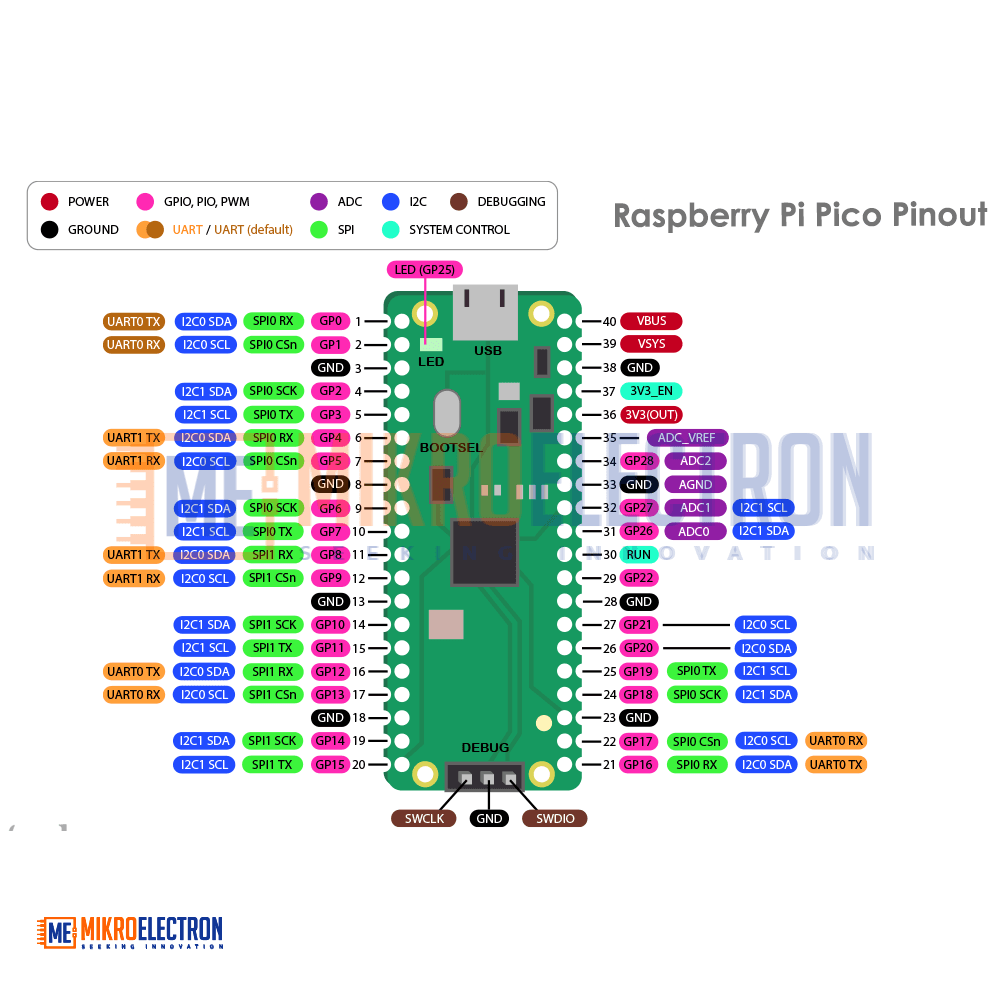
The board exposes 26 multifunction GPIO pins, including support for SPI, I2C, UART, PWM, and 12-bit ADC inputs. Its unique Programmable I/O (PIO) subsystem features eight state machines, enabling developers to create custom communication protocols and hardware interfaces that are not supported by standard peripherals.
An onboard buck-boost switched-mode power supply (SMPS) allows the board to operate from a wide input voltage range of approximately 1.8V to 5.5V, making it suitable for battery-powered applications. Programming is simple through the USB interface, supporting drag-and-drop firmware installation, while the Serial Wire Debug (SWD) interface enables advanced debugging.
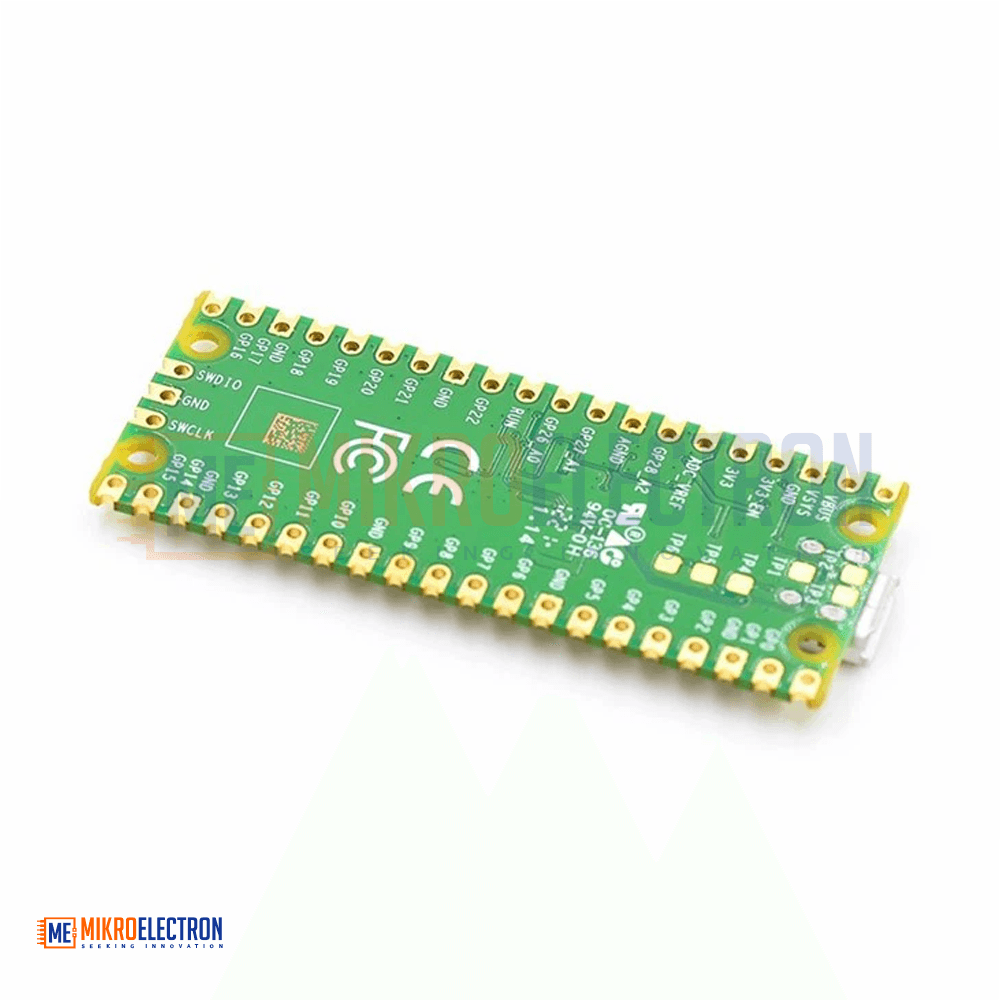
The castellated edges allow the Pico to be soldered directly onto custom PCBs, making it an excellent solution for production-ready embedded systems as well as rapid prototyping.
Specifications
| Specification | Details |
|---|---|
| Product Name | Raspberry Pi Pico |
| Microcontroller | RP2040 |
| CPU | Dual-Core Arm Cortex-M0+ |
| Clock Speed | Up to 133MHz |
| SRAM | 264KB |
| Flash Memory | 2MB Onboard Flash |
| GPIO Pins | 26 Multifunction GPIO |
| ADC | 3 × 12-bit ADC Channels |
| SPI Interfaces | 2 |
| I2C Interfaces | 2 |
| UART Interfaces | 2 |
| PWM Channels | 16 Controllable Channels |
| Programmable I/O | 8 PIO State Machines |
| USB | USB 1.1 Host and Device Support |
| Power Supply | 1.8V–5.5V Input via Onboard Buck-Boost SMPS |
| Debug Interface | Serial Wire Debug (SWD) |
| Temperature Sensor | Integrated |
| Floating Point Libraries | Hardware-Accelerated Libraries Included |
| Board Type | Castellated Surface-Mount Module |
Applications
- Embedded systems development
- Robotics and automation
- Internet of Things (IoT) projects
- STEM education and programming
- Sensor interfacing and data acquisition
- Motor and servo control
- Home automation systems
- Industrial control applications
- Custom communication interfaces using PIO
- Battery-powered devices
- DIY electronics and maker projects
- Prototype and product development