
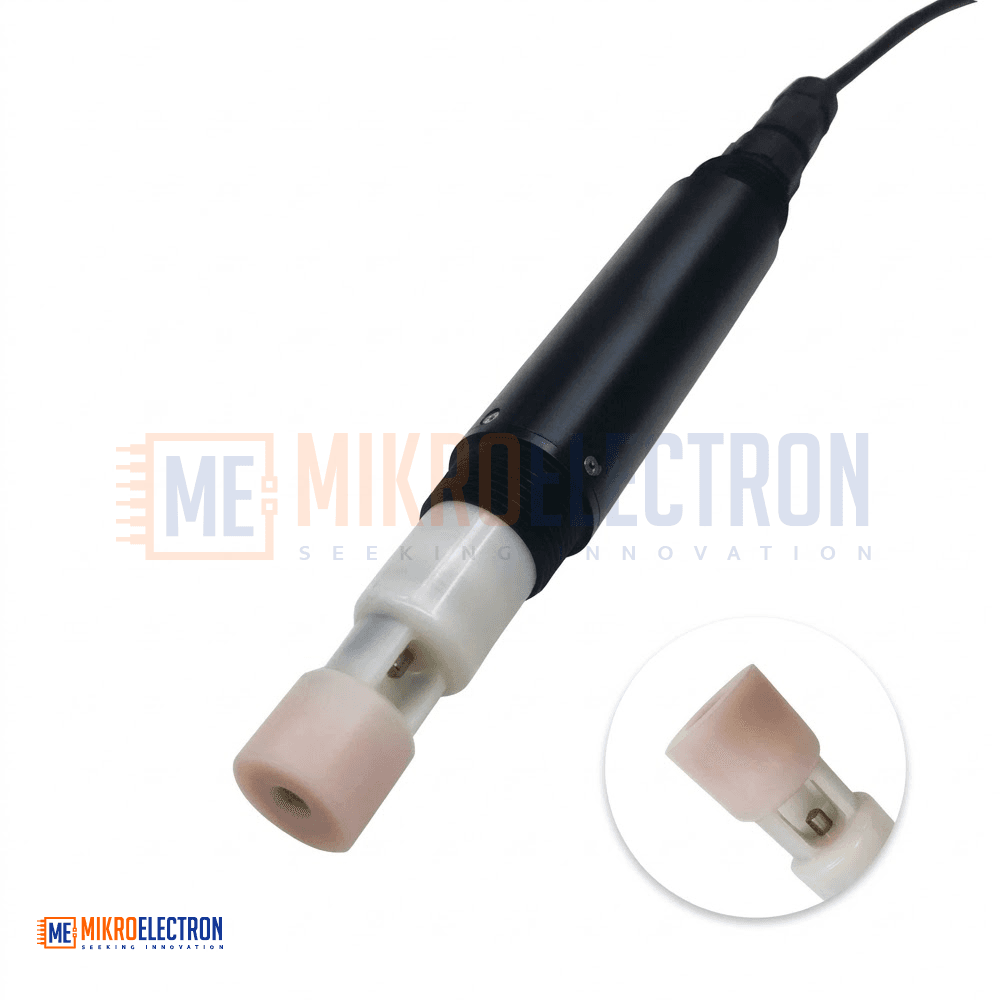
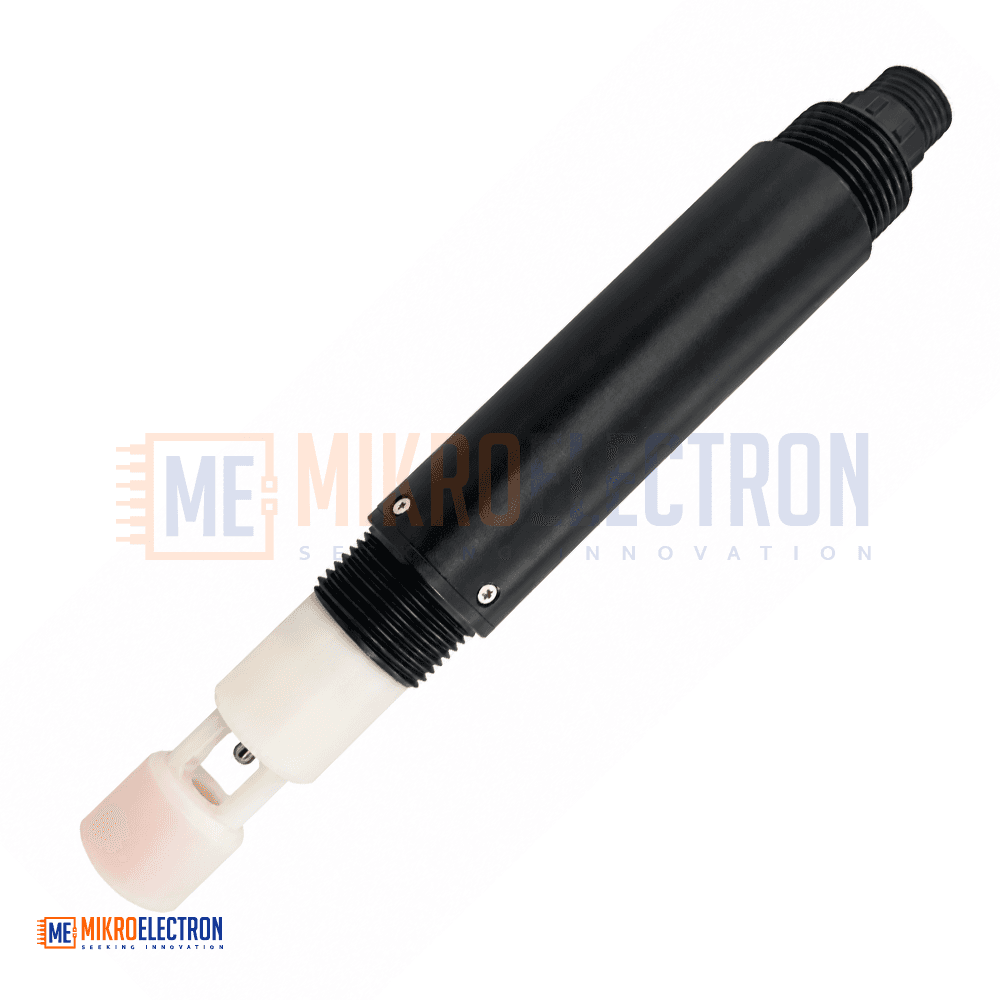
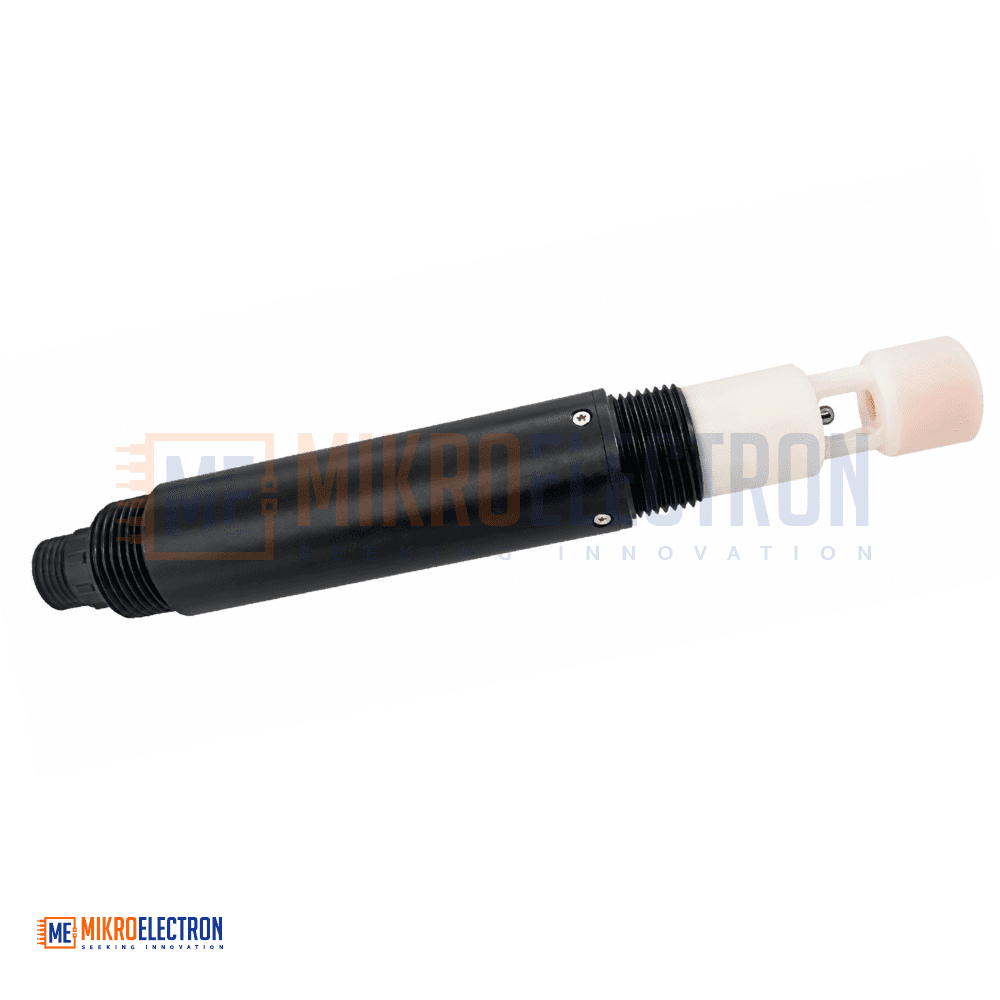
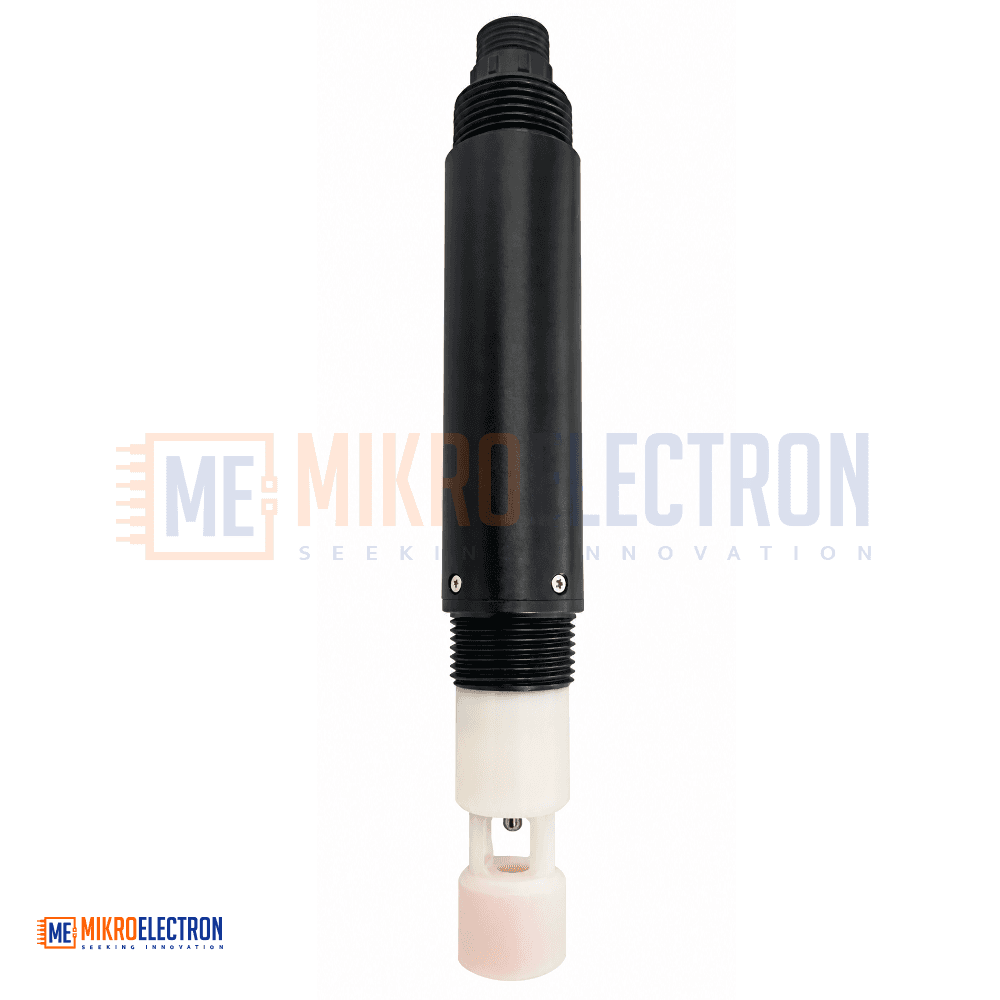
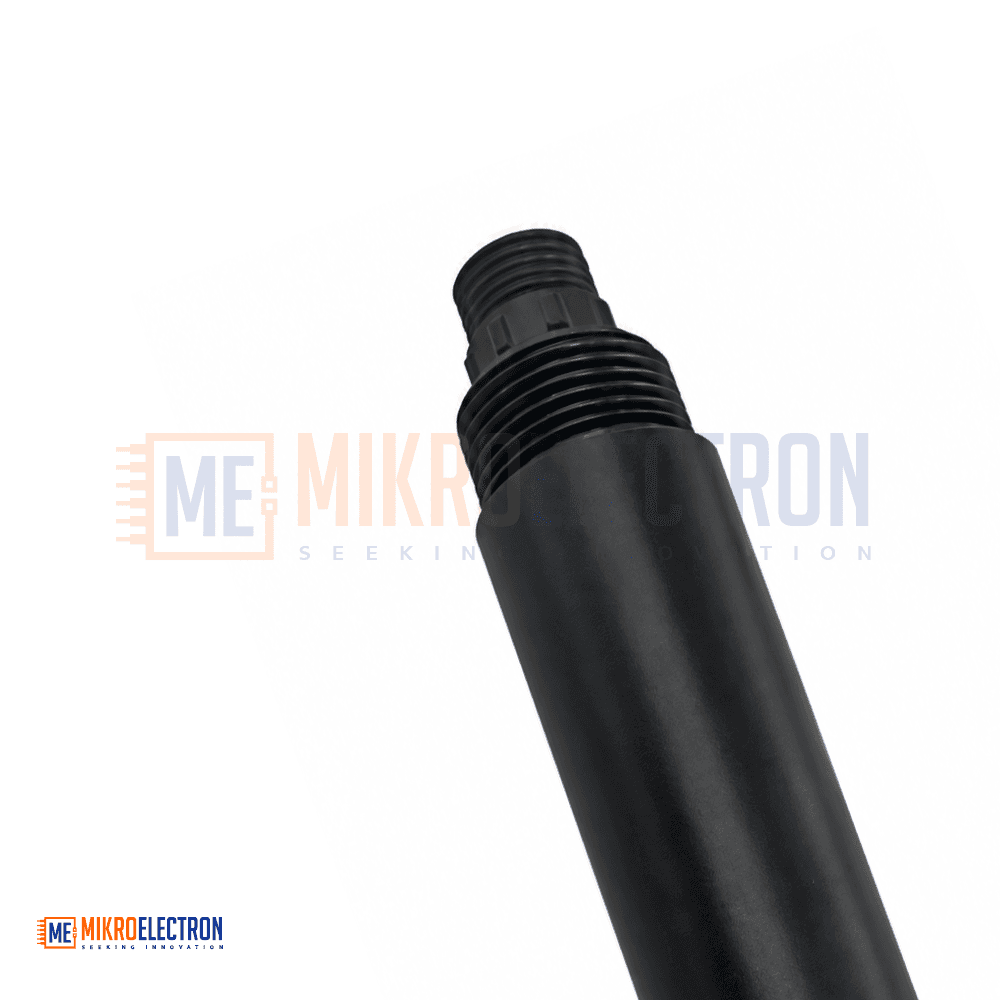
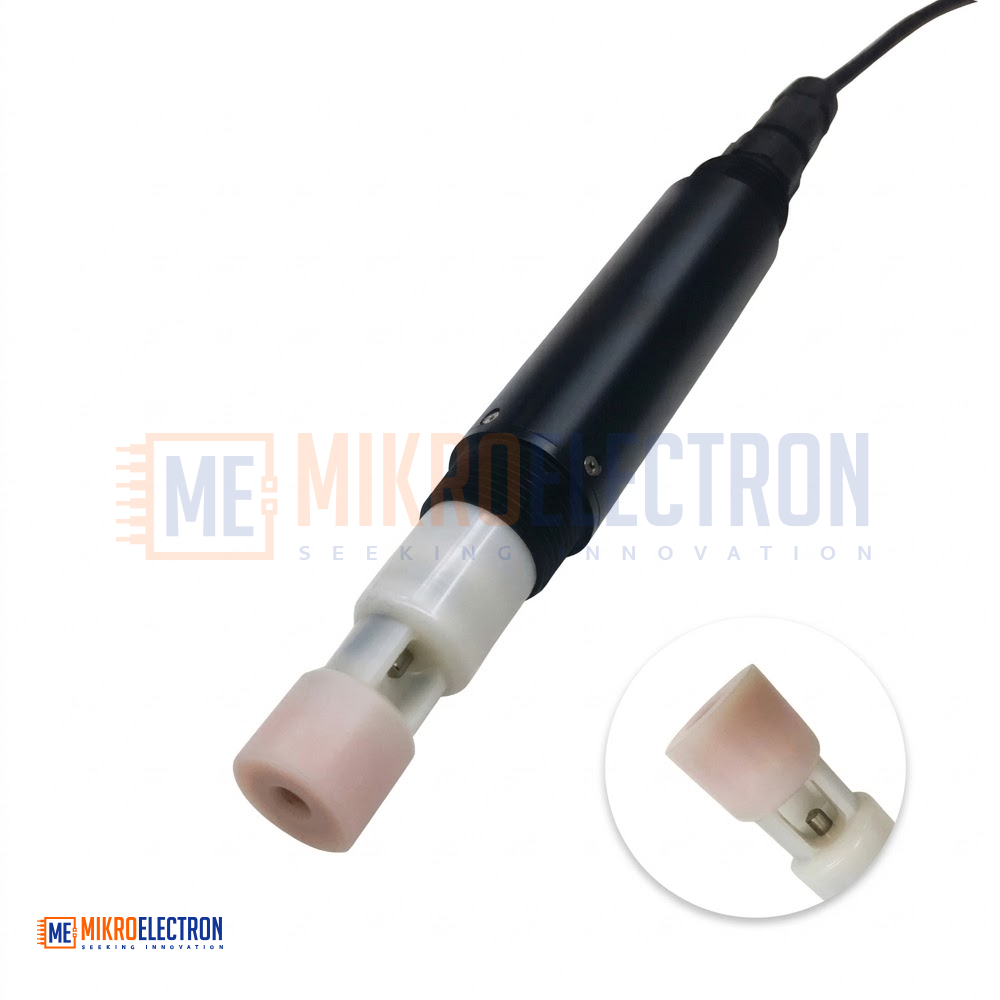
DODO AQUA SAL Inductive Salinity Sensor
The DODO AQUA SAL (DOT-SAS-200) is an industrial inductive salinity sensor measuring from fresh water to brine across 0–70 PSU with 0.1 PSU resolution and built-in temperature measurement. Its electrodeless toroidal cell has no metal in contact with the water, so fouling and mild scaling do not shift the reading, making it practically maintenance-free. It outputs over RS-485 Modbus-RTU, runs on DC 12–24 V, is IP68 rated with a 3/4" NPT thread, and ships with a 5 m cable and GX12 connector for plug-in use with the DODO LOGGER or any Modbus master.
حساس DODO AQUA SAL (DOT-SAS-200) هو حساس ملوحة حثّي صناعي يقيس من المياه العذبة حتى المحاليل الملحية المركزة ضمن مدى 0–70 PSU بدقة قراءة 0.1 PSU مع قياس مدمج لدرجة الحرارة. يعتمد على خلية حلقية بدون أقطاب فلا يلامس أي معدن الماء، لذلك لا تؤثر الترسبات أو التكلسات الخفيفة على القراءة، مما يجعله شبه خالٍ من الصيانة. يعمل بواجهة RS-485 Modbus-RTU وبجهد 12–24 فولت DC، بحماية IP68 وسن تركيب 3/4" NPT، ويأتي مع كابل 5 متر وموصل GX12 للتوصيل المباشر مع DODO LOGGER أو أي جهاز Modbus.
موصل GX12 للتوصيل المباشر مع DODO LOGGER لعرض القراءات وتخزينها ومراقبتها من خلال منصة DODOTIK PLATFORM وتطبيق DODOLINK.
The DODO AQUA SAL is part of the DODO AQUA family of industrial online water sensors from DODOTiK. It measures salinity (0–70 PSU) and temperature (0–65 °C), covering everything from fresh water to well beyond seawater (about 35 PSU).
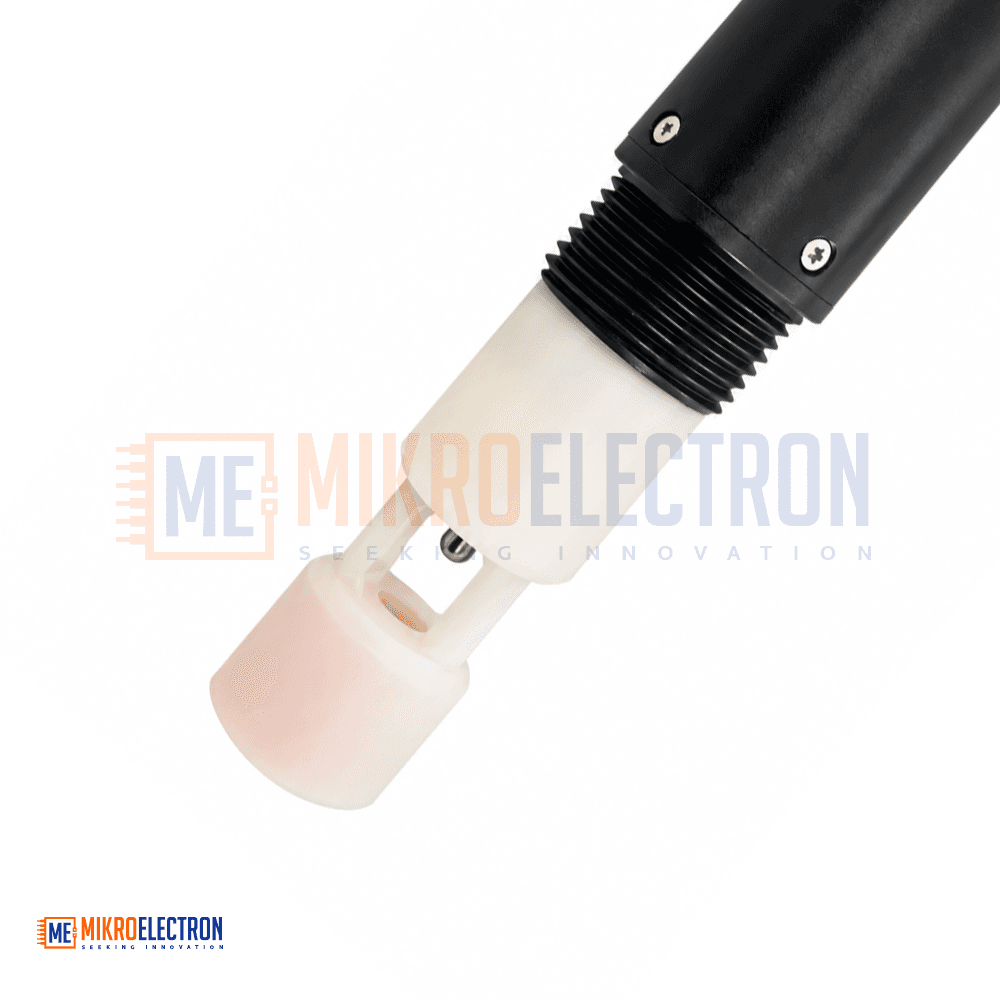
What sets it apart from a standard conductivity probe used for salinity is its inductive (electrodeless, toroidal) measuring principle. Two coils are sealed inside a plastic body: the first induces a current in the loop of water passing through the sensor bore, and the second senses that current. Because the coupling is magnetic, no metal touches the medium.
In saline or dirty water, contacting electrodes foul quickly and the reading drifts between cleanings. An inductive cell has no electrodes to foul or polarise, so a thin film or mild scale on the casing has very little effect. The casing can even be cleaned with a soft brush or sandpaper without changing the cell constant. In practice, this turns a monthly cleaning routine into an annual check.
Conductivity is converted to Practical Salinity Units using the measured temperature, with automatic Pt1000 temperature compensation accurate to ±0.5 °C. Calibration is a simple two-point procedure: zero in air and slope in a standard solution.
The sensor is a standard Modbus-RTU device (default address 6, 9600 8N1), readable by any PLC, DCS, SCADA, recorder or RS-485 master. With the DODO LOGGER, it plugs in directly via the fitted GX12 4-pin connector, logs to microSD, and publishes to the DODOTiK Platform and DODOLINK mobile app with no programming.
Specifications
| Parameter | Value |
|---|---|
| Model | DOT-SAS-200 |
| Order code | DA-SAL |
| Measured parameters | Salinity and temperature |
| Salinity range | 0–70 PSU |
| Salinity resolution | 0.1 PSU |
| Salinity accuracy | ±1.5 % F.S. |
| Temperature range | 0–65 °C |
| Temperature accuracy | ±0.5 °C |
| Temperature resolution | 0.1 °C |
| Measuring principle | Inductive (electrodeless, toroidal) cell |
| Temperature compensation | Automatic (Pt1000) |
| Calibration | Two-point: zero in air, slope in standard solution |
| Supply voltage | DC 12–24 V |
| Power consumption | < 0.2 W @ 12 V |
| Output | RS-485, Modbus-RTU |
| Baud rate | 9600 (default) |
| Frame format | 8N1 |
| Default slave address | 6 (changeable, 1–127) |
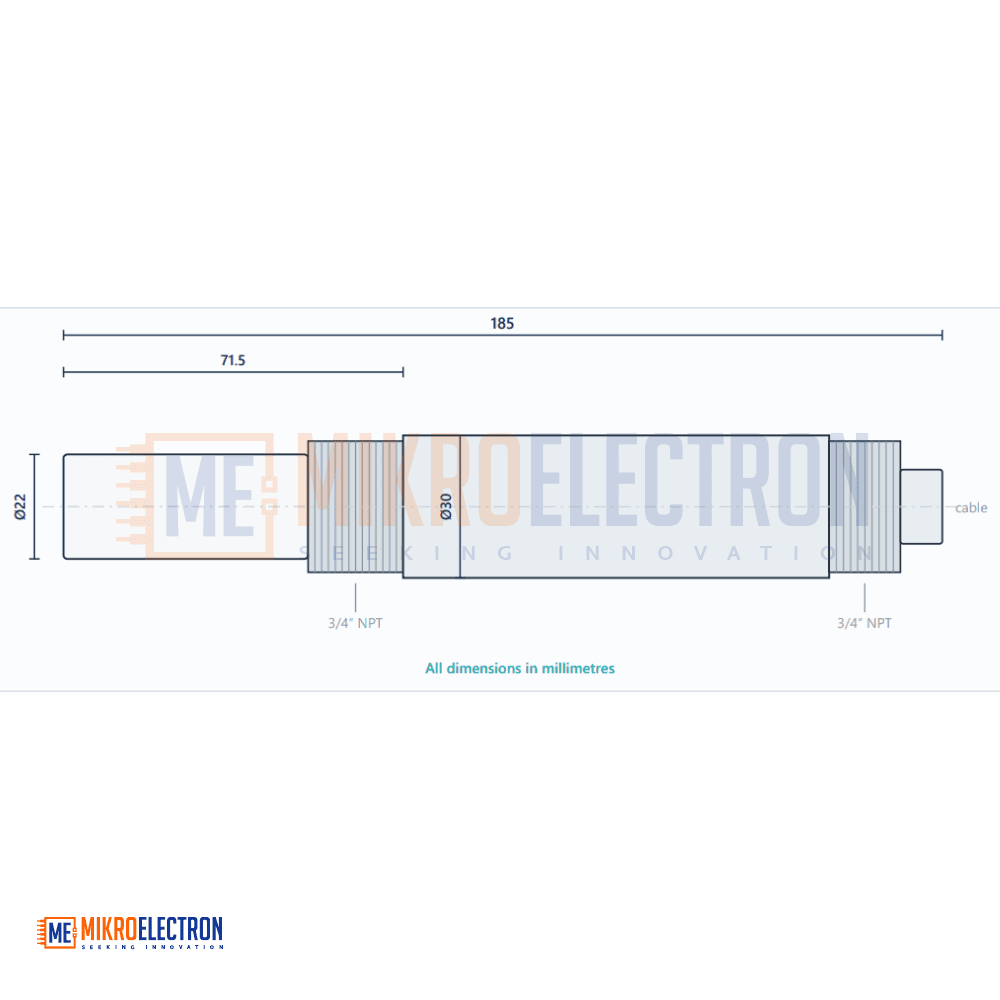
| Body diameter | Φ30 mm |
| Overall length | 185 mm |
| Wetted material | ABS (default) or POM |
| Mounting | Immersion, 3/4" NPT thread |
| Working pressure | < 0.6 MPa |
| Working temperature | 0 to +65 °C |
| Ingress protection | IP68 |
| Cable | 5 m, Φ6 mm shielded, corrosion-resistant jacket |
| Connector | GX12 4-pin female (VCC, GND, A, B) |
| Quality testing | 72-hour burn-in on every unit |
Applications
- Desalination: feed, brine and reject-stream salinity monitoring
- Aquaculture: marine and brackish pond and RAS salinity control
- Coastal and estuarine monitoring: saline intrusion and mixing studies
- Seawater intakes: cooling-water and process-intake quality
- Food processing: brine strength in curing and pickling lines
- Wastewater: saline-load monitoring on industrial effluent
- Industrial IoT and SCADA water-quality monitoring systems