
CDSENET E07-900MBL-01 CC1101 850-931MHz Wireless RF Development Evaluation Kit with STM8L151G4 MCU
The CDSENET E07-900MBL-01 is a wireless RF development and evaluation kit featuring the E07-900M10S module, powered by the TI CC1101 chip and operating within 850-931MHz at 10dBm. Equipped with an STM8L151G4 ultra-low-power MCU, USB interface, and accessible GPIO headers, it simplifies wireless communication testing and firmware development. The board includes user buttons, an LED, and reset functionality for convenient debugging. Designed for rapid prototyping, industrial sensor verification, and wireless meter reading applications, it supports SPI communication, serial connectivity, and module replacement. Its compact 53 × 27mm design provides a practical platform for Sub-1GHz wireless development, testing, and evaluation.
لوحة التطوير والتقييم اللاسلكية CDSENET E07-900MBL-01 مزودة بوحدة الاتصال E07-900M10S المعتمدة على شريحة TI CC1101، وتعمل ضمن نطاق التردد 850-931MHz بقدرة إرسال 10dBm. تحتوي اللوحة على متحكم STM8L151G4 منخفض استهلاك الطاقة، بالإضافة إلى واجهة USB ومنافذ GPIO لتسهيل الاختبار والبرمجة والتطوير. تتضمن أزرار تحكم، ومؤشر LED، وزر إعادة تشغيل المتحكم. تُستخدم في تطوير أنظمة الاتصالات اللاسلكية، وقراءة العدادات الذكية، واختبار المستشعرات الصناعية، وتطوير البرامج الثابتة. تدعم اتصالات SPI والاتصال التسلسلي، مع إمكانية استبدال الوحدات المتوافقة بسهولة. تتميز بتصميم مدمج بأبعاد 53 × 27mm لتسهيل التجارب وتقييم أداء الاتصالات اللاسلكية.
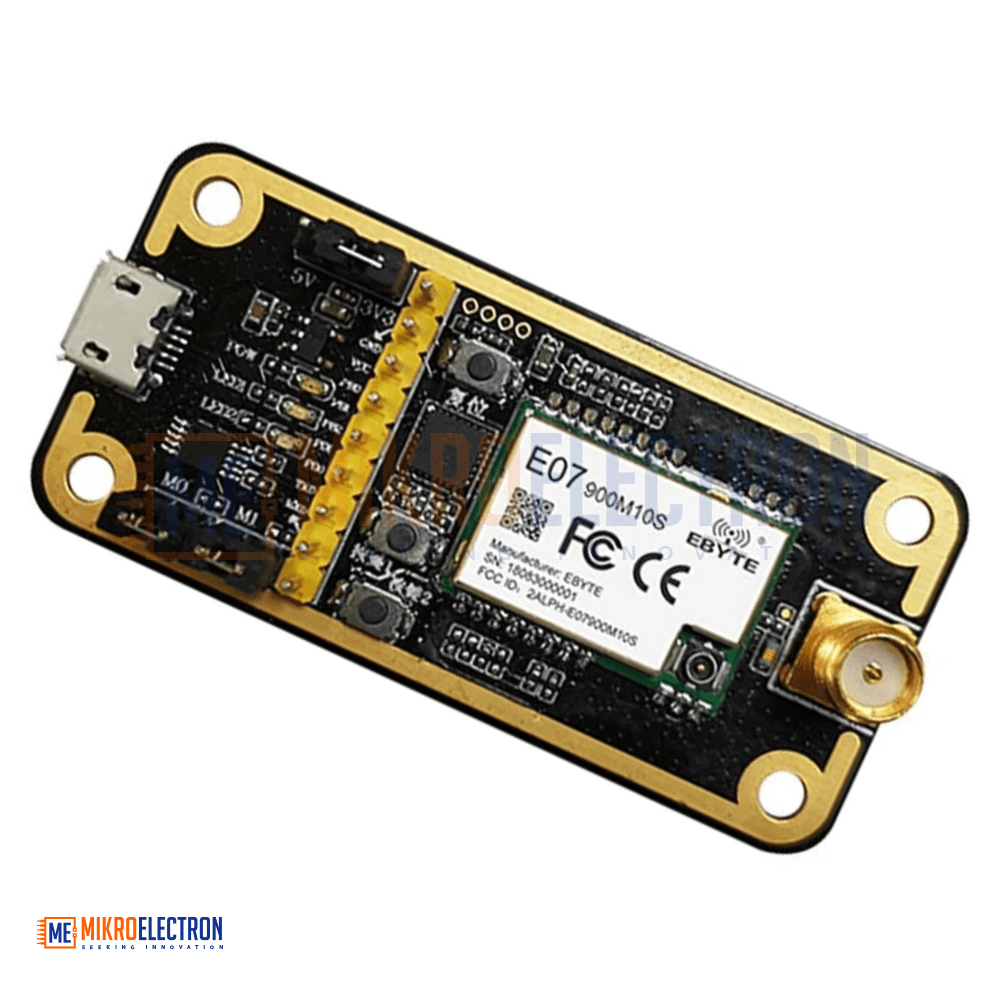
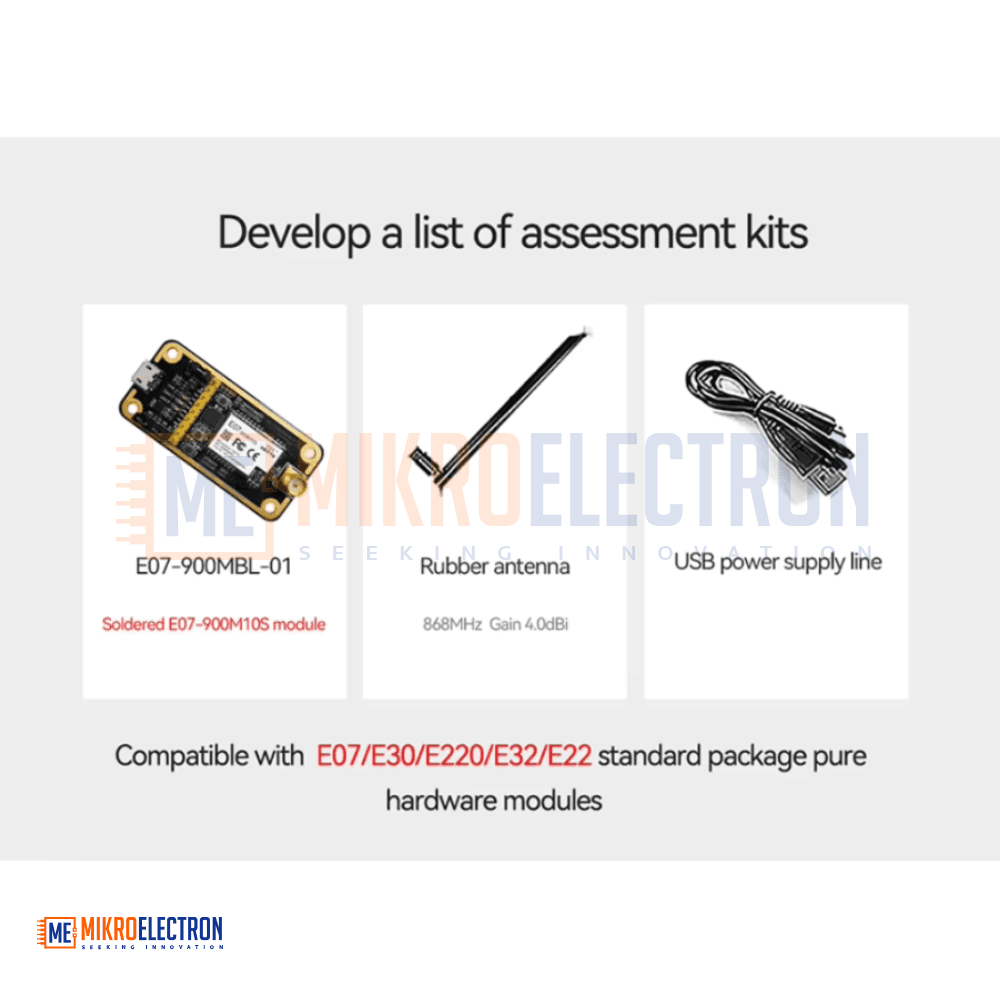
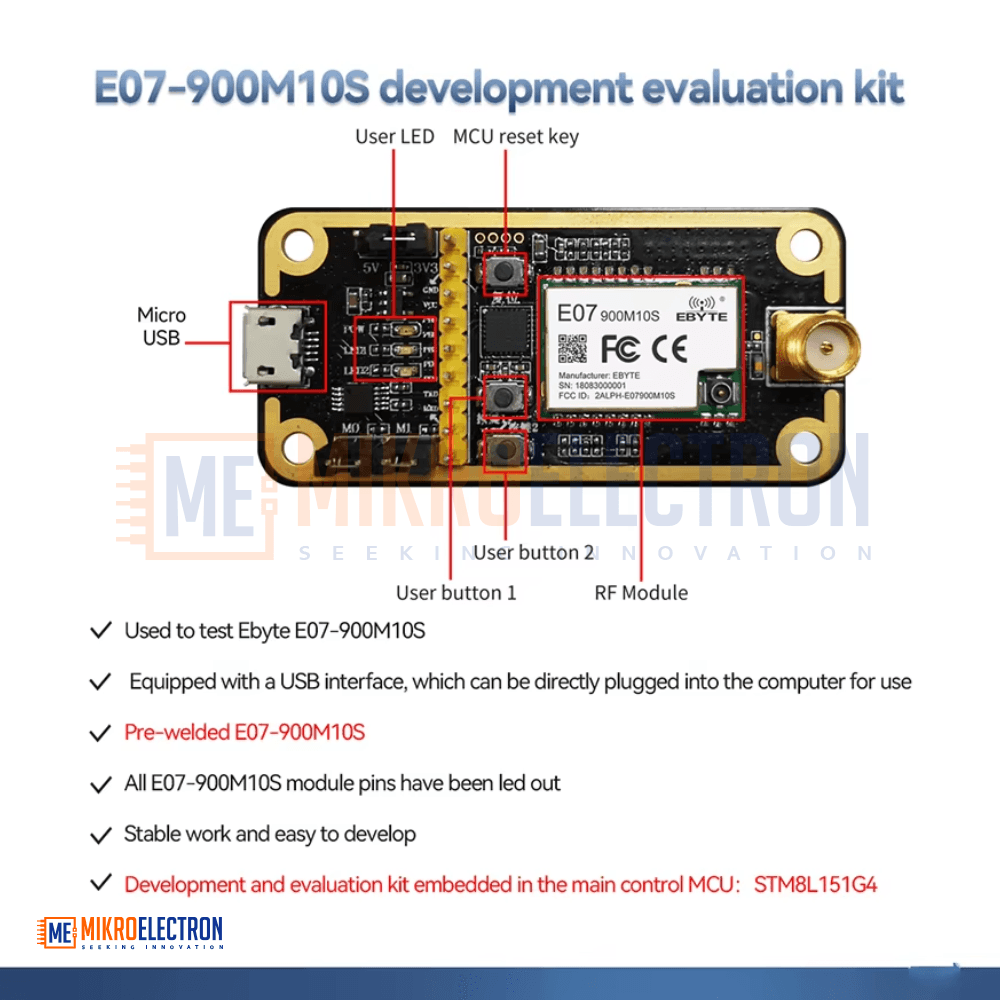
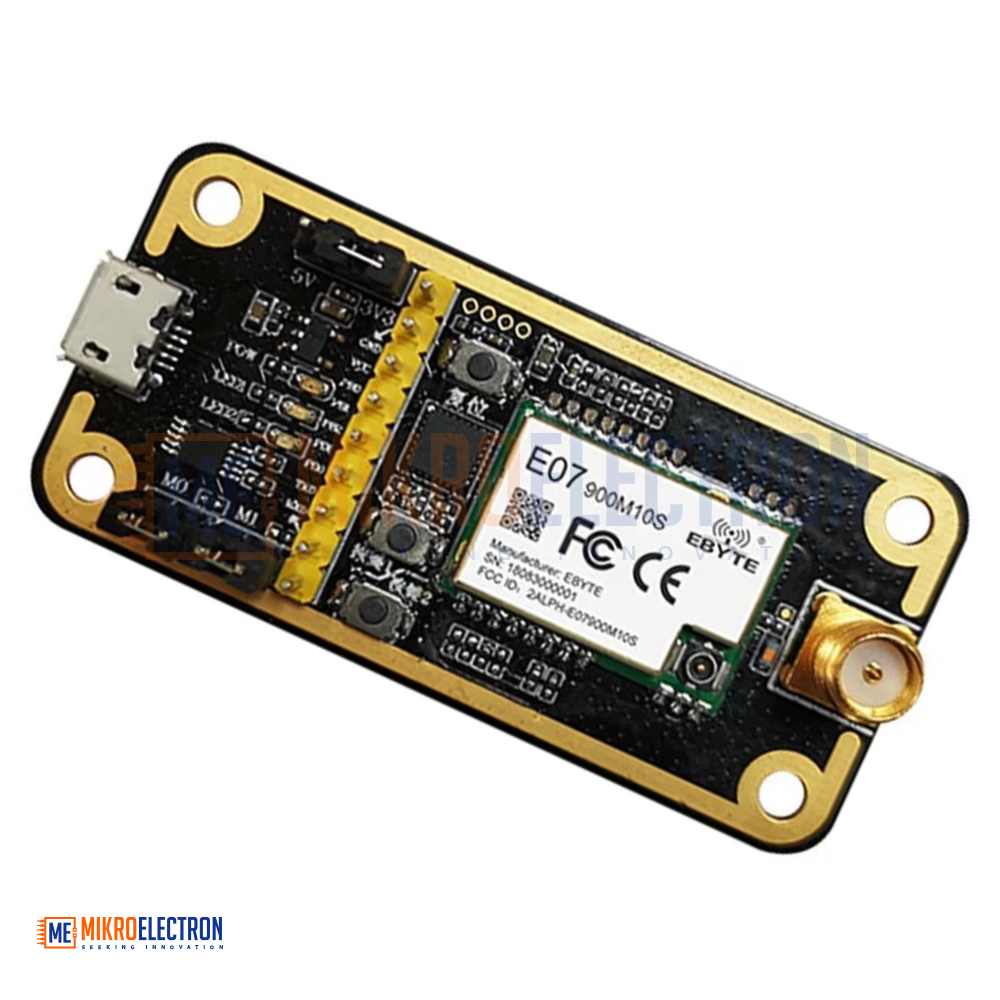
The CDSENET E07-900MBL-01 Wireless RF Development Evaluation Kit is a compact hardware development platform designed for testing, evaluating, and developing Sub-1GHz wireless communication applications. It comes with a pre-soldered Ebyte E07-900M10S RF module, based on the Texas Instruments CC1101 wireless transceiver, operating within the 850-931MHz frequency range with 10dBm transmission power.
The evaluation board integrates an STM8L151G4 ultra-low-power microcontroller, providing a practical environment for firmware development, RF communication testing, and embedded system debugging.
Equipped with a Micro USB interface, the board can be connected directly to a computer for development and testing. The available USB-to-TTL communication interface and accessible module pins simplify hardware integration, serial communication, and signal monitoring.
For convenient interaction and debugging, the board includes a user LED, two user buttons, and a dedicated MCU reset button. The exposed pin connections provide access to important signals, including SPI (MISO, MOSI, SCLK, NSS), UART (TXD, RXD), SWIM, reset, power, and mode-selection pins.
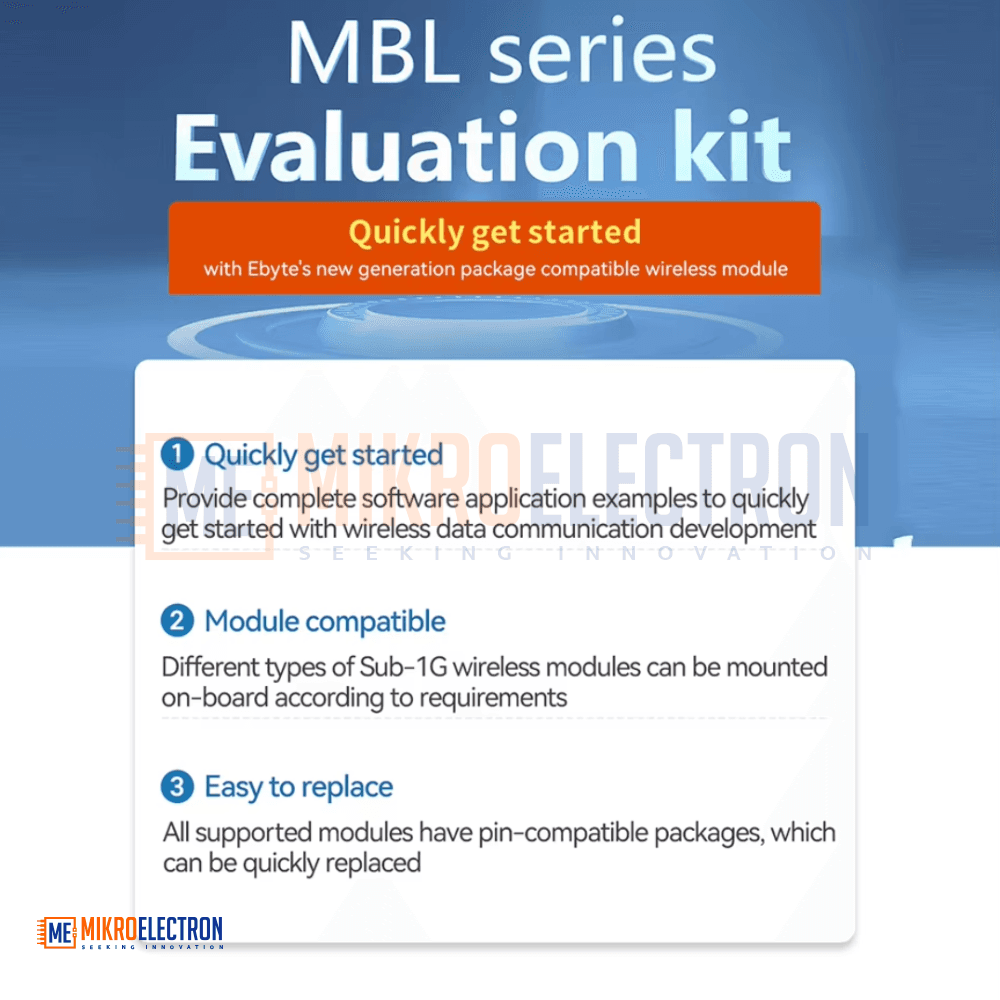
The E07-900MBL-01 belongs to the MBL Series Evaluation Kits, designed to accelerate wireless development through software application examples, module compatibility, and straightforward hardware replacement.
The evaluation platform supports compatible E07, E30, E220, E32, and E22 standard-package wireless modules, allowing developers to evaluate different Sub-1GHz wireless solutions using compatible pin configurations.
With its compact 53 × 27mm dimensions, the kit is suitable for wireless communication research, industrial sensor testing, automatic meter reading systems, and ultra-low-power embedded firmware development.
Specifications
| Specification | Details |
|---|---|
| Brand | CDSENET |
| Model Number | E07-900MBL-01 |
| Product Type | Wireless RF Development Evaluation Kit |
| Series | MBL Series |
| RF Module | Ebyte E07-900M10S |
| RF Chip | Texas Instruments CC1101 |
| Frequency Range | 850-931MHz |
| Transmission Power | 10dBm |
| Onboard MCU | STM8L151G4 |
| MCU Type | Ultra-Low-Power Microcontroller |
| Communication Interface | USB-to-TTL / GPIO Headers |
| USB Connector | Micro USB |
| RF Communication | Sub-1GHz Wireless |
| SPI Interface | MISO, MOSI, SCLK, NSS |
| Serial Interface | TXD, RXD |
| Debug Interface | SWIM |
| Module Operating Voltage | 3.3V |
| User Controls | 2 User Buttons |
| Reset Control | Dedicated MCU Reset Button |
| LED Indicator | User LED |
| Mode Selection | M0, M1 |
| Module Mounting | Pre-Soldered E07-900M10S |
| Compatible Module Families | E07 / E30 / E220 / E32 / E22 Standard Package |
| Dimensions | 53 × 27mm |
| Primary Function | RF Module Evaluation & Firmware Debugging |
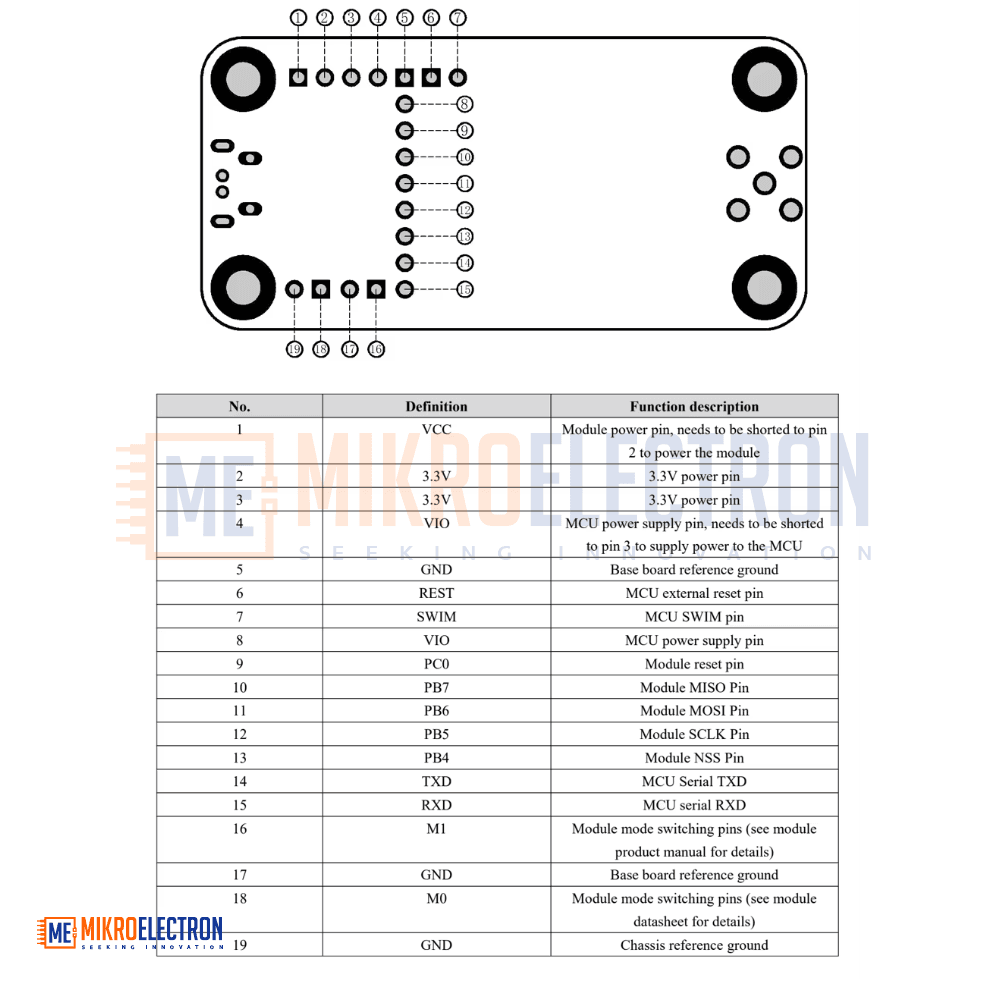
Pin Definition
| Pin No. | Definition | Function |
|---|---|---|
| 1 | VCC | Module power pin; connect to pin 2 to power the module |
| 2 | 3.3V | 3.3V power supply |
| 3 | 3.3V | 3.3V power supply |
| 4 | VIO | MCU power supply; connect to pin 3 to power the MCU |
| 5 | GND | Baseboard ground |
| 6 | REST | MCU external reset |
| 7 | SWIM | MCU SWIM debugging interface |
| 8 | VIO | MCU power supply |
| 9 | PC0 | Module reset |
| 10 | PB7 | SPI MISO |
| 11 | PB6 | SPI MOSI |
| 12 | PB5 | SPI SCLK |
| 13 | PB4 | SPI NSS |
| 14 | TXD | MCU serial transmission |
| 15 | RXD | MCU serial reception |
| 16 | M1 | Module operating mode selection |
| 17 | GND | Baseboard ground |
| 18 | M0 | Module operating mode selection |
| 19 | GND | Chassis reference ground |
Applications
1. Wireless Automatic Meter Reading (AMR)
Suitable for developing and evaluating wireless communication systems used in smart water and gas meters. The board enables engineers to test CC1101 RF performance, evaluate link margins, and monitor RSSI levels without designing a custom PCB.
2. Industrial Wireless Sensor Verification
Designed for testing Sub-1GHz wireless sensor applications in industrial environments. Accessible SPI signals and GPIO connections allow developers to monitor communication registers and analyze signal timing using external debugging instruments.
3. Wireless Communication Research
Provides a practical development platform for evaluating 850-931MHz wireless communication, experimenting with RF modules, and testing wireless data transmission.
4. Embedded Firmware Development
The integrated STM8L151G4 microcontroller supports embedded firmware development, programming experiments, and hardware debugging.
5. Ultra-Low-Power System Development
Useful for researching and optimizing low-power embedded applications, including testing microcontroller sleep modes and reducing power consumption.
6. Educational and Engineering Prototyping
Suitable for electronics students, developers, and researchers learning about RF communication, SPI interfaces, MCU programming, and wireless system integration.
7. RF Module Compatibility Testing
Supports evaluating different compatible E07, E30, E220, E32, and E22 wireless modules, allowing developers to replace supported pin-compatible modules according to project requirements.