
IR Flame Sensor Module
Please select an option to see price and availability
Select Option
 3Pin
 4Pin
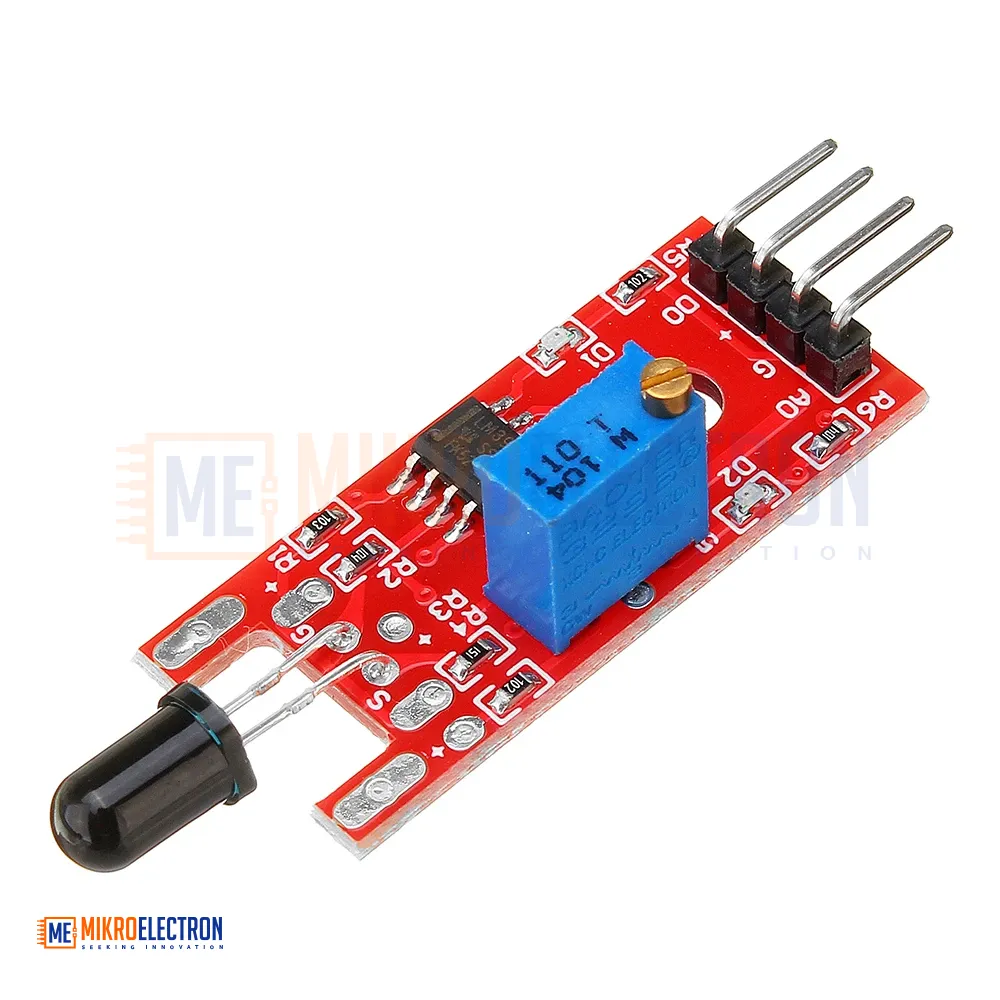 Analog
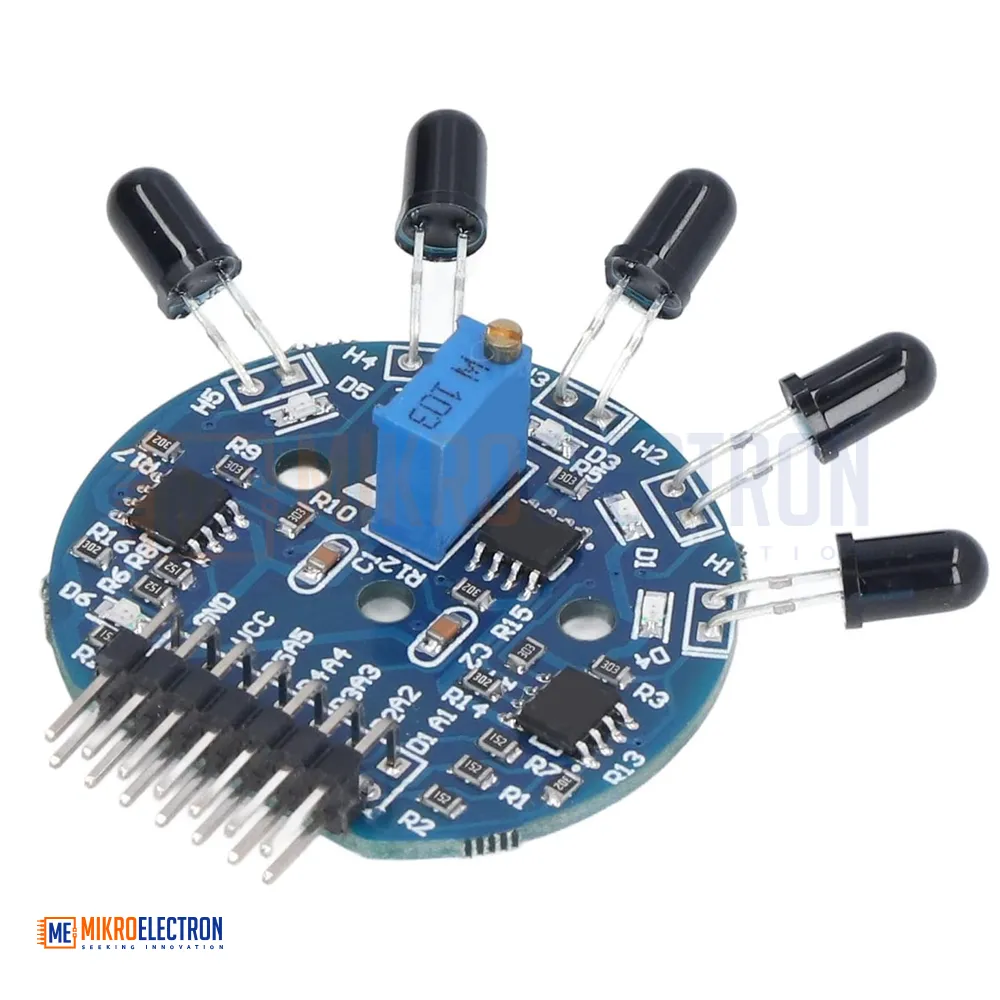 5 Channel
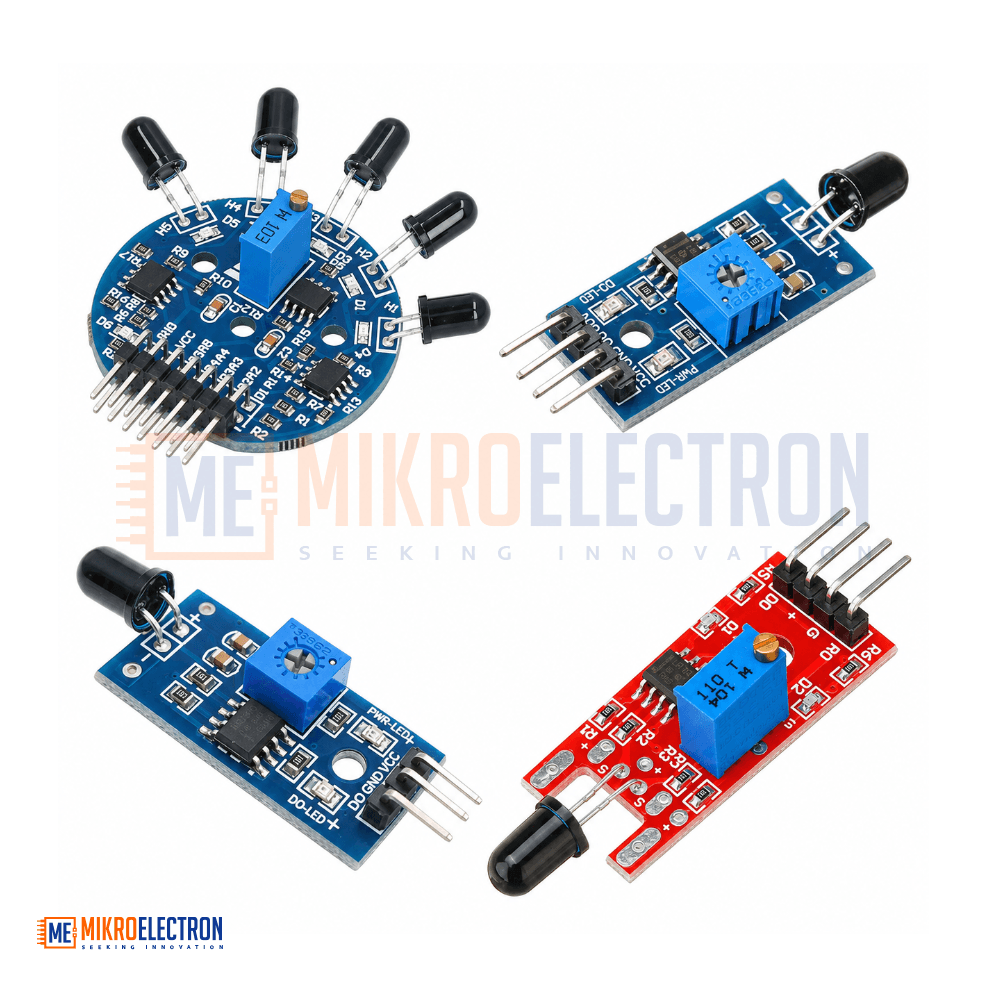
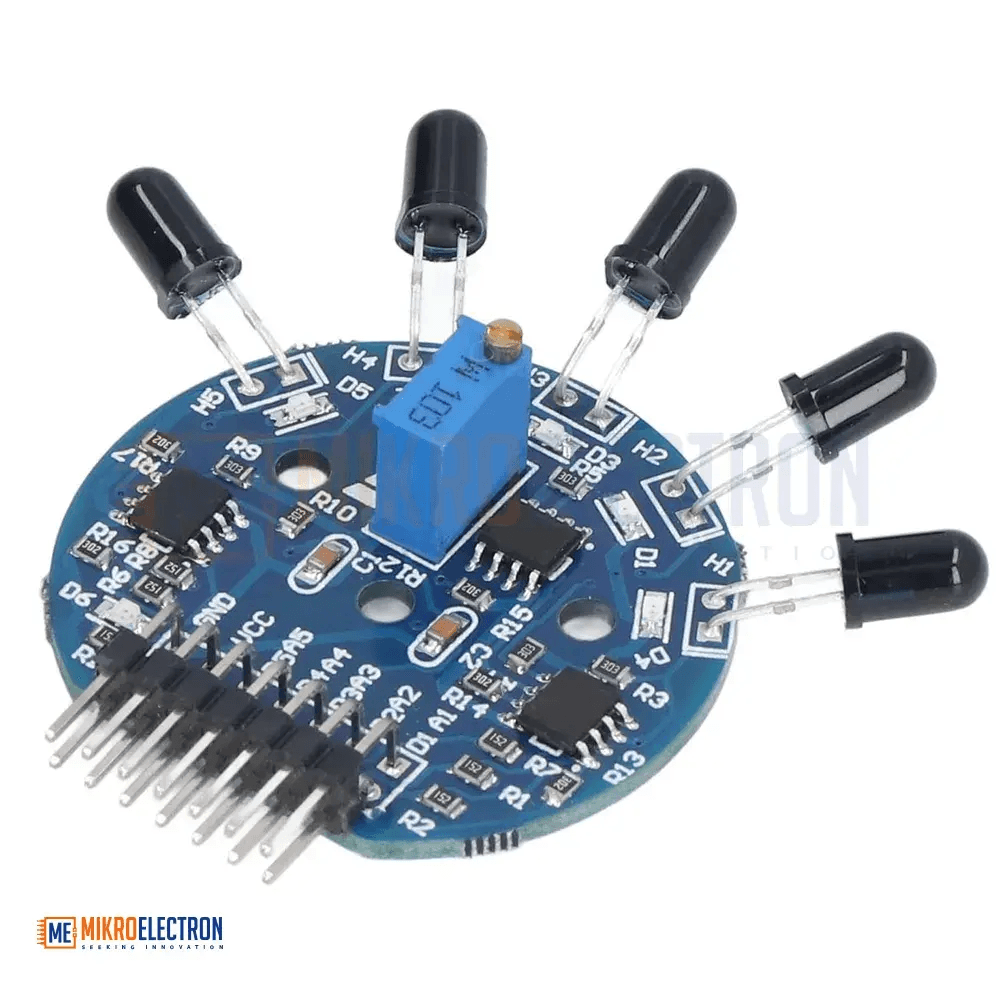
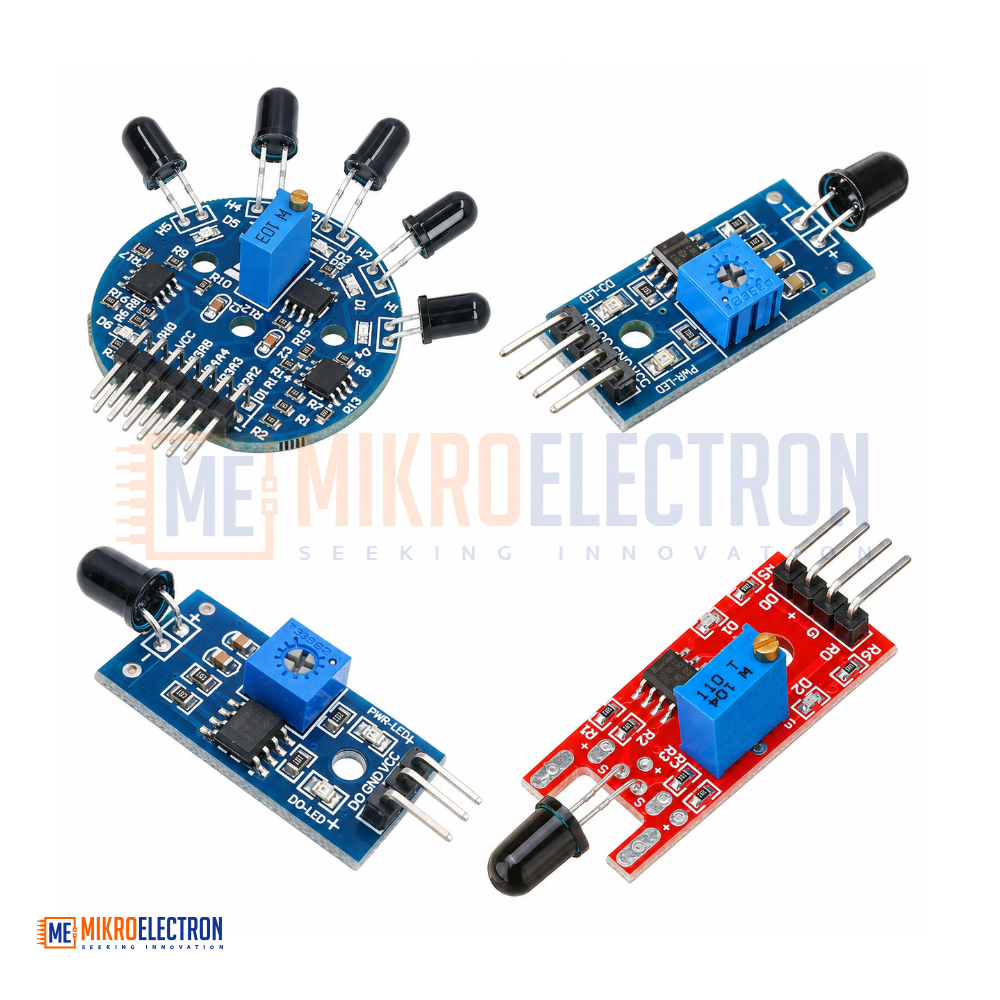
The IR Flame Sensor Module detects the infrared radiation from fire in the 760 nm to 1100 nm range, for fire detection, robotics, and safety monitoring. It comes in four versions: a 3-pin module with digital output, two 4-pin modules with analog and digital outputs based on the LM393 comparator, and a 5-channel module with five sensors spaced about 30° apart for a detection angle above 120°. The single-channel modules run on 3.3 V to 5 V DC and work with Arduino, ESP32, ESP8266, STM32, AVR, PIC, and Raspberry Pi. Every version has an onboard potentiometer to adjust sensitivity.
حساس اللهب بالأشعة تحت الحمراء يكشف الأشعة تحت الحمراء الصادرة عن النار ضمن نطاق 760 إلى 1100 نانومتر، ويُستخدم في كشف الحرائق والروبوتات وأنظمة مراقبة السلامة. يتوفر بأربعة إصدارات: موديول 3 أطراف بخرج رقمي، وموديولان 4 أطراف بخرج تناظري ورقمي يعتمدان على المقارن LM393، وموديول 5 قنوات يضم خمسة حساسات بزاوية تقارب 30 درجة بين كل منها لتحقيق زاوية كشف تزيد عن 120 درجة. تعمل الموديولات أحادية القناة على جهد 3.3 إلى 5 فولت DC، وتتوافق مع Arduino وESP32 وESP8266 وSTM32 وAVR وPIC وRaspberry Pi. تحتوي جميع الإصدارات على مقاومة متغيرة (Potentiometer) مدمجة لضبط الحساسية.
The IR Flame Sensor Module is a compact sensor that detects infrared radiation from fire in the 760 nm to 1100 nm range, made for electronics, automation, and safety projects. It is available in four versions to suit different project needs.
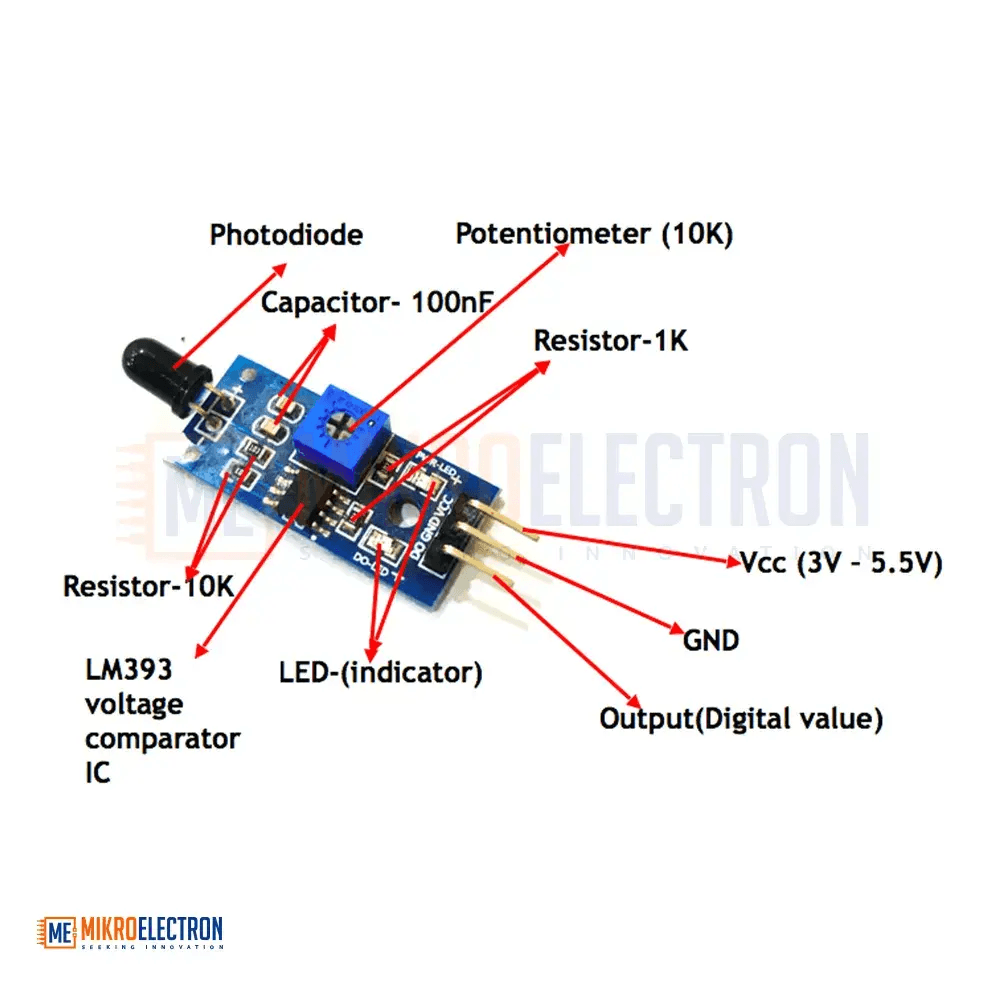
The 3-pin digital version gives a digital active-low output: LOW when a flame is detected, HIGH when none is present. It has a detection range of about 80 cm and a 60-degree sensing angle, and uses 0.1-inch pins that fit breadboards.
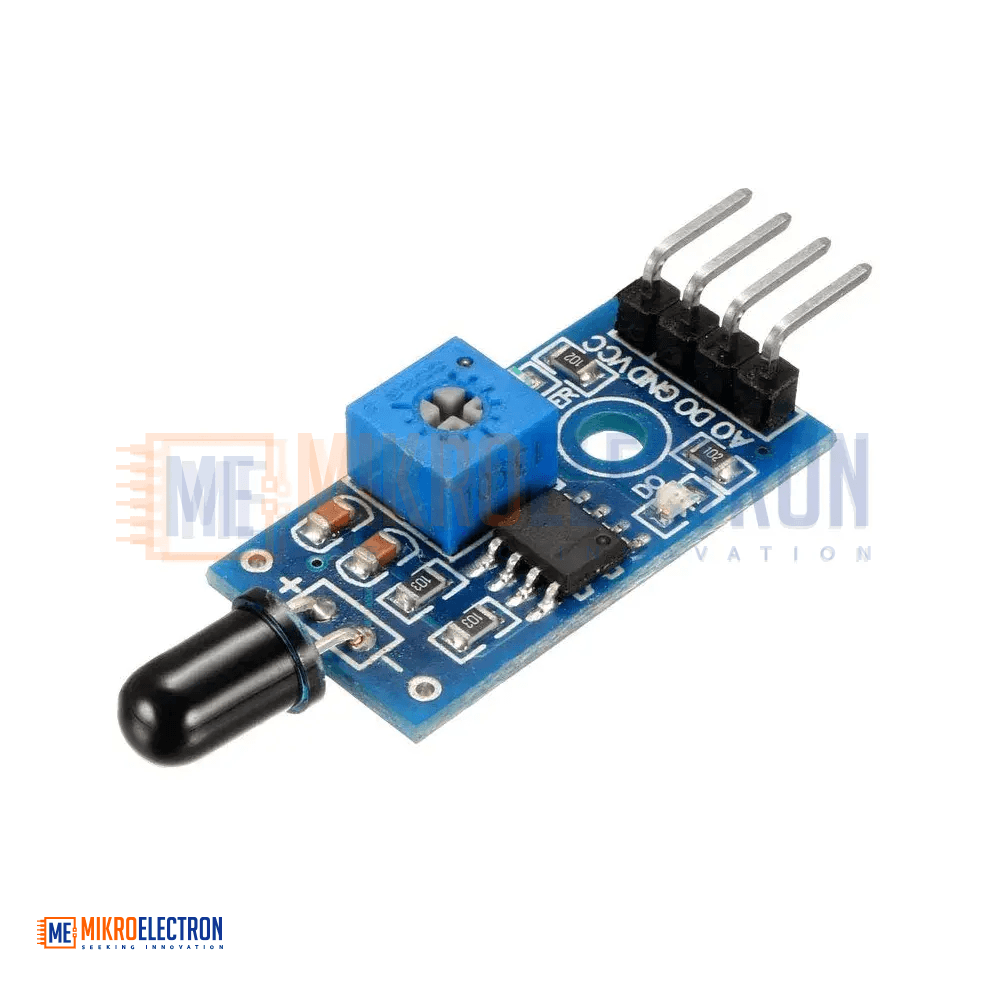
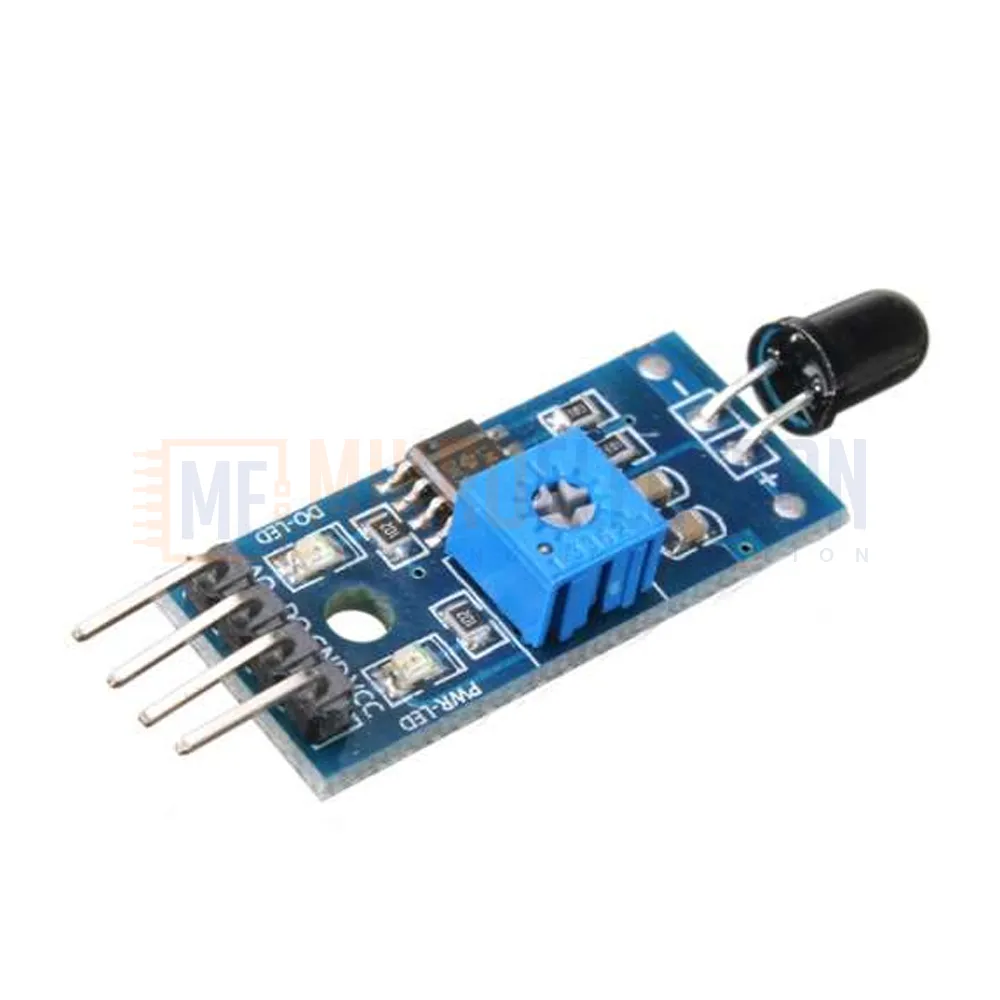
The 4-pin digital and analog version uses an LM393 comparator and offers both digital (DO) and analog (AO) outputs. Its analog output gives a voltage proportional to the detected IR intensity, and it has output current capability of >15 mA and mounting holes.
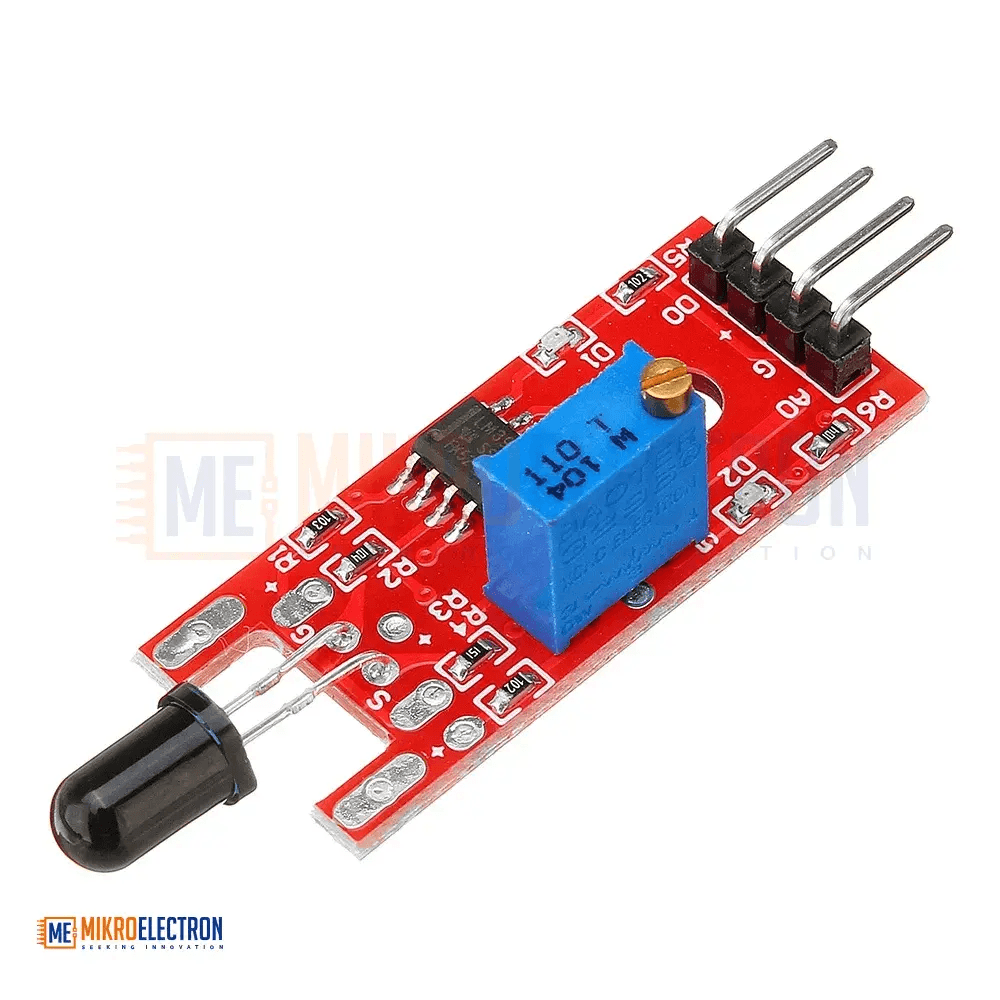
The 4-pin analog output version uses a YG1006 phototransistor, which is tuned for infrared and housed in black epoxy. An onboard LM393 comparator compares the signal to an adjustable threshold, and the digital output (D0) changes state when the threshold is crossed, and the signal LED lights. This version offers a maximum distance of up to 100 cm with power and signal LEDs.
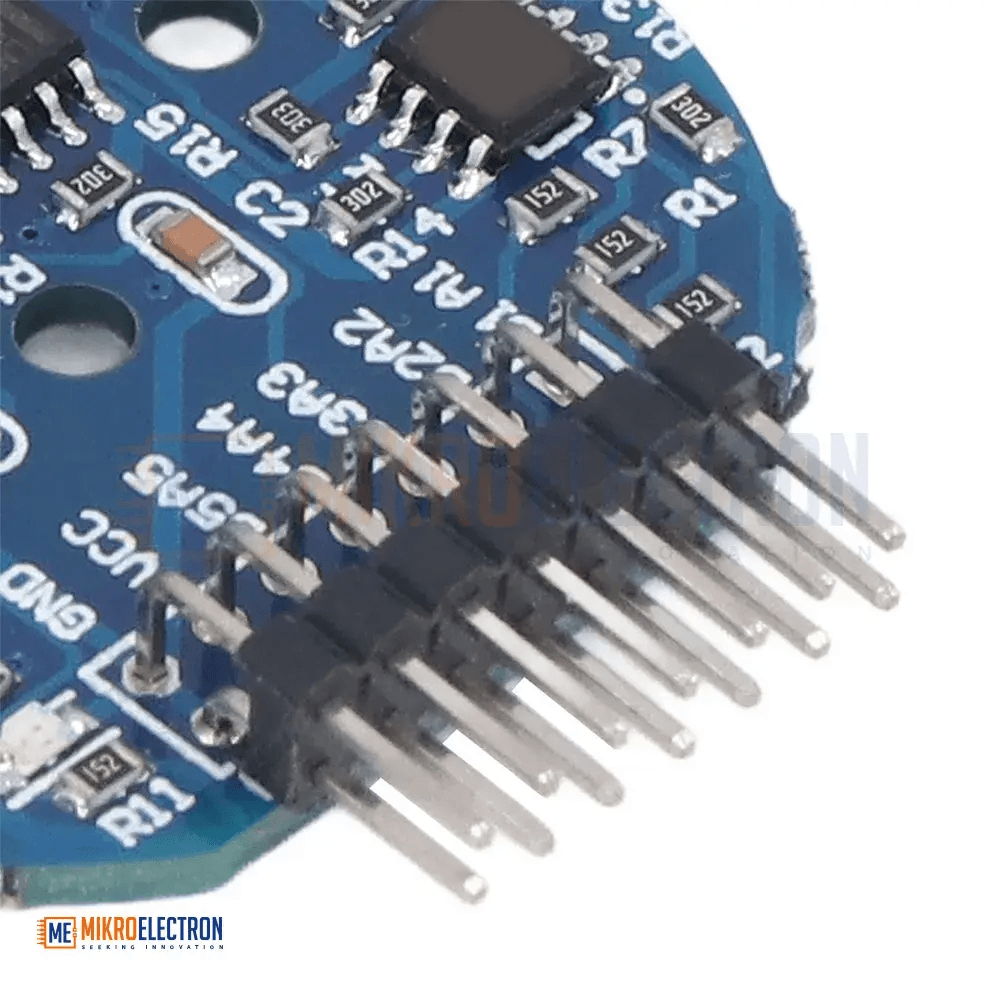
The 5-channel version uses five high-sensitivity flame sensors spaced about 30 degrees apart, for a total detection angle above 120 degrees. It provides five analog outputs and five digital outputs, five channel LEDs and one power LED for feedback and debugging, and 1% high-precision resistors for better stability and accuracy. It runs on a wider operating voltage of 3.3V to 9V DC, which makes it a strong choice for flame-tracking and firefighting robots.
Specifications
| Parameter | 3-Pin Digital | 4-Pin Digital + Analog | 4-Pin Analog Output | 5-Channel |
|---|---|---|---|---|
| Operating Voltage | 3.3 V – 5 V DC | 3.3 V – 5 V DC | 3.3 V – 5 V DC | 3.3 V – 9 V DC |
| Detection Wavelength | 760 – 1100 nm | 760 – 1100 nm | 760 – 1100 nm | 760 – 1100 nm |
| Sensor Channels | 1 | 1 | 1 | 5 |
| Outputs | Digital (active low) | DO (0/1) + AO (analog voltage) | A0 (analog) + D0 (digital) | 5 analog + 5 digital |
| Detection Angle | 60° | 60° | About 60° | Greater than 120° |
| Detection Distance | About 80 cm | Up to 80 cm | Up to 100 cm | About 80 cm |
| Sensing Element | - | - | YG1006 phototransistor | - |
| Comparator IC | - | LM393 | LM393 | - |
| Sensitivity Adjustment | Onboard potentiometer | Onboard potentiometer | Onboard potentiometer | Onboard potentiometer |
| Indicator LEDs | - | - | Power LED + signal LED | 5 channel LEDs + 1 power LED |
| Output Current | - | >15 mA | - | - |
| Resistor Precision | - | - | - | 1% |
| Pins | 3 (0.1-inch pitch) | VCC, GND, DO, AO | VCC, GND, A0, D0 | - |
| Dimensions | About 31 × 14 mm | 32 × 14 mm | - | - |
| Mounting Holes | - | Yes | - | - |
| Compatible Platforms | Arduino, ESP32, ESP8266, STM32, AVR, PIC, Raspberry Pi (GPIO) | Arduino, ESP32, STM32, Raspberry Pi | Arduino, Raspberry Pi, ESP32, STM32, PIC, AVR | Arduino, ESP32, ESP8266, STM32, AVR, PIC, Raspberry Pi (with ADC) |
Applications
- Fire alarm and fire detection systems
- Firefighting and flame-tracking robots
- Industrial safety and fire monitoring
- Smart home safety devices
- IoT fire and safety monitoring
- Combustion monitoring
- Security and warning systems
- Embedded control and automation projects
- Arduino, ESP32, and Raspberry Pi projects
- Educational experiments, laboratory, and R&D projects