
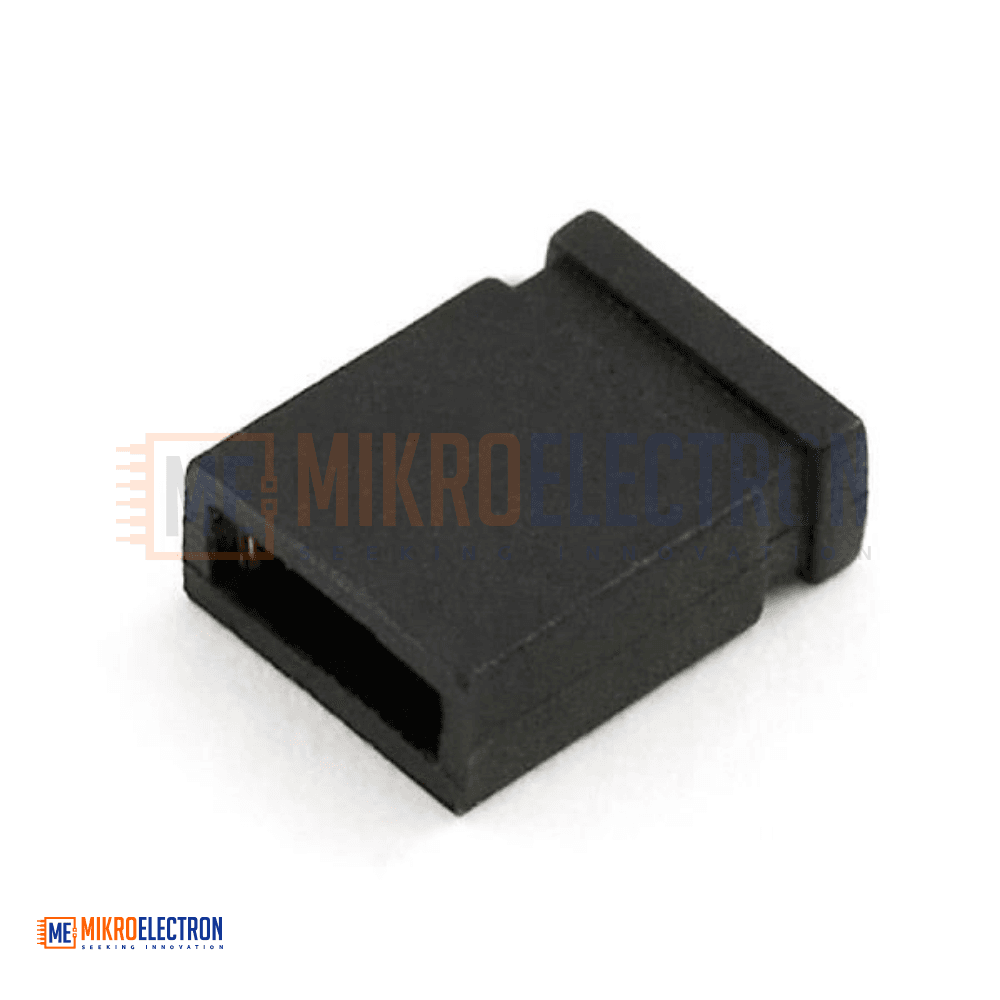
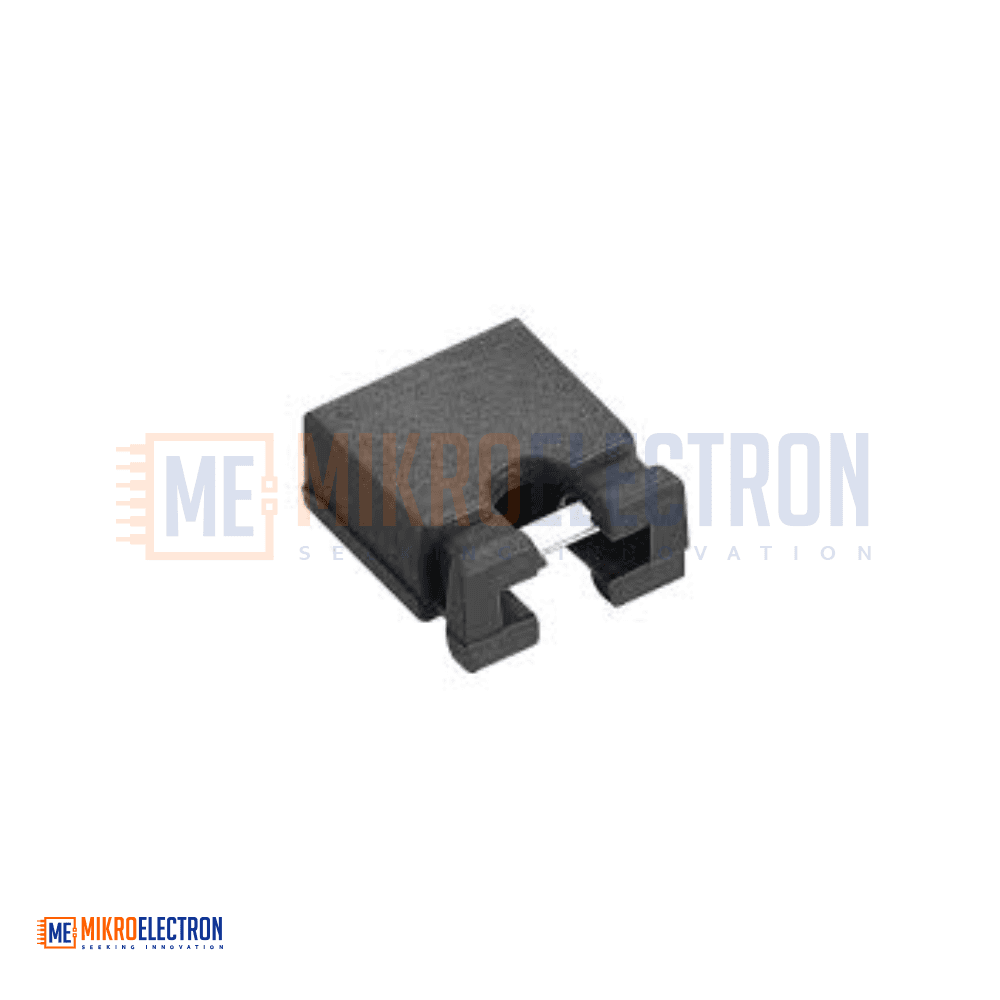
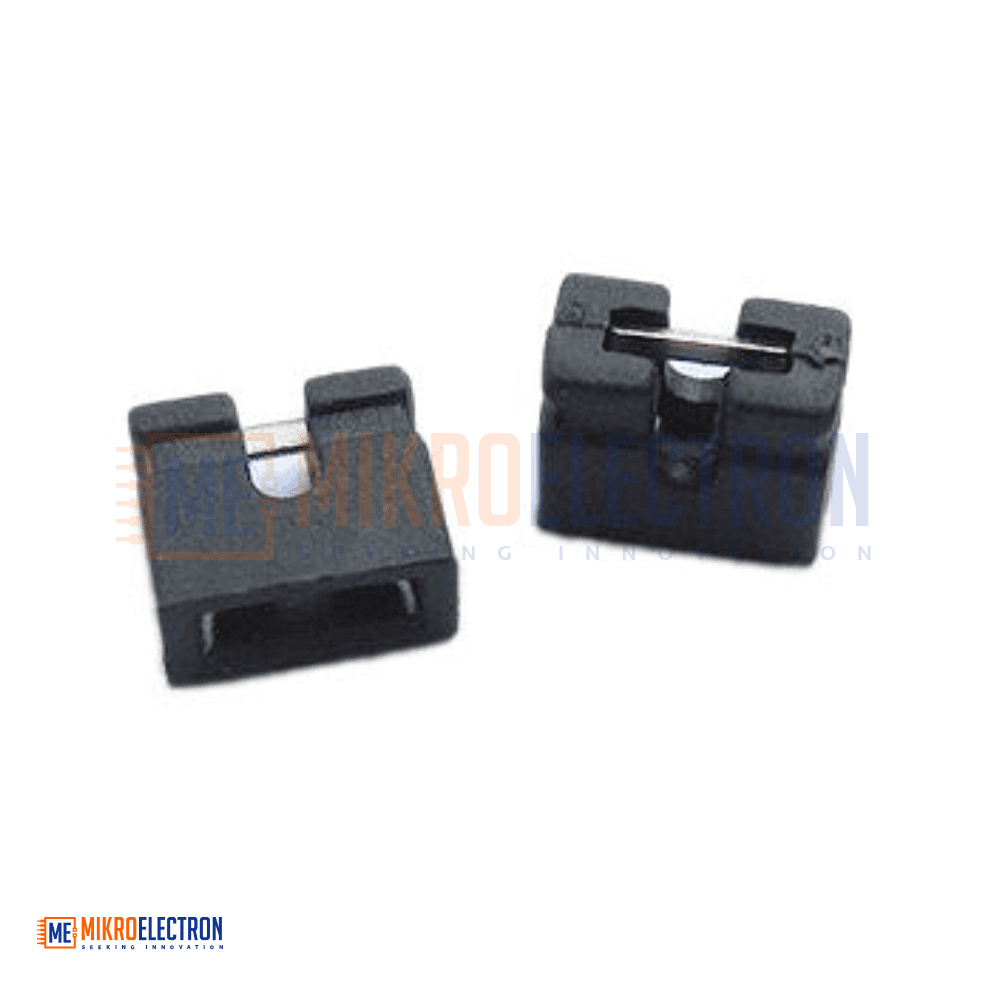

Jumper - 2 Pin
2.54mm Jumper Caps Short Circuit Caps Mini 2Pin
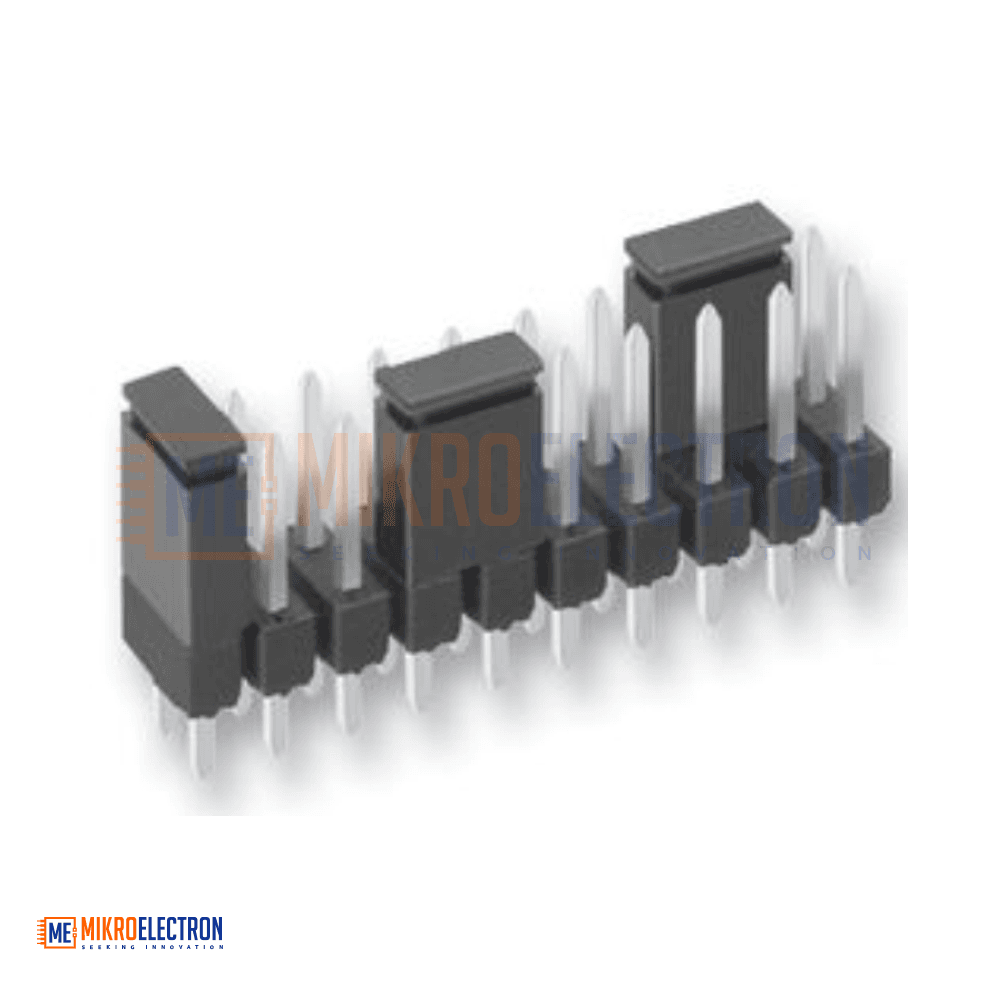
This 2-pin jumper (shunt) creates an electrical connection between two header pins on a PCB. Used for configuration settings, mode selection, or enabling/disabling circuit functions. 2.54mm pitch. Rated 3A. Gold-plated contacts. UL94V-0 insulation.
هذا الجسر ثنائي الدبوس يخلق اتصالاً كهربائياً بين دبوسين على لوحة PCB. يستخدم لإعدادات التهيئة أو اختيار الوضع أو تمكين/تعطيل وظائف الدائرة. مسافة 2.54mm. تصنيف 3A. جهات الاتصال مطلية بالذهب. عزل UL94V-0.
The Jumper - 2 Pin is a small plastic shunt designed to slide over standard 0.1 inch (2.54mm) pitch pin headers, creating a short circuit between two adjacent pins. It is widely used in electronics to manually configure hardware settings such as address selection, voltage reference selection, enabling or disabling specific circuit blocks, or restoring factory defaults. The jumper features a black PBT or polyester housing rated UL94V-0 for flame retardancy. Inside, the contact is made of phosphor bronze with gold-over-nickel plating, ensuring low contact resistance (up to 20 mΩ) and excellent corrosion resistance. It can withstand up to 1000V AC/DC and operates reliably from -40°C to 105°C. With a current rating of 3A, it is suitable for most low-power signal and power switching applications. The maximum temperature tolerance is 200°C for 10 seconds, allowing for reflow or wave soldering of the header pins before the jumper is installed.
Specifications
| Parameter | Value |
|---|---|
| Number of Pins | 2 |
| Pitch | 2.54mm (0.1 inch) |
| Rated Current | 3.0 Amps |
| Contact Resistance | ≤20 mΩ |
| Withstanding Voltage | 1000 V AC / DC |
| Insulation Resistance | 1000 MΩ (minimum) |
| Operating Temperature | -40°C to +105°C |
| Contact Material | Phosphor Bronze |
| Contact Plating | Au (Gold) over Ni (Nickel) |
| Insulation Material | Polyester (UL94V-0) |
| Standard Housing Material | PBT |
| Maximum Temperature Tolerance | 200°C for 10 seconds (392°F for 30 seconds) |
Applications
Setting I2C or other bus addresses on sensor modules
Enabling or disabling pull-up resistors on development boards
Selecting operating modes (e.g., programming vs. run mode)
Configuring voltage regulators (adjustable vs. fixed output)
Bypassing or inserting filters or feedback networks
Factory configuration settings on PCBs before final assembly
Educational breadboard and prototyping projects