
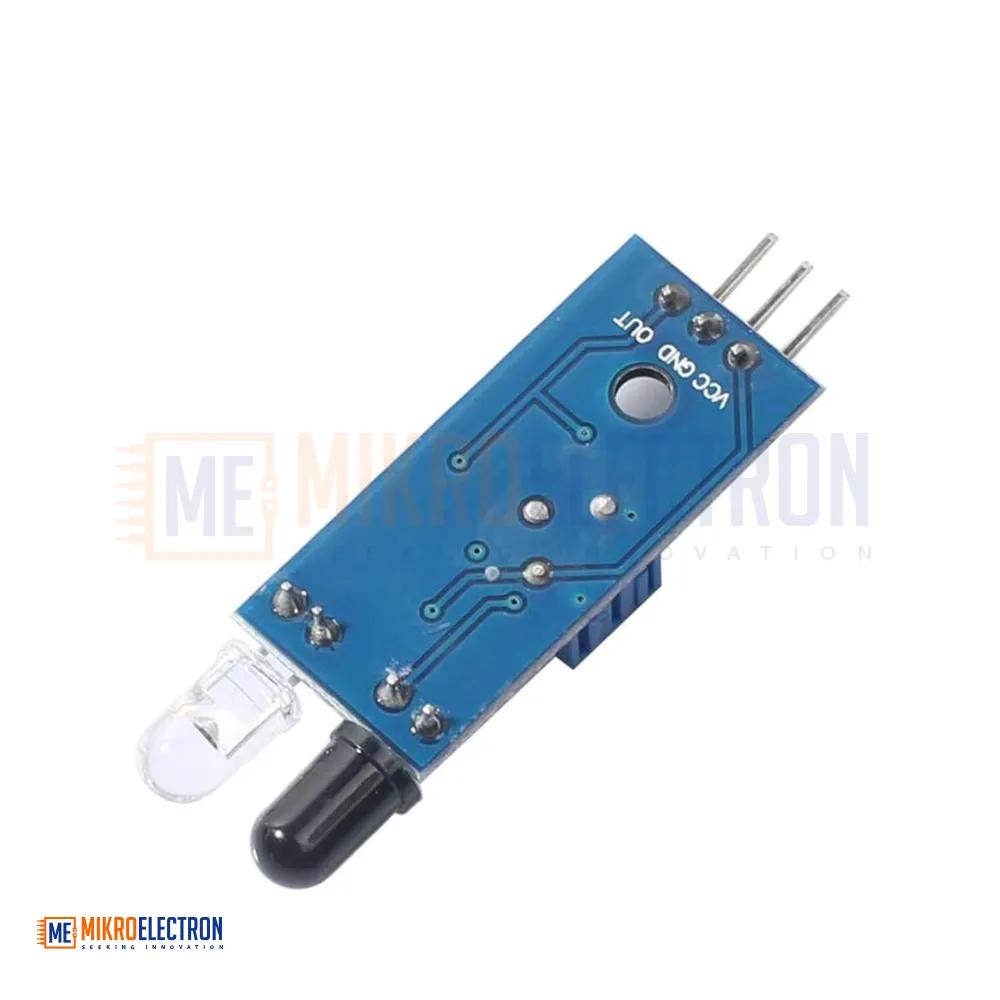

IR Infrared obstacle avoidance Module 3PIN
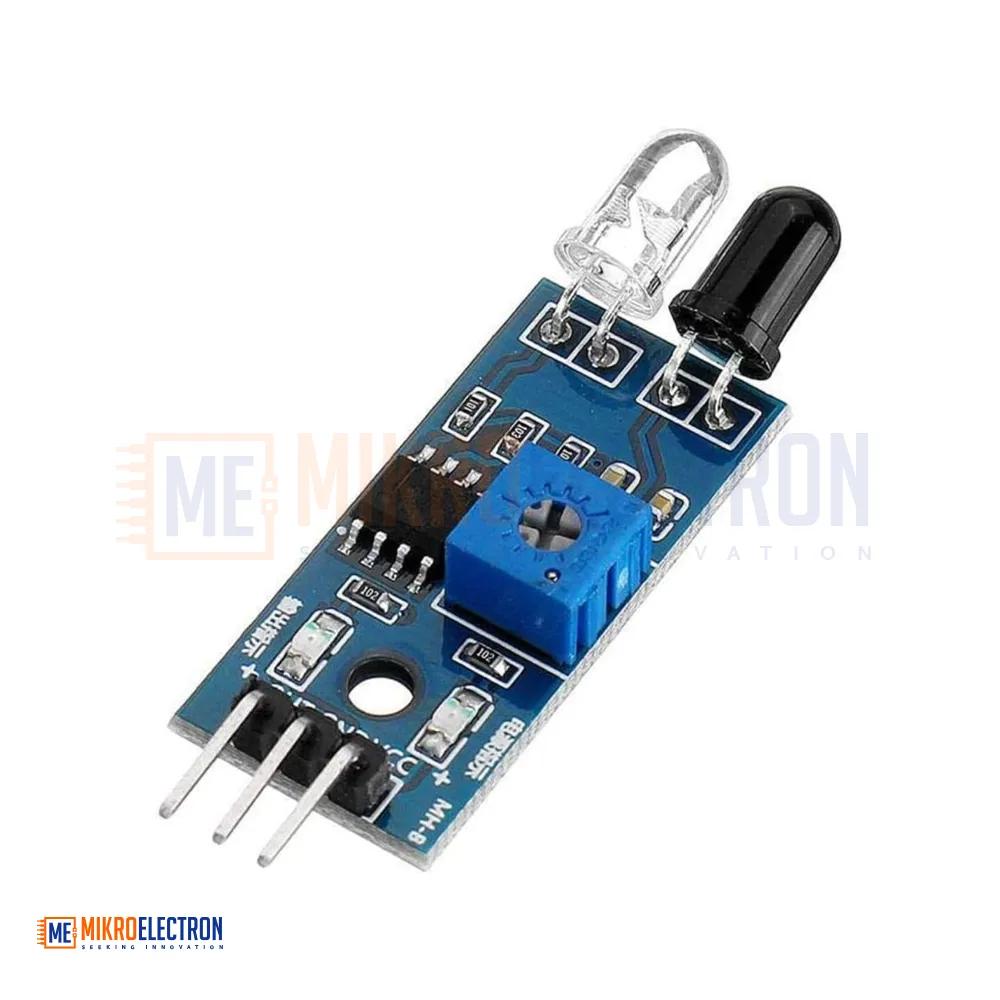
The 3-Pin IR Infrared Obstacle Avoidance Module is a reliable proximity sensor designed for robotics and automation projects. It uses an infrared transmitter and receiver pair to detect obstacles within a 2–30cm range, outputting a clean digital HIGH/LOW signal to any microcontroller. Featuring an adjustable potentiometer, LM393 comparator, and operation at 3.3V–5V, it's ideal for obstacle avoidance robots, line-following cars, and DIY automation builds.
وحدة استشعار العوائق بالأشعة تحت الحمراء IR ثلاثية الأطراف هي حساس قرب موثوق مصمم لمشاريع الروبوتات والأتمتة. تستخدم زوجاً من المرسل والمستقبل بالأشعة تحت الحمراء للكشف عن العوائق ضمن مدى 2 إلى 30 سم، وتُخرج إشارة رقمية HIGH/LOW نظيفة إلى أي متحكم دقيق. تتميز بـ مقاومة متغيرة قابلة للضبط، ومُقارن LM393، وتعمل بجهد 3.3 إلى 5 فولت، مما يجعلها مثالية لروبوتات تجنّب العوائق، وسيارات تتبع الخط، ومشاريع الأتمتة.
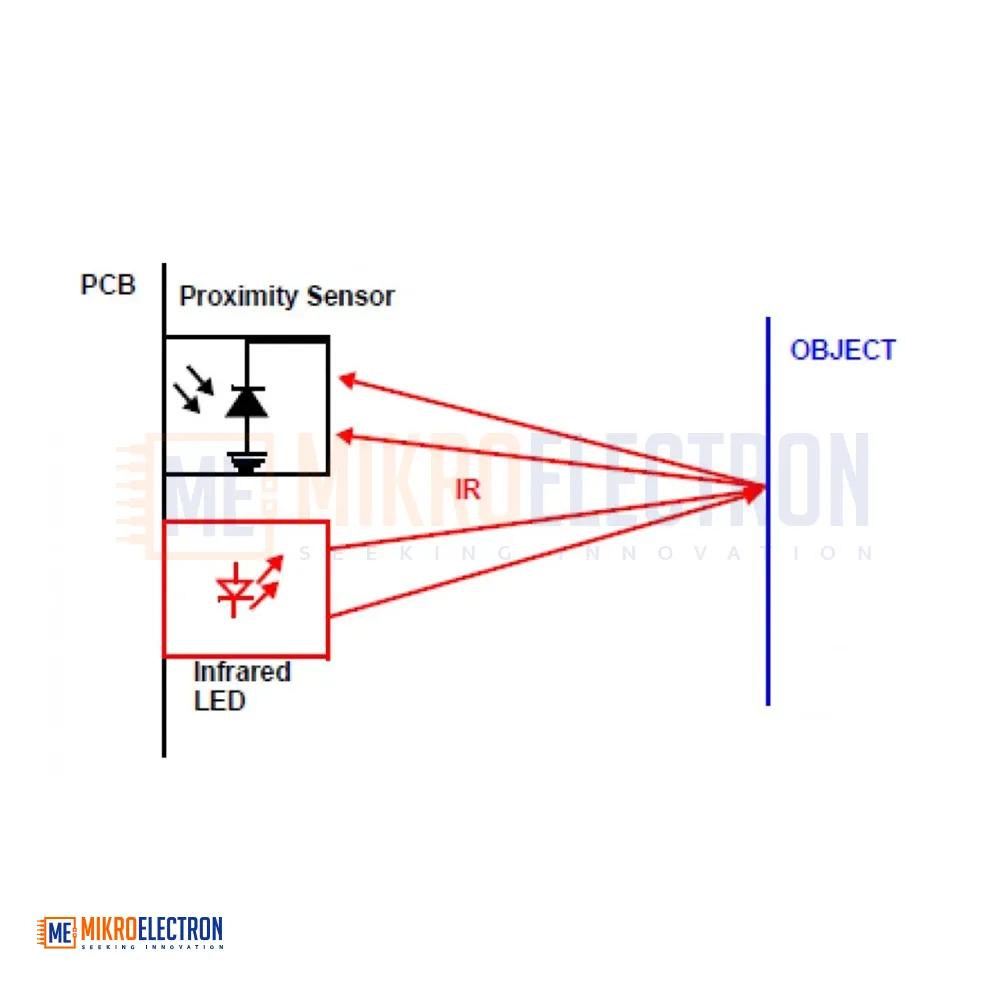
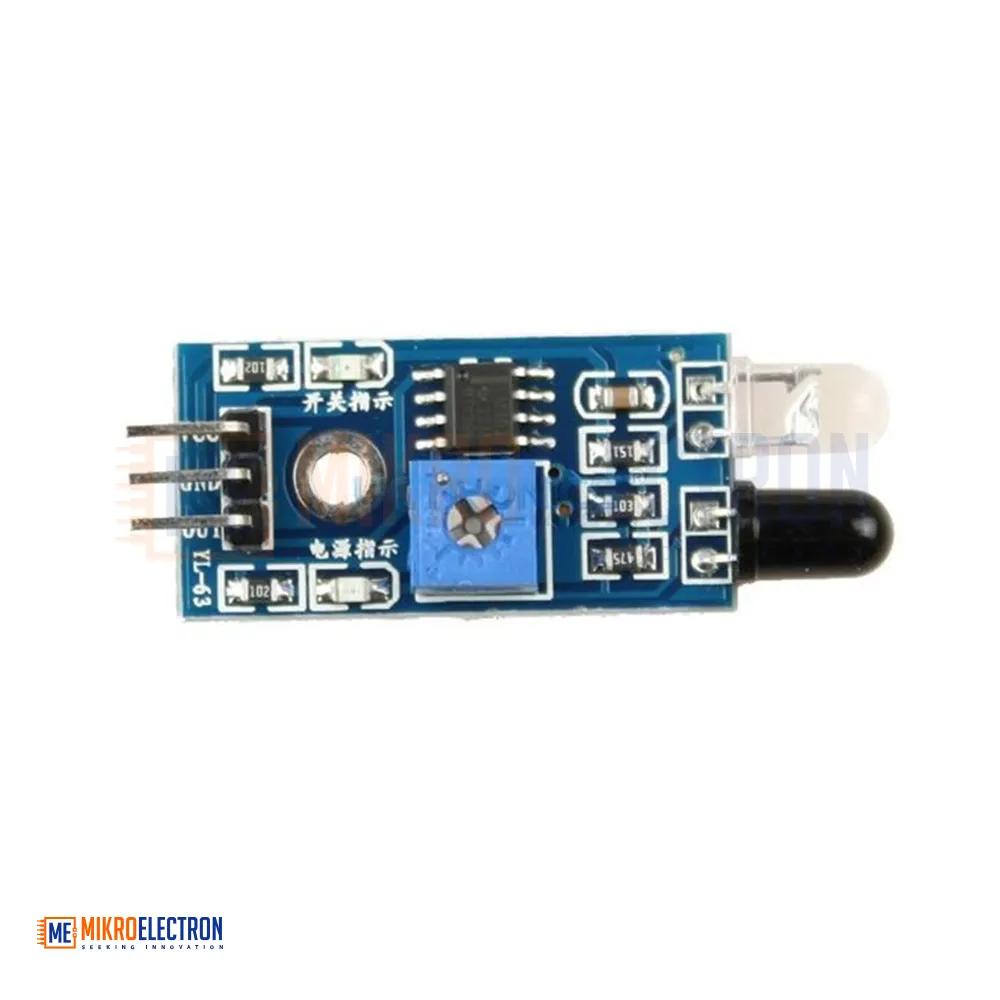
The 3-Pin IR Infrared Obstacle Avoidance Module is a versatile and environment-adaptive sensor designed for detecting obstacles in robotics and automation projects. It features a pair of infrared transmitter and receiver tubes: the transmitter emits IR light at a specific frequency, and when this light reflects off an obstacle, the receiver detects it. The signal is then processed through an LM393 comparator circuit, after which the onboard green indicator LED lights up and the OUT pin outputs a LOW digital signal.
The detection distance is fully adjustable via an onboard potentiometer — turning it clockwise increases the detection range, while turning it counter-clockwise decreases it. The module supports an effective detection range of 2 to 30cm with a 35° detection angle, and works on a flexible 3.3V to 5V supply.
Detection performance depends on the reflectivity and shape of the target object — white surfaces reflect best (maximum range), while black surfaces absorb IR (minimum range). Small objects produce shorter ranges, while larger ones extend the range. The OUT pin can be directly connected to any microcontroller IO or used to drive a 5V relay directly.
The module has low interference, is easy to assemble, and includes a 3mm mounting hole for fast integration. Each module is pre-calibrated at the factory, so adjusting the potentiometer is only required for special use cases.
Specifications
- Module Type: IR Infrared Obstacle Avoidance Sensor
- Operating Voltage: 3.3V to 5V DC
- Detection Range: 2 cm to 30 cm (adjustable)
- Detection Angle: 35°
- Comparator IC: LM393 (stable operation)
- Output Type: Digital (HIGH / LOW)
- Indicators: Red power LED + Green obstacle-detection LED
- Adjustment: Onboard potentiometer for sensitivity tuning
- Mounting: 3mm screw hole
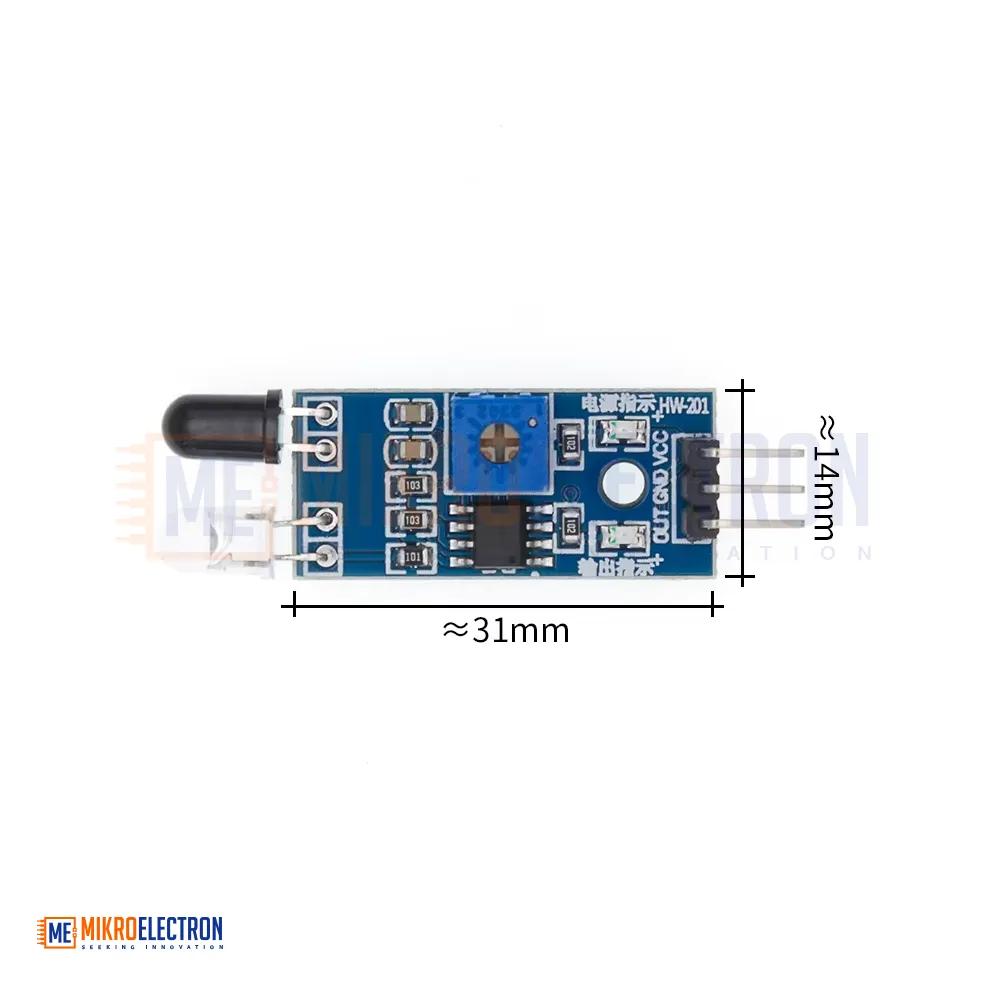
- Board Size: 3.2 cm × 1.4 cm
- Interface: 3-pin (VCC, GND, OUT)
Module Interface
- VCC: Connects to 3.3V or 5V power supply
- GND: Connects to ground (GND)
- OUT: Digital output signal (0 = obstacle detected, 1 = no obstacle) — connects directly to a microcontroller IO pin
Applications
- Obstacle avoidance for robots and robotic cars
- Line-following robots (as part of a broader sensor suite)
- Black and white line tracking systems
- Object counting on production or hobby lines
- Smart home devices requiring proximity detection
- Autonomous navigation and pathfinding projects
- DIY electronics and educational projects