
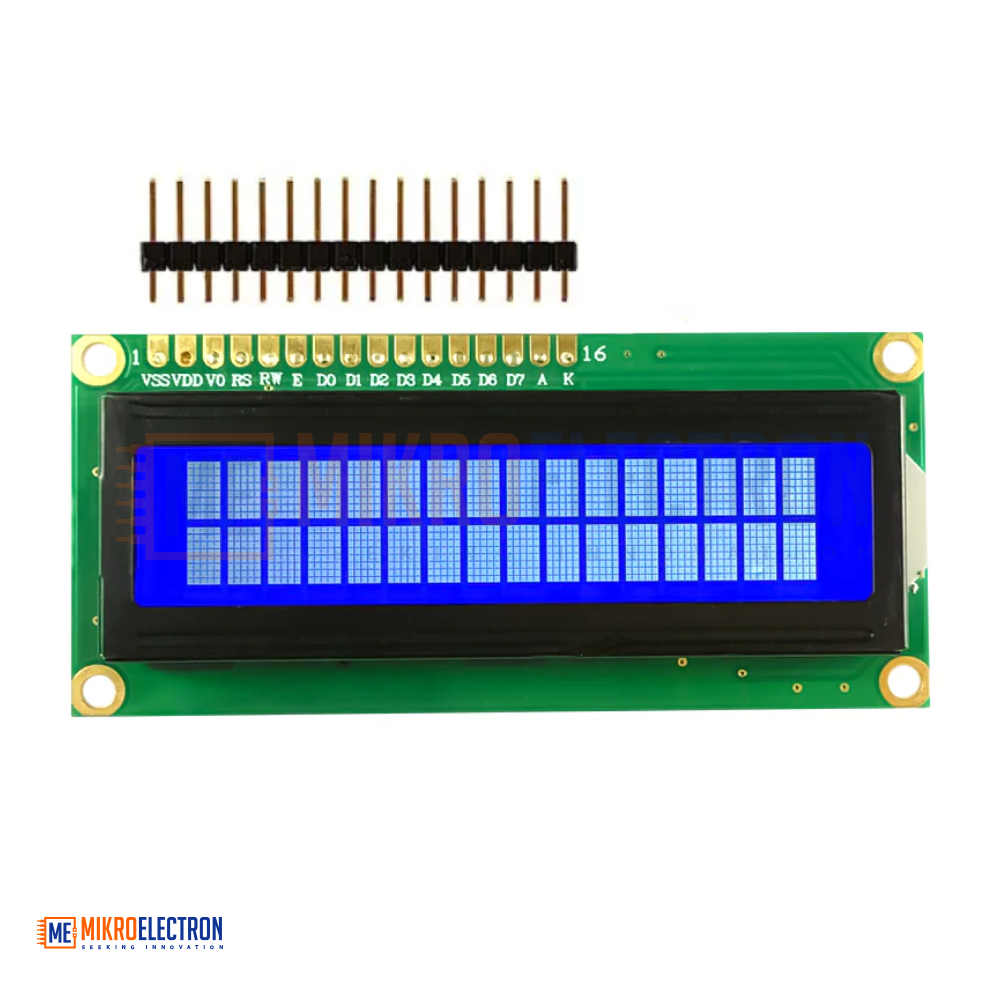
LCD 16x2 (Blue Screen)
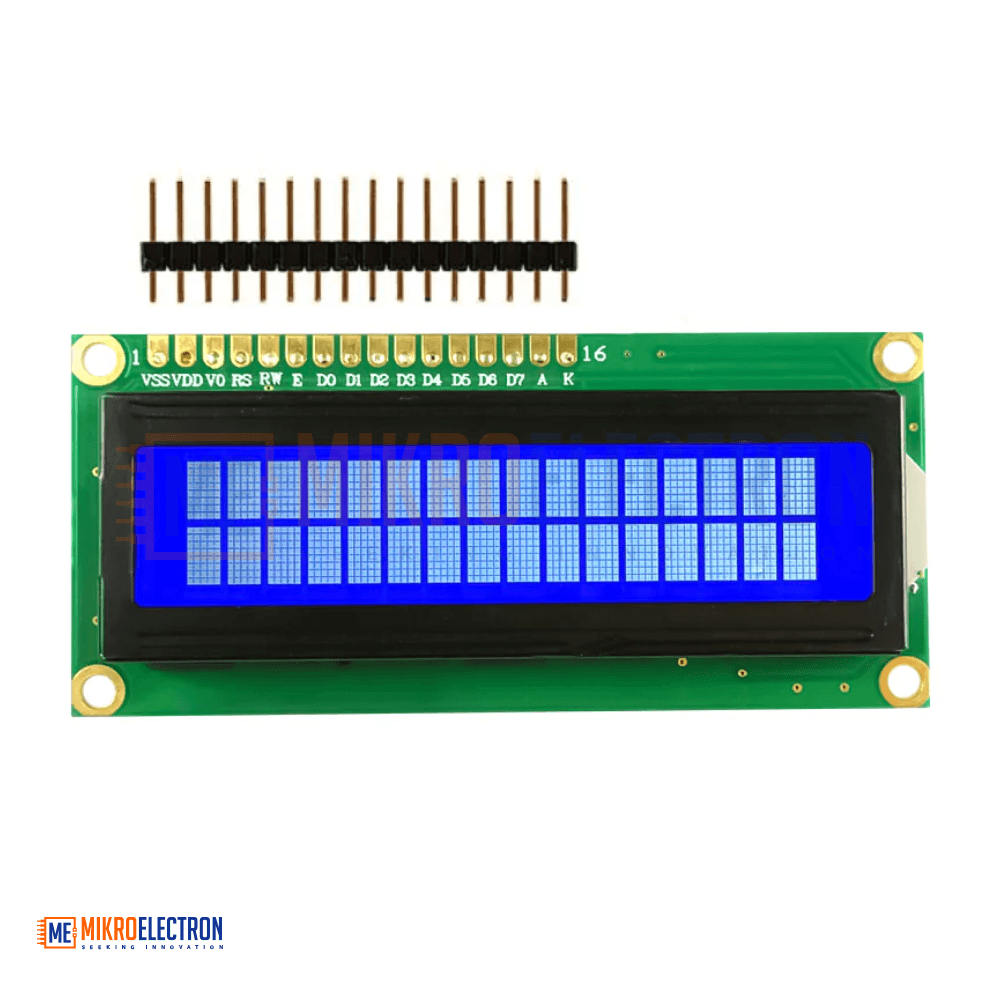
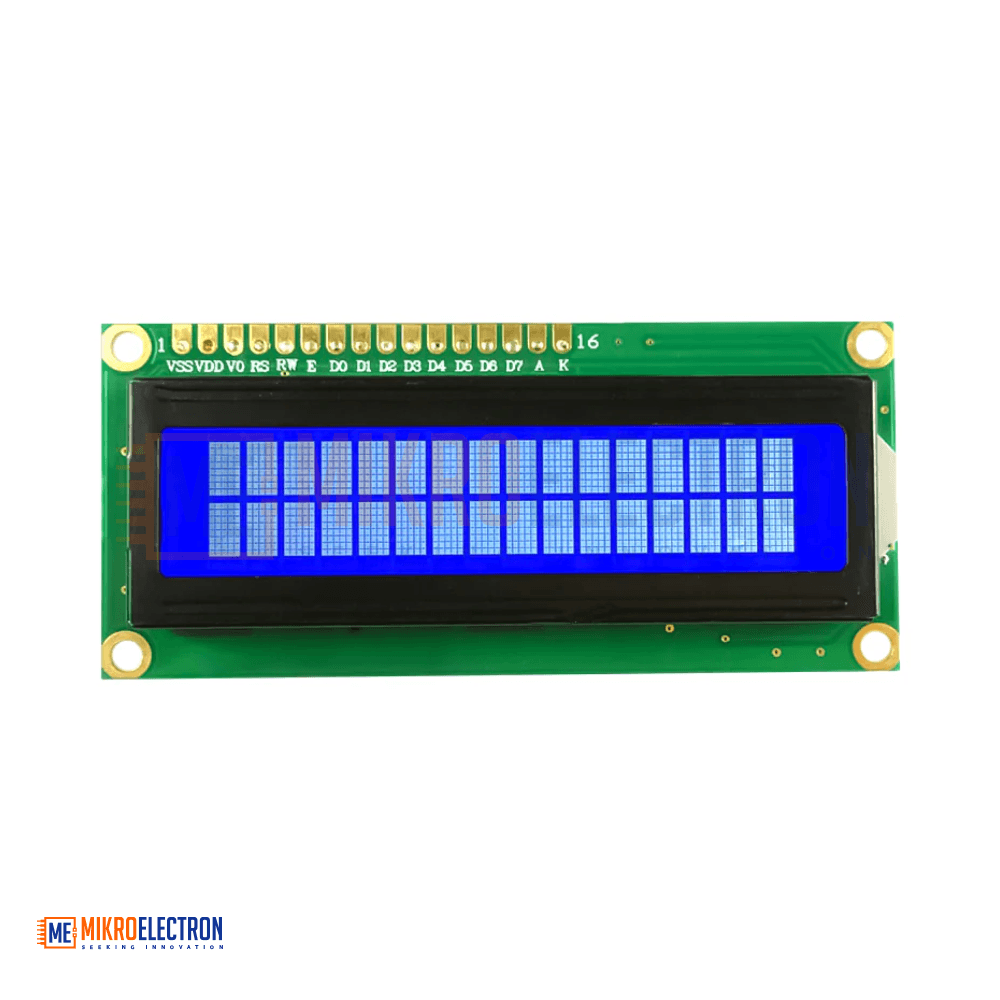
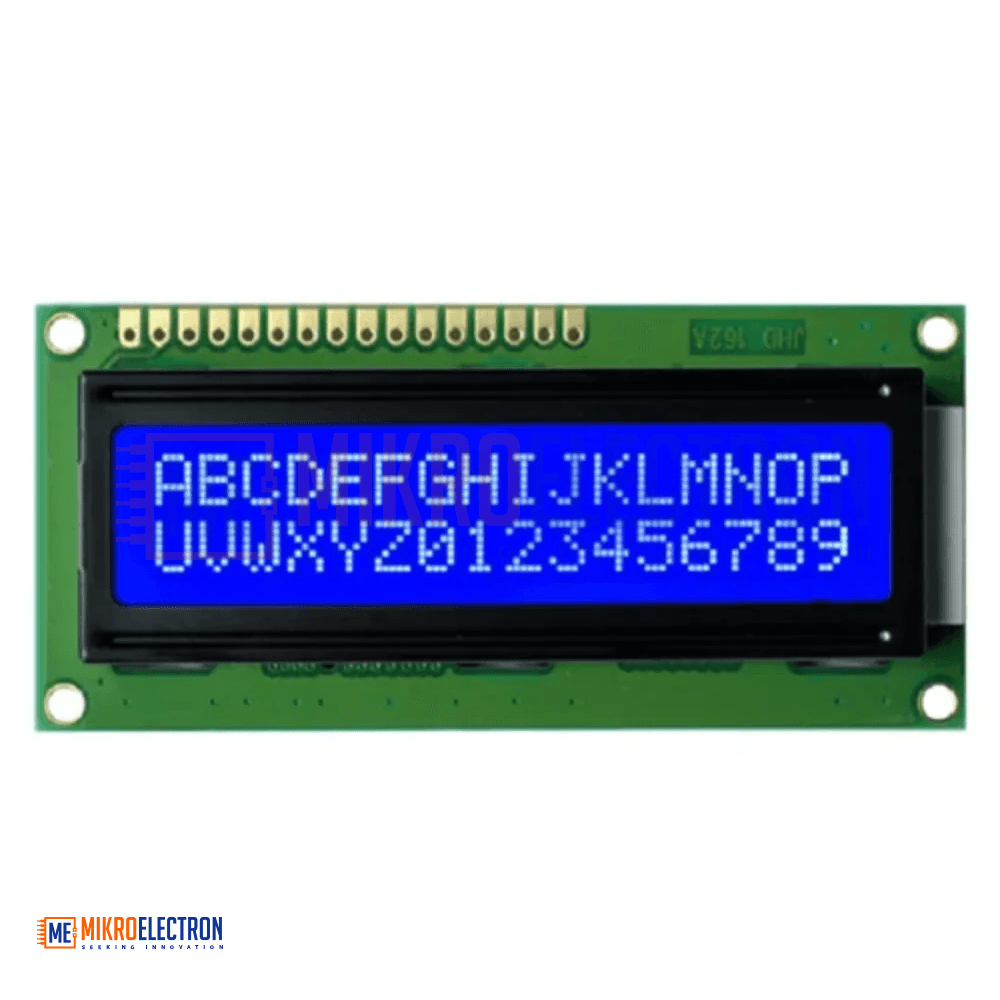
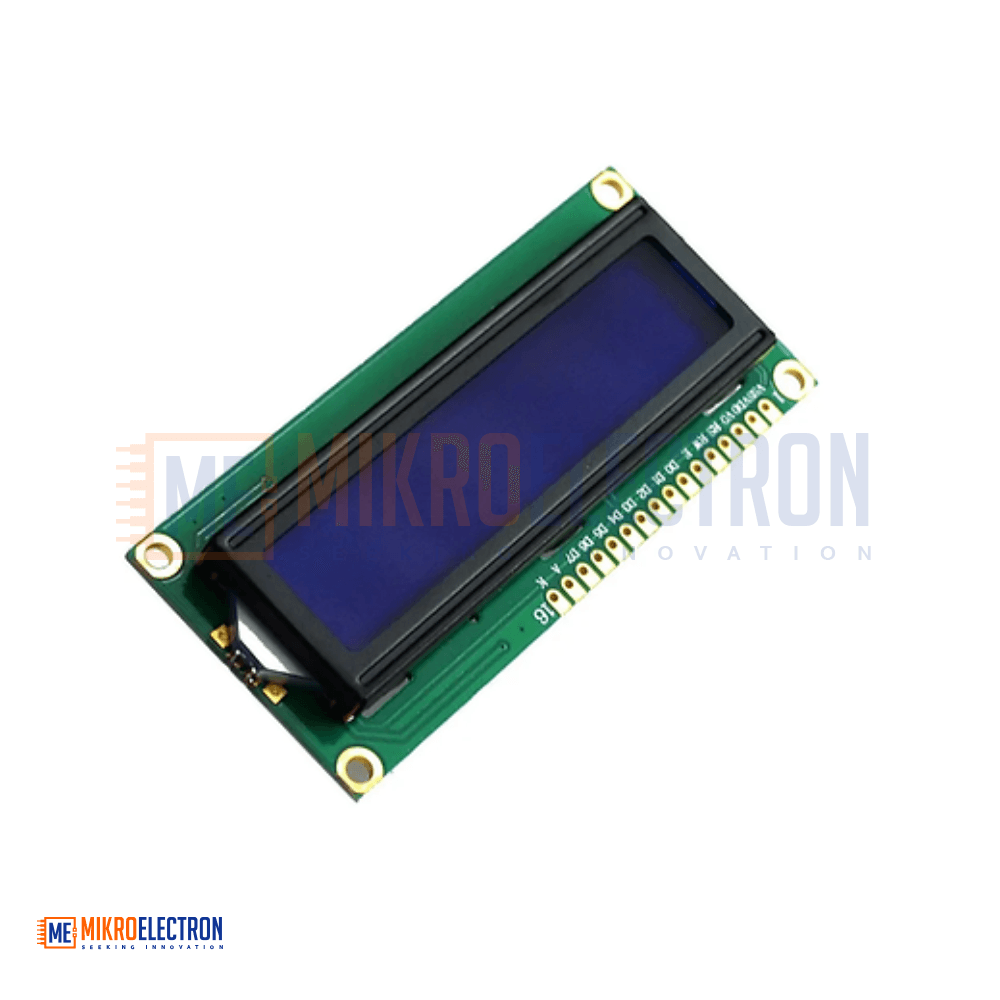
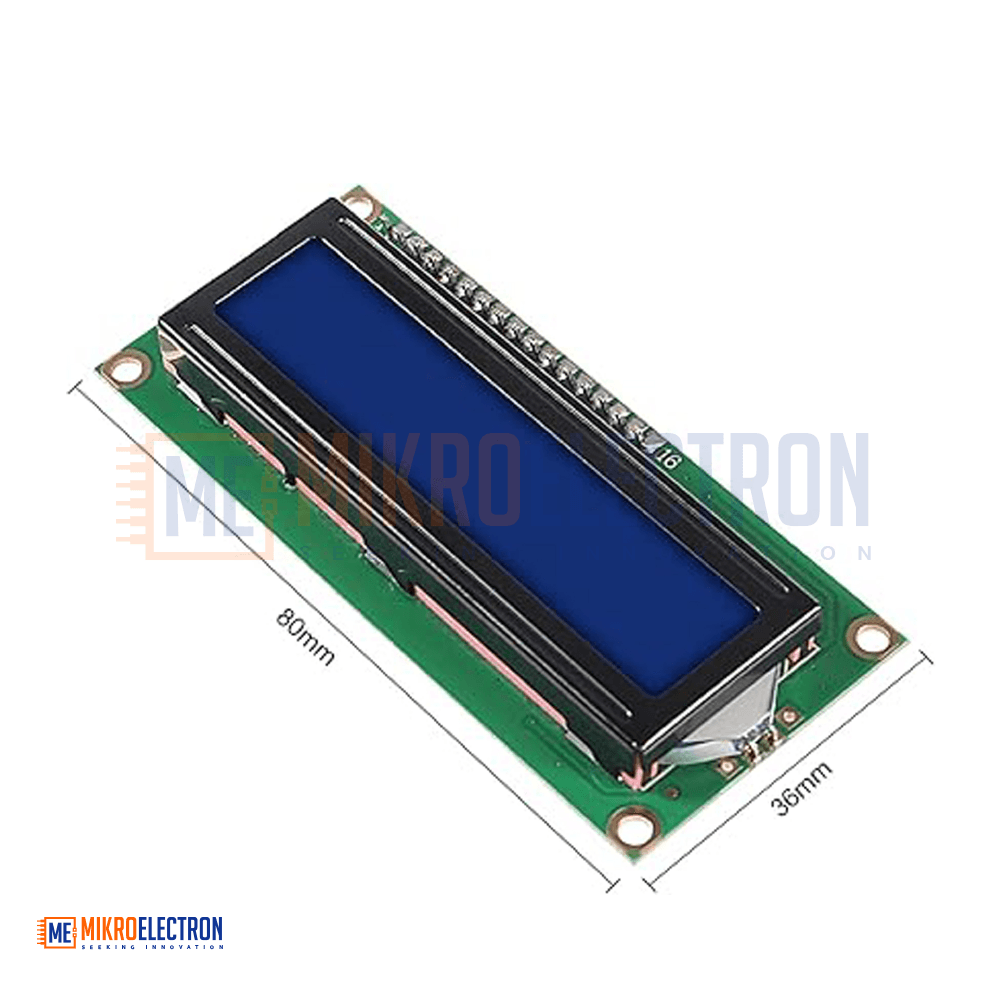
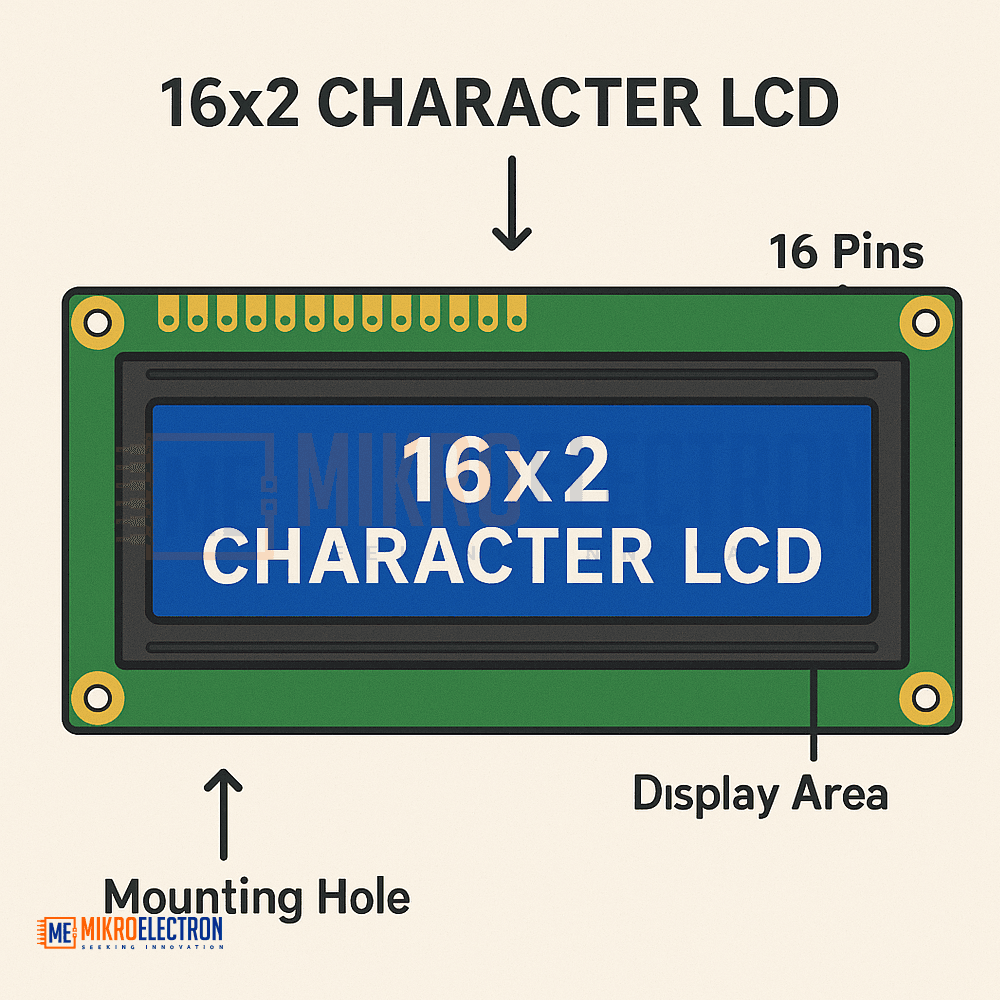
The LCD 16x2 Blue Screen is a standard character display module capable of showing 16 characters across 2 rows, totaling 32 characters. It features a blue backlight with white text for excellent readability in low-light conditions. Using a standard 16-pin interface, it connects easily to microcontrollers like Arduino and Raspberry Pi. With built-in character memory (CGROM) storing 160+ preset characters, it is perfect for displaying text, numbers, and symbols in DIY and embedded electronics projects.
شاشة LCD 16x2 الزرقاء هي وحدة عرض حروف قياسية تعرض 16 حرفًا في سطرين، بإجمالي 32 حرفًا. تتميز بـإضاءة خلفية زرقاء مع نص أبيض لقراءة واضحة في الإضاءة المنخفضة. تستخدم واجهة قياسية من 16 طرفًا تسهّل توصيلها بالمتحكمات الدقيقة مثل الأردوينو والراسبيري باي. تحتوي على ذاكرة حروف مدمجة (CGROM) تخزّن أكثر من 160 حرفًا جاهزًا، مما يجعلها مثالية لعرض النصوص والأرقام والرموز في مشاريع الإلكترونيات والأنظمة المدمجة.
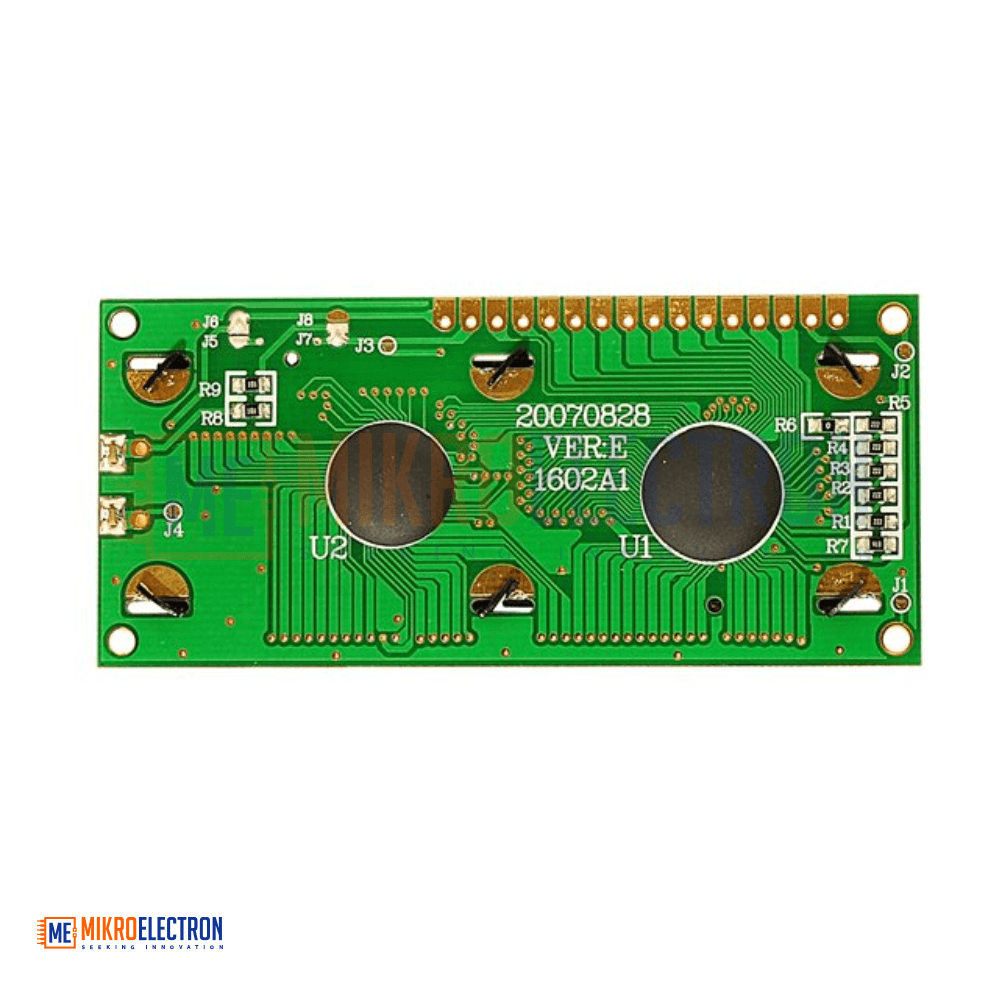
The LCD 16x2 Blue Screen is one of the most widely used alphanumeric display modules in the electronics world. It can display up to 32 characters (16 per row × 2 rows) on a clear blue backlit screen with white characters, providing excellent contrast and readability. The module operates on a standard 5V power supply and communicates through a 16-pin parallel interface, making it compatible with virtually all microcontrollers, including Arduino, PIC, AVR, and Raspberry Pi. Inside the module is a built-in Character Generator ROM (CGROM) that stores 160 pre-defined dot-matrix characters, including uppercase and lowercase English letters, numbers, Japanese kana, and common symbols. Each character has a fixed address; for example, the uppercase letter "A" corresponds to the code 01000001B (41H). The module also supports custom character creation through its CGRAM, allowing designers to create unique symbols and icons. Contrast adjustment is handled through pin 3 (V0), typically connected to a 10KΩ potentiometer to fine-tune display clarity and avoid the "ghosting" effect that occurs when contrast is set too high.
Specifications
- Display Type: 16x2 Character LCD (16 columns × 2 rows)
- Backlight Color: Blue with white text
- Operating Voltage: 5V DC
- Interface: 16-pin parallel interface
- Data Lines: 8-bit bidirectional (D0–D7), also supports 4-bit mode
- Built-in Controller: HD44780 or equivalent
- Character ROM (CGROM): Stores 160 preset characters
- Character RAM (CGRAM): Allows custom character generation
- Contrast Control: Via 10KΩ potentiometer on pin V0
- Viewing Angle: Wide, suitable for most applications
- Operating Temperature: 0°C to +50°C (typical)
- Storage Temperature: -10°C to +60°C (typical)
Pin Configuration
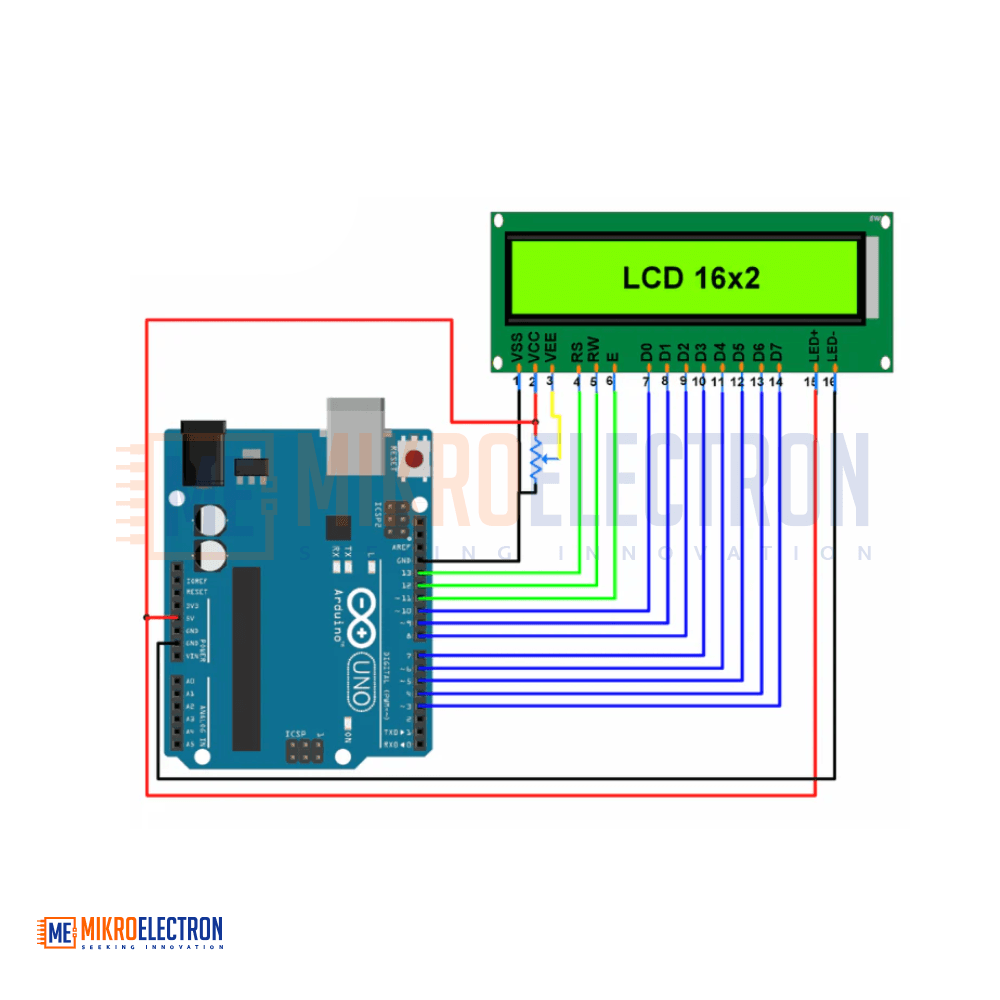
- Pin 1 (VSS): Ground power supply.
- Pin 2 (VDD): +5V positive power supply.
- Pin 3 (V0): Contrast adjustment via potentiometer.
- Pin 4 (RS): Register Select — High = Data Register, Low = Instruction Register.
- Pin 5 (R/W): Read/Write signal — High = Read, Low = Write.
- Pin 6 (E): Enable pin — executes command on high-to-low transition.
- Pins 7–14 (D0–D7): 8-bit bidirectional data lines.
- Pin 15: Backlight positive supply (+5V).
- Pin 16: Backlight negative supply (GND).
Applications
- Used in Arduino and microcontroller projects to display sensor data and status messages.
- Employed in digital thermometers, voltmeters, and measuring instruments.
- Common in home automation systems for displaying settings and feedback.
- Used in industrial control panels to show machine status and parameters.
- Essential in DIY electronics kits and educational learning platforms.
- Applied in vending machines and ATMs for user interaction.
- Found in smart locks, security systems, and access control devices.
- Used in IoT devices to show connection status and sensor readings.
- Suitable for robotics projects as a user interface.
- Ideal for medical devices such as glucose meters and pulse monitors.