
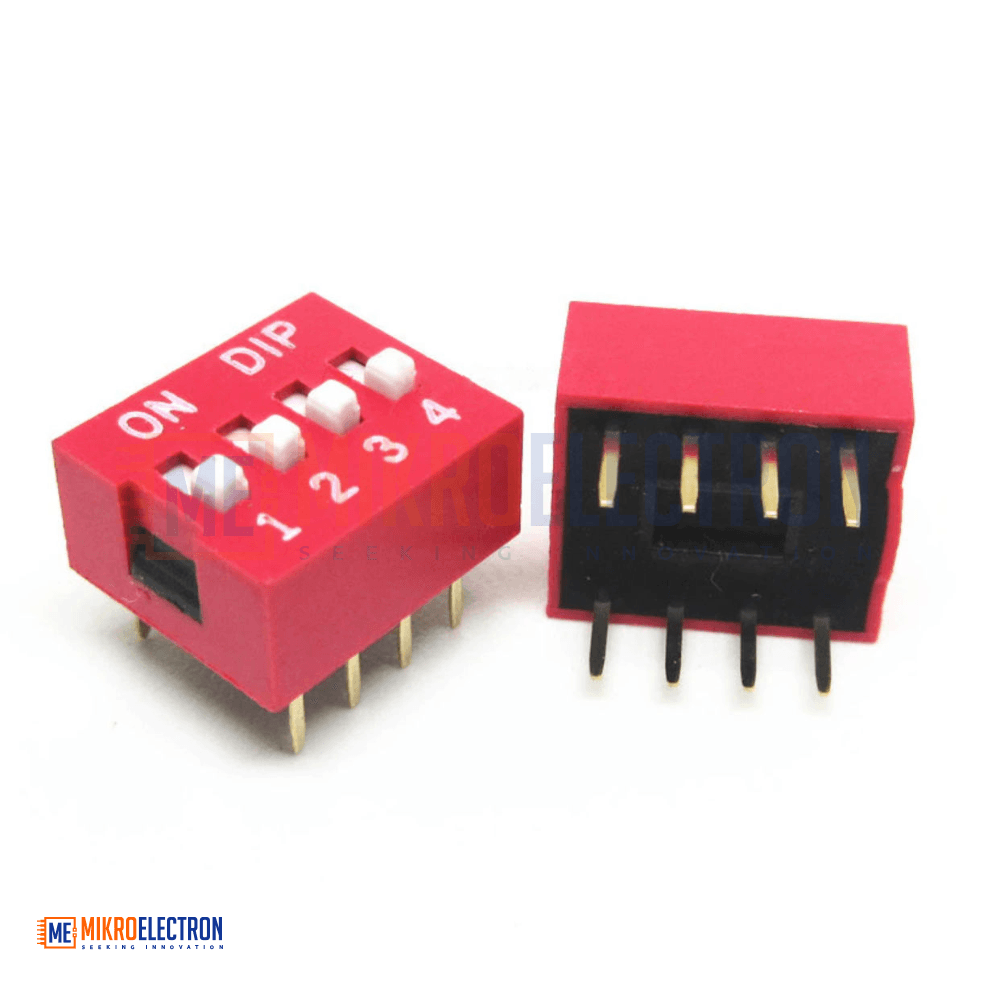
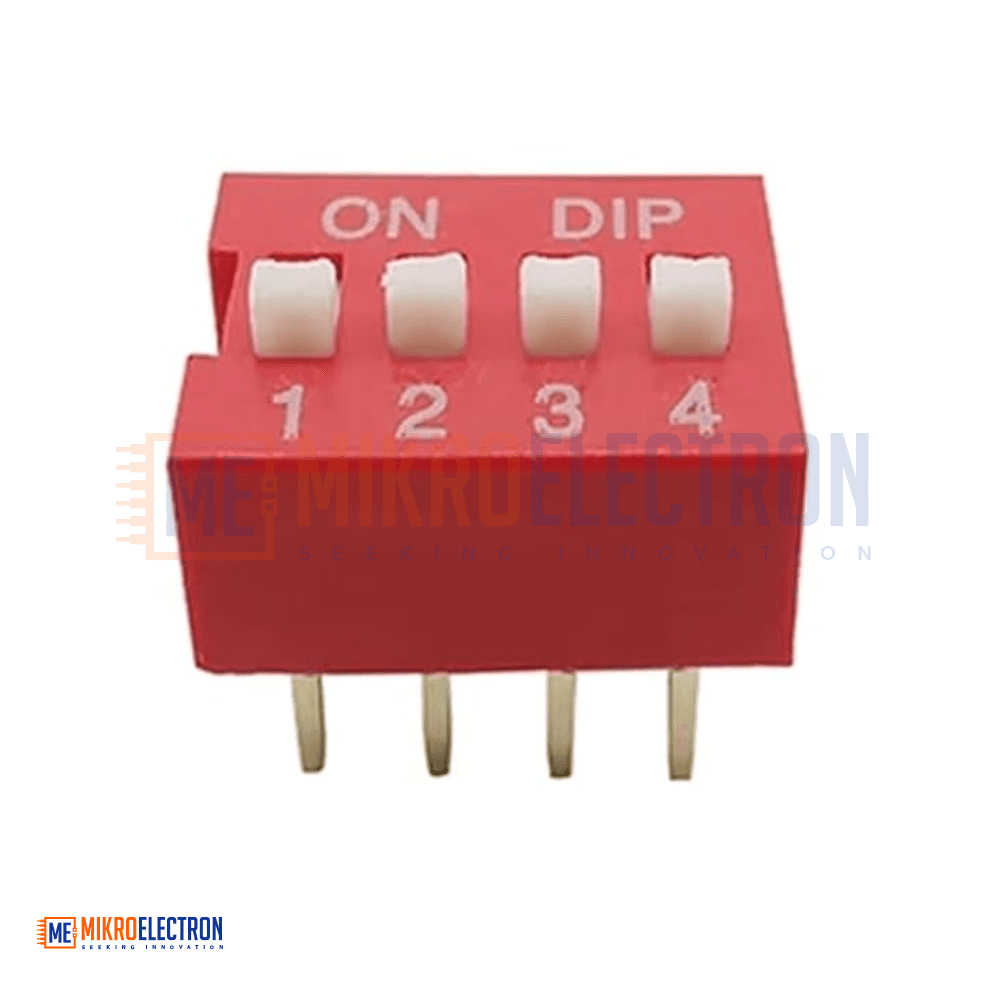
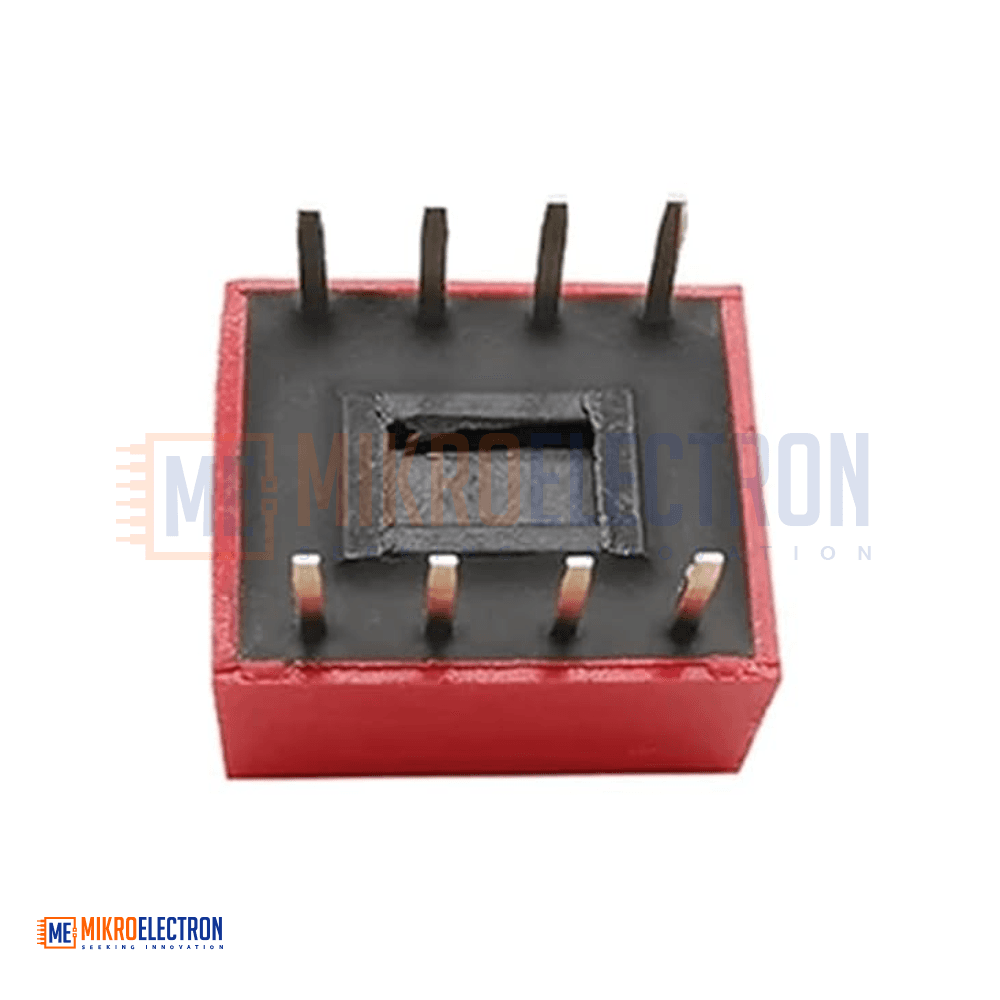
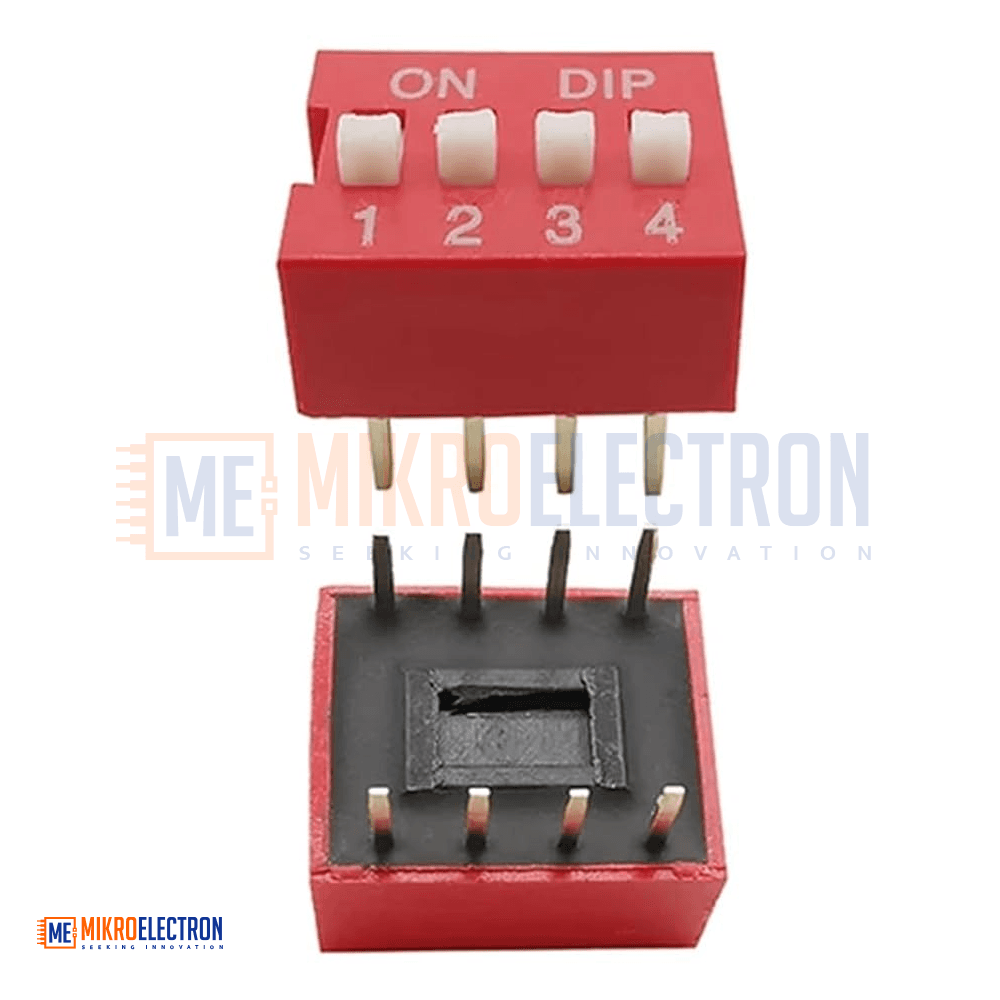

4 Position DIP Switch
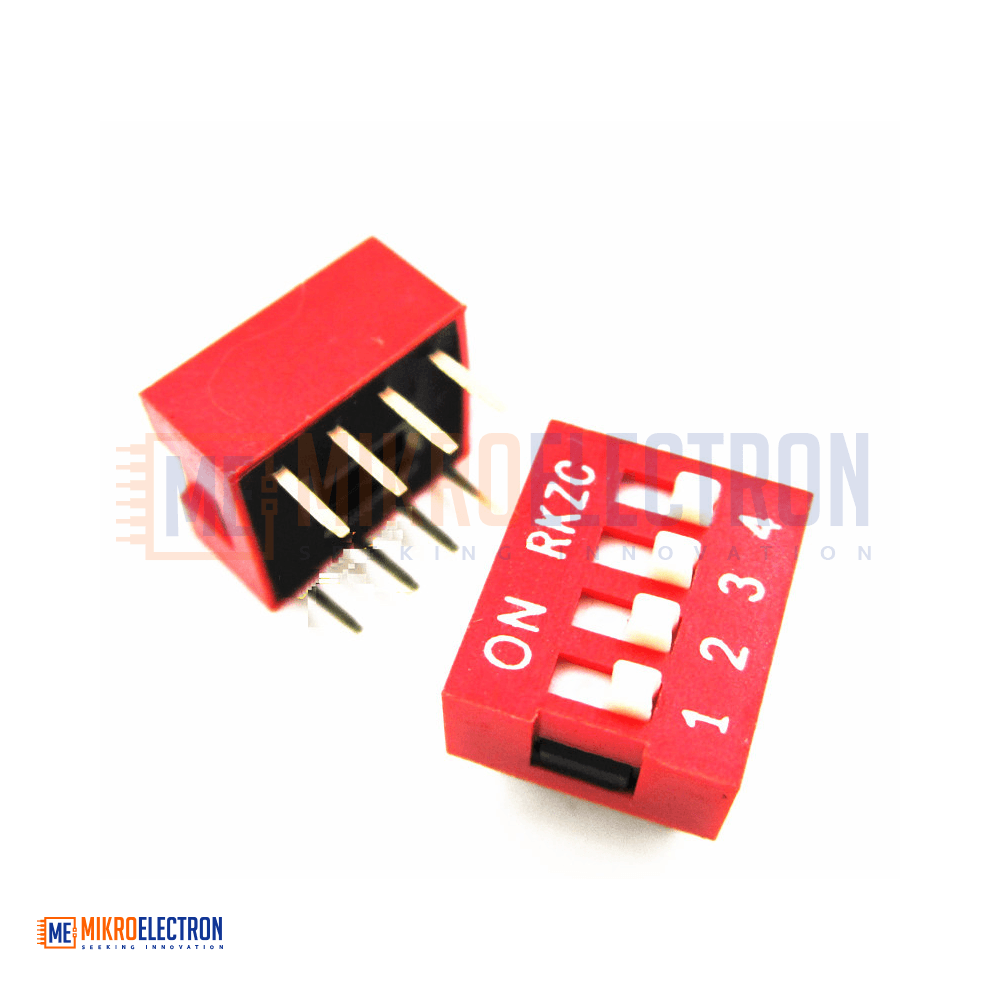
The 4 Position DIP Switch is a compact multi-switch component featuring 4 independent ON/OFF switches arranged in a 2-row, 8-pin DIP package with standard 2.54mm pitch. Designed for PCB mounting, it allows users to manually configure electronic circuits without reprogramming or rewiring. With a non-switching rating of 100mA at 50V DC and reliable contact performance, it is perfect for mode selection, address setting, jumper replacement, and logic control in Arduino, embedded systems, and industrial electronics applications.
مفتاح DIP بـ 4 مواضع هو مكوّن مدمج متعدد المفاتيح يحتوي على 4 مفاتيح تشغيل/إيقاف مستقلة مرتبة في عبوة DIP بصفّين و8 أطراف بتباعد قياسي 2.54 مم. مصمم للتثبيت على لوحات الدوائر المطبوعة، ويتيح تهيئة الدوائر الإلكترونية يدويًا دون الحاجة لإعادة البرمجة أو إعادة التوصيل. بتصنيف 100 مللي أمبير عند 50 فولت تيار مستمر وأداء اتصال موثوق، مثالي لـاختيار الوضع وضبط العنوان واستبدال الجمبرات والتحكم المنطقي في مشاريع الأردوينو والأنظمة المدمجة.
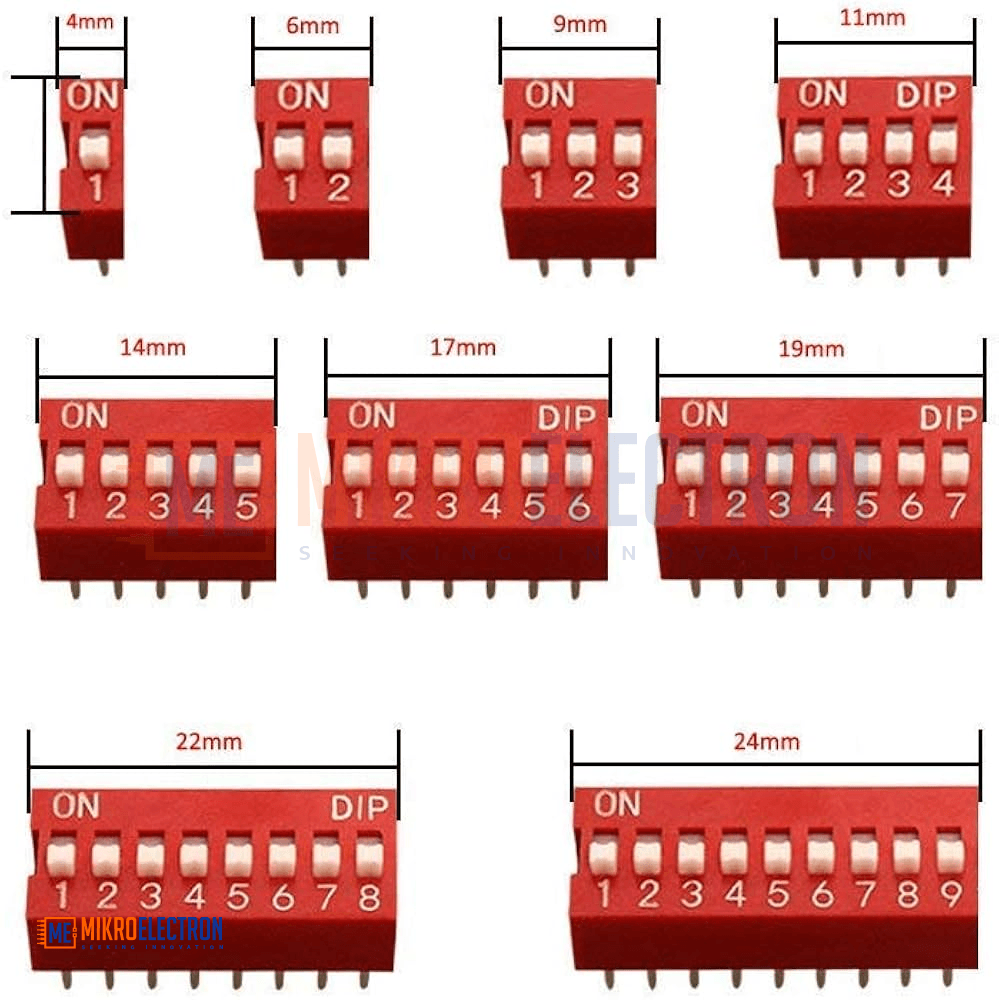
The 4 Position DIP Switch (Dual In-line Package Switch) is a versatile and compact electronic component consisting of four independent single-pole single-throw (SPST) switches integrated into one small module. Each switch can be individually set to either ON or OFF, providing users with a simple and reliable way to manually configure digital circuits, hardware parameters, and operating modes without the need for software adjustments. The switch array is housed in a standard 8-pin DIP package with 2.54mm pitch, making it fully compatible with standard IC sockets, breadboards, and through-hole PCBs. DIP switches are especially useful in applications where settings must remain fixed during operation but may occasionally need to be changed—such as selecting device addresses, enabling or disabling features, setting communication baud rates, or controlling modes in embedded systems. The contacts are built using high-quality electrical materials that provide low resistance and stable performance even after thousands of switching cycles. The durable plastic body protects the internal mechanism from dust, moisture, and mechanical shock. Each switch is clearly labeled with ON markings and position numbers for easy visual identification, and can be operated using a small screwdriver, pen tip, or tweezers for precise control. Compared to the 8-position variant, this 4-position model is more compact and ideal for projects requiring fewer configuration options while saving valuable PCB space.
Specifications
- Product Name: 4 Position DIP Switch
- Type: DIP (Dual In-line Package)
- Number of Positions: 4 independent switches
- Pin Configuration: 2 rows × 8 pins total
- Pin Pitch: 2.54 mm (0.1 inch)
- Switch Type: SPST (Single Pole Single Throw)
- Non-Switching Rating: 100 mA at 50V DC
- Switching Rating: 25 mA at 24V DC
- Initial Contact Resistance: ≤ 50 mΩ at 24VDC/100mA
- Contact Resistance (After Life Test): ≤ 100 mΩ typical at 24VDC/100mA
- Insulation Resistance: ≥ 100 MΩ at 100V DC
- Dielectric Strength: 500V AC for 1 minute
- Operating Life: ≥ 2,000 cycles (typical)
- Housing Material: Durable plastic (PBT or equivalent)
- Contact Material: Gold or silver-plated brass
- Operating Temperature: -25°C to +70°C
- Storage Temperature: -40°C to +85°C
- Mounting Type: Through-hole PCB mount
- Actuator Type: Slide type (flat or raised)
Applications
- Used for setting device addresses in I2C, SPI, and communication protocols.
- Employed in microcontroller configuration for mode and feature selection.
- Common in small embedded systems requiring a few configuration bits.
- Used in network equipment like routers and switches for simple configurations.
- Applied in alarm systems and security devices for mode selection.
- Ideal for Arduino and Raspberry Pi projects for quick manual input.
- Used in motor controllers for direction and mode switching.
- Employed in LED lighting systems for effect or color mode selection.
- Common in HVAC controllers for simple zone or mode settings.
- Used in gaming devices and electronic toys for mode selection.
- Found in access control systems for code and user configuration.
- Applied in audio equipment for channel and input selection.
- Used in test and measurement equipment for mode control.
- Ideal for educational electronics kits teaching digital logic.
- Common in industrial control systems for simple input configurations.
- Used in robotics projects for selecting operational modes.
- Applied in IoT devices for manual configuration settings.
- Found in remote controls for code setting and channel selection.