
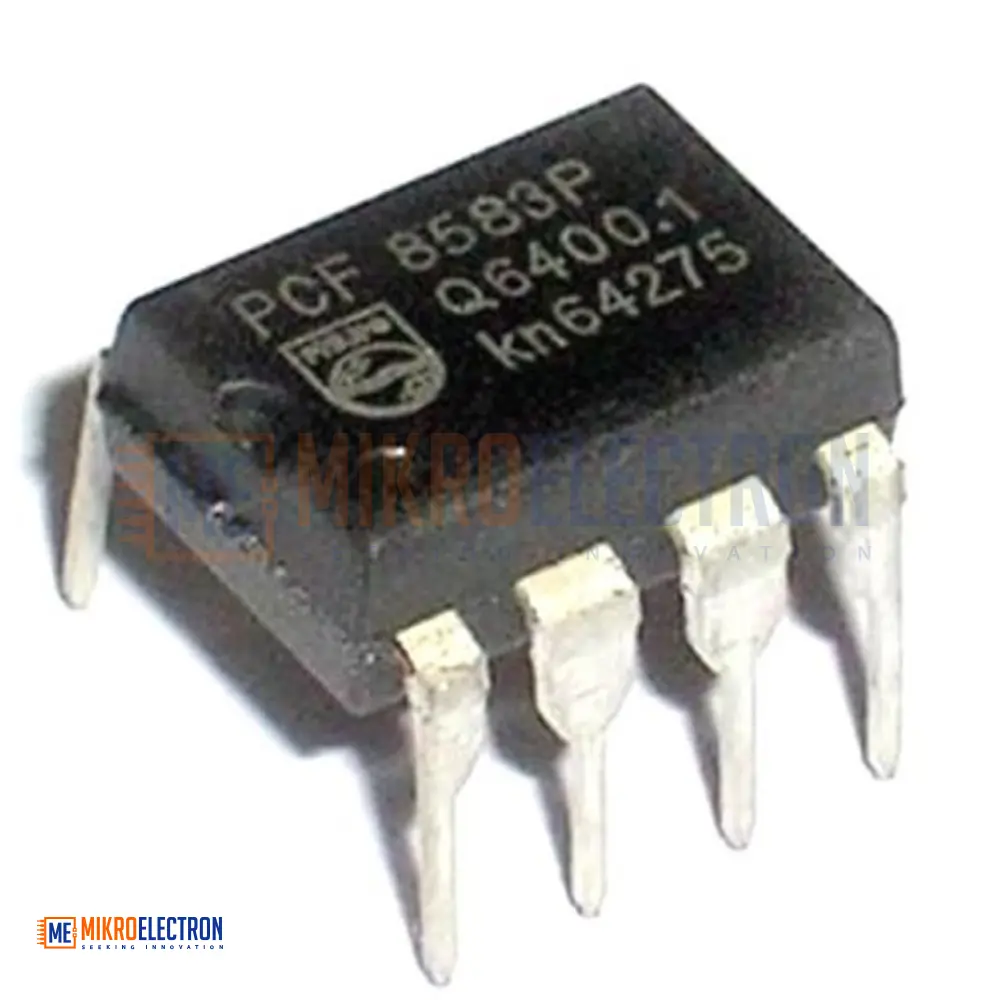
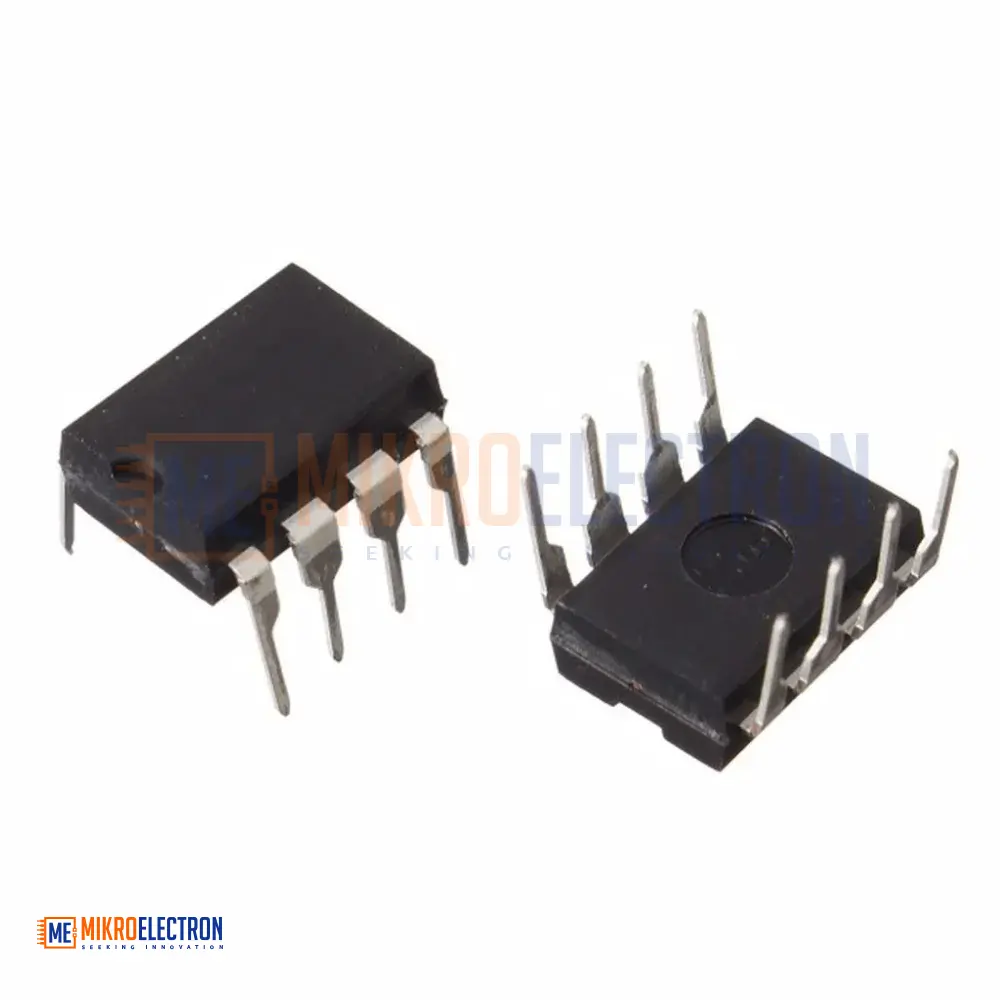
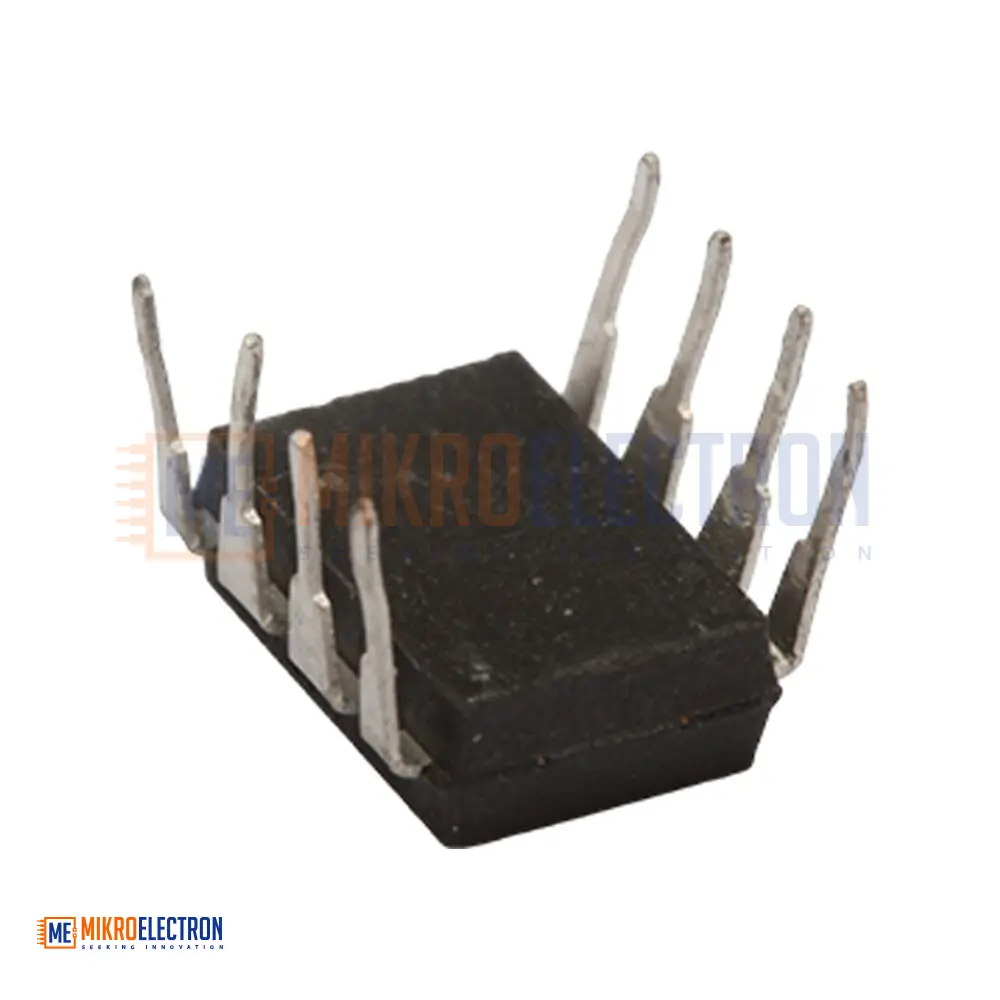
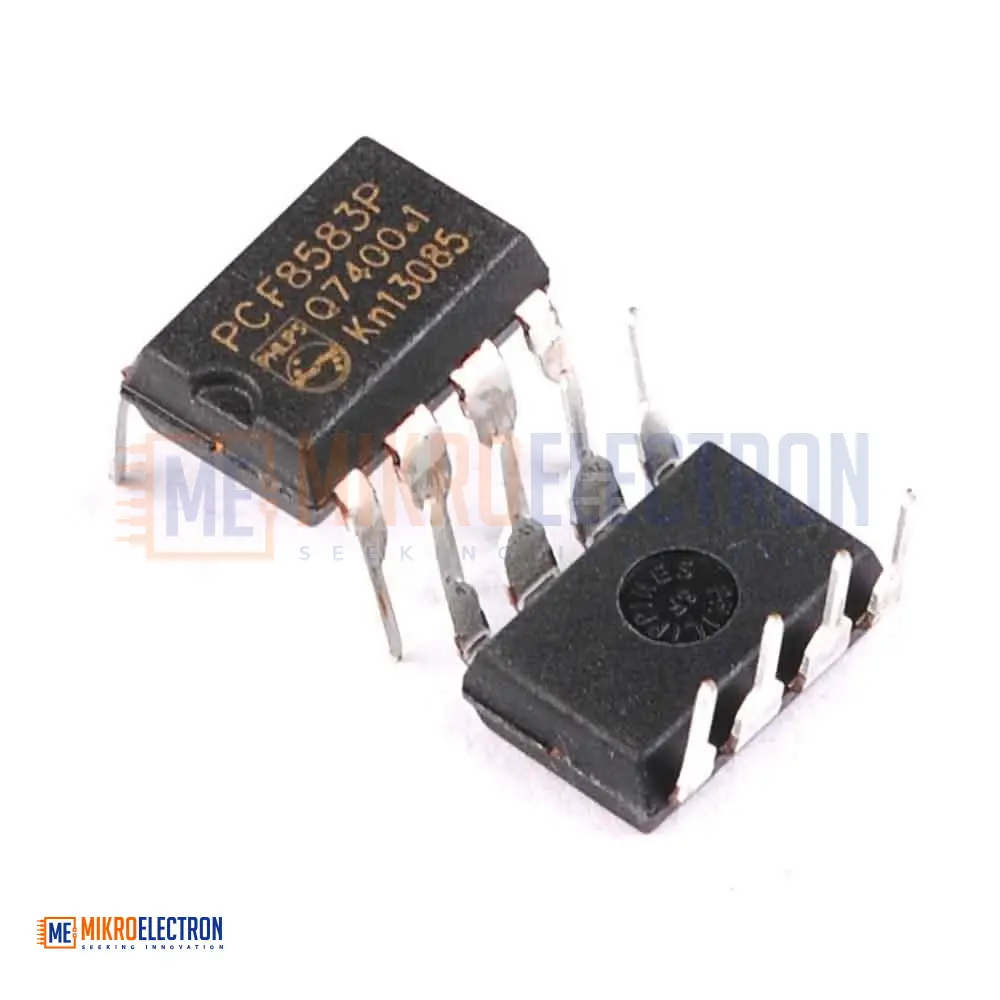
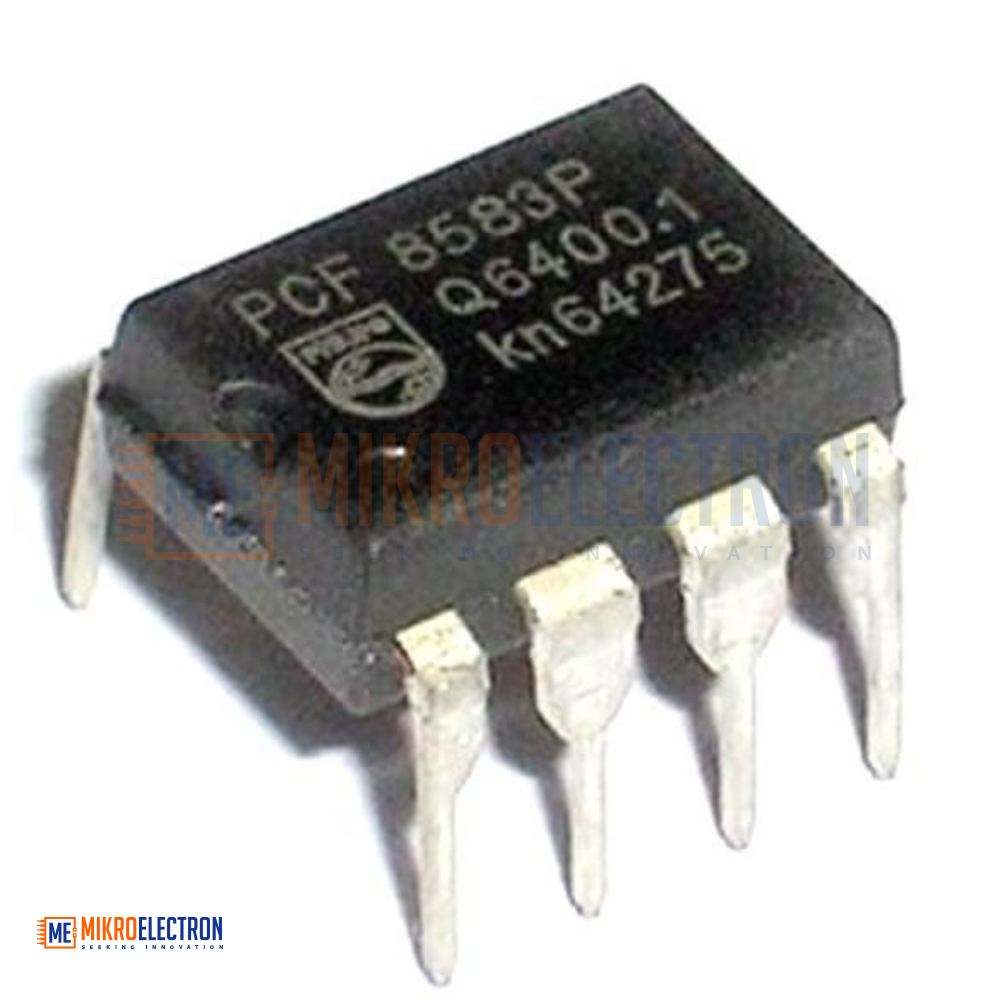
PCF8583 Clock and Calendar
The PCF8583 is a highly integrated real-time clock (RTC) and calendar IC featuring an I2C bus interface for easy communication with microcontrollers. It includes a 2048-bit static CMOS RAM organized as 256 × 8 bits, a built-in 32.768 kHz crystal oscillator, and supports both 24-hour and 12-hour time formats with a four-year calendar. With programmable alarm, timer, and interrupt functions, it's perfect for data loggers, clocks, scheduling systems, embedded applications, and Arduino projects requiring accurate timekeeping.
PCF8583 هي شريحة ساعة وتقويم في الوقت الحقيقي (RTC) عالية التكامل تتميز بواجهة ناقل I2C لسهولة التواصل مع المتحكمات الدقيقة. تحتوي على ذاكرة CMOS ساكنة بسعة 2048 بت منظمة كـ256 × 8 بت، ومذبذب بلوري مدمج بتردد 32.768 كيلوهرتز، وتدعم كلًا من صيغ الوقت 24 ساعة و12 ساعة مع تقويم رباعي السنوات. بفضل وظائف المنبّه والمؤقت والمقاطعة القابلة للبرمجة، هي مثالية لـمسجلات البيانات والساعات وأنظمة الجدولة والتطبيقات المدمجة ومشاريع الأردوينو التي تتطلب توقيتًا دقيقًا.
The PCF8583 is a highly versatile clock and calendar integrated circuit manufactured originally by NXP (formerly Philips Semiconductors). It has become a popular choice for embedded systems requiring accurate real-time clock functionality combined with a small amount of non-volatile RAM storage when used with a backup battery. The chip is built around a 2048-bit (256 × 8) static CMOS RAM array, with the first 16 bytes dedicated to clock, calendar, alarm, and timer functions, while the remaining 240 bytes are available as free general-purpose RAM—useful for storing system settings, logs, or configuration data. Communication with the host microcontroller is handled through the standard two-wire I2C serial interface, which requires only SDA (data) and SCL (clock) lines, significantly reducing wiring complexity and saving valuable GPIO pins. An internal built-in word address register automatically increments after each read or write operation, simplifying sequential data access. The PCF8583 can operate from multiple clock sources, including a standard 32.768 kHz crystal oscillator or a 50Hz line frequency input, offering flexibility in power-sensitive or line-synchronized applications. It supports both 24-hour and 12-hour time formats, tracks dates across a four-year calendar with automatic leap year correction, and offers programmable alarm, timer, and interrupt outputs for scheduled events or periodic wake-ups. The chip's wide operating voltage range (1.0V to 6.0V for the clock section) and very low power consumption (maximum 50µA at 0Hz SCL) make it ideal for battery-backed applications that require long-term, accurate timekeeping without frequent battery replacement.
Specifications
- IC Type: Real-Time Clock (RTC) and Calendar with RAM
- Manufacturer: NXP / Philips Semiconductors
- Memory: 2048-bit Static CMOS RAM (256 × 8 bits)
- Free RAM Space: 240 bytes (after clock and alarm registers)
- Interface: I2C Bus (Two-Wire Serial)
- I2C Supply Voltage: 2.5V to 6V
- Clock Supply Voltage: 1.0V to 6.0V (at 0°C to +70°C)
- Data Retention Voltage: 1.0V to 6.0V
- Operating Current (at fSCL = 0 Hz): Max 50 µA (very low power)
- Clock Source: 32.768 kHz crystal oscillator or 50 Hz line frequency
- Time Format: 24-hour or 12-hour selectable
- Calendar: 4-year calendar with leap year support
- Alarm Function: Programmable alarm with interrupt output
- Timer Function: Universal timer with overflow indication
- Automatic Address Incrementing: Yes
- Slave Addresses (Read): A1h or A3h
- Slave Addresses (Write): A0h or A2h
- Address Selection: A0 pin for hardware address programming
- Max Devices per Bus: 2 (without additional hardware)
- Package Type: 8-pin DIP or SOIC
- Operating Temperature: 0°C to +70°C (standard grade)
Pin Configuration
- Pin 1 (OSCI): Oscillator input
- Pin 2 (OSCO): Oscillator output
- Pin 3 (A0): Address input (hardware address selection)
- Pin 4 (VSS): Ground
- Pin 5 (SDA): Serial data (I2C)
- Pin 6 (SCL): Serial clock (I2C)
- Pin 7 (INT): Interrupt output (open-drain)
- Pin 8 (VDD): Positive supply voltage
Applications
- Used in real-time clocks for microcontroller-based systems.
- Essential in data loggers for timestamp recording.
- Employed in digital clocks and calendar devices.
- Used in Arduino, PIC, AVR, and STM32 timekeeping projects.
- Applied in alarm and scheduling systems.
- Common in home automation for timed events and routines.
- Used in embedded systems requiring accurate time reference.
- Found in industrial control panels with time-based operations.
- Employed in smart meters and utility monitoring devices.
- Used in security and access control systems for event logging.
- Applied in appliance timers and smart home devices.
- Common in medical devices for time-stamped patient data.
- Used in HVAC systems for programmable schedules.
- Found in weather stations for time-stamped environmental readings.
- Employed in GPS trackers and navigation devices.
- Used in automotive electronics for time displays and reminders.
- Applied in POS systems for transaction timestamps.
- Common in attendance and time tracking systems.
- Used in backup battery-powered devices for long-term timekeeping.
- Found in IoT devices for synchronized data reporting.
- Employed in digital scales and measurement instruments.
- Used in educational electronics kits for teaching I2C and RTC concepts.
- Applied in media players for scheduled playback.