
LM2596 DC-DC Step Down Module / dc-dc
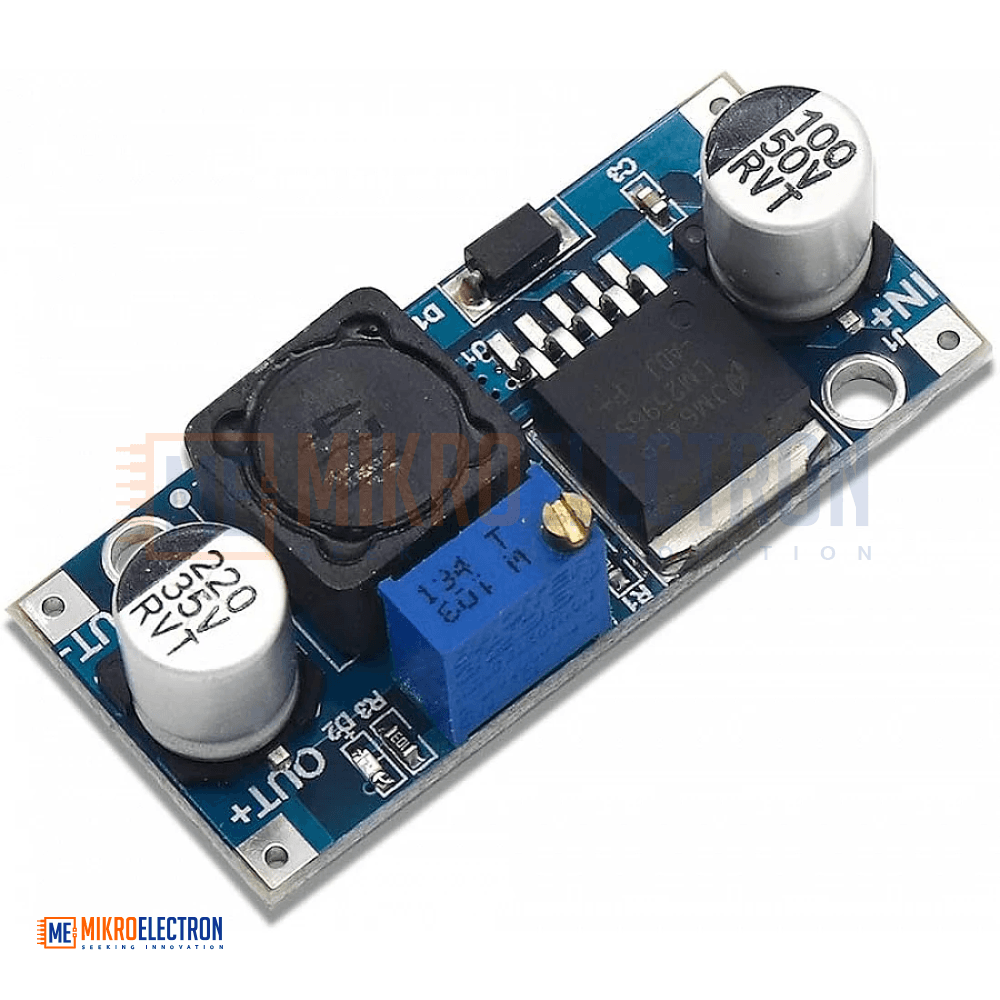
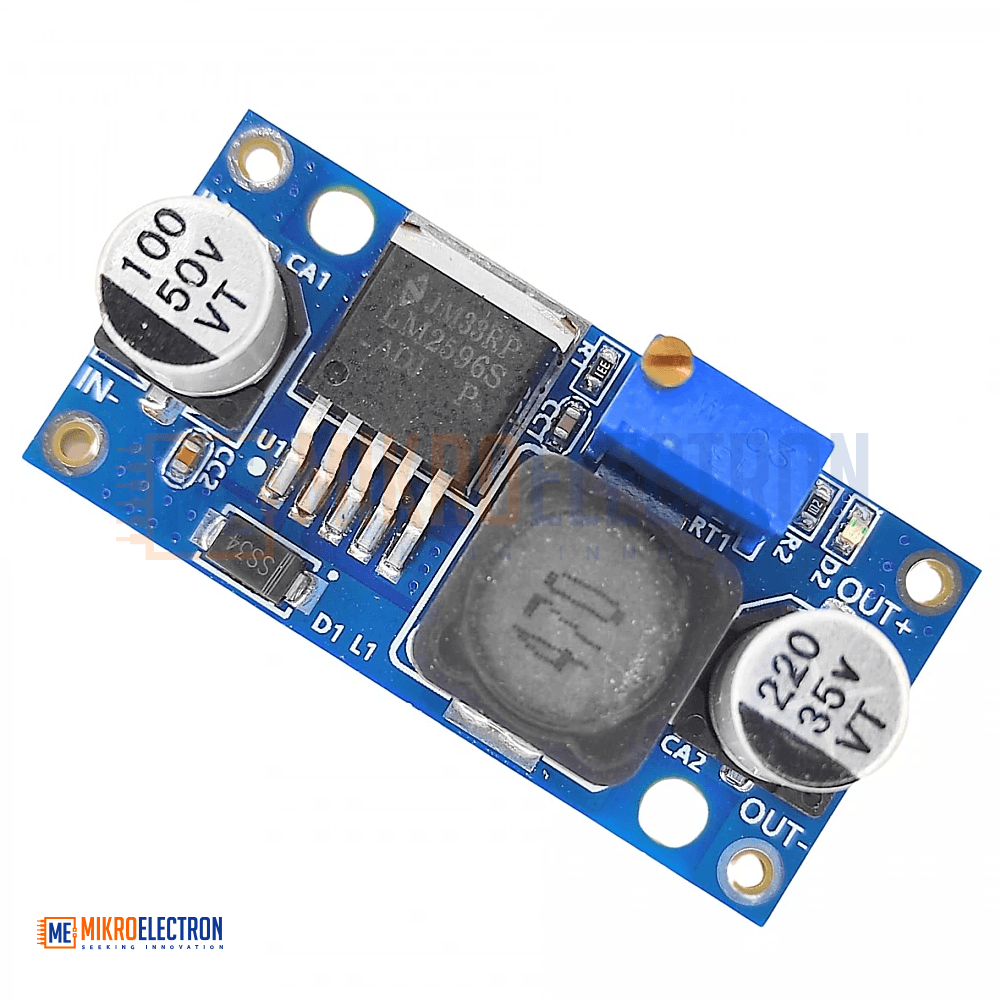
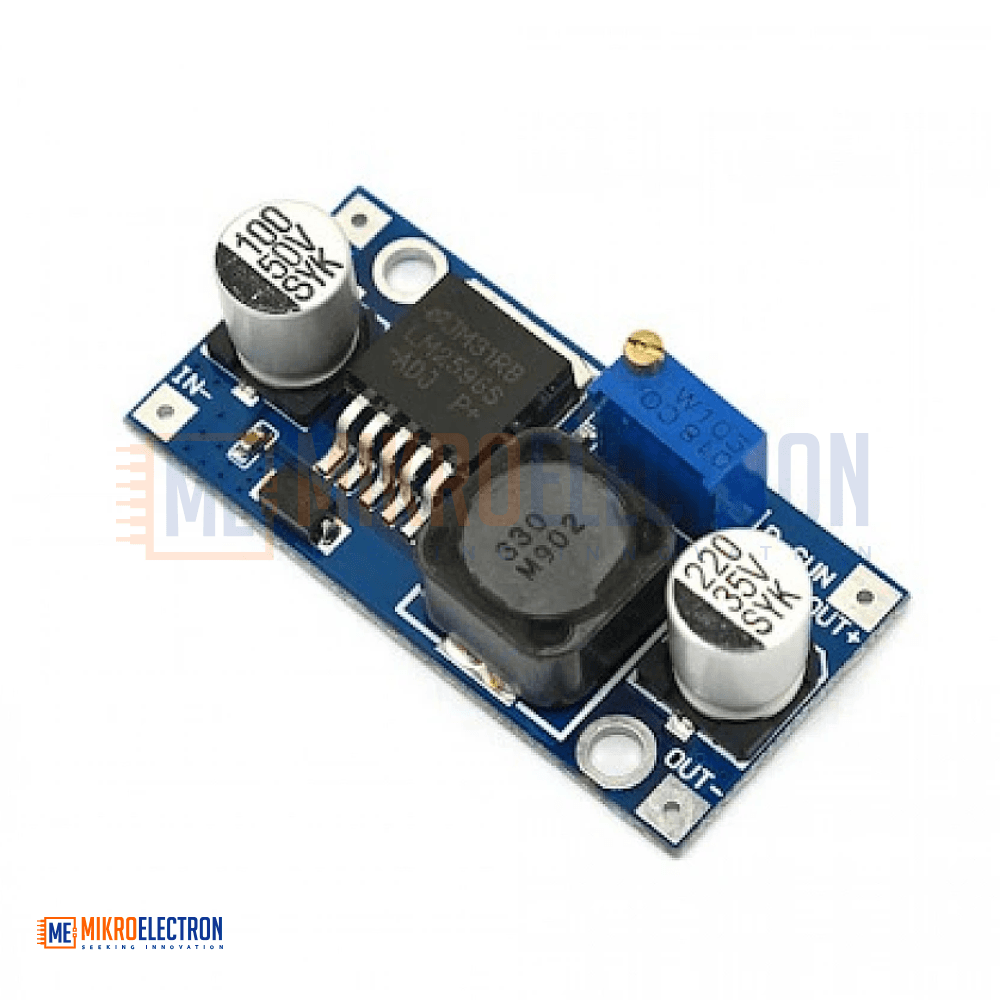
The LM2596 DC-DC Step-Down Module is a high-efficiency buck converter that converts a higher input voltage into a stable, lower output voltage. Based on the powerful LM2596 IC, it accepts an input range of 3V–40V and delivers an adjustable output from 1.3V to 35V, supporting up to 3A of current. With up to 92% conversion efficiency and minimal ripple, it's ideal for powering Arduino, sensors, motors, and DIY electronic projects.
وحدة LM2596 لخفض الجهد DC-DC هي محوّل خافض عالي الكفاءة يحوّل الجهد العالي إلى جهد منخفض ومستقر. تعتمد على شريحة LM2596 القوية، وتقبل جهد دخل من 3 إلى 40 فولت وتُخرج جهداً قابلاً للضبط من 1.3 إلى 35 فولت بتيار يصل إلى 3 أمبير. بكفاءة تحويل تصل إلى 92% وتموّج منخفض جداً، تُعدّ مثالية لتشغيل Arduino والحساسات والمحركات ومشاريع الإلكترونيات المختلفة.
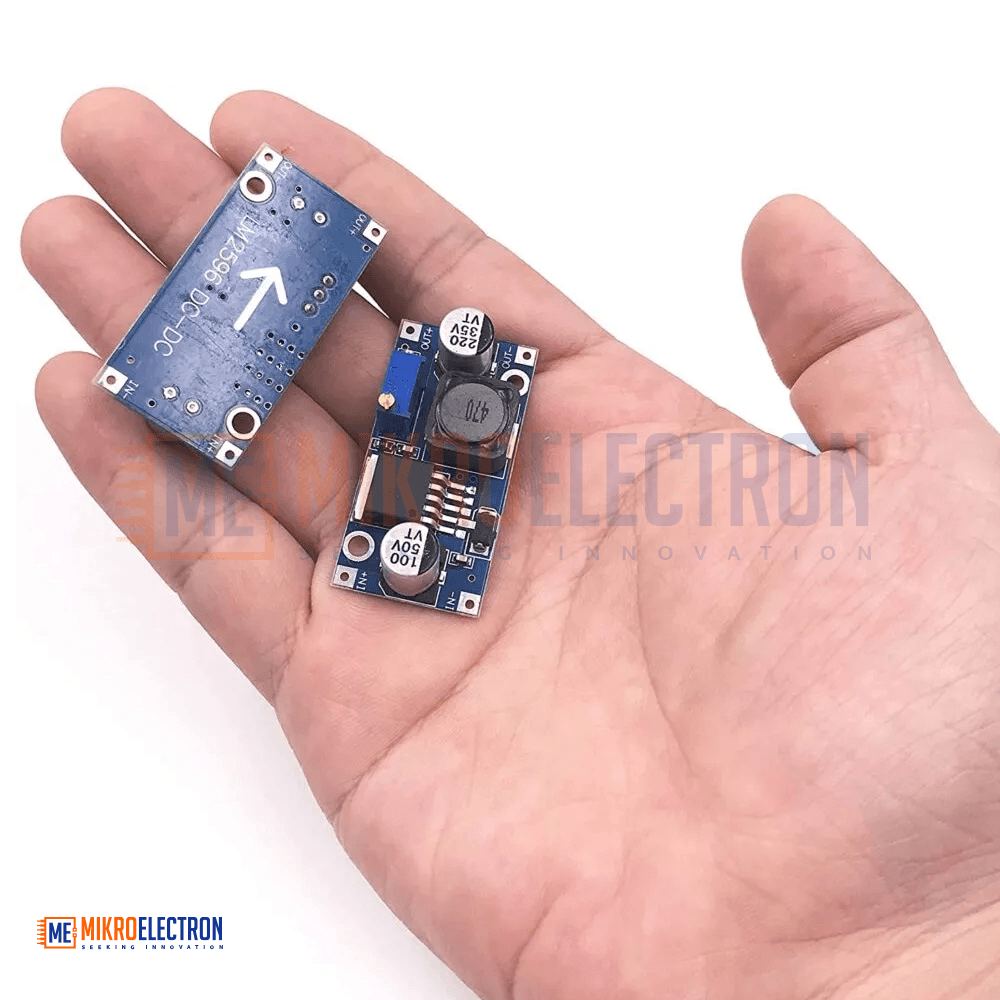
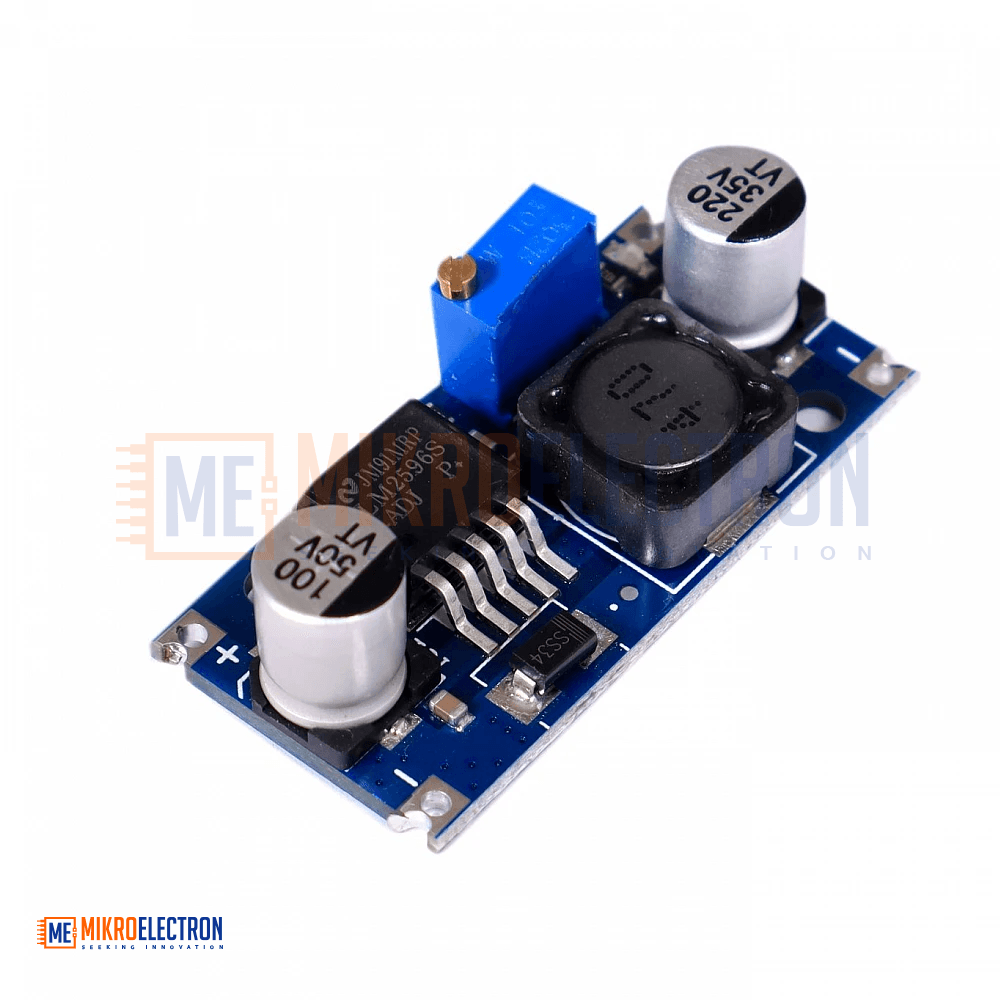
The LM2596 DC-DC Step-Down Module is a compact and highly efficient adjustable buck converter built around the well-known LM2596 monolithic integrated circuit from Texas Instruments. The LM2596 is a complete step-down (buck) switching regulator capable of driving up to a 3A load with excellent line and load regulation, making it one of the most reliable and popular voltage regulators among electronics enthusiasts and engineers.
This module accepts a wide input voltage range from 3V to 40V and provides a stable, adjustable output voltage from 1.3V to 35V through an onboard multi-turn potentiometer for precise tuning. With up to 92% conversion efficiency, the module minimizes power loss and heat generation compared to traditional linear regulators, which makes it especially useful for battery-powered and energy-sensitive applications.
Operating at a fixed switching frequency of 65kHz and producing very low output ripple (30mV maximum), the LM2596 module delivers clean and stable DC power suitable for powering microcontrollers, sensors, LEDs, motors, and other electronic loads. Its compact size and excellent thermal performance allow it to handle a continuous 2A rated current, with peaks up to 3A when an additional heatsink is used.
The module is a non-isolated buck converter using non-synchronous rectification, designed for general-purpose DC voltage step-down applications in DIY electronics, prototyping, robotics, and embedded systems.
Specifications
- Module Type: Non-Isolated Buck (Step-Down) Converter
- Regulator IC: LM2596
- Rectification Mode: Non-Synchronous Rectification
- Input Voltage Range: 3V – 40V DC
- Output Voltage Range: 1.3V – 35V DC (Adjustable)
- Rated Output Current: 2A
- Maximum Output Current: 3A (with additional heatsink)
- Conversion Efficiency: Up to 92%
- Switching Frequency: 65kHz
- Output Ripple: 30mV (maximum)
- Load Regulation: ±0.5%
- Voltage Regulation: ±2.5%
- Operating Temperature: -40°C to +85°C
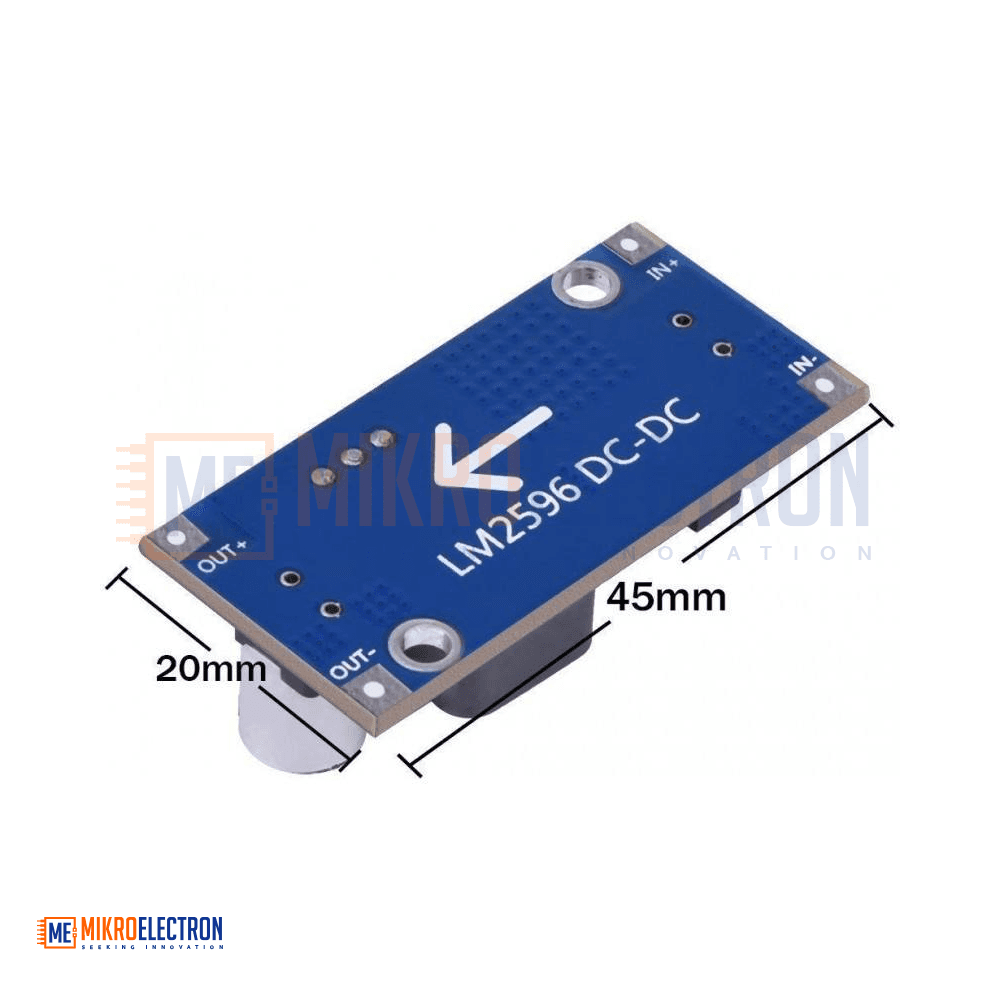
- Module Dimensions: 43mm x 21mm x 14mm (L x W x H)
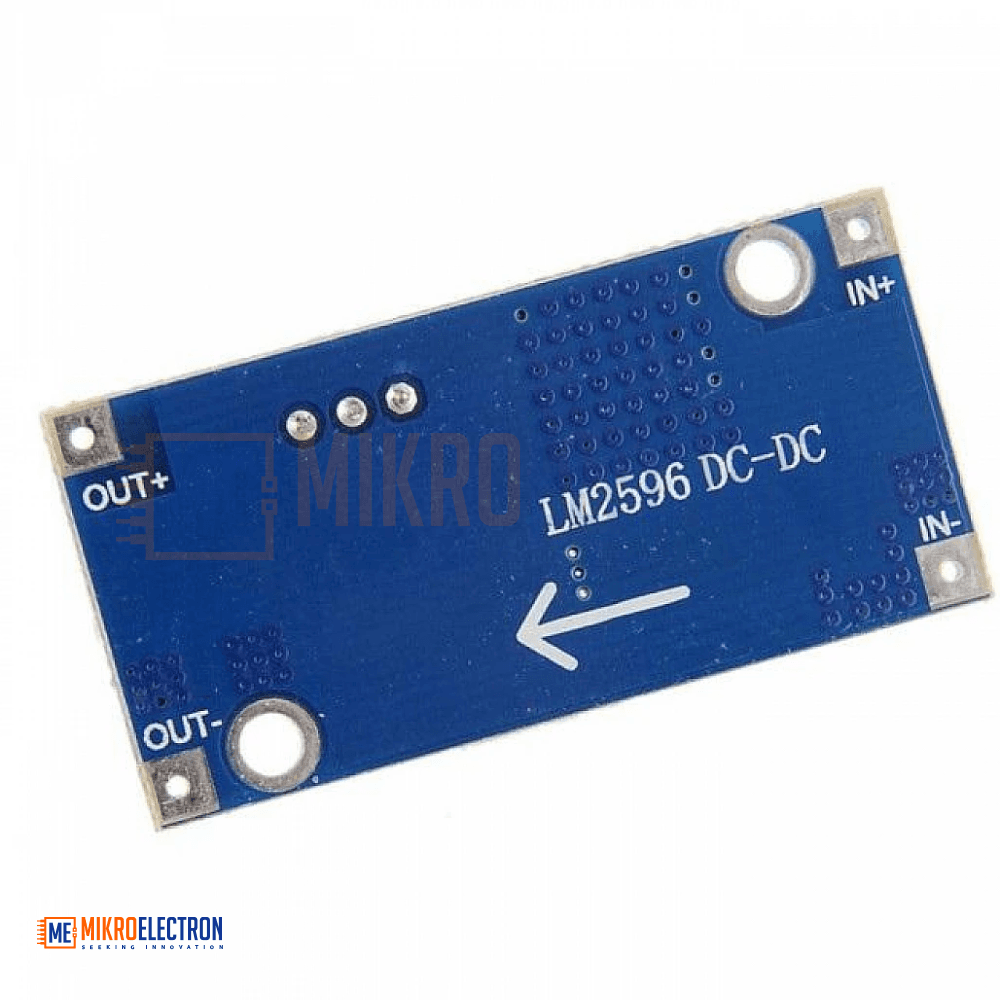
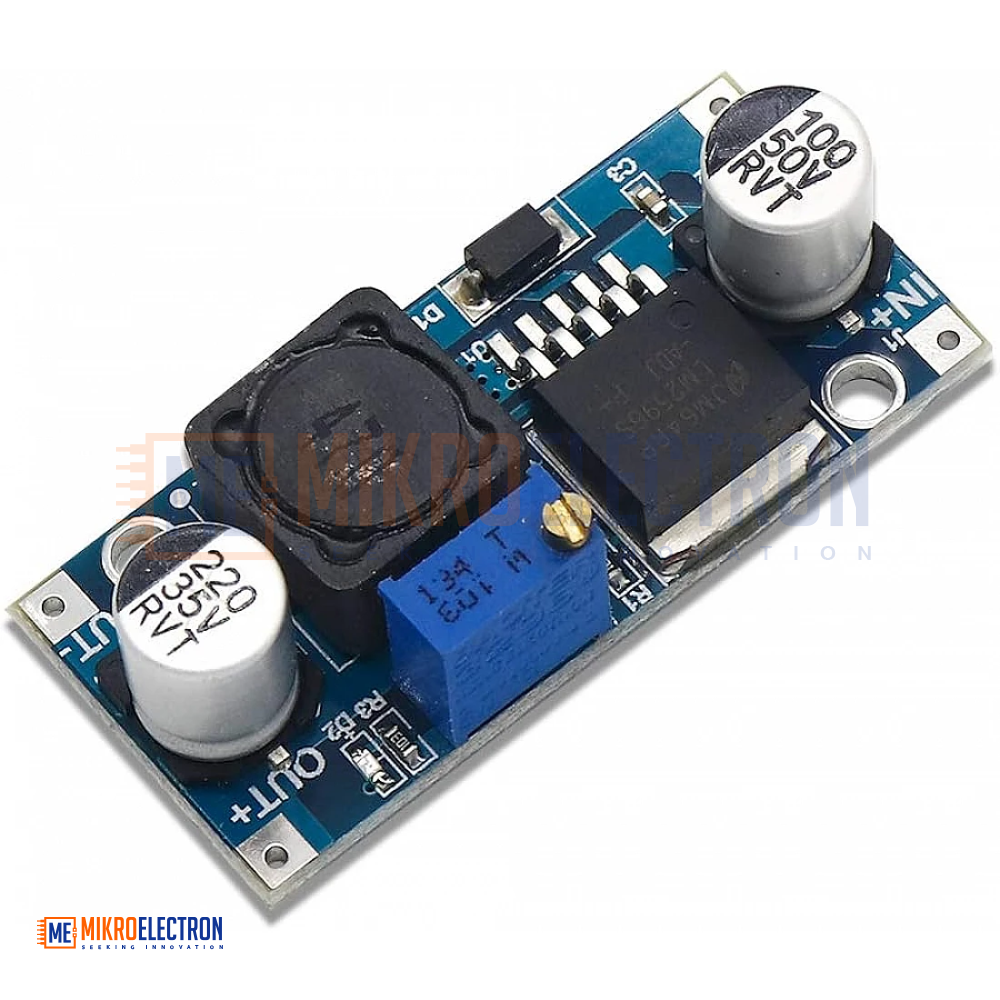
- Input Terminals: IN+ (Positive), IN- (Negative)
- Output Terminals: OUT+ (Positive), OUT- (Negative)
- Adjustment: Onboard multi-turn potentiometer
Applications
- Powering Microcontrollers — Arduino, ESP32, ESP8266, STM32, Raspberry Pi
- Battery-Powered Devices — converting Li-ion or 12V battery voltages to lower rails
- Solar Power Systems — regulating panel output for charging or DC loads
- Automotive Electronics — stepping down 12V/24V vehicle power for accessories
- LED Drivers & Lighting Projects — providing constant voltage to LED strips
- Sensor & Module Power Supply — clean, regulated power for sensitive sensors
- Robotics & Drones — supplying motors, controllers, and onboard electronics
- DIY Electronic Projects — breadboard prototyping and PCB integration
- Wireless Modules Power — supplying RF, WiFi, Bluetooth, and Zigbee devices
- Industrial Control Boards — replacing bulky transformers in low-power systems
- Educational & Lab Use — adjustable DC source for experiments and learnin