
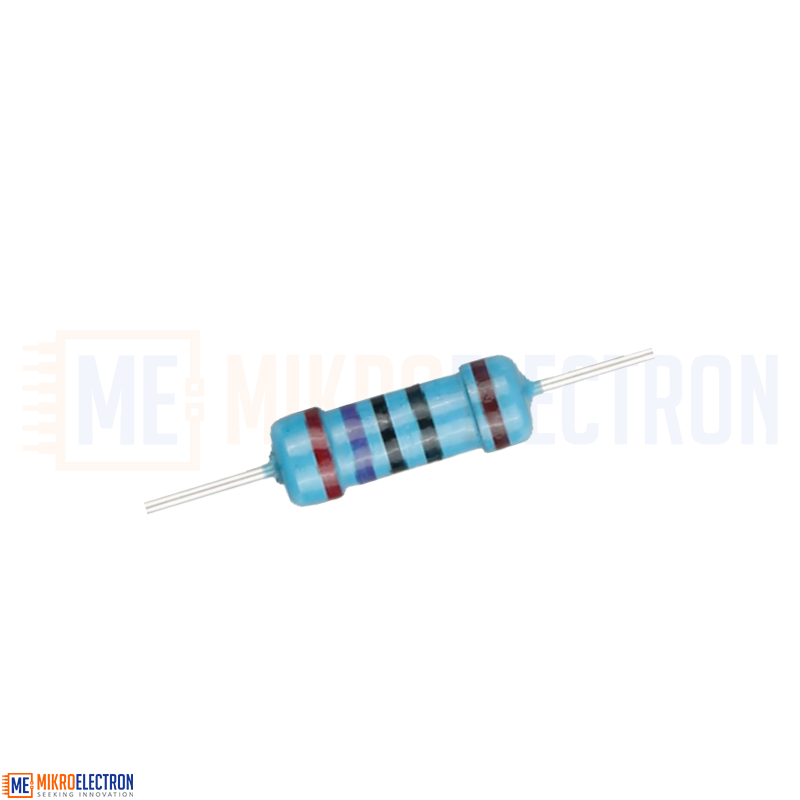
270 ohm Resistor
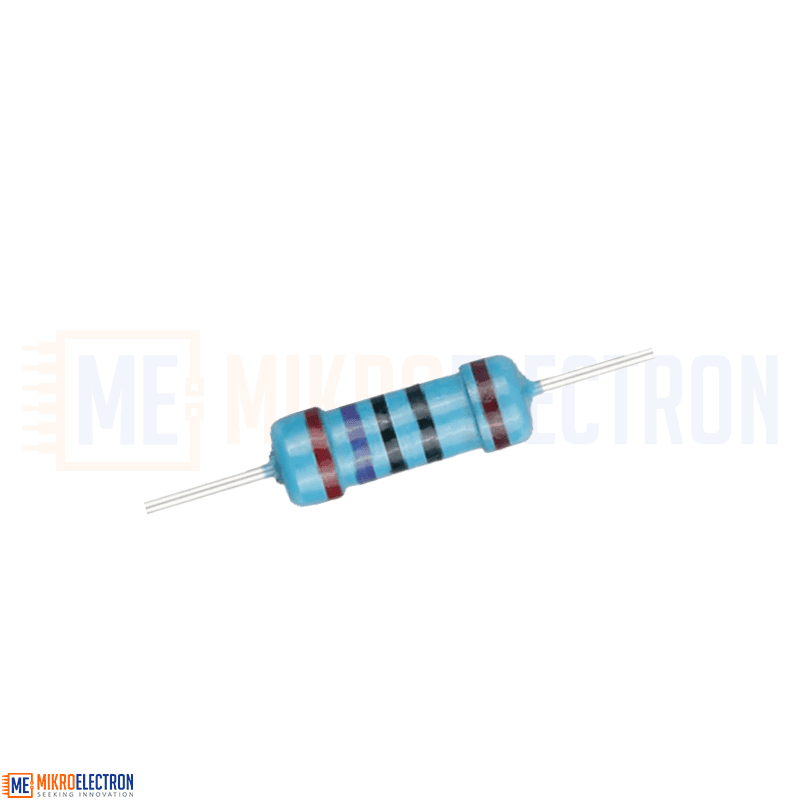
The 270Ω (Ohm) Resistor is a precision 1/4W metal film resistor with a tight 1% tolerance, ideal for DIY electronics, Arduino projects, and prototyping. This standard resistor value is widely used for LED current limiting, voltage division, and transistor biasing in low-power circuits. With excellent stability, low noise, and reliable long-term performance, it is a fundamental component for hobbyists, students, and engineers building circuits on breadboards, perfboards, or custom PCBs.
المقاومة 270 أوم هي مقاومة دقيقة من نوع Metal Film بقدرة 1/4 واط وتفاوت 1%، مثالية لـ مشاريع الإلكترونيات DIY ومشاريع Arduino والنماذج الأولية. تُستخدم هذه القيمة القياسية بشكل واسع في تحديد تيار الـ LED، وتقسيم الجهد، وتحييز الترانزستور ضمن الدوائر منخفضة الطاقة. تتميز بثبات ممتاز وضوضاء منخفضة وأداء موثوق طويل الأمد، وهي مكوّن أساسي للهواة والطلاب والمهندسين عند بناء الدوائر على لوحات التجارب أو ثنائيات الفينول النحاسية
The 270Ω Resistor is a high-quality 1/4 Watt metal film resistor engineered to deliver accurate and stable resistance in a wide range of electronic circuits. With a precise 1% tolerance, it provides consistent and predictable performance for both analog and digital applications. Metal film resistors are preferred over carbon film alternatives because of their lower noise, better thermal stability, and superior long-term accuracy, which makes them especially well-suited for precision designs.
The 270 ohm value is a standard E96-series resistor commonly used in LED current limiting circuits, especially when driving standard LEDs from 5V supplies like Arduino digital outputs. It provides a balanced trade-off between LED brightness and forward current protection. Beyond LEDs, it's frequently found in voltage dividers, biasing networks, signal conditioning circuits, and pull-up/pull-down configurations.
Designed in a standard axial-lead through-hole package, this resistor can be easily soldered to PCBs or inserted into breadboards and perfboards, making it ideal for both quick prototyping and permanent project builds. It is fully compatible with all popular development platforms, including Arduino, Raspberry Pi, ESP32, ESP8266, STM32, and PIC microcontrollers.
Specifications
- Resistance Value: 270 Ohm (Ω)
- Power Rating: 1/4 Watt (0.25W)
- Tolerance: ±1% (Precision Grade)
- Resistor Type: Metal Film
- Mounting Style: Through-Hole (Axial Lead)
- Lead Material: Tinned Copper
- Compliance: RoHS Compliant
- Operating Temperature Range: Typically -55°C to +155°C (standard for metal film)
Applications
- LED Current Limiting — driving standard LEDs from 5V supplies
- Voltage Dividers — generating reference voltages and scaling analog signals
- Pull-up / Pull-down Resistors — stabilizing digital input pins
- Transistor Base Biasing — driving BJTs in switching and amplifier circuits
- MOSFET Gate Resistors — protecting and slowing gate transitions
- Signal Conditioning — filtering and impedance matching
- Arduino & Microcontroller Projects — prototyping and learning kits
- Audio & RF Circuits — gain setting and feedback networks
- Sensor Interfacing — calibration and signal scaling
- Educational Electronics — schools, universities, and STEM workshops
- General-Purpose Electronics — repair, modification, and DIY builds