
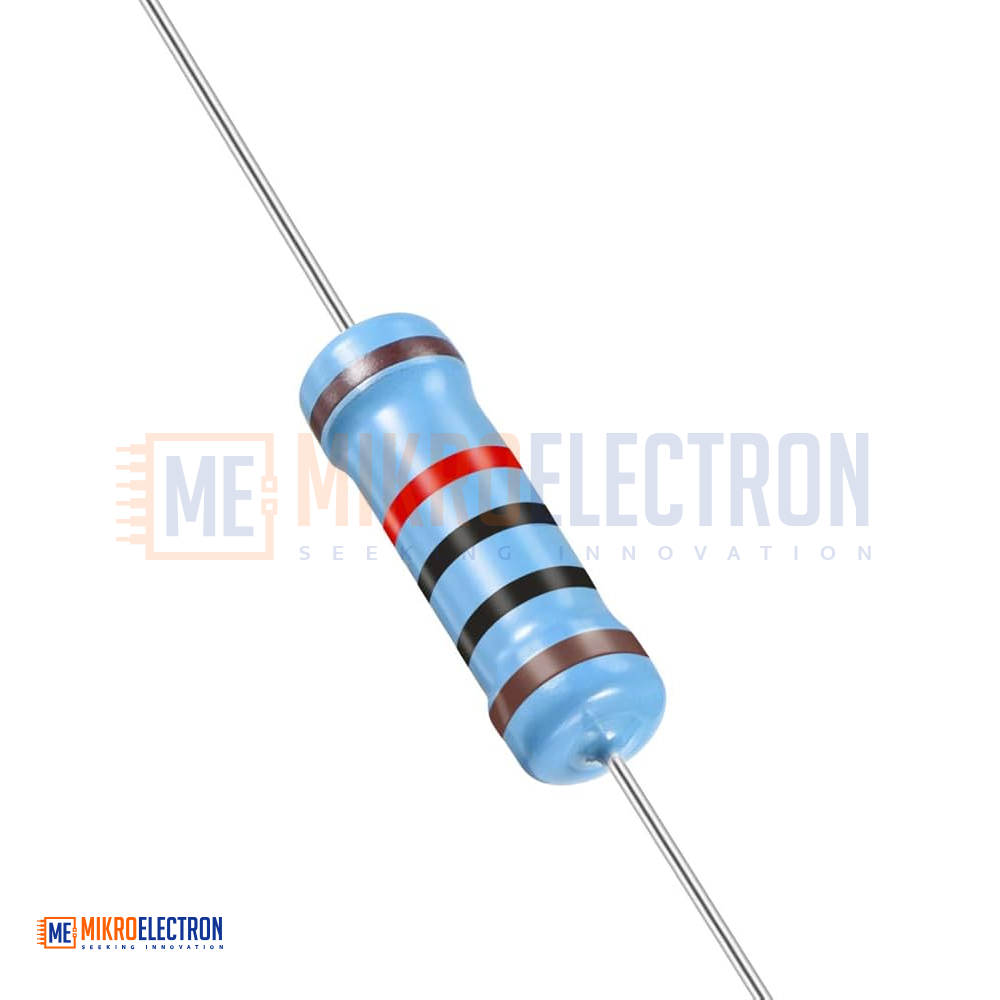
10k ohm Resistor
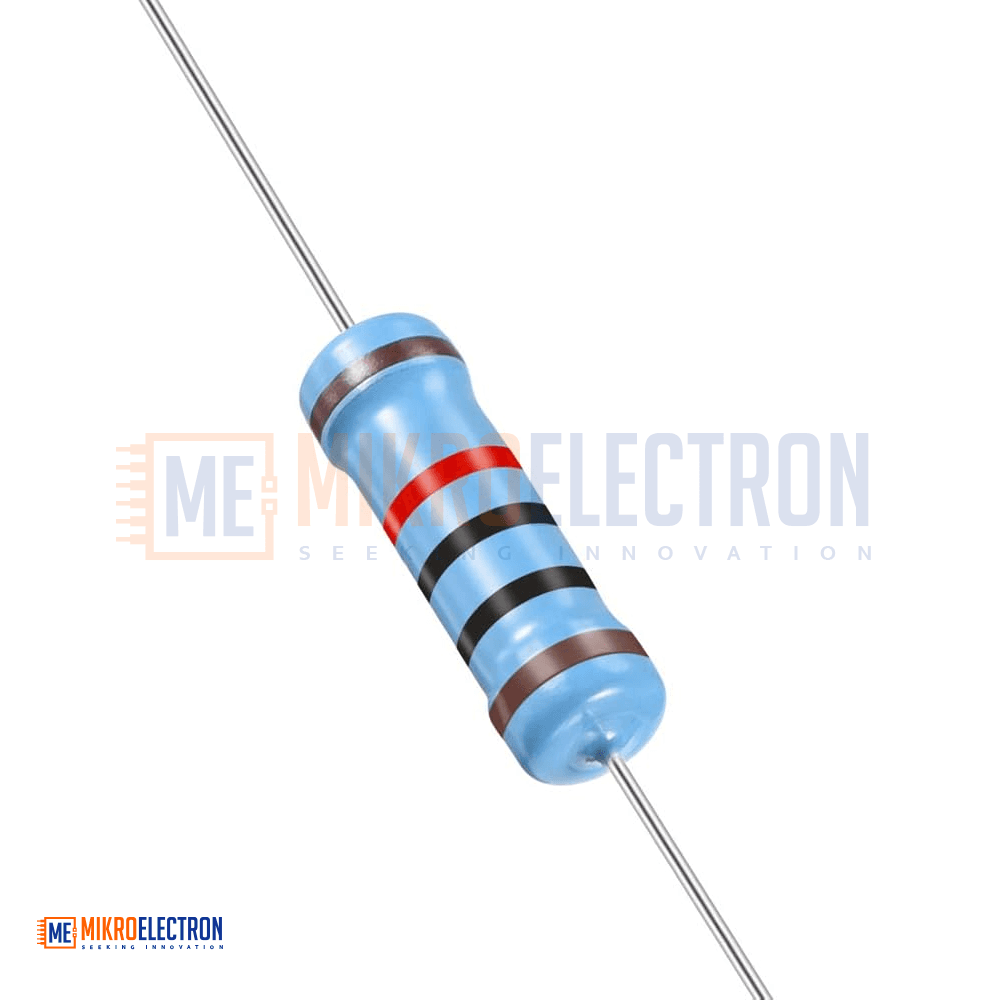
The 10kΩ (10,000 Ohm) Resistor is a precision 1/4W metal film resistor with a tight 1% tolerance, ideal for DIY electronics, Arduino projects, and prototyping. As the most widely used resistor value in electronics, it's perfect for pull-up/pull-down circuits, voltage dividers, button debouncing, and analog signal conditioning. With excellent stability, low noise, and reliable long-term performance, it's an absolutely essential component for hobbyists, students, and engineers in any electronic build.
المقاومة 10 كيلو أوم (10,000 أوم) هي مقاومة دقيقة من نوع Metal Film بقدرة 1/4 واط وتفاوت 1%، مثالية لـ مشاريع الإلكترونيات DIY ومشاريع Arduino والنماذج الأولية. تُعدّ القيمة الأكثر استخداماً في الإلكترونيات، وهي مثالية لـ دوائر Pull-up و Pull-down، ومقسّمات الجهد، وكبح ارتداد الأزرار، ومعالجة الإشارات التناظرية. تتميز بثبات ممتاز وضوضاء منخفضة وأداء موثوق طويل الأمد، وهي مكوّن لا غنى عنه للهواة والطلاب والمهندسين في أي مشروع إلكتروني.
The 10kΩ Resistor is a high-quality 1/4 Watt metal film resistor designed to deliver accurate and stable resistance in a wide variety of electronic circuits. With a precise 1% tolerance, it ensures consistent and predictable performance in both analog and digital applications. Metal film resistors are preferred over carbon film types because they offer lower noise, superior thermal stability, and higher long-term accuracy, making them ideal for sensitive electronic designs.
The 10 kilo-ohm (10kΩ) value is, without a doubt, the most popular and frequently used resistor value in modern electronics. It is the standard pull-up and pull-down resistor for digital input pins on virtually all microcontrollers — including Arduino, ESP32, ESP8266, STM32, and Raspberry Pi. It's the go-to choice for button debouncing, switch interfacing, voltage dividers (often paired with another 10kΩ to halve a signal), and as the standard load resistor for analog sensors like NTC thermistors, LDRs (light-dependent resistors), and potentiometers.
Beyond pull-ups, the 10kΩ resistor is widely used in op-amp feedback networks, transistor base biasing, RC timing circuits, filter networks, and sensor calibration. If there is one resistor value every electronics enthusiast must have in stock, it is the 10kΩ.
Manufactured in a standard axial-lead through-hole package, this resistor integrates easily with breadboards, perfboards, and printed circuit boards (PCBs), making it ideal for both rapid prototyping and permanent installations.
Specifications
- Resistance Value: 10 kΩ (10,000 Ohm)
- Power Rating: 1/4 Watt (0.25W)
- Tolerance: ±1% (Precision Grade)
- Resistor Type: Metal Film
- Mounting Style: Through-Hole (Axial Lead)
- Lead Material: Tinned Copper
- Compliance: RoHS Compliant
- Operating Temperature Range: Typically -55°C to +155°C (standard for metal film)
Applications
- Pull-up & Pull-down Resistors — stabilizing digital input pins (the standard value)
- Push Button Interfacing — debouncing and reliable digital reads
- Voltage Dividers — pairs with another 10kΩ for 2:1 signal halving
- NTC Thermistor Networks — standard load for 10K thermistors
- LDR (Light Sensor) Circuits — voltage divider for light-dependent resistors
- Potentiometer Replacement — fixed-value reference in analog circuits
- Transistor Base Biasing — driving BJTs in switching and amplifier circuits
- MOSFET Gate Pull-down — keeping gates at known states
- Op-Amp Feedback Networks — gain configurations in amplifier circuits
- RC Timing Circuits — delay generation with 555 timer ICs and capacitors
- Filter Networks — passive RC low-pass and high-pass filters
- Sensor Interfacing — calibration and biasing for analog and digital sensors
- Arduino & Microcontroller Projects — prototyping and learning kits
- Educational Electronics — schools, universities, and STEM labs
- General-Purpose Electronics — repair, modification, and DIY builds