

Level Conversion Module TXS0108E
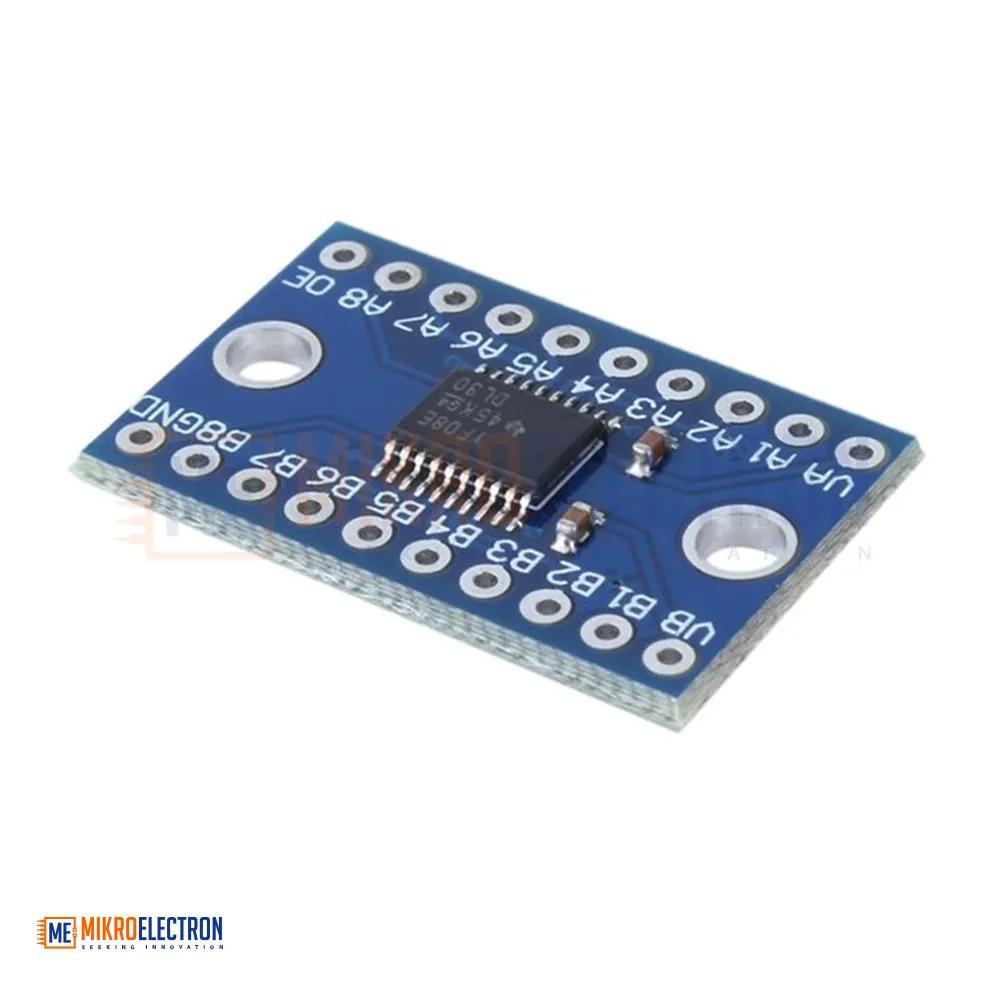
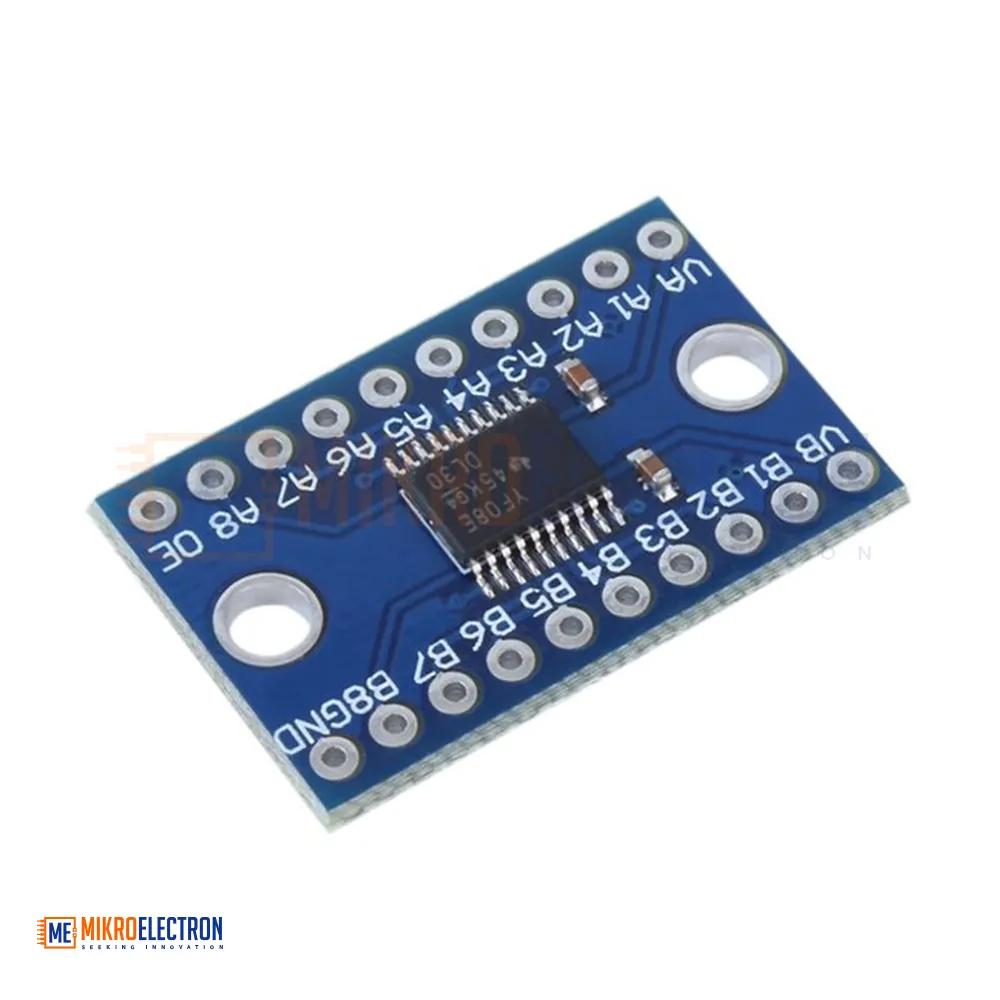
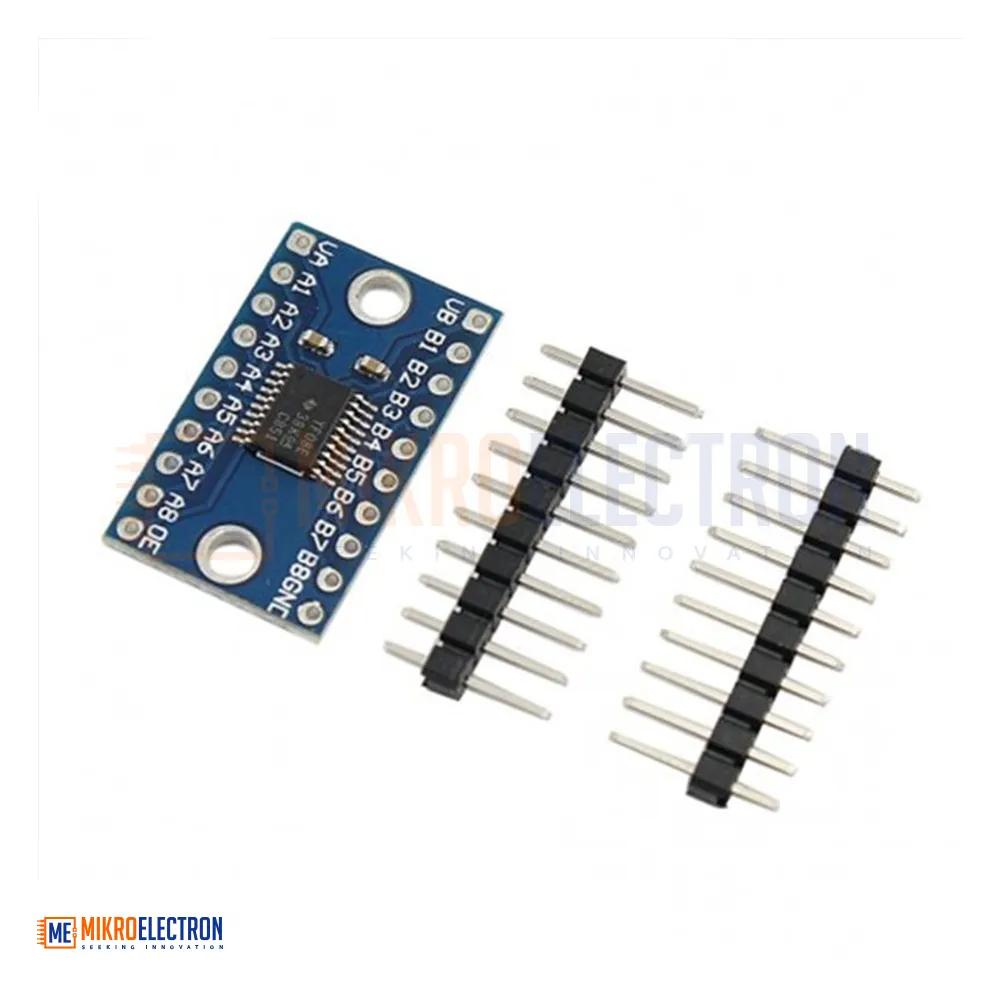
The TXS0108E Level Conversion Module is a bi-directional logic level shifter for interfacing devices with different voltages from 1.8V to 5V. Supports I2C, SPI, UART and other protocols. Uses TXS0108E IC for stable, fast signal transmission with minimal delay. Compact design with clear pinouts. Ideal for microcontrollers, sensors, IoT, and mixed-voltage systems.
وحدة تحويل المستوى TXS0108E هي منطق ثنائي الاتجاه لتوصيل أجهزة ذات فولتية مختلفة من 1.8V إلى 5V. تدعم I2C و SPI و UART وبروتوكولات أخرى. تستخدم دائرة TXS0108E IC لنقل إشارة مستقر وسريع بأقل تأخير. تصميم مضغوط مع دبابيس واضحة. مثالية للمتحكمات الدقيقة والمستشعرات وإنترنت الأشياء والأنظمة مختلطة الفولتية.
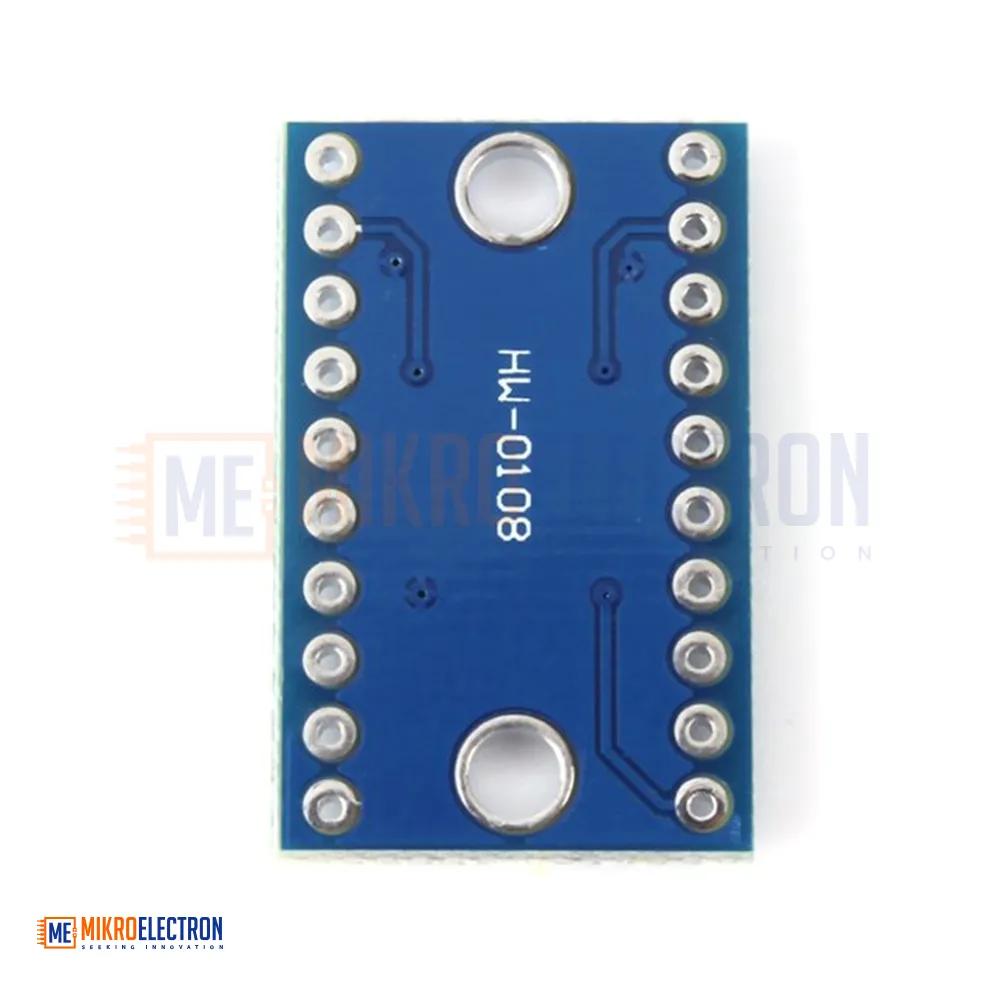
The TXS0108E Level Conversion Module is an 8-channel bi-directional logic level shifter designed to solve voltage incompatibility issues between digital devices operating at different logic levels. It enables seamless communication between components running at 1.8V, 2.5V, 3.3V, and 5V. The module is built around the TXS0108E integrated circuit from Texas Instruments, which provides automatic direction sensing – no direction control pin is required. This makes it ideal for bidirectional communication protocols such as I2C, SPI, UART, and parallel data buses. The module features fast signal transmission with minimal propagation delay, preserving signal integrity even at higher data rates (up to 24 Mbps in push-pull mode). The compact PCB includes clearly labeled pins for VCCA (low voltage side), VCCB (high voltage side), 8 signal channels (A1-A8, B1-B8), and GND. Built-in 10kΩ pull-up resistors simplify I2C use. This module is essential for embedded systems, IoT projects, robotics, and any application where 3.3V microcontrollers need to interface with 5V sensors, displays, or peripherals.
Specifications
| Parameter | Value |
|---|---|
| IC used | TXS0108E (Texas Instruments) |
| Number of channels | 8 (bi-directional) |
| Low voltage side (VCCA) | 1.8V to 3.6V |
| High voltage side (VCCB) | 2.5V to 5.5V |
| Input/Output logic levels | 1.8V, 2.5V, 3.3V, 5V |
| Direction control | Automatic (no direction pin) |
| Maximum data rate | 24 Mbps (push-pull) / 2 Mbps (open-drain) |
| Propagation delay | < 10 ns (typical) |
| Supported protocols | I2C, SPI, UART, GPIO, parallel bus |
| Built-in pull-up resistors | 10kΩ on both sides (optional enable/disable) |
| Operating temperature | -40°C to +85°C |
| PCB dimensions | Approx. 25mm × 18mm (varies by manufacturer) |
| Pin header pitch | 2.54mm (compatible with breadboards) |
Applications
Interfacing microcontrollers with different voltage logic levels – Connect 3.3V Arduino/ESP32 to 5V sensors or displays
Connecting 3.3V devices to 5V systems (or vice versa) – Bi-directional translation without level mismatch
I2C, SPI, and UART communication in mixed-voltage environments – Ensure reliable data transfer between devices
Embedded system designs where voltage compatibility is required – Simplify PCB design by using level shifting
IoT devices and wearables with different voltage standards – Interface low-power 1.8V sensors with 3.3V processors
Signal level conversion in sensor and actuator networks – Connect 5V industrial sensors to 3.3V logic controllers
Multivoltage prototyping – Breadboard projects combining components from different voltage families
SD card and memory interface – Translate between 3.3V microcontrollers and 5V legacy memory chips