
Level Converter Bi-Directional Module 5V to 3.3V 4 channel I2C Logic
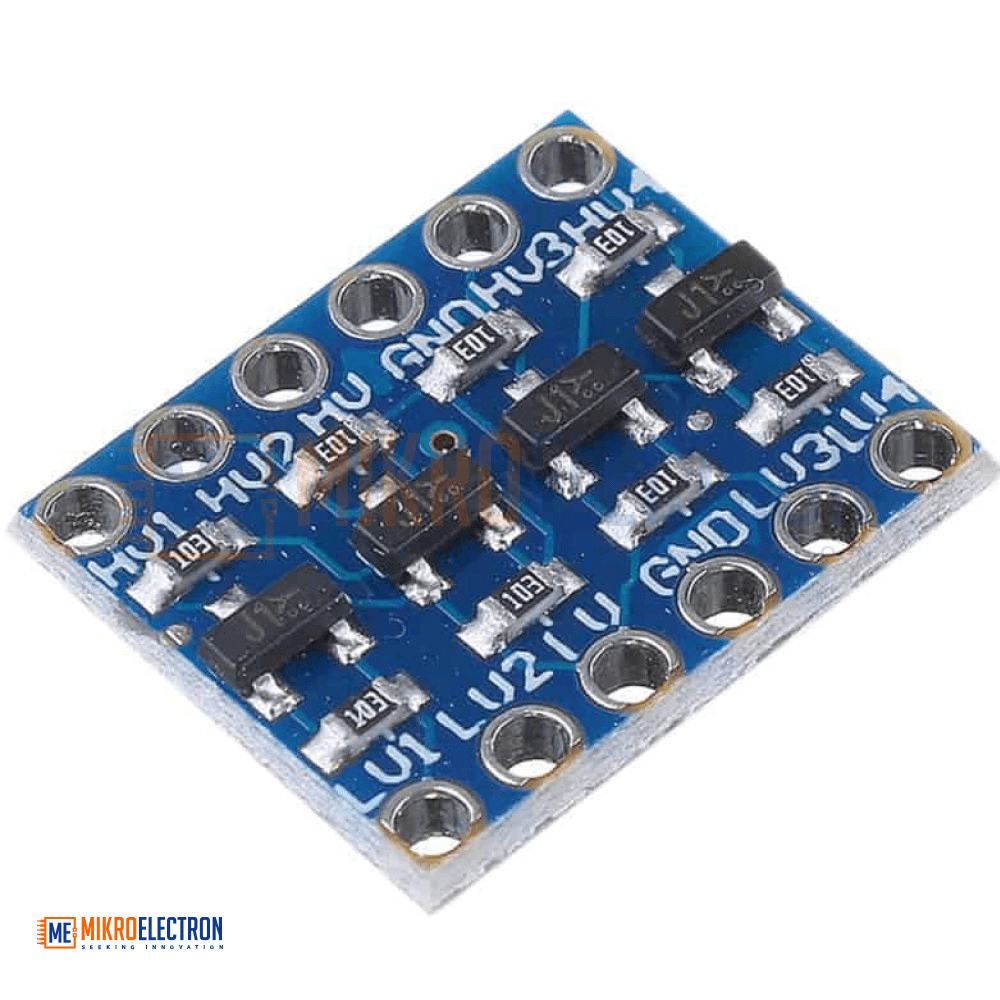
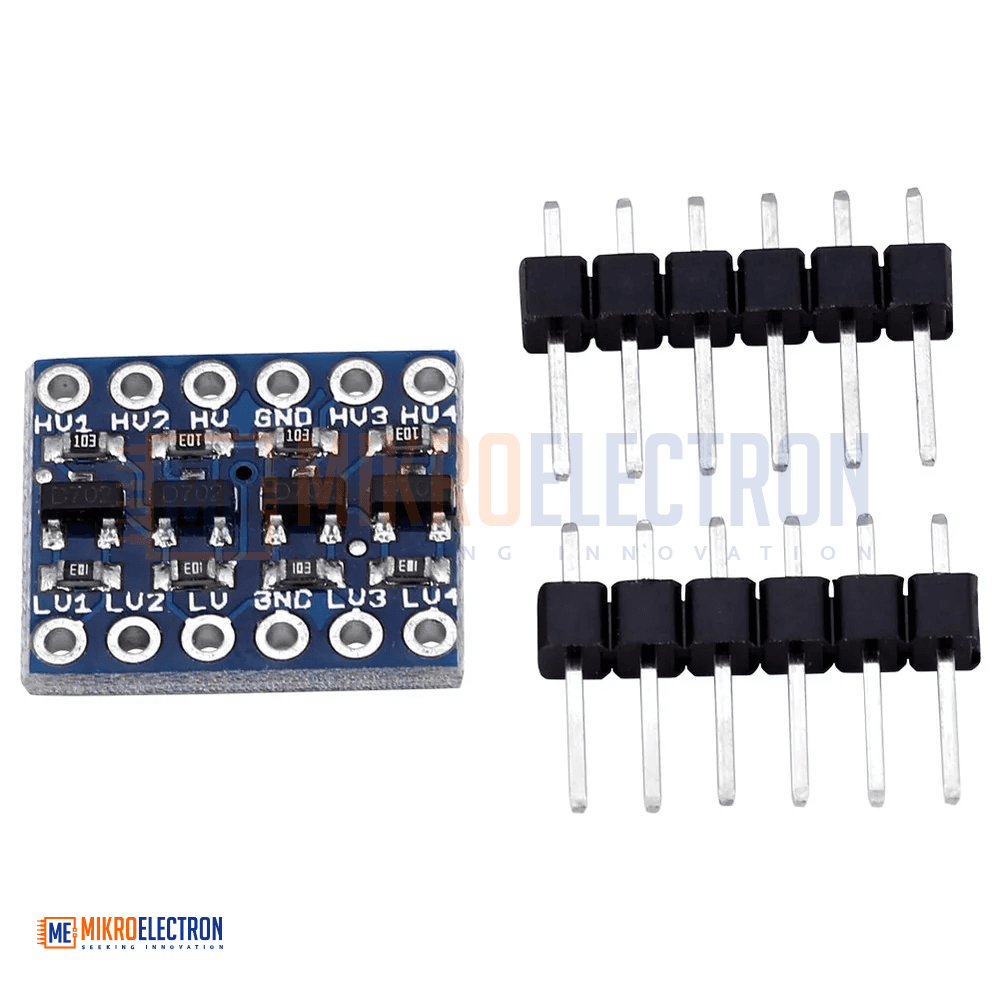
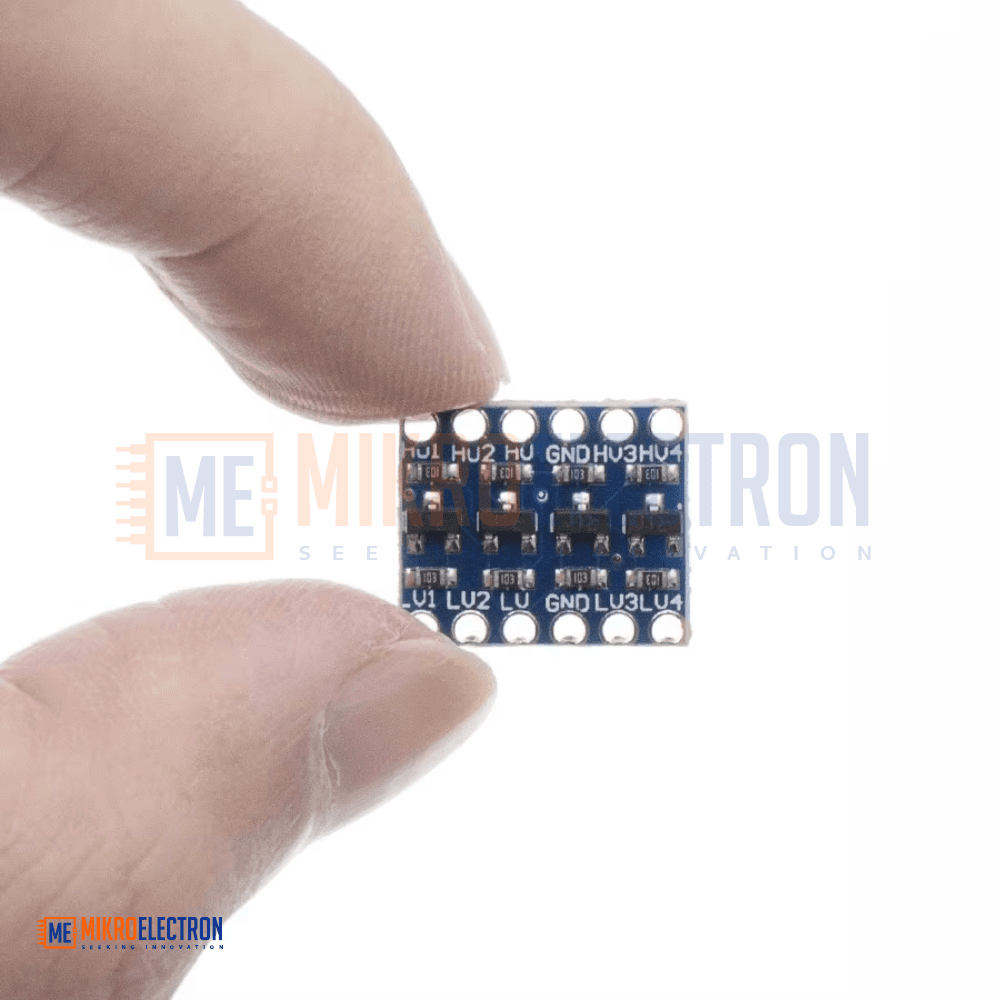
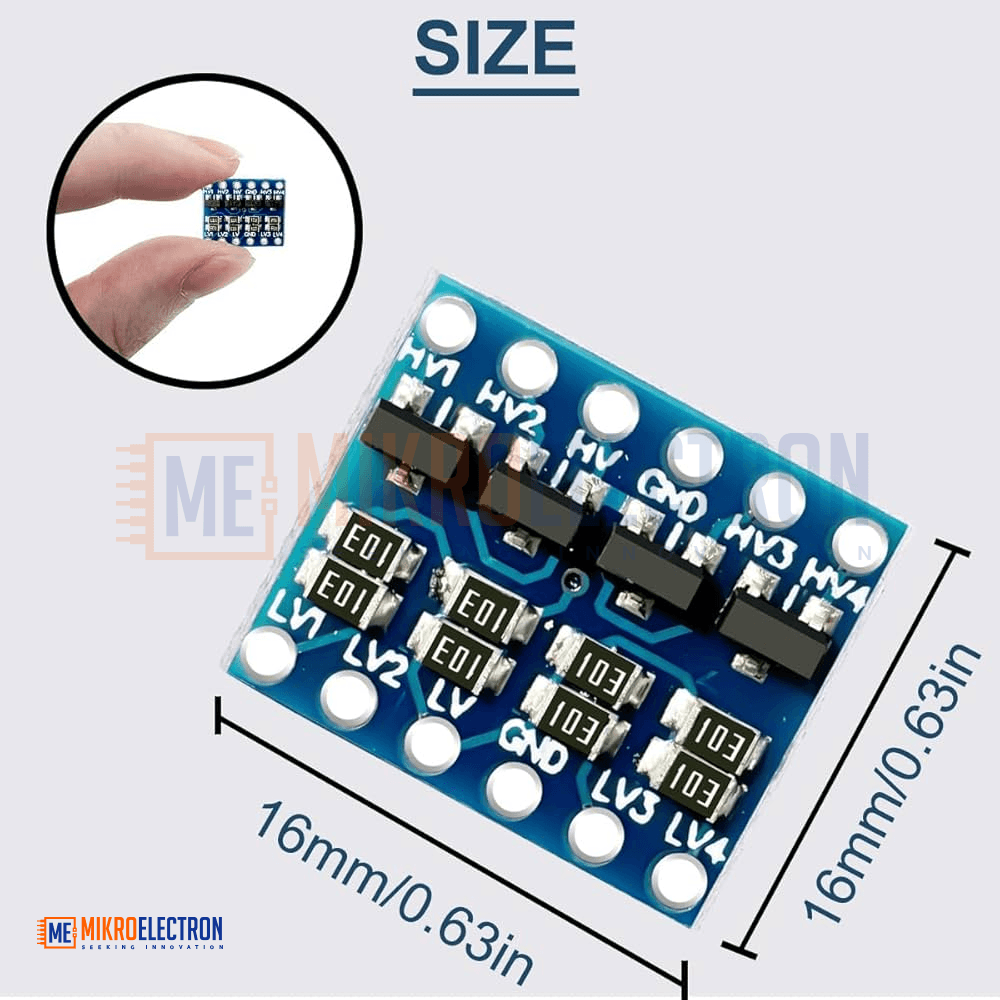
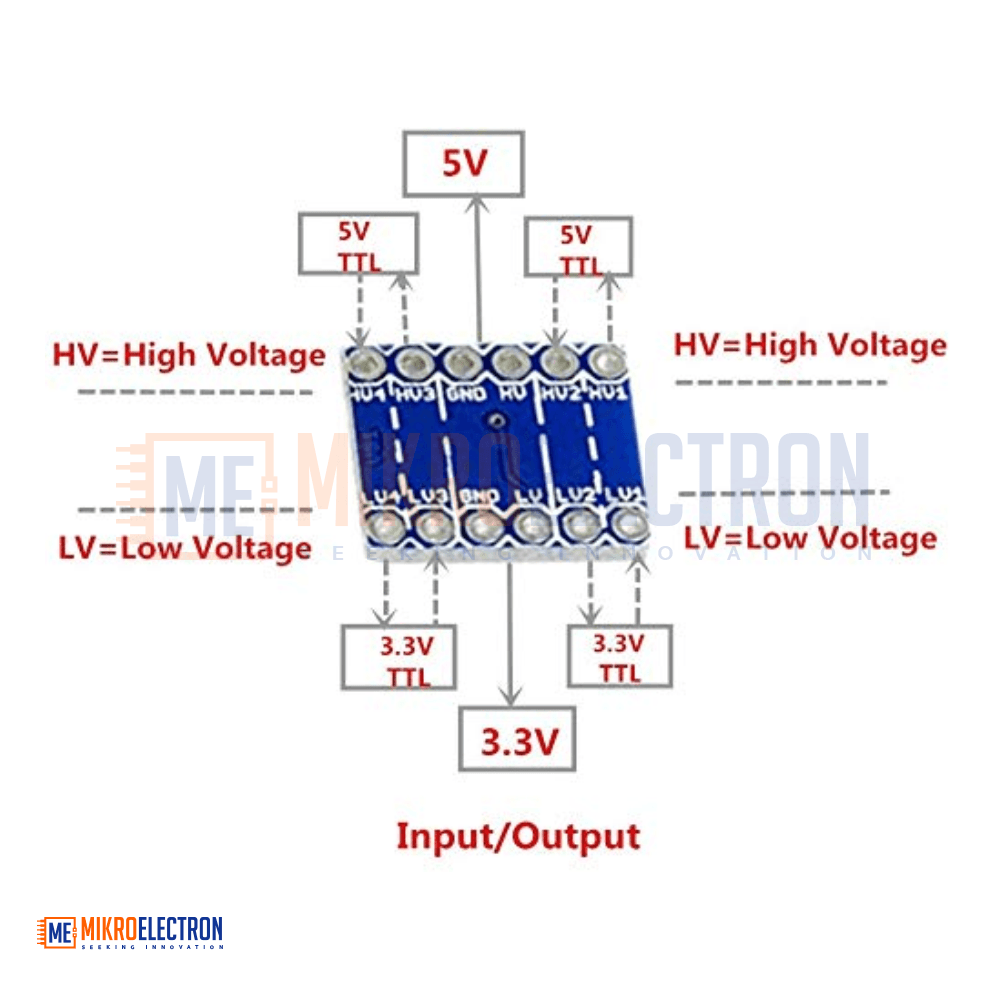
The 4-channel Bi-Directional Logic Level Converter safely steps down 5V signals to 3.3V and steps up 3.3V to 5V simultaneously. Supports 2.8V and 1.8V devices as well. Converts 4 pins on the high side to 4 pins on the low side. Powered from both voltage sources (HV and LV) with common ground. Ultra-compact dimensions: 16.05 × 13.33mm. Ideal for I2C, UART, and GPIO interfacing.
محول المستوى ثنائي الاتجاه 4 قنوات يخفض إشارات 5V إلى 3.3V ويرفع 3.3V إلى 5V في نفس الوقت. يدعم أيضاً أجهزة 2.8V و 1.8V. يحول 4 دبابيس من الجانب العالي إلى 4 دبابيس من الجانب المنخفض. يعمل من مصدري جهد (HV و LV) مع أرضية مشتركة. أبعاد فائقة الصغر: 16.05 × 13.33 مم. مثالي لـ I2C و UART و GPIO.
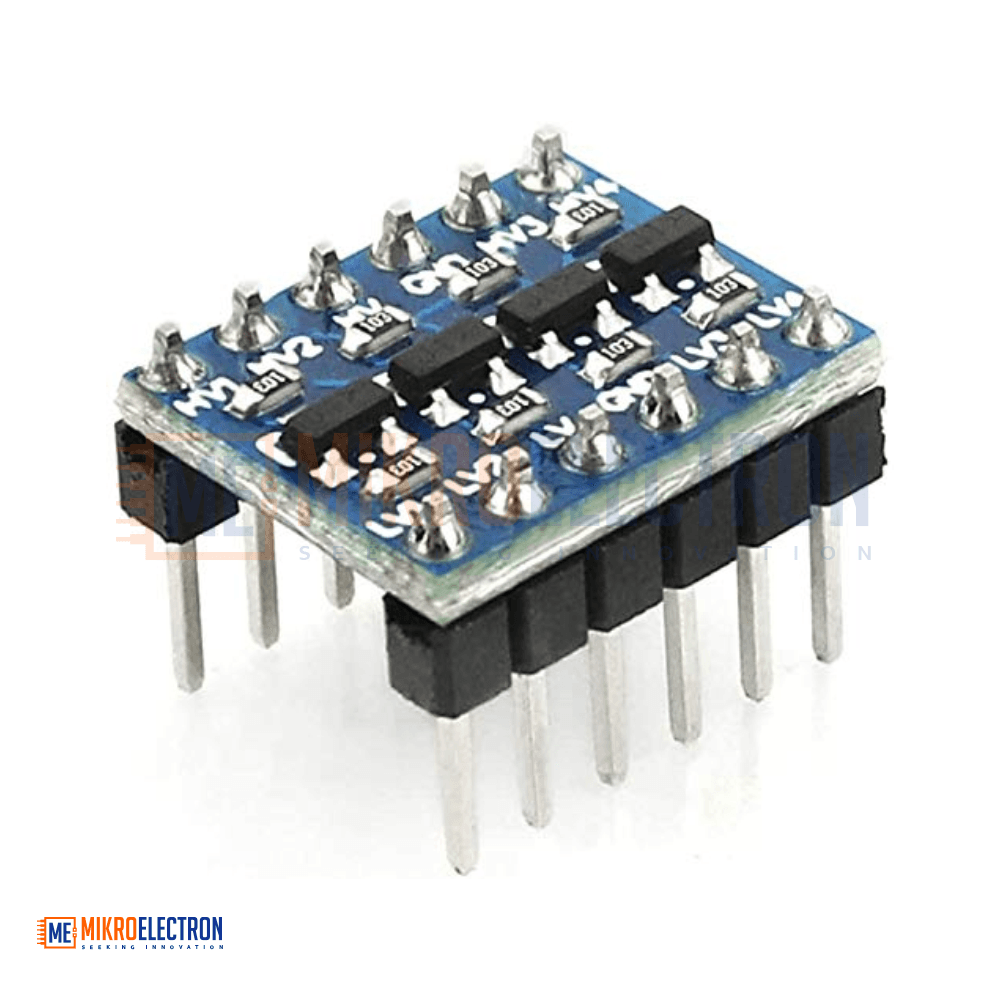
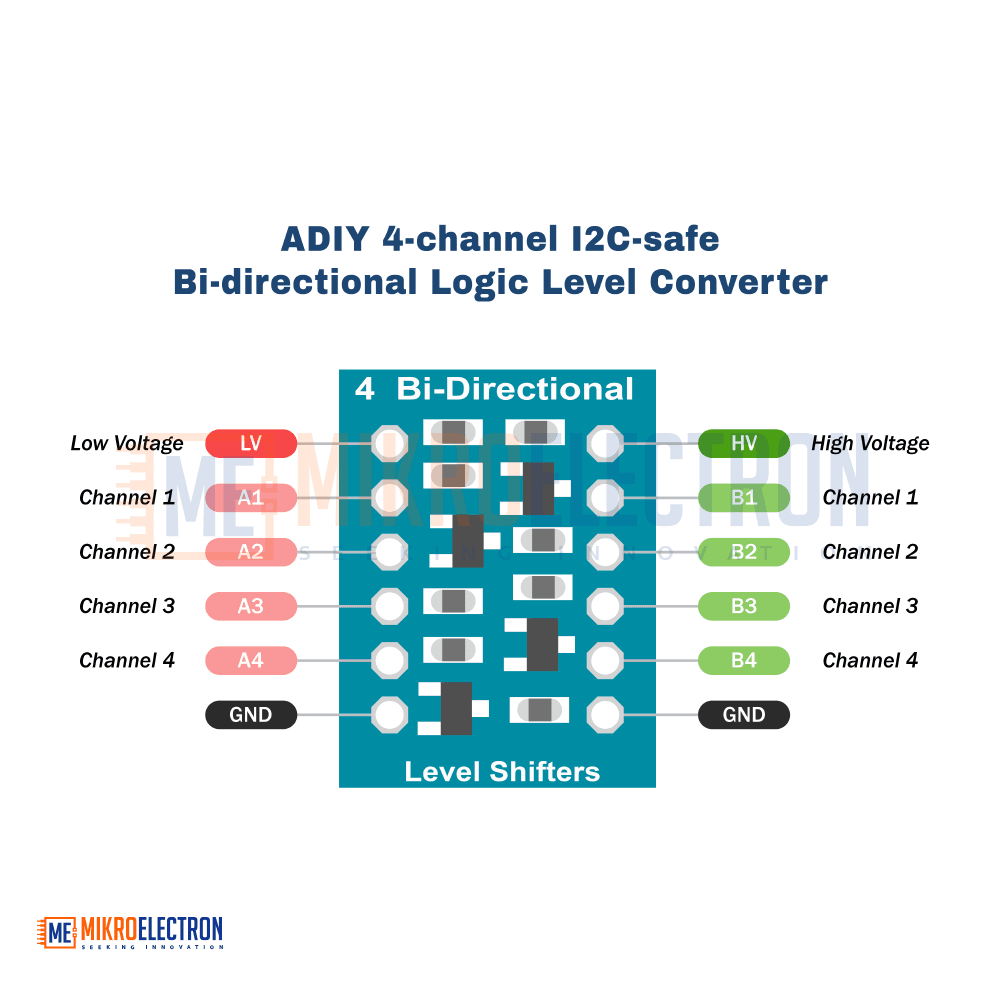
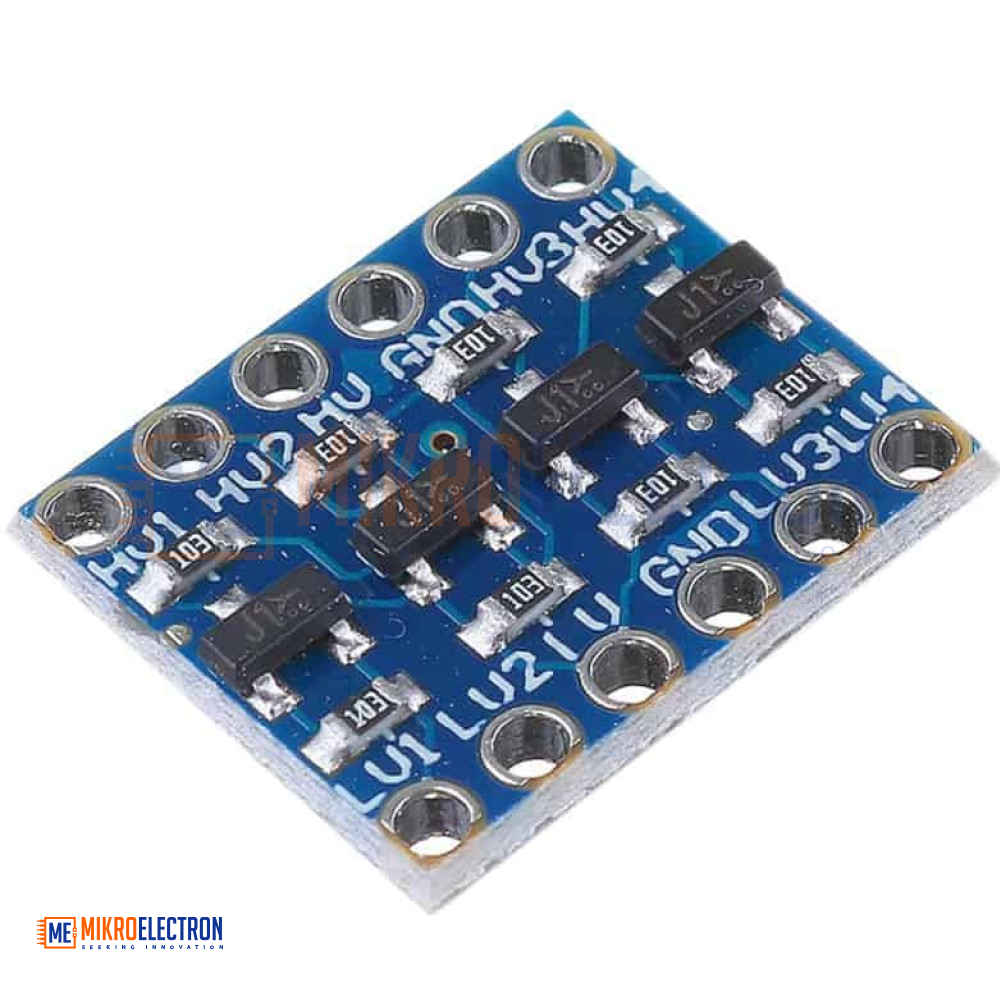
The 4-channel Bi-Directional Logic Level Converter is a compact module that solves voltage incompatibility between devices operating at different logic levels. It allows safe bidirectional communication between a 5V system (such as Arduino Uno or 5V logic microcontroller) and a 3.3V, 2.8V, or 1.8V system (such as ESP32, Raspberry Pi, sensors, or modules). Unlike unidirectional shifters, this converter handles automatic bidirectional translation on each channel, meaning you can transmit and receive data on the same line without direction control pins. It is especially suitable for I2C (SDA and SCL), UART (TX/RX), and GPIO signals. The module features 4 independent channels – each channel converts one high-voltage pin to one low-voltage pin and vice versa. Two voltage inputs are required: HV (high side, e.g., 5V) and LV (low side, e.g., 3.3V), plus common GND. The board is extremely small at 16.05 mm × 13.33 mm (0.63 × 0.52 inches), making it easy to embed into any project. Built-in MOSFET and resistor networks ensure clean signal translation with minimal propagation delay.
Specifications
| Parameter | Value |
|---|---|
| Number of channels | 4 (bidirectional) |
| High side voltage (HV) | 5V (also works with 3.3V as HV if LV is lower) |
| Low side voltage (LV) | 3.3V (also supports 2.8V, 1.8V) |
| Signal direction | Bi-directional (automatic) |
| Supported protocols | I2C, SPI, UART, GPIO, one-wire |
| Maximum frequency | > 400 kHz (I2C fast mode compatible) |
| Power supply | HV and LV both must be supplied from external sources |
| Current per channel | Up to 10 mA (typical) |
| Input/output voltage tolerance | HV side up to 5V, LV side down to 1.8V |
| Dimensions (L×W) | 16.05 mm × 13.33 mm (0.63 × 0.52 inches) |
| Pin header pitch | 2.54 mm (0.1 inch) breadboard compatible |
Applications
Interfacing 3.3V sensors (e.g., BMP280, MPU6050) with 5V Arduino – Safe signal translation without damage
I2C communication between mixed-voltage devices – Clock and data lines both translated
UART connection between 5V and 3.3V devices – TX and RX lines each get bidirectional conversion
Programming ESP8266/ESP32 from 5V USB-to-serial adapters – Prevent overvoltage on 3.3V modules
Connecting 5V displays or keypads to 3.3V logic – 4 channels allow multiple signals
Raspberry Pi (3.3V) to 5V Arduino communication – Reliable level shifting for GPIO
Battery-powered mixed-voltage IoT projects – Low power consumption
Prototyping environments – Breadboard-friendly size fits any setup