
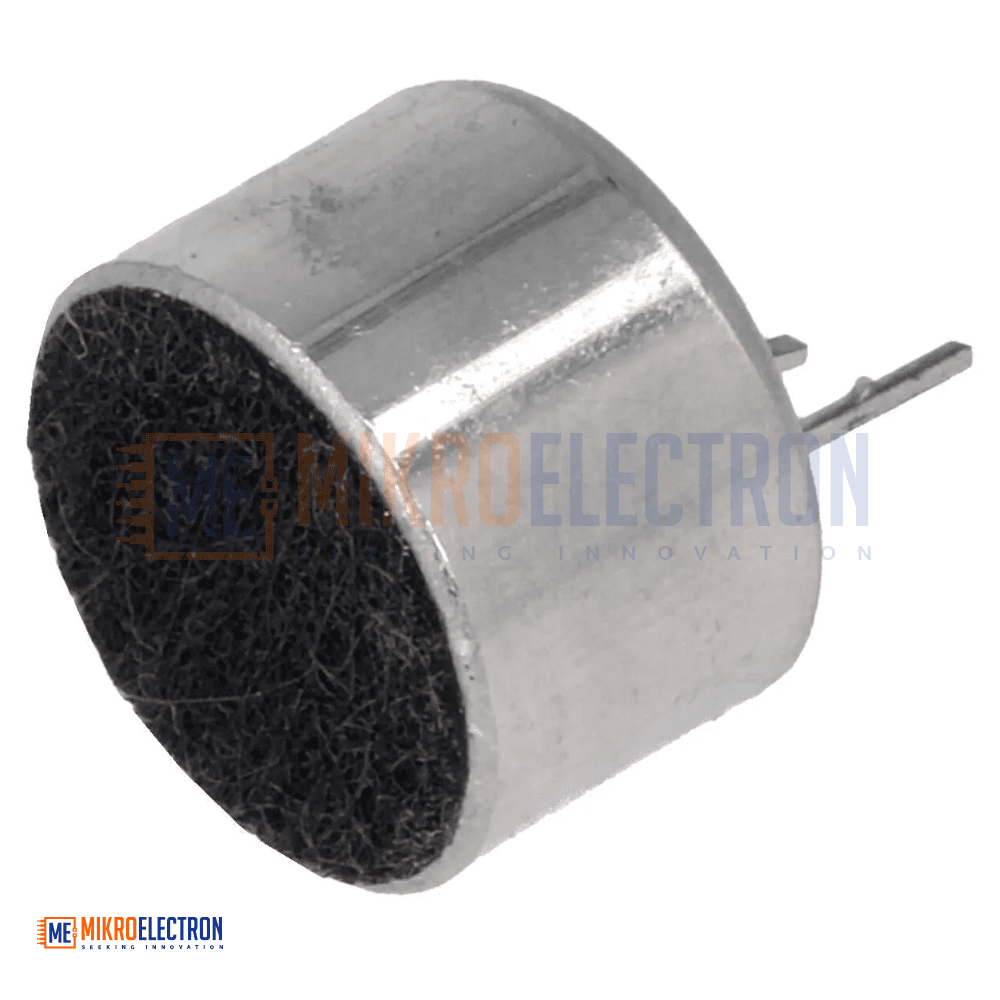
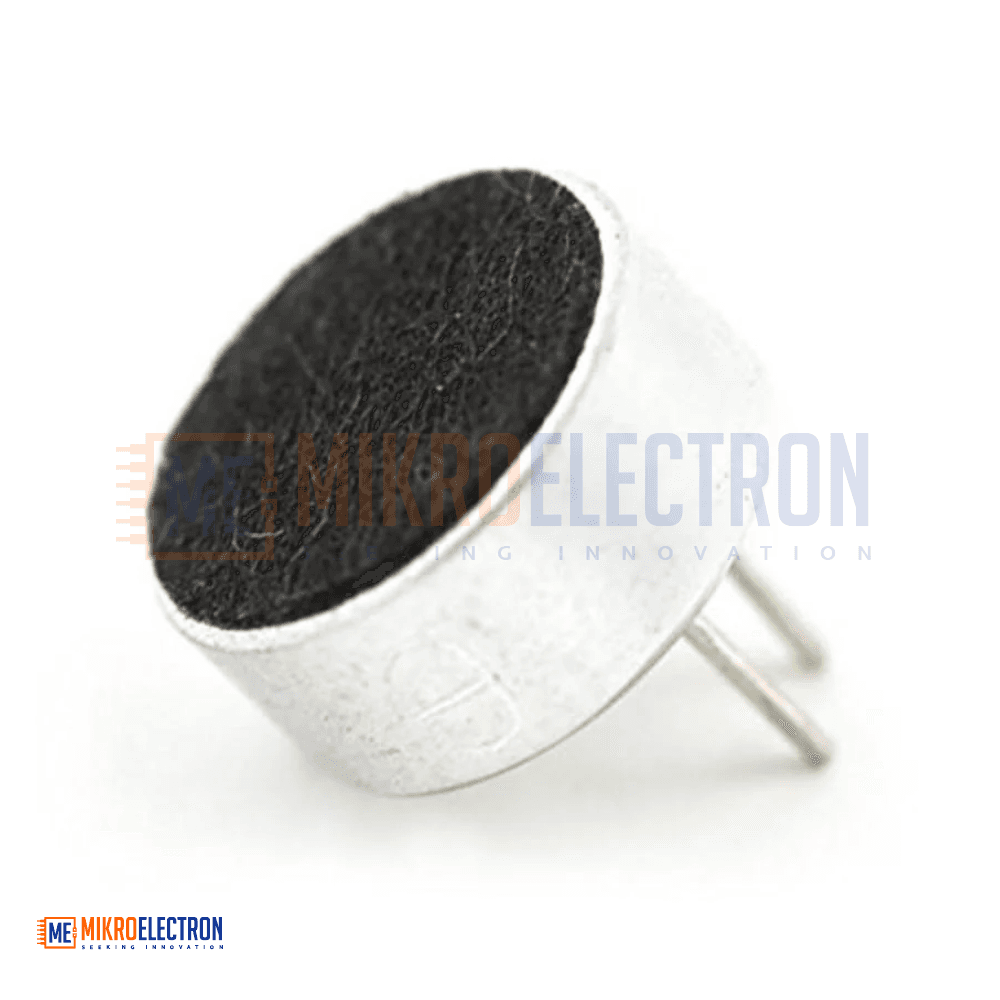
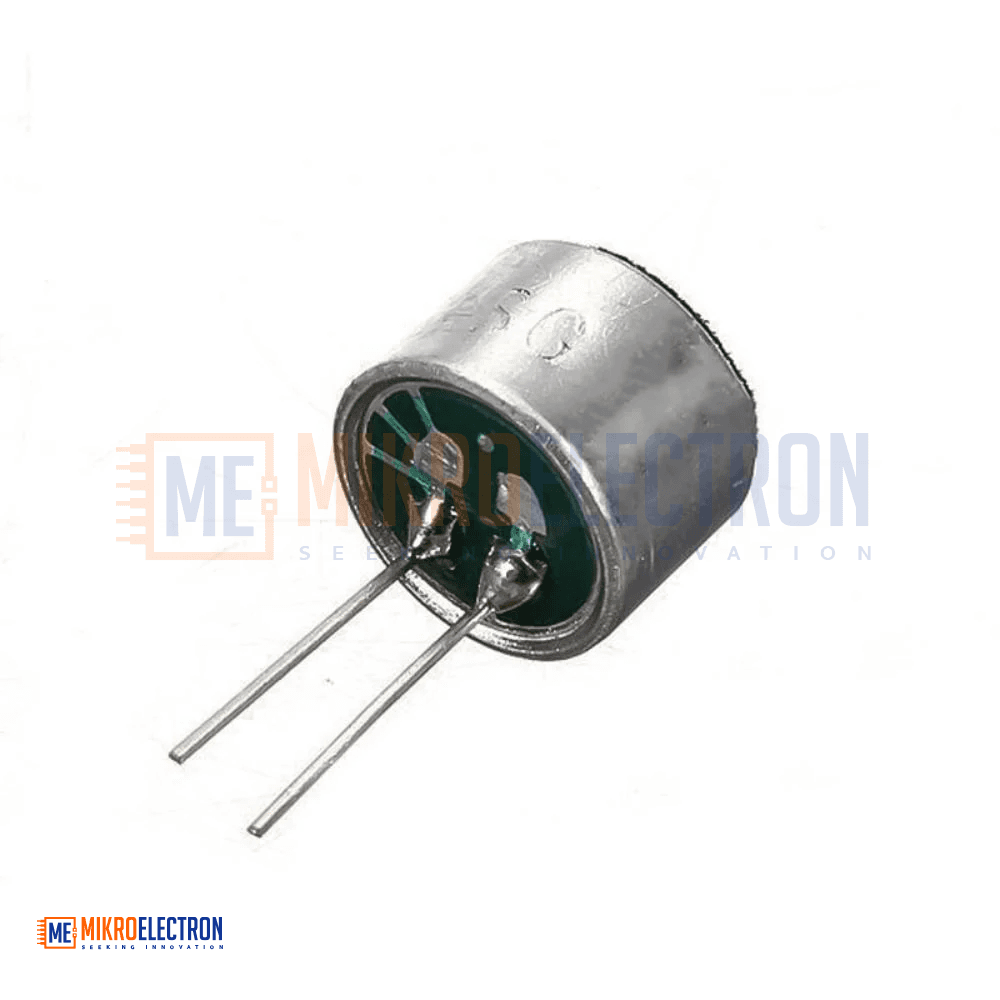
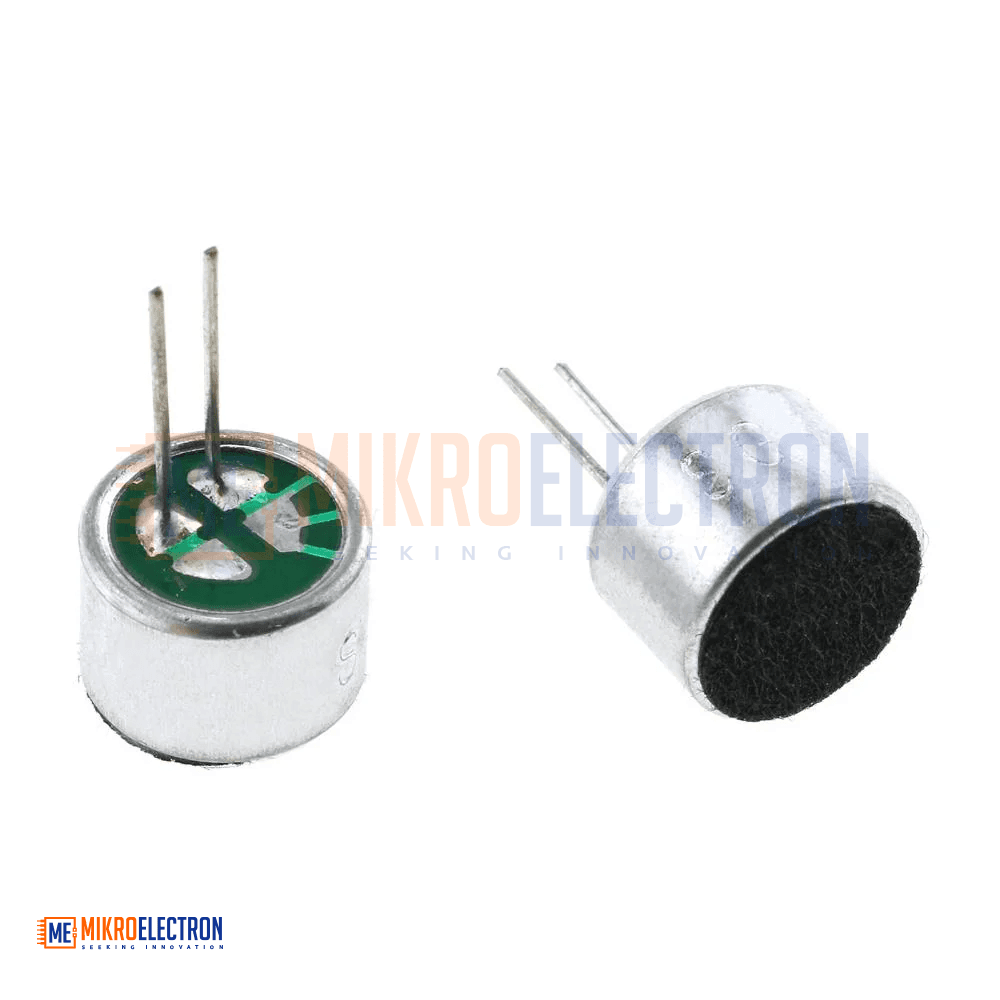
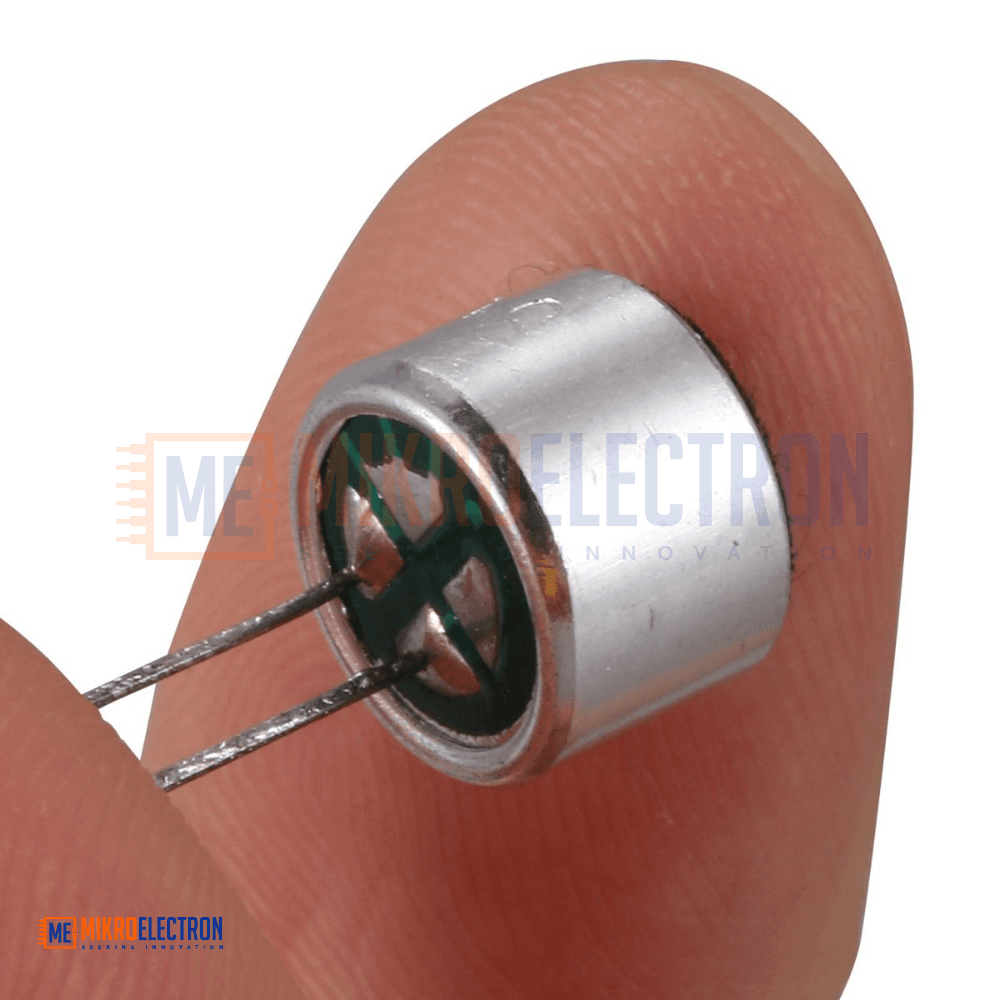
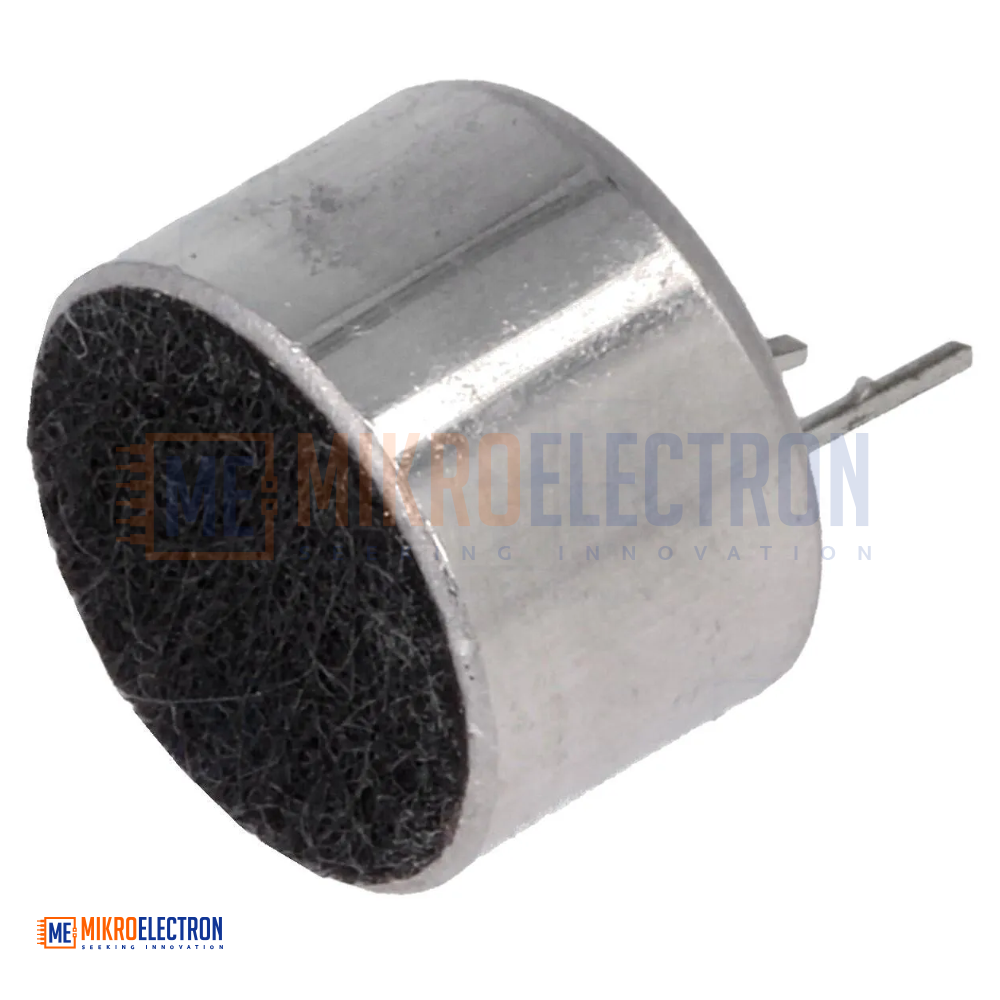
Electret Microphone 9*7mm
The 9 × 7mm Electret Condenser Microphone is a compact, high-sensitivity audio sensor with a built-in FET pre-amplifier for capturing sound signals. It converts sound waves into electrical signals using a capacitive principle, making it ideal for voice recording, sound detection, microphone amplifier circuits, and Arduino sound projects. With its small size and high sensitivity, this microphone is widely used in DIY audio projects, intercoms, hearing aids, voice-activated systems, and PC sound-card inputs, providing excellent audio quality at an affordable price.
الميكروفون الإلكتريت المكثفي 9 × 7 ملم هو حساس صوتي صغير الحجم وعالي الحساسية، يحتوي على مضخّم FET مدمج لالتقاط الإشارات الصوتية. يحوّل الموجات الصوتية إلى إشارات كهربائية باستخدام مبدأ السعة (Capacitive)، مما يجعله مثالياً لـ تسجيل الصوت، وكشف الصوت، ودوائر مضخمات الميكروفون، ومشاريع Arduino الصوتية. بفضل حجمه الصغير وحساسيته العالية، يُستخدم على نطاق واسع في المشاريع الصوتية DIY، والإنتركوم، وسماعات المساعدة على السمع، والأنظمة المنشّطة بالصوت، ومداخل بطاقات الصوت للحاسوب.
The Electret Condenser Microphone (9 × 7mm) is a high-quality, miniature audio transducer that converts sound waves into electrical signals. It contains both the microphone capsule and a built-in pre-amplifier in a single compact enclosure, making it one of the most popular microphone types for electronics projects, audio circuits, and embedded systems.
The microphone operates on the capacitive (condenser) principle, using two metal plates that act as a capacitor. One of the plates is a thin, flexible diaphragm that vibrates in response to incoming sound waves, causing the capacitance between the plates to change. Since the charge (Q) on the capacitor stays approximately constant over short time intervals, and capacitance (C) varies with the diaphragm's motion, the voltage (V) across the plates changes proportionally to the sound wave (Q = CV). This produces a small alternating voltage that accurately represents the original sound.
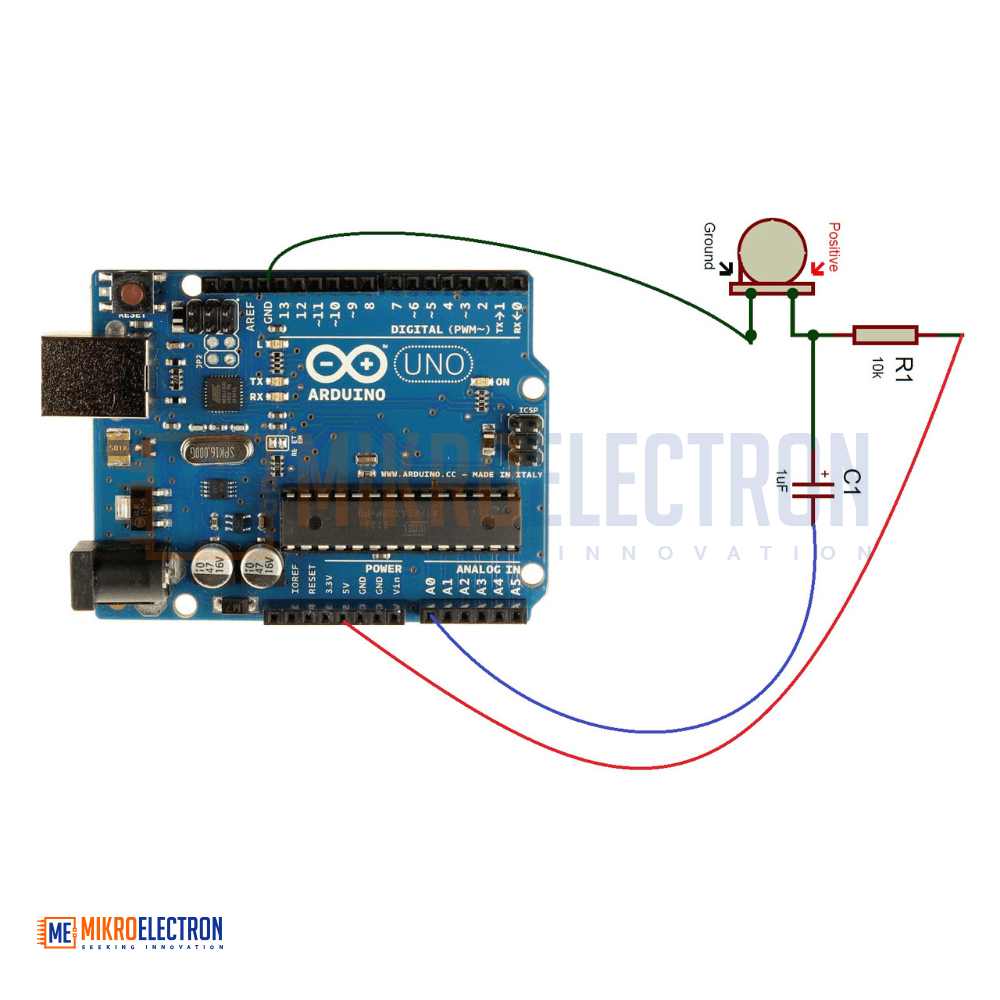
To boost this very weak signal, the microphone integrates a Field Effect Transistor (FET) pre-amplifier, which delivers a low-impedance output suitable for direct connection to audio amplifiers, sound cards, microcontroller ADC inputs, or further amplification stages. Because the built-in FET is delicate, it is important to connect the microphone with the correct polarity — the negative terminal usually connects to GND, and the positive terminal connects through a bias resistor (typically 33kΩ to 47kΩ for a 9V–15V supply) to the positive rail.
This electret microphone is the standard audio input element in MAX9814, MAX4466, and LM386-based microphone amplifier circuits, and is fully compatible with Arduino, Raspberry Pi, ESP32, and other MCU sound projects.
How It Works (Brief Theory)
- Capacitive Principle: Q = CV — sound moves the diaphragm, capacitance changes, voltage varies.
- Two Metal Plates: One fixed, one flexible (diaphragm) that vibrates with sound waves.
- Built-in FET Pre-Amp: Buffers and amplifies the tiny voltage signal generated by the capsule.
- Bias Resistor Required: Typically 33kΩ – 47kΩ to the positive supply rail, depending on supply voltage.
- Output: Low-impedance AC audio signal proportional to the input sound waves.
Specifications
- Type: Electret Condenser Microphone with Built-in FET Pre-Amp
- Dimensions: 9 × 7 mm (Diameter × Height)
- Operating Voltage: 1.5V – 10V DC (typical: 3V – 5V)
- Standard Bias Resistor: 2.2 kΩ – 47 kΩ (depends on supply voltage)
- Sensitivity: Approx. -44 dB to -48 dB (typical)
- Frequency Response: 20 Hz – 20 kHz (typical audio range)
- Output Impedance: Low (suitable for direct amplifier interface)
- Signal-to-Noise Ratio (SNR): Typically > 60 dB
- Operating Temperature: -20°C to +70°C
- Connection Type: Solder-pad / Wire-leads
- Compliance: RoHS Compliant
Applications
- Microphone Amplifier Circuits — basis for MAX9814, MAX4466, and LM386 designs
- Voice Recording Devices — DIY recorders and digital memos
- Sound Detection Sensors — clap switches and noise-activated triggers
- Arduino Sound Projects — voice level meters, sound visualizers, and FFT analyzers
- PC Sound-Card Inputs — DIY computer microphones
- Intercom & Communication Systems — two-way audio devices
- Hearing Aids & Assistive Devices — small, sensitive sound pickup
- Voice-Activated Systems — smart switches and IoT devices
- Spy & Hidden Audio Devices — covert microphone applications (legal use)
- Karaoke & Singing Microphones — amateur audio capture
- Educational & STEM Projects — teaching audio electronics and signal processing
- Speech Recognition — input for AI-based voice assistants
- Telephone & VoIP Handsets — replacement microphone capsules
- Acoustic Measurement — sound level monitoring (with proper calibration)