
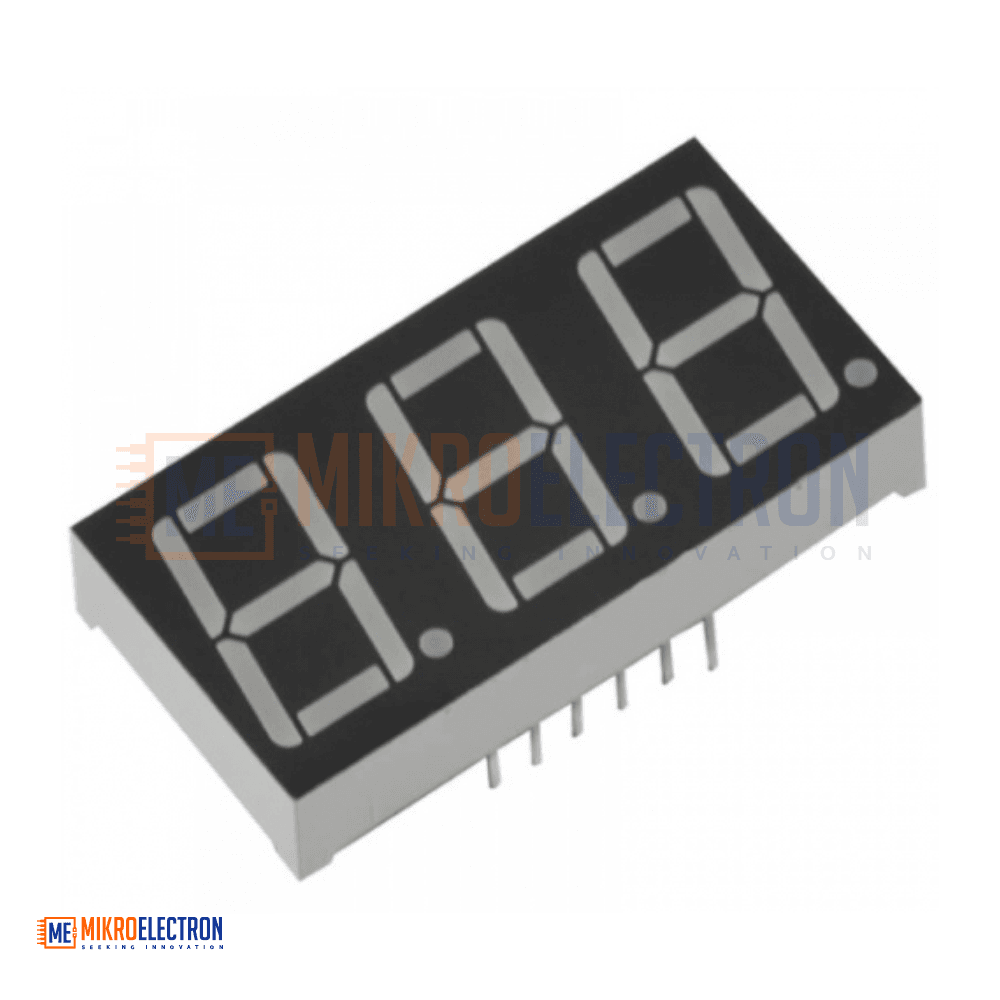
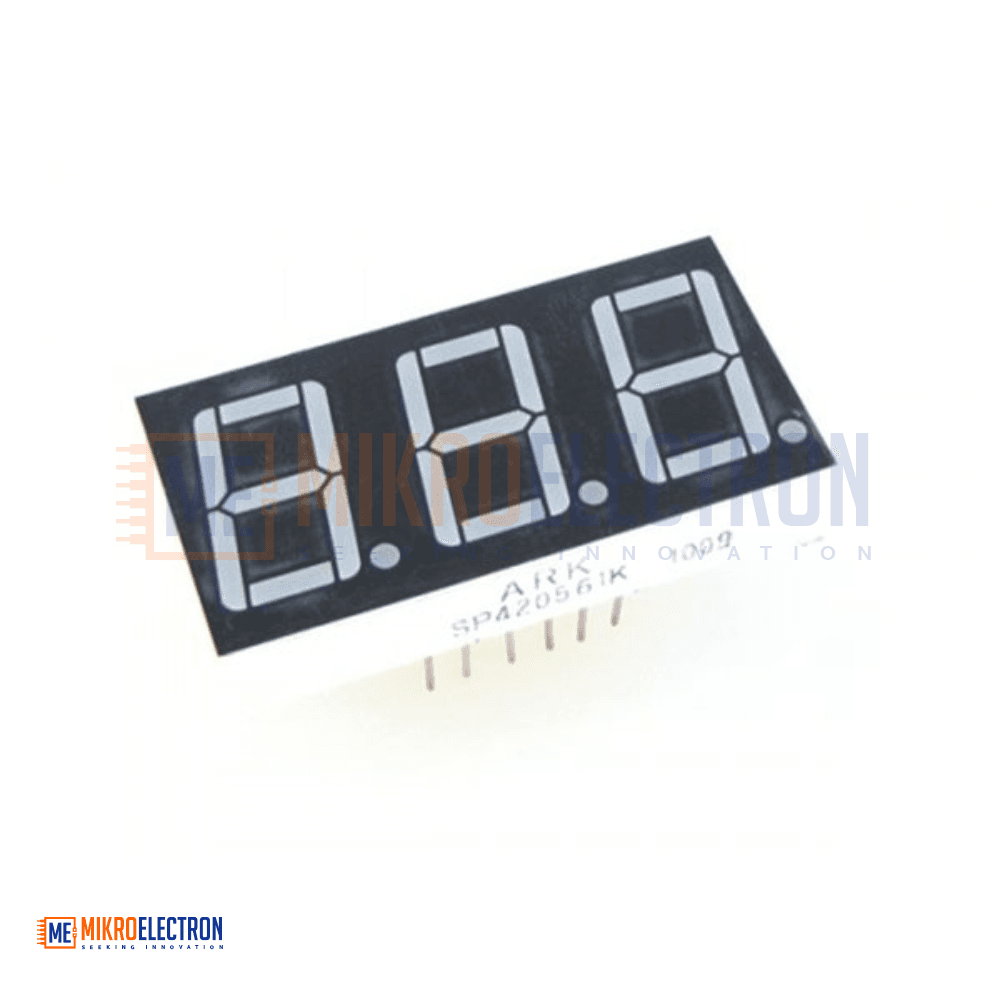
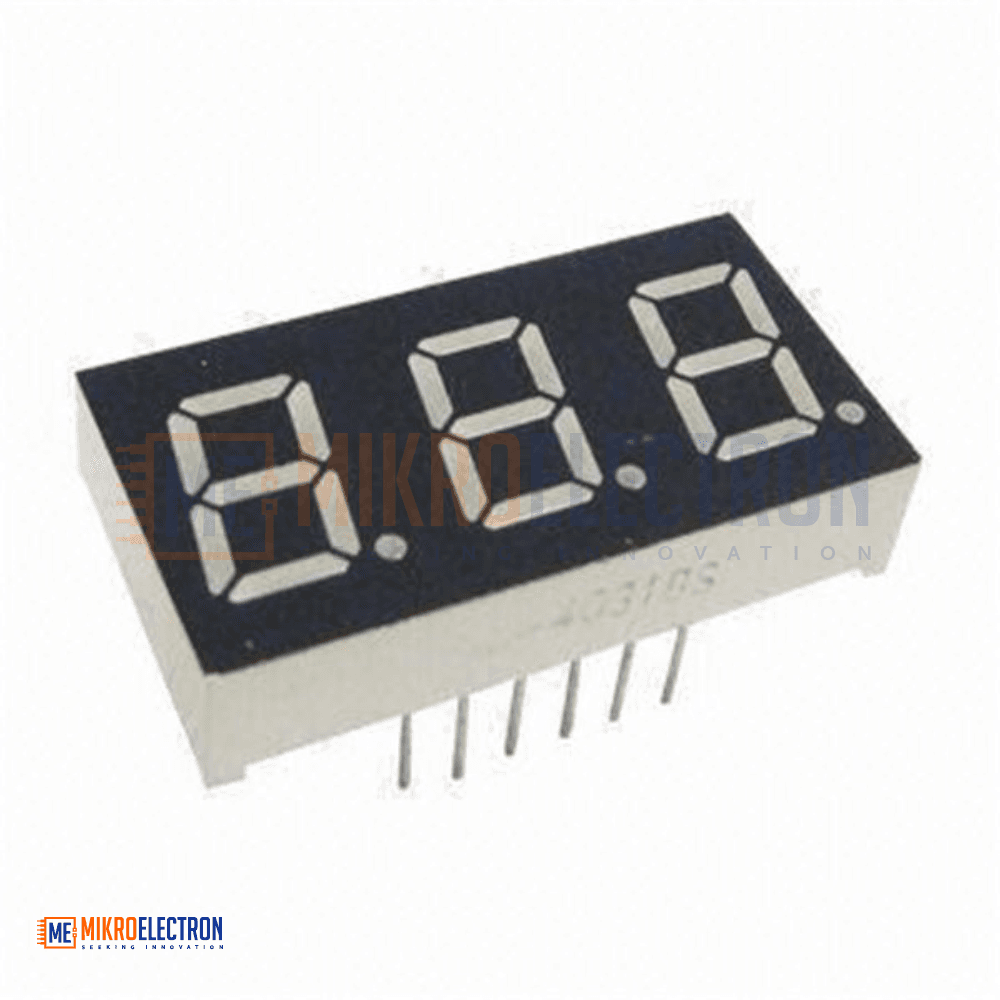
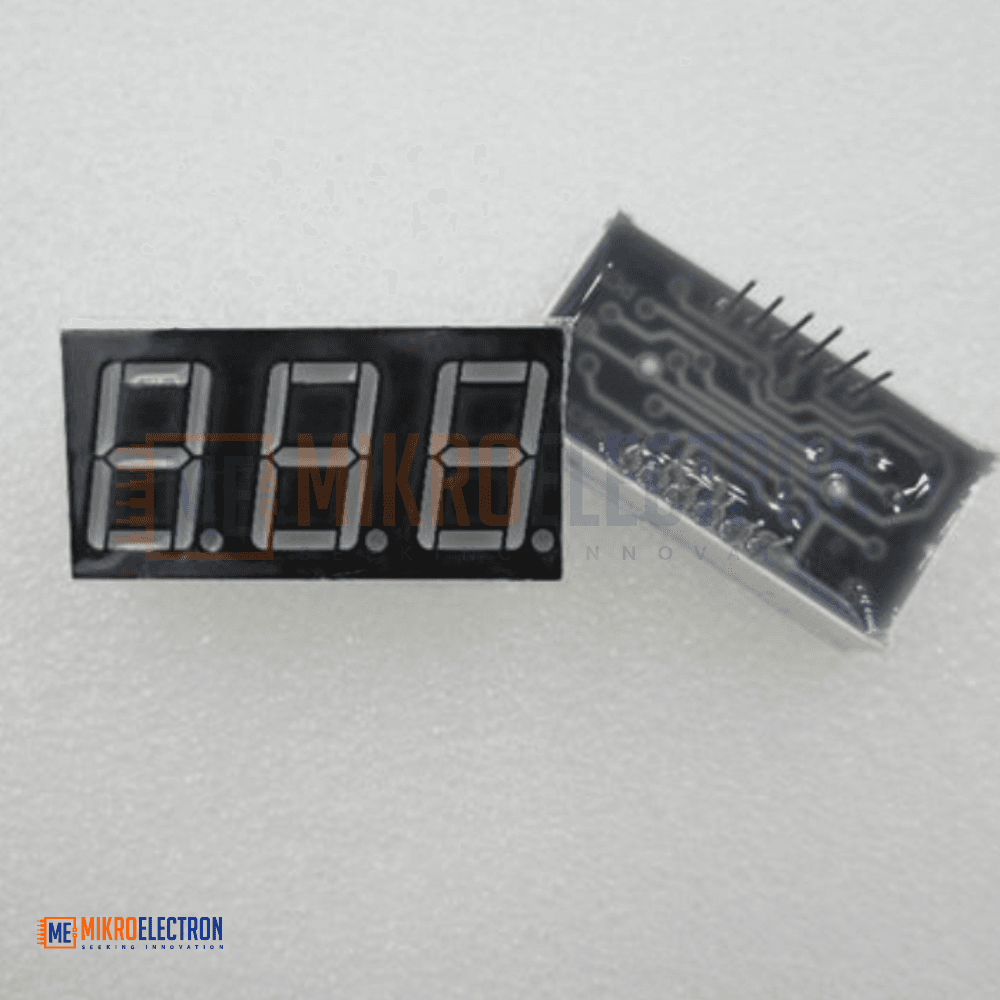
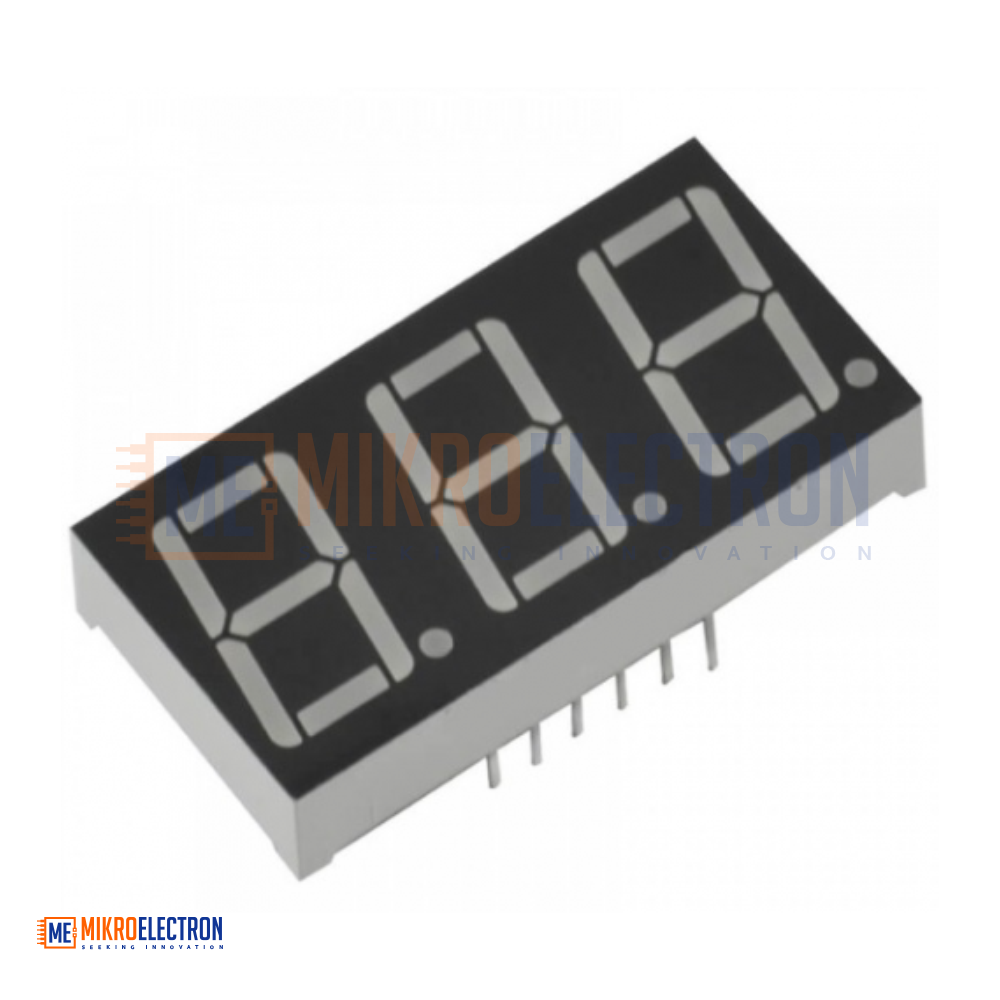
7 segment 3 digit display 0.36-Inch Common Cathode
The 0.36" 3-Digit 7-Segment LED Display is a compact common cathode red display ideal for showing numerical values in electronics projects. With three digits of 0.36-inch (9.14mm) character height, it provides clear, bright readability for counters, voltmeters, clocks, and meters. Each digit includes a decimal point, making it perfect for displaying decimal numbers. Compatible with Arduino, microcontrollers, and shift registers such as 74HC595, with a typical forward voltage of 1.8V per segment.
شاشة LED سبع شرائح ثلاثية الخانات بقياس 0.36 إنش من نوع الكاثود المشترك باللون الأحمر، مثالية لعرض القيم الرقمية في مشاريع الإلكترونيات. تتميز بـثلاث خانات بارتفاع 0.36 إنش (9.14 ملم) لكل رقم، مما يوفر وضوحاً وسطوعاً عاليين في العدّادات وأجهزة قياس الجهد والساعات الرقمية. كل خانة تحتوي على نقطة عشرية، مما يجعلها مناسبة لعرض الأرقام العشرية. متوافقة مع Arduino والمتحكمات الدقيقة ومسجلات الإزاحة مثل 74HC595، بجهد أمامي نموذجي 1.8 فولت لكل شريحة.
The 0.36 Inch 3-Digit 7-Segment LED Display is a bright red, common cathode numeric display designed to show numbers from 0 to 9 along with decimal points across three digits. Each digit measures 0.36 inches (approximately 9.14mm) in height, providing excellent readability from a reasonable distance while keeping the overall module compact at roughly 23mm × 15mm.
The display is built using seven LED segments labeled A through G, plus an eighth LED (DP) for the decimal point on each digit. Because this is a common cathode type, all the cathodes of the LEDs within a single digit are connected together, and that common pin is pulled to ground to activate the digit. Each digit has its own common cathode pin (D1, D2, D3), while the segment anodes are shared across all three digits — a setup that is ideal for multiplexing.
This makes the display extremely efficient to drive: instead of needing 24 individual pins, you can control all three digits using just 8 segment lines + 3 digit-select lines, which works seamlessly with Arduino, ESP32, STM32, PIC microcontrollers, or with shift registers like the 74HC595 and dedicated drivers such as the TM1637 or MAX7219 style circuits.
The display is logic-level compatible with both 3.3V and 5V systems when used with appropriate current-limiting resistors (typically 220Ω–470Ω per segment when driving from a 5V source). It is widely used in DIY electronics, instrumentation, and educational projects.
Important note: Always use current-limiting resistors on each segment line to protect the LEDs and your microcontroller pins.
Specifications
- Display type: 7-Segment LED, 3 digits with decimal points
- Digit height: 0.36 inch (9.14mm)
- Module dimensions: approximately 23mm × 15mm
- Polarity: Common Cathode
- LED color: Bright Red
- Peak wavelength: ~640nm
- Forward voltage (per segment): 1.8V typical (2.2V max)
- Forward current (per segment): 10–20mA typical (30mA max continuous)
- Peak pulsed current: up to 70–100mA (multiplexing)
- Reverse voltage: 3V max
- Luminous intensity: ~20,000 µcd @ IF = 10mA
- Number of pins: 12 pins (2 rows of 6)
- Operating temperature: −25°C to +85°C
- Storage temperature: −40°C to +85°C
- Package: Through-hole (DIP), white diffused epoxy on black face
Pin Configuration (Typical)
The module has 12 pins arranged as 6 pins on top + 6 pins on bottom:
- Segment pins: A, B, C, D, E, F, G, DP (shared between digits)
- Digit select pins: D1, D2, D3 (common cathodes — pull low to activate)
Applications
- Digital clocks and timers
- Counters (people counter, lap counter, score counter)
- Voltmeters, ammeters, and power supply displays
- Temperature and humidity displays
- Reaction time and stopwatch projects
- Arduino learning kits and educational electronics
- Flight simulator panels and home cockpit builds
- Industrial instrumentation panels
- Frequency counters and tachometers
- IoT and embedded system numeric output