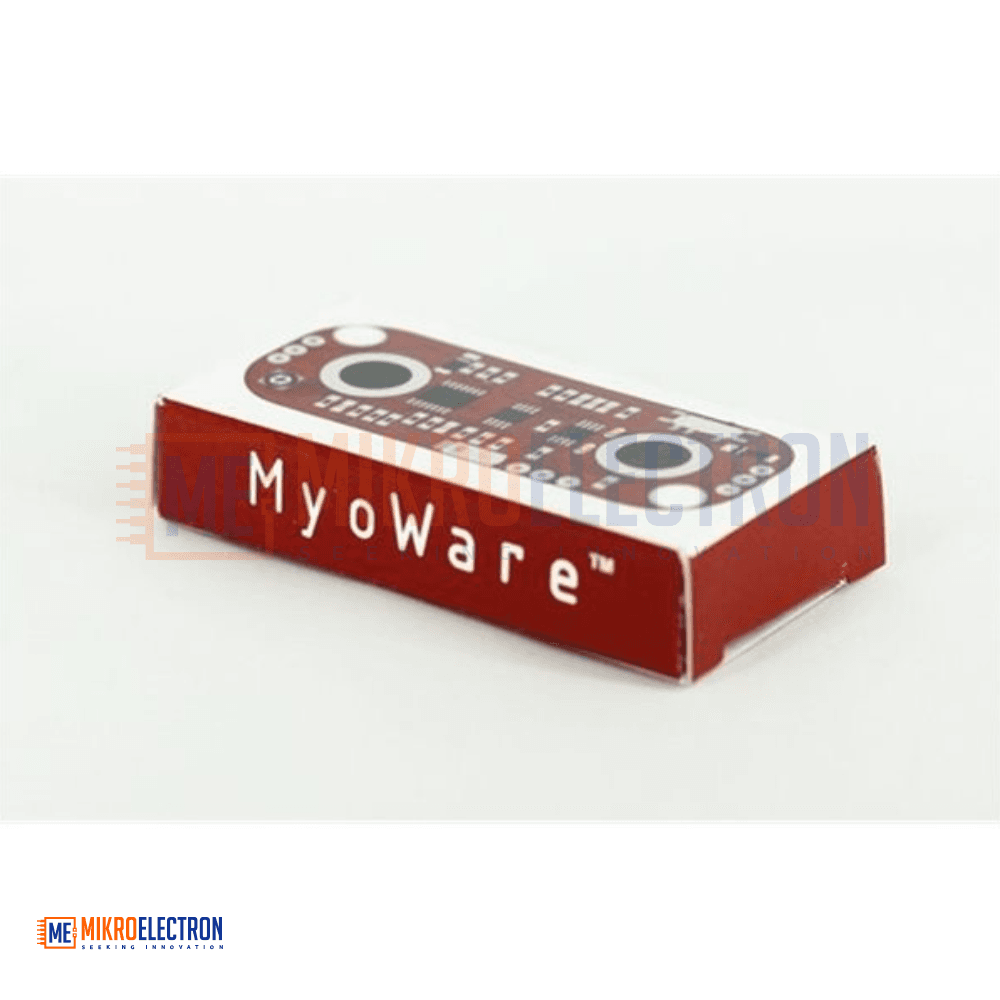
MyoWare Muscle Sensor Development Kit
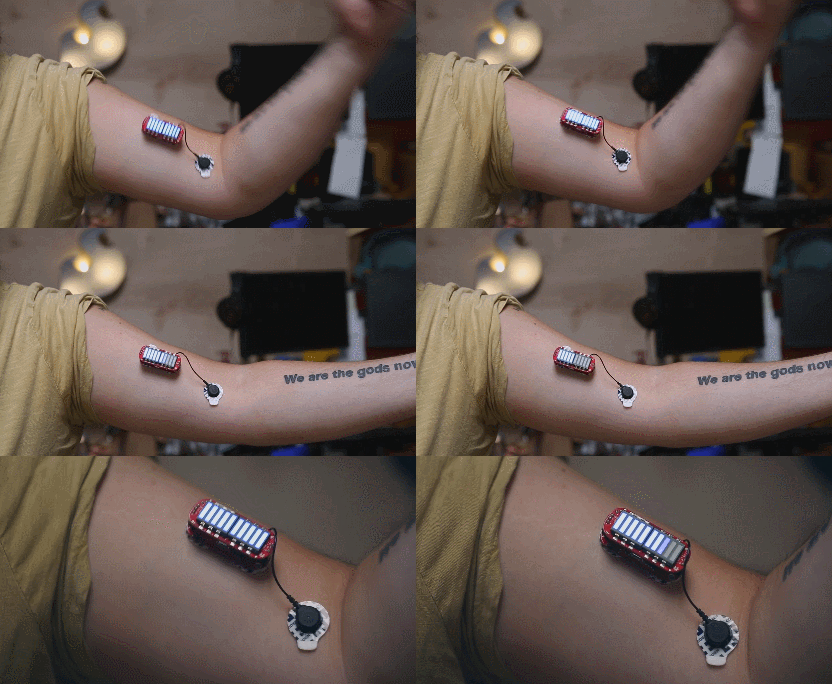
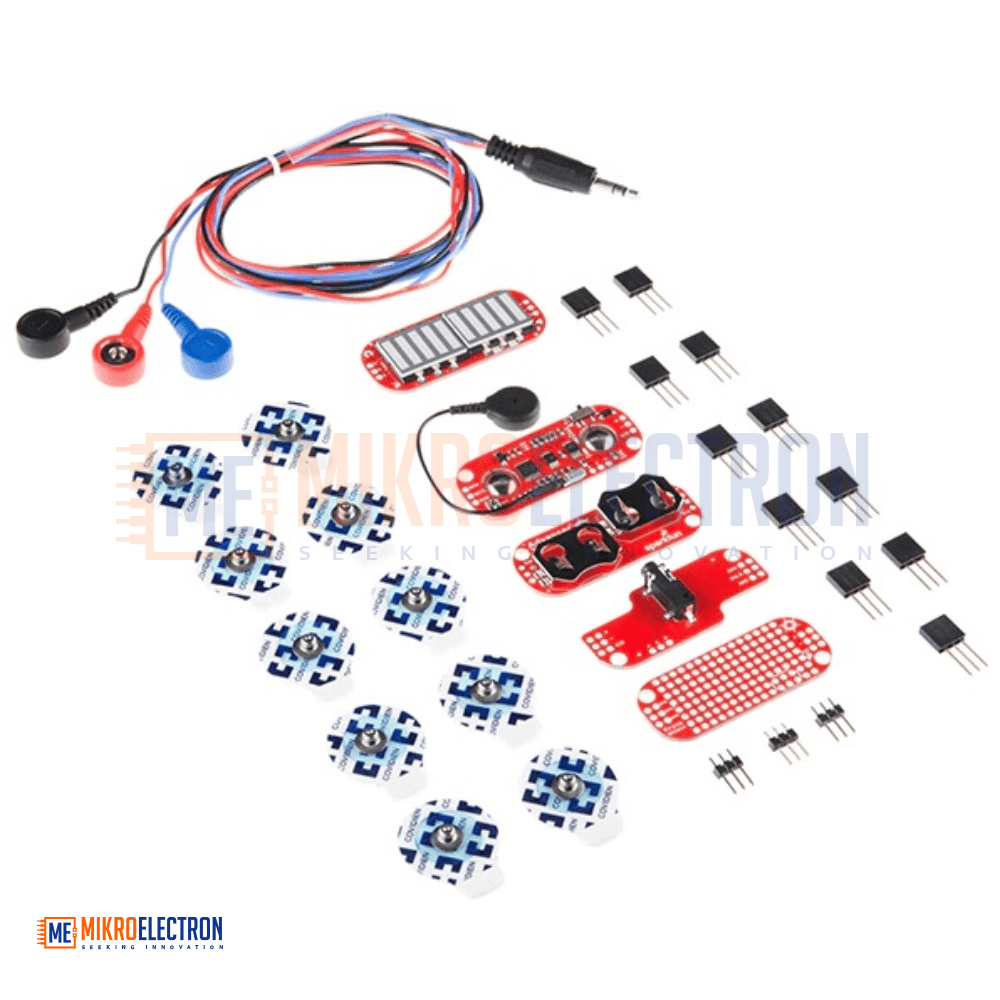
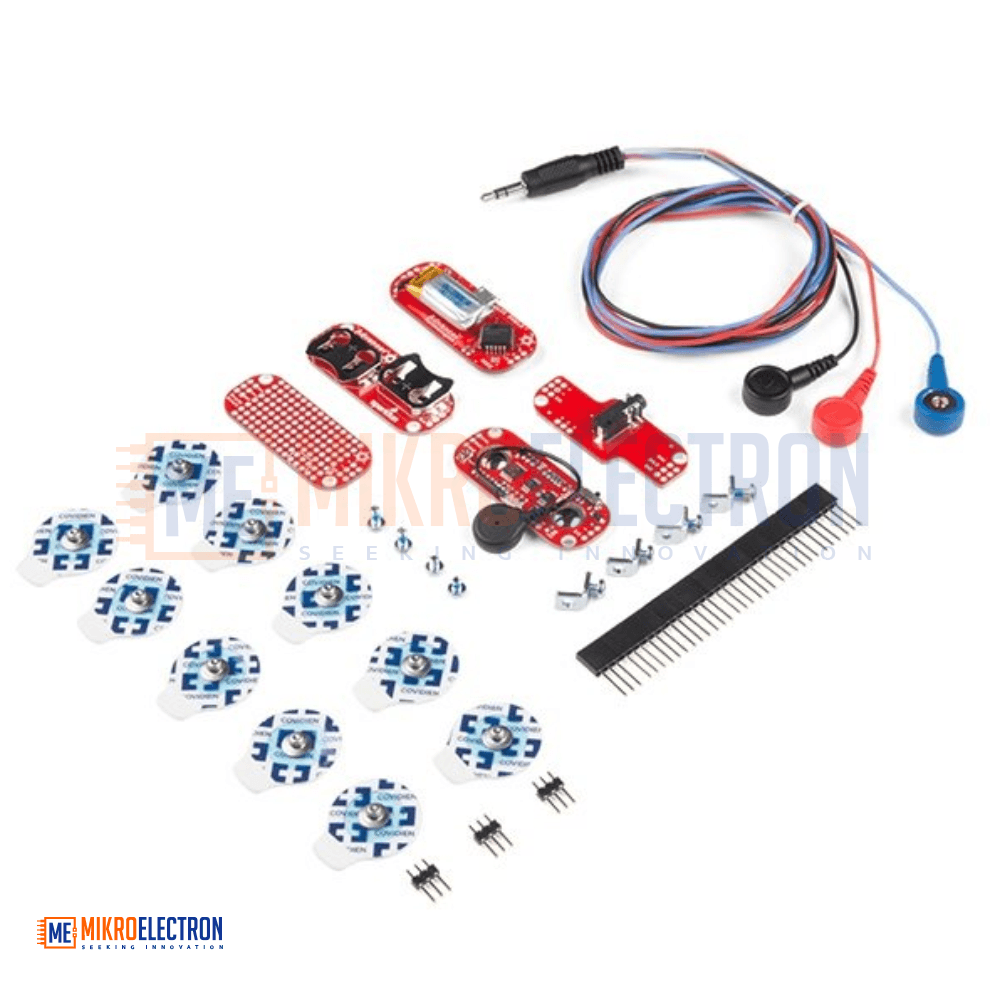
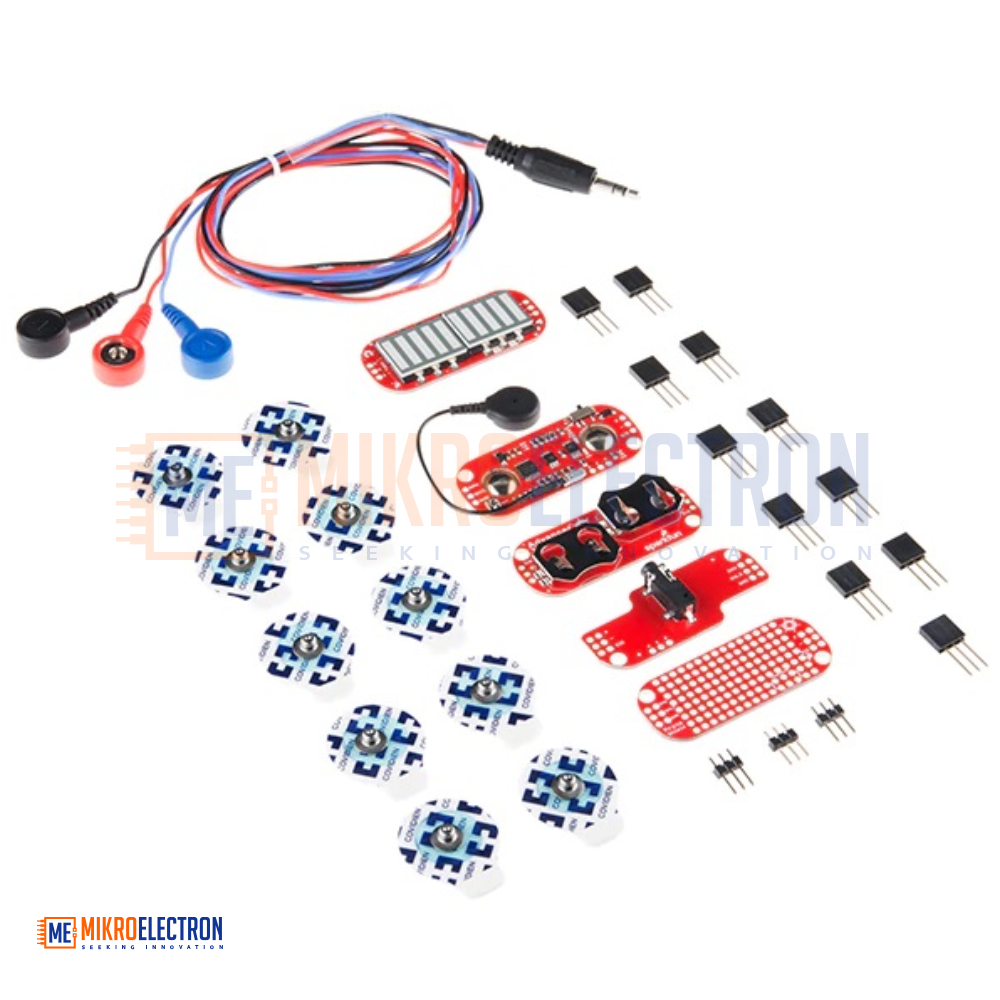
The MyoWare Muscle Sensor Development Kit is an Arduino-compatible electromyography (EMG) sensor kit that lets you control electronics using your own muscle activity. Instead of buttons or joysticks, the sensor reads the filtered and rectified electrical signals from your muscles and outputs a 0 to Vs voltage based on flex intensity. The kit includes the MyoWare Muscle Sensor, Power, Cable, LED, and Proto shields, biomedical electrodes, sensor cable, and stackable headers for flexible project configurations.
طقم تطوير حساس العضلات MyoWare هو طقم حساس تخطيط كهربية العضلات (EMG) متوافق مع Arduino يتيح لك التحكم في الإلكترونيات باستخدام نشاط عضلاتك بدلاً من الأزرار وعصي التحكم. يقوم الحساس بقراءة الإشارات الكهربائية المرشَّحة والمقوَّمة من العضلات ويُخرج جهداً من 0 إلى Vs فولت حسب شدة الانقباض. يحتوي الطقم على حساس العضلات MyoWare ودروع الطاقة، الكابل، LED، والنماذج الأولية، إضافة إلى أقطاب طبية حيوية، كابل حساس، وأشرطة قابلة للتركيب فوق بعضها.
The MyoWare Muscle Sensor Development Kit from SparkFun is a complete, Arduino-powered electromyography (EMG) sensor solution that opens the door to controlling devices using the electrical activity of your own muscles. Rather than relying on traditional inputs like buttons, levers, or joysticks, this kit allows your body's natural muscle signals to become the controller.
At the heart of the kit is the MyoWare Muscle Sensor, which measures the filtered and rectified electrical activity of a targeted muscle. The board outputs a voltage ranging from 0 to Vs volts (where Vs is the supply voltage), proportional to the intensity of muscle contraction. The harder you flex, the higher the output signal — making it ideal for analog reading with any Arduino-compatible microcontroller.
The kit is designed around a modular shield ecosystem. You can stack the included shields directly onto the muscle sensor to add functionality: the Power Shield provides battery power, the LED Shield offers a visual indicator of muscle activity, the Cable Shield lets you place electrodes away from the sensor body, and the Proto Shield gives you a prototyping area to add your own circuitry.
Setup is straightforward: solder the included headers, attach the desired shields, snap on the biomedical sensor pads, place them on a muscle group, and read the analog output. The kit includes 3-pin stackable headers to make combining shields in different configurations simple and reliable.
Important note: The Power Shield and the LED Shield both supply power but at slightly different voltages — do not use both shields simultaneously.
Specifications
- Sensor type: Surface Electromyography (sEMG)
- Supply voltage (Vs): +2.9V to +5.7V (single-supply, no ± rails needed)
- Output: Analog 0 to Vs volts (rectified and integrated EMG envelope)
- Polarity protection: Yes (reverse polarity protected)
- Indicators: On-board power LED and signal strength LED
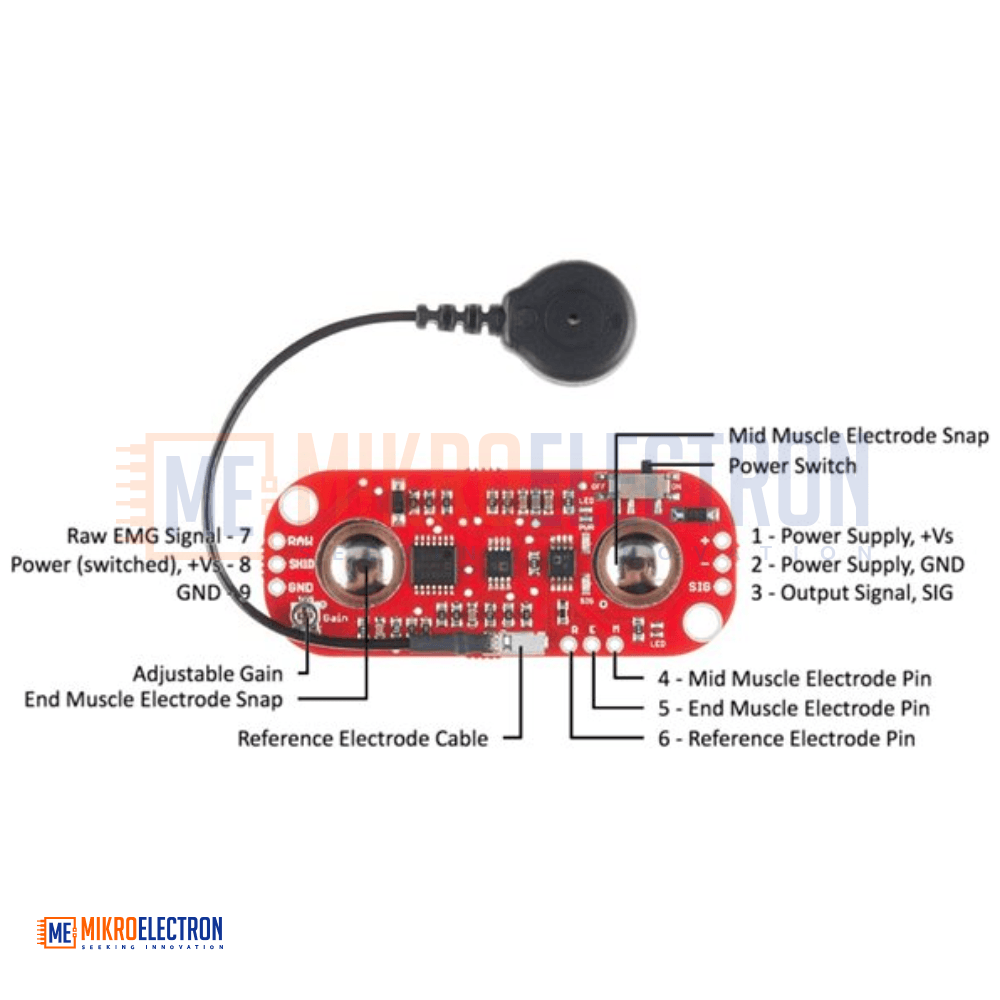
- Adjustable gain: Yes, via on-board potentiometer
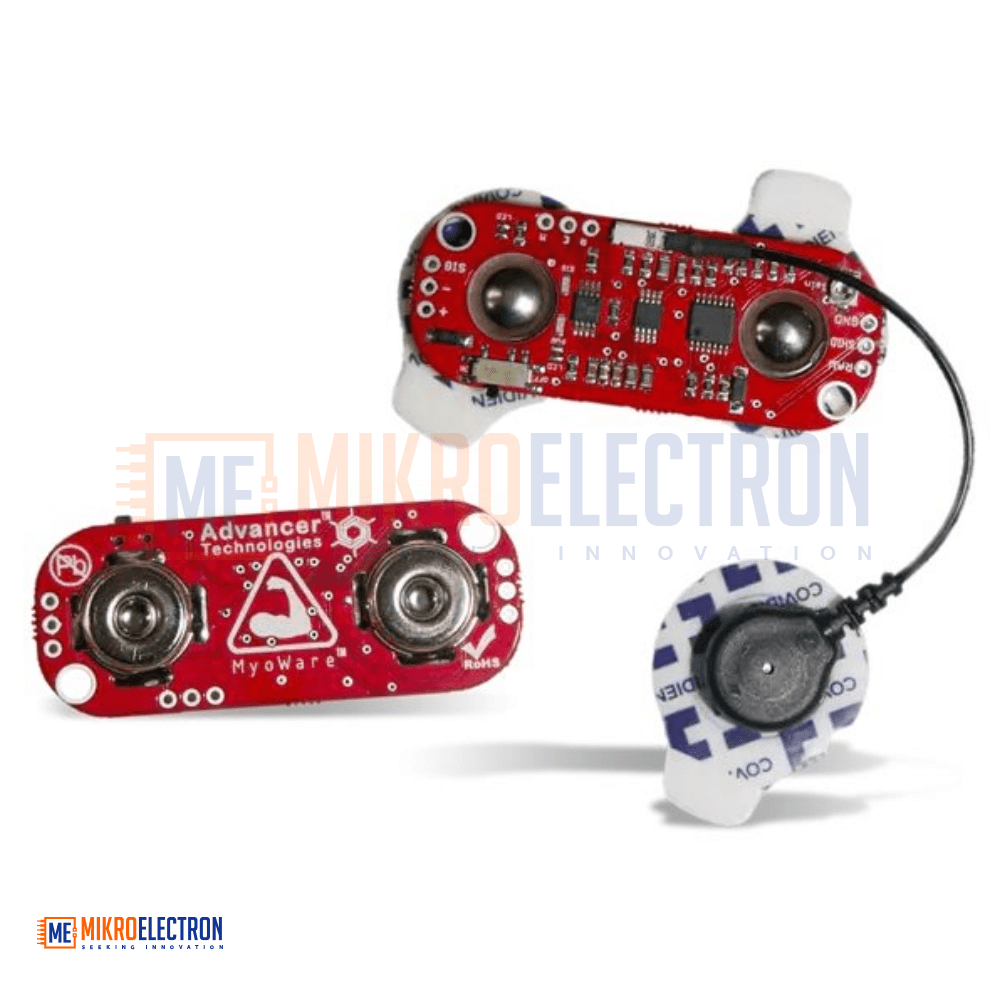
- Electrode connection: Embedded snap connectors for direct electrode attachment (wearable design)
- Compatibility: Arduino, RedBoard, and any 3.3V–5V microcontroller with an analog input
- Expansion: Stackable shield ecosystem (Power, Cable, LED, Proto)
Kit Contents
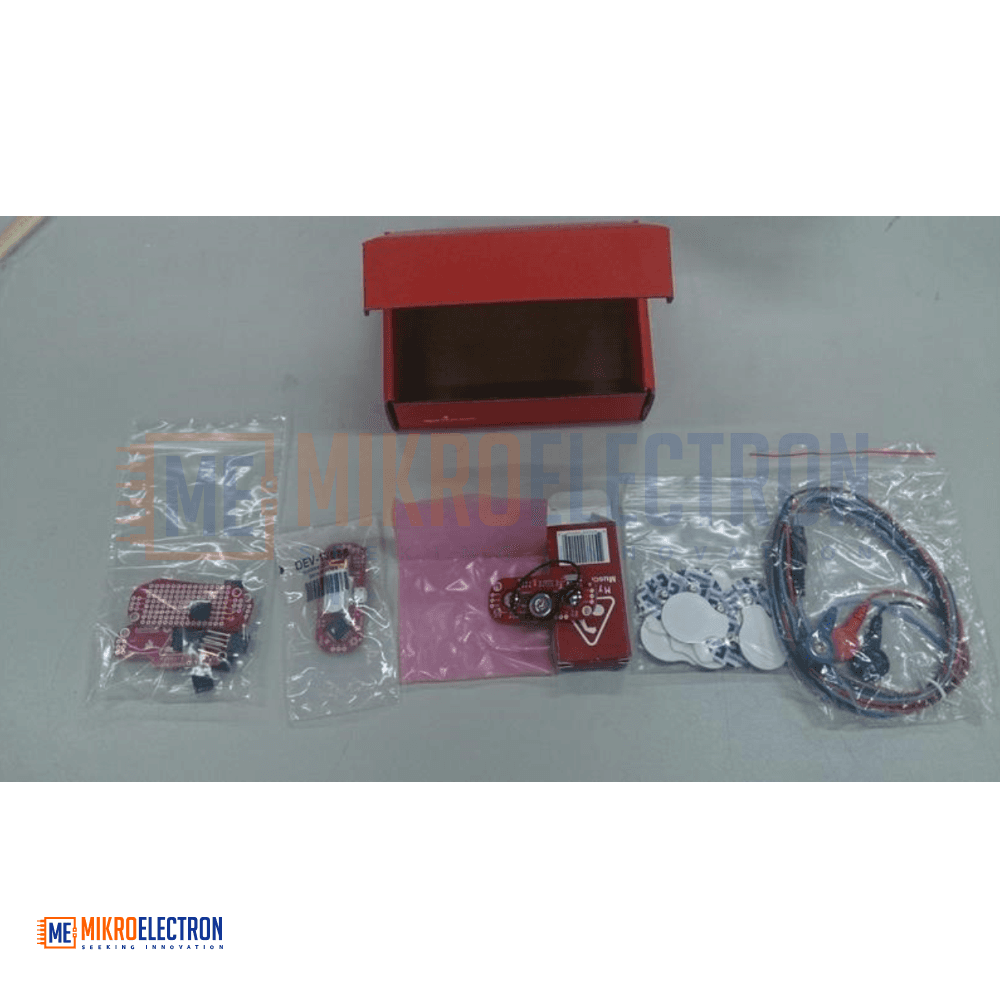
- 1x MyoWare Muscle Sensor
- 1x MyoWare Power Shield
- 1x MyoWare Cable Shield
- 1x MyoWare LED Shield
- 1x MyoWare Proto Shield
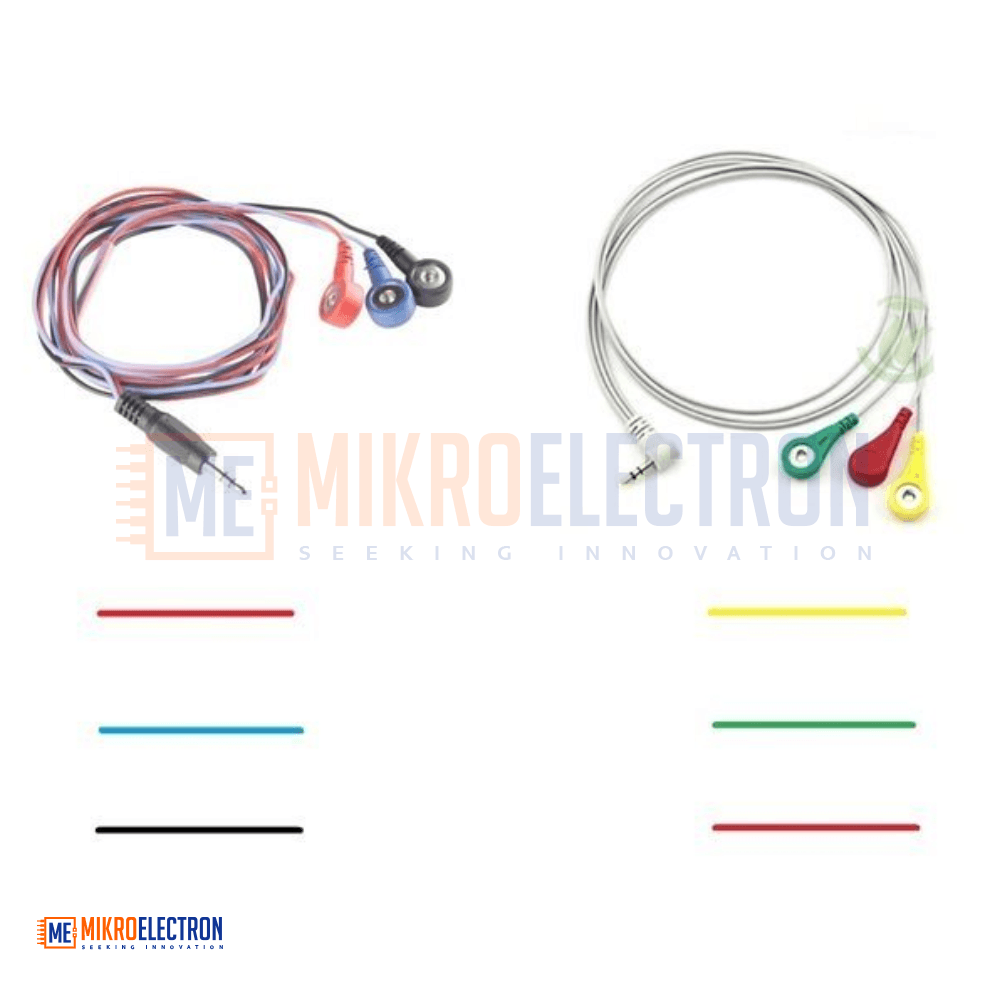
- 1x Sensor Cable (3-connector)
- 10x Biomedical Sensor Pads (disposable electrodes)
- 11x Stackable Headers (3-pin, female)
- 3x Headers (3-pin, male)
Applications
- Prosthetic limb control and assistive robotics
- Wearable health and fitness monitoring devices
- Gesture-based control of robots, drones, and RC vehicles
- Human-computer interaction and accessibility interfaces
- Biomedical research and physical therapy projects
- Virtual reality and gaming controllers
- Sports performance analysis and muscle activity tracking
- STEM and university projects in biomedical engineering, electronics, and IoT