
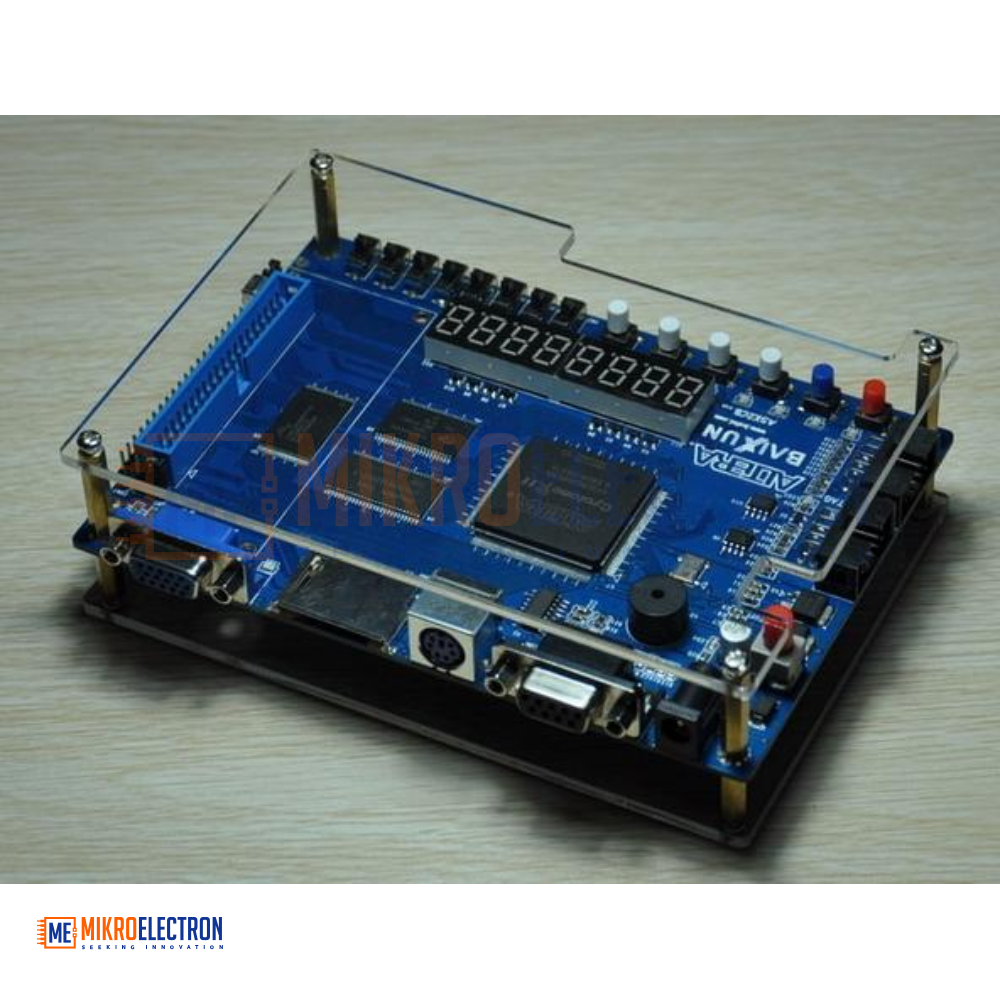
FPGA Altera CycloneII EP2C5T144
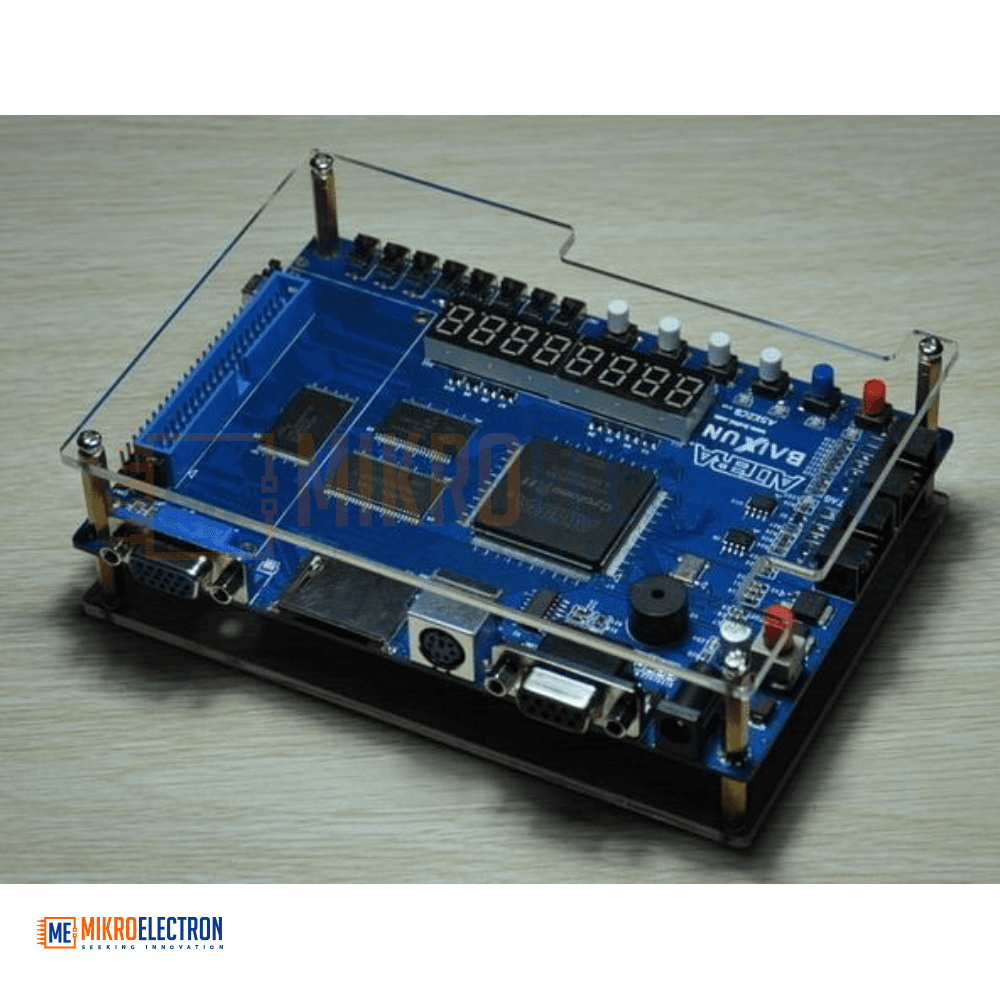
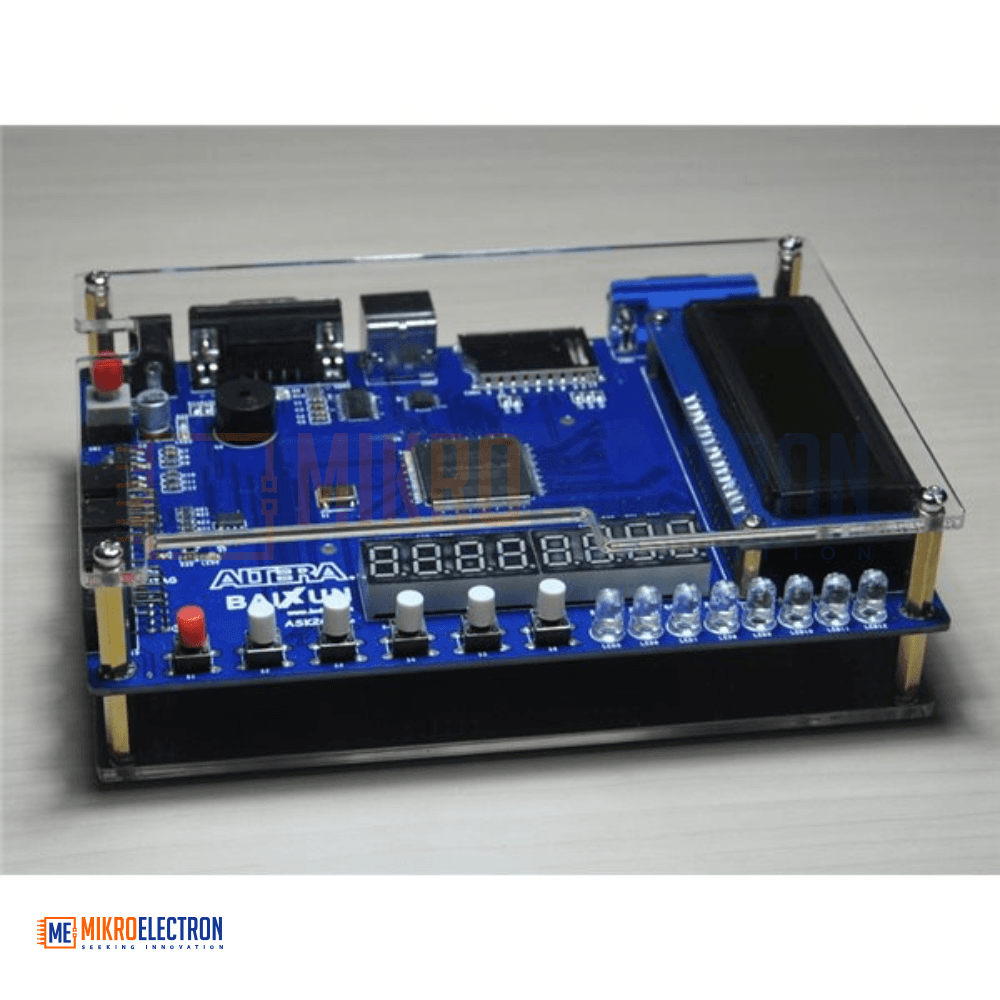
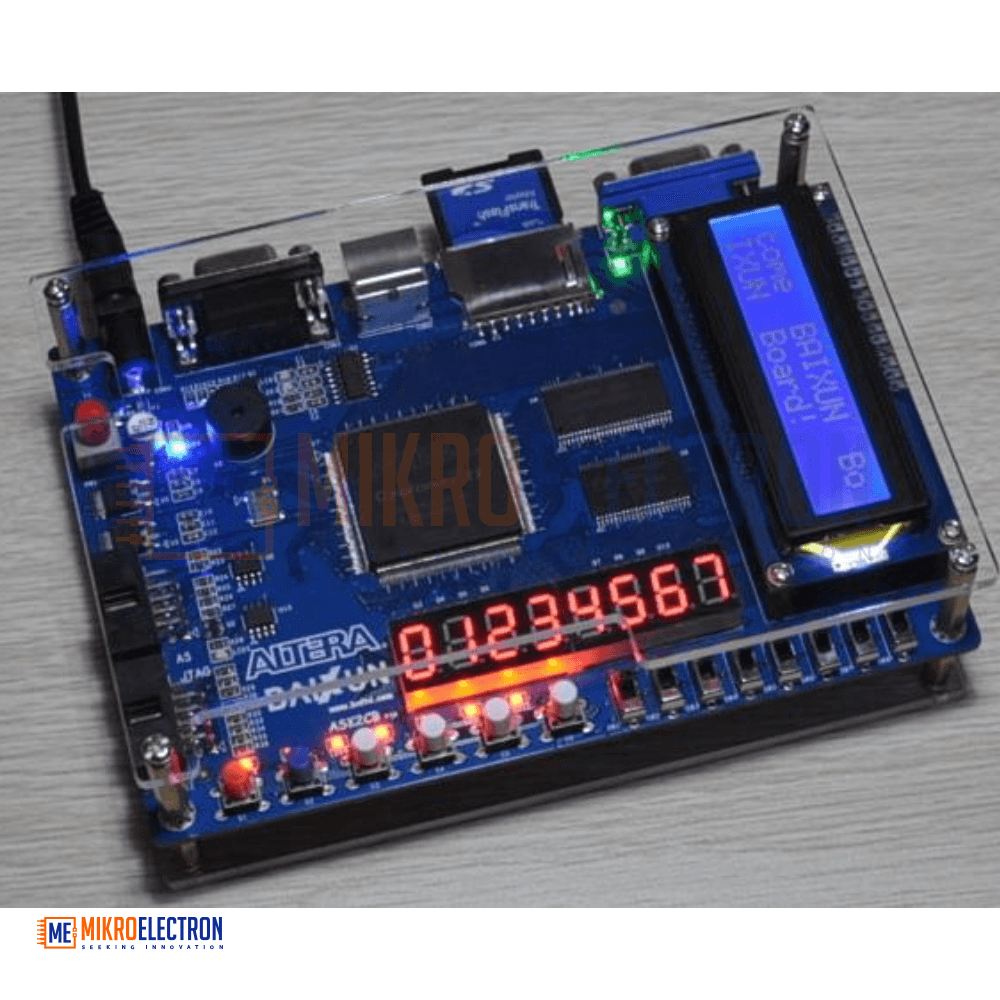
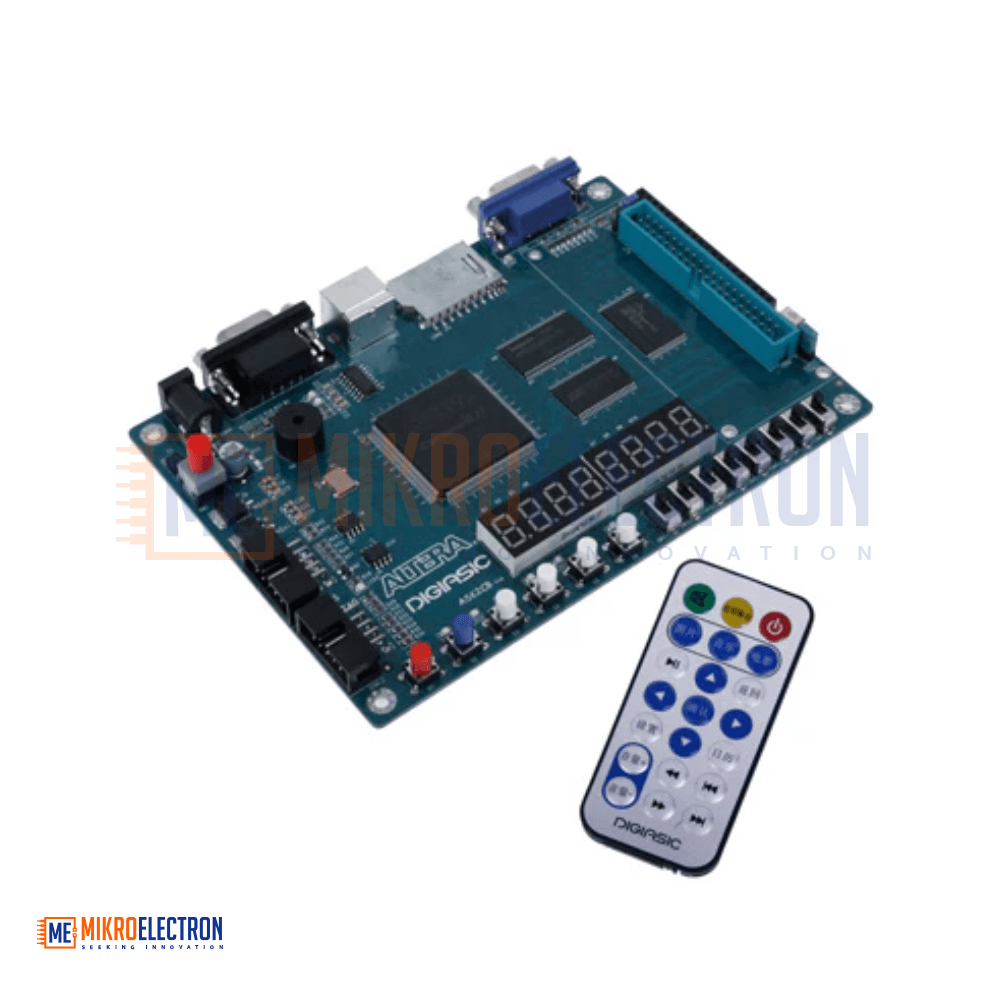
FPGA Development Board Altera Cyclone II EP2C5T144 is a versatile FPGA training and development platform designed for learning digital logic design, embedded systems, and hardware prototyping. Based on the Altera Cyclone II EP2C5T144 FPGA, the board includes a wide range of onboard peripherals such as LEDs, seven-segment displays, push buttons, VGA output, PS/2 interfaces, RS232 communication, SRAM memory, and LCD connectivity. It supports both JTAG and Active Serial (AS) configuration modes and features a 50MHz system clock. This board is ideal for students, educators, and engineers developing FPGA-based applications and digital system projects.
لوحة تطوير FPGA Altera Cyclone II EP2C5T144 هي منصة تعليمية وتطويرية متكاملة مصممة لتعلم تصميم الدوائر الرقمية والأنظمة المضمنة وتطوير المشاريع المعتمدة على FPGA. تعتمد على شريحة Altera Cyclone II EP2C5T144 وتحتوي على مجموعة واسعة من الوحدات المدمجة مثل مصابيح LED وشاشات العرض الرقمية والأزرار وواجهة VGA ومنافذ PS/2 ومنفذ RS232 وذاكرة SRAM وواجهة شاشة LCD. تدعم اللوحة وضعي البرمجة JTAG و Active Serial (AS) وتحتوي على ساعة تشغيل رئيسية بتردد 50 ميجاهرتز. تعد خياراً ممتازاً للطلاب والمهندسين ومطوري الأنظمة الرقمية.
The FPGA Altera Cyclone II EP2C5T144 Development Board is a comprehensive FPGA learning and prototyping platform built around the Altera Cyclone II EP2C5T144 device. It provides numerous onboard peripherals and interfaces that enable users to develop, test, and implement digital logic designs without requiring additional hardware.
The board features an EPCS4 configuration device and supports both JTAG and Active Serial (AS) programming modes. A built-in 50MHz system clock provides a stable timing source for FPGA projects.
Multiple user interfaces are included, such as LEDs, seven-segment displays, push buttons, a buzzer, VGA output, PS/2 ports, RS232 communication, EEPROM, SRAM memory, and LCD connectivity. These peripherals allow users to explore topics including digital logic, communication protocols, memory interfacing, video signal generation, and embedded system development.
For power flexibility, the board supports both USB power and external 5V DC power, with an onboard selector switch. A 2A resettable fuse provides protection against overcurrent conditions, enhancing reliability during development and experimentation.
This development board is suitable for FPGA education, research, laboratory experiments, and hardware prototyping projects.
Specifications
| Parameter | Specification |
|---|---|
| Product Name | FPGA Development Board |
| FPGA Device | Altera Cyclone II EP2C5T144 |
| Configuration Memory | EPCS4 |
| Configuration Modes | JTAG, Active Serial (AS) |
| System Clock | 50 MHz |
| SRAM Memory | 1 Mbit CY7C1019VC33 |
| EEPROM | AT24C04 (I²C Interface) |
| LED Indicators | 8 LEDs |
| Seven-Segment Display | 8-Digit LED Display |
| Push Buttons | 4 Independent Buttons |
| Buzzer | Yes |
| RS232 Interface | MAX3232 Level Conversion |
| PS/2 Interfaces | 2 Ports (Keyboard/Mouse) |
| LCD Interface | LCD1602 |
| VGA Interface | 3-bit VGA Output |
| Additional IO Header | 2.54mm Expansion Header |
| Power Supply Options | USB or External 5V DC |
| Protection | 2A Resettable Fuse |
| Board Dimensions | 104 mm × 138.5 mm |
Onboard Interfaces
| Interface | Description |
|---|---|
| RS232 | Serial communication via MAX3232 |
| PS/2 | Keyboard and mouse interface |
| VGA | Video display output |
| LCD1602 | Character LCD connection |
| I²C EEPROM | AT24C04 storage interface |
| SRAM | External memory expansion |
| User LEDs | Visual status indicators |
| Seven-Segment Display | Numeric display output |
| Push Buttons | User input controls |
| Buzzer | Audio signaling |
Applications
- FPGA education and training
- Digital logic design
- Verilog and VHDL development
- Embedded system prototyping
- VGA display projects
- Keyboard and mouse interfacing
- Memory controller development
- Serial communication projects
- Industrial control experiments
- Digital signal processing studies
- Computer architecture learning
- Hardware verification and testing