
Arduino Leonardo
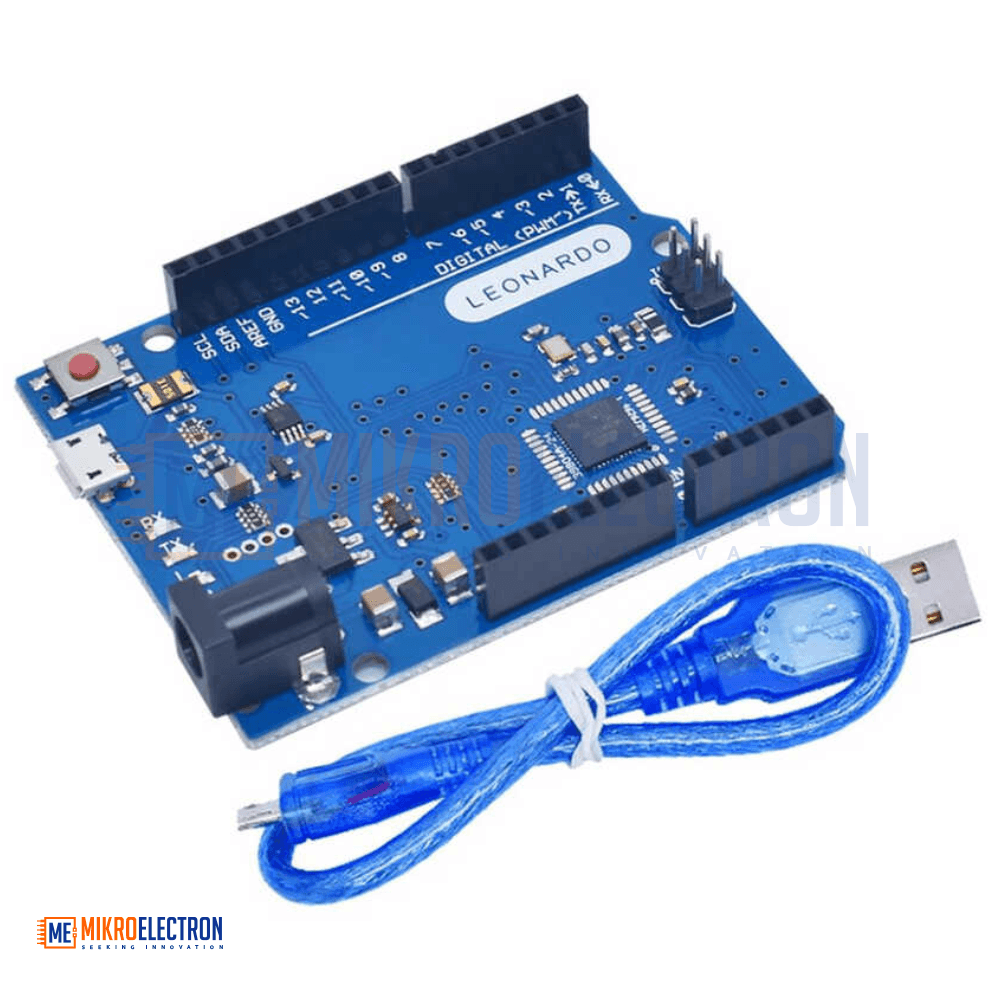
The Arduino Leonardo is a versatile microcontroller board based on the ATmega32u4 chip, featuring built-in USB communication that allows it to act as a keyboard, mouse, or virtual COM port directly to a computer — no USB-to-Serial converter needed. With 20 digital I/O pins (7 PWM), 12 analog inputs, 32KB Flash memory, and a 16MHz clock, it's perfect for HID projects, custom keyboards, game controllers, robotics, and educational electronics. Powered via micro USB or 7–12V external supply.
لوحة Arduino Leonardo هي لوحة متحكم دقيق متعددة الاستخدامات مبنية على شريحة ATmega32u4، وتتميز بـ اتصال USB مدمج يسمح لها بالعمل كـ لوحة مفاتيح، أو فأرة، أو منفذ COM افتراضي مباشرة مع الحاسوب — بدون الحاجة إلى محوّل USB-Serial. تحتوي على 20 منفذ I/O رقمي (منها 7 PWM)، و12 مدخلاً تناظرياً، وذاكرة Flash 32 كيلوبايت، وتعمل بسرعة 16 ميجاهرتز، مما يجعلها مثالية لـ مشاريع HID، ولوحات المفاتيح المخصصة، ووحدات تحكم الألعاب، والروبوتات، والإلكترونيات التعليمية. تعمل عبر Micro USB أو مصدر طاقة خارجي 7–12 فولت.
The Arduino Leonardo is a uniquely capable microcontroller development board that stands apart from the rest of the Arduino lineup due to its integrated USB communication. Built around the Atmel ATmega32u4 microcontroller, the Leonardo eliminates the need for a separate USB-to-Serial converter chip (such as the FT232 or CH340) found on other Arduino boards. The ATmega32u4 has native USB capability built directly into the chip, which opens up a wide range of new possibilities for makers, developers, and tinkerers.
This means the Leonardo can be programmed to act as any USB peripheral device — including a keyboard, mouse, joystick, MIDI controller, or virtual serial port — appearing to the host computer as a standard HID (Human Interface Device). This makes it the perfect platform for building custom USB peripherals, such as macro keyboards, gaming controllers, accessibility devices, automation tools, and educational HID projects.
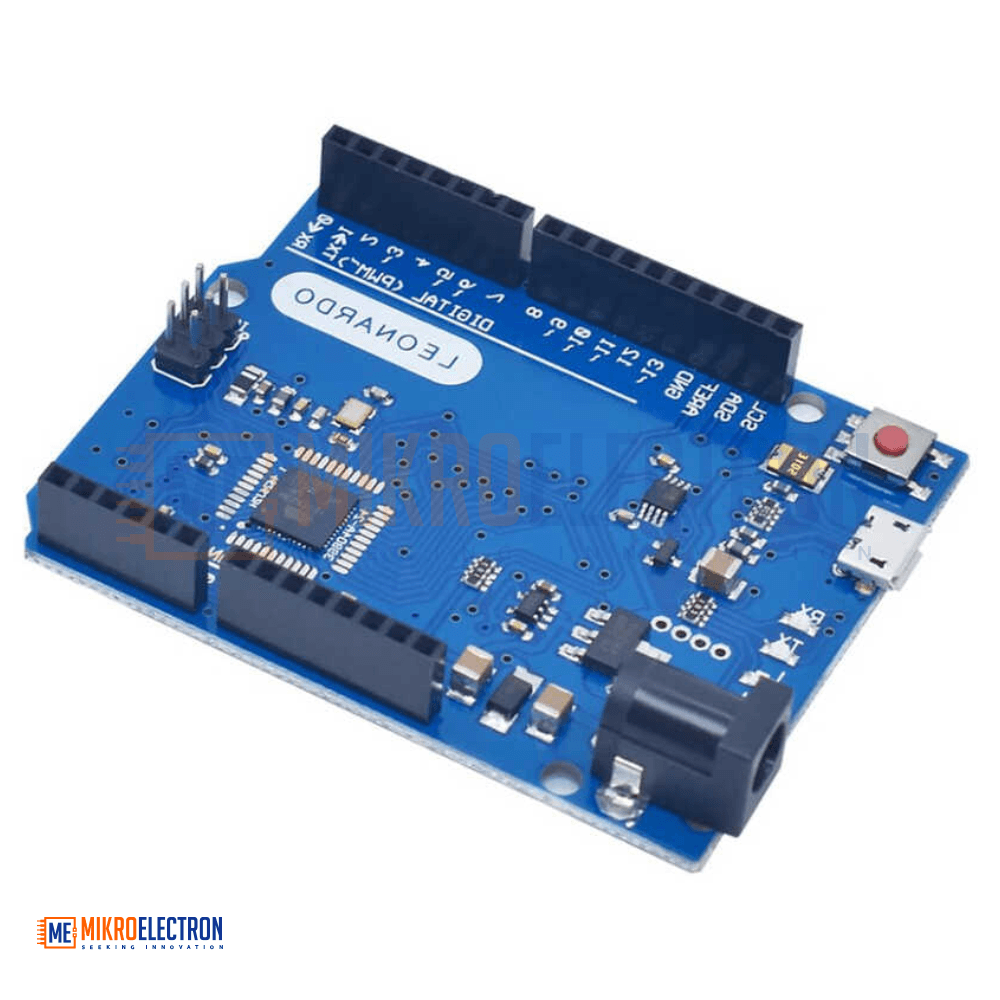
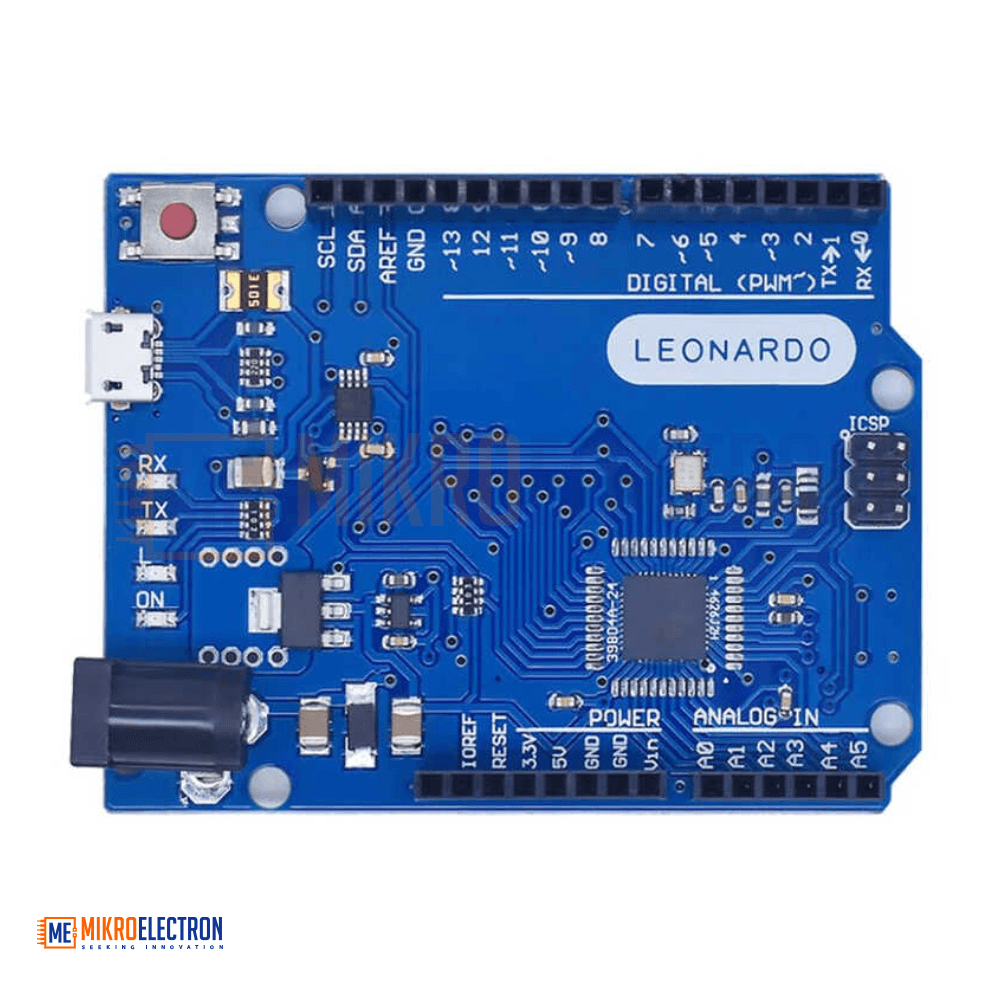
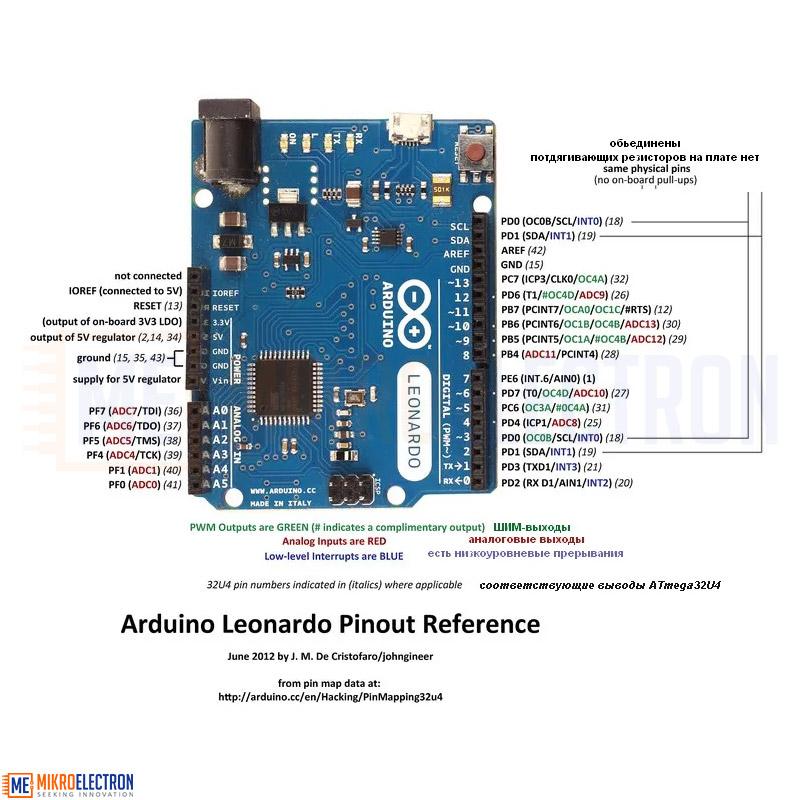
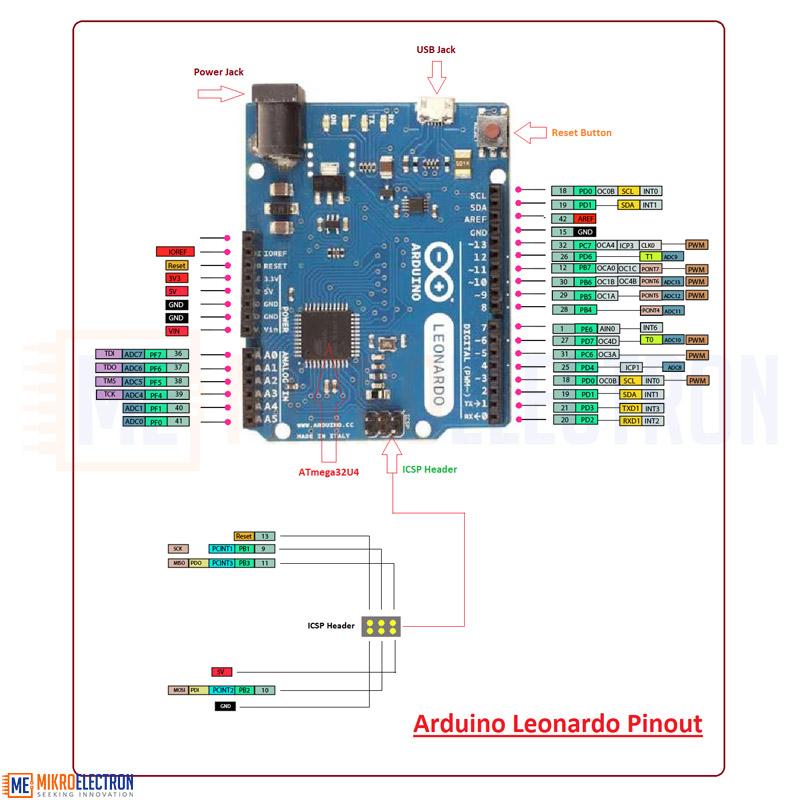
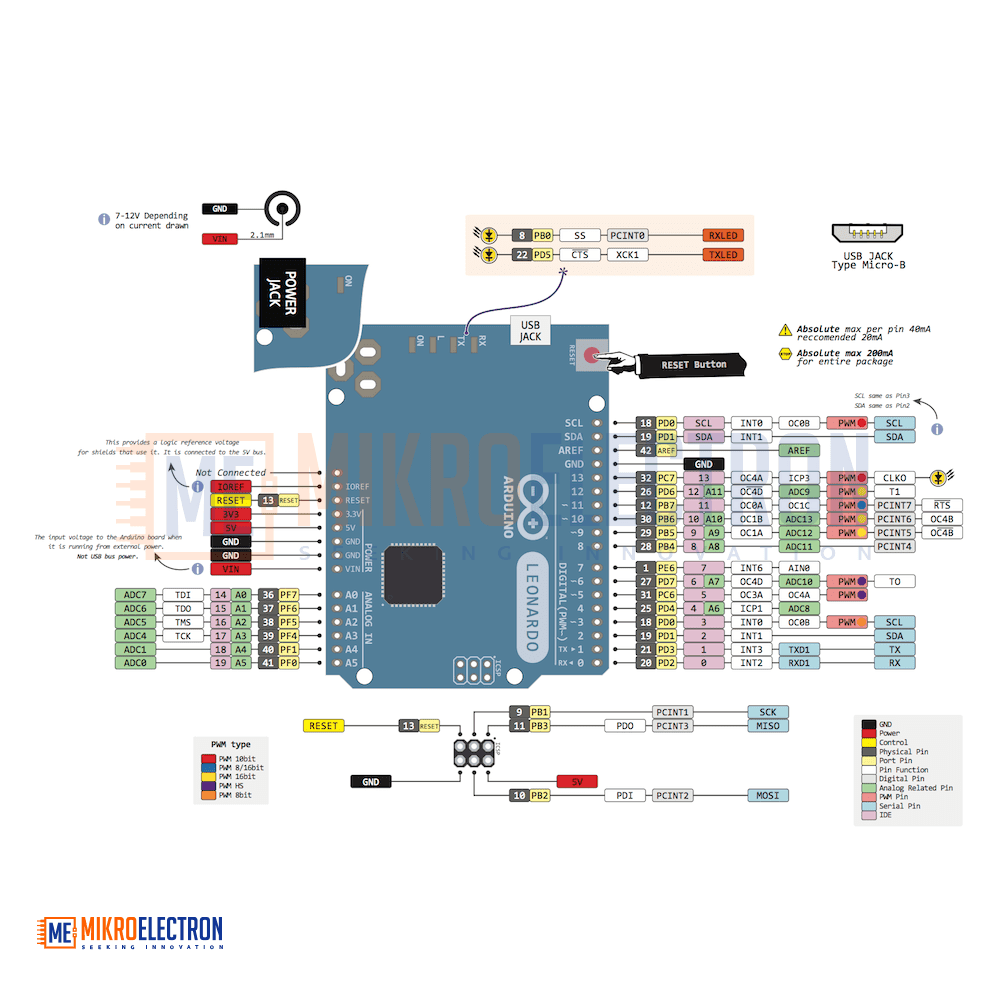
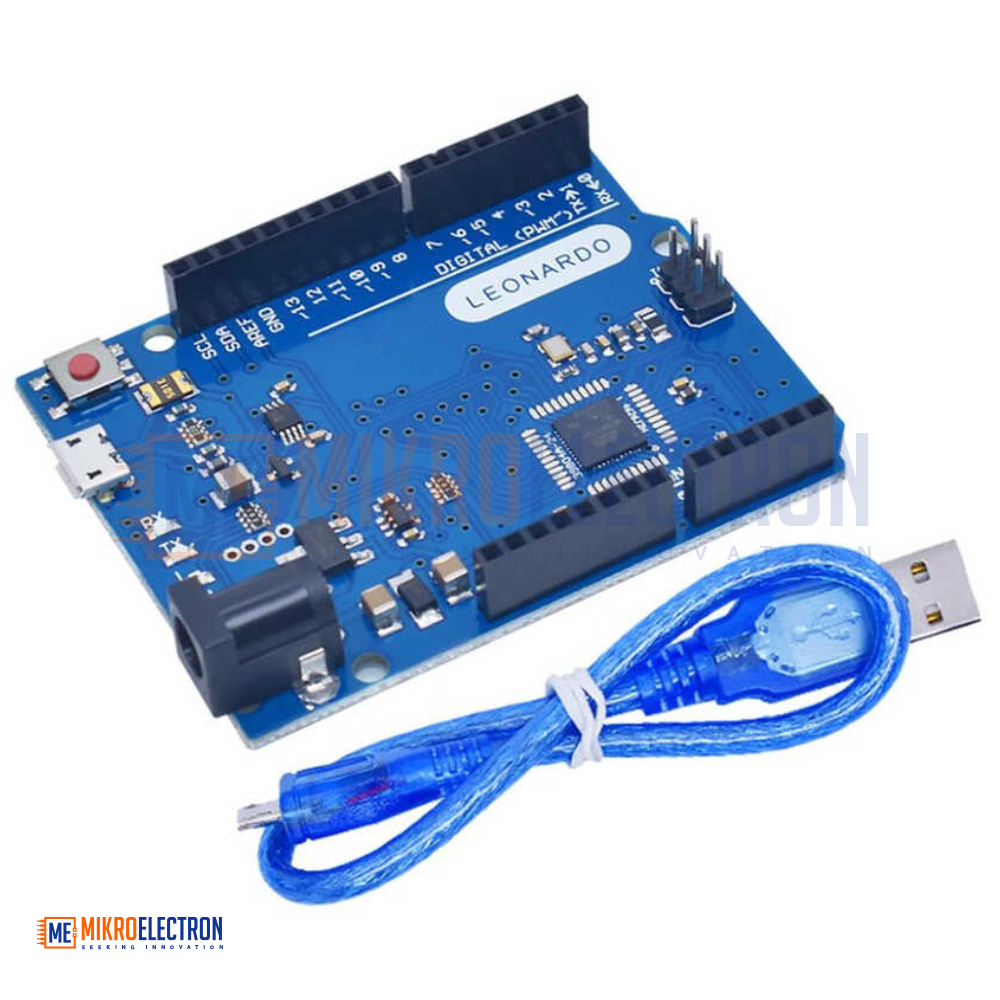
The board features 20 digital I/O pins (with 7 supporting PWM output), 12 of which can be used as analog inputs, providing more analog inputs than the Arduino Uno. It includes a 16 MHz crystal oscillator, a micro-USB connector, a DC power jack, an ICSP header for direct programming, and a reset button. Onboard, you'll find everything needed for the microcontroller to function reliably, including voltage regulation, status LEDs, and the bootloader pre-installed.
The Leonardo can be powered through three options: a micro-USB cable, a 7–12V external DC adapter via the power jack, or a battery connected to the Vin pin. The board automatically selects the highest available power source, providing flexibility for both desktop development and standalone deployment.
With 32KB of Flash memory, 2.5KB of SRAM, and 1KB of EEPROM, the Leonardo offers enough resources for moderately complex applications including sensor networks, robotics control, IoT devices, and creative interactive projects. The board is fully compatible with the Arduino IDE and the vast majority of Arduino libraries, shields, and tutorials, making it accessible for both beginners and advanced users.
Specifications
- Board Name: Arduino Leonardo
- Microcontroller: Atmel ATmega32u4
- Operating Voltage (Logic Level): 5 V
- Recommended Input Voltage: 7 – 12 V
- Input Voltage Limits: 6 – 20 V
- Digital I/O Pins: 20 (7 with PWM output)
- Analog Input Pins: 12
- DC Current per I/O Pin: 40 mA
- DC Current for 3.3V Pin: 50 mA
- Flash Memory: 32 KB (4 KB used by bootloader)
- SRAM: 2.5 KB
- EEPROM: 1 KB
- Clock Speed: 16 MHz
- USB Interface: Built-in (Native USB via ATmega32u4)
- USB Connector: Micro-USB
- Power Connector: DC Power Jack (5.5 × 2.1mm)
- Communication Interfaces: UART, I²C, SPI
- HID Capability: Keyboard, Mouse, Joystick, MIDI
- ICSP Header: Yes
- Reset Button: Yes
- Compliance: RoHS Compliant
- Length: 68.6 mm
- Width: 53.4 mm
- Weight: 20 gr
Applications
- Custom USB Keyboards & Macro Pads — programmable HID keyboards
- Custom Mice & Trackballs — DIY pointing devices
- Game Controllers & Joysticks — arcade-style controllers and flight sticks
- MIDI Controllers — DIY music interfaces and synthesizers
- Accessibility Devices — adaptive controls for users with disabilities
- Automation Tools — keyboard/mouse macro automation
- Educational HID Projects — teaching USB protocols and HID programming
- Robotics Control — robot brain with USB feedback to PC
- IoT Devices — sensor nodes with native USB serial
- Home Automation — relay, lighting, and sensor controllers
- Data Loggers — USB-connected environmental loggers
- DIY Electronics & STEM Projects — schools, universities, and labs
- 3D Printer Add-ons — control panels and helper devices
- Music & Audio Interfaces — USB-MIDI and audio bridges
- Custom Test Equipment — DIY measurement and analysis tools
- Interactive Art Installations — touch- and motion-triggered displays
- Replacement Board — for damaged or upgrading Arduino Leonardo projects
- Hardware Hacking — penetration testing tools (BadUSB-style devices)