
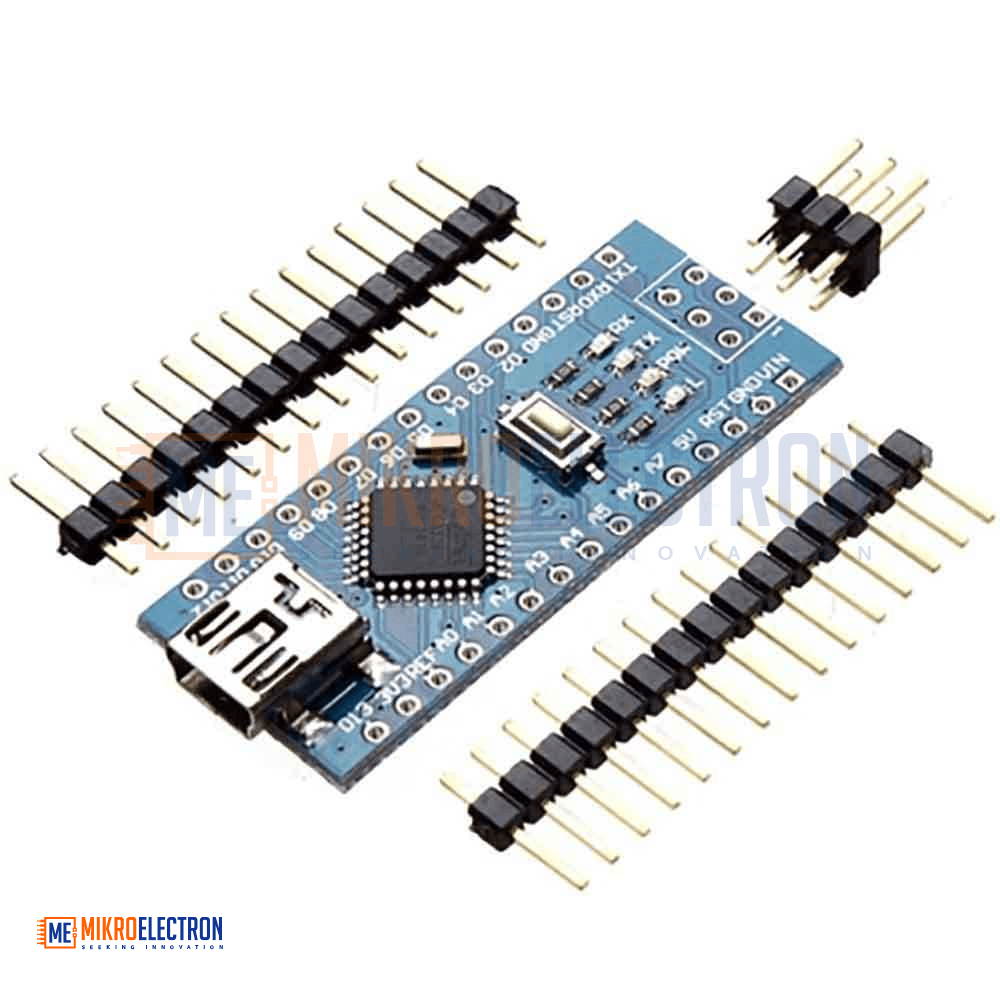
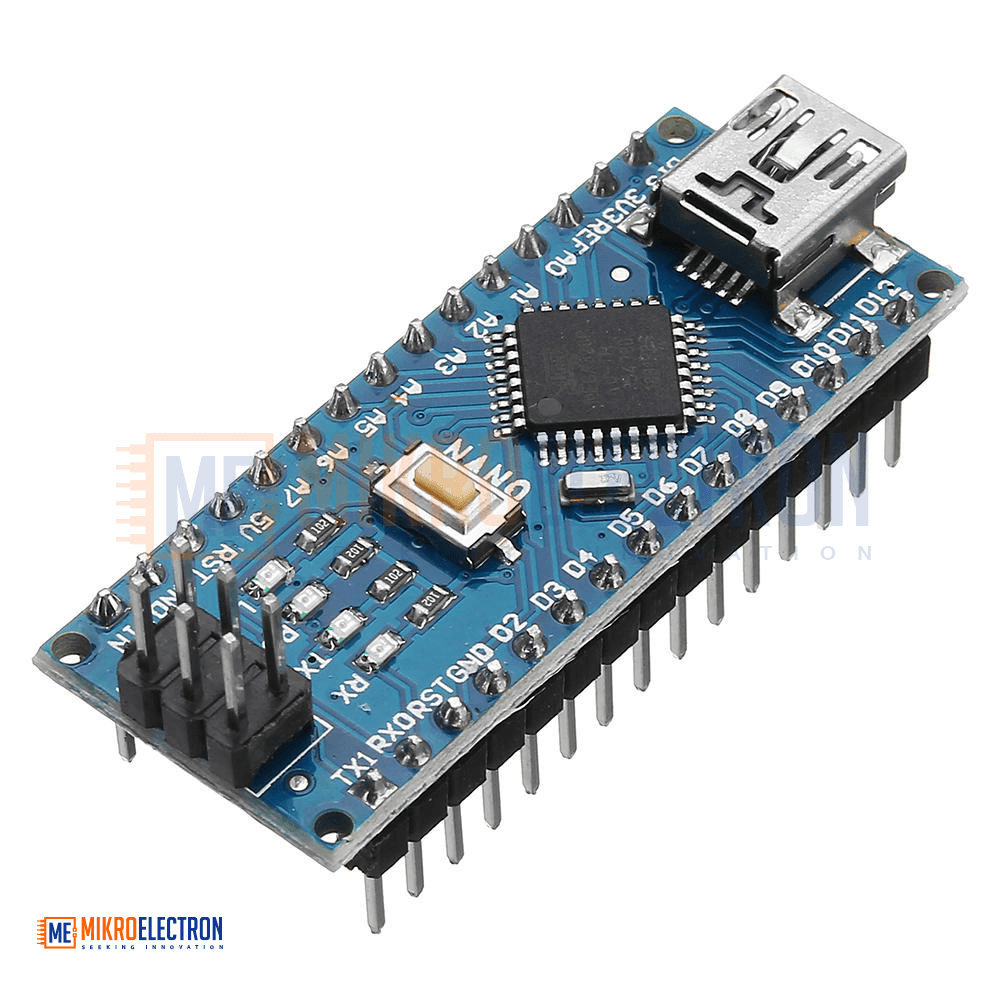

Arduino Nano FT232 (Original Chip)
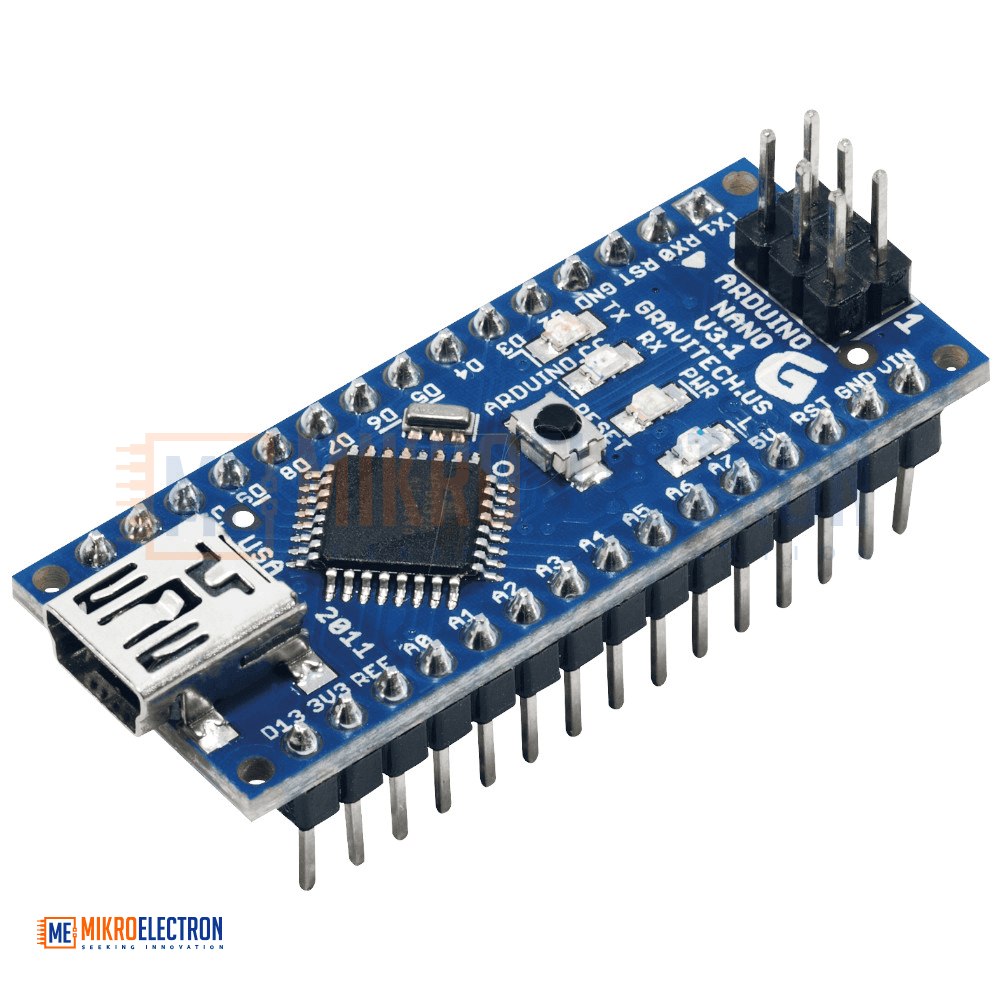
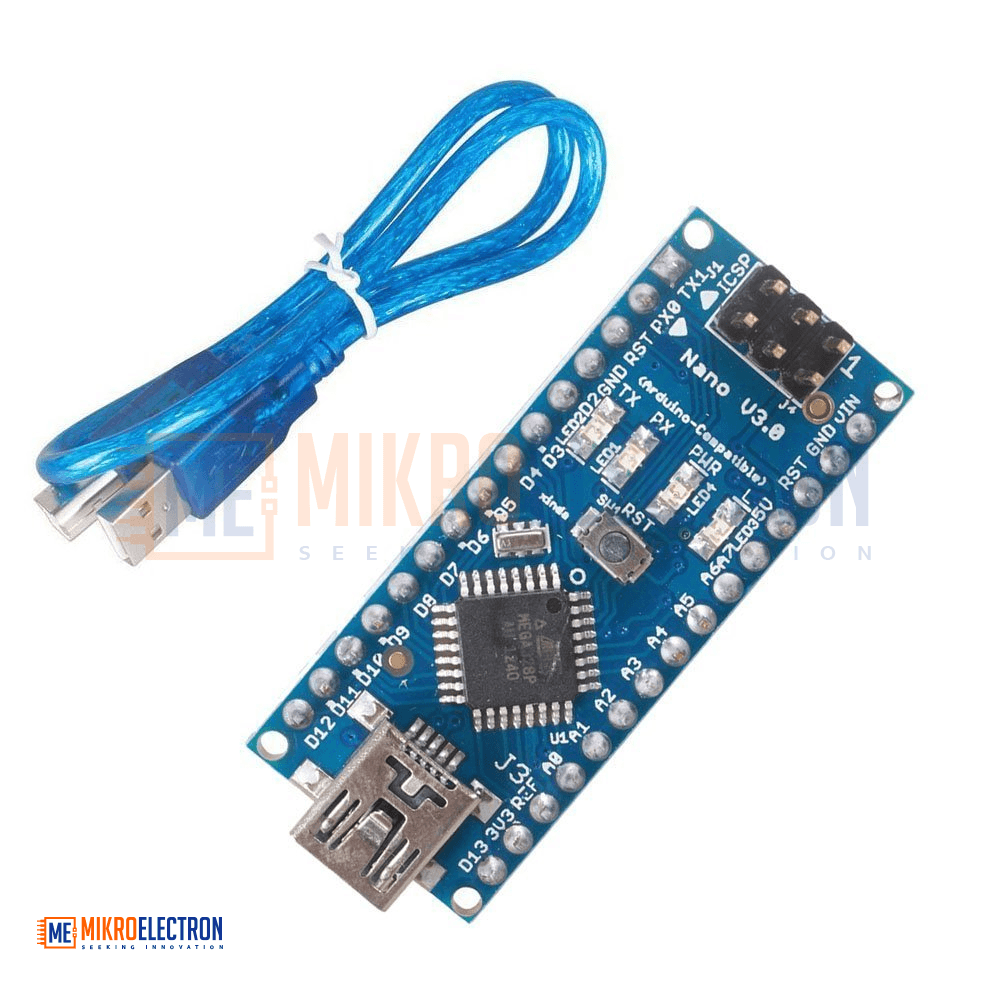
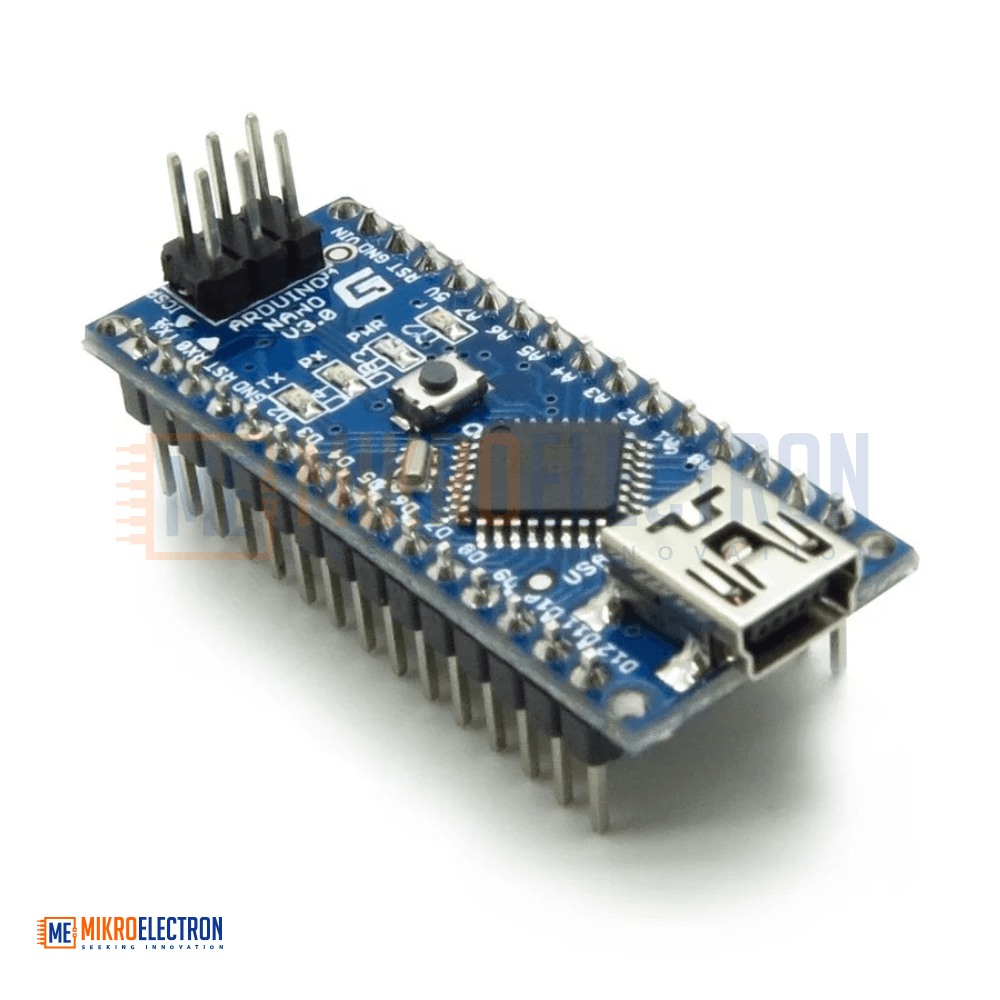
The Arduino Nano (FT232 Original Chip) is a compact, breadboard-friendly microcontroller board powered by the ATmega328 chip running at 16MHz. With 14 digital I/O pins (6 PWM), 8 analog inputs, 32KB Flash, 2KB SRAM, and 1KB EEPROM, it offers the same functionality as the Arduino Uno in a smaller footprint. Featuring a mini-B USB connection, automatic power selection, and ICSP header, it's perfect for DIY electronics, robotics, IoT projects, and embedded prototyping where space is limited.
لوحة Arduino Nano (شريحة FT232 الأصلية) هي لوحة متحكم دقيق صغيرة الحجم متوافقة مع لوحات التجارب، مدعومة بشريحة ATmega328 تعمل بسرعة 16 ميجاهرتز. تحتوي على 14 منفذ I/O رقمي (منها 6 PWM)، و8 مداخل تناظرية، وذاكرة Flash 32 كيلوبايت، و SRAM 2 كيلوبايت، و EEPROM 1 كيلوبايت، وتقدّم نفس وظائف Arduino Uno بحجم أصغر. تتميز بـ منفذ Mini-B USB، واختيار تلقائي لمصدر الطاقة، ورأس ICSP، مما يجعلها مثالية لـ مشاريع الإلكترونيات DIY، والروبوتات، وإنترنت الأشياء، والنماذج الأولية المدمجة عند الحاجة لحجم صغير.
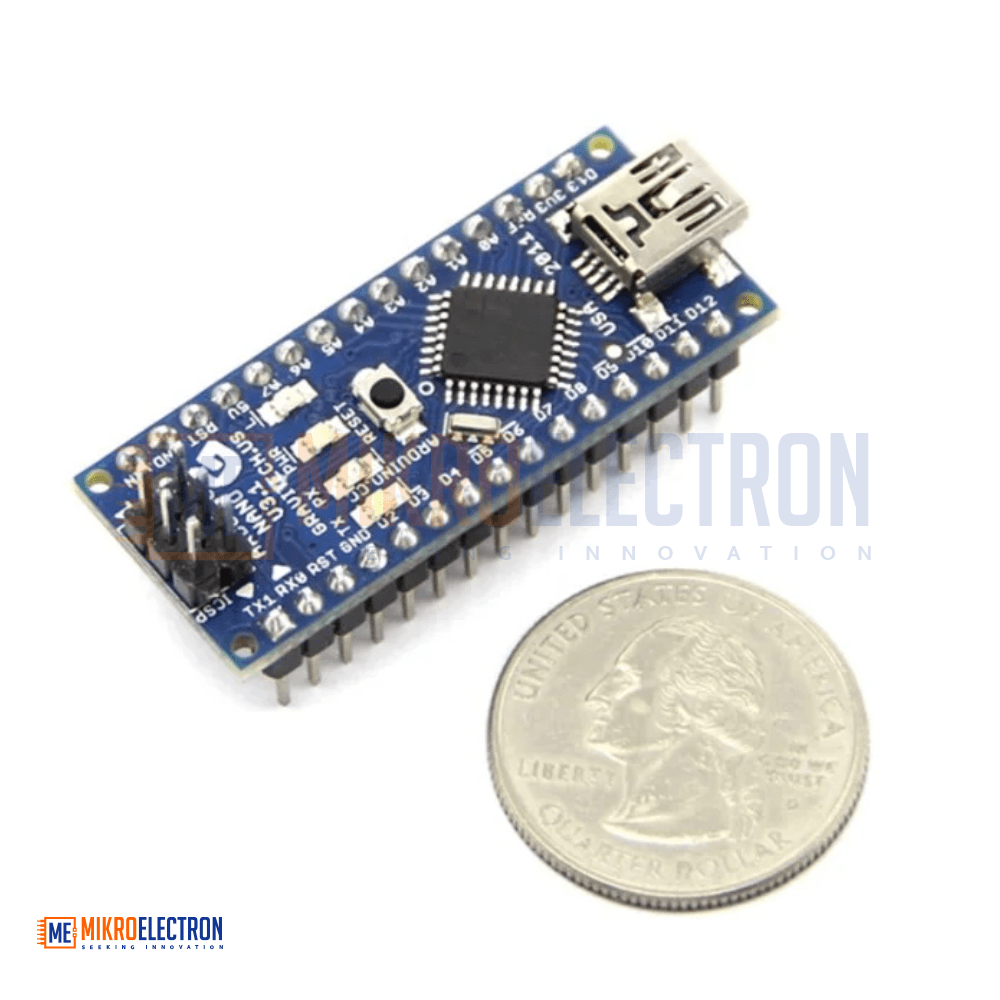
The Arduino Nano is one of the most popular and widely used microcontroller development boards in the maker community, offering all the power and functionality of the famous Arduino Uno in a much smaller, breadboard-friendly form factor. Powered by the Atmel ATmega328 microcontroller running at 16 MHz, the Nano provides everything you need to start building embedded electronics, robotics, IoT devices, and educational projects.
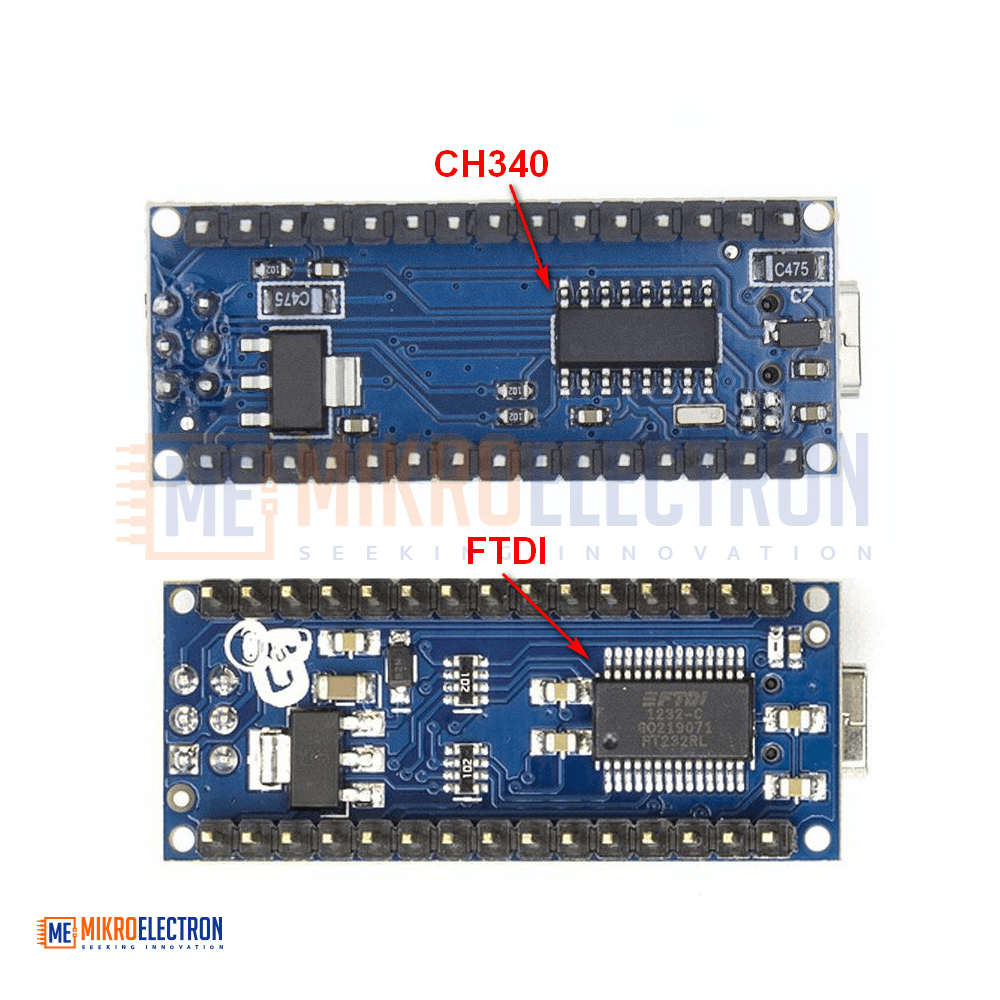
This particular version features the original FT232 USB-to-Serial chip from FTDI, ensuring stable, fast, and reliable USB communication with all major operating systems (Windows, macOS, Linux). The FT232 chip provides superior driver support and signal quality compared to many low-cost CH340-based alternatives, making it a preferred choice for professional development and production-quality prototypes.
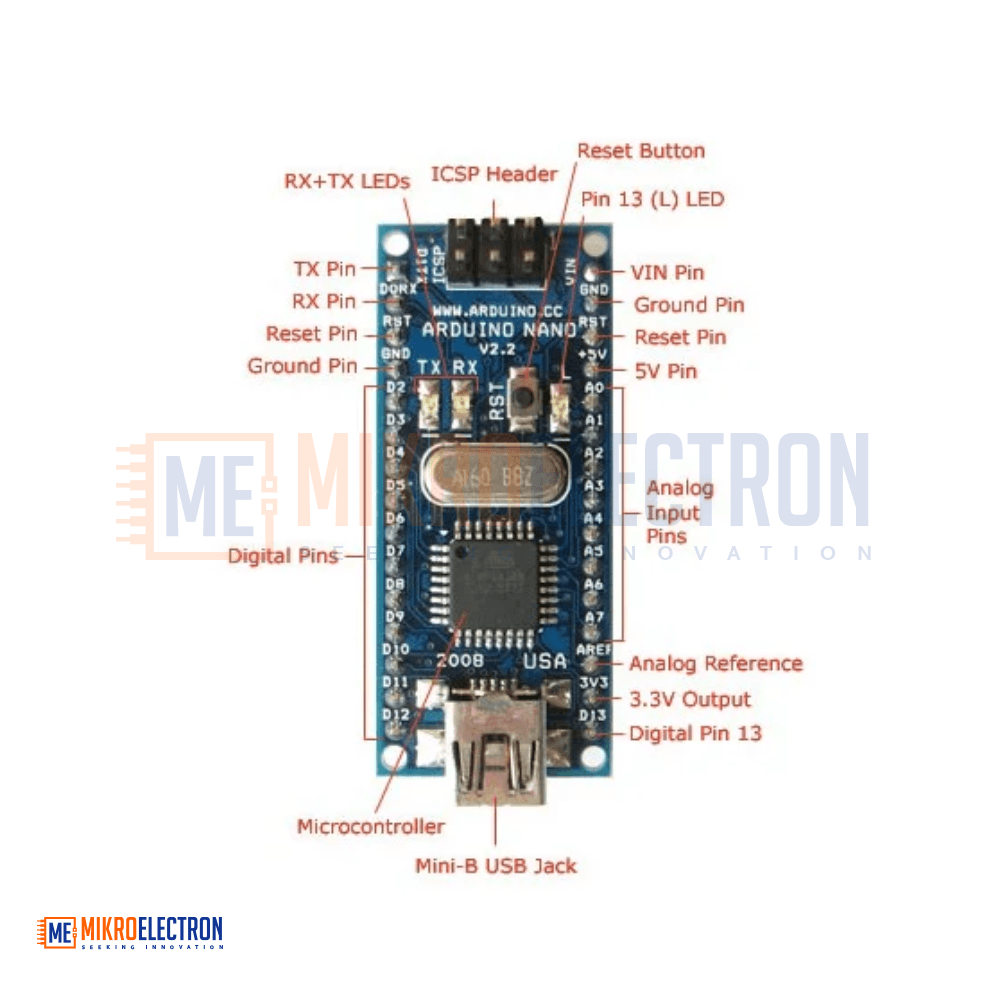
The Nano comes equipped with 14 digital I/O pins (6 of which support PWM output), 8 analog input pins (two more than the Uno), and a comprehensive set of communication peripherals including UART, I²C, and SPI. Its compact 0.70" × 1.70" footprint with standard 0.1" (2.54mm) DIP pin spacing allows it to plug directly into a breadboard, providing easy access to all I/O pins for wiring sensors, modules, and components.
The board can be powered through three different sources: the mini-B USB connector, an unregulated external supply (6–20V) on Pin 30 (Vin), or a regulated 5V external supply on Pin 27. The Nano features automatic power source selection, intelligently switching to the highest available voltage — eliminating the need for jumpers or manual selection.
Additional features include automatic reset during program upload, a manual reset switch, an ICSP header for direct programming, and status LEDs for Power (blue), TX (green), RX (red), and L (orange) that provide visual feedback during operation and debugging. The Nano runs the same Arduino IDE-compatible bootloader as the Uno, making it fully compatible with the vast Arduino ecosystem of libraries, shields, and tutorials.
Whether you're a beginner just starting with electronics or an experienced engineer building a compact embedded prototype, the Arduino Nano delivers reliability, ease of use, and proven performance in a tiny package.
Specifications
- Board Name: Arduino Nano (FT232 Original Chip Version)
- Microcontroller: Atmel ATmega328
- USB-to-Serial Chip: FTDI FT232 (Original)
- Operating Voltage (Logic Level): 5 V
- Recommended Input Voltage (Vin): 7 – 12 V
- Input Voltage Limits: 6 – 20 V
- Digital I/O Pins: 14 (6 with PWM output)
- Analog Input Pins: 8
- DC Current per I/O Pin: 40 mA
- Flash Memory: 32 KB (2 KB used by bootloader)
- SRAM: 2 KB
- EEPROM: 1 KB
- Clock Speed: 16 MHz
- USB Connector: Mini-B USB
- Communication: UART, I²C, SPI
- Programming Interface: USB (via FT232) + ICSP Header
- Pin Spacing: 0.1 inch (2.54 mm) — Breadboard Friendly
- Dimensions: 0.70" × 1.70" (~18 × 43 mm)
- Compliance: RoHS Compliant
Power Supply Options
- Mini-B USB Connection (5V) — for programming and operation
- External Unregulated Supply — 6–20V on Pin 30 (Vin)
- External Regulated Supply — 5V on Pin 27 (5V Pin)
- Automatic Power Source Selection — chooses highest available voltage
Applications
- DIY Electronics Projects — perfect entry-level embedded controller
- Robotics & RC Vehicles — compact controller for robot brains
- IoT Devices — paired with WiFi/Bluetooth modules (ESP-01, HC-05)
- Wearable Electronics — small footprint for clothing-integrated devices
- Educational & STEM Projects — schools, universities, and STEM kits
- Sensor Networks — analog/digital sensor data acquisition
- Home Automation — controlling relays, lights, and appliances
- Drones & UAVs — auxiliary processing for flight controllers
- 3D Printer Add-ons — auxiliary control for printer modifications
- Custom MIDI Controllers — music and audio interfaces
- Data Loggers — environmental and scientific data collection
- Game Controllers — DIY arcade and joystick projects
- Smart Home Sensors — temperature, humidity, motion, and light sensors
- Industrial Prototyping — rapid concept testing and validation
- Embedded System Development — replacing larger Uno boards
- Replacement Board — drop-in upgrade for older Nano boards
- CNC Machine Controllers — small mill and laser engraver controllers
- Battery-Powered Projects — ample power options and low consumption