
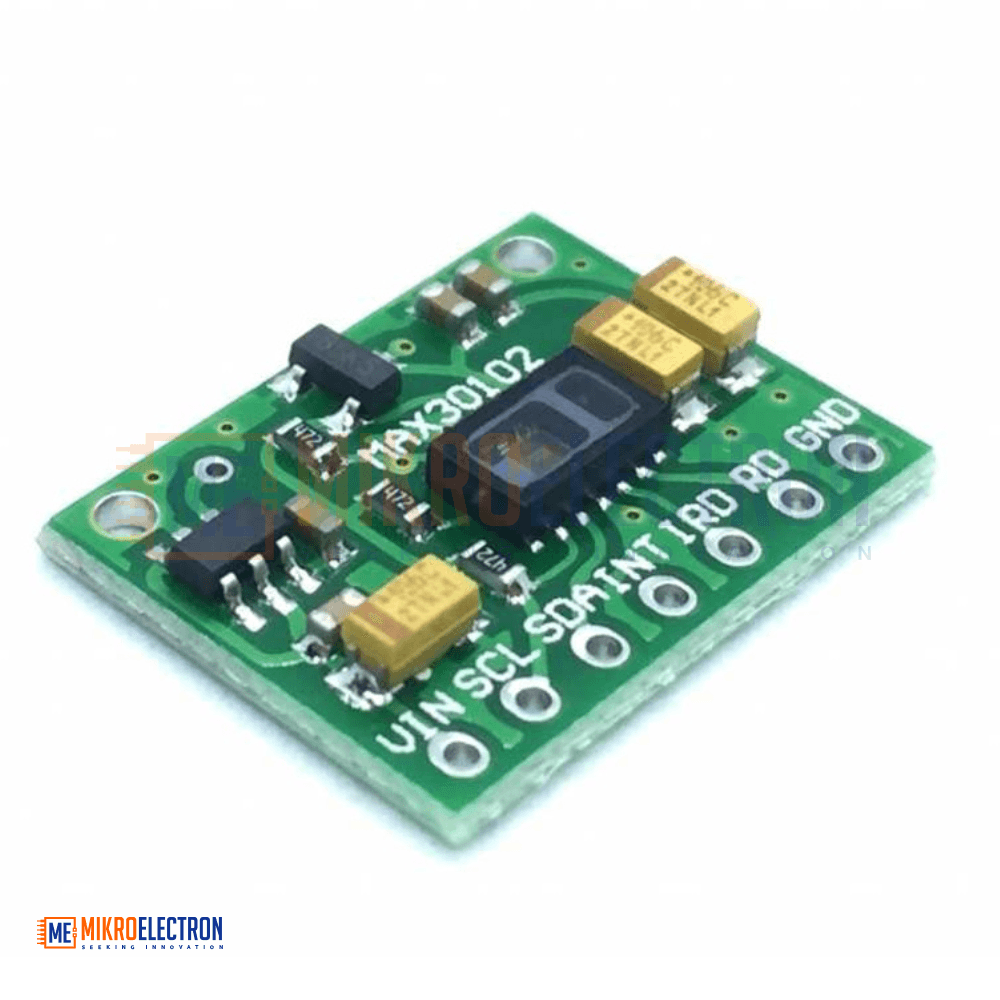
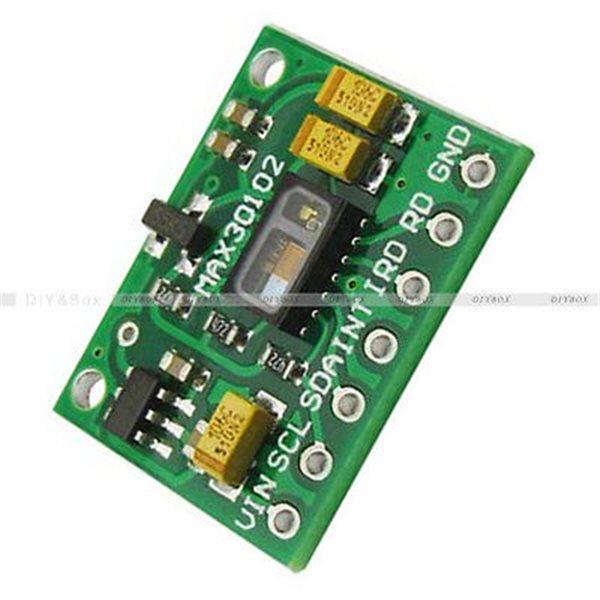
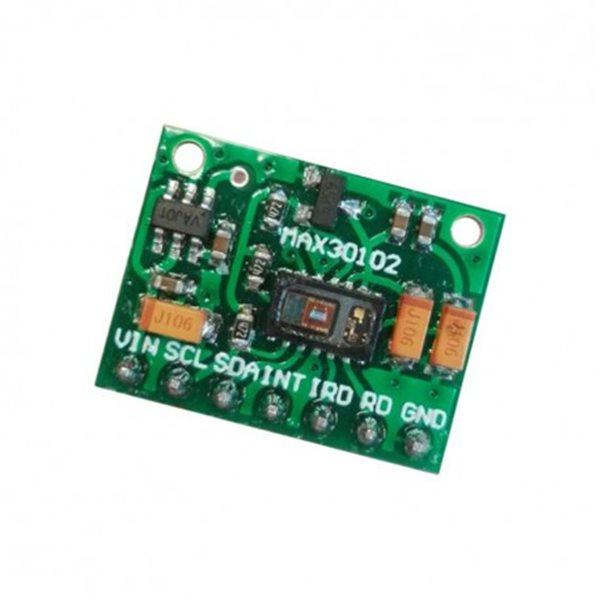
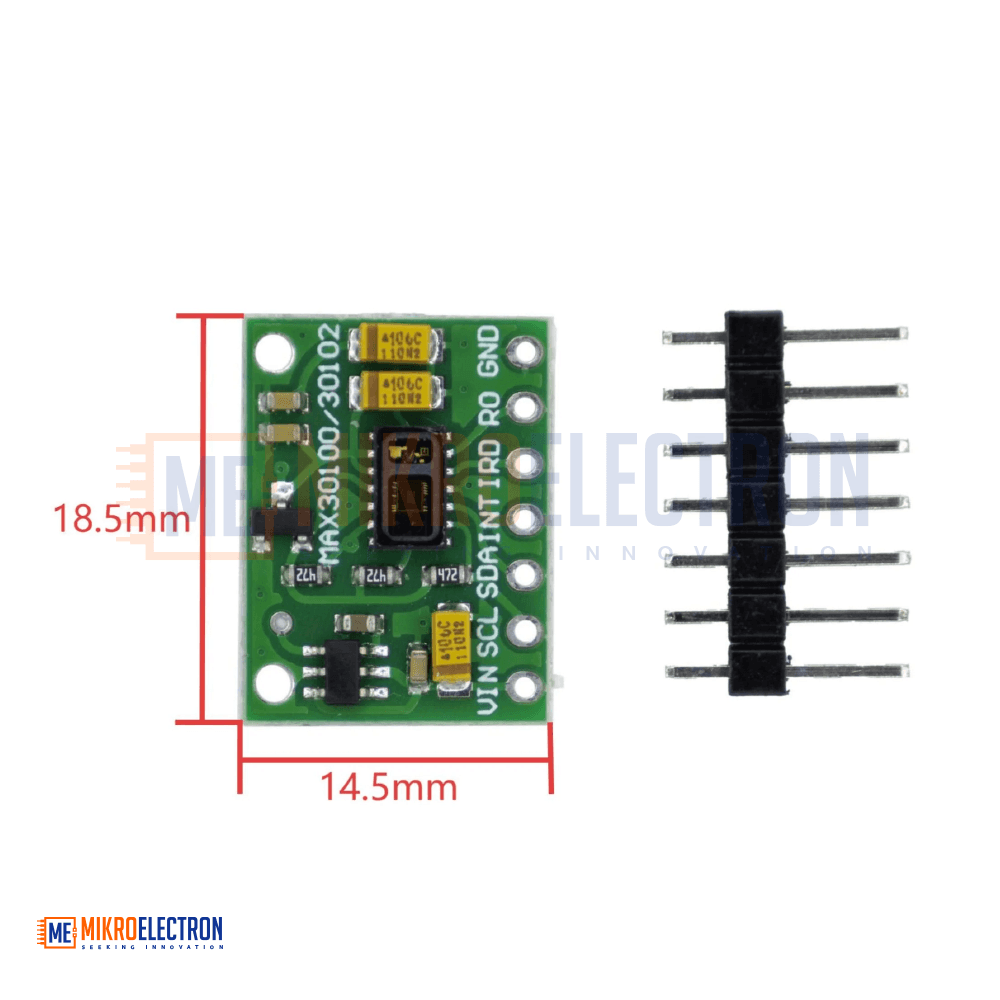
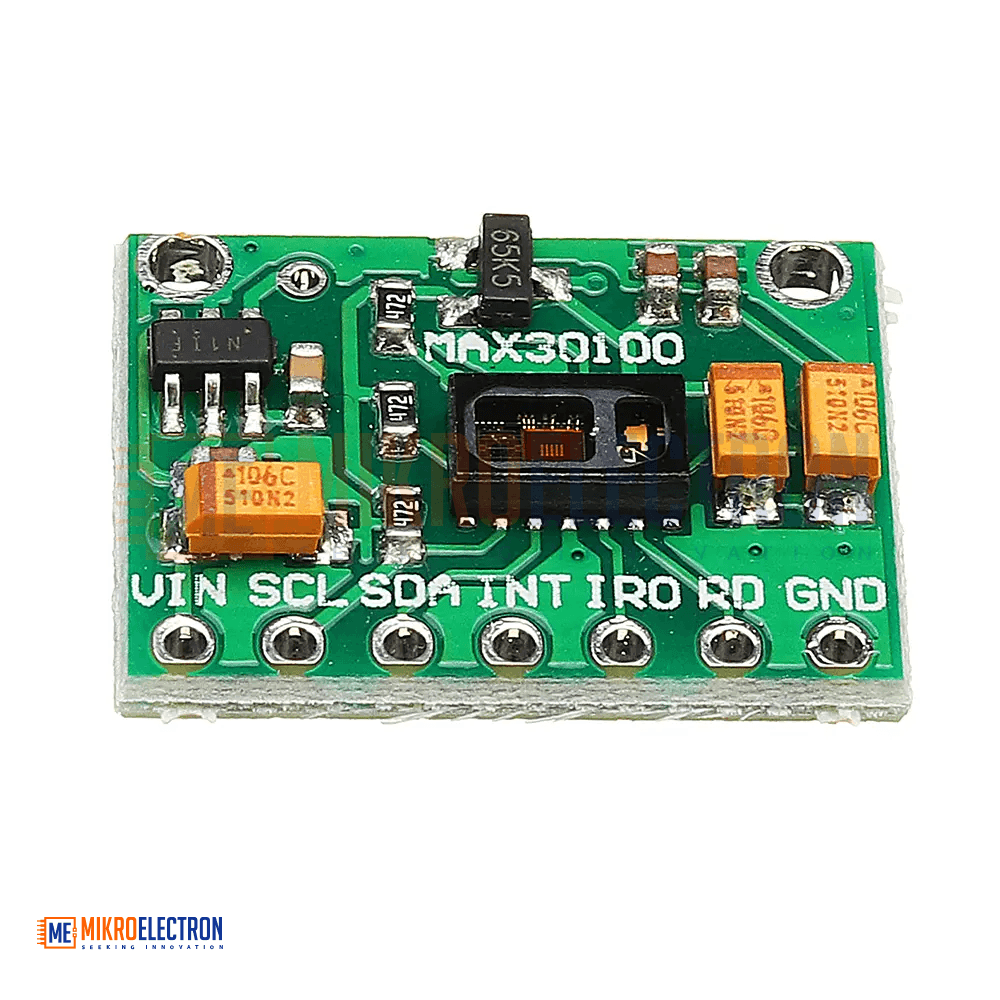

MAX30102 PULSE OXIMETER HEART-RATE SENSOR MODULE
The MAX30102 Pulse Oximeter and Heart-Rate Sensor Module is a compact optical sensing solution designed to measure heart rate (HR) and blood oxygen saturation (SpO₂). It uses integrated red and infrared LEDs along with a photodetector to analyze blood flow through a fingertip. Featuring an I2C communication interface, the module can easily connect to microcontrollers such as Arduino, ESP32, and Raspberry Pi. With ultra-low power consumption, built-in ambient light cancellation, and a high-performance analog front end, the MAX30102 is ideal for wearable devices, fitness trackers, health monitoring systems, and biomedical research projects.
تُعد وحدة MAX30102 لقياس معدل ضربات القلب ونسبة الأكسجين في الدم حلاً متكاملاً للاستشعار البصري مصممًا لقياس معدل نبض القلب (HR) وتشبع الأكسجين في الدم (SpO₂). تعتمد على مصابيح LED حمراء وتحت الحمراء مع مستشعر ضوئي لتحليل تدفق الدم عبر الإصبع. تدعم الاتصال عبر واجهة I2C مما يسهل دمجها مع متحكمات مثل Arduino وESP32 وRaspberry Pi. بفضل استهلاكها المنخفض للطاقة، وإلغاء تأثير الإضاءة المحيطة، والأداء العالي في معالجة الإشارات، تعد مناسبة للأجهزة القابلة للارتداء، وأجهزة اللياقة البدنية، وأنظمة المراقبة الصحية، والمشاريع الطبية والبحثية.
The MAX30102 Pulse Oximeter and Heart-Rate Sensor Module is an advanced biometric sensor designed to measure heart rate and blood oxygen saturation levels (SpO₂) using optical sensing technology. The module integrates red and infrared LEDs, a photodetector, optical components, and a low-noise analog signal processing system into a compact package.
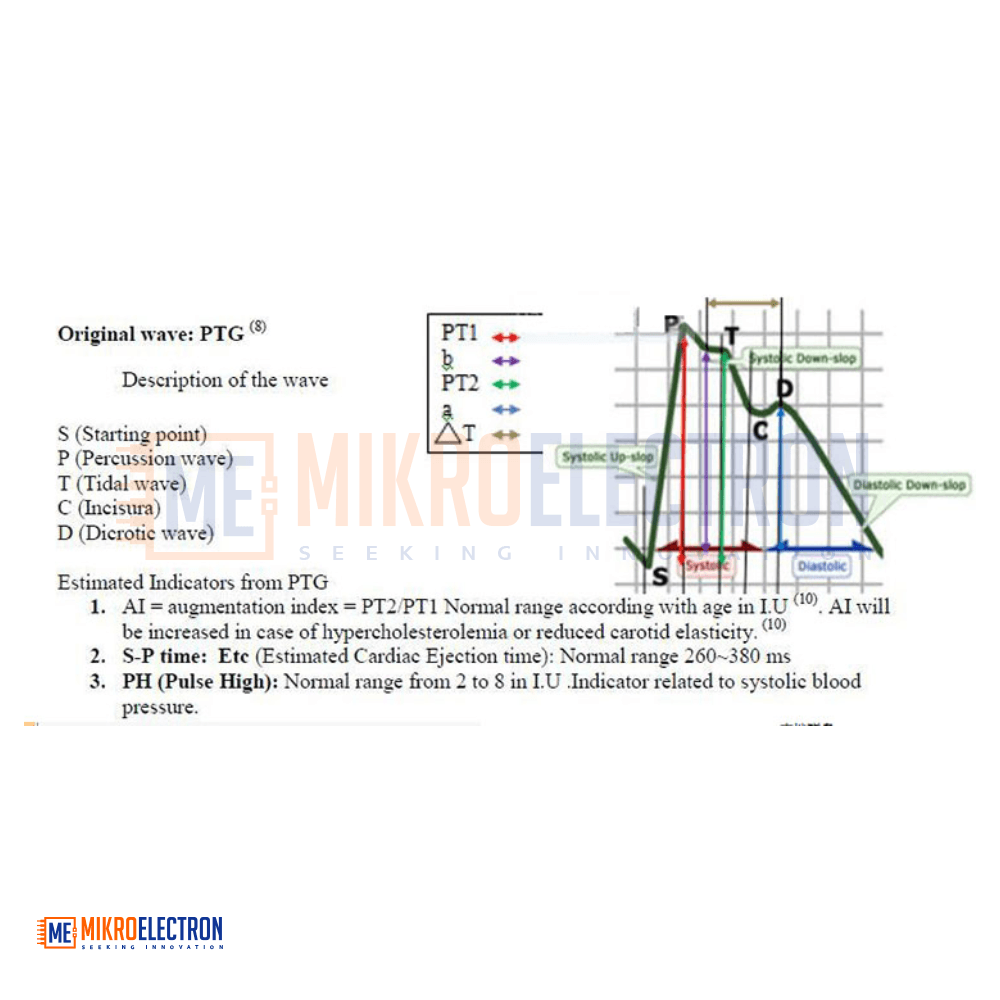
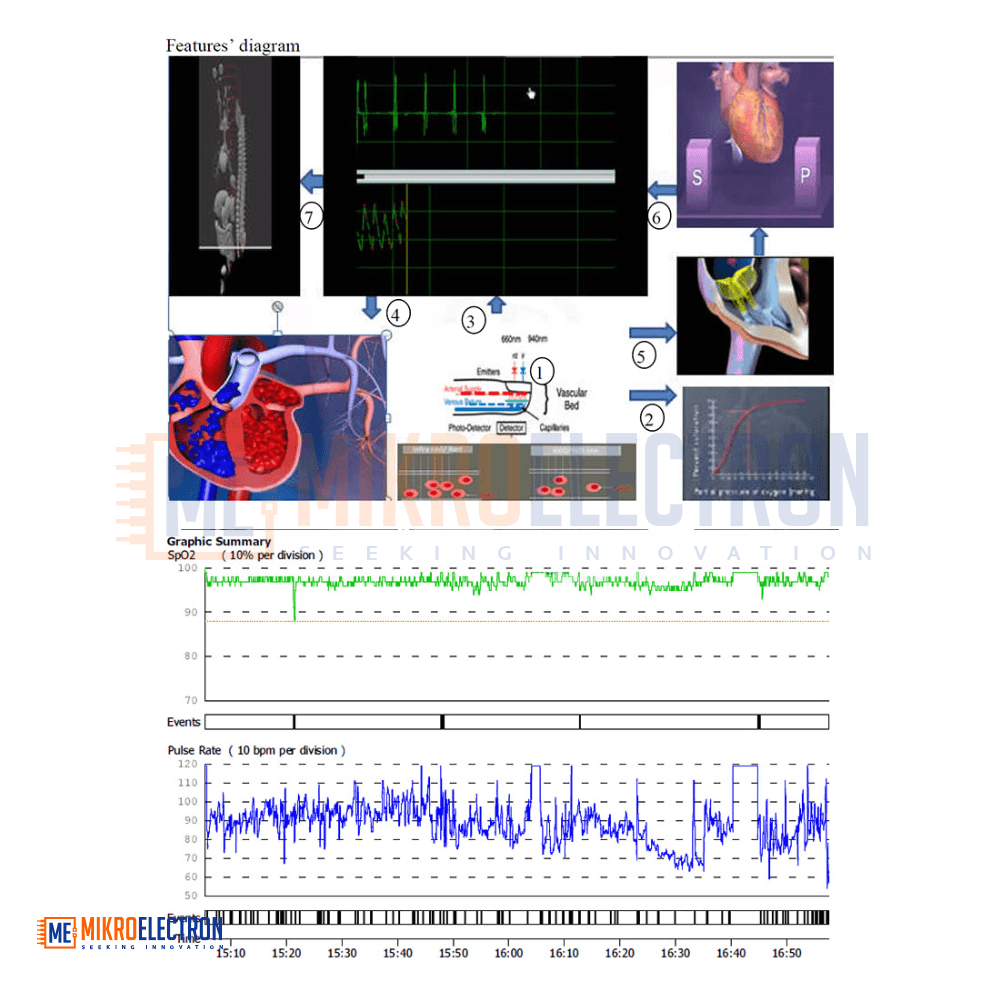
The sensor works by emitting red and infrared light through a fingertip and measuring the amount of light absorbed by pulsating blood vessels. This data is processed to determine heart rate and oxygen saturation levels accurately.
The MAX30102 features an I2C digital communication interface and includes a built-in 16-sample FIFO buffer, reducing communication overhead for the host microcontroller. Advanced features such as ambient light cancellation, programmable LED current, high signal-to-noise ratio, and motion artifact resilience help improve measurement accuracy.
Its ultra-low power consumption makes it especially suitable for battery-powered and wearable applications. The module is commonly used in health monitoring devices, fitness trackers, smart wearables, medical instrumentation, and educational biomedical projects.
Specifications
| Parameter | Value |
|---|---|
| Sensor Model | MAX30102 |
| Function | Heart Rate and Blood Oxygen (SpO₂) Monitoring |
| Measurement Method | Optical Pulse Oximetry |
| LED Types | Red LED and Infrared LED |
| Communication Interface | I2C (IIC) |
| Supply Voltage (Sensor) | 1.8V – 3.3V |
| VIN Input Voltage | 1.8V – 5.5V |
| ADC Resolution | 16-bit Sigma-Delta ADC |
| FIFO Buffer Depth | 16 Samples |
| Shutdown Current | 0.7µA (Typical) |
| Ambient Light Cancellation | Integrated |
| Interrupt Output | Yes (INT Pin) |
| Package Size | 5.6 × 2.8 × 1.2 mm |
| Power Consumption | Ultra-Low Power |
| Communication Protocol | I2C Digital Interface |
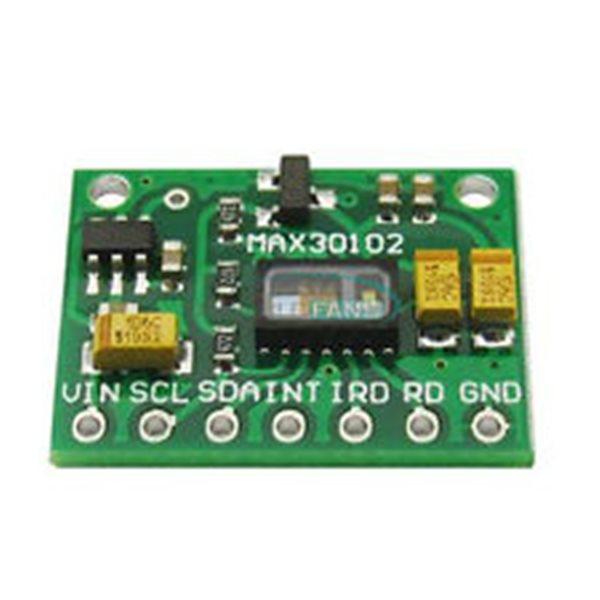
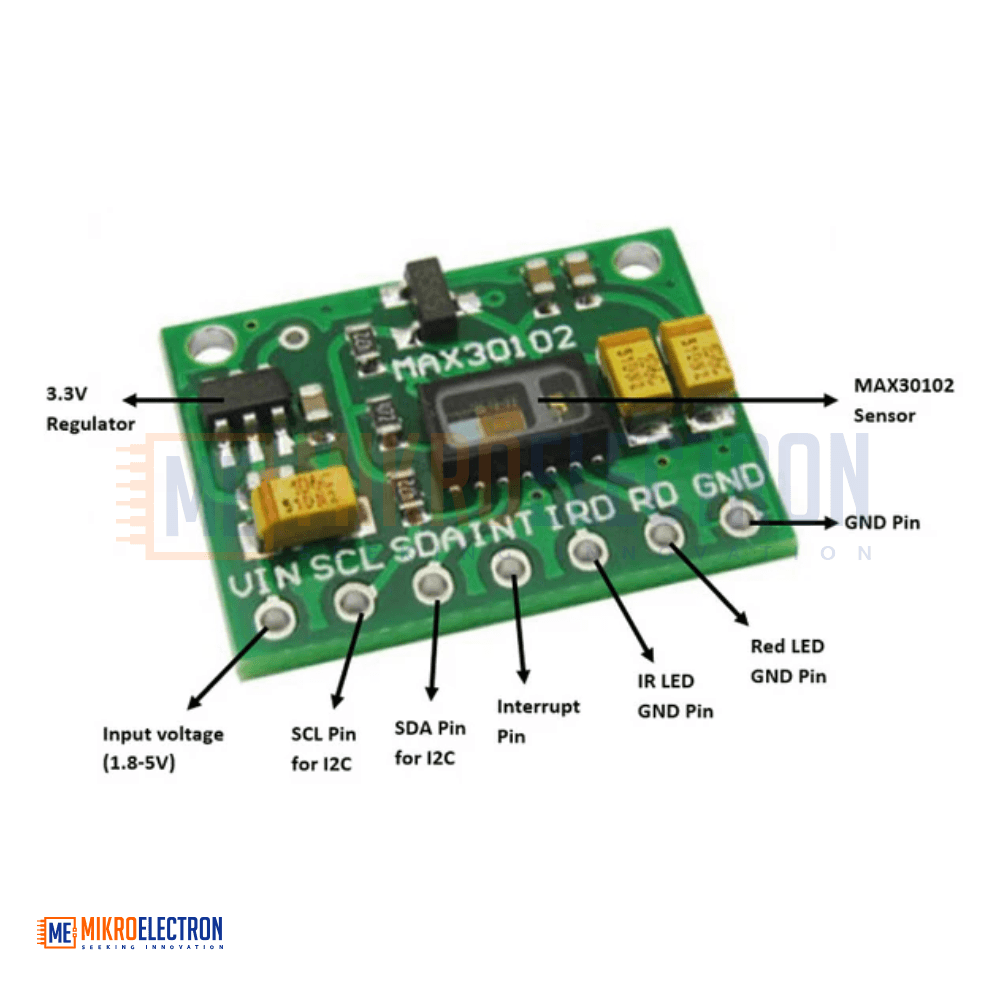
Pin Configuration
| Pin | Description |
|---|---|
| VIN | Input Voltage (1.8V – 5.5V) |
| SCL | I2C Clock Line |
| SDA | I2C Data Line |
| INT | Interrupt Output |
| IRD | Infrared LED Driver |
| RD | Red LED Driver |
| GND | Ground |
Applications
- Wearable health monitoring devices
- Pulse oximeters
- Heart rate monitoring systems
- Fitness trackers and smart bands
- Medical monitoring equipment
- Biomedical research projects
- Portable healthcare devices
- Patient monitoring systems
- IoT health monitoring applications
- Educational electronics and sensor projects
- Battery-powered health devices
- Remote physiological monitoring systems