
Heart Rate Pulse Sensor (copy)
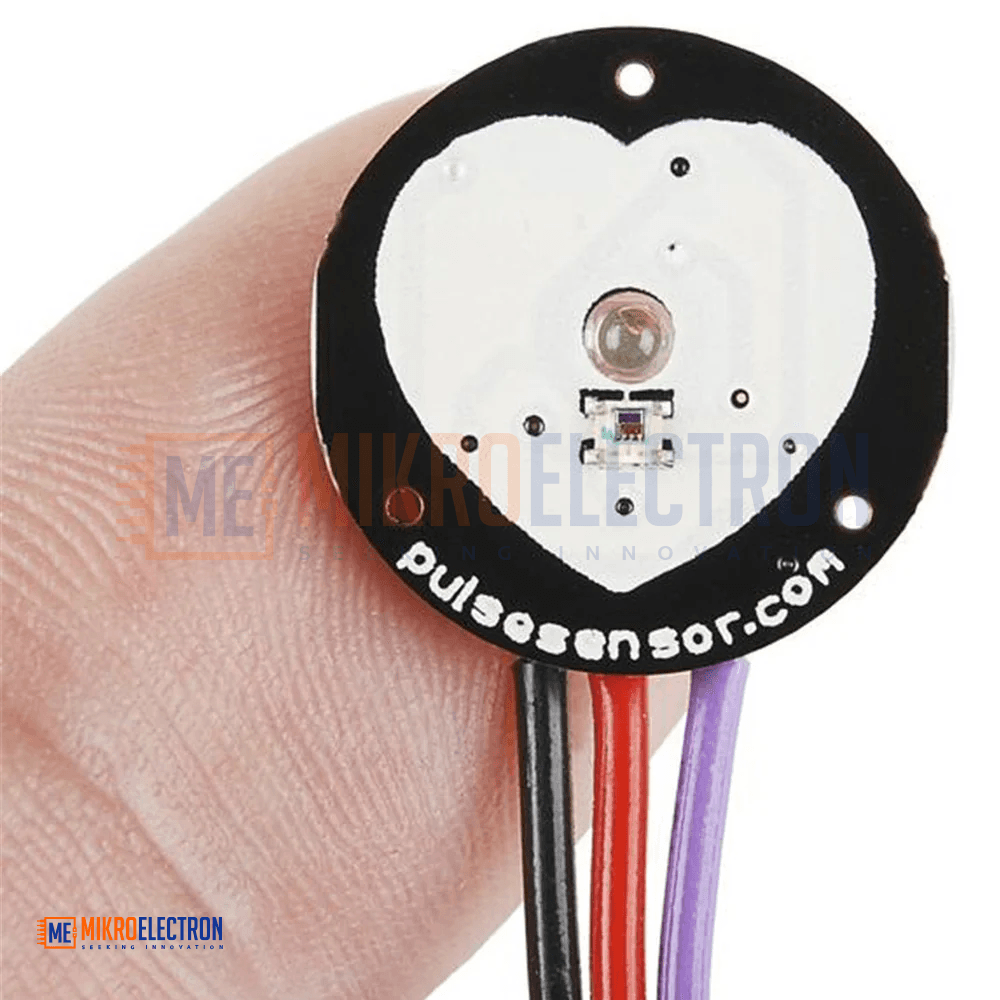
The Pulse Sensor is a plug-and-play optical heart-rate sensor designed for Arduino and other 3–5V microcontrollers. Combining a photoplethysmography (PPG) sensor with onboard amplification and noise cancellation, it delivers fast and reliable pulse readings when placed on a fingertip or earlobe. With a circular PCB, 3-pin color-coded cable, and analog output, it's perfect for DIY heart rate monitors, fitness wearables, biofeedback projects, and educational STEM applications — no soldering required.
حساس النبض Pulse Sensor هو حساس بصري لمعدل ضربات القلب يعمل بنظام Plug-and-Play، ومصمم لـ Arduino والمتحكمات الدقيقة 3–5 فولت. يجمع بين حساس Photoplethysmography (PPG) ودائرة تضخيم وإلغاء ضوضاء مدمجة، ليقدم قراءات نبض سريعة وموثوقة عند وضعه على طرف الإصبع أو شحمة الأذن. بفضل تصميمه الدائري، وكابل 3 أرجل ملوّن، وخرج تناظري، يُعدّ مثالياً لـ مشاريع مراقبة معدل ضربات القلب DIY، والأجهزة القابلة للارتداء، وأنظمة التغذية الراجعة الحيوية، والتطبيقات التعليمية STEM — بدون الحاجة للحام.
The Pulse Sensor is a compact, well-designed optical heart-rate monitoring sensor created specifically for makers, students, artists, athletes, and developers who want to easily integrate live heart-rate data into their Arduino, ESP32, ESP8266, or microcontroller-based projects. Its plug-and-play design and onboard signal conditioning make it one of the most popular biometric sensors in the maker community.
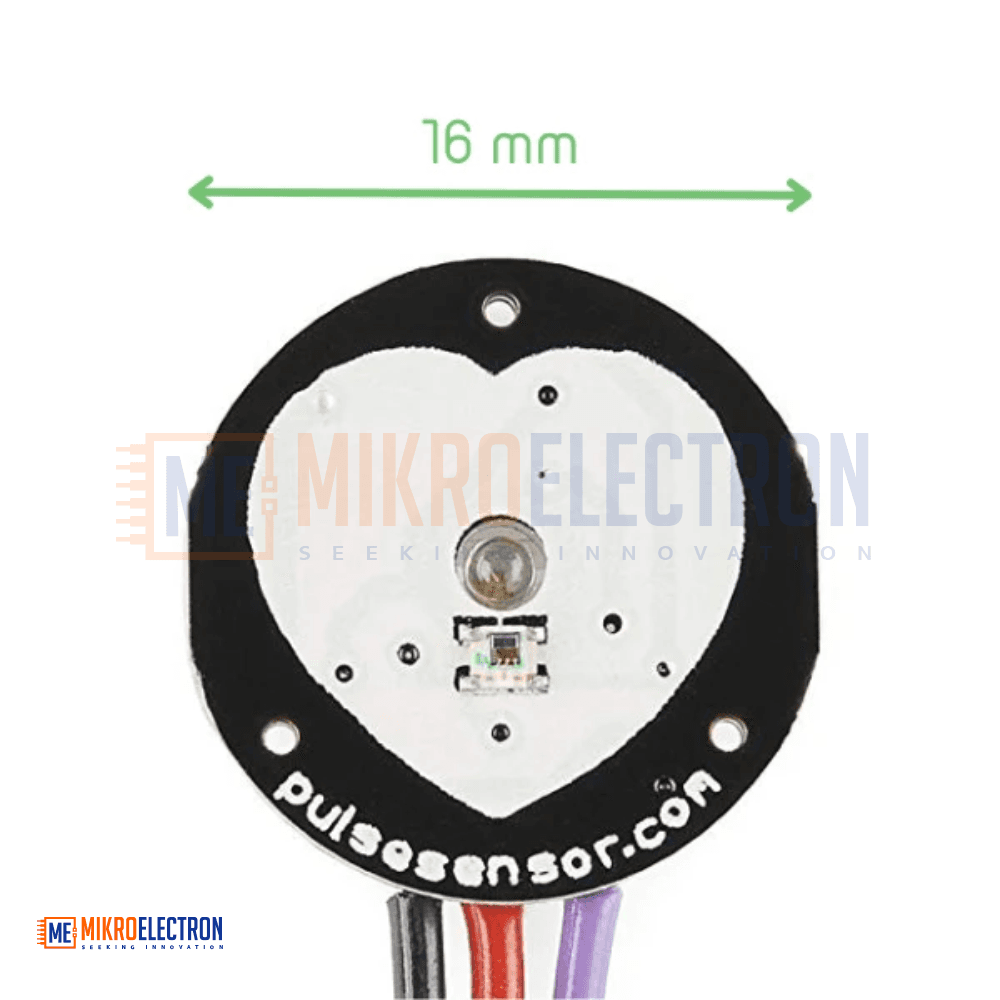
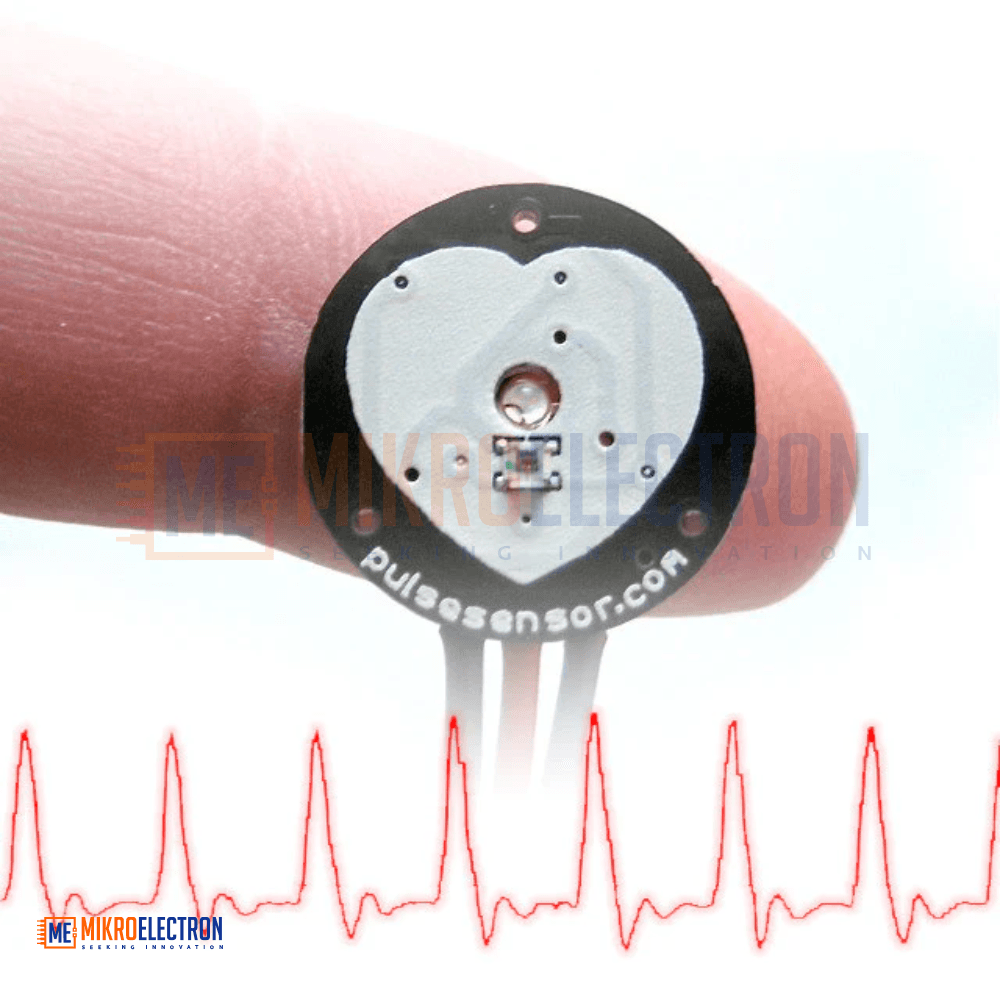
The sensor uses photoplethysmography (PPG) — a non-invasive optical technique that measures small changes in blood volume in the capillaries of the skin. A green LED with a 609 nm wavelength illuminates the tissue (typically a fingertip or earlobe), and an ambient light photo sensor detects the variations in reflected light caused by the pulsing of blood with each heartbeat. These tiny variations are then amplified by a factor of 330 and filtered by an onboard noise-cancellation circuit, producing a clean, reliable analog signal that any microcontroller can easily read.
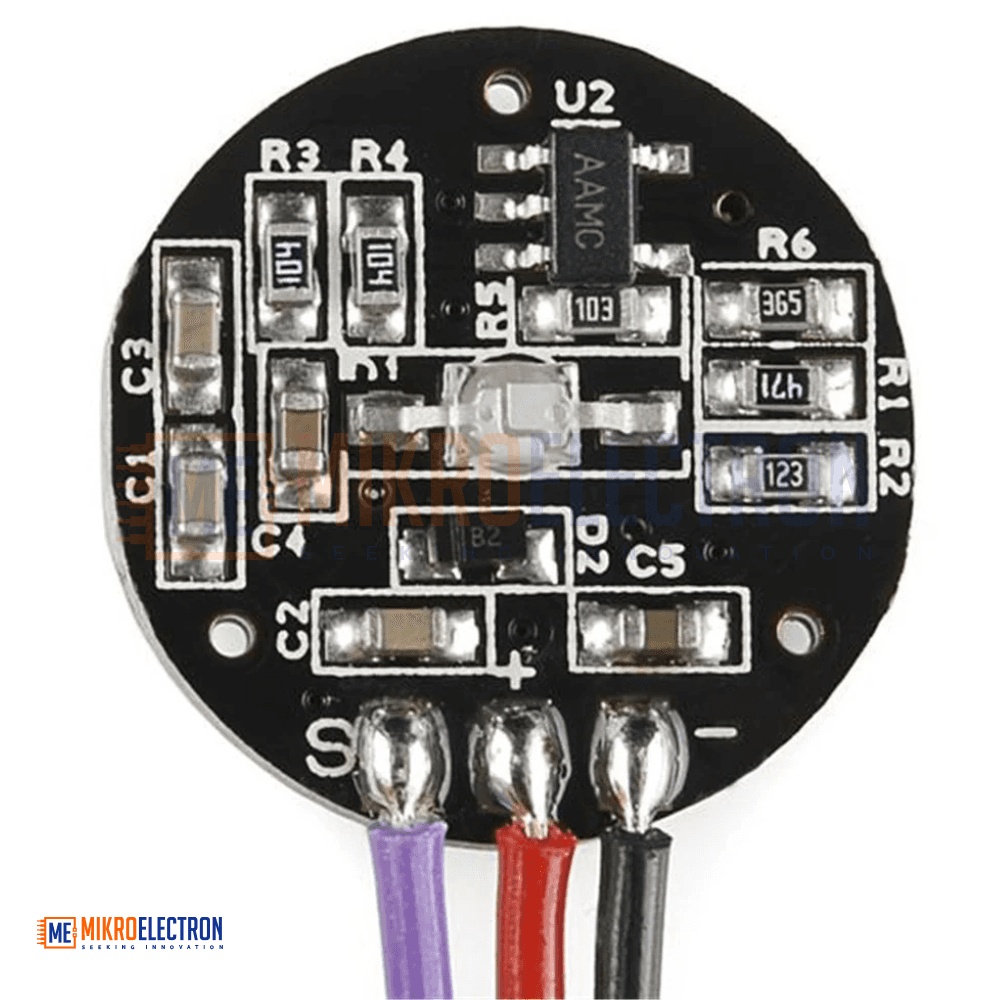
The sensor's circular PCB design is slim and lightweight, making it easy to mount onto fingers, earlobes, or wrists with the help of a velcro strap or clip. The PCB also features 3 sewing holes around the edge, allowing it to be sewn directly into clothing, gloves, or wearable projects for true e-textile integration.
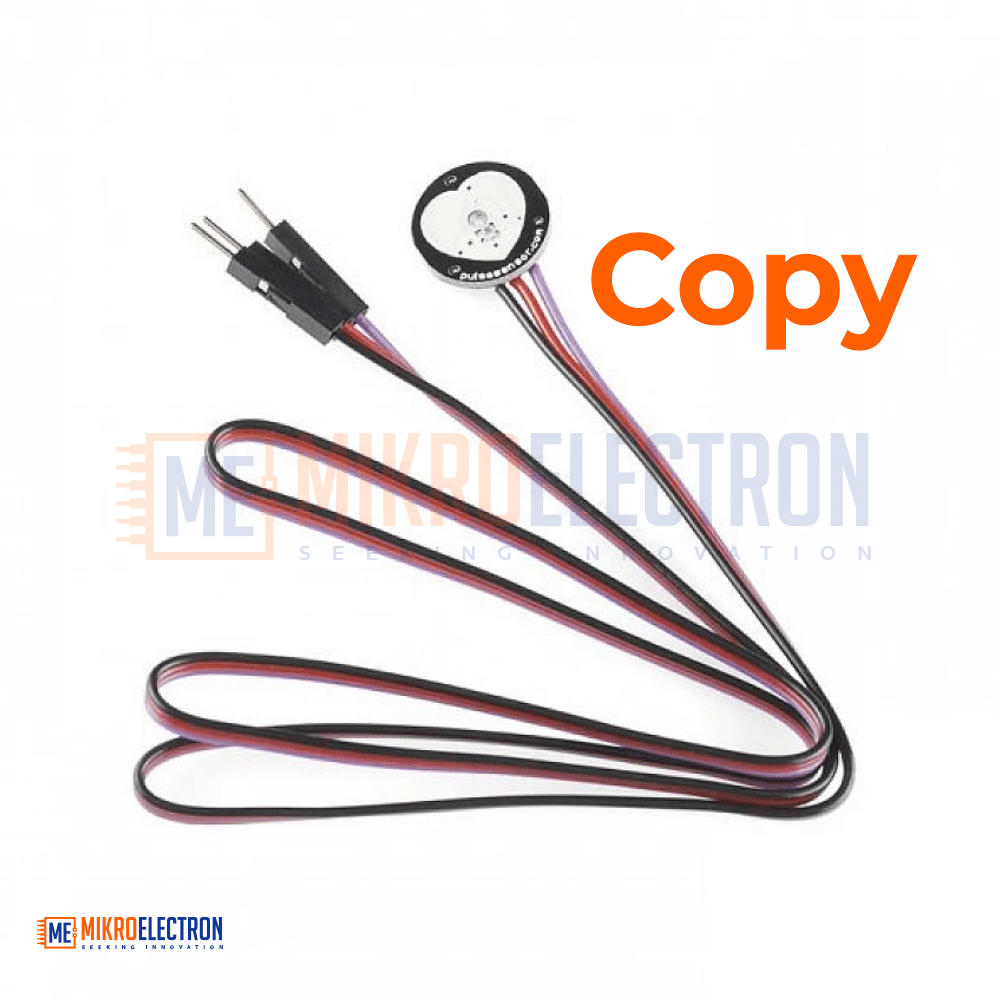
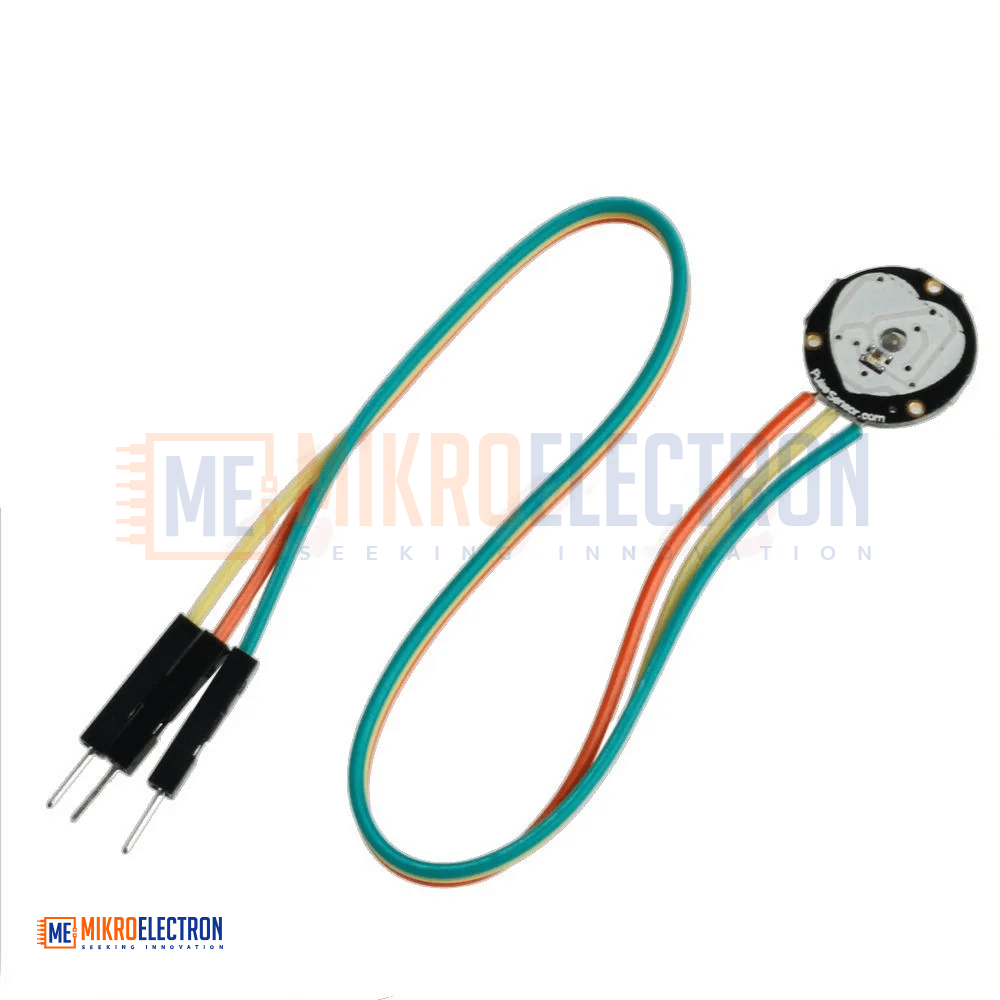
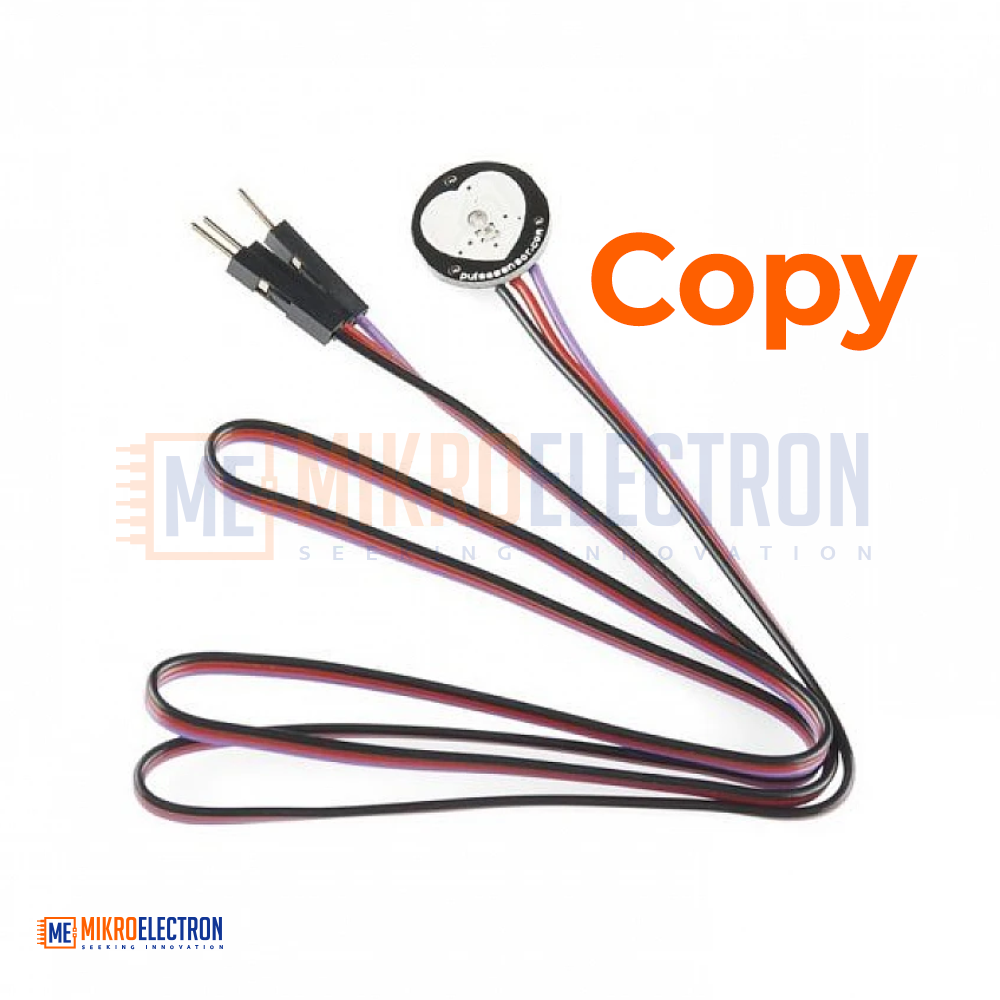
The 3-pin color-coded cable (typically Red = VCC, Black = GND, Purple = Signal) terminates in standard male header connectors, allowing the sensor to be plugged directly into an Arduino board or breadboard with no soldering required. The signal output is a clean analog waveform that can be read using the analogRead() function on Arduino. Free Processing-based visualization software is also available, allowing users to immediately see the heartbeat waveform on a PC for debugging, demonstration, or signal analysis.
Whether you're building a fitness tracker, biofeedback game, stress monitor, smart wearable, IoT health device, or a research prototype, the Pulse Sensor provides a fast, simple, and affordable way to capture real-time heart rate data.
How It Works
- Green LED (609 nm) illuminates the skin tissue (fingertip / earlobe)
- Ambient light photo sensor detects light variations caused by blood pulsing
- Onboard amplifier (gain ×330) boosts the tiny signal
- Noise cancellation circuit removes ambient interference
- Clean analog waveform is sent to the microcontroller's ADC pin
- Pulse detection algorithms (e.g., PulseSensor Playground library) calculate BPM
Specifications
- Sensor Type: Optical Heart-Rate Sensor (Photoplethysmography / PPG)
- Operating Voltage: 3V – 5V DC
- Operating Current: ~4 mA
- Amplification Factor: ×330
- LED Wavelength: 609 nm (Green)
- Output Type: Analog Signal
- Interface: 3-Pin Header (VCC, GND, Signal)
- Signal Conditioning: Onboard Amplifier + Noise Filter
- Board Shape: Circular PCB
- Compatibility: Arduino, ESP32, ESP8266, STM32, PIC, Raspberry Pi (with ADC)
- Mounting: Velcro strap, finger clip, or sewn into fabric (3 sewing holes)
- Cable: Color-coded with standard male header connectors
- Software Support: PulseSensor Playground Library + Processing visualization
- Compliance: RoHS Compliant
Pinout
- Pin 1 (VCC): +3V to +5V DC (Red wire)
- Pin 2 (GND): Ground (Black wire)
- Pin 3 (Signal): Analog Output to MCU ADC pin (Purple wire)
Applications
- DIY Heart Rate Monitors — wearable BPM trackers for daily use
- Fitness Wearables — smart watches, wristbands, and chest straps
- Biofeedback Systems — stress reduction and relaxation training
- Sports Performance Monitoring — real-time training intensity feedback
- Educational & STEM Projects — teaching biomedical signal processing
- Health & Wellness IoT Devices — connected heart-rate monitors
- Telemedicine Prototypes — remote patient monitoring devices
- Sleep Tracking — heart rate variability during rest
- Meditation & Mindfulness Apps — guided breathing with HRV feedback
- Interactive Art & Performance — pulse-driven lights, sound, and visuals
- Game Development — biofeedback-controlled gaming experiences
- Wearable Smart Clothing — sewn-in PPG sensors for e-textiles
- Anxiety & Stress Detectors — real-time emotional state monitoring
- Cardiac Rehabilitation Tools — light monitoring during recovery
- Research & Lab Use — PPG signal analysis experiments
- Pulse-Triggered Devices — heart-rate-activated LEDs, motors, or alarms
- Replacement Sensor — for damaged Pulse Sensors in existing projects
- Beginner Arduino Health Projects — first hands-on biometric sensor