
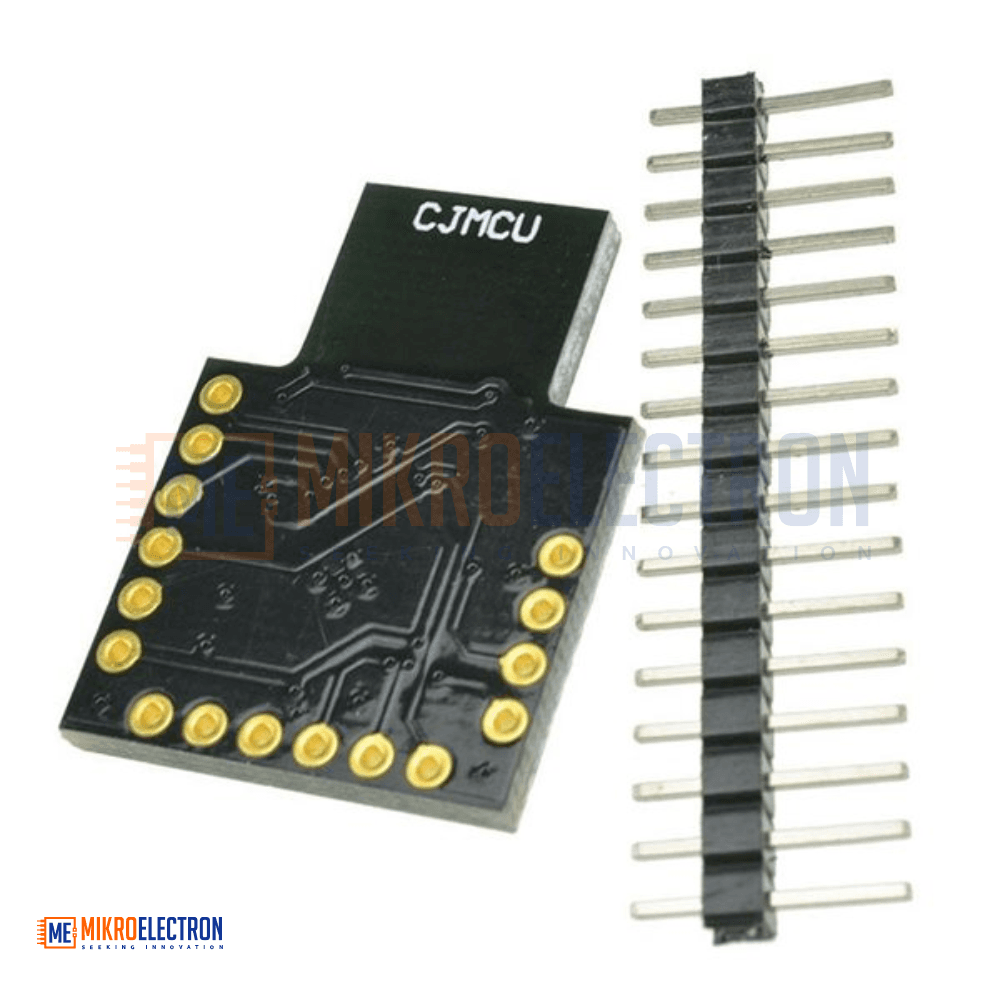
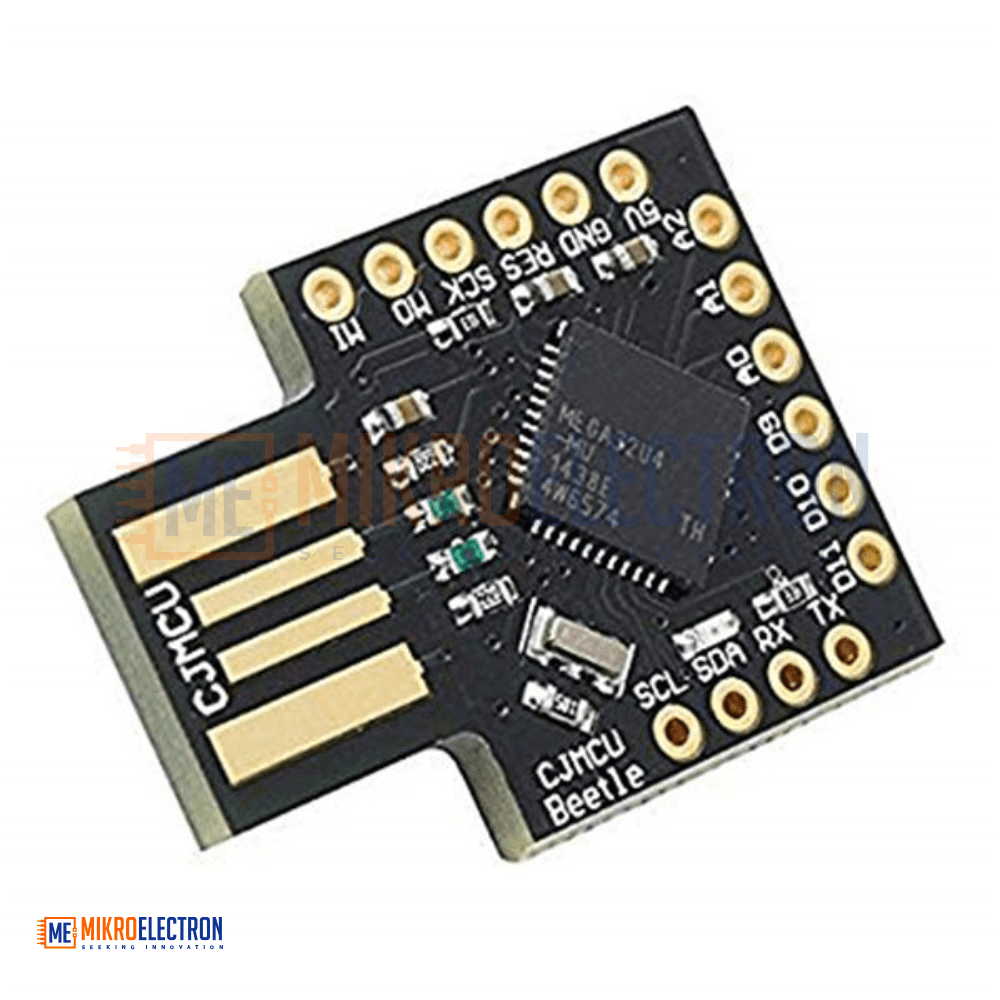
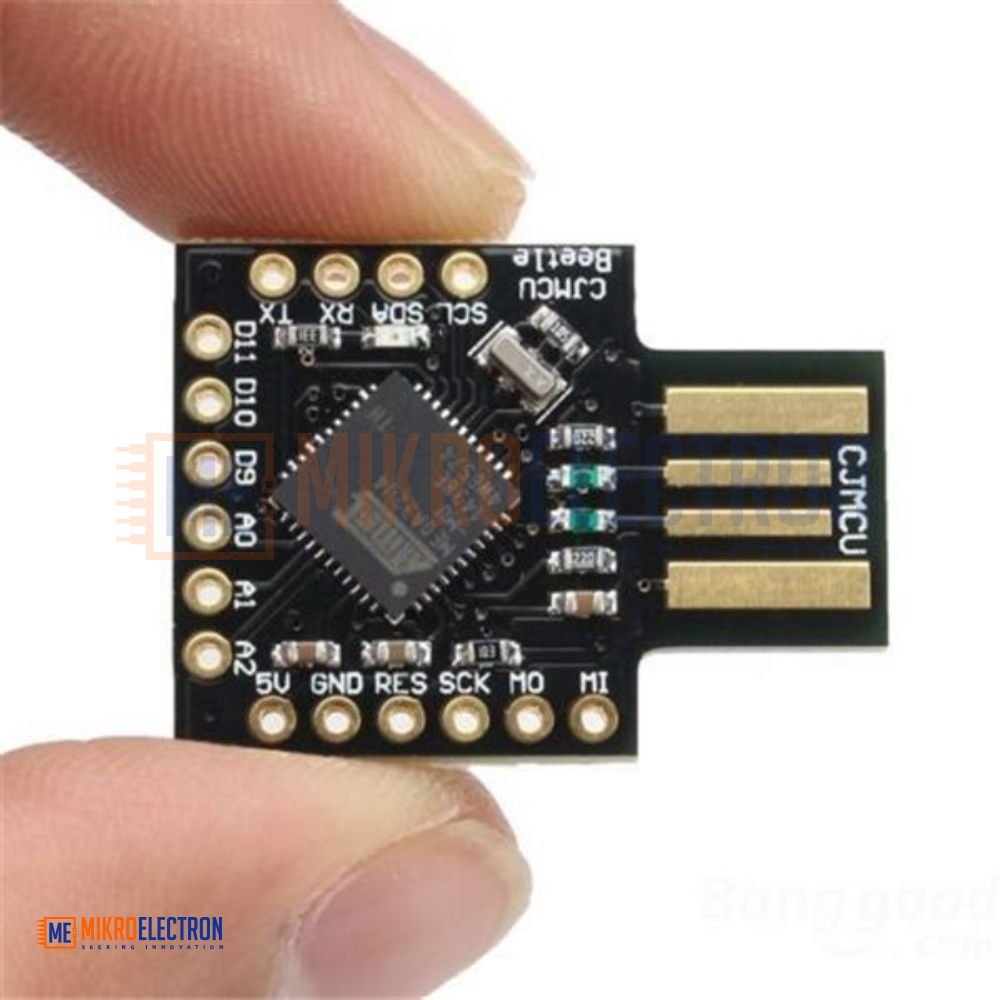
Mini Arduino Leonardo USB ATMEGA32U4 Development Board For Arduino
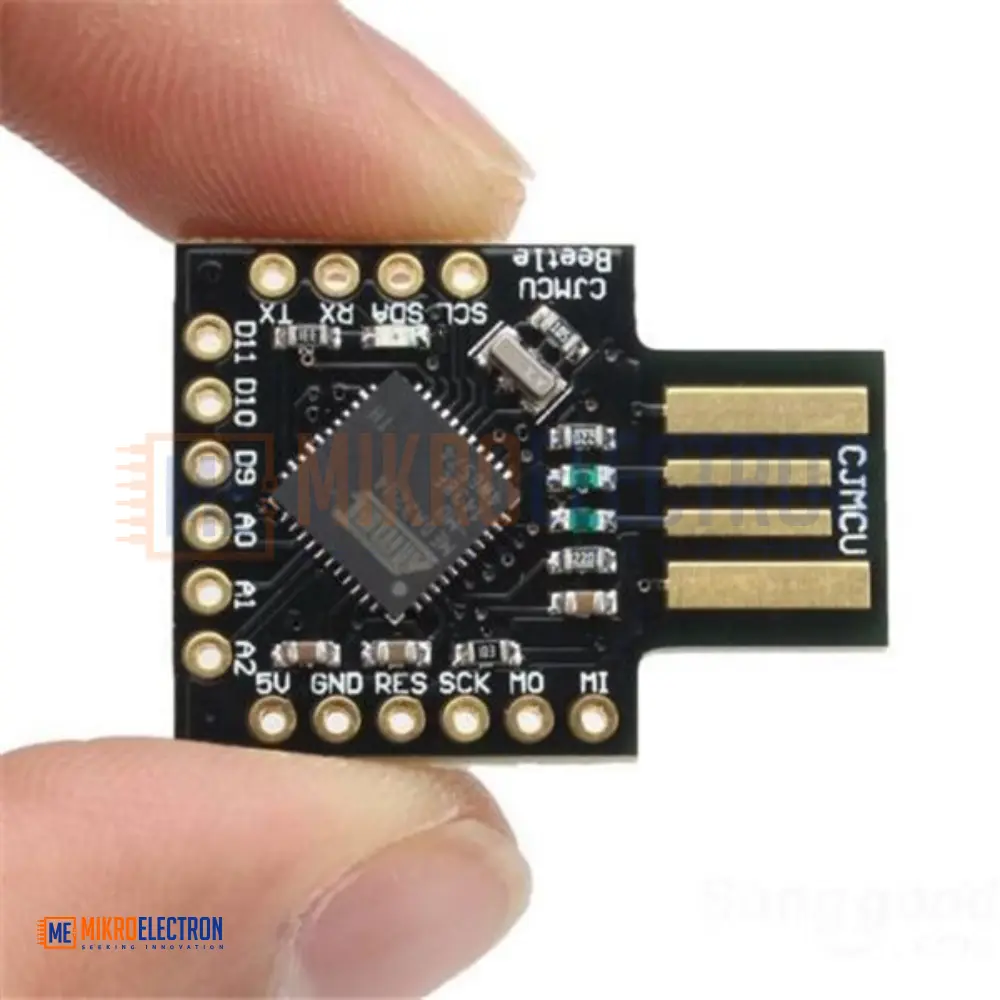
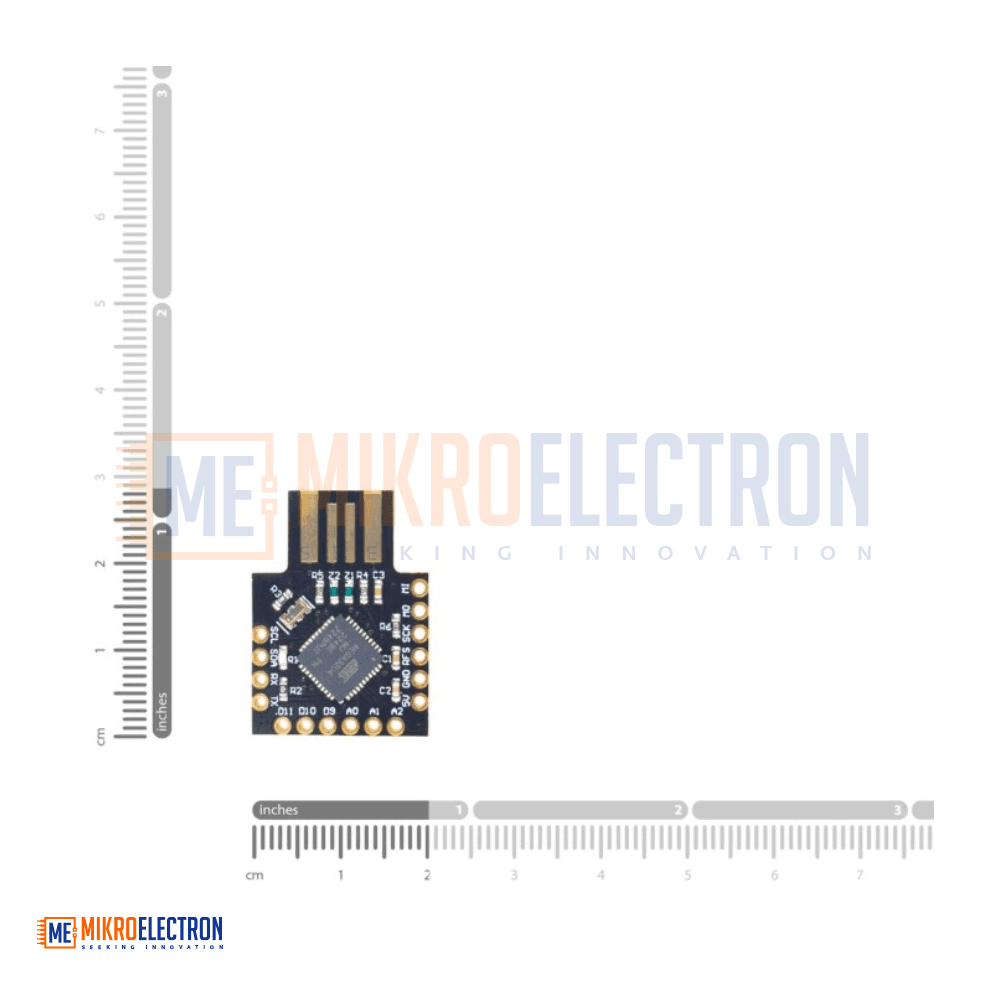
The CJMCU Beetle (Mini Arduino Leonardo) is an ultra-compact ATmega32U4 development board measuring just 21×28 mm, making it one of the smallest Arduino-compatible boards available. Powered by the ATmega32U4 microcontroller at 16 MHz, it features built-in USB HID capability, allowing it to emulate a keyboard, mouse, or game controller directly from your code. With 10 digital I/O pins, 4 PWM channels, 5 analog inputs, and a micro-USB connector, it's perfect for wearable electronics, DIY keyboards, cosplay props, and space-constrained projects. Fully compatible with the Arduino IDE and Leonardo bootloader for effortless programming.
لوحة CJMCU Beetle (Arduino Leonardo المصغّرة) هي لوحة تطوير فائقة الصغر مبنيّة على معالج ATmega32U4 بأبعاد 21×28 ملم فقط، ممّا يجعلها من أصغر اللوحات المتوافقة مع Arduino في السوق. تعمل بتردّد 16 ميغاهرتز وتتميّز بـ دعم USB HID المدمج، ممّا يمكّنها من محاكاة لوحة مفاتيح أو فأرة أو ذراع تحكّم ألعاب مباشرةً عبر الكود. تحتوي على 10 أطراف رقميّة، و4 قنوات PWM، و5 مداخل تناظريّة، وموصل micro-USB، وهي مثاليّة لـ الإلكترونيّات القابلة للارتداء، ولوحات المفاتيح المخصّصة، ومشاريع الكوسبلاي، والمشاريع محدودة المساحة. متوافقة تمامًا مع Arduino IDE وbootloader الخاصّ بـ Leonardo لبرمجة سهلة وسريعة.
The CJMCU Beetle Mini Arduino Leonardo Development Board is a remarkably tiny microcontroller platform built around the powerful Atmel ATmega32U4 chip — the same MCU used in the official Arduino Leonardo and Arduino Micro boards. Despite its minuscule 21×28 mm footprint, this board retains all the essential functionality needed for a wide variety of embedded projects, prototypes, and finished products.
At the heart of the Beetle lies the ATmega32U4 microcontroller running at 16 MHz, offering 32 KB of Flash memory (4 KB reserved for the bootloader), 2.5 KB of SRAM, and 1 KB of EEPROM for persistent data storage. Unlike Arduino Uno boards that use a separate USB-to-serial chip, the ATmega32U4 has native USB support built directly into the microcontroller — a critical feature that enables the board to appear to a computer as a native USB HID device such as a keyboard, mouse, joystick, or MIDI controller.
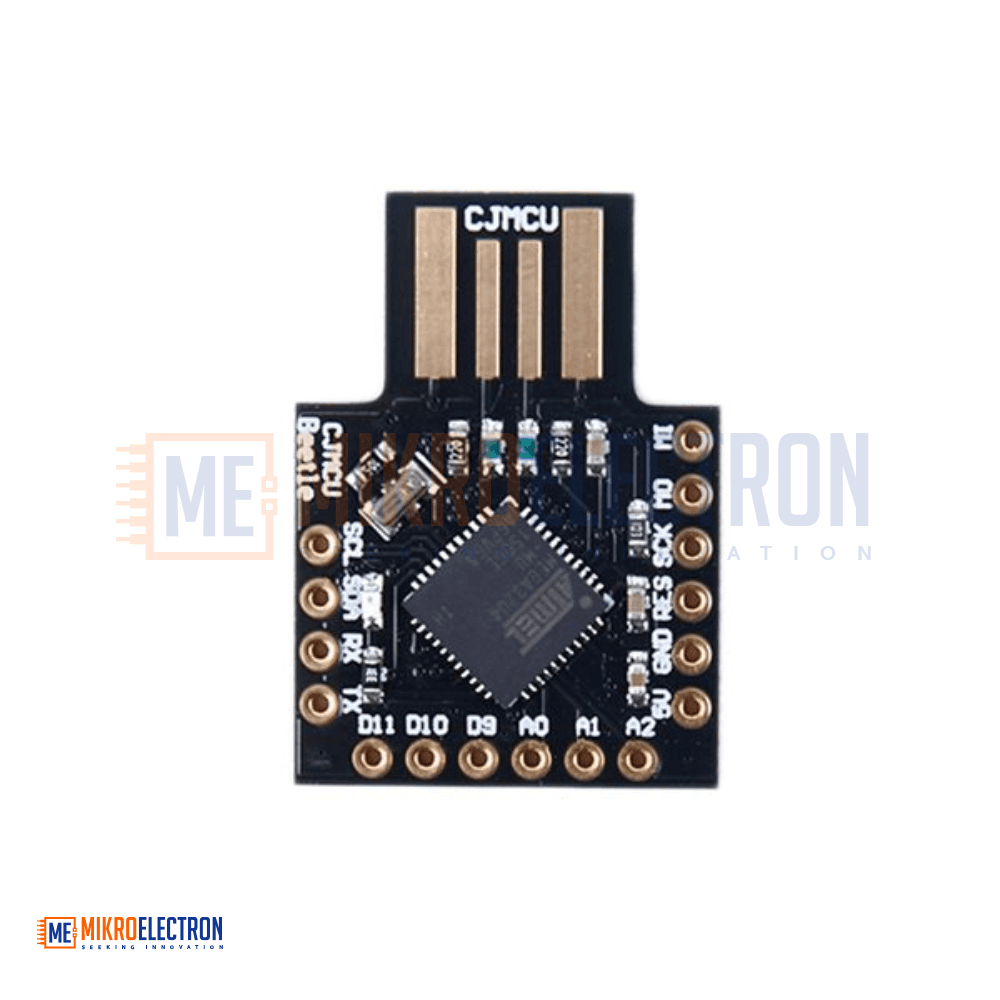
The board exposes 10 digital I/O pins, of which 4 support PWM output for controlling LEDs, motor speeds, or generating audio tones. Additionally, 5 pins can function as analog inputs with 10-bit ADC resolution, enabling connection to a wide range of sensors including potentiometers, photoresistors, thermistors, and analog accelerometers. The board also provides one hardware UART, one I2C bus (SDA/SCL), and an SPI interface through the exposed test pads for advanced peripheral communication.
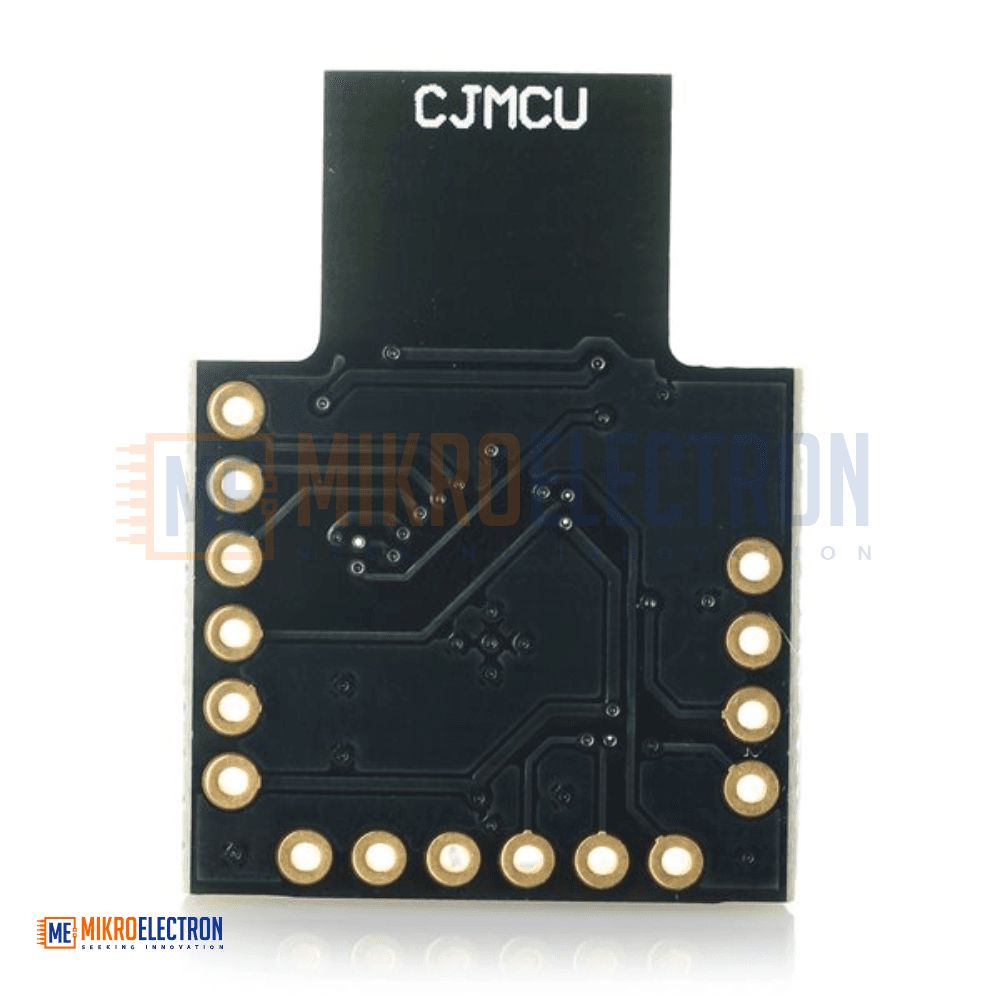
Power and programming are handled through the onboard micro-USB port, which supplies 5V DC to the board and enables drag-and-drop code uploads via the Arduino IDE using the Arduino Leonardo bootloader. Its castellated edge pads allow it to be directly soldered onto a larger PCB like a surface-mount module, opening up possibilities for custom shields, wearable jewelry, badges, and integrated product designs.
The Beetle's compact form factor makes it particularly popular in the DIY mechanical keyboard community, where it's used to build macro pads, foot pedals, and custom HID input devices. It's also widely employed in cosplay and prop-making for controlling LEDs, servos, and sound effects, as well as in wearable technology projects where full-size Arduinos would be impractical.
Specifications
| Parameter | Value |
|---|---|
| Board Model | CJMCU Beetle (Arduino Leonardo Compatible) |
| Microcontroller | Atmel ATmega32U4 |
| Clock Speed | 16 MHz |
| Operating Voltage | 5V DC |
| Input Voltage (via USB) | 5V DC |
| Digital I/O Pins | 10 |
| PWM Output Channels | 4 |
| Analog Input Channels | 5 (10-bit ADC) |
| UART (Serial) | 1 |
| I2C Interface | 1 (SDA / SCL) |
| SPI Interface | 1 (via test pads) |
| USB Connector | Micro-USB (native USB HID support) |
| Flash Memory | 32 KB (4 KB used by bootloader) |
| SRAM | 2.5 KB |
| EEPROM | 1 KB |
| Board Dimensions | 21 × 28 mm |
| Bootloader | Arduino Leonardo |
| Programming Environment | Arduino IDE (and compatible IDEs) |
Applications
- DIY mechanical keyboards and macro pads — full HID keyboard emulation directly from code
- Custom mouse and game controller builds — HID mouse and joystick emulation
- Wearable electronics — smart jewelry, LED badges, and interactive clothing
- Cosplay and prop electronics — controlling LEDs, servos, and sound effects in costumes
- Foot pedals and accessibility devices — customized input peripherals for specialized use
- Miniature robotics — small robots and BEAM-style bots with limited onboard space
- IoT sensor nodes — compact wireless data loggers when combined with a radio module
- MIDI controllers — DIY drum pads, control surfaces, and expression pedals for musicians
- USB automation tools — auto-typing devices, login helpers, and repetitive-task automators
- Educational projects — teaching microcontroller basics in a compact, breadboard-friendly form
- Smart home controllers — small footprint controllers for simple home automation nodes
- Product prototypes — final integration into custom PCBs using castellated edge pads
- Interactive art installations — sensor-driven LED and motion projects with hidden electronics