
DC to DC Step up Power LM2577s / XL6009
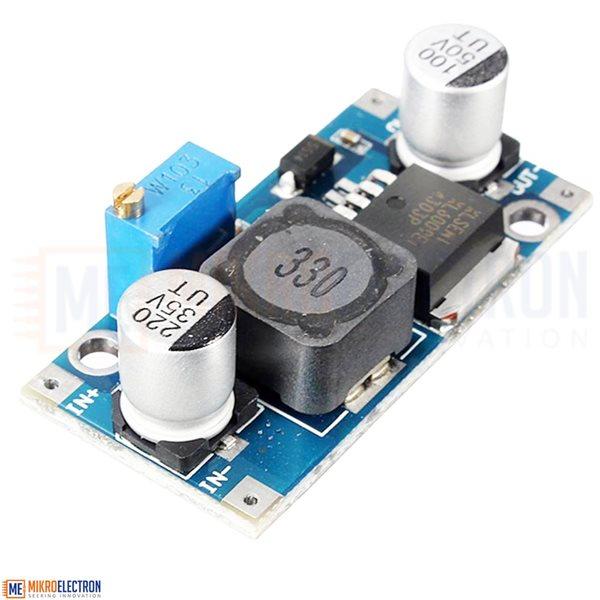
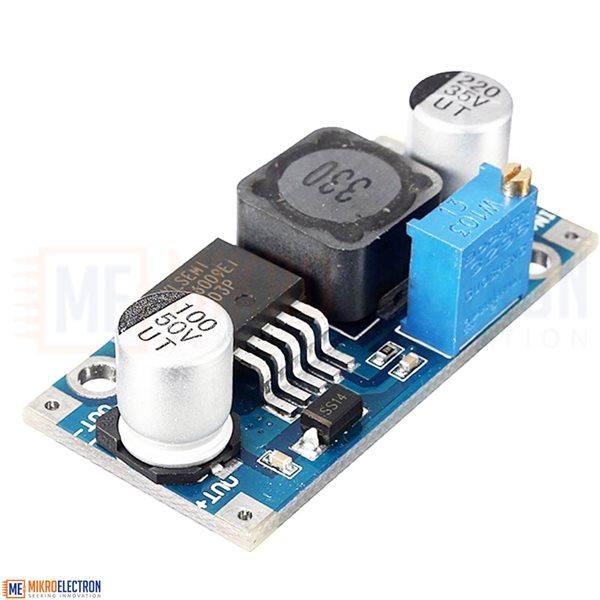
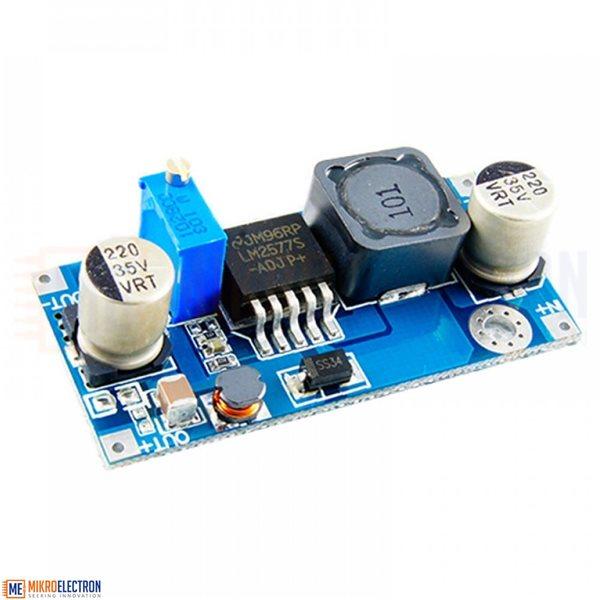
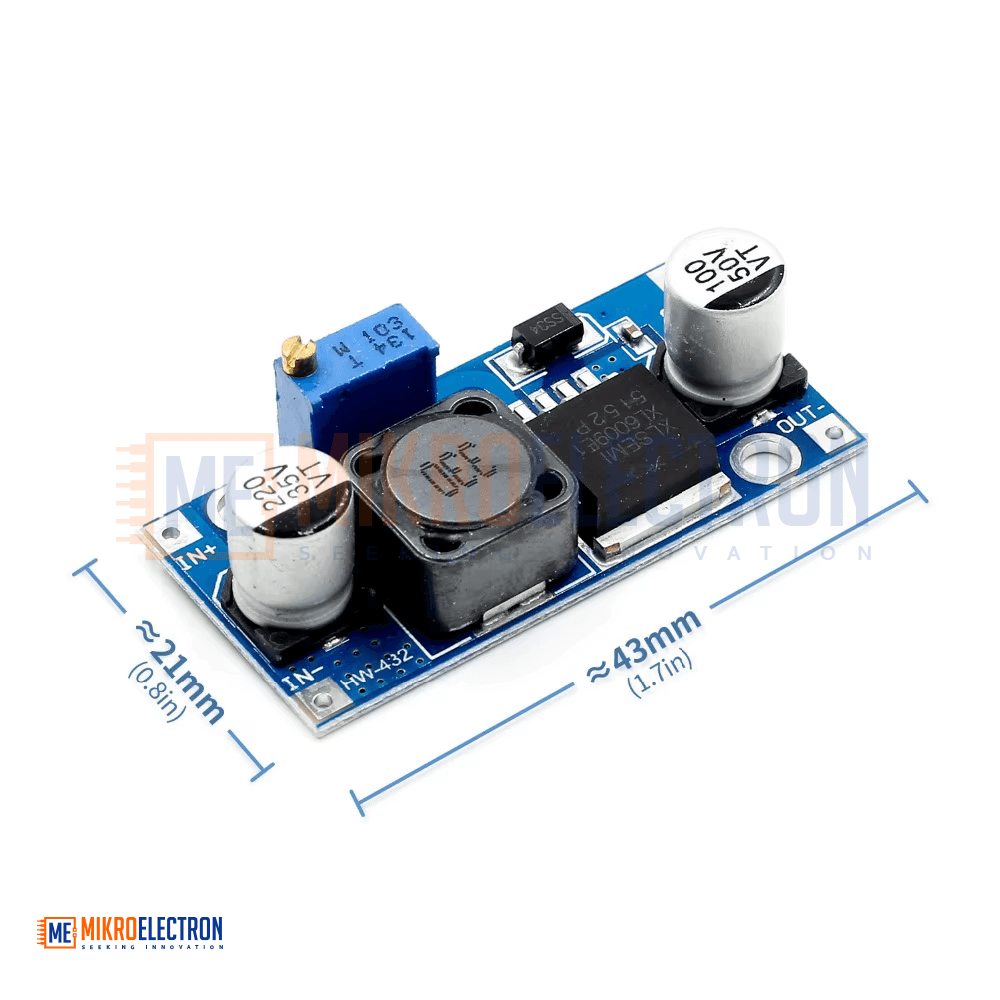
The DC-DC Step-Up Boost Converter (LM2577 / XL6009) is a high-efficiency adjustable power module that boosts low DC voltages to higher levels. Accepting input from 3.7V to 34V and delivering an adjustable output between 4V and 35V at up to 2.5A, it's ideal for powering devices that need a higher voltage than your battery or supply provides. Perfect for Arduino, robotics, LED drivers, battery-powered projects, and DIY electronics.
مودول رفع الجهد DC-DC (LM2577 / XL6009) هو مودول طاقة عالي الكفاءة قابل للضبط يرفع الجهد المستمر المنخفض إلى مستويات أعلى. يقبل دخل من 3.7 فولت إلى 34 فولت ويوفر خرج قابل للضبط بين 4 و35 فولت بتيار يصل إلى 2.5 أمبير، مما يجعله مثالياً لتشغيل الأجهزة التي تحتاج جهداً أعلى من البطارية. مثالي لـ الأردوينو، الروبوتات، مشغلات LED، المشاريع التي تعمل بالبطارية، ومشاريع DIY الإلكترونية.
The DC-DC Step-Up (Boost) Converter Module based on the popular LM2577 / XL6009 chip is a powerful and versatile voltage boosting solution for electronics projects. Unlike linear regulators, this module uses switching technology to efficiently raise a lower input voltage to a higher output voltage with minimal heat generation and high conversion efficiency.
The module accepts a wide input voltage range of 3.7V to 34V, and provides an adjustable output from 4V to 35V via an onboard multi-turn trimmer potentiometer. This makes it perfect for boosting battery voltages — for example, lifting a single Li-ion cell (3.7V) to 5V, 9V, or 12V, or stepping a 12V supply up to 19V or 24V for higher-voltage devices.
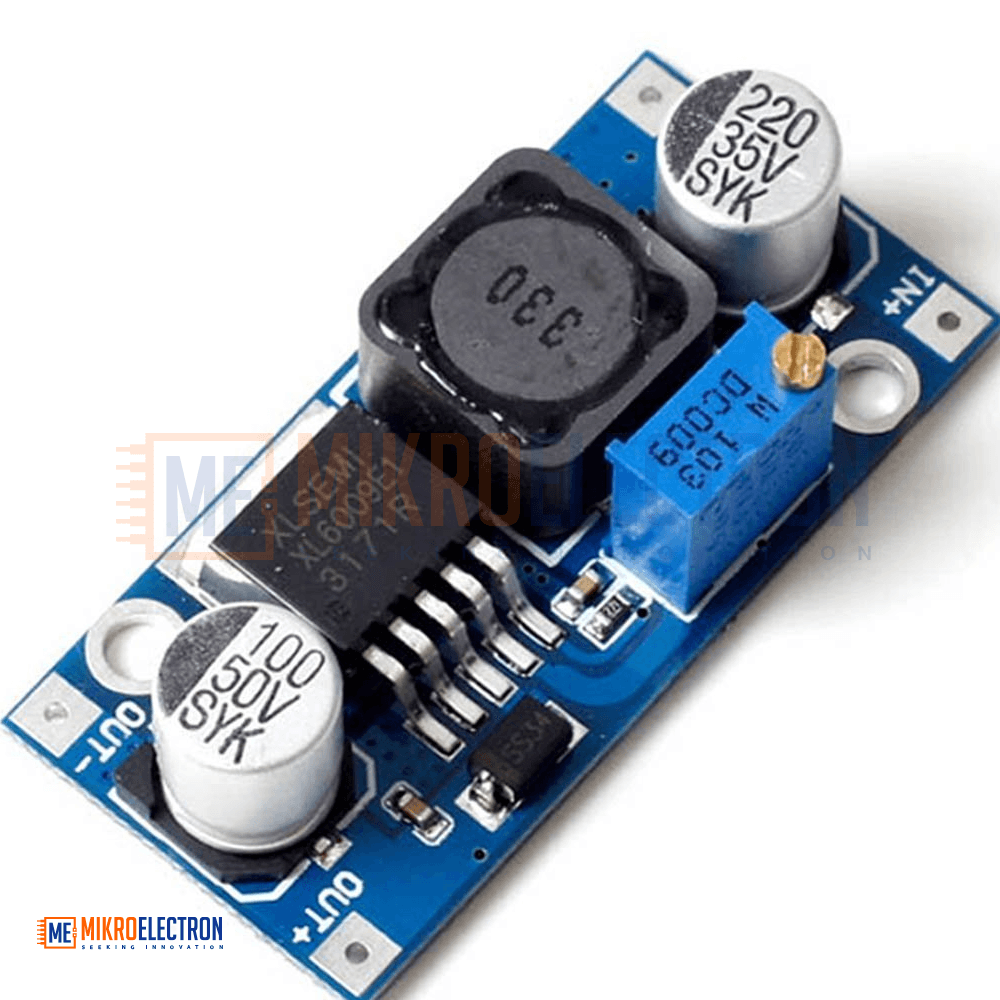
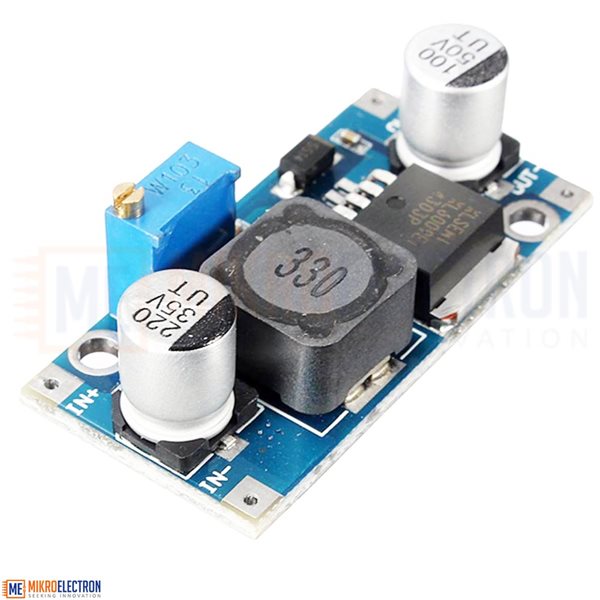
Capable of supplying up to 2.5A of output current (with proper heat management), the module is suitable for driving motors, LEDs, sensors, microcontrollers, and small electronic devices. The board features high-quality components including a power inductor, Schottky diode, and filter capacitors for stable, low-ripple output.
Whether you're building a portable battery-powered project, designing a DIY LED driver, prototyping with Arduino, or creating a custom power supply rail, the LM2577 / XL6009 boost converter is one of the most reliable and widely used power modules in the maker community.
Important: Always set the output voltage before connecting your load. Use a multimeter on the output and adjust the onboard trimmer until the desired voltage is reached.
Specifications
- Module Type: DC-DC Step-Up (Boost) Converter
- Main Chip: LM2577 / XL6009
- Input Voltage Range: 3.7V – 34V DC
- Output Voltage Range: 4V – 35V DC (Adjustable)
- Maximum Output Current: 2.5A
- Maximum Input Current: 3A
- Conversion Efficiency: Up to ~90% (depending on input/output voltage)
- Output Adjustment: Multi-turn onboard trimmer potentiometer
- Switching Frequency: ~400 kHz (typical for XL6009)
- PCB Material: CCL (Copper Clad Laminate)
- Color: Blue
- Output Type: Non-Isolated, Adjustable
- Minimum Working Voltage: 3.7V
Connection Points:
- IN+ / IN− → DC Input
- OUT+ / OUT− → DC Output
Notes & Tips:
- Output voltage must be higher than input voltage — this is a boost-only converter, not buck-boost
- For continuous loads above 2A, add a heatsink to the IC for better thermal performance
- Always verify output voltage with a multimeter before connecting your load
- Input voltage should not exceed 34V to avoid damaging the IC
Applications
- Boosting Li-ion battery voltage (3.7V) to 5V, 9V, or 12V
- Powering Arduino, ESP32, and microcontroller boards from low-voltage batteries
- Portable battery-powered electronics
- DIY power banks and custom power supplies
- LED driver circuits for high-brightness LEDs
- Solar power systems — boosting panel voltage to charge higher-voltage batteries
- Robotics and motor power supplies
- Audio amplifier power rails
- Lab bench power supply projects
- Automotive 12V to 19V/24V conversion
- Educational STEM and electronics labs
- Sensor and module power conversion
- 3D printer auxiliary electronics
- Drone and RC vehicle power systems